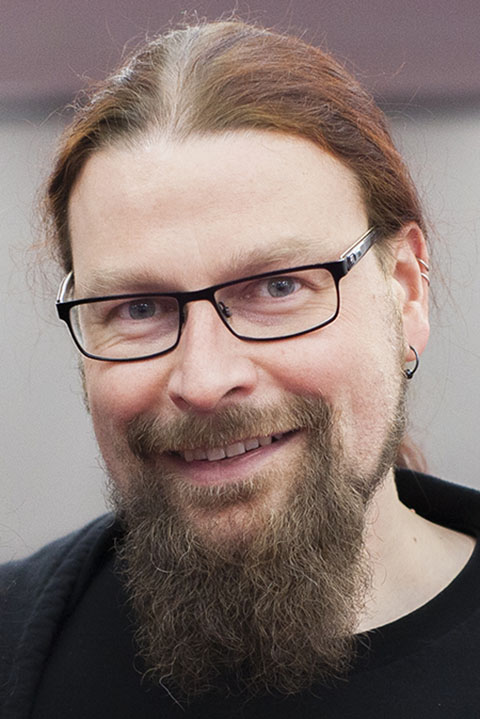
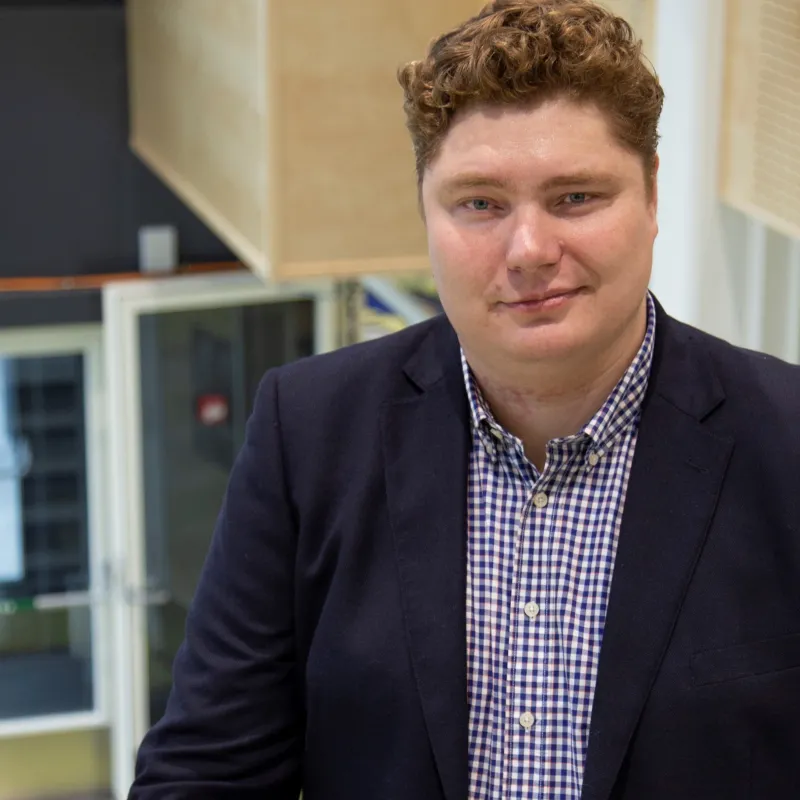
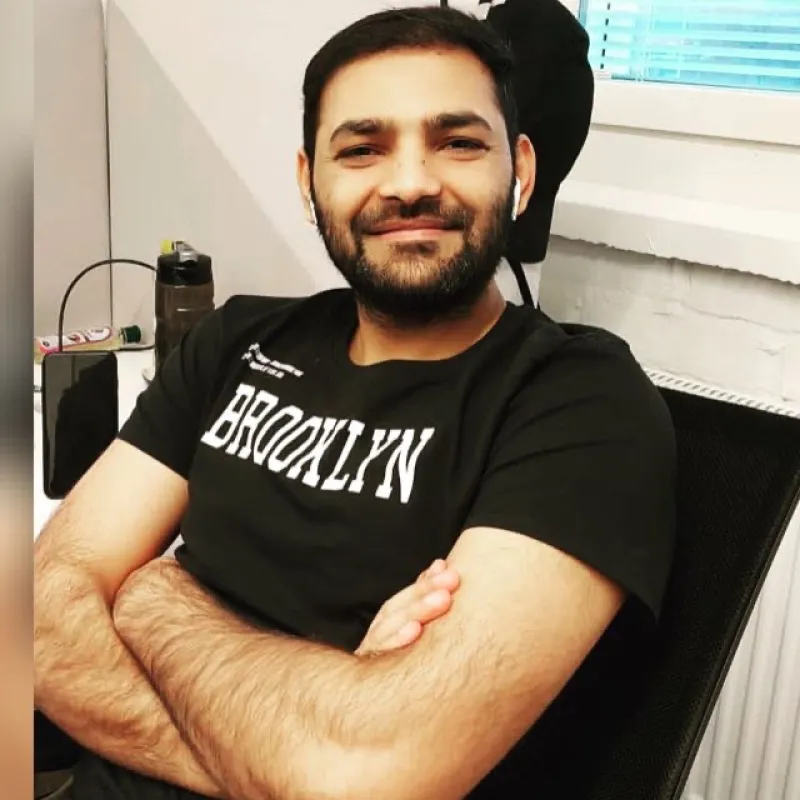
Patrick Rinke serves as an Adjunct Professor in the Department of Applied Physics at Aalto University, Finland. His research bridges theoretical physics, materials science, and computational methodologies with a strong focus on machine learning applications. His computational work spans electronic structure theory, materials design, and atmospheric chemistry. Rinke's research integrates Bayesian optimization, active learning, and high-throughput computational screening to accelerate materials discovery, particularly in hybrid perovskites, catalysts, and biomaterials. Recent work demonstrates machine learning's transformative potential in predicting molecular properties, optimizing materials functionality, and solving complex physical chemistry problems. His scientific contributions have been recognized with multiple awards: Thesis Prize from the Institute of Physics (2003) DFG Research Scholarship (2007-2009) Outstanding Postdoctoral Achievement Award (2009) Outstanding Referee of Physical Review Letters (2014) August-Wilhelm Scheer Visiting Professorship (2017)
Petteri Nurmi is a Professor of Computer Science at the University of Helsinki, affiliated with the Department of Computer Science and the Helsinki Institute of Sustainability Science (HELSUS). His research focuses on IoT systems, environmental monitoring, AI-driven solutions, and sustainable computing. He leads projects such as the NordForsk-funded initiative (2024-2028) and the Team Finland Knowledge programme (2024-2026), emphasizing large-scale IoT deployments and quantum computing integration. Key research interests include drone-based air quality monitoring, low-cost sensor networks, and AI applications in environmental science. Nurmi has published extensively in top venues like IEEE IoT Journal and ACM workshops. His work bridges technical innovation with societal challenges, such as urban pollution reduction and sustainable resource management. He supervises doctoral students in the Computer Science program and collaborates internationally on projects like underwater plastic detection (SEAGULL) and smart city infrastructure. Nurmi’s contributions to edge computing and pervasive sensing have been recognized through grants totaling over €2M. His lab develops tools for data-intensive systems, including thermal imaging for energy efficiency analysis and AI-driven sensor fusion frameworks.
Jukka K Nurminen is a Professor of Computer Science at the University of Helsinki (since 2019) and a Research Professor at VTT. He leads the Empirical Software Engineering research group and supervises doctoral students in the Doctoral Programme in Computer Science. His career spans academia and industry, including roles as Adjunct Professor at Aalto University (part-time, 2016-2021) and Principal Scientist at VTT (2016-2019). His research focuses on efficient software systems , particularly energy-efficient software , mobile cloud computing , and data-intensive systems . Recent work addresses AI system testing , ethical decision-making in software , and quantum computing software . His publications highlight trends in quantum algorithms , machine learning for edge computing , and ethical AI . Best Paper Award (2023) Nurminen has supervised 6 PhD theses, 48 MSc theses, and 21 BSc theses. He has secured over 1 MEUR in research funding, including projects like FrameQ and EM4QS for quantum middleware. His teaching innovations include hackathons and summer schools, with excellence recognized in tenure-track evaluation (2018) and adjunct professorship (2015).
Pekka Abrahamsson is a Professor at the Faculty of Information Technology and Communication Sciences at Tampere University , Finland. He actively contributes to research in Software Engineering , Artificial Intelligence , and AI Ethics , with recent work focusing on generative AI, multi-agent systems, and ethical software design. Published over 42 research outputs (2016–2025) Editorial roles in multiple international conferences (2016, 2019, 2022–2024) His research emphasizes practical applications of AI in software development, including tools like ChatGPT for full-stack coding, multi-agent systems for requirements engineering, and frameworks for AI ethics in software practices. He also explores challenges in continuous software engineering and quantum computing architecture. Key publication trends (2024–2025) include: Agile methodologies enhanced by AI Ethical alignment in AI systems Autonomous software development platforms AI tool adoption in programming education Quantum software architecture reviews Technical debt in embedded systems Awards and recognitions : PlumX Metrics highlight 1 scientific prize (unspecified) High readership on platforms like Mendeley (up to 211 readers) Multiple citations in Scopus (up to 53 citations for quantum computing work) Grants and collaborations include global studies on work-from-home impacts, AI tool usage in programming courses, and projects like CodePori for autonomous development. His work influences policy and industry practices, particularly in AI ethics and multi-robot systems.
Joonas Keski-Rahkonen is a researcher active in quantum physics, nanotechnology, and condensed matter physics. He holds a Master of Science in Physics from the University of Oulu and completed his doctoral thesis at Tampere University. His work focuses on quantum chaos, electronic transport in nanostructures, and magnetic field effects. His research has appeared in journals like Physical Review E , Physical Review B , and Computer Physics Communications . Collaborations span topics such as quantum dots, planckian resistivity, and lattice vibrations. Recent articles analyze anomalous diffusion, bouncing-ball scars, and quantum acoustics. He has no explicitly listed scientific awards or grants in the provided text. While details on current affiliations or part-time status are absent, his academic role is inferred from extensive peer-reviewed publications and software development in his field.
Ivan Lopushenko is a Postdoctoral Researcher (mapped to academic rank: Researcher) at the University of Oulu's Faculty of Information Technology and Electrical Engineering, working within the Optoelectronics and Measurement Techniques Unit and Biophotonics group since 2020. He earned his doctoral degree in Physics and Mathematics from Lomonosov Moscow State University, Russia, in 2019. His dissertation focused on developing semi-analytic numerical models for electromagnetic scattering and nonlocal nanoplasmonics. Dr. Lopushenko's research bridges mathematical physics and computational modeling, with primary interests in: Mathematical Physics and Electromagnetic Scattering theory High-performance simulation software and digital twins for physical processes Optical imaging, biosensing, and communication applications Nanotechnology and quantum electrodynamics implementations Radiative transfer and mesoscopic electrodynamics systems Quantum state tomography methodologies He maintains active affiliations with Biocenter Oulu and contributes to cross-disciplinary advancements in light-scattering technologies for biomedical and engineering applications.
Prof. Ertugrul Basar holds the position of Professor of Wireless Systems at the Department of Electrical Engineering, Tampere University, Finland. He is also a member of the Tampere Wireless Research Centre and previously served as founding director of the Communications Research and Innovation Laboratory (CoreLab) at Koç University (2018–2025). His academic career includes faculty roles at Koç University (2018–2025) and Istanbul Technical University (2009–2018), alongside visiting positions at Princeton University and Ruhr University Bochum. He earned his B.S. (High Honors) from Istanbul University, and M.Sc. and Ph.D. from Istanbul Technical University. His research focuses on 6G and beyond wireless systems, reconfigurable intelligent surfaces (RIS), index modulation, physical layer security, and deep learning for communications. He has authored over 190 journal papers, holds 17 patents, and been recognized with prestigious awards including IEEE Fellow (2023), TÜBA Outstanding Young Scientist Award (2017), and multiple best paper awards. He has supervised 9 Ph.D. and 20 M.Sc. students, and served on editorial boards of IEEE Transactions on Communications and other journals. Prof. Basar’s work has been impactful, with over 18,000 citations and an h-index of 55. His contributions span theoretical advancements and practical implementations, including pioneering RIS technologies and waveform designs. He is a Fellow of AAIA and AIIA, and an IEEE Communications Society Distinguished Lecturer (2024–2025).
Muhammad Waseem serves as a Postdoctoral Researcher in Computing Sciences, specializing in the integration of artificial intelligence with software engineering practices. His work focuses on leveraging advanced AI techniques to transform traditional software development workflows through automation and intelligent systems. His core research domains include: Large Language Models for code generation Multi-agent system architectures Retrieval-Augmented Generation frameworks Software engineering automation AI-driven security analysis Quantum software development challenges Publication analysis reveals a concentrated research trajectory applying multi-agent LLM systems across the software lifecycle—from requirements engineering to quantum security—demonstrating consistent innovation in AI-augmented development methodologies between 2024-2026.
Sami Hyrynsalmi is a Professor of Software Engineering at the LUT School of Engineering Sciences, Lappeenranta–Lahti University of Technology (LUT University), Lahti Campus. He has held academic positions including Associate Professor (tenure track) at LUT University (2019–2023), and prior roles at Tampere University (2020–2023) and the University of Turku (2007–2016). He earned his Doctor of Science in Technology (2014) and Master of Science in Technology (2009) from the University of Turku. Research Focus: Software engineering, information systems, software ecosystems, agile development, DevOps, blockchain ethics, quantum computing applications, and software product management. Publications: Authored over 20 journal articles and 80 conference/workshop papers, with work appearing in journals like Information and Software Technology , IEEE Access , and Computers in Human Behavior . Collaborations: Frequent collaborations with institutions such as Tampere University, University of Turku, and international researchers on topics like 6G ecosystems, DevOps challenges, and blockchain compliance. Employment Timeline: 2023–Present: Professor of Software Engineering, LUT University. 2019–2023: Associate Professor (tenure track), LUT University. 2020–2023: Employment at Tampere University. 2007–2016: Roles at the University of Turku and Turku School of Economics.
Markku-Juhani Saarinen is a Professor of Practice in Computing Sciences at Tampere University, affiliated with the Faculty of Information Technology and Communication Sciences. He holds a Ph.D. from Royal Holloway, University of London (2009), and is a Docent in Cryptography and Information Security. His expertise spans applied cryptography, cryptographic engineering, post-quantum cryptography, and security assessments. He has led research on lattice-based cryptography, side-channel resistant implementations, and hardware security. Key contributions include the Round5 post-quantum encryption scheme, RISC-V entropy source interfaces, and the BLAKE2 cryptographic hash function. He has published extensively at top venues like CRYPTO, EUROCRYPT, and PQCrypto, and co-edited conference proceedings such as the 2024 PQCrypto workshop. His research focuses on securing cryptographic systems against quantum computing threats, optimizing implementations for embedded devices, and advancing hardware-software co-design for cryptographic primitives. He actively collaborates with industry and academia to bridge theoretical advancements with practical applications in secure communication and embedded systems.
Kari Systä is a Professor of Software Engineering at Tampere University's Faculty of Information Technology and Communication Sciences. His career spans academia and industry, including 16 years at Nokia Corporation and current leadership in software engineering research. He teaches courses like Continuous Development and Deployment - DevOps and supervises Master's theses. Research Focus: Data-driven software engineering, web/cloud platforms, IoT architectures, energy systems software, and edge computing. Current Projects: LiquidAI (2023-2025) for IoT-Edge-Cloud ML systems; 6GSoft (2023-2026) for 6G software engineering; Microblock (2021-2023) on blockchain micro-credentials; and DELI (2023-2025) for energy research infrastructure. Research Unit: Leads work at TASE (Tampere Software Engineering Research Group). His expertise bridges software engineering theory and practice, with collaborations across Finnish universities and industry. He advocates for integrating AI/ML into software development workflows and optimizing energy systems through programmable edge-cloud solutions.
Heikki Karjaluoto is a Professor and Vice Dean of Research at the Faculty of Information Technology, University of Jyväskylä. He teaches in the Technology Management program and focuses on the intersection of technology and business. His research emphasizes customer behavior in digital contexts, including social media, influencer marketing, and IT-driven business strategies. Karjaluoto has published extensively in leading journals and authored multiple books, collaborating with researchers globally and industry partners. Research interests include digital consumer behavior, value co-creation in supply chains, and the impact of emerging technologies like blockchain and quantum computing. He leads research groups in Empirical Software Engineering, Quantum Information & Computation, and Cyber-Physical Systems & Services (CPSS). Notable awards include Best Teacher and Best Paper awards. His work spans topics such as social media overload, influencer credibility, and sustainable digital practices. He actively engages in joint R&D projects with companies, emphasizing practical applications of academic research.
Muhammad Azeem Akbar is an Associate Professor in the Software Engineering Department at LUT University, Finland, with a multidisciplinary research focus on integrating software engineering with large language models (LLMs), data analytics, artificial intelligence, and emerging technologies. He earned his Ph.D. in Software Engineering from Chongqing University, China, in 2019, followed by postdoctoral research at Nanjing University of Aeronautics and Astronautics and LERO – The Irish Software Research Centre. His career includes contributions to projects like the Automated Code Recommendation System, Huawei’s Software Trustworthiness initiative, and leadership in the 6GSoft project funded by Business Finland. Current position: Associate Professor, LUT School of Engineering Sciences Education: Ph.D. in Software Engineering (Chongqing University, 2019) His research spans three core areas: Software Engineering : Specializing in software process improvement, requirements engineering, change management, DevOps/DevSecOps, and global software development. He has developed maturity models, decision-support frameworks, and prioritization taxonomies to enhance software efficiency. AI and LLMs in Software Engineering : Focused on AI-driven code recommendation, defect prediction, test case generation, and requirements analysis. His work also examines ethical implications and trustworthiness of AI tools, including generative AI like ChatGPT. Emerging Technologies : Pioneering research at the intersection of software engineering with quantum computing, 6G, blockchain, IoT, and MLOps. He has proposed predictive models for quantum software development and secure frameworks for blockchain-enabled DevOps. Notable projects include the €3.2 million Code Recommendation System Improvement (China), €1.5 million Towards Zero-Touch Testing (Jiangsu-Nanjing), and contributions to EU Horizon proposals. He has published over 125 articles and collaborates with institutions like Huawei, King Saud University, and EU consortia. His teaching and research emphasize empirical and evidence-based approaches to address real-world challenges in modern software systems, with a focus on human-AI collaboration, cybersecurity, and smart cities.
Edward Alan Morrell is a Lecturer at Aalto University , affiliated with the Life-Wide Learning department. His work bridges game design, digital games, and educational technology. Recent publications highlight his focus on: Game-based learning (e.g., templating pedagogical tools) Game development pipelines for academic settings Interdisciplinary approaches (e.g., quantum games) His research explores how games can be structured to enhance learning experiences and foster innovation in educational contexts.
Laura Piispanen is a Doctoral Researcher at Aalto University's Department of Computer Science, focusing on quantum games, quantum art, and simulation tools. Her work bridges quantum physics and interactive media, emphasizing education and citizen science. Awards: Shared first place in Aalto University's Campus Art Competition (2020). Her research explores quantum computing through game development, creating educational tools and fostering collaborations between scientists and artists. Recent publications highlight quantum game design, simulation tools, and the evolution of quantum games. Key trends in her articles include quantum education, game jam methodologies, and interdisciplinary approaches merging art with quantum physics. She contributes to pedagogical frameworks for integrating quantum concepts into software development and design education.