Aumber Abbas is a researcher at Newcastle University specializing in advanced materials for sustainable energy and environmental applications. His work spans nanotechnology, catalysis, and biomass conversion, with significant contributions to carbon-based nanomaterials and electrochemical systems development. His research focuses on synthesizing graphene quantum dots from biomass waste for environmental sensing and remediation applications, developing catalytic processes for CO 2 utilization and cyclic carbonate production, and engineering electrochemical systems including vanadium redox flow batteries. Recent work emphasizes waste-derived functional materials for optical security, anti-counterfeiting, and wastewater treatment through nanoporous catalyst design and plasma-based tar removal technologies. Analysis of recent publications (2024-2025) reveals a dominant trend in sustainable nanomaterial engineering, particularly biomass-waste-derived carbon structures with tailored optical and catalytic properties. His work integrates experimental validation with simulation approaches to address energy storage, environmental remediation, and security applications, demonstrating strong interdisciplinary collaboration within Newcastle's engineering research community.
Gediminas Juzeliūnas is a Distinguished Professor at the Institute of Theoretical Physics and Astronomy within the Faculty of Physics at Vilnius University. His research spans quantum optics, ultracold atoms, and condensed matter physics, with particular expertise in quantum simulations and synthetic gauge fields. Professor Juzeliūnas's research program focuses on creating artificial gauge fields for neutral atoms, enabling quantum simulation of complex condensed matter phenomena. His seminal Reviews of Modern Physics article on artificial gauge potentials has become foundational in the field. Current research explores subwavelength optical lattices, topological quantum matter, and spin-orbit coupling phenomena in ultracold atomic systems. His theoretical work often bridges fundamental concepts with experimental feasibility, making it highly influential in both theoretical and experimental communities. Analysis of his recent publications reveals a clear trajectory toward exploring topological phenomena in ultracold atomic systems through subwavelength structures and Raman lattices. Juzeliūnas has pioneered approaches to create and manipulate synthetic gauge fields that simulate condensed matter physics, with applications ranging from quantum simulation to precision measurement technologies. His work frequently addresses the interplay between geometrical frustration, long-range interactions, and topological order in quantum many-body systems. True member of the Lithuanian Academy of Sciences (since 2019) Jucys Prize for Theoretical Physics (2014) Vilnius University Rector's award (2010, 2025) National State Prize for Science of Lithuania (2007) Professor Juzeliūnas has supervised multiple doctoral students including Edvinas Gvozdiovas (working on subwavelength optical lattices), Tomas Andrijauskas (researching artificial magnetic fields), and Hamid Reza Hamedi (studying slow light phenomena). He currently leads four major research projects funded by the Lithuanian Research Council, including "Ultracold atoms in unconventional optical lattices" (2024-2027) and "Quantum dynamics of interacting ultracold atoms in complex sub-wavelength potentials" (2024-2026), demonstrating his leadership in advancing quantum simulation techniques. His research group at the Institute of Theoretical Physics and Astronomy collaborates extensively with international partners, including Japanese, Latvian, and Taiwanese scientists, reflecting the global significance of his work. Professor Juzeliūnas regularly presents at major international conferences and has chaired significant events including the Humboldt Kolleg on Synthetic Quantum Matter (2023) and the 14th European Conference on Atoms Molecules and Photons (2022).
Valentina KRACHMALNICOFF is a CNRS Research Scientist at Institut Langevin, affiliated with ESPCI Paris and PSL University. She joined the institute in 2012 after completing her postdoctoral fellowship there in 2010. Her research focuses on experimental nanophotonics, particularly studying near-field interactions between fluorescent nano-emitters and nanostructured plasmonic or dielectric materials. Dr. KRACHMALNICOFF obtained her PhD from University Paris-Sud in 2009 with a thesis on quantum atom optics experiments supervised by Alain Aspect and Charles Westbrook. Her research interests span experimental nanophotonics with plasmonic and dielectric media, near-field optical microscopy with fluorescent nanoprobes, quantum optics applications, and the study of electromagnetic local density of states. She has developed expertise in fluorescence intensity and decay rate measurements of nano-objects grafted on scanning probe microscope tips, as well as nano-manipulation techniques. Her work bridges fundamental physics with potential applications in quantum technologies, biosensing, and thermal management at the nanoscale. She frequently employs super-resolution imaging techniques to overcome diffraction limits in optical measurements. Analysis of Dr. KRACHMALNICOFF's recent publications reveals a strong methodological evolution toward increasingly sophisticated combinations of experimental techniques with theoretical modeling. Her work consistently focuses on probing light-matter interactions at the nanoscale, with growing integration of biophysical approaches. The publications demonstrate expertise in thermal radiation at nanoscale distances, plasmonic and dielectric nanostructures, and super-resolution fluorescence lifetime imaging. Her research shows a trajectory from fundamental near-field optics toward applications in quantum information and biosensing. Dr. KRACHMALNICOFF has received notable scientific recognition: 2017: CNRS Bronze Medal for her pioneering work in nanophotonics 2007: L'Oréal France - UNESCO "For Women in Science" Prize Dr. KRACHMALNICOFF actively mentors doctoral students and postdoctoral researchers. Current advisees include Guillaume Blanquer and Dorian Bouchet (PhD candidates) and Vivien Loo (postdoctoral researcher). Former students include Da Cao and Etienne Castanié. Her research is supported by CNRS funding and collaborative grants with other institutions, evident from her extensive co-authorship network spanning theoretical physicists, materials scientists, and optical engineers. Dr. KRACHMALNICOFF leads an experimental research team at Institut Langevin specializing in nanophotonics. Her laboratory features advanced near-field optical microscopy capabilities, fluorescence lifetime imaging systems, and nano-manipulation setups. The team collaborates closely with other researchers at Institut Langevin, including Yannick De Wilde (CNRS Research Director) and Ignacio Izeddin (Associate Professor at ESPCI), forming a cohesive research group focused on light-matter interactions at the nanoscale.
Zihe Gao serves as a tenure-track Assistant Professor in the Department of Electrical and Computer Engineering at Auburn University's College of Engineering since August 2023, following postdoctoral research at the University of Pennsylvania and industry experience at Meta (Facebook Reality Labs). His academic foundation includes: PhD in Electrical and Computer Engineering, University of Illinois Urbana-Champaign (2018) MS in Physics, University of Illinois Urbana-Champaign (2012) BS in Physics, Nanjing University (2011) Dr. Gao's research integrates optics, microelectronics, and physics to develop programmable photonic systems. His work focuses on controlling collective behaviors in multi-element photonic systems for scalable integrated chips, with applications spanning dynamically steerable laser sources and reconfigurable quantum optical platforms . Key methodologies include non-Hermitian physics, topological photonics, and spin-orbit coupling engineering. Analysis of his 2023-2025 publications reveals dominant trends in non-Hermitian photonic switching , high-dimensional quantum state manipulation , and topological semiconductor laser arrays . His team pioneers lithography-free reconfigurable photonics and spin-orbit microlasers for quantum key distribution, demonstrating strong industry-academia translation from prior Meta work on AR/VR structured-light systems. His scholarly trajectory shows continuous progression from VCSEL array fundamentals (PhD under Prof. Kent Choquette) to quantum-topological photonics (postdoc with Prof. Liang Feng), now establishing independent research at Auburn with emphasis on integrated quantum-classical hybrid systems.
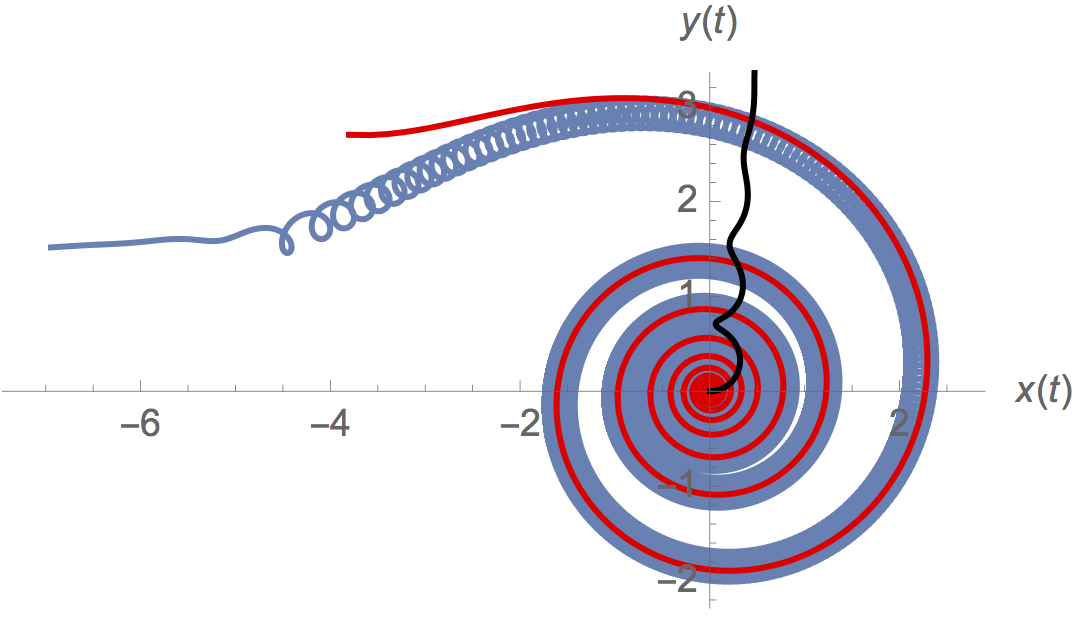
Prof. Dr. Hartmut Ruhl is a Professor (chair) at the Faculty of Physics of Ludwig-Maximilians-Universität München (LMU Munich), with his office located at Theresienstrasse 37, Room A237 in Munich, Germany. He leads an active research group focused on high field physics and quantum electrodynamics, particularly investigating radiation reaction, vacuum effects, and strong field phenomena. Prof. Ruhl's research spans several cutting-edge areas of theoretical and computational physics. His primary interests include high field physics, quantum electrodynamics in strong fields, radiation reaction effects, vacuum polarization phenomena, and computational methods for solving complex physical systems. He has made significant contributions to understanding the Heisenberg-Euler effective Lagrangian, vacuum high harmonic generation, and the Trident process for electron-positron pair production. His work combines theoretical developments with advanced numerical simulations to explore physics in extreme electromagnetic field conditions. Prof. Ruhl's publication record demonstrates consistent focus on nonlinear quantum electrodynamics in strong fields. His work spans theoretical developments in radiation reaction, numerical methods for solving Heisenberg-Euler equations, and investigations of vacuum effects like high harmonic generation and pair production. A recurring theme is the exploration of quantum vacuum nonlinearities and their observable consequences in high-intensity laser-matter interactions. Prof. Ruhl actively supervises PhD students in high field physics, requiring profound knowledge in quantum transport theory and advanced programming. His group seeks candidates who have completed his courses in Relativistic Quantum Theory and Advanced Programming. He co-organizes the seminar 'Selected Topics in Computational Physics' with Prof. A. Scrinzi, serving as a platform for master's and PhD students interested in computational plasma physics. Prof. Ruhl is associated with the Advanced Simulation Center (ASC) at LMU Munich, as indicated by room locations in his teaching schedule. He collaborates closely with Prof. A. Scrinzi on computational physics topics and is involved with the PSC (Plasma Simulation Code) project. His research group develops specialized numerical solvers for nonlinear wave equations based on the Heisenberg-Euler effective Lagrangian, contributing to the understanding of quantum vacuum effects in extreme field conditions.
Dr. Carrie Weidner is a Senior Lecturer at the University of Bristol, affiliated with both the School of Physics and the School of Electrical, Electronic and Mechanical Engineering. Her research spans quantum control, atom interferometry, and quantum technology education, with a focus on robust control techniques in optical lattices and spin networks. Principal Investigator for Quantum Positioning, Navigation, and Timing Hub (2024-2029) Lead on EPSRC-funded project EP/Y004728/1 for trapped ultracold atom interferometry (2023-2025) Her recent work includes energy landscape shaping for quantum systems, deterministic generation of squeezed states, and innovative educational tools like the Quantum Composer. Publications analyze robustness metrics, control algorithms, and quantum-classical system comparisons. Collaborations span international institutions in quantum physics and engineering domains. She contributes to quantum outreach through gamification and interactive platforms, targeting improved education and community inclusivity. Current research trends emphasize precision measurement, error mitigation, and AI integration in quantum control systems.
Christian Roos is an Associate Professor at the Department of Experimental Physics , University of Innsbruck, Austria. His research focuses on quantum simulation, trapped ion systems, and quantum information processing. University: University of Innsbruck Department: Experimental Physics Rank: Associate Professor Roos's work explores quantum entanglement , many-body physics , and quantum metrology using trapped ions. His recent studies address dynamical phase transitions, thermalization with noncommuting charges, and large-scale entanglement. Key trends in his publications (2023–2025) include advancements in quantum simulation platforms, correlation spectroscopy , and multiqubit-enhanced sensing . Awards and student advising details are not explicitly mentioned in the provided data.
Philipp Schindler serves as an Assistant Professor in the Department of Experimental Physics at the University of Innsbruck, Austria. His research is centered on experimental quantum computing using trapped ion systems, with a focus on advancing quantum error correction and scalable quantum processor architectures. Dr. Schindler's primary research interests include quantum error correction, fault-tolerant quantum computing, quantum simulation, and the development of trapped ion quantum hardware. His work bridges theoretical concepts with experimental implementations, contributing to the realization of practical quantum computers through innovations in ion trap design, qudit-based processing, and verification protocols. Key methodologies involve precision control of molecular ions and multiqubit operations within cryogenic environments. Analysis of his recent publications (2022-2025) reveals a consistent emphasis on experimental demonstrations of quantum error correction, novel ion trap architectures, and the use of qudits for enhanced quantum processing. Key themes include fault-tolerant operations, two-dimensional connectivity for scalability, and verification protocols for quantum computations. His research shows increasing focus on molecular ion systems and cross-verification techniques for quantum hardware validation. No scientific awards were mentioned in the provided information. Details regarding his students and research grants are not available in the given text. Dr. Schindler operates within the quantum computing research group at the Department of Experimental Physics, utilizing specialized facilities including cryogenic setups and microfabricated ion traps at Technikerstraße 25 in Innsbruck.
Dr. hab. Magdalena Skurzok is an Associate Professor at Jagiellonian University in Krakow, Poland, affiliated with the Faculty of Physics, Astronomy and Applied Computer Science. She conducts research in nuclear physics with a focus on exotic nuclear matter, particularly mesic nuclei and mesonic atoms. Her work bridges fundamental particle physics with practical medical applications through advanced detector systems including the J-PET scanner and SIDDHARTA-2 apparatus. Her educational background includes: Habilitation thesis: "Investigation of exotic nuclear matter in the form of mesic nuclei and mesonic atoms" (2024) Doctoral thesis: "Search for eta-mesic helium via dd -> 3Henpi0 reaction by means of the WASA-at-COSY facility" (2016) Diploma thesis: "Feasibility study of eta-mesic nuclei production by means of the WASA-at-COSY and COSY-TOF facilities" (2010) Dr. Skurzok's research primarily focuses on nuclear physics, particularly the investigation of exotic nuclear matter in the form of mesic nuclei and mesonic atoms. Her work explores the bound states of the eta meson with light atomic nuclei and kaon atoms, contributing to our understanding of strong interactions in nuclear systems. She is also involved in PET tomography research, developing novel imaging techniques with applications in medical diagnostics. Her experimental work utilizes advanced detector systems including the J-PET scanner and the SIDDHARTA-2 apparatus at the DAFNE collider. Analysis of Dr. Skurzok's recent publications reveals a strong focus on kaonic atoms research, precision X-ray spectroscopy, and PET imaging technology development. Her work bridges fundamental nuclear physics with practical medical applications, particularly in brain imaging and cancer diagnostics. The interdisciplinary nature of her research connects particle physics, nuclear spectroscopy, and medical imaging technologies. Dr. Skurzok is actively involved in several major research collaborations: SIDDHARTA-2 experiment at DAFNE collider for kaonic atoms research J-PET collaboration developing novel PET imaging technology AMADEUS experiment investigating low-energy K- interactions with nuclei WASA-at-COSY facility for mesic nuclei research Her laboratory work primarily involves the SIDDHARTA-2 apparatus for X-ray spectroscopy of kaonic atoms and the J-PET scanner for positron emission tomography. These advanced detector systems enable precision measurements of exotic nuclear phenomena and innovative medical imaging applications. Dr. Skurzok's research group collaborates extensively with international institutions including CERN, GSI, and various European research centers.
Nicholas Wright serves as the NERSC Chief Architect and Advanced Technologies Group Lead at Lawrence Berkeley National Laboratory's National Energy Research Scientific Computing Center (NERSC) since 2009. He holds a PhD in Chemistry from the University of Durham, United Kingdom. Role: Focuses on evaluating emerging technologies for scientific computing Key Contributions: Chief architect for NERSC-10 procurement (2026), optimized Perlmutter machine architecture His research explores performance analysis of HPC applications and architectural evaluation for future technologies. Recent publications address: GPU frequency optimization using DNN-based models FPGA acceleration for HPC workloads Quantum computing cost scaling Disaggregated memory system evaluation Scientific workflow characterization Scientific awards include: Co-investigator on SDCI HPC Improvement grant (2007-2012) His work bridges computer architecture and energy-efficient computing through rigorous performance modeling and technology evaluation for NERSC's diverse scientific users.
Aleksey Cherman is an Assistant Professor in the School of Physics and Astronomy at the University of Minnesota. His research focuses on theoretical aspects of quantum field theory, nuclear theory, and particle physics with particular emphasis on Quantum Chromodynamics (QCD). Cherman's research interests span quantum field theory, nuclear theory, QCD, particle theory, gauge theory, baryon physics, and fermion physics. His work particularly emphasizes the large N limit, confinement phenomena, and symmetry structures in quantum field theories. He investigates fundamental questions about the nature of strong interactions, string theory approaches to QCD, and non-perturbative methods in gauge theories. Analysis of his recent publications reveals a strong focus on confinement mechanisms, symmetry structures in quantum field theories, and the interplay between gauge theories and string theory. His work often explores the large N limit of QCD, 1-form symmetries, and non-perturbative aspects of quantum field theories. Recent research has particularly emphasized the connections between confinement, symmetry, and the structure of gauge theories in various dimensions. Simons Collaboration on Color Confinement and QCD Strings (2022-2026) As Principal Investigator of the Simons Collaboration on Color Confinement and QCD Strings, Cherman leads a major research initiative focused on understanding the fundamental mechanisms of color confinement in quantum chromodynamics and the string-theoretic approaches to describing QCD phenomena. His research program involves both analytical and numerical approaches to non-perturbative quantum field theory problems.
Massi Pontil is a part-time Professor of Computational Statistics & Machine Learning in the Department of Computer Science at University College London (UCL). He joined UCL as a lecturer in 2003 and was promoted to Professor in 2010. Since 2016, his primary appointment has been at the Istituto Italiano di Tecnologia (IIT), where he leads the CSML research group. His work bridges theoretical machine learning with practical applications in physical sciences. His research interests span a wide range of topics in machine learning theory and algorithms: Machine Learning Theory and Statistical Learning Algorithmic Fairness and Ethical AI Kernel Methods and Reproducing Kernel Hilbert Spaces Transfer Learning, Multitask Learning, and Meta-Learning Operator Learning and Dynamical Systems Sparsity Regularization and Optimization Pontil's recent work focuses on the intersection of machine learning with numerical simulations of physical systems, particularly in molecular dynamics and climate science. His publications demonstrate a strong emphasis on theoretical foundations while addressing practical challenges in high-dimensional systems, symmetry-aware learning, and uncertainty quantification. Among his notable honors are: Best Paper Runner Up Award from ICML 2013 EPSRC Advanced Research Fellowship (2006-2011) Edoardo R. Caianiello Award for the Best Italian PhD Thesis on Connectionism (2002) Professor Pontil has served on program committees for major machine learning conferences (COLT, ICML, NeurIPS) and on editorial boards of prestigious journals including Machine Learning Journal, Statistics and Computing, and JMLR. He teaches Advanced Topics in Machine Learning at UCL, with a focus on convex optimization and statistical learning theory.
Géza Giedke is an Ikerbasque Research Professor at the Donostia International Physics Center (DIPC) in Donostia-San Sebastián, Spain. His research focuses on quantum information theory and its implementation in solid-state and quantum optical systems, with particular emphasis on entanglement, quantum channels, and the dynamics of open quantum systems. His educational background includes a Dr. rer. nat. (Doctor of Natural Sciences) from the University of Innsbruck, Austria. Prior to his current position, he has held research positions at the University of Innsbruck (Austria), Max Planck Institute of Quantum Optics in Garching and Technical University of Munich (Germany), and ETH Zurich (Switzerland). Dr. Giedke's research interests span multiple areas of quantum physics and quantum information science. His work explores the theoretical foundations of quantum information processing while also addressing practical implementation challenges in solid-state systems. He has made significant contributions to understanding entanglement in fermionic systems, quantum channels, and the application of quantum information concepts to condensed matter physics. His recent work has increasingly focused on quantum phenomena in graphene-based nanostructures and their potential for quantum information processing applications. His publication record demonstrates a strong trajectory from fundamental quantum information theory to more applied work connecting quantum information concepts with condensed matter physics, particularly in the realm of graphene nanostructures and quantum transport phenomena. Dr. Giedke has secured significant research funding, including the recently granted GRAFIQ project (2023-2027) on 'Harnessing quantum spin states, dynamics, and transport in graphene-based nanostructures' and the TENINT project (2023-2025) on 'Tensor network methods for interacting electrons in quasi-1d graphene nanostructures.' He actively mentors PhD students and postdoctoral researchers, currently supervising several researchers working on various aspects of quantum information in solid-state systems. Dr. Giedke also organizes major scientific events, including the Basque Quantum Science and Technology Workshops and the Nanotechnology meets Quantum Information Summerschool.
Nicolás Quesada is an Associate Professor in the Department of Engineering Physics at Polytechnique Montréal, where he holds the MEI Chair in Quantum Photonics. He serves as Director of COPL (Centre d'optique, photonique et laser) and is a member of INTRIQ (Institut transdisciplinaire d'informatique quantique). His research program focuses on quantum information, quantum computing, and quantum optics, with particular emphasis on photonic implementations of quantum technologies. Dr. Quesada earned his B.Sc. in Physics from Universidad de Antioquia in 2010, followed by M.Sc. and Ph.D. degrees in Physics from the University of Toronto. During his doctoral studies, he was awarded both Vanier and Stoicheff scholarships. Prior to joining Polytechnique Montréal, he worked at Xanadu Quantum Technologies as lead developer of the Strawberry Fields and The Walrus software libraries, where he led theoretical efforts demonstrating photonic quantum advantage. His research interests span quantum photonics, quantum computing, and quantum optics, with specific focus on Gaussian Boson Sampling, squeezed light generation, non-Gaussian light sources, and quantum benchmarking techniques. His group develops theoretical frameworks and computational tools for next-generation quantum light sources needed for fault-tolerant quantum computers, quantum communication networks, and quantum sensors. His work bridges theoretical quantum information science with practical photonic implementations. Analysis of his recent publications reveals a strong focus on advancing Gaussian Boson Sampling as a platform for quantum advantage, developing mathematical frameworks for quantum optics, and engineering practical photonic quantum devices. His work spans from fundamental quantum optics to applied quantum computing, with increasing emphasis on verification and benchmarking of quantum computational advantage. Dr. Quesada has received notable recognition including the Vanier Canada Graduate Scholarship and the Stoicheff Scholarship during his doctoral studies. His research has attracted significant funding, including a $6 million grant for quantum projects at Polytechnique Montréal announced in January 2025 and involvement in a $1.91 million NSERC quantum sensing project led by Professor Denis Seletskiy. He has supervised two Master's students to completion in 2024: Dalbec-Constant, N. who worked on photon counting from transition-edge sensors, and Zhao, J. who researched optimal pumps for spontaneous parametric down-conversion. His research group collaborates extensively with both academic and industry partners in the quantum technology sector. As Director of COPL, he oversees one of Canada's leading photonics research centers, facilitating interdisciplinary research across quantum optics, classical optics, and laser technologies.
Sungsoo Ahn is an Assistant Professor at the Graduate School of AI, KAIST, where he leads the Structured and Probabilistic Machine Learning (SPML) Lab. His research focuses on developing machine learning algorithms for molecular science, particularly in drug discovery, material design, and generative modeling. He directs a team of 13 researchers (including 2 post-docs and 11 students) and maintains collaborations with institutions like Mila and industry partners. His core research integrates probabilistic machine learning , generative models , and AI for science , with applications spanning molecular dynamics simulation, language model reasoning, combinatorial optimization, and graph neural networks. Key methodologies include flow matching, diffusion models, GFlowNets, and equivariant neural networks applied to chemical and biological domains. Recent publications (2023–2025) demonstrate strong emphases on: (1) Molecular generation/optimization for drug design, (2) Enhancing reliability and reasoning in large language models, (3) Graph-based machine learning for scientific discovery, and (4) Efficient training paradigms for generative samplers. These appear predominantly in NeurIPS, ICML, ICLR, and ACL. He advises multiple PhD/master's students and post-doctoral researchers in the SPML Lab. Current research directions include torsion-aware molecular generation, causal AI safety, neural operators for quantum chemistry, and multi-agent systems for molecular optimization.