Dr. Jed Pitera is an Adjunct Assistant Professor at the University of California, San Francisco (UCSF) Department of Pharmaceutical Chemistry and currently serves as the strategy co-lead for Accelerated Discovery in Sustainable Materials at IBM Research - Almaden. He has spent over two decades at IBM Research, applying computational tools and machine learning to materials R&D challenges. Caltech (Biology, Chemistry) University of California, San Francisco (Ph.D. in Biophysics) ETH Zurich (Postdoctoral work in computational physical chemistry) His research focuses on leveraging AI, machine learning, high-performance computing, and quantum computing for advanced materials discovery, particularly in sustainability applications such as carbon capture, energy storage, and PFAS replacement. He also works on improving the sustainability of existing materials in semiconductor manufacturing and directed self-assembly techniques. His work spans computational physical chemistry, polymer science, and AI-driven approaches to material design. His publications demonstrate a focus on AI-driven materials discovery (6 papers), directed self-assembly applications (4 papers), semiconductor manufacturing (4 papers), computational modeling (4 papers), and sustainability-focused research (5 papers). Notable trends include integrating robotics with AI for materials discovery and developing lifecycle assessment tools for sustainable design. Dr. Pitera leads the Accelerator Technologies project at IBM and contributes to the IBM Safer Materials Advisor initiative. He has collaborated with researchers across multiple institutions, including Dan Sanders, Brandi Ransom, Seiji Takeda, and Teodoro Laino.
Bjorn Baumeier is an Associate Professor in the Department of Mathematics and Computer Science at Eindhoven University of Technology (TU/e). His research group is part of the Centre for Analysis, Scientific Computing and Applications (CASA) and the Institute for Complex Molecular Systems (ICMS). He also participates in several research groups including Scientific Computing, ICMS Core, Eindhoven Hendrik Casimir institute, and Computational Quantum & Molecular Dynamics. His educational background includes: Diploma in Theoretical Solid State Science from the University of Münster PhD in Theoretical Solid State Science from the University of Münster Baumeier's research focuses on the development and application of multiscale simulation techniques for studying electronic transport processes in soft matter. His work combines approaches from computational chemistry, statistical physics, and mathematics to analyze the interplay between molecular electronic structure and material morphology. Additional research lines include studies of disordered biomolecular assemblies and super-coarse-grained modeling of soft granular materials. His group employs large-scale computer simulations linking quantum chemistry, classical Molecular Dynamics at various levels, and rate-based models. Recent publications (2024-2025) demonstrate a strong focus on charge transport phenomena in complex materials, with particular emphasis on interface effects in polymer composites, trap identification in molecular networks, and embedded many-body Green's function methods. His work bridges fundamental physics with practical applications in energy materials and opto-electronic devices. Scientific awards include: Vidi grant from NWO (The Netherlands Organisation for Scientific Research) in 2017 (€800,000) Baumeier has received significant research funding, most notably the Vidi grant focusing on understanding mechanisms underlying long-distance and spin-selective electronic transport in complex molecular systems. His research is often conducted in collaboration with multiple institutions and research groups within TU/e, indicating a strong interdisciplinary approach. His work has practical applications in opto-electronic devices and bio-molecular processes. His research group operates within the Computational Quantum & Molecular Dynamics group, which is part of several larger research initiatives at TU/e including ICMS and the Eindhoven Hendrik Casimir institute. This positioning allows for strong collaboration across physics, chemistry, and engineering disciplines.
François Raymond J Cornet is a Postdoctoral Researcher in the Department of Energy Conversion and Storage and a PhD Student in the Department of Applied Mathematics and Computer Science at the Technical University of Denmark (DTU). His dual affiliation bridges energy conversion research and computational science, focusing on AI-driven molecular design. His research spans Organometallic Chemistry , Computational Chemistry , and Machine Learning , with specialization in catalyst design through diffusion models and inverse design methodologies. Key areas include metallocene chemistry, density functional theory applications, and generative modeling for chemical space exploration, targeting organometallic complexes like Vaska's complex. Cornet's publication trajectory reveals a concentrated effort in advancing equivariant diffusion models for molecular generation, particularly addressing small-data challenges in catalyst design. His work consistently integrates quantum chemistry with deep generative architectures, establishing new paradigms for inverse-design pipelines in computational chemistry. No scientific awards were documented in the source material. He recently completed the PhD project Machine learning for electronic scale inverse design of enzymatic catalysts (2021-2025) under supervisors M. N. Schmidt (primary), A. Bhowmik, and O. Winther, with examiners W. K. Boomsma and S. Olsson. Collaborators include P. Deshmukh, B. Benediktsson, and C. A. Naesseth across multiple publications. Research operations occur within DTU's interdisciplinary framework connecting the Department of Energy Conversion and Storage and Department of Applied Mathematics and Computer Science, leveraging computational infrastructure for molecular simulations and AI model training.
Dr. Sirojan Tharmakulasingam serves as a Lecturer and Research and Development Coordinator at the Signals, Information & Machine Intelligence lab within the Faculty of Engineering at the University of New South Wales (UNSW) Sydney. His work bridges theoretical machine learning with practical applications in edge computing and high-performance systems. His research spans multiple cutting-edge domains including machine learning, artificial intelligence, data science, edge computing, and high-performance computing. Dr. Tharmakulasingam specializes in developing next-generation inference models by integrating machine learning, signal processing, mathematical modeling, and computing across diverse data types including images, video, audio, and quantum molecular data. His work has significant implications for scientific computing, telecommunications, and healthcare applications. Analysis of his publication trends reveals a strong focus on practical AI implementations, with increasing emphasis on edge computing solutions, quantum applications, and energy-efficient models. His recent work demonstrates progression from foundational machine learning techniques toward specialized applications in scientific computing and real-time systems. Dr. Tharmakulasingam holds a Doctor of Philosophy from UNSW Sydney and a Bachelor of Science of Engineering from the University of Moratuwa in Sri Lanka. His academic journey reflects a strong foundation in both theoretical and applied engineering principles. As Research and Development Coordinator for the Signals, Information & Machine Intelligence lab, he oversees critical research infrastructure and collaborations. His work location in Room 447 of the EE&T Building (G17) places him at the heart of UNSW's engineering research ecosystem, with access to the Mark Wainwright Analytical Centre's extensive facilities.
Laxmikant V. Kale is a Professor and the Paul and Cynthia Saylor Professor Emeritus at the University of Illinois at Urbana-Champaign , where he has been a faculty member since 1985. He directs the Parallel Programming Laboratory and is a Fellow of the ACM and IEEE . Educational Background: B.Tech, Electronics Engineering (1977), Banaras Hindu University M.E., Computer Science (1979), Indian Institute of Science Ph.D., Computer Science (1985), SUNY Stony Brook Research Interests include parallel computing with a focus on adaptive runtime systems , message-driven execution , and interdisciplinary applications such as biomolecular simulations (NAMD), computational cosmology (ChaNGa), and quantum chemistry (OpenAtom). His work integrates high-performance computing with distributed systems to improve scalability and efficiency. Recent Publications highlight advancements in exascale resilience , N-body simulations , power management , and fault tolerance via migratable objects , reflecting his commitment to scalable and robust parallel systems. Scientific Awards Gordon Bell Award (2002) for NAMD IEEE Sidney Fernbach Award (2012) for parallel software development HPCC Challenge Class 2 Award (2011) for Charm++ C. W. Gear Outstanding Junior Faculty Award (1990) ONR Young Investigator (1990-93) Students and Collaborators include Maya Taylor , Jessica Williams , Abhinav Bhatele , Gengbin Zheng , and James C. Phillips , who have contributed to projects like Charm++ , NAMD , and BigSim . Grants include funding from the NIH , NSF , DOE , and NCSA for projects such as NAMD , OPEN ATOM , and Blue Waters .
Vivian Ferry is an Associate Professor in Materials Science and Engineering at the University of Minnesota’s College of Science and Engineering. Her research explores the interaction between light and nanostructured materials, focusing on applications for solar energy conversion, optoelectronic devices, and tunable metamaterials. She leads the Ferry Research Group, which emphasizes interdisciplinary work combining colloidal chemistry, nanofabrication, optical spectroscopy, and computational modeling. PhD in Chemistry (2011) Research Interests: The group’s research integrates Nanophotonics , Plasmonics , and Materials Science to develop advanced materials for sustainability and energy technologies. Current projects include Nano-Optics for Sustainability , Light Management in Optoelectronic Devices , and Nanopatterning . The work spans theoretical and experimental approaches, with collaborations across departments and institutions. Selected Scientific Awards: SPIE Early Career Achievement Award (2019) NSF CAREER Award (2016) AFOSR YIP award (2016) McKnight Land-Grant Assistant Professor (2017) Technology Review’s 35 Innovators under 35 (2016) APS Ovshinsky Fellowship in Sustainable Energy (2019) Marion Milligan Mason Award (2018) Advising and Collaborations: Vivian has mentored numerous PhD and Master’s students, including Rohan Chakraborty , John Keil , Bryan Cote , and Clare Froehlich , many of whom have transitioned to roles in academia and industry. Her group collaborates with researchers like Professor Chris Leighton and Professor Kelsey Stoerzinger, and has secured grants from the NSF, AFOSR, and ACS PRF. The Ferry Group has produced over 20 peer-reviewed publications and actively engages in outreach through programs like MRSEC REU and IPRIME. Labs and Teams: She is based in 431 Amundson Hall and co-directs the Electronic, Magnetic & Photonic Materials program at IPRIME. Her team includes postdocs, graduate students (e.g., Sri Aashrita Boddu , Sam Ewald ), and undergraduate researchers. The group participates in national and international conferences (e.g., MRS, IPRIME, AVS) and symposia on photovoltaics, nanophotonics, and plasmonics.
Tony Hansson is a Professor in the Department of Physics at Stockholm University, focusing on chemical physics and surface reaction dynamics. His research employs advanced spectroscopic techniques like femtosecond photoelectron spectroscopy and sum frequency generation to study molecular interactions with laser pulses and catalytic surfaces. Research Areas: Ultrafast laser-matter interactions, hydrocarbon decomposition, catalyst passivation, and excited state molecular relaxation. Methodologies: Combines experimental approaches (TPD, SFG, XPS, STM) with computational methods (DFT, molecular dynamics). Recent publications highlight his work on naphthalene dehydrogenation on nickel surfaces, sulfur's role in carbon formation, and oxide-derived gold electrode characterization. His studies bridge fundamental atomic-level processes with industrial catalysis applications. Key collaborations include Oliver Schalk and Ting Geng, with affiliations to Stockholm University's Fysikum facility. Contact: thansson@fysik.su.se
Jeffrey Young is a Principal Research Scientist at Georgia Institute of Technology, working with the Partnership for Advanced Computing Environments (PACE) and leading Georgia Tech’s Open Source Program Office. His research focuses on high-performance computing (HPC), computer architecture, and novel accelerators including GPUs, FPGAs, and Arm/RISC-V processors. He leads next-generation computing strategy at PACE and directs the NSF-funded CRNCH Rogues Gallery testbed, which explores post-Moore accelerators like neuromorphic and near-memory systems. His work bridges hardware-software co-design and scientific software engineering. Recent research trends show expertise in quantum programming (Qwerty/ASDF), heterogeneous computing (Cupbop), and memory system optimization across GPUs, FPGAs, and CPUs. He has contributed to exascale workflows (HIPLZ), safe HPC libraries, and UAV co-simulation frameworks. Scientific Awards: NSF-funded CRNCH Rogues Gallery testbed (2020-2024) Education: Ph.D. in Computer Architecture (2013), advised by Dr. Sudhakar Yalamanchili Labs & Initiatives: Director, CRNCH Rogues Gallery testbed Co-Director, Georgia Tech Center for Scientific Software Engineering Director, Georgia Tech Open Source Program Office
Richard Brenner is a Professor and Head of Department at the Department of Physics and Astronomy , Uppsala University. He is a key member of the ATLAS detector team at the CERN Large Hadron Collider (LHC) , focusing on instrumentation development and real-time data processing for dark matter detection. His work bridges semiconductor detector signals with machine learning systems , emphasizing radiation resistance in high-energy environments. Role: Head of Department of Physics and Astronomy Affiliation: Uppsala University and CERN Research Focus: Dark Matter, Higgs Boson, Particle Physics His recent 15 publications (2025) span topics like dark matter searches , Higgs boson production , vector boson fusion , and machine learning applications in data analysis. Keywords include High Energy Physics , Experimental Physics , and Quantum Interactions , with subfields such as Collider Physics , Detector Engineering , and Theoretical Modeling
Carolin Müller is a Juniorprofessor for the Theory of Electronically Excited States at the Friedrich-Alexander University Erlangen-Nuremberg since November 2023. Previously, she was a Feodor Lynen Postdoctoral Researcher at the University of Luxembourg (June 2022-October 2023) and a Postdoctoral Researcher at Friedrich Schiller University Jena (March 2021-May 2022). Dr. Müller received her B.Sc. (2016) and M.Sc. (2018) in Chemistry from Friedrich Schiller University Jena, followed by her Ph.D. (Dr. rer. nat) in 2021 from the same institution. Her doctoral research focused on "Towards Operando Spectroscopy of Supramolecular Photocatalysts – A Case Study on Ru-dppz-derived Systems" under the supervision of Prof. B. Dietzek-Ivanšić. Dr. Müller's research focuses on the theoretical understanding of photoinduced processes in molecules and materials. Her group (CPC Group) investigates electron transfer processes, isomerization reactions, and excited-state dynamics with the goal of controlling and optimizing light-driven processes for increased reactivity and efficiency. Her work combines computational chemistry, spectroscopy, and machine learning approaches, specifically utilizing methods like TD-DFT, CASSCF, molecular/quantum dynamics, and cheminformatics techniques including SVD, MCR, and global/target lifetime analysis. Her recent publications demonstrate a strong interdisciplinary approach spanning computational chemistry, spectroscopy, and machine learning. Key themes include nonadiabatic molecular dynamics, excited-state simulations, photoswitch design, photocatalysis, and the development of computational tools like KiMoPack for kinetic modeling. Her work often bridges theoretical predictions with experimental validation through close collaboration with spectroscopy research groups. Feodor Lynen Research Fellowship (Alexander von Humboldt Foundation) Thuringian Research Award 2023 for Applied Research Albert-Weller Award (German Chemical Society) Dissertation Award (Faculty of Chemistry and Earth Sciences) FCI Kekulé PhD fellowship As a Juniorprofessor, Dr. Müller leads the CPC Group at FAU, where she mentors students in computational chemistry research. She has developed expertise in combining spectroscopic techniques (resonance Raman, transient absorption, and time-resolved emission spectroscopy) with computational methods and cheminformatics approaches. She also actively contributes to the scientific community through service roles including co-organizing the ESTML 2023 Workshop and serving as an active member in the yPC organization of the German Bunsen Society. Dr. Müller is actively developing the CPC Group research program at the Computer Chemistry Center, focusing on light-induced physical processes and chemical reactions. Her group combines quantum chemistry, chemoinformatics, and experimental spectroscopy to reveal mechanisms behind photoinduced phenomena and optimize light-driven processes.
Maurits Haverkort is a Professor at the Institute for Theoretical Physics, Heidelberg University (Germany). His research focuses on quantum many-body systems , strongly correlated electrons , and X-ray spectroscopy of complex materials under strong fields. University of Cologne (PhD in Physics, 2005) University of Groningen (M.Sc. in Physics, 2002) Research Interests : He investigates orbital and magnetic properties in heavy fermion systems , actinide materials , and correlated oxides using resonant inelastic X-ray scattering (RIXS) , ARPES , and computational tools like Quanty . His work spans crystal field theory , spin-orbit coupling , and ultrafast electron dynamics . Scientific Awards & Activities : 2018 – Editorial Board Member, Physical Review Letters 2017 – Beam Time Allocation Panel, ESRF Grenoble 2016–2018 – Swedish Research Council Panel NT-4 2012–2016 – Scientific Selection Panel, Helmholtz-Zentrum Berlin Recent Publications highlight 5f electron counting , photon-modulated bonding , and precision neutrino mass experiments , reflecting his expertise in quantum materials and advanced spectroscopy .
Aleksas Mazeliauskas is a theoretical physicist and Assistant Professor at Heidelberg University's Institute for Theoretical Physics. Since 2022, he has led an Emmy Noether Research Group funded by the German Research Foundation (DFG), and as of 2024, serves as a project leader at the Collaborative Research Center ISOQUANT. His research focuses on many-body phenomena in high-energy hadron collisions and ultracold quantum gases. Emmy Noether Research Group Leader (2022-present) Project Leader, CRC ISOQUANT (2024-present) Senior Research Fellow, CERN (2019-2022) Postdoctoral Researcher, Heidelberg University (2017-2019) Mazeliauskas specializes in understanding emergent collective phenomena in systems of varying sizes and energy scales, with particular interest in thermalization and hydrodynamic behavior in isolated quantum systems. His work bridges theoretical physics with experimental observations from facilities like CERN's Large Hadron Collider. By analyzing heavy-ion collisions, he investigates how quark-gluon plasma forms and thermalizes, connecting these processes to broader phenomena across physics disciplines. His publication record demonstrates consistent contributions to understanding non-equilibrium dynamics in quantum systems, with recent work focusing on QCD phase transitions, hydrodynamic attractors, and energy loss mechanisms in nuclear collisions. His research group actively contributes to advancing our understanding of fundamental particle interactions under extreme conditions. 2022-2026: Emmy Noether Programme grant from DFG 2021: FCT junior researcher position (declined) 2019: Nuclear Physics A Young Scientist Award 2017: Max Dresden Prize for outstanding theoretical thesis 2016: APS FGSA Travel Award for Excellence in Graduate Research 2013: David Fox award for outstanding Teaching Assistant Mazeliauskas actively mentors students and postdoctoral researchers while securing competitive funding for his research program. His group develops computational tools like KøMPøST and FastReso for analyzing pre-equilibrium dynamics in heavy-ion collisions. He maintains strong international collaborations, particularly with CERN and Stony Brook University. Beyond research, Mazeliauskas is committed to outreach, co-organizing Girls' Day events at Heidelberg and leading physics sections at Lithuania's National Student Academy. His laboratory work focuses on computational modeling of quark and gluon kinetic theory, with applications to both high-energy nuclear collisions and ultracold quantum gases. The group's current projects include thermalization dynamics in heavy-ion collisions (Project A01) and origins of collectivity in few-body systems (Project ABC).
Georgios Zouraris is a Professor at the University of Crete, where he has maintained an active research profile since earning his Ph.D. from the same institution in 1995. His work is centered in the School of Science and Engineering, focusing on advanced computational mathematics with applications in physics and engineering. Education: Ph.D. in Mathematics, University of Crete, 1995 Professor Zouraris specializes in the development and rigorous analysis of numerical methods for partial differential equations. His research spans finite element and finite difference techniques for nonlinear Schrödinger equations, logarithmic heat equations, and stochastic PDEs with space-time white noise. Key contributions include error estimation frameworks for relaxation schemes, convergence analysis of Crank-Nicolson methods, and efficiency improvements for multilevel Monte Carlo simulations. His theoretical work consistently addresses singular nonlinearities and complex domain geometries, bridging mathematical rigor with computational practicality. Analysis of his 2020-2025 publications reveals a sustained focus on high-accuracy numerical schemes for challenging PDEs, particularly those involving logarithmic singularities and stochastic forcing. Recent work demonstrates increasing sophistication in handling noncylindrical domains and coupling strategies, with applications ranging from quantum systems to material science. The publications show consistent emphasis on provable convergence rates and computational efficiency. Information regarding student advising, research grants, and laboratory facilities is not documented in the available sources. His active publication record through 2025 indicates ongoing research leadership in computational mathematics.
Sophia Natasha Wilson is a Research Fellow in the Department of Computer Science (DIKU) at the University of Copenhagen, specializing in machine learning applications across interdisciplinary domains. She is affiliated with the SCIENCE AI Centre and holds a cross-departmental position at the Niels Bohr Institute . Her research bridges theoretical machine learning with practical implementations in healthcare, quantum computing, and environmental sustainability. University of Copenhagen Department of Computer Science (DIKU) Niels Bohr Institute SCIENCE AI Centre Her research focuses include: Quantum-enhanced machine learning algorithms Explainable AI for healthcare applications Environmental sustainability in computing Emotion-aware language models Quantum computing hardware optimization Public health risk modeling Her recent publications demonstrate cross-disciplinary work in quantum machine learning (hybrid optical processors, qubit stabilization), health informatics (hypothyroidism analysis, nursing values evaluation), and ethical AI (sustainable AI, fairness in recommender systems). Technical work also appears in non-Euclidean generative models and real-time adaptive systems . Current projects include quantum dot array simulation (QDarts platform) and federated learning for personalized medicine . She contributes to the TreeSense center for remote sensing of global tree resources and works on climate-aware AI frameworks.
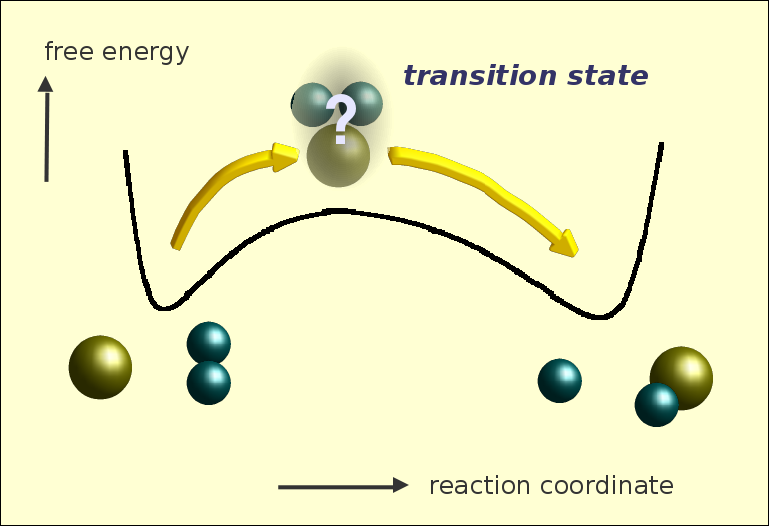
Christoph Dellago is a full Professor of Computational Physics at the Faculty of Physics of the University of Vienna, where he has been a faculty member since 2003. He currently serves as Director of the Erwin Schrödinger Institute for Mathematics and Physics, Head of the Computational and Soft Matter Physics Group, and Project lead of EuroCC Austria - National Competence Centre for Supercomputing. Previously, he served as Dean of the Faculty of Physics (2009-2012) and Coordinator of the Doctoral College Advanced Functional Materials (DCAFM). Full Professor, Faculty of Physics, University of Vienna (2003-present) Director, Erwin Schrödinger Institute for Mathematics and Physics (2017-present) Head, Computational Physics and Soft Matter Group (2024-present) Coordinator, Doctoral College Advanced Functional Materials (DCAFM) Austrian Representative, Council of CECAM Dellago received his PhD in Physics from the University of Vienna in 1996, followed by postdoctoral research at UC Berkeley as a Schrödinger Fellow of the Austrian Science Foundation. His research focuses on developing computational methods to study rare events in condensed matter systems, particularly transition path sampling methodology for simulating nucleation, chemical reactions, and biomolecular reorganizations. He has pioneered the application of machine learning to molecular structure recognition and potential energy surfaces. Recent work examines self-assembly of nanocrystals, biopolymer folding, aqueous interfaces, phase separation in alloys, thermo-polarization, cavitation, and freezing phenomena. Analysis of Dellago's recent publications (2023-2025) reveals a strong emphasis on machine learning applications in computational physics, particularly neural network potentials for simulating water interfaces, crystal defects, and phase transitions. His work bridges traditional statistical mechanics with modern computational techniques, creating powerful tools for studying complex dynamical processes that occur on timescales far beyond conventional molecular dynamics simulations. The publications demonstrate increasing integration of machine learning with rare event sampling methods, reflecting the cutting-edge direction of computational statistical mechanics. Förderpreis der Stiftung Futura zur Förderung junger Südtiroler im Ausland (1997) The Raymond and Beverly Sackler Prize in the Physical Sciences (2005) UNIVIE Teaching Award of the University of Vienna (2014) Dellago leads an active research group with multiple PhD students and postdocs, focusing on computational statistical mechanics. His group develops trajectory-based sampling methods and machine learning approaches for molecular simulation. He has secured significant funding through EuroCC Austria and various research platforms including the Research Platform Accelerating Photoreaction Discovery and the Research Platform Erwin Schrödinger International Institute for Mathematics and Physics. His research has been supported by numerous grants enabling advanced computational infrastructure for high-performance simulations. The Dellago Group operates within the Computational and Soft Matter Physics division at the University of Vienna, with strong connections to the Research Network Data Science. The group collaborates extensively with international research institutions and maintains close ties with the Erwin Schrödinger Institute, which Dellago directs. Their research environment combines theoretical physics, computational chemistry, and machine learning expertise to tackle fundamental questions in condensed matter physics and soft matter systems.