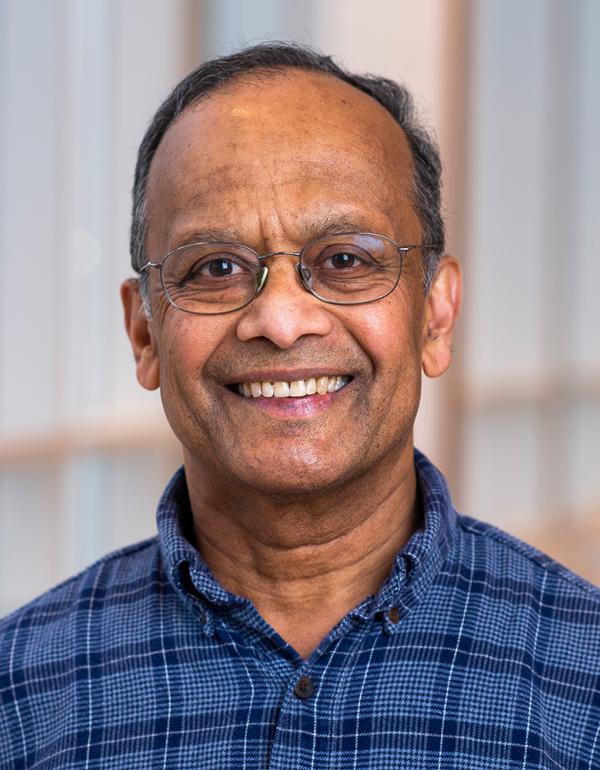
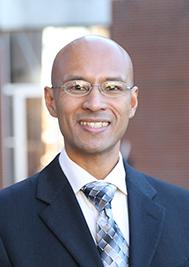
Rajarshi Roy is a Professor at the Institute for Physical Science and Technology (IPST) at the University of Maryland. His research focuses on nonlinear dynamics, chaos theory, and their applications in optical systems. He explores phenomena such as synchronization patterns, machine learning-driven network analysis, and quantum-optical systems. His experimental work includes studies on optoelectronic oscillators, delay-coupled systems, and photonic random number generation. His research interests span nonlinear dynamics , chaos theory , and optical systems . Key areas include synchronization of coupled oscillators, chimera states, and machine learning applications in network inference. He also investigates noise effects in photonics and quantum technologies, such as entanglement quality estimation in fiber systems. His recent work emphasizes combining machine learning with nonlinear dynamics to analyze complex systems. For instance, his studies on delayed dynamical systems and neuromorphic computing showcase innovations in network inference and reservoir computing. Experimental validations using optoelectronic setups highlight his interdisciplinary approach. Roy’s articles explore cutting-edge topics like entropy harvesting in photon-counting systems, topological control of synchronization, and suppression of optical scattering via chaos. His contributions bridge fundamental nonlinear science with technological applications in photonics and information systems.
Professor Dionysios Anninos is a faculty member in the Department of Mathematics at King's College London, part of the Faculty of Natural, Mathematical & Engineering Sciences. He holds the title of Professor of Theoretical Physics. Anninos received his PhD from Harvard University under Andrew Strominger and has held positions at Stanford University, the Institute for Advanced Study, and the University of Amsterdam before moving to King's College in 2018 with a Royal Society University Research Fellowship. His research focuses on theoretical physics at the intersection of black hole physics, cosmology, and gauge/gravity duality. Key areas include extending the AdS/CFT correspondence to broader spacetime contexts, particularly de Sitter universes, and studying models like higher spin theories and matrix models. His work also involves quantum gravity, Euclidean quantum gravity, and the application of disorder physics concepts to cosmological models. Recent publications highlight contributions to quantum cosmology, dS2 supergravity, and gravitational observatories, reflecting his exploration of spacetime structures and quantum phenomena in cosmological settings. Anninos has been awarded a Royal Society University Research Fellowship (2018) and leads projects funded by the Royal Society, including 'Concrete Calculables in Quantum de Sitter' and 'Solvable models for real world holography.' His academic trajectory includes collaborations across institutions and engagement with international conferences, emphasizing his role in advancing fundamental theoretical physics research.
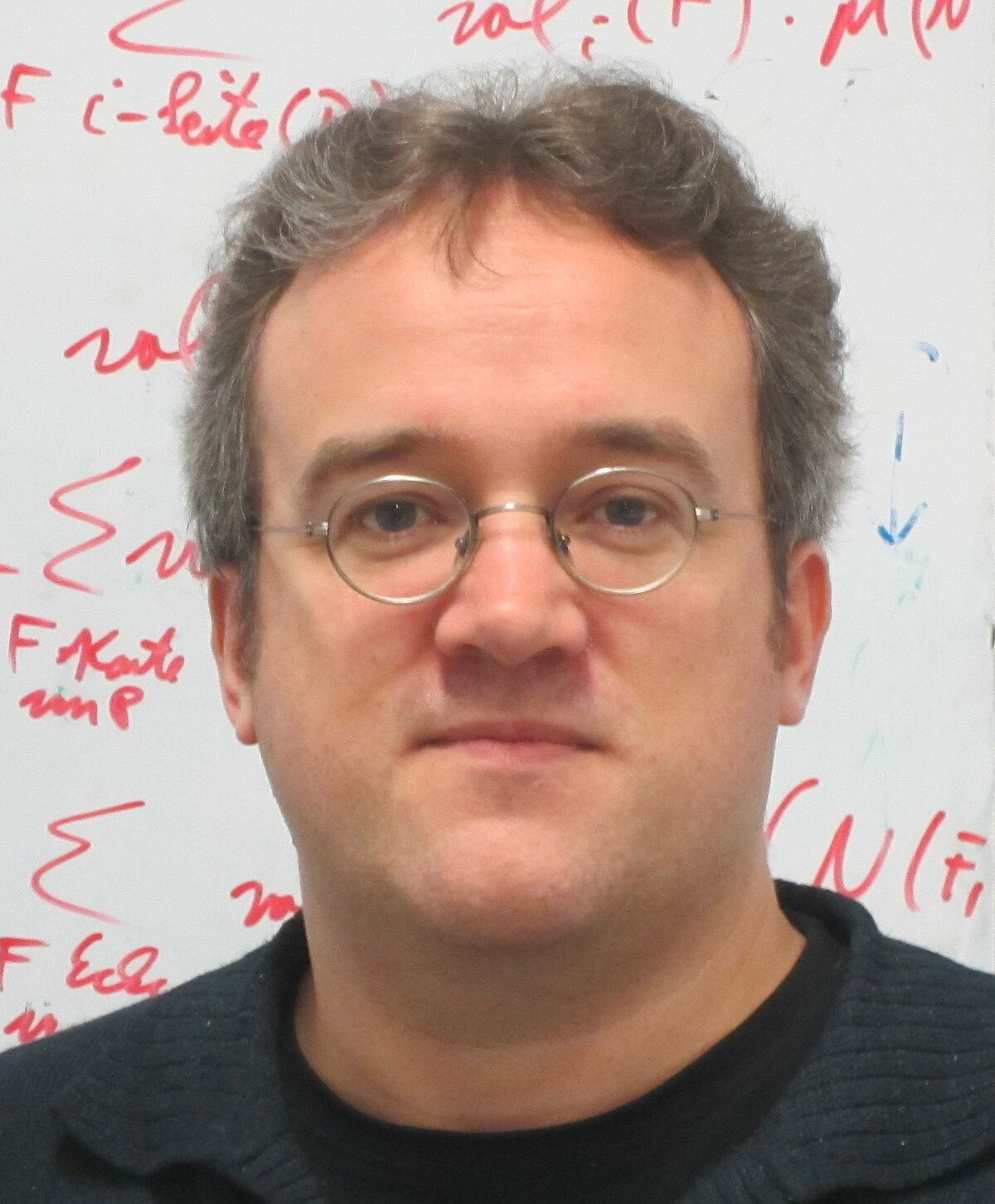
PD Dr. Frieder Ladisch serves as an Associate Professor at the Institute for Mathematics within the Faculty of Mathematics and Natural Sciences at the University of Rostock, Germany. His institutional affiliation includes membership in the Geometry working group (AG Geometry), with office location at Ulmenstraße 69, Haus 3, Room 231, and contact via university email and phone. His research program centers on Quantum Physics and Quantum Information , with specialized expertise in: Non-Hermitian quantum systems and PT-symmetry phenomena Topological photonic implementations including Su-Schrieffer-Heeger lattices Non-Abelian geometric phases and quantum holonomy Quantum random number generation using solid-state photon sources Experimental quantum optics with integrated photonic circuits Analysis of his 15 most recent publications (2019-2025) reveals consistent focus on PT-symmetry breaking experiments, quantum walk implementations in topological photonic structures, and quantum random number generation using hexagonal boron nitride emitters. His work bridges theoretical non-Hermitian quantum mechanics with practical photonic implementations. Dr. Ladisch operates within the Geometry working group at Rostock's Institute for Mathematics, where his research integrates mathematical geometry concepts with quantum information processing through photonic chip technologies and single-photon source applications.
H. Metin Aktulga is an Associate Professor in the Department of Computer Science and Engineering at Michigan State University's College of Engineering. His research focuses on high-performance computing, parallel algorithms, and numerical methods for large-scale scientific applications. He leads interdisciplinary projects involving collaborations with computational physicists and materials scientists to develop scalable software systems. His work includes the development of PuReMD, a reactive molecular dynamics code, and DOoC+LAF, a task-based middleware for data analytics. He explores parallel computing on emerging architectures, emphasizing energy efficiency and performance optimization. His research spans applications in molecular modeling, nuclear physics, and computational biology. Awards and grants are not explicitly listed, but his contributions are highlighted through collaborations with projects like MFDn (nuclear structure) and SHINES (electronic structure computations). He advises students in computational methods and leads efforts to automate force field optimization using machine learning and big data analytics. Labs and teams include the High-Performance Computing group at MSU, with active participation in interdisciplinary initiatives to bridge simulation and data-driven discovery in materials science and quantum systems.
Francesco Regazzoni is a Senior Researcher at the Faculty of Informatics, Università della Svizzera italiana (USI), and affiliated with the Dalle Molle Institute for Artificial Intelligence (IDSIA USI-SUPSI). His work bridges embedded systems, cybersecurity, and artificial intelligence, with a focus on securing hardware and cyber-physical systems. Research Interests: His expertise spans embedded and cyber-physical systems security, side-channel attacks, post-quantum cryptography, hardware trojans, random number generators, and the security of AI and approximate computing. He also contributes to hardware/software co-design and operating systems security. The analysis of his recent publications reveals a consistent focus on hardware and system-level security , particularly in resource-constrained environments like IoT and embedded devices. His work integrates machine learning for attack detection and applies formal methods to ensure trust in hardware. A growing emphasis is placed on securing AI systems from physical and adversarial threats. Scientific Contributions: Over 100 peer-reviewed publications One book and one patent Extensive international collaboration (Belgium, Netherlands, USA, Switzerland, Singapore) Advising and Grants: While specific advisees and grants are not listed, his leadership in funded research projects and involvement with ALaRI and IDSIA suggest active mentorship and project coordination. His work has been supported by industry (e.g., ST Microelectronics, HP), the Swiss National Foundation, and the European Union. Labs and Teams: He is part of the Graph Machine Learning Group (GMLG) at IDSIA, which evolved from the Advanced Learning and Research Institute (ALaRI). This group focuses on graph machine learning, reinforcement learning, and dynamical systems, particularly in non-stationary environments.
Caterina Vigliar is an Assistant Professor in the Department of Electrical and Photonics Engineering at the Technical University of Denmark (DTU), affiliated with the High-Speed Optical Communications Centre of Excellence for Silicon Photonics for Optical Communications. Her work bridges quantum information science and integrated photonics, with a focus on developing scalable on-chip quantum technologies. Her research interests include quantum photonics , integrated quantum circuits , graph theory in quantum systems , quantum random number generation , and high-dimensional entanglement . She applies theoretical frameworks to practical photonic implementations, aiming to realize compact, efficient quantum devices. The recent publications highlight a strong trend toward very-large-scale integration of quantum photonic circuits , particularly using graph-based designs for multidimensional entanglement and quantum information processing. These works demonstrate advancements in on-chip quantum random number generators and multiphoton entanglement , contributing to the scalability of quantum technologies. Scientific Contributions: Active contributor to high-impact research in Nature Photonics and SPIE proceedings. Key collaborator in international quantum photonics projects. Supervisor of multiple PhD projects in quantum photonic computing and number generation. Advising and Grants: Dr. Vigliar supervises four active PhD projects related to quantum photonic reservoir computing, remote quantum computing, and integrated quantum number generation. These projects are supported by DTU and involve collaboration with leading researchers such as F. Da Ros, D. Bacco, and Y. Ding. While specific grant names are not listed, the funding context suggests support from national and institutional research bodies. Labs and Teams: She is part of the High-Speed Optical Communications Centre of Excellence for Silicon Photonics at DTU, a leading group in integrated photonics and quantum communications. Her work is embedded within a collaborative network involving experimental and theoretical researchers focused on advancing quantum technologies through photonic integration.
Iyán Méndez Veiga is a Research Associate and Doctoral Student at the Lucerne School of Computer Science and Information Technology, part of the Lucerne University of Applied Sciences and Arts (HSLU). Their research focuses on quantum cryptography, post-quantum security protocols, and privacy amplification. They have conducted studies on adversarial wiretap channels and reproducible builds in open-source systems like Arch Linux. Education includes a BSc in Physics from the University of Oviedo, Spain, and an MSc in Physics from Ulm University, Germany. Their work bridges theoretical cryptography with practical implementations, such as developing the randextract library for validating privacy amplification algorithms. Key projects include quantum-safe hardware security modules, implications of post-quantum cryptography on certificate management, and quantum cryptography in practice. Presentations emphasize topics like quantum hardware verification and secure communication protocols. Collaborations with institutions like the University of Applied Sciences and Arts Northwestern Switzerland highlight their applied research focus.
Marco Russo is a PhD Student in Computer and Systems Engineering (38th cycle, 2022-2025) at the Department of Automatic Control and Computer Science (DAUIN) of the Polytechnic University of Turin. He serves as an external teacher/teaching assistant in DAUIN and holds a Contract Professor position at the Center for Autonomous Management of the Interfaculty University School of Strategic Sciences (SUISS) from November 2023 to October 2024. His research focuses on Quantum Computing, Quantum Machine Learning, and Quantum Simulations, with ERC sectors emphasizing machine learning and quantum computing formal methods. He teaches Computer Architecture courses for Computer Engineering Master's students. Russo's recent publications explore cutting-edge applications in quantum control, embedded systems integration with quantum algorithms, quantum security protocols, and neural-symbolic AI for puzzles. His work bridges theoretical advancements in quantum computing with practical implementations across gaming, communications, and aerospace domains. His academic roles include collaboration with PhD guardians Bartholomew Montrucchio and Olivier the Third. While no formal awards are listed, his contributions span interdisciplinary research areas at the intersection of quantum technologies and classical engineering systems.
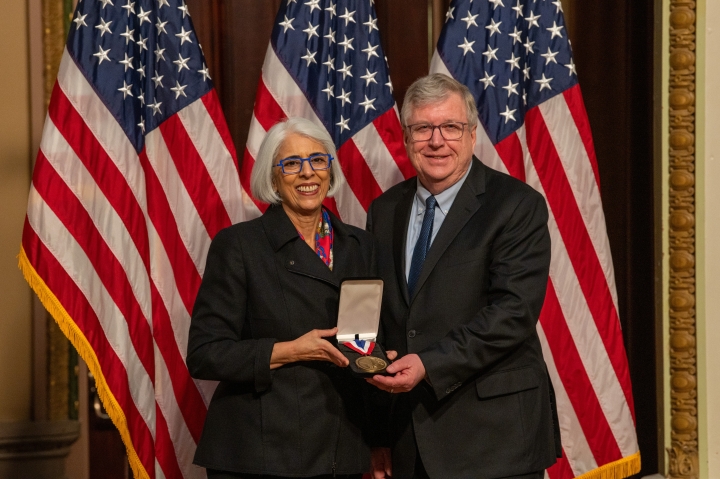
Eric R. Fossum is the John H. Krehbiel Sr. Professor for Emerging Technologies at the Thayer School of Engineering at Dartmouth College. He serves as Vice Provost for Entrepreneurship and Technology Transfer and Director of Dartmouth's PhD Innovation Program. As one of the world's leading experts in solid-state image sensors, he invented the CMOS active pixel sensor technology that revolutionized digital imaging in smartphones, medical devices, and automotive systems. His work has earned him numerous accolades, including the National Medal of Technology and Innovation (2025) and the Queen Elizabeth Prize (2017). His research interests focus on: Solid-state image sensors (CCDs, CMOS active pixel sensors, Quanta Image Sensors) Advanced imaging systems and on-chip processing New applications for image sensors in medicine, security, and space Dr. Fossum's recent publications demonstrate significant advancements in: Photon-counting sensors for low-light applications High-speed imaging for microscopy and radiography Backside-illuminated and sub-diffraction-limit pixel designs Quantum random number generation using sensor technology Infrared spectral extension of CMOS sensors His scientific awards include: National Medal of Technology and Innovation (2025) Queen Elizabeth Prize for Engineering (2017) IEEE Andrew S. Grove Award (2009) Induction into National Inventors Hall of Fame (2011) Emmy Award for Technology & Engineering (2021) Doctor of Science, Honoris Causa from Trinity College (2014) As an entrepreneurial leader, Dr. Fossum has: Co-founded Gigajot Technology with former PhD students Previously led Photobit and Siimpel Corporations Active participant in technology transfer initiatives at Dartmouth Founder and Past President of the International Image Sensor Society
Dr. Enrique Blair is an Associate Professor in the Department of Electrical and Computer Engineering at Baylor University, where he has served since 2015, advancing to his current rank in 2021. His academic journey includes prior roles as a Military Instructor at the U.S. Naval Academy and service in the U.S. Navy submarine force. He is actively engaged in research, teaching, and mentoring within the College of Engineering. His research focuses on the theoretical and computational aspects of quantum engineering, particularly in quantum-dot cellular automata (QCA), open quantum systems, and quantum information sciences. He explores molecular computing paradigms, quantum decoherence, and the quantum mechanical basis of olfaction, aiming to develop ultra-dense, low-power nanoelectronic devices and novel quantum technologies. His interdisciplinary work bridges electrical engineering, physics, chemistry, and materials science. The recent articles highlight a strong trend in molecular QCA design, quantum simulation for NISQ devices, and the application of ab initio methods to understand counterion effects and molecular stability. His research increasingly integrates machine learning for material discovery and emphasizes robustness in quantum circuits against environmental noise and external fields. The publications reflect a consistent focus on foundational quantum phenomena with practical applications in computing, sensing, and security. Research Grant, Office of Naval Research, Code 312 Nanoscale Computing Devices and Systems (May 2020 - May 2023) Summer Sabbatical, Baylor University (Summer 2019) Senior Member, IEEE (2019) Outstanding Faculty Award (untenured, tenure-track faculty), Baylor University (2018) Proposal Development Award, Office of the Vice Provost for Research, Baylor University (2017) Rising Star Program, Baylor University (2017-2018) Undergraduate Research and Scholarly Achievement Award, Office of the Vice Provost for Research, Baylor University (2017-2018) Rising Star Program, Baylor University (2016-2017) Graduate Research Fellowship Program, National Science Foundation (2010-2015) National Defense Science and Engineering Graduate Fellowship, American Society for Engineering Education (2010-2013) Dr. Blair has advised multiple Ph.D. and Master’s students, including Colin Burdine, Nischal Gautam, and Nishat Liza, and has mentored numerous undergraduate researchers. His research is supported by competitive grants, particularly from the Office of Naval Research, reflecting the strategic importance of his work in nanoscale computing. He integrates teaching and research, offering courses such as Quantum Mechanics for Engineers and Introduction to Quantum Computing, and promotes scholarly productivity through tools like Emacs Org Mode and LyX. He leads an active research team focused on molecular QCA and quantum information, with current members including Ph.D. students and undergraduates. The team conducts simulations, theoretical modeling, and design of quantum devices, contributing to advancements in nanoelectronics and quantum computing. Collaborations with experts in chemistry, physics, and computer science further extend the impact of the research.
Vikas Remesh is a Researcher in the Department of Experimental Physics at the University of Innsbruck, Austria, actively contributing to quantum optics and quantum information science. His work focuses on quantum emitters, particularly semiconductor quantum dots, for developing advanced quantum light sources and control techniques essential for quantum computing and secure communication. His research centers on manipulating quantum states in solid-state systems, with emphasis on chirped-pulse control, dark-state engineering, and high-dimensional entanglement. Key innovations include the SUPER excitation scheme for collective state preparation and methods for high-purity single-photon generation in 2D materials like WSe 2 . His approaches bridge theoretical models with experimental implementations to overcome coherence and stability challenges in quantum photonics. Analysis of his 15 most recent publications (2022-2025) reveals a dominant focus on quantum dot control mechanisms, particularly using chirped pulses and magnetic fields for adiabatic rapid passage. Recurring themes include single-photon source optimization for quantum cryptography, photon-number-encoded entanglement, and spectral engineering of quantum emitters. His work consistently targets practical quantum technology applications while addressing fundamental coherence limitations. No scientific awards or fellowships were documented in available sources. His research is conducted within the quantum optics group led by Univ.-Prof. Hanns-Christoph Nägerl, likely supported by institutional and national funding frameworks typical for European quantum research initiatives. Remesh operates within the University of Innsbruck's Department of Experimental Physics, part of Austria's leading quantum research ecosystem. His work intersects with the institution's strengths in ultracold atoms and quantum simulation, contributing to experimental platforms for quantum information processing and quantum communication protocols.
Dr. Thinh Le is a Postdoctoral Research Fellow at the School of Computer Science , University of Technology Sydney , where he works at the Centre for Quantum Software and Information (since 2023). His academic journey includes research fellowships at the Institute for Quantum Optics and Quantum Information Vienna (2020-2023) and Leibniz University Hannover (2019-2020). He earned his PhD in Physics (2015) and BSc in Physics (2011) from the National University of Singapore . Thinh's research focuses on quantum information science , bridging theoretical foundations and experimental implementations. His work addresses critical challenges in quantum computing (error correction, fault tolerance), quantum tomography (device-independent characterization), and quantum software stack development. He investigates quantum randomness generation, Bell nonlocality, and entanglement distillation for quantum networks, with applications in quantum cryptography and secure communication. His recent publications examine advanced topics like trapped-ion lattice surgery (2025), quantum correlation boundaries (2025), and quantum backflow phenomena (2023). Earlier work established foundational limits for real quantum theory (2021) and developed practical entanglement distillation protocols (2018). Scientific awards include the Lise Meitner Postdoctoral Fellowship (2020-2023) and Humboldt Postdoctoral Fellowship (2019-2020). His funded research projects focus on quantum computing error correction and device-independent quantum tomography , aligning with his theoretical expertise guided by experimental applications.
Dileep Venkatarama Reddy is a Senior Research Fellow at the National Institute of Standards and Technology (NIST) and University of Colorado Boulder, affiliated with the Department of Physics. He leads research in quantum photonics within the FAINT PHOTONICS GROUP, focusing on integrated quantum devices and advanced optical measurements. Education: Ph.D. in Physics, University of Oregon (2017) M.Tech in Communications and Signal Processing, Indian Institute of Technology Madras (2009) B.Tech in Electrical Engineering (with Physics minor), Indian Institute of Technology Madras Research Interests: Dr. Reddy specializes in quantum information processing using photonic temporal modes, superconducting single-photon detectors, and integrated nonlinear optics. His work bridges quantum optics with practical device engineering, enabling advancements in quantum communication and detection technologies. Key areas include chip-scale quantum devices, frequency conversion techniques, and high-efficiency photon detection systems operating from ultraviolet to infrared wavelengths. Publication Focus: His extensive publication record demonstrates consistent contributions to quantum optics and photonics, with recent work emphasizing superconducting detector optimization, quantum frequency conversion, and entanglement distribution. Research trends show increasing focus on practical quantum networking implementations and device integration. Awards and Honors: Weiser PhD Thesis Award (University of Oregon, 2017-18) Science Literacy Program Fellowship (2013-2014) Weiser Teaching Assistant Awards (2010-2013) Summer Research Fellowship at JNCASR (2006) Top national ranks in IIT-JEE and AIEEE examinations Research Infrastructure: Conducts experiments through the FAINT PHOTONICS GROUP at NIST Boulder, leveraging advanced nanofabrication facilities for superconducting detectors and integrated photonic circuits. Collaborates widely on projects related to quantum networks and device-independent quantum protocols.
Dr. Trong Toan Tran is a Senior Lecturer (equivalent to Associate Professor in the US) at the School of Electrical and Data Engineering , University of Technology Sydney (UTS). He leads the Nanoscale Electro-Thermo-Optical (NETO) laboratory and holds prestigious fellowships including the DECRA and UTS Chancellor's Postdoctoral Research Fellowship. His research focuses on quantum optics, nanophotonics, solid-state physics, and nanofabrication, with breakthroughs in quantum light sources and thermal sensing technologies. Dr. Tran earned his Ph.D. in Material Science and Chemical Engineering, completing a thesis on quantum emission from hexagonal boron nitride. His work in Nature Nanotechnology (2016) introduced room-temperature ultra-bright quantum emitters, now cited over 1,600 times. He has secured over $2M in grants, including leadership in the Quantum Challenge 2032 and DECRA projects. His team develops advanced photonic devices, thermal sensors, and quantum technologies. Key research themes include quantum emitters in 2D materials , nanoscale thermometry , and optical architectures . He has advised three PhD students and serves on editorial boards for top journals like Physical Review Letters and Nature Communications . Recognition includes an h-index of 34, 6,100+ citations, and awards such as the AIP Postgraduate Excellence Award (2017). Beyond academia, he engages in science communication, advocating for quantum technologies and nanomaterial applications.
Gang Xiao is the Ford Foundation Professor of Physics and Professor of Engineering at Brown University, currently serving as Chair of the Physics Department. His research focuses on condensed matter physics, nanotechnology, spintronics, and superconductivity. He holds affiliations with the School of Engineering and the Department of Physics. Xiao has received prestigious awards including the Alfred P. Sloan Fellowship and the NSF Young Investigator Award. He leads research in magnetic materials and devices, with contributions to magnetic tunnel junctions, skyrmion-based computing, and spintronic applications. His work integrates theoretical and experimental approaches, emphasizing device innovation and material characterization. Teaching includes foundational physics courses and advanced topics in condensed matter physics. Major achievements include pioneering studies on magnetic vortex sensors, quantum oscillations in CrO2 films, and noise analysis in magnetic devices. He directs the Center for Nanoscience and Soft Matter and collaborates on interdisciplinary projects combining materials science with electronics. Xiao’s research has practical implications for sensor technology, energy-efficient computing, and advanced materials development.