
Joao Pedro Leal Abalada de Matos Carvalho is a researcher at Lusofona University 's School of Communication, Architecture, Arts and Technologies , focusing on Artificial Intelligence, Machine Learning, and Unmanned Aerial Vehicle systems. He contributes to projects like ANTIDOTE (AI Attack & Defense) and REMARKABLE (Rural Environmental Monitoring). Active in AI-driven environmental monitoring and cyber-physical systems Collaborates with Horizon Europe and Marie Skłodowska-Curie Actions Key research areas: Deep Learning, Federated Learning, High-Energy Physics His work involves LoRaWAN engineering , satellite data processing , and hydroelectric forecasting models , with 55 scientific publications and 382 h-index citations. Current collaborations span Europe and Brazil , with active projects in smart healthcare , AI literacy , and radiation-hardened electronics for CERN experiments.
جستوجوی استاد و پژوهشگر
استاد راهنما، استاد دانشگاه یا پژوهشگر مناسب برای مسیر پژوهشیتان را پیدا کنید و با او ارتباط بگیرید.
نمایش ۷۰۶-۷۲۰ از ۷۵۴ استاد راهنما
اطلاعات این پروفایلها از صفحات عمومی دانشگاهها جمعآوری شده و ممکن است بهروز نباشد.
Mihai Boicuمشاهده پروفایل
دانشیار
Mihai Boicu is an Associate Professor at George Mason University's Volgenau School of Engineering , Department of Applied Information Technology, and Associate Director of the Learning Agents Center (LAC) . His research spans Artificial Intelligence , structured analytical methods, personalized education, and collective intelligence. He is the architect of the Disciple agent development platform and has secured grants from the US Department of Defense , VentureWell , and Oculus Info Inc. . His work includes over 100 publications, with three defense-focused textbooks and contributions to journals like AI Magazine and International Journal of Intelligence and CounterIntelligence . He has co-organized premier AI conferences such as ICMLA and AAAI Symposia . His research focuses on AI in defense , education technology , and metacognition in STEM , published in venues ranging from AAAI to IEEE and Hawaii International Conference on System Sciences . Scientific Awards : Innovative Application Award from AAAI Certificates of Appreciation from U.S. Army War College and Air War College GMU Teacher of Distinction (2015) His recent articles (2023–2025) analyze machine learning in education, quantum computing , LLM feedback systems , and metacognition , with projects like SugarNet (diabetes management) and FlightList (Air Force compliance). He advises PhD students in applied AI, education technology, and innovation.
Muhammad Abu Bakar Siddique is an Assistant Professor in the Department of Computer Science at the University of Kentucky, part of the Stanley and Karen Pigman College of Engineering. His research focuses on natural language processing, large language models, and machine learning with particular emphasis on zero-shot learning and conversational AI systems that are safe, personalizable, and interpretable. Dr. Siddique earned his Ph.D. in Computer Science from the University of California, Riverside (2017-2021), his M.S. from Lahore University of Management Sciences, Pakistan (2008-2011), and his B.S. from International Islamic University, Pakistan (2003-2008). His research interests include: Natural Language Processing and Large Language Models Zero-shot and few-shot learning for conversational AI Safe, personalizable, and interpretable conversational systems Task-oriented dialog systems with domain generalization Mobile app recommendation systems Scalable machine learning methodologies Dr. Siddique's publications span top venues including WWW, SIGIR, KDD, and IEEE S&P, demonstrating his focus on developing practical AI solutions that can adapt to new domains without extensive retraining. His recent work shows increasing exploration of quantum software and the intersection of AI with mobile applications. His notable achievements include Best Paper Awards at the IEEE International Conference on Quantum Software (2025) and IEEE ICSC (2021). Dr. Siddique has secured significant funding from the National Science Foundation: CPS Medium: Calfhealth: Explainable AI for Pneumonia Detection in Dairy Calves ($941,359) SaTC CORE: Personalized and Trustworthy Mobile App Recommendations ($300,000) III Small: User-Centric Task-Oriented Dialog Systems ($599,898) DCL EPSCOR: Distributed Edge Intelligence ($100,000) He currently advises three PhD candidates (Adib Mosharrof, Moghis Fereidouni, and Muhammad Umair Haider) and has mentored several successful graduates. Dr. Siddique serves on program committees for major conferences including ACL, NeurIPS, ICML, and AAAI, and participates in outreach by hosting high school students through the University of Kentucky's Summer Youth Program.
Murat GÜZEL serves as a full-time Lecturer at Ahi Evran University's Mucur Vocational School within the Computer Technologies Department since 2010. His academic career spans over a decade of teaching computer science courses at the associate degree level. His educational background includes: PhD in Computer Engineering (2022) from Konya Technical University's Graduate School of Education MSc in Computer Education (2011-2013) from Gazi University's Informatics Institute BSc in Computer Engineering (1998-2003) from Mersin University's Faculty of Engineering Dr. GÜZEL's research focuses on Computer and Communication Networks, Artificial Intelligence, and Machine Learning as evidenced by his UAK classifications. His teaching portfolio demonstrates extensive experience in web technologies, server systems, and network fundamentals across multiple programming languages and platforms. His publication record shows interdisciplinary research spanning computational chemistry and medical endocrinology between 2013-2014, primarily through collaborations with researchers from Gazi University and Harran University. The publications combine theoretical DFT calculations with experimental spectroscopy techniques. Professionally active since 2007, he maintains membership in the Chamber of Computer Engineers (TMMOB Bilgisayar Mühendisleri Odası). His teaching load has consistently included 10-15 courses annually across web design, network administration, and programming fundamentals.

- Formal Methods
- Security Protocols
- Type Theory
- +۷ مورد دیگر
Jan Gunnar Cederquist is an Assistant Professor at the Department of Computer Engineering, Instituto Superior Técnico, Technical University of Lisbon, since 2006. He is also a member of the SQIG (Security and Quantum Information Group) at IT (Instituto de Telecomunicações). His research focuses on mathematical modeling, formal specification, and verification, particularly in security protocols and language-based security. His work spans software verification, type theory, and cryptographic protocol analysis. He has contributed to fields like non-repudiation protocols, RBAC, audit logic, and distributed security. He has taught courses ranging from Software Specification to Language-Based Security at the PhD and MSc levels. His students include MSc candidates Fernando Mário Machado Marques and Carlos Magno Gaspar Vasconcelos. Previously, he held postdoctoral positions at the University of Twente, CWI, INRIA, and Imperial College London. He has chaired tracks at ACM SAC conferences (2010–2011) and served on program committees for security and formal methods events. His industry experience includes roles at Prover Technology and SEMCON.
Tomás Fernández Pena is a Full Professor at the University of Santiago de Compostela (USC) and Senior Researcher at the Research Center in Intelligent Technologies (CiTIUS) . With a career spanning over three decades, he has held academic positions since 1990 and contributed extensively to High Performance Computing (HPC), Big Data, and emerging quantum computing fields. Ph.D. in Physics from USC (1994) Senior Member of IEEE Associate Editor for IEEE Transactions on Computers and IEEE Access Research Contributions : His work focuses on parallel systems architecture, cloud computing middleware, and quantum simulation optimization. He has pioneered methods for NUMA systems, LiDAR data processing, and Big Data applications in bioinformatics/cheminformatics. His recent articles show increasing emphasis on quantum computing frameworks and distributed quantum processing. Scientific Recognition : Holds four Spanish Ministry of Education six-year research excellence periods (sexenios de investigación) and has served as Principal Investigator in 3 public projects and co-investigator in 31 EU/Xunta de Galicia funded initiatives. Supervised 7 Ph.D. theses and published 43+ international journal papers. International Collaborations : Maintains academic connections through funded research stays at Loughborough University, University of Tennessee, and University of Illinois Urbana-Champaign. Active in IEEE and participates in global conferences like Euro-Par and CHEP.
Juan Carlos Pichel Campos is a Full Professor at the University of Santiago de Compostela (USC) specializing in high performance computing and language technologies. His research spans quantum computing, distributed systems, and Big Data technologies with a focus on practical applications in health informatics and computational physics. He received his B.Sc. and M.Sc. in Physics from University of Santiago de Compostela (Spain) and completed his Ph.D. there in 2006. He conducted postdoctoral research at University Carlos III de Madrid and University of Illinois at Urbana-Champaign, and worked as a researcher and project manager at Galicia Supercomputing Center. Professor Pichel's research interests include parallel and distributed computing, Big Data technologies, programming models, and software optimization techniques for emerging architectures. His recent work has focused on bridging quantum computing with classical high performance computing systems, developing efficient algorithms for processing massive biological datasets, and creating tools for health-related information retrieval and misinformation detection. His interdisciplinary approach combines techniques from computer science, physics, and biomedical informatics to solve complex computational problems. Analysis of his recent publications reveals a strong trend toward quantum computing applications and integration with classical HPC systems (accounting for approximately 40% of his recent work), followed by health informatics and natural language processing (about 30%), and bioinformatics and computational physics (about 30%). His research demonstrates a consistent focus on developing practical tools and frameworks that address real-world computational challenges across multiple domains. rePowerSiC: High-Efficiency High-Power Laser Beaming In-Space Systems Based On Sic (2024-2028) C3HS: Content curation for consumer health search - Search and misinformation detection (2023-2026) Big-eRisk: Early Prediction of Personal Risks on Massive Data (2021-2024) eRISK: Technologies for the early prediction of signs related with psychological disorders (2019-2021) BigNLP: Approaching High Performance Computing to Big Data Technologies: Natural Language Processing as Case Study (2015-2018) Professor Pichel has established strong collaborations with research groups across Europe and the United States, particularly in the fields of quantum computing and biomedical informatics. He is actively involved with CiTIUS (Centro singular de investigación en tecnoloxías da información e da comunicación de USC), contributing to its mission of advancing information and communication technologies through interdisciplinary research.

Mohammad Soltanieh-haمشاهده پروفایل
استادیار بالینی
Mohammad Soltanieh-ha is a Clinical Assistant Professor in the Information Systems department at Boston University’s Questrom School of Business. He holds a Ph.D. in computational physics from Northeastern University (2015) and an M.Sc. from the University of Wyoming (2012). Ph.D. , Northeastern University, 2015 M.Sc. , University of Wyoming, 2012 His research spans computer vision for cancer diagnosis automation, macroeconomics time-series forecasting , and large language model applications . Earlier work focused on computational physics , including nonlinear equations, quantum systems, and spin-incoherent regimes. The articles reflect a transition from theoretical physics to data science applications in healthcare and economics. His 2012–2014 work addressed quantum systems, while 2019–2023 studies emphasized deep learning in histopathology and AI in business . At Boston University, he teaches data science programming , big data analytics , and data science applications in business. He co-founded the American Physical Society (APS) data science unit and serves on the APS Board of Directors. Additionally, he advocates for cloud computing education as a Faculty Expert at Google Cloud.

Xiao Cheng is a Lecturer in the School of Computing at Macquarie University, specializing in the intersection of Programming Languages and Software Engineering. His research focuses on enhancing software security and reliability through advanced analysis techniques. PhD in Computer Science and Engineering from the University of New South Wales Research interests include: Abstract interpretation and typestate analysis Integration of AI technologies like graph neural networks Malware detection in Android systems using DNN Recent publications address challenges in: Quantum search-optimized static analysis Dynamic malware label noise mitigation Recursion handling through topological ordering Scientific recognition includes: FSE 2024 ACM SIGSOFT Distinguished Paper Award OOPSLA 2020 ACM SIGPLAN Distinguished Paper Award Professional service includes: Web Chair for LCTES 2024 PC member for FSE 2026, ISSRE 2025, PAKDD 2025 Artifact Evaluation Committee for ICSE 2025 and ISSTA 2024

Eric Howardمشاهده پروفایل
پژوهشگر ارشد
Dr. Eric Howard is a Research Fellow at Macquarie University , affiliated with the School of Engineering , School of Mathematical and Physical Sciences , and School of Computing . His research spans interdisciplinary domains at the intersection of quantum physics, machine learning, and AI-driven systems. Key research themes include: Quantum cryptography for Industry 4.0 security Machine learning in IoT temperature sensing Adversarial AI in cybersecurity 6G wireless communication optimization Quantum information processing Deep learning for data imputation Recent publications demonstrate a focus on emerging technologies, with articles on quantum Bayesian inference , 6G signal processing , and smart city IoT systems . His collaborative work extends to blockchain-enabled supply chain visibility and generative AI applications in programming. Research collaborations span institutions in India (AIP Publishing) and Australia, with technical contributions to quantum dynamics, neural network applications, and nanosensor development.

Christian Schaffner is a Professor in Theoretical Computer Science at the Informatics Institute, University of Amsterdam. He serves as director of QuSoft (Dutch research center for quantum software) and chairman of Quantum.Amsterdam. His research focuses on quantum cryptography, cryptographic protocols, and quantum information theory. PhD from Aarhus University (2007) and diploma in mathematics from ETH Zurich (2003). Recipient of prestigious NWO grants, including VENI, VIDI, and a 21.5M Euro Gravitation Grant. Active in academic leadership: co-organized QCrypt conferences, chaired program committees (e.g., QCrypt 2023), and served on editorial boards (Quantum Science and Technology journal). Teaches flipped-classroom courses in cryptography and information theory at the University of Amsterdam.
John van de Wetering is an Assistant Professor at the Theoretical Computer Science group of the Informatics Institute at the University of Amsterdam . He works with the QuSoft research center and co-develops the PyZX open-source quantum compiler. His research spans quantum computation, diagrammatic reasoning, and quantum foundations. Education: PhD in Computer Science (2022, Radboud University) Research: Focuses on ZX-calculus for quantum circuit optimization, verification, and simulation. Explores quantum foundations through algebraic and compositional methods. Recent work includes quantum circuit optimization with AlphaTensor, completeness proofs for ZH-calculus, and scalable spider nets for transversal non-Clifford gates. He directs the new Master's program in Quantum Computer Science at UvA and co-authored the book Picturing Quantum Software . Notable collaborations include PyZX development and EU Gender Equality Working Group participation. Supervision includes current PhD students Lia Yeh (Oxford), Sarah Li (UvA), and Marc Farreras (Leiden). Former students include Boldizsár Poór (Quantinuum), Julien Codsi (Princeton), and Yanbin Chen (TUM). Tools & Outreach: Maintains the ZX-calculus Wikipedia page, co-lectured courses like Quantum Processes and Computation , and develops the ZX-calculus educational website. Organized QPL2026 conference and contributed to open-access journal Quantum .

Dr. Lisa Lopez is a Professor of Educational Psychology at the University of South Florida , College of Education. Her research focuses on the educational and environmental opportunities for Latino Dual Language Learner (DLL) children in the U.S., with three active research strands: (1) developmental trajectories of school readiness, (2) ecological perspectives (home/classroom factors), and (3) curriculum/assessment development for DLL children. She collaborates with local Head Start programs and mentors doctoral students in her Bilingual School Readiness Lab . Ph.D., Applied Developmental Psychology, University of Miami NSF-funded Postdoctoral Fellowship, Harvard Graduate School of Education Her research applies ecological frameworks to examine sociocultural influences on DLL children's academic and social-emotional development, with a focus on applied solutions for educators and at-risk populations. Recent work explores longitudinal bilingual development, language dominance, and science achievement trends. Dr. Lopez has received grants including the Researcher Starter Grant (2005) and Minority Postdoctoral Research Fellowship (2001). She actively serves on doctoral dissertation committees and trains educators on working with DLLs.

Oliver Pooleyمشاهده پروفایل
دانشیار
Oliver Pooley is Vice Provost at Oriel College, University of Oxford, where he serves as Fellow and Tutor in Philosophy. He is also an Associate Professor in the Faculty of Philosophy at the University of Oxford. His academic appointments include teaching roles in multiple interdisciplinary programs: Computer Science and Philosophy, Mathematics and Philosophy, Philosophy and Modern Languages, Philosophy (Joint Honours), Philosophy and Theology, Philosophy, Politics and Economics, and Physics and Philosophy. Pooley's research focuses on the philosophy of physics, particularly the nature of space, time, and spacetime. His work intersects significantly with metaphysics and the philosophy of language. He is currently completing a book titled The Reality of Spacetime under contract with Oxford University Press. His research addresses fundamental questions about whether time really passes (concluding it doesn't) and how work in general metaphysics should inform the interpretation of physics. Analysis of Pooley's publication record reveals a sustained focus on spacetime ontology, particularly the substantivalist-relationalist debate. His work frequently engages with the hole argument, general covariance, and background independence in both classical and relativistic physics. A significant portion of his scholarship examines how metaphysical considerations interact with physical theories, especially regarding the interpretation of spacetime structure. His more recent work shows increasing attention to the relationship between dynamical symmetries and spacetime structure. Prior to his current position at Oriel, Pooley held a British Academy Postdoctoral Fellowship and college lectureship at Exeter College, Oxford. His teaching interests extend beyond philosophy of physics to include logic, metaphysics, epistemology, philosophy of language, and philosophy of science. He actively welcomes contact from potential graduate students whose research interests overlap with his own.
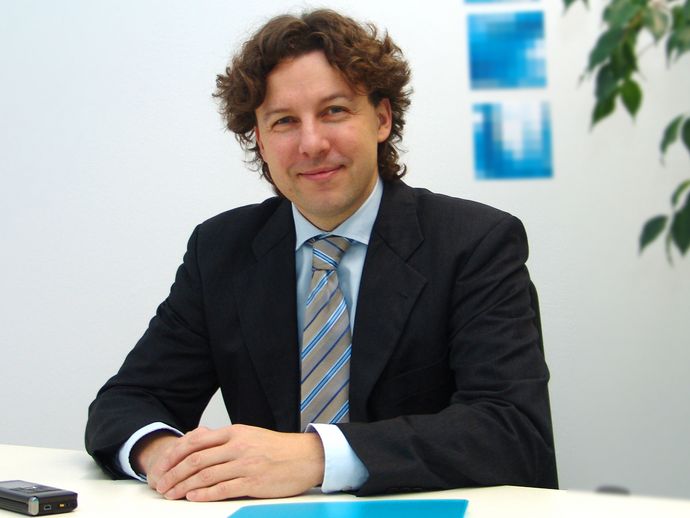
Rolf Drechsler is a Full Professor and Head of the Group of Computer Architecture at the University of Bremen's Institute of Computer Science since 2001, and Director of the Cyber-Physical Systems Group at DFKI Bremen since 2011. He holds an adjunct professorship at the Indian Statistical Institute and has been affiliated with Duke University. Education: Diploma (1992) and Dr. phil. nat. (1995) in Computer Science from Goethe University Frankfurt Academic Leadership: Dean of Mathematics and Computer Science Faculty (2018-2025), Vice Rector for Research (2008-2013) His research focuses on formal verification , RISC-V architectures , and quantum/in-memory computing . Recent work explores LLM integration in hardware testing and polynomial-based verification techniques. Publications from 2024-2025 span IEEE Transactions , DATE , and DAC , emphasizing automated verification , quantum circuit mapping , and LLM-driven testbench generation . Scientific Awards IEEE/ACM Best Paper Awards (2013, 2018) Berninghausen-Preis for Innovative Teaching (2018) IEEE Fellow (2015) Founder Award for Solvertec (2013) He has served on program committees for DAC, ICCAD, DATE, and founded graduate schools in Embedded Systems and System Design under Germany's Excellence Initiative.
فقط ۷۵۰ نتیجه اول نمایش داده میشود. برای رسیدن به نتایج دقیقتر، جستوجو را با فیلترها محدودتر کنید.