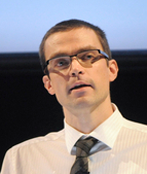
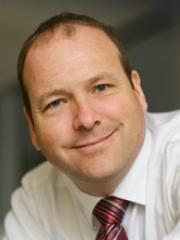
Dr. Owen Dillon is a Research Fellow in the Discipline of Medical Imaging Sciences at the University of Sydney's Faculty of Medicine and Health. He holds affiliations with the ACRF Image X Institute and the Dodd-Walls Centre for Photonic and Quantum Technologies. His work focuses on advanced imaging techniques for medical applications, particularly computed tomography (CT) and motion compensation in radiation therapy. He completed his PhD in Mathematics at the University of Auckland, specializing in probabilistic compression algorithms for inverse problems. Education: B.Sc. Physics & Applied Mathematics (2013, University of Auckland), First Class Honours in Mathematics (2015), PhD Mathematics (2018). Research interests include inverse problems, Bayesian statistics, CT image reconstruction, and real-time imaging systems. Current projects involve optimizing CT acquisition geometries, motion-compensated 4D imaging, and anatomical motion estimation. His contributions have led to clinical trials reducing radiation dose and scan times. He advises two PhD students and collaborates on grants like the Quantum CT project. Grants: 'Quantum CT for Cancer Diagnosis' (2024), 'Functional Imaging in Lung Cancer' (2024). His work bridges mathematical theory with clinical applications in oncology and interventional radiology.
Andrea Collevecchio is a Professor in the School of Mathematics at Monash University, Australia, where he has been a faculty member since 2012. His research focuses on the intersection of Probability, Mathematical Physics, and Statistical Mechanics, with particular expertise in stochastic processes and theoretical modeling. He earned his PhD in Statistics from Purdue University in 2004, followed by postdoctoral positions in Italy and Germany. In 2006, he became Assistant Professor at Ca’Foscari University in Venice before joining Monash University. Collevecchio specializes in Reinforced Processes and Large Deviations, investigating complex systems through random walk models. His work bridges abstract probability theory with applications in statistical mechanics, examining phenomena like memory effects in stochastic processes and phase transitions in lattice systems. Recent research emphasizes hypercube structures, non-reversible dynamics, and reinforcement mechanisms. His 2021-2025 publications reveal a concentrated focus on hypercube random walks, with increasing exploration of non-reversible processes, vertex-reinforced dynamics, and bootstrap methods. These works consistently apply probabilistic frameworks to problems in mathematical physics, demonstrating strong connections between theoretical probability and physical modeling. Collevecchio has secured multiple research grants including ARC-funded projects on self-interacting random walks (2023-2026) and random walks with long memory (2018-2022). He contributes to interdisciplinary initiatives like the Smart Vehicles project for dementia support (2025-2027) and actively organizes academic events including the AIM Day series connecting mathematics, AI, and industry applications.
Professor Scott Anthony Sisson is a leading academic at the University of New South Wales (UNSW) , holding the position of Professor of Statistics and Data Science in the School of Mathematics and Statistics . He serves as Director of the UNSW Data Science Hub (uDASH) and Deputy Director of the UNSW AI Institute (UNSW.ai) . Previously, he was Deputy Director of the Australian Centre of Excellence for Mathematical and Statistical Frontiers (ACEMS) and held leadership roles in the Australasian Society of Bayesian Analysis and Statistical Society of Australia . PhD in Statistics (Bristol University, 2002) MSc in Environmental Statistics and Systems (Lancaster University, 1997) BSc in Mathematics and Statistics (Lancaster University, 1996) His research focuses on computational statistics and Bayesian inference , with expertise in machine learning , extreme value theory , and high-dimensional data analysis . He develops simulation-based algorithms for complex statistical problems and applies these to diverse scientific challenges like seagrass decline, urban flood modeling, and drug delivery systems. His recent work spans quantum computing for statistics, graphon modeling, and synthetic likelihood methods. Scientific awards include: 2024 Fellow of the International Society of Bayesian Analysis 2023 Fellow of the Institute of Mathematical Statistics 2017 ARC Future Fellowship 2010 Queen Elizabeth II Research Fellowship 2006 John Yu Fellowship His advising team has mentored students in statistical modeling, Bayesian computation, and applied data science. Grants from the Australian Research Council and industry collaborations support his research in government and scientific applications. He contributes as Associate Editor for Journal of Computational and Graphical Statistics and Statistics and Computing .
Associate Professor Steven Wiederman holds the position of Associate Dean Research in the Faculty of Health and Medical Sciences at the University of Adelaide. He leads the Visual Physiology & Neurobotics Laboratory within the School of Biomedicine. His research focuses on understanding visual processing in insects, particularly dragonflies, and translating these insights into applications for autonomous robotics and neuro-inspired systems. Key areas include target detection, optic flow processing, and selective attention mechanisms in biological systems. His interdisciplinary work combines electrophysiological techniques, computational modeling, and robotics engineering. Current projects explore how dragonfly neurons enable precise tracking of moving targets amidst clutter, with applications in developing advanced vision systems for drones and robots. He has secured significant funding through ARC fellowships and industry partnerships, including projects on neuro-inspired deep learning for defense applications. Academic achievements include an ARC DECRA Fellowship (2011–2015) and an ARC Future Fellowship (2016–2020). He is a member of the ARC College of Experts and actively supervises PhD and Master’s students in neuroscience, robotics, and computational biology. His lab collaborates with engineers and computer scientists to bridge biological insights with technological innovation. Publications highlight breakthroughs in understanding neuronal mechanisms underlying predictive vision, selective attention, and adaptive processing in dragonfly visual systems. Media coverage includes features in Wall Street Journal , New York Times , and Science Daily , emphasizing the potential of insect-inspired solutions for future technologies.
Professor John Close is a Professor and Head of the Department of Quantum Science within the Research School of Physics and Engineering at the Australian National University (ANU). He has held this professorship since 2008 and previously served as Deputy Director of the School from 2012 to 2016. His leadership roles include Chair of the ANU Defence Working Group and Deputy Chair of ANU Academic Board (2015-2017), alongside being a Senior Fellow of the Higher Education Academy. His educational background includes: PhD in Physics from the University of California, Berkeley (1991) Postdoctoral Fellowship at the University of Washington, Seattle (1991-1994) Alexander von Humboldt Fellowship and Max Planck Research Fellowship at the Max Planck Institut für Strömungsforschung, Göttingen (1994-1998) Close's research centers on harnessing quantum fields to develop advanced quantum sensors for fundamental physics and interdisciplinary applications. His experimental and theoretical work spans quantum gravimetry, magnetometry, and Bose-Einstein condensate systems, with direct applications in mapping archaeological sites, volcanoes, aquifers, and mineral deposits. He actively explores quantum wavelet representations, higher-dimensional information processing, motion simulation, and biological quantum sensing through extensive collaborations with Earth Science, Biology, and Industry partners. Analysis of his recent publications reveals a dominant focus on compact mobile quantum sensing platforms, atom interferometry innovations, and sensor fusion techniques. His work bridges quantum physics with practical navigation, geophysical surveying, and environmental monitoring solutions, emphasizing real-world deployment of quantum technologies for precision measurements in gravimetry and inertial navigation. His scientific recognition includes: Alexander von Humboldt Fellowship (1994-1998) Queen Elizabeth II Fellowship (2000) National Teaching Award for Research Led Education (2006) As a former member of the Australian Research Council College of Experts (2015-2018), Close has significantly influenced national research funding while securing grants for interdisciplinary quantum projects. His educational leadership as Deputy Director of the Research School of Physics and Engineering (2012-2016) demonstrates commitment to research-led teaching, recognized by his national teaching award. Close leads the Atom Laser Research Group, driving experimental work in quantum sensor development and Bose-Einstein condensate applications. His team focuses on translating quantum phenomena into deployable technologies for defense, resource exploration, and environmental monitoring through industry and international academic partnerships.
Ko, Jonghyeon is a researcher affiliated with the Ulsan National Institute of Science and Technology (UNIST) , specifically the Department of Materials Science and Engineering within the College of Natural Science and Engineering. His work spans multiple disciplines including process mining, anomaly detection, blockchain technology, AI computing, and environmental engineering. His research interests include: Anomaly detection in business process event logs Blockchain-based systems for nuclear/radioactive waste management AI computing using neuromorphic devices Statistical leverage and information-theoretic approaches to process mining Optimization of autonomous vehicle safety systems Recent publications demonstrate expertise in developing formal languages for data quality simulation, probabilistic trace alignment methods, and practical tools for anomaly detection like AIR-BAGEL. While no explicit scientific awards are mentioned in the text, his work has been published in venues such as Information Systems , npj Unconventional Computing , and Expert Systems with Applications .
Professor Heinrich Schmidt is an Adjunct Professor in the School of Science at RMIT University, Australia. His research focuses on Software Engineering, Distributed Systems, and Cyber-Physical Systems. He specializes in areas such as formal verification, safety-critical systems, and cloud computing. His work emphasizes practical applications in industrial automation, IoT, and HPC environments. Key research interests include spatio-temporal analysis, fault tolerance, and adaptive systems design. He has supervised projects on IoT data contextualization, software fault characterization, and spatial modeling in PRISM. Over 98 publications highlight his contributions to formal methods, distributed systems, and industrial software solutions. Professor Schmidt collaborates on projects like Chiminey (cloud/HPC integration) and VxLab (industrial visualization). His teaching covers parallel systems, trusted components, and model-based monitoring. No specific awards are listed, but his extensive publication record underscores his academic impact.
Beth Fisher is a Research Fellow at Monash University's Centre for Consciousness and Contemplative Studies, specializing in interdisciplinary research spanning computational psychiatry, cognitive neuroscience, and theoretical models of consciousness. Her work integrates advanced computational frameworks to investigate fundamental psychological phenomena with implications for mental health and cognitive theory. Research Interests: Computational modeling of optimism bias and self-evidencing processes Probabilistic causal reasoning under cognitive constraints Psychedelic pharmacology (psilocybin) effects on behavioral engagement Quantum-inspired geometric approaches to perceptual judgment Active inference and predictive processing in decision-making Her methodology bridges experimental psychology, neuropharmacology, and mathematical modeling to explore consciousness mechanisms. Publication Trends: Recent work (2023-2025) demonstrates cohesive advancement in applying computational psychiatry techniques to model cognitive biases across species and perceptual domains. Key contributions include formalizing optimism bias through active inference frameworks, analyzing time-pressure effects on causal reasoning, and developing novel quantum geometric models for color perception—establishing significant methodological innovations in cognitive science. Scientific Awards: No major awards, fellowships, or medals are documented in the available profile information. Advising and Funding: No graduate students, advisees, or grant funding details are specified in current materials. Research appears collaborative through multi-author publications with established neuroscience and cognitive science researchers. Research Environment: Operates within Monash University's Centre for Consciousness and Contemplative Studies, indicating participation in an interdisciplinary hub focused on theoretical and empirical investigations of consciousness. This affiliation suggests regular collaboration across neuroscience, philosophy, and psychology departments despite no explicit school/departmental assignment.
Dr. Catarina Pinto Moreira is an Adjunct Associate Professor in the School of Computer Science at Queensland University of Technology (QUT). She holds a PhD in Information Systems and Computer Engineering from the University of Lisbon and specializes in quantum probabilistic models, machine learning, and explainable AI. Her research focuses on developing non-classical probabilistic graphical models for decision-making, particularly in medical and cognitive contexts. She has been recognized with awards such as the Dean's Award for Excellence in Teaching (2018) and the Centre for Data Science 2020 Excellence Award. Dr. Moreira is an Associate Editor for BMC Bioinformatics' 'Artificial Intelligence in Bioinformatics' section, emphasizing applications of machine learning in biological data. She actively supervises PhD students in areas like interpretable AI and predictive process analytics. Her academic roles include teaching at QUT and the University of Leicester, where she contributed to courses in information systems, finance, and artificial intelligence. Her work bridges quantum cognition, medical decision support, and human-centered AI, with publications spanning journals like Behavioral and Brain Sciences and Entropy . She has secured grants totaling $20,000 for research in Explainable AI and causality. Dr. Moreira's contributions to AI ethics, multimodal learning, and adversarial attacks reflect her commitment to advancing trustworthy AI systems.
Dr. Denis Potapov is a Senior Lecturer at the School of Mathematics and Statistics, University of New South Wales (UNSW), Sydney. His research specializes in noncommutative analysis, perturbation theory, and harmonic analysis, with significant contributions to operator theory and spectral analysis. His work explores the interplay between operator Lipschitz functions, spectral shift functions, and noncommutative integration, often leveraging advanced techniques from functional analysis and mathematical physics. Key research themes include trace formulas for noncommuting operators, Fréchet differentiability in noncommutative spaces, and applications to quantum mechanics. Dr. Potapov's publications demonstrate a consistent focus on resolving open problems in operator theory (e.g., the Nazarov-Peller conjecture) and developing frameworks for noncommutative manifolds. His recent articles emphasize operator-Lipschitz estimates, Hardy spaces, and spectral flow in non-Fredholm contexts.
Peter Bruza is Professor in the School of Information Systems at Queensland University of Technology. His pioneering research in Quantum Cognition applies quantum mechanics principles to model human decision-making, judgment, and conceptual reasoning. Funded by the US Air Force, his work examines trust calibration in human-AI interactions and shared decision-making frameworks. Core publications establish formal frameworks for cognitive contextuality (2023), transepistemic abduction (2021), and bistable probability models (2020). Articles demonstrate consistent theoretical innovation in modeling non-classical cognitive phenomena using quantum mathematical structures. Key Theoretical Contributions Quantum probability models of cognitive contextuality Formalization of transepistemic reasoning across knowledge domains Resolution of rationality paradoxes through bistable probability frameworks Quantum semantic models for concept compositionality
Raphaël Phan is a Professor at the Malaysia School of Information Technology, Monash University, specializing in security, cryptography, and malicious AI. His research focuses on areas including privacy, emotion recognition, motion analysis, and generative AI, with a particular interest in adversarial behavior. He has published over 200 papers and secured research funding exceeding RM3 million from government and industry sources. Phan led projects such as the privacy-preserving data mining initiative funded by the UK government and Ministry of Defence, and co-designed the hash function BLAKE, a finalist in NIST’s SHA-3 competition. He currently supervises 18 PhD students and has graduated 13, focusing on topics like AI security, generative models, and neurological disease prediction using AI. Recent research contributions include advancements in adversarial AI, brain disorder identification via graph deep learning, and post-quantum cryptography. He actively serves on technical committees for major conferences (e.g., AAAI 2024, Eurocrypt 2024) and has an h-index of 49 with an Erdős number of 2. Key collaborations include projects on Parkinson’s disease tremor analysis, brain network prediction using signal decomposition, and Indo-Pacific post-quantum cryptography initiatives. His work aligns with UN Sustainable Development Goals addressing health and technological innovation.
Professor Michael Bruenig is the Head of School for the School of Electrical Engineering and Computer Science (EECS) at The University of Queensland (UQ), a position he has held since 2016, with an interim role as Head of UQ’s Business School from 2019–2021. He previously led the CSIRO’s $140m National Research Flagship on Digital Productivity and co-founded Data61. With a PhD from RWTH Aachen University, his career spans automotive R&D in Germany, Silicon Valley, and Australia. He holds a Master’s and PhD in Science from RWTH Aachen University, Germany. His research focuses on strategic innovation, entrepreneurship, and translating research into industry impact through ventures like UQ Cyber, the National Industry 4.0 Energy Testlab, and the QLD Government AI Hub. He pioneered UQ’s Bachelor of Computer Science, Master of Cyber Security (based on US NICE Framework), and online Master of Business Analytics. His work spans robotics, sensor networks, and terahertz technology, with recent articles addressing lidar-based navigation, terahertz imaging, and cybersecurity. He advises startups and sits on boards, driving commercialization and spin-offs. Key initiatives include UQ Innovate and UQ Ventures, fostering student and faculty entrepreneurship. Labs and teams include collaborations on AI, Industry 4.0, and energy systems. His leadership emphasizes cross-disciplinary projects and curriculum innovation in tech and data fields.
Dr. Yongli Ren is an Associate Professor in the School of Computing Technologies at RMIT University, located at the City Campus in Australia. His research focuses on advancing Recommender Systems, with particular emphasis on fairness, quantum computing optimization, and spatio-temporal data analysis. He holds expertise in data mining, collaborative filtering, and context-aware systems. Dr. Ren is open to supervising Masters and PhD students in areas such as quantum annealer-based optimization, fairness-aware recommendation, and heterogeneous time-series analysis. His teaching interests include web search algorithms, collaborative filtering, data mining methodologies, and log analysis. Dr. Ren has contributed to over 70 research outputs, with recent works addressing recommendation system evaluation metrics, fairness in AI, and energy-efficient routing protocols in wireless sensor networks. His research has been published in prestigious venues like ACM Transactions on Information Systems, IEEE Access, and the ACM Web Conference (WWW). Key research themes include addressing the precision-diversity trade-off in recommendations, enhancing fairness through dual-temporal networks, and leveraging quantum computing for QUBO optimization. He has also explored applications in mobility pattern analysis, workplace productivity systems, and fog-based distributed recommendations.
Marco Tomamichel is a Senior Lecturer and Australian Research Council (ARC) Discovery Early Career Researcher Award (DECRA) fellow at the Centre for Quantum Software and Information, which is part of the Faculty of Engineering and Information Technology at the University of Technology Sydney. He received his Master of Science in Electrical Engineering and Information Technology from ETH Zurich, where he was awarded the prestigious ETH Medal, followed by a doctorate in Theoretical Physics from the same institution. Prior to joining the University of Technology Sydney, Dr. Tomamichel held research positions at the Centre for Quantum Technologies in Singapore and the University of Sydney. Dr. Tomamichel's research lies at the intersection of information theory, computer science, and quantum physics, with a particular focus on the mathematical foundations of quantum information theory. His work explores entropy and other information measures, and addresses theoretical questions in quantum communication and cryptography when resources are limited. His research examines quantum information processing with noisy and limited resources, cryptography in a quantum world, mathematical foundations of quantum information, and other applications of quantum information theory in physics, engineering, and computer science. His recent publications demonstrate a strong focus on quantum information theory, with particular emphasis on entropies, divergences, and their applications. His work spans fundamental theoretical developments in quantum information measures, quantum cryptography protocols, quantum communication theory, and connections to quantum thermodynamics and machine learning. The recurring theme across his publications is the rigorous mathematical treatment of quantum information processing tasks, often focusing on finite-resource scenarios that are relevant for near-term quantum technologies. Dr. Tomamichel has received significant recognition for his research, including: Australian Research Council Discovery Early Career Researcher Award (DECRA) ETH Medal for Master's degree Dr. Tomamichel is available for Masters Research and PhD student supervision. His funded research projects include "Securing the quantum internet with high-dimensional quantum systems" (ARC Discovery Projects), "Topological algebra, first-order logic, and computability" (Royal Society of New Zealand), and "Enhancing Communication using Small Quantum Devices" (ARC DECRA Scheme). Dr. Tomamichel is actively involved in the quantum information research community, serving as an editor for "Quantum - the open journal for quantum science" and participating in numerous conference organizing committees including TQC, QIP, and Quantum Cryptography conferences.