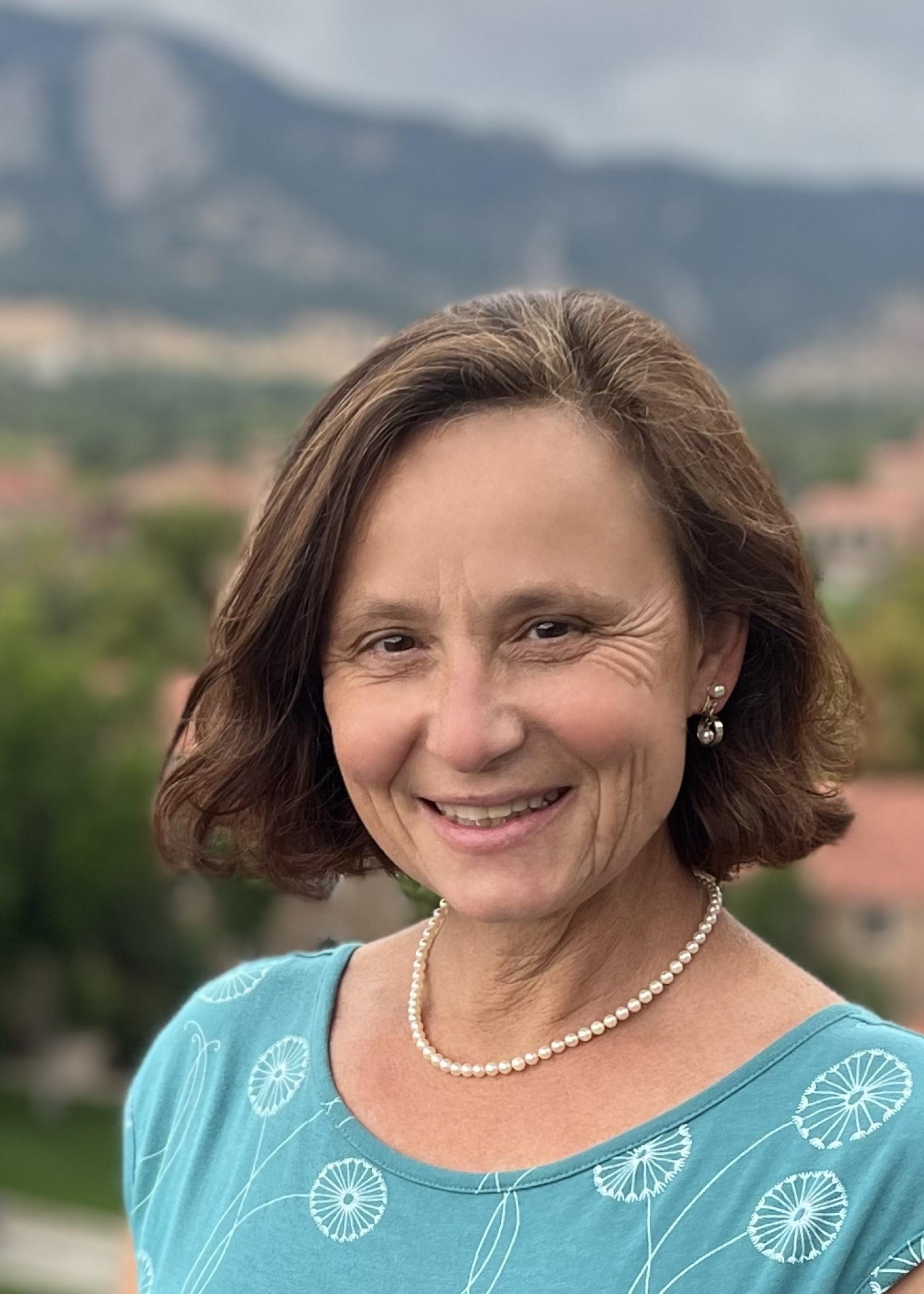
Zoya Popovic is a Distinguished Professor and holds the Lockheed Martin Endowed Chair in RF Engineering at the University of Colorado Boulder's Department of Electrical, Computer, and Energy Engineering. She earned a Dipl.Ing. from the University of Belgrade (1985) and a PhD from Caltech (1990). She has advised over 50 PhD students and was a visiting professor at Technical University of Munich (2001). Her research focuses on high-efficiency microwave/millimeter-wave circuits, smart antenna arrays, wireless powering systems, and biomedical microwave applications. Notable contributions include quasi-optical imaging techniques and low-noise amplifier designs. Key awards: IEEE Microwave Prizes (1993/2006), Humboldt Research Award (2000), Terman Medal (2001) Lab Group Website: [Link] Recent work emphasizes in-band full-duplex systems, GaN MMICs, and quantum-based waveform modulation. Her group maintains advanced facilities for millimeter-wave and terahertz research.
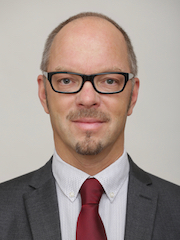
Roman Schnabel is a Professor of Experimental Physics at the University of Hamburg , affiliated with the Institute for Laser Physics under the Faculty of Mathematics, Informatics and Natural Sciences. He leads cutting-edge research in quantum optics, gravitational wave detection, and quantum technologies. Education : PhD in Physics (1999, Leibniz Universität Hannover); Physics degree (1988–1994, Leibniz Universität Hannover) Awards : QCMC 2018 Award, Gruber Cosmology Prize 2016 (LIGO team), Special Breakthrough Prize in Fundamental Physics 2016 (LIGO team), Joseph F. Keithley Award 2012 His recent work explores high-frequency gravitational wave observatories , entanglement generation , and quantum-enhanced sensing . He holds patents for gas sensors and optical surface imaging technologies. Schnabel co-founded the start-up Noisy Labs in 2023 and served as Director of Outreach & Transfer for the Cluster of Excellence 'Quantum Universe' (2019–2022).
Thomas M. Antonsen Jr. is a Distinguished University Professor at the University of Maryland, holding joint appointments in the Department of Electrical and Computer Engineering and the Department of Physics. He is affiliated with the Institute for Research in Electronics & Applied Physics (IREAP), Maryland Energy Innovation Institute, and the Institute of Physical Science and Technology. His research focuses on plasma physics, nonlinear dynamics, and high-power coherent radiation sources. Antonsen earned his B.S., M.S., and Ph.D. in electrical engineering from Cornell University (1973–1977) and has held visiting positions at institutions such as the University of California, Santa Barbara, and the École Polytechnique in France. **Education:** B.S., Electrical Engineering, Cornell University, 1973 M.S., Electrical Engineering, Cornell University, 1976 Ph.D., Electrical Engineering, Cornell University, 1977 **Research Interests:** Antonsen’s work spans magnetically confined plasmas, laser-plasma interactions, and advanced vacuum electronics. He has pioneered adjoint methods for optimizing beam-wave interaction systems and contributed to the development of high-power microwave amplifiers. His recent projects include wave chaos in complex systems and machine learning applications in nonlinear dynamics. **Awards & Honors:** James Clerk Maxwell Award (American Physical Society, 2023) IEEE Marie Sklodowska-Curie Award (2022) University of Maryland Distinguished University Professor (2017) IEEE Fellow (2012) **Teaching & Mentorship:** Antonsen teaches courses such as Physics 132 (Biophysics), Electrodynamics, and Plasma Physics. He mentors graduate students in plasma physics and vacuum electronics through his research groups at IREAP and the Bright Beams Collective. **Labs & Collaborations:** His research is supported by grants from the Department of Energy, NASA, and the Office of Naval Research. Key collaborations include the National Institute of Standards and Technology (NIST) and the European XFEL facility.
Nuh Gedik is the Donner Professor of Physics at MIT, leading the Gedik Research Group. His work focuses on quantum materials, employing advanced optical and electron spectroscopies. He joined MIT in 2008 as an Assistant Professor, earned his B.S. from Bogazici University (1998), and Ph.D. from UC Berkeley (2004) before postdoctoral work at Caltech. His awards include NSF CAREER, DOE Early Career, Sloan Fellowship, and APS Fellow recognition. Research interests include ultrafast dynamics in topological insulators, charge density waves, and light-induced phenomena. Key techniques include time-resolved ARPES, ultrafast electron diffraction, and terahertz spectroscopy. His group explores hidden orders in quantum materials and develops novel measurement tools. Recent work includes metastable magnetization control in FePS₃ and Floquet-Bloch states in graphene. Affiliated with the MIT Center for Quantum Engineering and Institute for Soldier Nanotechnologies.
Maiken Mikkelsen is the James N. and Elizabeth H. Barton Associate Professor of Electrical and Computer Engineering at Duke University, promoted to Professor in 2025. She holds a secondary appointment as Associate Professor of Physics (2023–present) within Trinity College of Arts & Sciences. Her research bridges Nanophotonics , Quantum Materials , and Ultrafast Spectroscopy , focusing on plasmonic nanostructures and nonlinear metasurfaces for quantum optics and optoelectronic applications. Education: Ph.D. in Physics (University of California, Santa Barbara, 2009), B.S. in Physics (University of Copenhagen, 2004), postdoctoral work at University of California, Berkeley. Her work explores Plasmonics and Quantum Optics to engineer nanoscale light-matter interactions, enabling transformative technologies in Single-Photon Sources , Ultrafast Photodetectors , and Active Metasurfaces . Recent projects include real-time tunable lasing and polarization-controlled nanocavity systems. Her 2016–2025 publications highlight breakthroughs in plasmonic fluorescence enhancement, hot electron dynamics, and room-temperature quantum devices. Grants include Nano Solutions On-Chip (Triad National Security, LLC, 2025–2029) and Meta-Imaging (Air Force Office of Scientific Research, 2021–2026). Her lab, jointly based in Electrical & Computer Engineering and Physics, has graduated PhD students Eunso Shin and Hengming Li, and actively engages in STEM outreach initiatives.
Eugene Demler is a Full Professor at the Department of Physics, ETH Zurich. Previously, he held academic positions at Harvard University from 1998 to 2021, including Assistant Professor (2001-2004), Associate Professor (unspecified dates), and Full Professor (2005-2021). His work bridges theoretical condensed matter physics, atomic and molecular physics, quantum optics, and quantum simulations. Education: MSc in Physics, Moscow Institute of Physics and Technology (1993) Diploma work, Lebedev Physics Institute (1992-1993) PhD in Theoretical Physics, Stanford University (1998), supervised by S.C. Zhang Demler's research focuses on strongly correlated quantum systems, spintronics, quantum sensing, and photo-induced phase transitions. His recent publications explore topics such as quantum polarons, Josephson plasmons, magnon dynamics, and terahertz spectroscopy in superconductors. He has pioneered hybrid quantum-classical methods for electron-phonon systems and cavity-mediated quantum materials. His Google Scholar articles (2023-2025) span theoretical and experimental domains, with keywords including Quantum Physics , Condensed Matter Physics , and Quantum Optics . Subfields include Quantum Control , Superconductivity , Spin Waves , Quantum Sensing , Non-Equilibrium Dynamics , and Quantum Simulation . Scientific Awards: Hamburg Prize for Theoretical Physics (2021) Simons Investigator (2021) Moore Distinguished Scholar (2020) Hanna Visiting Scholar (2019) Highly Cited Researcher (2017-2020) Senior Fellow at ETH Zurich's Institute for Theoretical Studies (2015) Simons Fellowship (2015) Distinguished Scholar at Max Planck Institute of Quantum Optics (2015) Thomson Reuters Highly Cited Researcher (2014) Siemens Research Award (2006) Johannes Gutenberg Lecture Award (2006) NSF Career Award (2002) Sloan Fellowship (2002) Demler teaches courses such as Statistical Physics and Strongly Correlated Systems in Atomic and Condensed Matter Physics . His work integrates theoretical modeling with experimental collaborations, particularly in quantum optics and condensed matter systems.
Lan Wei is an Associate Professor in the Department of Electrical and Computer Engineering at the University of Waterloo, Canada. She leads the Waterloo Emerging Integrated Systems Group, focusing on device-circuit co-optimization, cryogenic CMOS for quantum computing, and emerging technologies like GaN, RRAM, and low-dimensional materials. Her work bridges nanoelectronics and system-level applications, with notable contributions to the MIT Virtual Source GaN HEMT (MVSG) compact model, an industry-standard tool. Education: B.S. in Microelectronics and Economics, Peking University (2005) M.S. and Ph.D. in Electrical Engineering, Stanford University (2007, 2010) Research Interests: Nanoelectronic devices Cryogenic CMOS for quantum computing GaN-based circuits and systems RRAM-based neuromorphic computing Device-circuit interactive design Publications reflect her expertise in GaN modeling, quantum computing hardware, and RRAM applications. Recent work emphasizes scalable quantum control circuits and error-resilient neural networks using emerging technologies. Awards include the 2019 Ontario Early Researcher Award and the 2020 UWaterloo President's Excellence Award in Research. She has served on technical committees for IEDM, DATE, and ICCAD, and contributed to the ITRS roadmap. Teaching includes courses like ECE 240 (Electronic Circuits) and ECE 730 (Solid State Devices). Her group actively seeks graduate students with interest in integrated systems and nanoelectronics.
Junfei Li is an Assistant Professor in the School of Mechanical Engineering at Purdue University. His research focuses on advanced acoustic technologies, including acoustic tweezers, acoustofluidics, metamaterials, and underwater communication systems. He specializes in multiphysics wave propagation, noise control, and energy harvesting. Li's work bridges fundamental science and engineering applications in biomedical devices, sustainable energy, and advanced materials. Research Interests: Acoustic tweezers for microscale manipulation Design of metamaterials for acoustic control Ultrasound and underwater communication systems Energy-efficient noise mitigation strategies His recent publications emphasize innovations in acoustic metasurfaces, nonreciprocal sound propagation, and biomedical acoustic applications. Li’s research has implications for improving medical imaging, energy sustainability, and next-generation acoustic devices. Awards & Recognition: None explicitly listed in the provided materials. Advising & Grants: No student advisees or grant information specified in the text.
Professor Emilio Artacho is a faculty member in the Department of Physics at the University of Cambridge, based at the Cavendish Laboratory. He transitioned from the Department of Earth Sciences in 2011, where he was granted a Professorship in 2006. His research focuses on computational simulations of non-equilibrium processes in condensed matter, particularly using first-principles molecular dynamics and density-functional theory. He co-developed the SIESTA program for linear-scaling electronic structure calculations, widely utilized in computational materials science. Artacho’s work spans far-from-equilibrium phenomena in irradiated matter, multiferroics, nanoconfined water systems, and surface chemistry. His contributions include studies of electronic stopping power in materials, 2D electron gas formation at ferroelectric interfaces, and the structural dynamics of water under confinement. His academic roles include adjunct positions at Ikerbasque (Nanogune, Spain) and visiting professorships at institutions like the University of California, Berkeley, and École Normale Supérieure de Lyon. Research interests are anchored in theoretical condensed matter physics, with applications to nanomaterials, radiation effects, and interfacial phenomena. His computational methods bridge quantum mechanics and classical dynamics, enabling insights into complex systems like proton-irradiated solar cells and confined water films.
James R. Fienup is the Robert E. Hopkins Professor of Optics at the University of Rochester's Institute of Optics, with additional appointments as Distinguished Scientist at the Laboratory for Laser Energetics, Professor at the Center for Visual Science, Professor of Electrical and Computer Engineering, and Affiliated Faculty at the Goergen Institute for Data Science and Artificial Intelligence. His office is located at Wilmot 410, 275 Hutchison Rd., Rochester, NY. Education PhD in Applied Physics from Stanford University (1975) MS in Applied Physics from Stanford University (1972) BA in Physics & Mathematics (magna cum laude) from Holy Cross College (1970) Research Focus Professor Fienup's research specializes in imaging science , with emphasis on phase retrieval algorithms, unconventional imaging techniques, and wavefront sensing. His work spans computational methods for image reconstruction, sparse-aperture systems, and synthetic-aperture imaging. Recent innovations include applying machine learning to wavefront control and developing advanced digital holography techniques for 3D imaging through atmospheric turbulence. Publication Trends His recent articles (2018-2024) demonstrate a strong focus on computational imaging techniques, particularly phase retrieval algorithms applied to optical metrology and wavefront correction. Key themes include multi-plane digital holography, coronagraphic wavefront control for astronomical applications, machine learning-enhanced sensing, and novel approaches for segmented-aperture systems. His work consistently bridges theoretical optics with practical instrumentation challenges. Awards and Honors Lifetime Achievement Award, Hajim School of Engineering (2019) Emmett N. Leith Medal, Optical Society of America (2013) National Academy of Engineering Member (2012) Distinguished Visiting Scientist, JPL (2009) Fellow of OSA and SPIE International Prize in Optics (1983) Rudolf Kingslake Medal (1979) NSF Graduate Fellow (1970-1972) Professional Activities Professor Fienup has served as Editor-in-Chief of the Journal of the Optical Society of America A (1998-2003) and held editorial roles at Applied Optics and Optics Letters . He consults for NASA (James Webb Space Telescope, Hubble), national laboratories, and aerospace companies, and holds five patents in optical systems design.
David Schuster is an Associate Professor of Physics at the University of Chicago. His primary research focuses on experimental condensed matter physics, with a particular emphasis on circuit quantum electrodynamics (cQED), superconducting qubits, and quantum information science. He leads the Schuster Lab, which explores quantum systems, hybrid quantum technologies, and topological materials. Education: Ph.D. in Physics from Yale University (2007), advised by Robert Schoelkopf. His doctoral work pioneered advancements in circuit QED, demonstrating strong coupling between superconducting qubits and microwave resonators. Research Interests: The lab investigates superconducting quantum circuits, topological photonics, quantum sensors for dark matter, and scalable quantum computing architectures. Projects include developing fluxonium qubits, autonomous error correction, and hybrid systems involving trapped electrons on helium. Key Contributions: Published in Nature , Science , and Physical Review Letters on topics like topological circuits, photon blockade, and dark matter detection using superconducting cavities. Collaborates with groups at Stanford, Purdue, and other institutions on quantum technologies. Students and Collaborators: Advises numerous graduate and undergraduate students, including prominent alumni who have transitioned to postdocs and industry roles. Lab members present at major conferences like the APS March Meeting. Labs: Schuster Lab at the University of Chicago, with access to state-of-the-art facilities like the Pritzker NanoFabrication Facility. Collaborates with the Awschalom, Cleland, and Houck groups on hybrid quantum systems and materials science.
Professor Gary Gibbons is a distinguished academic at the University of Cambridge, holding the position of Professor of Theoretical Physics within the Department of Applied Mathematics and Theoretical Physics (DAMTP), part of the Faculty of Mathematics. His research focuses on general relativity, quantum gravity, cosmology, and black hole physics. He is a core member of the Relativity and Gravitation Group, known for contributions to gravitational wave theory, black hole thermodynamics, and geometric methods in physics. His work intersects with areas such as the memory effect of gravitational waves, Carroll symmetry, and the mathematical structure of spacetime. Prof. Gibbons collaborates internationally, publishing extensively in top journals like Physical Review D and Classical and Quantum Gravity . His research also extends to applied mathematics, including studies on abrasion processes and shape evolution in geosciences. He maintains an active role in theoretical physics, advising graduate students and contributing to the academic community through lectures and seminars.
Romain Fleury is an Associate Professor at the Laboratory of Wave Engineering (LWE) , part of the École Polytechnique Fédérale de Lausanne (EPFL) School of Engineering and Institute of Electrical and Micro Engineering (IEL) . He earned a Ph.D. in Electrical and Computer Engineering from the University of Texas at Austin in 2015 under Andrea Alù, followed by a Marie-Curie Postdoctoral Fellowship at ESPCI Paris-Tech and CNRS Langevin Institute (2016). His research explores wave physics and engineering , focusing on topological insulators , nonreciprocal wave propagation , and time-modulated metamaterials . He has co-authored over 70 peer-reviewed articles in journals like Science , Nature , and Physical Review series, with recent work on topological acoustics , active metamaterials , and wave-based analog computing . Dr. Fleury received the Eccellenza Grant (2021) from the Swiss National Science Foundation and an ERC Starting Grant (2022) . He co-founded Minwave , a startup selling miniaturized microwave devices patented by his lab, which has garnered awards such as ESA-BIC CH , FIT , and Venture Kick . He has served as Technical Program Committee Chair for Eucap 2019 and on the Editorial Board of the New Journal of Physics . Recognized for teaching excellence with the STI Polysphere Award (2019) and IEL Best Teacher Award , he teaches courses including Electromagnetics , Antennas , and Advanced Photonics . His work bridges fundamental wave physics with applied technologies , emphasizing topological effects , nonlinear systems , and metamaterials . Collaborations span institutions such as ESPCI Paris , University of Texas at Austin , and University of Vienna , with applications in acoustic imaging , 5G antennas , and optical signal processing . His recent publications highlight ultrafast anti-lasing , reconfigurable metasurfaces , and disorder-assisted photonic crystals , reflecting a career dedicated to advancing wave engineering through topological and nonreciprocal designs .
CHONG Yidong is a Professor in the Division of Physics and Applied Physics at Nanyang Technological University (NTU), Singapore. He leads the Centre for Disruptive Photonic Technologies and holds positions in the School of Physical and Mathematical Sciences. His research focuses on theoretical photonics, topological systems, and non-Hermitian physics, with contributions to photonic crystals, topological insulators, and coherent perfect absorbers. He has been recognized with awards including the President's Science Award (2020) and the National Research Foundation Fellowship (2012). Education: Ph.D. (Physics), Massachusetts Institute of Technology (2005–2008) B.Sc. (Physics) and B.Sc. (Mathematical & Computational Sciences), Stanford University (1999–2003) Research Interests: Topological photonics, non-Hermitian systems, photonic topological insulators, PT-symmetric structures, and applications in quantum optics and acoustics. Recent Articles: Focus on experimental realizations of topological lasers, exceptional points in non-Hermitian systems, and higher-order topological phenomena in acoustic and photonic platforms. His work bridges theory and experiment, with collaborations in materials science and electrical engineering. Awards: Extensive recognition for both research and education, including Nanyang Research and Education Awards. Teaching: Courses in mathematical methods for scientists, quantum mechanics, and computational physics, emphasizing numerical techniques and wave phenomena.
Dr. Alex S Clark is an Associate Professor in Quantum Technologies at the University of Bristol's School of Physics, where he serves as a Senior Lecturer and Royal Society University Research Fellow. He is a key member of the Quantum Engineering Technology Labs (QETLabs) and leads the Interfaces Work Package in the EPSRC Programme Grant 'Quantum Science with Ultracold Molecules (QSUM).' Additionally, he holds a Visiting Academic position at Imperial College London and serves as Honorary Secretary for the QQQ Group at the Institute of Physics. His research focuses on Solid State Quantum Nanophotonics, exploring the use of atoms, molecules, and solid state defects to develop quantum technologies. Dr. Clark's work spans quantum imaging, quantum sensing, and quantum information processing, with particular emphasis on creating on-demand photon sources, quantum memories, photonic quantum gates, and hybrid interfaces to link disparate quantum systems. His research integrates experimental and theoretical approaches across quantum photonics, nanophotonics, and quantum technology. Analysis of his recent publications reveals a strong trend toward practical quantum applications, particularly in quantum sensing and imaging using undetected light. His work demonstrates increasing focus on real-world applications including methane sensing, medical diagnostics, and environmental monitoring, while maintaining fundamental research in quantum optics and nanophotonics. The interdisciplinary nature of his research bridges physics, engineering, and materials science. Among his notable achievements is the prestigious Royal Society University Research Fellowship, recognizing his significant contributions to quantum technology research. His work has resulted in numerous publications and patents in quantum photonics and related fields. Dr. Clark leads multiple major research initiatives, including the Quantum Positioning, Navigation, and Timing Hub (2024-2029) and the Integrated Quantum Networks project. His research has secured substantial funding through EPSRC grants and other sources, supporting a vibrant research group focused on advancing quantum technologies from fundamental principles to practical applications. Within the Quantum Engineering Technology Labs (QETLabs), Dr. Clark's research group works at the intersection of quantum optics, nanophotonics, and quantum information science. His team develops novel photonic platforms for quantum applications, with particular expertise in quantum imaging with undetected photons, quantum sensing, and integrated quantum photonics.