Dr. Saeed Jahromi is a researcher in theoretical condensed matter physics, with an ORCID ID (0000-0001-7994-8192) and a personal webpage at http://saeedjahromi.com/ . He has contributed to studies on quantum spin systems, particularly focusing on kagome lattice antiferromagnets with breathing anisotropy. His research interests include quantum magnetism , spin liquids , and strongly correlated electron systems , as evidenced by his 2020 publication in SciPost Physics on the spin-1/2 kagome Heisenberg antiferromagnet.
Prof. Mathieu Luisier is a Full Professor of Computational Nanoelectronics at ETH Zurich's Department of Information Technology and Electrical Engineering. He earned his PhD in 2007 from ETH Zurich, followed by postdoctoral research there and a role as Research Assistant Professor at Purdue University (2008–2011). His research focuses on nanoscale device modeling, including nanowire transistors, memristors, and 2D semiconductors, with a strong emphasis on quantum transport and high-performance computing. ERC Starting Grant (2013) SNSF Advanced Grant (2022) ACM Gordon Bell Prize (2019) His work integrates advanced simulation techniques like GW approximations and parallel algorithms to address challenges in nanoelectronics. He teaches courses on digital circuits and integrated systems, and leads research groups exploring next-generation devices for applications in quantum computing and neuromorphic systems.
Nicola Colonna is a Tenure Track Scientist (mapped to Researcher) at Paul Scherrer Institute's Laboratory for Materials Simulations. Focuses on Koopmans spectral functionals and electronic structure theory. Research develops computational methods for predicting electronic properties of quantum materials, perovskites, and nanoporous systems using orbital-density-dependent functionals. Recent publications (2021-2024) demonstrate: 60% focus on Koopmans functional methodology development, 25% on perovskite electronic structures, and 15% on quantum material characterization. Common themes include spectral accuracy, high-throughput screening, and validation against experimental benchmarks. Software Development: Contributed to open-source koopmans package for spectral property prediction.
Paolo Colciaghi is a PostDoc researcher in the Quantum Optics Lab at the University of Basel, led by Prof. Philipp Treutlein. He holds a PhD (2023) and Master's (2018) from the University of Basel and ETH Zürich, respectively, focusing on quantum optics and atomic physics. His research explores quantum entanglement in Bose-Einstein condensates, hybrid atom-optomechanical systems, and quantum sensing technologies. Key achievements include observing the Einstein-Podolsky-Rosen paradox in macroscopic systems and developing scalable quantum memories. He has received the SPS Award (2024) and QCQT Excellence Award (2022). Research interests span quantum metrology, quantum technology applications, and foundational quantum mechanics. His work combines experimental techniques in atomic physics with theoretical insights from quantum optics and optomechanics. Current projects aim to enhance quantum control in macroscopic systems and improve quantum sensor precision. Teaching contributions include courses on quantum optics, physics laboratory modules, and computational quantum mechanics at the University of Basel. He collaborates with institutions like ETH Zürich and the Warburton group on semiconductor-atomic interfaces.
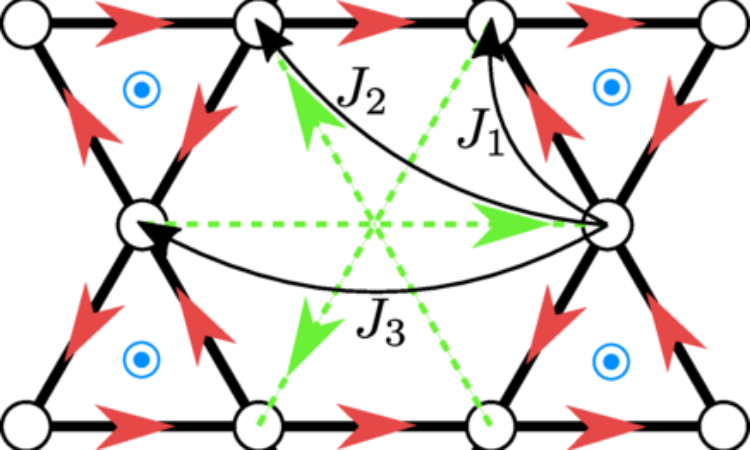
Dr. Johannes Motruk is a researcher in the Theory of Flat and Strange Quantum Matter group led by Prof. Louk Rademaker. His work focuses on theoretical condensed matter physics, particularly quantum many-body systems with strong correlations and topological features. His research interests include: Quantum Many-Body Physics Condensed Matter Theory Frustrated Magnetism on Kagome Lattices Topological Phases and Spin Liquids Schwinger Boson Mean Field Approaches Dzyaloshinskii-Moriya Interactions in Antiferromagnets The most recent highlighted work involves the study of the J1−J2−J3 kagome Heisenberg antiferromagnet with Dzyaloshinskii-Moriya interactions, published in Physical Review B in 2023. This research employs Schwinger boson mean field theory to explore complex magnetic phase diagrams, motivated by applications in transition metal dichalcogenide (TMD) heterostructures. The work lies at the intersection of theoretical modeling and emergent quantum phenomena in flat band systems. No scientific awards or honors are listed in the provided text. There is no information available about student advising, grants, or educational background. Dr. Motruk appears to be an active researcher contributing to advanced topics in quantum magnetism and strongly correlated electron systems. The research is conducted within a theoretical physics group focusing on flat and strange quantum matter, likely situated in a university physics department, though institutional details are not specified.
Zurich University of Applied Sciences (ZHAW)Switzerland
Wolf Wüster is a Lecturer at the Zurich University of Applied Sciences (ZHAW) School of Engineering, specializing in Applied Optics. He serves as a Project Leader and Researcher, collaborating with industry partners and academic institutions to advance optical technologies. PhD in Physics, ETH Zurich (2015) MSc in Physics, ETH Zurich (2009-2015) BSc in Physics, ETH Zurich (2004-2009) Wüster's research focuses on Applied Optics, Quantum Electrodynamics, and Spectroscopy. His work includes optical thermometry for cryogenic environments, NMR-based drug discovery, and optoelectronic innovations for medical imaging. Recent projects involve developing diagnostic tools for NMR CryoProbes and high-throughput drug screening platforms. His publications span quantum cascade laser frequency combs, cavity quantum electrodynamics, and optoelectronic material analysis. Key themes include cryogenic sensing, mid-infrared spectroscopy, and quantum dynamics in low-dimensional systems. Current roles include leading cryogenics projects at ZHAW and prior industrial R&D roles at Bruker Switzerland AG and IRSweep AG. He has held academic positions at ETH Zurich since 2009, including Postdoctoral Researcher and Dissertation Fellow.
Marc Janoschek is an Associate Professor at the University of Zurich specializing in experimental physics. He heads the PSI Center for Neutron and Muon Sciences (CNM) in Switzerland and leads the Laboratory for Neutron and Muon Instrumentation. His research integrates material synthesis, instrumentation development, and advanced experiments to study quantum phenomena in correlated materials. Research interests center on quantum matter phases investigated through neutron/x-ray scattering under extreme conditions. Key areas include: Tuning atomic-scale interactions via pressure, field, and chemistry Quantitative determination of quantum properties Novel instrumentation design for neutron scattering Publications focus on quantum materials like UTe₂ and heavy fermion systems, with methodological innovations in scattering techniques. Recent work explores topological states and unconventional superconductivity. Awards include: PSI Diversity Award 2024 Wolfram-Prandl Award for spin dynamics studies Los Alamos National Laboratory Fellows Prize Hans Fischer Fellowship Leads the PSI-ESS project (€30M Swiss contribution to neutron instruments) and chairs international committees including the LENS Working Group on Synergies. Maintains extensive global collaborations with theorists and experimental facilities.
Per Moosavi is a researcher at Stockholm University, as confirmed by his institutional web page (https://www.su.se/english/profiles/pemo3512-1.674705) and ORCID (0000-0003-0011-2937). His work centers on theoretical condensed matter physics with emphasis on quantum dynamics in low-dimensional systems. His research interests include: Theoretical Physics Condensed Matter Physics Quantum Many-Body Systems Statistical Mechanics Quantum Dynamics Specializing in Tomonaga-Luttinger liquids, he investigates non-equilibrium phenomena, marginal quenches, and hydrodynamic behavior in quantum integrable systems. Recent publications (2020-2023) reveal a cohesive focus on dynamical properties of 1D quantum systems, bridging quantum field theory with statistical mechanics through advanced modeling of non-local interactions and generalized hydrodynamics. Scientific awards: No awards mentioned in source material. Advising and grants: No information available regarding student supervision or research funding. Laboratory/team affiliations: Not specified in provided text.
Prof. Dr. Juan Carrasquilla Alvarez serves as an Associate Professor in the Department of Physics at ETH Zurich, holding the dedicated Professorship of Computational Physics. His academic office is located at HIT G 21.4, Wolfgang-Pauli-Str. 27, 8093 Zurich, Switzerland, with direct work contact +41 44 633 83 02. His research focuses on Computational Physics methodologies applied to Theoretical Physics problems, particularly in Condensed Matter Physics and Quantum Many-Body Systems . He employs advanced numerical simulations and high-performance computing to investigate emergent phenomena in complex quantum materials, leveraging ETH Zurich's strong infrastructure in computational science.
Swiss Federal Institute of Technology in LausanneSwitzerland
Michael F. Herbst is a tenure-track Assistant Professor at the Swiss Federal Institute of Technology Lausanne (EPFL) with joint appointments in Mathematics and Materials Science. He leads the Mathematics for Materials Modelling (MatMat) research group, focusing on algorithm development for quantum-chemical simulations of solids and error control in computational modeling. His work bridges mathematics, solid-state physics, and computer science through interdisciplinary research. His research interests include: Density-functional theory (DFT) and Kohn-Sham equations Error propagation in materials property predictions High-throughput screening algorithms Julia programming for scientific computing Tensor networks and reduced basis modeling Self-consistent field convergence methods Recent publications highlight his contributions to: Efficient response property calculations in DFT Rotationally equivariant machine learning operators GPU-accelerated electronic structure methods Polarizable continuum solvation models Robust black-box quantum chemistry algorithms Open-source software development Teaching activities span mathematics, computer science, and chemistry curricula, including interdisciplinary workshops on electronic structure numerics and Julia programming for materials science. He has mentored PhD students Bruno Ploumhans and Niklas Frederik Schmitz.
Dr. Boris Décamps is a researcher at the Quantum Optics Lab within the Department of Physics at the University of Basel. He specializes in quantum optics, optomechanics, and atomic physics, focusing on entanglement in many-particle systems, quantum memories, and hybrid quantum systems. His work combines experimental and theoretical approaches to explore quantum phenomena in macroscopic systems, including Bose-Einstein condensates and optomechanical devices. Research highlights include observing the Einstein-Podolsky-Rosen (EPR) paradox in spatially separated Bose-Einstein condensates, demonstrating optical storage in microfabricated vapor cells, and developing coherent feedback techniques for cooling nanomechanical systems. His contributions have been published in top journals like Science, Physical Review Letters, and Physical Review X. Boris has received the Poster Prize at the 2017 International Conference on Laser Spectroscopy (ICOLS) for his work on coherence and entanglement in Bose-Einstein condensates. He has advised or collaborated with students and researchers in the lab, contributing to groundbreaking experiments in quantum technology and foundational quantum physics.
Prof. Ajit Srivastava is a faculty member at the University of Geneva, affiliated with the Faculty of Science and leading the Quantum Light Matter Lab. His research focuses on quantum optics, spin-valley physics, and topological aspects of light-matter interactions in atomically thin materials, particularly transition metal dichalcogenides such as WSe₂ and MoSe₂. His research interests include: Quantum optics with 2D materials Spin-valley coupling and dynamics Excitons, polarons, and dipolar interactions in van der Waals heterostructures Topological and geometric effects in Bloch bands Quantum emitters and quantum information applications Analysis of his recent publications (2015–2025) reveals a strong focus on the quantum optical properties of low-dimensional systems. His work bridges experimental and theoretical physics, exploring non-trivial band geometry, excitonic many-body states, and electrical control of valley and spin degrees of freedom. Key themes include the manipulation of quantum states via light, the emergence of topological phenomena in 2D systems, and the engineering of quantum emitters for information processing. Scientific contributions and recognitions: Prof. Srivastava has published in leading journals including Nature Nanotechnology , Nature Physics , Nature Materials , and Advanced Science . His research has advanced the understanding of valley physics, polaron-polaritons, and quantum dots in 2D materials. While no formal awards are listed, the impact of his work is evident in high-impact publications and consistent funding, as reflected in ongoing lab development. He supervises research students and collaborators, as seen through co-authorship on numerous papers, and leads a dynamic lab equipped with advanced spectroscopy and nanofabrication tools. The Quantum Light Matter Lab recently expanded with new instrumentation, including a new spectrometer and magnet, indicating active research growth and future exploration in quantum control of 2D materials.
Dr. Nicholas Clark Plumb is a Scientist (SIS) at the Paul Scherrer Institute (PSI) in Switzerland, working within the Spectroscopy of Quantum Materials group. He holds a permanent PSI staff position since 2017 and contributes to the development of the new QUEST beamline for ARPES in SLS 2.0. Research Focus: Dr. Plumb specializes in spectroscopic investigations of quantum materials, particularly those exhibiting many-body interactions like high-temperature superconductivity, metal-insulator transitions, and colossal magnetoresistance. His work integrates advanced instrumentation development with studies of oxide materials, interfaces, and surfaces. Publications: His research spans topics such as electron-phonon interactions in bismuthates (2020), metallic states in oxide systems (2017), SrTiO3-LaAlO3 interface evolution (2017), and electronic structure of BaBiO3 (2016). These reflect expertise in ARPES, resonant inelastic X-ray scattering (RIXS), and thin-film growth techniques.
Swiss Federal Institute of Technology in LausanneSwitzerland
Edoardo Lopriore is a Researcher at the Laboratoire d'électronique et structures à l'échelle nanométrique (LANES) within the School of Engineering (STI) at École Polytechnique Fédérale de Lausanne (EPFL). His research focuses on nanoscale electronic systems, layered materials, and optoelectronic devices, particularly in van der Waals heterostructures. He has contributed to the development of ultrafast photodetectors, tunable exciton dynamics, and cryogenic ASICs for particle physics experiments. His work intersects semiconductor physics, quantum devices, and materials science, with applications in both fundamental research and advanced technology. Key themes in his publications include electrical characterization of layered materials, interlayer exciton interactions, and high-precision electronics for cryogenic environments. He collaborates on projects like the Deep Underground Neutrino Experiment (DUNE), emphasizing interdisciplinary innovation. Edoardo's research emphasizes experimental and theoretical analysis of nanomaterials' electronic and optoelectronic properties, with a focus on translating fundamental discoveries into functional devices. His lab website can be found at https://lanes.epfl.ch .
PD Dr. Ramasubramanian Chitra is a Research Professor at ETH Zürich's Institute for Theoretical Physics, where she teaches Advanced Methods in Quantum Many-Body Theory. As the Mobility Advisor for the Department of Physics, she supports academic exchanges and collaborations. Her research focuses on complex quantum systems and theoretical physics methodologies.