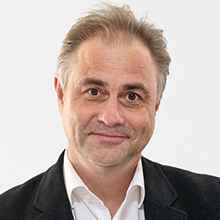
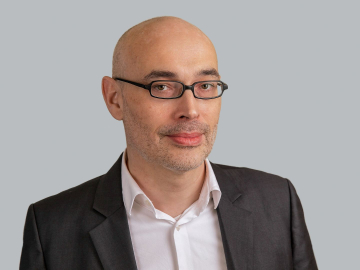
Carsten Hopf is a Professor of Bioanalytics and Drug Discovery at Mannheim University of Applied Sciences, leading the Institute of Instrumental Analytics and Bioanalytics and the CeMOS (Center for Mass Spectrometry and Optical Spectroscopy). His work focuses on developing spatially resolved omics technologies (e.g., MALDI-MS imaging) for neurodegenerative and oncological research. He explores lipidomics, proteomics, and metabolomics to understand Alzheimer's disease, glioblastoma, and other neurodegenerative disorders. Key projects include the SMART-CARE-2 BMBF initiative (2023–2026) and DFG-funded research on spatial multi-omics in glioblastoma (SFB 1389). Research interests center on mass spectrometry innovations, including matrix optimization, AI-driven data analysis, and multimodal imaging (e.g., infrared microscopy integration). His lab develops label-free cell assays for drug discovery and studies molecular mechanisms of neurodegeneration. Collaborations span academia and industry, with projects like the M 2 Aind partnership addressing 3D cell culture toxicity assessments. Grants include BMBF, DFG, and EU funding for systems medicine, organoid analysis, and mass spectrometry cores. His technological advancements aim to improve biomarker discovery and translational medicine in neuro-oncology and neurodegeneration.
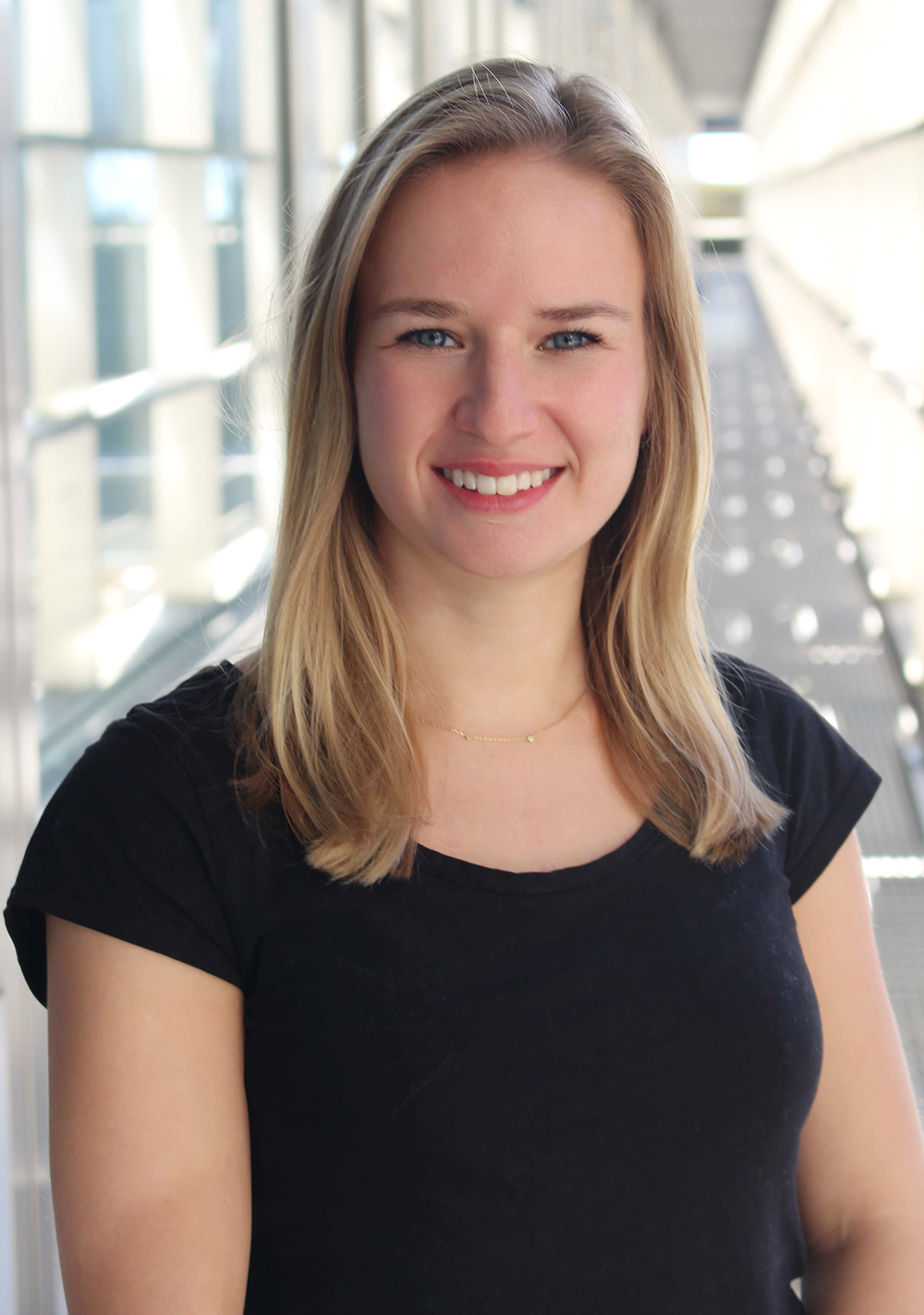
Dr. Harshala Gammulle is a Research Fellow at Queensland University of Technology (QUT), School of Electrical Engineering & Robotics. She holds a PhD in Computer Vision from QUT (2019), receiving the QUT Executive Dean's Commendation for Outstanding Doctoral Thesis. Her expertise spans machine learning, computer vision, and spatio-temporal modeling for human behavior understanding. She leads interdisciplinary projects with funding from DST Group, SmartSat CRC, QLD DESI, and others. Research focuses include: human action recognition, medical anomaly detection, satellite image analysis, and AI for environmental monitoring. Key projects involve quantum-classical hybrid ML for biomedical signal analysis, disaster forecasting via hyperspectral data, and autonomous combat vision systems. She has supervised PhD/MPhil candidates in ML and quantum hybrid ML. Education: PhD (Computer Vision, QUT 2019), BSc (University of Peradeniya, Sri Lanka). Awards: WiT Emerging Achiever Technology Award finalist (2021), University Award for Academic Excellence (2015). Teaching includes units like Digital Signals and Image Processing (EGH444), and Computing & Data for Engineers (EGB103). Current grants involve QLD DESI, SmartSat CRC, and Rheinmetall Defence Australia collaborations. Active in labs like SAIVT and QUT's Early Career Research schemes.
Dr. Laura Galazzo is a Lecturer at the Department of Chemistry and Applied Biosciences, ETH Zurich, affiliated with the Institute of Molecular Physical Sciences (IMPS). Her research focuses on biophysical chemistry and molecular dynamics, employing advanced spectroscopic techniques like Electron Paramagnetic Resonance (EPR) to study protein structure, phase transitions, and membrane transport mechanisms. She investigates topics such as liquid-liquid phase separation in proteins, ABC transporter function, and nitroxide radical dynamics in aqueous environments. Dr. Galazzo also contributes to methodological advancements in pulsed dipolar spectroscopy and neural network applications in spectroscopic data analysis. Her work bridges theoretical and experimental approaches, combining computational methods (e.g., ab initio molecular dynamics) with experimental techniques to address complex biological systems. Key areas of study include protein aggregation, conformational changes in large complexes, and the interplay between solvent effects and biomolecular behavior. Recent research highlights include studies on mycobacterial iron uptake mechanisms and the structural dynamics of pro-apoptotic peptides. Dr. Galazzo’s publications reflect a strong emphasis on interdisciplinary approaches, integrating spectroscopy, computational modeling, and structural biology. Her contributions have advanced methodologies for distance measurements in biomolecules and provided insights into fundamental biological processes such as phase separation and membrane-mediated transport. She is actively engaged in promoting sustainable education through initiatives like the EquipSent project, aiming to enhance global access to scientific resources.
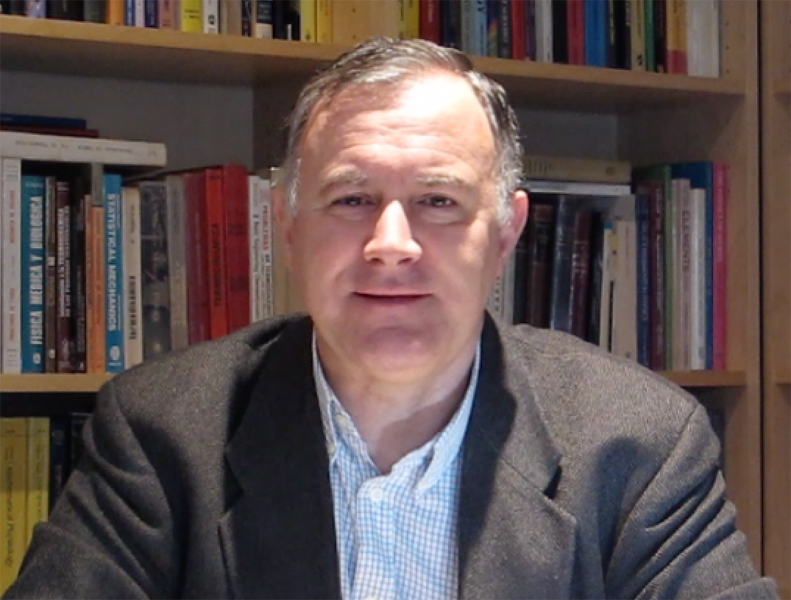
Miguel Angel Fernandez Sanjuan is a Full Professor of Physics at Rey Juan Carlos University (since 2002) and holds a Professor position in Applied Informatics at Kaunas University of Technology (since 2016). He has held visiting roles at University of Maryland (Fulbright Scholar), Beijing Jiaotong University, and Lanzhou University. Current affiliations: Rey Juan Carlos University (Physics), Kaunas University of Technology (Applied Informatics) Previous institutions: University of Maryland, Beijing Jiaotong University, Universidad Politécnica de Madrid His research spans nonlinear dynamics, chaos theory, and complex systems with applications in: Physics: Chaotic oscillators, Hamiltonian scattering, time-delay systems Neuroscience: Map-based neuron models, synchronization dynamics Engineering: Fault diagnosis, image processing via resonance phenomena Mathematics: Basin entropy, Wada basin analysis Recent publications focus on AI-driven chaos control, aperiodic resonance mechanisms, and biomedical applications. He has over 605 publications and 141k reads on ResearchGate. Scientific honors include: 2024: Foreign Academician, Serbian Academy of Nonlinear Sciences 2023: Full Academician, Spanish Royal Academy of Sciences 2022: James Yorke Award 2020: Chieh-Su Hsu Award Active in editorial roles (International Journal of Bifurcation and Chaos) and international collaborations. Leads the Miguel A.F. Sanjuan Lab researching complex systems and nonlinear phenomena.
Tushar Athawale is a Research Scientist at Oak Ridge National Laboratory (ORNL) and a Joint Faculty Assistant Professor in the Department of Electrical Engineering and Computer Science at the University of Tennessee, Knoxville. His primary research focuses on uncertainty visualization, statistical data analysis, and high-performance computing for large-scale scientific data. He holds a PhD in Computer Science from the University of Florida (2015) and has held roles including Postdoctoral Fellow at the University of Utah's Scientific Computing & Imaging Institute and Application Support Engineer at MathWorks. His academic and professional affiliations include ORNL's Computer Science and Mathematics Division, the IEEE Visualization Conference program chair (2025), and associate editor for IEEE Transactions on Visualization and Computer Graphics. He has organized workshops, tutorials, and served on program committees for major visualization conferences. Key research interests span uncertainty quantification, topological methods, and visualization techniques for biomedical imaging, fusion simulations, and quantum computing. His work emphasizes trustworthy scientific data analysis through advanced visualization frameworks like VTK-m and implicit neural representations. Awards include ORNL's 2024 Special Award and Best Paper Honorable Mention at the IEEE Uncertainty Visualization Workshop 2024. His contributions bridge visualization theory with practical applications in exascale computing and AI-driven decision-making.
Dr. Jordan Shropshire is the Lawrence Minto Sylvestre Endowed Chair in Computing and a Professor in the Information Systems and Technology Department at the University of South Alabama's School of Computing. His academic journey includes a Ph.D. in Management Information Systems from Mississippi State University (2008) and a B.S. in Business Administration from the University of Florida (2004). Dr. Shropshire's research focuses on cybersecurity, data center management, cloud computing, IoT ecosystems, and systems architecture. His work addresses critical challenges such as post-quantum cryptography, embedded system vulnerabilities, and compliance frameworks for autonomous systems. He has also contributed to studies on developer platform risks, real-time operating system security, and AI-driven systems hardening. Education: Ph.D. – Management Information Systems, Mississippi State University, 2008 B.S. – Business Administration, University of Florida, 2004 His teaching career spans roles at the University of South Alabama (2008–present) and Georgia Southern University, where he held tenure (2008–2014). His publications emphasize practical cybersecurity solutions, including tools for drone compliance and frameworks for secure cloud infrastructure. He has also explored behavioral aspects of security policy adherence and IT professional retention. Dr. Shropshire's work often bridges theoretical research and real-world implementation, with a focus on mitigating emerging threats in cloud systems, IoT, and embedded devices. His research has been supported by grants such as the NSF TWC Small Grant for hypervisor security detection techniques.
Alessandra Buonanno is a Research Professor at the University of Maryland, College Park, and Director at the Max Planck Institute for Gravitational Physics (Albert Einstein Institute) in Potsdam. Her primary affiliation is with the Department of Physics at UMD, and she holds honorary professorships at Humboldt University and Potsdam University. She leads the Astrophysical and Cosmological Relativity department at the Max Planck Institute. Education: PhD in Physics from the University of Pisa (1996), following a Master's in Physics (Laurea, 1993). Postdoctoral work included stints at the Institut des Hautes Études Scientifiques (France), Caltech, and CNRS institutes in Paris. Research focuses on gravitational physics, including theoretical and phenomenological aspects of gravitational waves, general relativity, and astrophysical applications. She contributed to the LIGO Scientific Collaboration's groundbreaking detection of gravitational waves, earning numerous accolades such as the Balzan Prize (2021), Dirac Medal (2021), and Gottfried Wilhelm Leibniz Prize (2018). Publications emphasize high-field superconducting magnets for particle colliders, quantum gravity, and gravitational wave modeling. She leads projects like the Muon Collider's magnet design and coordinates international collaborations in particle physics and cosmology. Awards include the European Research Council's Synergy Grant (2024), Oskar Klein Medal (2023), and membership in prestigious academies like the US National Academy of Sciences and Leopoldina. Service roles include roles on the Kavli Prize Committee, the LISA Consortium Board, and the European Space Agency's Voyage 2050 committee. She is a Principal Investigator for the LIGO collaboration and actively contributes to advancing quantum-resistant cryptography and superconducting technologies.
Ata Zadehgol is an Associate Professor (promoted to Full Professor in 2025) in the Department of Electrical and Computer Engineering at the University of Idaho, College of Engineering. He is the founding director of the Applied Computational Electromagnetics and Signal/Power Integrity (ACEM-SPI) Laboratory. His academic journey includes a Ph.D. from the University of Illinois at Urbana-Champaign (2011), an M.S. from UC Davis (2006), and a B.S. from the University of Washington (1996). He spent over a decade in the microelectronics industry before joining academia. Ph.D., Electrical and Computer Engineering, University of Illinois at Urbana-Champaign, 2011 M.S., Electrical and Computer Engineering, University of California, Davis, 2006 B.S., Electrical Engineering, University of Washington, Seattle, 1996 Dr. Zadehgol's research focuses on computational electromagnetics , signal and power integrity , and modeling of multi-scale and stochastic systems . His work spans from low-frequency to terahertz regimes, with recent expansion into quantum electrodynamics and photonics. He develops advanced computational algorithms for efficient and stable modeling of electromagnetic systems, including FDTD methods, reduced-order modeling, and machine learning applications. The research articles highlight a consistent focus on electromagnetic modeling , signal integrity , and computational efficiency . Key themes include FDTD sub-gridding, stochastic surface roughness in waveguides, stability of transfer functions, and macro-modeling for antennas and interconnects. The publications span IEEE Transactions, Applied Mathematics and Computation, and Electronics, reflecting interdisciplinary work bridging engineering, physics, and numerical methods. Best Poster-Paper Award, IEEE EDAPS, 2016 University of Idaho Presidential Mid-Career Award, 2020 Outstanding Faculty Award, College of Engineering, 2025 NSF Recognition for Novel Algorithm for Optical Interconnects, 2018 Dr. Zadehgol has secured significant research funding from the National Science Foundation (NSF) , NASA , Micron Technology , and Schweitzer Engineering Laboratories (SEL) . He advises graduate students in the ACEM-SPI Lab, though specific names are not listed. His lab supports research in computational electromagnetics, signal/power integrity, and quantum engineering applications. Future work includes advancing modeling techniques for quantum systems and high-frequency electronics. The Applied Computational Electromagnetics and Signal/Power Integrity (ACEM-SPI) Laboratory , which he founded and directs, serves as the central hub for his research group. The lab focuses on algorithm development for electromagnetic simulation, signal integrity analysis, and emerging applications in quantum science. It is supported by federal and industrial grants and collaborates with partners in academia and industry.
Koushik Sen is a Professor in the Department of Electrical Engineering and Computer Sciences at the University of California, Berkeley. He holds a B.Tech from IIT Kanpur and M.S./Ph.D. from UIUC. His research focuses on Software Engineering, Programming Languages, and Formal Methods, emphasizing tools like DART, CUTE, and Jalangi for improving software reliability. He leads projects such as CORVETTE and Sky Computing Lab, and collaborates with Samsung Research America on JavaScript analysis. Sen has received prestigious awards including the Sloan Fellowship and ACM SIGSOFT Impact Award. Education: B.Tech, Indian Institute of Technology, Kanpur M.S. and Ph.D., University of Illinois at Urbana-Champaign Research Interests: Software Testing, Verification, Symbolic Execution, Security, and Quantum Computing. His work bridges automated testing (e.g., concolic testing) with machine learning for bug detection and program synthesis. Projects include Hindsight Logging for ML reproducibility and quantum circuit optimization (QFAST). Awards: NSF CAREER, IFIP Manfred Paul, ACM SIGSOFT Distinguished Paper (multiple), and Sloan Fellowship. Advising: Supervised over 30 students/postdocs, leading to faculty roles at UBC, CMU, and industry positions at Google, Facebook, and Samsung. Labs/Teams: Berkeley Center for Responsible, Decentralized Intelligence (RDI), EPIC Data Lab, and Sky Computing Lab. Active in quantum computing and hardware fuzzing (RTL-FuzzLab).
Paul McKenna is a Professor in the Department of Physics, Faculty of Science, at the University of Strathclyde, where he currently serves as Deputy Associate Principal (Research & Knowledge Exchange). He previously held leadership roles as Vice Dean (Research) in the Faculty of Science (2021–2023) and Head of the Department of Physics (2018–2021). His work is central to advancing ultra-intense laser-plasma science and its applications. His research focuses on ultra-intense laser-plasma interactions , particularly the development of laser-driven particle and radiation sources , plasma optics and photonics , and high field science . His work bridges fundamental physics with practical applications in medicine, materials science, and fusion energy. He is actively involved in major international laser facilities, serving on advisory boards such as the Program Advisory Committee for the Extreme Light Infrastructure-Nuclear Physics (ELI-NP) and previously at the Central Laser Facility, Harwell. Recent publications highlight a strong trend in laser-driven proton acceleration , beam diagnostics using machine learning , plasma-based collimation , and structured light generation . His work increasingly integrates computational methods, such as Bayesian optimization and neural networks, to enhance experimental outcomes in high-energy-density physics. Fellow of the Royal Society of Edinburgh (2020) High Power Laser Science and Engineering Outstanding Contribution Award (2023) McKenna has secured significant research funding, notably from EPSRC, and leads multiple active projects including those on relativistic plasma apertures and Bayesian optimization in fusion simulations. He contributes extensively to researcher development and postgraduate research strategy. He has supervised numerous early-career researchers and PhD students, though specific names are not listed in the provided data. He is also involved in interdisciplinary efforts to foster collaborative research cultures in technological universities. He leads or participates in advanced research facilities such as the SCAPA (Scottish Centre for the Application of Plasma-based Accelerators) and contributes to the development of high-repetition-rate laser systems. His lab’s work is highly collaborative, involving partnerships across the UK and internationally, with strong ties to institutions like Queens University Belfast and national laboratories.
Kun Chen is a Professor in the Department of Statistics at the University of Connecticut's College of Liberal Arts and Sciences. His research bridges advanced statistical methodology with critical applications in healthcare, environmental science, and mental health. His research focuses on large-scale statistical learning , machine learning optimization , and healthcare analytics , particularly in suicide risk prediction using electronic health records and health information exchanges. Recent work integrates natural language processing with social determinants of health for veteran suicide prediction and develops novel tensor regression methods for longitudinal data with missing observations. Analysis of his 15 most recent publications reveals a dominant trend in mental health data science (73% of articles), with significant contributions to statistical methodology (53%) including reduced-rank regression extensions and sparse factor modeling. His environmental statistics work (20%) focuses on nanomaterial applications in contaminated agriculture and microbiome-environment interactions. Scientific Recognition: Co-authored seminal 2023 Springer monograph Multivariate reduced-rank regression: theory, methods and applications (2nd Edition) Developed rrpack R package for reduced-rank regression (2019) His collaborative work spans UConn Health, Veterans Affairs, and multiple national consortia, with recent grants supporting data fusion techniques for suicide prevention and Parkinson's disease progression modeling. Current projects include transfer learning frameworks for hospital suicide risk prediction and gut microbiome analysis in neurological disorders. Dr. Chen maintains active leadership in statistical ecology applications and serves on editorial boards for biostatistics journals, with recent work on quantum dot analysis demonstrating methodological versatility across physical and health sciences.
Dr. Stavros Shiaeles is an Associate Professor in Cybersecurity at the Faculty of Technology , University of Portsmouth, and Co-Director of the Portsmouth AI and Data Science Centre (PAIDS) . With over 130 publications and 3000+ citations, he specializes in cybersecurity, applied AI, and threat mitigation frameworks. Academic Qualifications : PhD in Electrical and Computer Engineering (Democritus University of Thrace, 2013), MEng in Electrical and Computer Engineering (Democritus University of Thrace, 2007), MBA in Human Resource Management (University of Plymouth, 2016), and PG Cert in Academic Practice (University of Plymouth, 2017). Research Interests span cybersecurity, malware detection, blockchain, 6G networks, AI/ML applications, digital forensics, and post-quantum cryptography. His work addresses threats in IoT, financial systems, and critical infrastructure while exploring SDG4 (Quality Education) through cybersecurity training. Recent publications emphasize AI-driven anomaly detection (e.g., ransomware behavior analysis, 6G traffic monitoring), deepfake forensics, synthetic image attribution, and hybrid blockchain/AI security architectures. He also curates datasets for malware analysis and synthetic media classification. Scientific Awards : IEEE SMC TCHS Outstanding Service Award (2021). Grant Funding : Over €18M secured in EU Horizon 2020 grants, including €8M as Principal Investigator for the ongoing XTRUST-6G project. Active in KTPs, consulting, and research commercialization opportunities.
Elie Alhajjar is a Senior Information Scientist at RAND and Professor of Policy Analysis at the RAND School of Public Policy. He focuses on interdisciplinary projects at the intersection of technology and national security, with expertise spanning artificial intelligence (AI), quantum computing, cybersecurity, and workforce development. Current affiliations: RAND (Senior Information Scientist) and RAND School of Public Policy (Professor of Policy Analysis) Research domains: AI/ML, quantum computing, cyber risk, space mission assurance Research interests center on AI integration for organizational leadership, quantum computing applications in cybersecurity, and policy-driven solutions for space systems resilience. His recent work addresses: AI workforce development for military and civilian leaders Quantum advantage analysis in Homeland Security missions Cybersecurity frameworks for commercial space operations Publications demonstrate a trend toward applying computational sciences to national security challenges. His 2024 works emphasize: Adversarial machine learning threats Clean energy transition modeling Countering weapons of mass destruction via data systems
Joanna Cecilia da Silva Santos is an Assistant Professor in the Department of Computer Science and Engineering at the University of Notre Dame , where she leads the Security and Software Engineering research lab (S 2 E) . She earned her Ph.D. and M.Sc. in Computing and Information Sciences from Rochester Institute of Technology (RIT) and a B.Sc. in Computer Engineering from Federal University of Sergipe (UFS) . Research Interests: Her work focuses on the intersection of Software Engineering and Software Security , with specific emphasis on Code Generation , Program Analysis , Software Architecture , and Quantum Software Engineering . Recent projects include evaluating large language models for code generation, detecting regular expression denial-of-service vulnerabilities, and creating taint-based analysis tools for Java security. 2025: Code generation benchmarks, LLM performance in programming assignments 2024: Frameworks for secure code generation, ReDoS analysis, static analysis of deserialization 2023: GitHub Copilot complexity prediction, vulnerability characterization 2022: Transformer-based code smell detection, security evaluation datasets Scientific Awards: 2017 Best Paper Award at ICSA 2020 JOBS Workshop Research Pitch Competition Winner 2023 Distinguished Reviewer at ESEC/FSE 2014 CAPES Scholarship for Masters at RIT 2013 3rd Place Paper at XIII ERBASE Her research group engages in empirical studies of code vulnerabilities, automated security tools, and educational applications of language models, with funding reflected in multiple peer-reviewed publications.
Francis de Véricourt is Professor of Management Science and the founding Academic Director of the Institute for Deep Tech Innovation (DEEP) at ESMT Berlin, where he also holds the Joachim Faber Chair in Business and Technology. He has held faculty positions at Duke University and INSEAD and was a post-doctoral researcher at MIT, reflecting a global academic footprint across France, the USA, Germany, and Singapore. His educational background includes a PhD from Université Paris VI and an engineering degree from ENSIMAG (Grenoble Institute of Technology), establishing a strong foundation in applied mathematics and computer science. Francis's research focuses on decision science, analytics, and operations, with impactful applications in healthcare, sustainability, and human-AI interaction. He investigates how mental models—'framing'—enable individuals and organizations to transcend data and generate better alternatives for decision-making. His work emphasizes cognitive agility, translational innovation, and the role of human intuition in the age of artificial intelligence. The analysis of his recent publications reveals a consistent trajectory in understanding cognitive frameworks in decision-making, the integration of AI in human contexts, and the ethical and strategic dimensions of deep-tech innovation. His writings bridge academic rigor with practical insight, targeting both scholarly and industry audiences. ENRE Best Publication Award, INFORMS MSOM Best Publication Award, INFORMS He has been a Department Editor for Operations Research and MSOM , and his academic leadership includes establishing the Center for Decisions, Models, and Data at ESMT. He has received multiple teaching awards for his work with MBA and Executive MBA students and is deeply engaged in executive education and corporate learning solutions. His book Framers , published by Penguin Random House and listed among the Financial Times' Best Books, has amplified his influence in both academic and public spheres. Francis leads DEEP—the Institute for Deep Tech Innovation—which fosters research, education, and entrepreneurial action in areas like AI, quantum computing, and biotechnology. The DMD Center, now integrated into DEEP, explores how modeling and representation enhance decision-making beyond data. These initiatives reflect his commitment to cultivating cognitive and entrepreneurial capabilities within scientific and business communities.