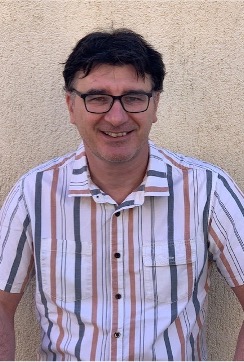
Cristian Ciobanu serves as Professor in the Department of Mechanical Engineering at Colorado School of Mines, where he has maintained continuous faculty appointment since 2004. His academic journey includes postdoctoral research at Brown University prior to joining Mines, with progressive promotions from Assistant to Associate to full Professor by 2014. Educational background: PhD in Physics, The Ohio State University (2001) MS in Physics, The Ohio State University (1998) BS in Physics, University of Bucharest (1995) His research program integrates computational and experimental approaches to address fundamental challenges in nanoscale surface physics and two-dimensional materials . Specialized expertise includes evolutionary algorithms for atomic structure optimization, development of materials for renewable energy applications, and investigation of self-organized nanostructures on crystal surfaces. Current work emphasizes machine learning applications in high-entropy alloy design and piezoelectric property engineering of layered systems. Publication trends reveal sustained focus on transition metal dichalcogenides, computational materials discovery, and piezoelectric response enhancement through alloying. Recent work increasingly incorporates machine learning for materials design while maintaining strong experimental validation through advanced microscopy and spectroscopy techniques. Key recognitions include: NSF Career Award (2009-2014) Research Excellence Award at Colorado School of Mines (2013) Fellow of the Institute of Physics (elected 2014) Ohio State Presidential Fellowship (2000-2001) Research funding has been secured through competitive mechanisms including the NSF Career Award, supporting his authorship of over 60 technical publications and a coauthored book on atomic structure determination. He actively advises graduate students in computational materials science and nanotechnology research within the Mechanical Engineering department. His scholarly activities are complemented by professional memberships in the Materials Research Society, American Physical Society, and American Vacuum Society. While specific laboratory facilities aren't detailed in source materials, his publication record indicates capabilities in computational modeling, scanning probe microscopy, and thin film characterization relevant to nanoscale materials research.