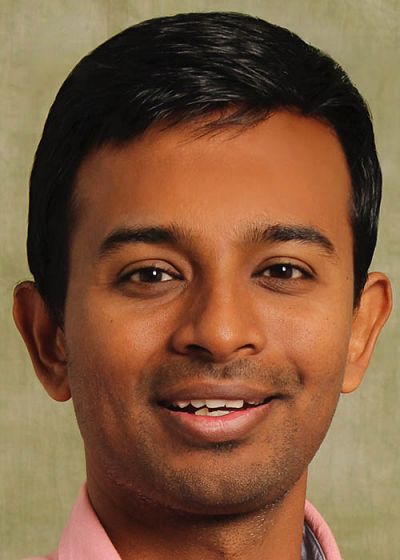
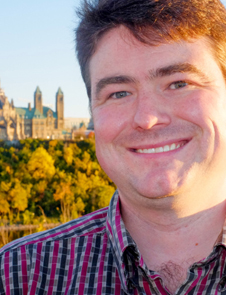
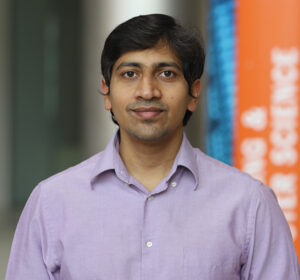
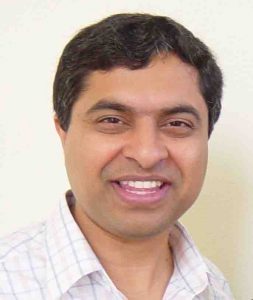
Marlene Bonmann is a researcher at Chalmers University of Technology, specializing in Terahertz and Millimetre-Wave Laboratory and Graphene Field-Effect Transistor (FET) studies. Her work spans from 2016 to 2024, focusing on high-frequency electronics, powder dynamics monitoring, and fluidized bed diagnostics. Research Interests : Graphene FETs, Terahertz radar, powder flow analysis, and plasma wave imaging. Projects : Contributed to the Graphene Core Project 3 (Graphene Flagship) (2020–2023). Key Trends : Recent work emphasizes Terahertz radar applications for pharmaceutical manufacturing and 340-GHz FMCW radar systems for particle cloud characterization.
Dr. Riccardo Pilato is an active researcher in particle and high-energy physics, with affiliations to major experimental collaborations like LHCb and MUonE. His work focuses on precision measurements, CP symmetry breaking, and rare decay analysis in the context of the Standard Model. Recent research outputs highlight his contributions to understanding fundamental symmetries and interactions in particle physics. Key areas include: Hadronic contributions to the muon $g-2$ CP violation in baryon decays Bose-Einstein correlations in proton collisions Angular distributions of $B_s^0$ decays Branching fraction measurements for rare processes His work spans both theoretical and experimental domains, utilizing collider data to test electroweak interactions and explore matter-antimatter asymmetry.
Laurent Schmalen is a full professor at the Karlsruhe Institute of Technology (KIT), co-directing the Communications Engineering Laboratory (CEL). He holds a Dipl.-Ing. and Dr.-Ing. in Electrical Engineering from RWTH Aachen University (2005 and 2011). Previously, he worked at Alcatel-Lucent Bell Labs (2011–2019) and led the Coding for Optical Communications department at Nokia Bell Labs (2016–2019). His research focuses on channel coding, machine learning, optical communications, and high-speed data transmission. Education and Professional Experience: 1999: Abitur at Lycée Classique Diekirch (Luxembourg) 2005: Diploma in Electrical Engineering and Information Technology, RWTH Aachen University 2011: PhD (summa cum laude) in Electrical Engineering, RWTH Aachen University 2011–2019: Research roles at Bell Labs 2014–2019: Visiting Lecturer at University of Stuttgart 2019–present: Full Professor at KIT Research Interests: His work spans channel coding (e.g., LDPC codes), machine learning for communications, modulation formats, and optical transmission systems. Key areas include non-linear channel analysis, probabilistic constellation shaping, and FEC optimization for fiber optics. Awards and Recognition: IEEE Fellow (2023) ERC Consolidator Grant (2023) Best Paper Awards in IEEE journals (2016, 2018) E-Plus Prize for Doctoral Thesis (2011) Editorial and Leadership Roles: Associate Editor, IEEE Transactions on Communications TPC Co-Chair, International Symposium on Topics in Coding (ISTC 2025) General Co-Chair, ITG Conference on Systems, Communications, and Coding (2025) Labs and Teams: He co-leads the Communications Engineering Lab (CEL) at KIT, focusing on cutting-edge research in optical communications and machine learning applications.
Nitish Kumar Panigrahy is an Assistant Professor in the School of Computing at Binghamton University. His academic background includes a PhD in Computer Science from the University of Massachusetts Amherst (2021), an MS from the Indian Statistical Institute Kolkata, and a Bachelor's degree from National Institute of Technology Rourkela, India. Prior to this role, he served as a postdoctoral researcher at the NSF Engineering Research Center for Quantum Networks, working with Prof. Leandros Tassiulas (Yale University) and Prof. Don Towsley (UMass Amherst). His research focuses on modeling, optimization, and performance evaluation of quantum information networks, with applications to quantum networks, IoT, cloud computing, and content delivery systems. His work has been recognized with awards such as the IEEE Quantum Week'23 Best Paper Award (Second Place) and the IEEE MASCOTS '18 Best Paper Runner-Up Award. Panigrahy actively serves on the Technical Program Committees (TPC) of major conferences including ACM SIGMETRICS 2025, IEEE QCE 2024, and IEEE GLOBECOM 2023. He is also engaged in advancing quantum networking through initiatives such as satellite-based quantum entanglement distribution and quantum virtual private networks. His team at Binghamton University is recruiting students interested in quantum information systems and network science.
Matthias Grosse Perdekamp is a Professor of Physics and Nuclear, Plasma, and Radiological Engineering at the University of Illinois. He holds concurrent roles as a Professor at the European Union Center, Center for East Asian and Pacific Studies, and Center for Global Studies. His research focuses on high-energy nuclear physics, particularly in heavy ion collisions, particle spectroscopy, and detector design for experiments like PHENIX and COMPASS. He has contributed to studies of azimuthal anisotropy, quarkonium suppression, and transverse spin physics. His work includes leadership in the design of the Electron Ion Collider’s ECCE detector and collaborations on radiation-hard materials for LHC detectors. He was awarded the APS Fellow designation in 2015 for his contributions to nuclear physics. Research interests span Hadron Physics, Muon Physics, and Quantum Chromodynamics. Key contributions include studies on strange meson spectroscopy, direct photon production, and jet quenching in relativistic collisions. His recent articles highlight advancements in detector technology and precision measurements of spin-dependent effects in particle interactions.
Andrew Lance is a Senior Research Fellow at the International Centre for Radio Astronomy Research (ICRAR) at The University of Western Australia. His research focuses on quantum cryptography, quantum key distribution (QKD), and continuous variable quantum systems. He has contributed to advancements in error correction codes, noise mitigation in quantum communication, and quantum state sharing. Lance holds a prestigious Eureka Prize for Scientific Research (2006), recognizing his impactful work in quantum information science. His research explores cutting-edge topics such as finite-size effects in QKD protocols, design of robust codes for low signal-to-noise regimes, and integration of quantum random number generators. Key areas of interest include securing quantum communication channels, optimizing quantum protocols for real-world applications, and advancing fundamental understanding of quantum phenomena like entanglement and coherence. Lance’s work spans theoretical and experimental aspects of quantum technologies, with a particular emphasis on practical implementations of quantum cryptography. His publications highlight contributions to both foundational science and applied engineering solutions for quantum systems.
Jasminder Sidhu is a Research Fellow in the Physics Department at the University of Strathclyde's Faculty of Science. She works at the interface of finite and one-shot quantum information theory, collaborating closely with experimentalists and engineers on satellite quantum communication missions including the UK Quantum Communications Hub, QUARC/ROKS, and Canadian QEYSSat missions. Her educational background includes: PhD from the University of Sheffield MSci in Physics from Imperial College London Sidhu's research bridges theoretical quantum information with practical implementations, focusing on developing finite key analyses for quantum key distribution, efficient routing protocols for quantum resources, precision limits for quantum metrology and sensing, and practical quantum receivers. Her work addresses real-world constraints in quantum communication systems, with particular emphasis on space-to-ground quantum channels where finite statistics naturally arise. Her recent publications demonstrate a strong focus on satellite quantum communications and practical quantum information processing, analyzing performance under real-world constraints like atmospheric turbulence, channel loss, and finite measurement statistics. Her research provides critical insights for implementing quantum communication technologies in space-based systems. Her notable awards include: Fellow of the Higher Education Academy (April 2018) SUPA Short Term Visits Funding Recipient (January 10, 2021) Global engagements Funding Recipient (February 2020) Sidhu has been heavily involved in teaching and public outreach, speaking at secondary schools to engage students with quantum technologies and developing educational animations featured in the UK National Quantum Technologies Showcase. As Science Faculty Representative for public engagement at Strathclyde, she implements strategic goals toward the university's 2025 Vision. Her research is supported through multiple projects including the EPSRC Quantum Communications Hub (2019-2025) where she collaborates with principal investigator Daniel Oi. She actively contributes to the quantum research community through professional activities including organizing the International Network in Space Quantum Technologies (INSQT W3) and serving on the program committee for the Theory of Quantum Computation, Communication and Cryptography (TQC23), demonstrating leadership in advancing satellite-based quantum communication technologies.
James McDonald serves as an Assistant Professor in the Department of Mechanical Engineering within the Faculty of Engineering at the University of Ottawa. He joined the university in July 2013 after working at the Centre for Computational Engineering Science at RWTH Aachen, Germany (2010-2013), where he developed advanced models for non-equilibrium gas flows. His academic credentials include: Ph.D. in Aerospace Studies from the University of Toronto M.A.Sc. from the University of Toronto B.Eng. from Dalhousie University Professor McDonald specializes in non-equilibrium gas flows , micro-scale fluid dynamics , and computational fluid dynamics . His research develops novel moment-closure models using maximum-entropy methods to solve flows where Navier-Stokes equations fail, with applications spanning rarefied gas dynamics, plasma physics, multi-phase systems, and radiation modeling. His work enables accurate simulation of hypersonic, micro-scale, and highly rarefied flows. Analysis of his recent publications (2020-2025) reveals a consistent focus on extending moment-closure techniques to diverse non-equilibrium flow regimes. Key advancements include globally hyperbolic closures using orthogonal polynomials, applications to plasma discharges and multiphase flows, and solutions for relativistic gases. His research consistently addresses realizability and numerical stability challenges in complex flow simulations.
Georgios Tzimpragos is an Assistant Professor in the Department of Computer Science and Engineering at the University of Michigan, College of Engineering. His research focuses on advanced hardware systems, including superconducting electronics, quantum computing, FPGA design, and energy-efficient architectures. He emphasizes independent student research leadership, with weekly one-on-one meetings and occasional lab visits. Students are expected to present progress in weekly group meetings using slide summaries. He actively supports internships, particularly during summer, and encourages teaching experiences via GSI roles. Research interests span superconducting circuits, temporal logic applications, and hardware acceleration for machine learning. Key venues include ISCA, ASPLOS, MICRO, and PLDI. Funding for conference participation prioritizes students with accepted papers, leveraging university and external resources. Vacations are respected, with one-month advance notice required except during critical deadlines. Publications emphasize novel circuit designs (e.g., clockless SfQ logic, superconducting memory) and tools like PyLSE for superconductor electronics. His group develops hardware instrumentation frameworks and explores low-power computing paradigms. No formal awards are listed, but contributions to Rackham-funded initiatives highlight collaborative research efforts.
Prof. Ping Lam is a Professor in the Department of Quantum Science & Technology at Australian National University (ANU), serving as an ARC Laureate Fellow (2015). His research focuses on quantum communication, quantum memory, laser levitation, squeezed light, quantum sensing, and metrology. He holds a BSc from the University of Auckland and MSc/PhD from ANU. His work spans theoretical and experimental quantum technologies, with contributions to quantum key distribution protocols, entanglement purification, and quantum state manipulation. Notable projects include the ARC Centre of Excellence for Quantum Computation and Communication Technology and collaborations on optical levitation systems and photothermal effects in resonators. Research Interests: Quantum communication, quantum memory, laser levitation, squeezed light, quantum sensing, and metrology. Awards: ARC Laureate Fellow (2015). Key Projects: Includes quantum levitation of macroscopic systems, cryogenic imaging facilities, and satellite-based quantum communication. Recent articles emphasize advancements in quantum metrology, continuous variable systems, and machine learning applications in quantum optics. His work bridges fundamental quantum physics with practical applications in secure communication and precision measurement.
Dr. Venkata S.S. Gandikota is an Assistant Professor in the Department of Electrical Engineering and Computer Science at Syracuse University. He is an Affiliate Faculty at the EnCORE Institute for Emerging CORE Methods in Data Science and an IEEE Senior Member. His research focuses on algorithmic principles for data recovery under noise, leveraging coding theory and structured redundancy to design efficient machine learning and distributed computing algorithms. Key areas include sparse recovery, error-correcting codes, and lattice-based methods. Education Ph.D. Computer Science, Purdue University MS Computer Science, Purdue University MSc Mathematics & B.E. Computer Science, Birla Institute of Technology and Science, Goa, India Research interests span Foundations of Machine Learning, Algorithms for Big Data, Coding Theory, Information Theory, and Lattice Algorithms. His work integrates combinatorial coding principles with modern machine learning challenges, emphasizing robustness against noise and computational efficiency. Recent trends in his publications include advancements in compressed sensing, distributed clustering, and quantum hypothesis testing. Awards: CUSE Seed Grant, SOURCE RA Grant, IEEE Senior Member designation Grants: Supported by CUSE and SOURCE RA grants for research in algorithmic data recovery and distributed systems Labs/Teams: Active contributor to the EnCORE Institute, focusing on emerging data science methodologies
Sridhara Dasu is a Professor of Physics at the University of Wisconsin–Madison, affiliated with the Department of Physics and the High Energy Physics group. His primary research focus is experimental particle physics, with contributions to the CMS experiment at CERN's Large Hadron Collider (LHC). He has played a key role in the discovery of the Higgs boson and ongoing studies of its properties, as well as searches for dark matter and new physics beyond the Standard Model. Dasu has also been instrumental in designing future collider projects, including the Muon Collider and Linear Collider Facility. Education: PhD in Physics from the University of Rochester (1988–1992), postdoctoral research at SLAC National Accelerator Laboratory (1983–1988). He previously contributed to the BaBar experiment at SLAC, the ZEUS experiment at DESY, and the SLD experiment at SLAC. Research Interests: Fundamental particle interactions, high-energy collider physics, detector development for CMS, and advancing compact lepton colliders. His work combines experimental data analysis with theoretical interpretations to probe unresolved questions in particle physics, such as the nature of dark matter and the Higgs mechanism. Administration & Teaching: Served as Chair of the UW-Madison Physics Department from 2018–2021, overseeing faculty hiring, graduate student support, and computing infrastructure. Teaches courses including Particle Physics (Physics 535/735), Computational Physics (Physics 433), and undergraduate seminars. Collaborations: Active member of the CMS Collaboration, BaBar Collaboration, and International Muon Collider Collaboration. His group operates the UW Tier-2 computing center supporting CMS data analysis.
Todd Martinez is the David Mulvane Ehrsam and Edward Curtis Franklin Professor of Chemistry and Professor of Photon Science at Stanford University, affiliated with SLAC National Accelerator Laboratory. His research focuses on theoretical and computational chemistry, with emphasis on photochemistry, mechanochemistry, and quantum mechanical methods. He earned his PhD in Chemistry from UCLA in 1994, followed by postdoctoral work at UCLA and the Hebrew University in Jerusalem before joining Stanford in 2009. His group develops novel simulation tools, including GPU-accelerated quantum chemistry software (e.g., TeraChem) and virtual reality interfaces (InteraChem and MolAR) for interactive molecular modeling. Key interests include predicting molecular behavior under light and mechanical force, designing self-healing materials, and advancing reaction discovery through first-principles methods. Awards include the MacArthur Fellowship and recognition as a Fellow of the American Academy of Arts and Sciences. Education: PhD in Chemistry (UCLA, 1994); Postdoctoral Studies at UCLA and Hebrew University (Jerusalem) Research Themes: Molecular modeling, excited-state dynamics, mechanochemical reactions, and computational tools Publications span ultrafast spectroscopy, quantum mechanical modeling, and algorithm development for large-scale simulations. The Martinez Group’s work bridges theory and application, aiming to make molecular design predictive and accessible through interdisciplinary collaborations.
Mohsen Farid is a Senior Lecturer in Data Science at the College of Science and Engineering. His research spans interdisciplinary areas including artificial intelligence, machine learning, neurotechnology, and healthcare analytics. He has contributed to advancements in genomics data management, video authentication, and neurotechnological solutions for mental health conditions like PTSD. His work frequently integrates computational methods with real-world applications in healthcare and cybersecurity. Key research outputs include studies on storage-optimized genomics systems (2024), neurotechnological interventions for PTSD (2023), and deep learning analyses of histopathology images (2021). His earlier contributions include gait recognition systems (2018) and semantic mapping of legal arguments (2015). Farid’s publications reflect a strong focus on applied data science and its societal impact, particularly in healthcare, security, and biomedical engineering. While no specific awards or grants are explicitly mentioned, his extensive publication record highlights sustained contributions to interdisciplinary data-driven research. His articles often address challenges in data management, pattern recognition, and ethical applications of AI.
Dr. Andrés M. Somoza Gimeno is a Professor in the Department of Physics at the Faculty of Chemistry , Universidad de Murcia, Spain. His research focuses on condensed matter physics, particularly in the study of electronic transport in disordered systems, phase transitions, and nanoscale charge dynamics. Key research areas include: Coulomb and electron glasses Variable-range hopping Surface charge analysis via scanning probe microscopy Many-body localization Phase transitions in 2D and 3D systems His work combines theoretical modeling with numerical simulations, targeting topics like charge distribution in graphene oxide, conductivity anomalies in disordered semiconductors, and critical behavior in strongly correlated systems. Publications span from 2001 to 2025, reflecting continuous contributions to condensed matter physics and nanoscale transport phenomena. Education: PhD in Physics (1989) from Universidad Autónoma de Madrid, thesis on phase transitions in liquid crystals under Dr. Pedro Tarazona Lafarga