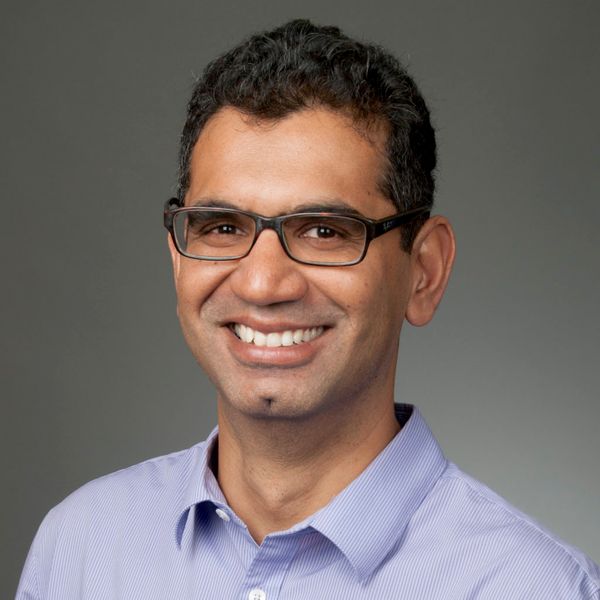
Dr. Krishnendu Guha is an Assistant Professor and CONNECT Funded Investigator at the School of Computer Science and Information Technology, University College Cork. His research bridges embedded systems, cybersecurity, and quantum-safe hardware design with AI and bio-inspired strategies. PhD: University of Calcutta (Department of Science and Technology, Government of India) Postdoctoral: University of Florida Past Roles: Research Fellow at Intel India, Visiting Scientist at Indian Statistical Institute, Temporary Assistant Professor at NIT Jamshedpur His research focuses on embedded systems security , real-time security mechanisms , and quantum-safe hardware . He integrates AI (e.g., neural networks) and bio-inspired strategies (e.g., gecko crypsis behavior) into security frameworks for FPGAs and edge platforms. Recent publications highlight trends in blockchain for supply chains , quantum machine learning , secure FPGA architectures , and distributed AI systems . His work addresses energy efficiency, fault detection, and decentralized security in hardware. As a CONNECT Centre member, Dr. Guha contributes to advanced research in reconfigurable systems and cybersecurity. Grants and collaborations span quantum-safe design, cloud FPGA security, and hardware trojan mitigation.
Hugh Churchill is a Professor in the Department of Physics at the University of Arkansas, College of Arts & Sciences. His research focuses on quantum materials and devices, particularly condensed matter physics with applications in 2D systems and quantum transport. Education: PhD in Physics from Harvard University, BA in Physics and BM in Music Performance from Oberlin College Recent research trends include studies on 2D materials like transition metal dichalcogenides and black phosphorus, investigating quantum transport phenomena, supercurrent tuning, strain engineering for exciton control, and applications of machine learning in quantum material discovery. His work also explores THz emission mechanisms and quantum noise mitigation strategies. Arkansas Research Alliance Fellow Presidential Early Career Award for Scientists and Engineers NSF CAREER Award ORAU Powe Junior Faculty Award AFOSR Young Investigator Connor Faculty Fellowship Hugh teaches graduate and undergraduate courses in quantum mechanics, modern physics, and 2D materials, including PHYS 5413 Quantum Mechanics I and PHYS 6713 Condensed Matter Physics II.
Joseph S. Friedman is an Associate Professor of Electrical & Computer Engineering at the University of Texas at Dallas, leading the NeuroSpinCompute Laboratory within the Erik Jonsson School of Engineering and Computer Science. His research focuses on unconventional computing paradigms leveraging nanotechnology, including neuromorphic systems, spintronics, and memristive devices. He specializes in nanomagnet-based logic architectures, neuromorphic computing with domain walls and skyrmions, and hardware security for emerging technologies. His research explores energy-efficient computing through novel paradigms such as reversible skyrmion logic, neuromorphic networks using magnetic tunnel junctions, and stochastic Bayesian inference circuits. He has pioneered spintronic neurons demonstrating 94% accuracy in handwritten digit recognition and developed secure logic locking mechanisms using nanomagnet logic. His work integrates experimental fabrication with SPICE modeling, emphasizing scalable beyond-CMOS systems. Recent advancements include toggle SOT-MRAM architectures, quantum circuit design for neutral atom systems, and neuromorphic networks leveraging superconducting flux quanta. He advises over 20 graduate and undergraduate students, fostering innovation in AI hardware and unconventional computing. Notable projects include the NeuroSpinCompute Lab's domain wall neuromorphic networks, secure logic locking schemes, and collaborations with institutions like Sandia National Labs on neuromorphic reservoir computing. Current research trends emphasize low-energy spintronic architectures, hybrid quantum-classical systems, and neuromorphic applications in edge computing. His research is supported by NSF grants CCF-1910800 and CCF-2146439, focusing on neuromorphic and spintronic systems. He regularly contributes to conferences like IEEE Rebooting Computing and SPIE Spintronics, showcasing breakthroughs in nanomagnetic logic and neuromorphic inference.
Donald Spector is Professor of Physics at Hobart and William Smith Colleges (HWS), where he has been a faculty member since 1989. He holds a Ph.D. in Physics from Harvard University (1986) and has taught at Harvard, Cornell, and the University of Utrecht. He is affiliated with the Department of Physics in the School of Natural and Social Sciences and has served as coordinator of the Engineering Program and chair of the Physics Department. Ph.D., Harvard University, 1986 A.M., Harvard University, 1983 A.B., Harvard University, 1981, magna cum laude His research centers on supersymmetry, quantum field theory, and mathematical physics, with significant contributions to Q-balls, magnetic monopoles, and duality in supersymmetric quantum mechanics. He explores the intersection of physics with number theory, set theory, and computational complexity. His interdisciplinary work spans physics and the arts, particularly music (e.g., John Cage, Terry Riley) and theatre (e.g., Waiting for Godot ). His recent publications reveal a strong trend toward foundational questions in physics and information theory, especially the application of set-theoretic forcing to generalize information theory. His work bridges theoretical physics, mathematics, and the humanities, often drawing analogies between physical principles and artistic expression. Scientific awards and honors include: Teaching awards at Harvard and Cornell NSF-NATO Postdoctoral Fellowship KITP Scholar (2005–2008) Japan Society for the Promotion of Science Visiting Fellowship Philip J. Moorad Professor of Science (2005–2010) FQXi Grant (2013–2015) Spector has been regularly funded by the National Science Foundation, FQXi, KITP, and JSPS. He has supervised student research in quantum mechanics and simulated annealing. He is a founding member and board member of the Anacapa Society, which promotes theoretical physics at undergraduate institutions. He teaches courses such as Quantum Computing, Modern Physics, and interdisciplinary seminars like Physics through Star Trek and Time Travel & Multiple Universes . He is involved in multiple labs and collaborative initiatives, including organizing workshops at the Kavli Institute for Theoretical Physics and contributing to interdisciplinary projects at the Institute for Science and Interdisciplinary Studies. His recent work includes performing in plays and providing dramaturgical support for theatre productions.
Dr. Youngchan Kim is a Lecturer in Quantum Biology at the University of Surrey , serving as Director of the Quantum Biology Doctoral Training Centre (QB-DTC). He is affiliated with multiple departments including the School of Biosciences, Advanced Technology Institute, and Quantum Sciences Group. PhD in Physics (2011), Korea Advanced Institute of Science and Technology MSc in Physics (2008), KAIST BSc in Physics (2006), Chung-Ang University Graduate Certificate in Learning and Teaching (2022), Advance HE His research focuses on quantum phenomena in biological systems at physiological temperatures, particularly using femtosecond optical spectroscopy and genetically engineered fluorescent proteins to explore evolutionary adaptations and develop quantum-bio-inspired technologies like room-temperature single-photon sources. The 15 most recent publications span quantum biology, biophotonics, and optical spectroscopy, with particular emphasis on quantum coherence in biological systems , terahertz birefringence , fluorescent protein dynamics , and biomedical imaging innovations . These works demonstrate his interdisciplinary approach bridging physics, biology, and medical applications. As QB-DTC Director, he leads transdisciplinary initiatives fostering collaboration between quantum physics and biosciences. His technical expertise includes time-correlated single-photon counting , common-path interferometry , and ultrafast fluorescence depolarization techniques.
Dr. Yu Zhong is an Assistant Professor in the Department of Materials Science and Engineering at Cornell University's College of Engineering, where he leads the Yu Zhong Group. His research laboratory focuses on the design and synthesis of novel soft materials and nanomaterials for applications in electronics, energy, healthcare, and sustainability. As a principal investigator, he oversees a dynamic research team comprising postdoctoral associates, graduate students, and undergraduate researchers working on cutting-edge materials science projects. Dr. Zhong received his educational training at prestigious institutions, earning his B.S. in Chemistry from the University of Science and Technology of China (USTC) in 2011, followed by a Ph.D. in Chemistry from Columbia University in 2017 under the supervision of Prof. Colin Nuckolls. His doctoral research centered on designing contorted molecules for electronic and energy applications including organic solar cells, photodetectors, and gas sensors. He then conducted postdoctoral research at the University of Chicago in Prof. Jiwoong Park's group, where he worked on the design and synthesis of 2D polymers for ultrathin electronic circuits and energy conversion. Dr. Zhong's research program spans three primary directions: (1) the bottom-up synthesis of ultrathin nanoporous membranes using techniques like laminar assembly polymerization (LAP) for applications in water desalination, nanofiltration, and gas separation; (2) the study of transport behaviors in hybrid organic-inorganic 2D heterostructures created through layer-by-layer assembly for use in optical, electronic, and thermal management devices; and (3) the development of mixed ionic-electronic materials for bio-inspired and bioelectronic devices. His group employs advanced synthesis methods including organic/polymer synthesis, supramolecular and reticular chemistry, and 2D materials characterization to explore novel scientific phenomena and technological applications. An analysis of Dr. Zhong's recent publications reveals a strong focus on the synthesis and characterization of 2D polymers and organic-inorganic hybrid materials. His work bridges fundamental materials science with practical applications in energy conversion, electronics, and separation technologies. A notable trend is his development of innovative synthesis techniques like laminar assembly polymerization that enable precise control over material structure at the molecular level, leading to breakthroughs in areas such as lithium-ion transport, osmotic power generation, and ultra-narrowband photodetection. Dr. Zhong's scientific achievements have been recognized with several prestigious awards: Pegram Award for Meritorious Graduate Research, Columbia University (2016) Camille and Henry Dreyfus Postdoctoral Fellowship, Dreyfus Foundation (2016) Arun Guthikonda Memorial Fellowship, Columbia University (2015) Jack Miller Award for Excellence in Teaching, Columbia University (2014) As an advisor, Dr. Zhong mentors a diverse group of researchers including postdoctoral associate Qiyi Fang, multiple Ph.D. students (Yuhe Zhang, Kaushik Chivukula, William Xie), M.S. students, and undergraduate researchers. His group has secured funding for research on soft and nanomaterials, with projects spanning organic electronics, 2D materials synthesis, and biomimetic membranes. Dr. Zhong actively seeks motivated graduate students and postdoctoral fellows to join his research team, emphasizing the importance of interdisciplinary collaboration in advancing materials science. The Yu Zhong Group operates state-of-the-art laboratories in Bard Hall at Cornell University, equipped for organic synthesis, materials characterization, and device fabrication. The research team works collaboratively across disciplines, partnering with experts in physics, chemistry, and engineering to tackle complex challenges in materials science. Current projects focus on developing novel synthesis methodologies and exploring structure-property relationships in soft materials to enable next-generation electronic, energy, and healthcare technologies.
Ankit Kariryaa is a Tenure Track Assistant Professor at the Department of Computer Science and Department of Geosciences and Natural Resource Management , University of Copenhagen. His work bridges Machine Learning and Environmental Informatics , focusing on remote sensing, geospatial analysis, and ecological modeling. University of Copenhagen, Denmark Machine Learning Section, Department of Computer Science Geography, Land, Environment and Society, Department of Geosciences Kariryaa specializes in applying deep learning and computer vision to environmental challenges. His research includes: Automated tree detection and biomass estimation via satellite imagery Multi-modal geospatial representation learning Monitoring farmland tree decline and carbon sequestration potential Agroforestry system mapping using AI Developing AI tools for climate policy and sustainability Recent work trends show a focus on quantum-inspired machine learning , environmental monitoring , and cross-cultural AI applications . His 15 most recent publications span topics in remote sensing , ecological modeling , and AI ethics , with methods ranging from neural networks to tensor-based learning. He collaborates across disciplines, notably with researchers in ecology , climate science , and quantum computing . His outreach includes seminars on AI in agroforestry and ecosystem management , while his team contributes to global tree resource databases like TreeSense.
Bradley Nilsson is a Professor of Chemistry at the University of Rochester, Department of Chemistry. He leads the Nilsson Group, focusing on peptide self-assembly, amyloid structures, and their applications in biomedicine and materials science. His work bridges organic, biological, and materials chemistry, with notable contributions to amyloid-inspired hydrogels and HIV transmission mechanisms. He received the 2016 Goergen Award for Excellence in Teaching and the 2012 NSF CAREER Award. Education: PhD in Organic Chemistry (2003, University of Wisconsin-Madison), postdoctoral research at UC Irvine. He joined Rochester in 2006. Research interests include molecular recognition in amyloid peptides, SEVI fibrils' role in HIV transmission, and hydrogel development for tissue engineering. His lab has pioneered studies on stimulus-responsive self-assembly and co-assembly of peptides. Key achievements include the reductive trigger for peptide hydrogelation (JACS 2010), and NIH-funded work on anti-HIV microbicides. Current projects explore amyloid-β oligomer toxicity, SEVI mechanisms, and functional biomaterials from simple amino acid derivatives. Lab members include graduate students Elena Quigley, Melissa Jagrosse, Francine Yanchik, Hannah Distaffen, and Chris Jones. The lab collaborates on interdisciplinary projects funded through NIH and NSF grants.
Anomadarshi Barua is an Assistant Professor in the Department of Cyber Security Engineering at George Mason University, leading the System Design and Security research group. His work spans hardware-software co-design for securing cyber-physical systems (CPS), robotics, and sensors. Prior Affiliation: PhD from University of California, Irvine (2023) Industry Experience: Intel Corporation, Solidigm, Nordic Semiconductor, IDEAS Research Themes: Focuses on multimodal system security (audio, visual, electromagnetic data), analog-digital signal integrity, and quantum-inspired defenses in CPS. Key applications include healthcare systems, smart grids, and industrial control systems (ICS). Recent ACSAC 2024 paper acceptance Best Paper Award at ACSAC 2022 NSF panel reviewer (2024) Labs & Collaborations: Collaborates with University of Louisville on robotics and works on Commonwealth-funded UG research (2024). Publications in ACM CCS, USENIX, CHES, and IEEE Transactions (TDSC, TIFS).
Dr. Huadong Mo is a Senior Lecturer at the School of Systems and Computing, University of New South Wales (UNSW) Canberra, Australia. He holds a B.E. degree in automation from the University of Science and Technology of China (2012) and a Ph.D. in systems engineering and engineering management from the City University of Hong Kong (2016). Prior to his current position, he was a research associate at ETH Zurich's Reliability and Risk Engineering Lab (2016-2019) and a Lecturer at UNSW Canberra (2019-2021). Dr. Mo's educational background includes a strong foundation in systems engineering with international experience across China, Switzerland, and Australia. His career trajectory demonstrates a progression from academic research to faculty positions with increasing responsibilities in teaching and research leadership. His research focuses on enhancing the resilience, performance, and security of complex systems using learning-based algorithms, primarily in power and energy systems, cyber-physical systems, and manufacturing systems. He applies data analytics to understand system evolution under uncertainties, with particular emphasis on prognostics and health management, sustainable transportation, robust operation of power systems under extreme events, and reinforcement learning-based asset management. His work bridges theoretical advances with practical applications in critical infrastructure. Analysis of Dr. Mo's recent publications reveals a strong focus on energy systems, particularly in the integration of machine learning with power grid management, battery storage systems, and resilience against cyber threats. His research shows a clear trajectory toward increasingly complex system integration, with growing emphasis on multi-vector energy communities, cross-domain prediction, and uncertainty-aware energy management. The interdisciplinary nature of his work spans electrical engineering, computer science, and operations research. 2024 IEEE SMC Early Career Award 2023 Visiting Research Fellowship (Jean d'Alembert Pour Fellowship) Gold Medal in 2024 China International College Student Innovation Competition (as supervisor) Arc PGC Supervisor Award (2021) IEEE SMC Outstanding Chapter Award (2021) Alumni Achievement Award from City University of Hong Kong (2019) Dr. Mo actively supervises numerous HDR students working on cutting-edge research topics including battery health monitoring, quantum control, reinforcement learning for power systems, and explainable AI for energy management. He leads multiple significant research grants totaling over 3 million AUD, including projects funded by ARC, Energy Innovation Fund, and international collaborations with institutions like ETH Zurich, Cambridge, and Tsinghua University. His research group maintains strong international connections, facilitating student exchanges and collaborative research. As Postgraduate Course Coordinator of Systems Engineering and Chair of IEEE SMC ACT Chapter, Dr. Mo plays a significant role in academic leadership and professional community building. His research team collaborates with industry partners on practical implementations of their theoretical work, particularly in the energy sector.
Pankaj Mehta is a Professor in the Department of Physics at Boston University, with additional affiliations in the Department of Biomedical Engineering. His research bridges statistical physics, theoretical biology, and interdisciplinary systems approaches. Key areas include ecological dynamics, synthetic biology, and the application of machine learning principles to biological systems. His work focuses on understanding emergent phenomena in biological systems, such as cell fate decisions, ecosystem stability, and signal processing in cellular networks. He has pioneered methods combining physics-based modeling with computational tools to study complex systems, including gene circuits, microbial communities, and cancer dynamics. Recent contributions highlight the use of order parameters for interpreting cellular states, geometric frameworks for ecological niches, and machine learning analogies to ecological principles. His interdisciplinary approach integrates experimental data with theoretical models to address questions in biomedicine, environmental science, and fundamental physics.
Maurizio Martina is a Full Professor at the Department of Electronics and Telecommunications (DET) of Politecnico di Torino. He is a member of the Interdepartmental Center PEIC - Power Electronics Innovation Center and serves as an Associate Editor for the IEEE Transactions on Circuits and Systems I (2018-2023). His research focuses include: Digital circuits and signal processing Machine learning hardware architectures RISC-V extensions and post-quantum cryptography VLSI design for edge computing and IoT Recent publications emphasize cryptographic hardware implementations (CHIMERA, Keccak co-processors), RISC-V integration methodologies, and privacy-preserving neural network frameworks. His work spans VLSI architectures for video processing, bio-inspired electronics, and error correcting codes, with applications in cybersecurity, robotics, and biomedical systems. Scientific Recognition : Premio Nazionale Innovazione (2013) Premio dei Premi (2014) He supervises 12 PhD students across cycles 35-40 in Electrical, Electronics and Communications Engineering, including: Valeria Piscopo (2024-in progress) Alessandra Dolmeta (2022-in progress) Luigi Giuffrida (2022-in progress) Walid Walid (2019-2023) As part of the VLSILAB Group , his research explores hardware accelerators for machine learning, post-quantum cryptography on RISC-V, and bio-inspired embedded systems. Teaching activities include courses on Integrated Systems Architecture and Hardware & Wireless Security at Politecnico di Torino and Università di Pavia.
Cristopher Moore is a Professor at the Santa Fe Institute, where he conducts interdisciplinary research at the intersection of physics, computer science, and mathematics. His work focuses on understanding phase transitions in computational problems, statistical inference, and network analysis. Moore has made significant contributions to the fields of complex systems, quantum computing, and algorithmic justice. Moore's primary research areas include phase transitions in computational problems and statistical inference, where he investigates how problems suddenly become hard or impossible to solve when certain thresholds are crossed. His work spans social networks, big data analysis, quantum computing, algorithmic transparency, and decarbonization efforts. He is particularly known for applying physics-inspired approaches to computational problems, using techniques from spin glass theory, network theory, and computational complexity. His recent publications reveal a strong focus on community detection in networks, phase transitions in data science problems, algorithmic fairness in criminal justice systems, and quantum computing applications. Moore's work demonstrates consistent patterns across multiple disciplines, with recurring themes of phase transitions, computational limits, and the application of physics concepts to computational problems. Moore actively mentors students and has advised numerous PhD and Master's students who have gone on to successful careers in academia and industry. His work on algorithmic justice has influenced policy discussions in New Mexico and beyond, particularly regarding risk assessment in the criminal justice system.
Dr. Quirin Thomas Simon Vogel is a Senior Lecturer at the Department of Statistics, University of Klagenfurt. He previously held postdoctoral positions at the Technical University of Munich, New York University Shanghai, and served as an Interim Professor at Ludwig-Maximilians University of Munich. His research bridges probability theory with statistical mechanics and algorithmic applications. Current role: Senior Lecturer (2025) Previous roles: Postdoc (TUM, NYU Shanghai), Interim Professor (LMU Munich) His research focuses on: Random walks and their geometric/stochastic properties Randomized algorithms with applications in statistical models Quantum-inspired probabilistic systems (e.g. interacting bosonic loop soups) Large deviation theory for complex systems Percolation and phase transitions in particle models The articles reflect trends in probability theory, mathematical physics, and algorithmic applications. Key topics include high-dimensional percolation, Bose gas models, neural network theory, and stochastic geometry. The work combines rigorous mathematical analysis with interdisciplinary applications in physics and computer science. Scientific awards and functions cannot be determined from the provided data, as they describe other researchers. The department's research activities include projects on statistical learning, quantum models, and algorithmic probability, though Vogel's direct involvement in these specific funded projects isn't explicitly stated.
Christopher Re is a Professor in the Department of Computer Science at Stanford University, affiliated with the Stanford AI Lab, Machine Learning Group, and Center for Research on Foundation Models. His research focuses on the intersection of machine learning, database systems, and scientific computing, with applications in humanitarian efforts, scientific discovery (e.g., extrasolar neutrinos, DNA foundation model Evo), and industry partnerships with companies like Apple and Google. He has been recognized with prestigious awards, including the MacArthur Foundation Fellowship and multiple test-of-time awards. His work emphasizes advancing thermal materials, phase-change memory, and ultrafast electron microscopy technologies. Re's research contributions span database theory, systems, and machine learning, with best papers at PODS 2012, SIGMOD 2014, and ICML 2016. His lab’s innovations have been incorporated into products globally, and he actively invests in technology startups. Key projects include developing thermal interface materials for 3D integrated circuits and exploring energy-efficient neuro-inspired memory systems. His awards reflect sustained excellence: NeurIPS 2020 and PODS 2022 test-of-time awards, along with recent accolades for student-led initiatives at MIDL 2022 and ICLR22. Re’s interdisciplinary approach bridges academia and industry, driving both scientific and humanitarian impact.