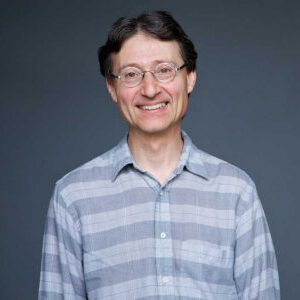
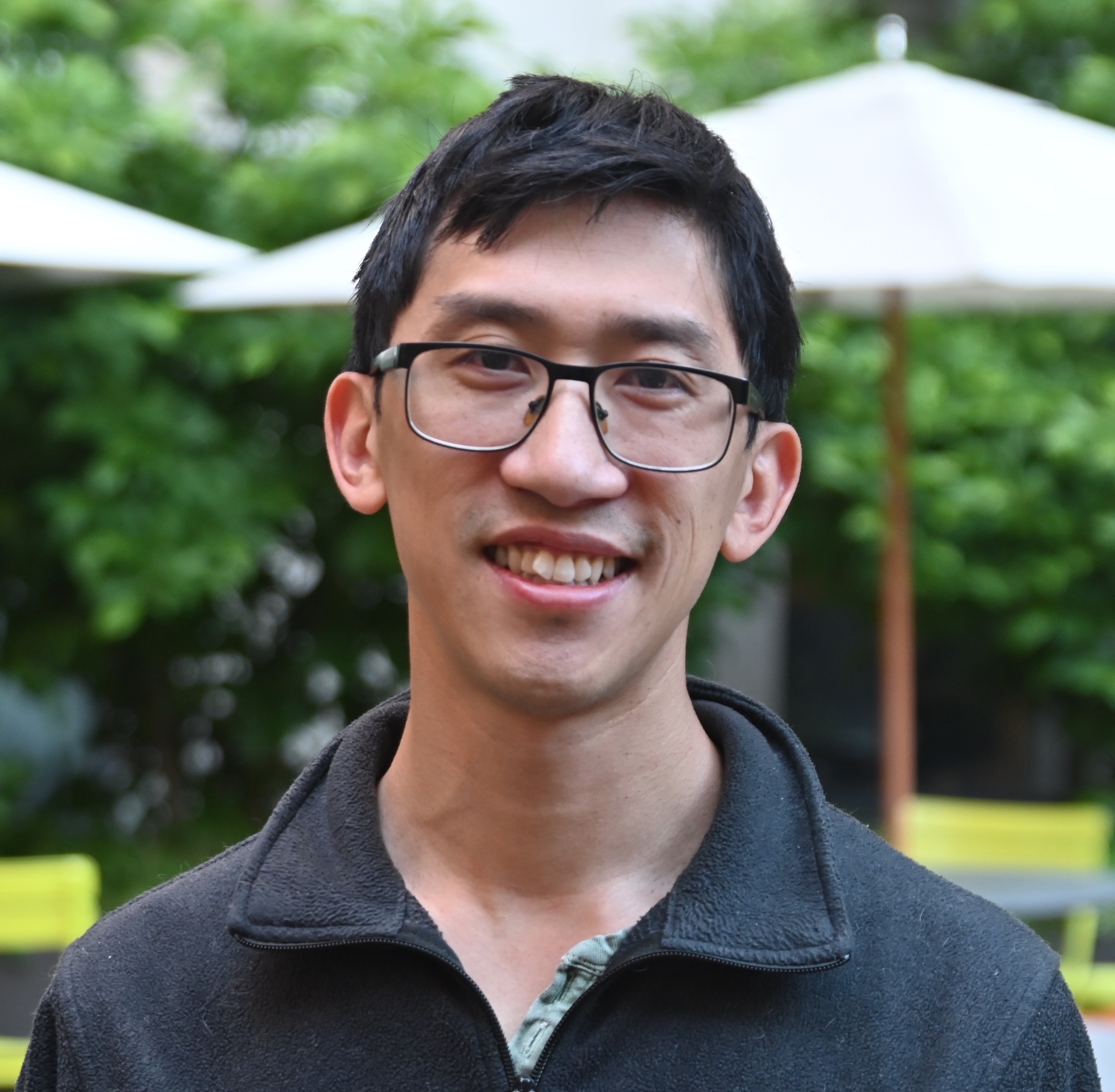
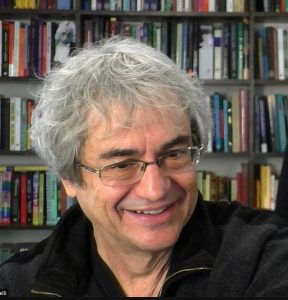
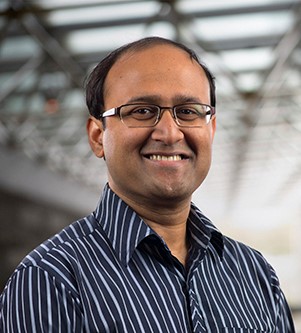
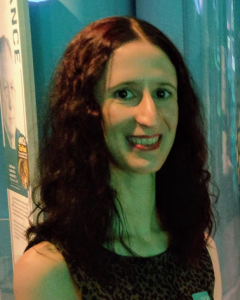
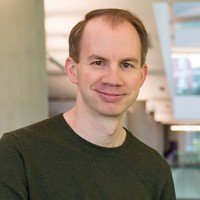
Ian Goldberg is a Professor at the Cheriton School of Computer Science , University of Waterloo, Canada. He holds the Canada Research Chair in Privacy Enhancing Technologies and leads the Cryptography, Security, and Privacy (CrySP) group . He is affiliated with the Cybersecurity and Privacy Institute and the Institute for Quantum Computing . Research Focus: Security, privacy, and privacy-enhancing technologies (PETs) for the Internet, including Off-the-Record (OTR) Messaging , censorship resistance , private information retrieval , and zero-knowledge proofs . Recent Publications: His work addresses metadata protection , deniable authentication , and secure multi-party computation , with applications to anonymous communication and censorship resistance. Scientific Awards: Canada Research Chair in Privacy Enhancing Technologies Students: He advises current and former PhD/Master’s students in projects like Lox , PRSONA , Walkie-Talkie , and SkypeMorph . Notable advisees include Sajin Sasy (Privacy-Preserving Communications), Justin Tracey (PETs Development), and Tao Wang (Website Fingerprinting Defenses). Labs & Teams: Goldberg is a core member of the CrySP group and contributes to the Tor Project and Off-the-Record Messaging open-source initiatives. His research bridges theoretical and applied cryptography, with deployments in real-world systems like Tor and PIR protocols.
Professor Harry E. Ruda holds the Stanley Meek Chair in Advanced Nanotechnology at the University of Toronto's Faculty of Applied Science and Engineering. He directs the Centre for Advanced Nanotechnology and leads the Electronic-Photonic Materials Group. His research spans semiconductor nanostructures, focusing on nanoelectronics and nanophotonics, with notable contributions to nanowire growth, quantum transport, and plasmonic effects. Education: B.Sc. in Physics, Imperial College London Ph.D. in Physics, MIT His research interests include: Semiconductor nanowire growth via VLS process Quantum transport and spintronics Nonlinear optical effects in quantum dots/nanowires Surface state control through passivation Photonic crystal structures for optical devices Carrier dynamics in low-dimensional systems Recent publications highlight advancements in InAs nanowire sensors, Coulomb impurity effects, photonic crystal design, and hybrid superconducting/semiconductor devices. His work bridges fundamental electron dynamics and applied quantum technologies. Scientific Awards: Fellow, Canadian Academy of Engineering Fellow, Royal Society of Canada Fellow, Institute of Physics (UK) Fellow, Institute of Nanotechnology Fellow, Institution of Engineering and Technology Fellow, Institute of Materials, Minerals and Mining Fellow, Canadian Academy of Engineering Teaching: MSE335: Materials Physics MSE490: Professional Ethics and Practice MSE1023: Quantum Transport
Henry Yuen is the Srivani Family Associate Professor of Computer Science at Columbia University, with affiliations in the CS Theory group, Data Science Institute, and Columbia Quantum Initiative. His work bridges theoretical computer science and quantum information, focusing on the computational foundations of quantum systems. Yuen received his BA in Mathematics from the University of Southern California (2010) and PhD in Computer Science from MIT (2016). His research explores quantum complexity theory, quantum cryptography, and quantum information through both theoretical frameworks and practical applications. His recent publications reveal a strong focus on quantum pseudorandomness, quantum circuit complexity, and quantum cryptographic primitives. The research trajectory demonstrates increasing sophistication in connecting quantum computational models with fundamental questions in complexity theory, particularly through the lens of quantum interactive proofs and quantum state complexity. His work frequently intersects with operator algebras and quantum information theory, reflecting the interdisciplinary nature of modern quantum computing research. NSF CAREER award Sloan Fellowship Yuen actively mentors graduate students, with several PhD students having graduated to postdoctoral positions or faculty roles. His service includes co-organizing the Columbia CS Theory Seminar and serving on program committees for major conferences including QIP, STOC, and ITCS. He has organized multiple workshops on quantum computing challenges and cryptography. As a member of the Columbia Quantum Initiative, Yuen contributes to Columbia's growing quantum ecosystem, collaborating across departments to advance both theoretical foundations and potential applications of quantum information processing.
David Jao is a Professor in the Department of Combinatorics and Optimization at the University of Waterloo. His research focuses on post-quantum cryptography, particularly leveraging isogenies of supersingular elliptic curves for secure cryptographic protocols. He is renowned for co-developing the Supersingular Isogeny Key Encapsulation (SIKE) protocol, a leading candidate for post-quantum cryptography standards. His work spans theoretical foundations and practical implementations, including optimizing isogeny-based systems for embedded devices and ARM processors. Research interests include isogeny-based cryptosystems, elliptic curve cryptography, zero-knowledge proofs, and cryptographic security against quantum attacks. He explores applications of expander graphs and Ramanujan graphs in cryptography, alongside algorithmic improvements for cryptographic protocols such as SIDH (Supersingular Isogeny Diffie-Hellman). Key contributions include advancements in key compression techniques for SIKE, side-channel attack mitigation, and formalizing security models for post-quantum key exchange. His publications analyze cryptographic hardness assumptions, such as the discrete logarithm problem in finite groups and the semidirect product structure in isogeny-based systems. Jao’s work bridges theoretical mathematics and applied cryptography, with a focus on ensuring practical security in next-generation cryptographic systems. His research addresses challenges in quantum-resistant authentication, key establishment, and digital signatures, often emphasizing efficiency and resistance to both classical and quantum attacks.
Carlo Rovelli is a Professeur de classe exceptionnelle in the Department of Physics at Aix-Marseille University, holding adjunct roles at Western University's Department of Philosophy and a Distinguished Visiting Research Chair at the Perimeter Institute. He founded the quantum gravity group at the Centre de Physique Théorique (CPT) and is an associate member of the Rotman Institute of Philosophy. His research focuses on loop quantum gravity, relational quantum mechanics, and the history/philosophy of science. He authored influential popular science books including Seven Brief Lessons on Physics (41 languages, 1M+ copies sold) and Helgoland: Making Sense of the Quantum Revolution . Rovelli's work bridges theoretical physics with philosophical inquiry, exploring foundational questions in quantum mechanics, spacetime structure, and the interpretation of physical theories. His recent publications address topics like quantum information theory, gauge symmetries, black hole evaporation, and cosmological implications of quantum gravity.
Jonathan Baugh is a Professor in the Department of Chemistry at the University of Waterloo, serving as Director of the Quantum Information Graduate Program. His research focuses on quantum devices, nanoelectronics, and molecular electronics with affiliations at the Institute for Quantum Computing and Waterloo Institute for Nanotechnology. He leads the Baugh Research Lab, exploring quantum control, semiconductor spin qubits, and superconducting hybrid systems. Research interests include quantum information processing, nanoscale charge transport, and the development of next-generation photonic sources. His work bridges quantum physics and materials science, with recent breakthroughs in dopant-free semiconductors and single-molecule transistors. Publications emphasize scalable quantum architectures, noise mitigation in quantum control, and phase-coherent molecular electronics. Current projects involve cryogenic CMOS device modeling and topological quantum computing in silicon-based systems. No awards are explicitly listed, though his work has been highlighted in invited reviews and special sessions on quantum systems. Advising focuses on graduate students in quantum nanotechnology and condensed matter physics. His lab collaborates on integrated quantum networks and III-V/Si nanowire photodetectors. Labs/Teams: Baugh Research Lab (Quantum Nanoelectronics Group), Institute for Quantum Computing (IQC), Waterloo Institute for Nanotechnology (WIN).
K. Rajibul Islam is an Associate Professor at the University of Waterloo, affiliated with the Institute for Quantum Computing (IQC) and the Department of Physics and Astronomy. He holds a joint appointment with the Perimeter Institute for Theoretical Physics and co-founded Open Quantum Design and Lightflow Optics Inc. His research focuses on quantum information processing, quantum simulation, and trapped ion systems, with applications in quantum computing and entanglement studies. Education: Ph.D. in Physics (2012, University of Maryland), M.Sc. in Physics (2007, Tata Institute of Fundamental Research), B.Sc. in Physics (2005, Jadavpur University). Postdoctoral research at Harvard University (2012–2015) and MIT (2015–2016). Research Interests : Quantum simulation of spin models, quantum computing with trapped ions, entanglement measurement, frustrated spin systems, and quantum materials. His lab, QITI (Quantum Information with Trapped Ions), develops scalable quantum simulators and open-access quantum computers like 'QuantumIon.' Awards : Fellow of the American Physical Society (2024), VAIBHAV Fellowship (2024), Excellence in Teaching Award (2024), Early Researcher Award (2019), and Distinguished PhD Dissertation Award (2012–13). Teaching : Courses include PHYS 701 (Graduate Quantum Physics), PHYS 234 (Quantum Physics I), PHYS 393 (Physical Optics), and PHYS 256 (Geometrical and Physical Optics). He emphasizes outreach via initiatives like Bigyan.org.in , a Bengali-language science platform. Lab and Collaborations : Active in developing trapped-ion quantum hardware, including ion trap designs, optical addressing systems, and holographic control methods. Collaborates on quantum algorithms, machine learning for quantum systems, and experimental quantum thermodynamics.
Olivia Di Matteo serves as an Assistant Professor in the Department of Electrical and Computer Engineering within UBC's Faculty of Applied Science, leading the Quantum Software and Algorithms Research (QSAR) group since her January 2022 appointment. Her academic foundation includes a BSc from Lakehead University and MSc/PhD in Physics (Quantum Information) from the University of Waterloo, completed in 2019. Dr. Di Matteo's research centers on quantum software engineering , with pioneering work in quantum compilation , circuit optimization , and debugging tools . She champions open-source quantum frameworks and develops accessible educational resources to democratize quantum computing. Analysis of her 15 most recent publications (2021-2025) reveals dominant trends in quantum programming infrastructure, particularly circuit analysis (33%), bug classification (20%), and qubit network optimization (15%), with strong emphasis on practical software tooling over theoretical physics. No scientific awards were documented in the source materials. She advises graduate students in the QSAR group while contributing to open-source quantum ecosystems through projects like PennyLane and The Ionizer transpiler, and teaches courses including CPEN 400Q (Gate-model quantum computing) and ELEC 221 (Signals and Systems). The QSAR group operates at the intersection of quantum software development and education, focusing on making quantum programming accessible through visual tools, real-time debugging environments, and hardware-agnostic compilation techniques.
John Capobianco, PhD, is a Professor in the Department of Chemistry and Biochemistry at Concordia University and holds the Honorary Concordia University Research Chair in Nanoscience. His research focuses on lanthanide-doped nanoparticles, upconversion luminescence, and biomedical applications. PhD, University of Geneva Key research areas include: Nanomaterials synthesis and spectroscopy Upconversion for biomedical imaging Drug delivery systems Photodynamic therapy for cancer treatment Optical thermometry and sensing Recent publications highlight advancements in: X-ray detection via photochromic nanoparticles Lipid-coated nanoparticles for lung permeation Cooperative energy transfer in Yb3+/Eu3+ complexes Biocompatible nanomaterials for secure information storage Pr3+-doped radiosensitizers for glioblastoma therapy Scientific recognitions: Honorary Concordia University Research Chair in Nanoscience Teaching includes undergraduate and graduate courses in inorganic chemistry and spectroscopy. His work bridges fundamental material science with applied biomedical engineering, emphasizing optical properties and therapeutic applications of lanthanide-based nanomaterials.
William Sulis is an Associate Clinical Professor in the Department of Psychiatry and an Associate Member of the Department of Psychology at McMaster University, where he also directs the Collective Intelligence Lab (CILab). With a unique interdisciplinary background spanning mathematics, physics, and psychiatry, Dr. Sulis bridges the gap between theoretical science and clinical practice. His educational journey is exceptionally diverse: B.Sc. (Hon) in Mathematics with minor in Theoretical Physics, Carleton University (1976) M.D., University of Western Ontario (1980) M.A. in Mathematics, University of Western Ontario (1984) Ph.D. in Mathematics, University of Western Ontario (1989) FRCPC in Psychiatry (1984) Ph.D. in Theoretical Physics, University of Waterloo (2014) CRCPC in Geriatric Psychiatry (2015) Dr. Sulis's research explores the intersection of complex systems theory with psychological and psychiatric phenomena. His work on Collective Intelligence investigates how group dynamics emerge from individual interactions, while his research on Temperament and Psychobiology examines the continuum between normal personality variations and mental illness. He has made significant contributions to understanding Synchronization in Complex Systems and developed the concept of Transient Induced Global Response Synchronization (TIGoRS) , which has implications for neural coding and information processing. His theoretical work extends to Quantum Foundations and Process Algebra Theory , where he proposes novel approaches to quantum mechanics. Analysis of his recent publications reveals a consistent thread connecting complex systems theory with psychological and psychiatric applications. His work increasingly focuses on bridging the gap between temperament theory and clinical psychiatry, using mathematical and computational approaches to understand mental illness. Simultaneously, he continues to develop theoretical frameworks in quantum physics through process algebra models, demonstrating remarkable interdisciplinary range. Dr. Sulis has received several prestigious awards including The Governor General's Medal for having the highest overall grade point average in his graduating class, the Henry Marshall Tory Scholarship, and multiple Harry Stevenson Southam Scholarships. Throughout his career, Dr. Sulis has mentored numerous students across disciplines, supervising research projects spanning collective intelligence, semantic space modeling, network dynamics, and temperament studies. His Collective Intelligence Lab has served as a hub for interdisciplinary research connecting computer science, psychology, and psychiatry. Dr. Sulis has also been actively involved in professional organizations, serving as President of The Society for Chaos Theory in Psychology and the Life Sciences (1996-1998) and holding editorial positions for several journals including "Dynamical Psychology" and "Nonlinear Dynamics in Psychology and the Life Sciences." As Director of the Collective Intelligence Lab at McMaster University, Dr. Sulis fosters research exploring how complex adaptive systems can model cognitive and social phenomena. The lab serves as an intellectual nexus where mathematics, computer science, psychology, and psychiatry converge to address fundamental questions about intelligence, both individual and collective.
Christopher Ramsey is an Associate Professor and Interim Chair of the Department of Mathematics and Statistics within the Faculty of Arts and Science at MacEwan University in Edmonton, Alberta. He holds a PhD in Pure Mathematics from the University of Waterloo (2013), an MMath from Waterloo, and a BSc Honours from the University of Regina. Dr. Ramsey's research centers on operator algebras and functional analysis, with particular emphasis on non-selfadjoint operator algebras and multivariable operator theory. His work explores connections between analysis and algebra, studying algebras of infinite matrices and their applications to group theory, dynamical systems, free probability, and quantum information theory. He also investigates aperiodic order and its mathematical structures. His recent publications (2020-2025) demonstrate a consistent focus on operator algebras, with significant contributions to C*-algebras, tensor algebras, and their applications. The research spans theoretical foundations in functional analysis while connecting to diverse fields including symbolic dynamics, aperiodic structures, and quantum information. His work often bridges abstract algebraic structures with concrete analytical problems. Dr. Ramsey has received notable recognition including an NSERC Discovery Grant (2019), a MacEwan University Project Grant (2019), and an NSERC Postdoctoral Fellowship (2013). He serves as Editor-in-Chief of the MacEwan University Student eJournal (MUSe) and Associate Editor of the Canadian Transactions of Operator Theory. As an educator, Dr. Ramsey teaches various mathematics courses and supervises senior students' independent studies. His academic service includes editorial work and active participation in the Canadian Mathematical Society. His research program continues to develop connections between operator algebras and their diverse applications across mathematical disciplines.
Michele Mosca is a Professor at the University of Waterloo, affiliated with the Institute for Quantum Computing (IQC). He is based in the Department of Combinatorics and Optimization, with his office located in QNC 3106 at the University of Waterloo in Waterloo, Ontario, Canada. Research Interests: Quantum-safe cryptography Quantum algorithms and complexity Methods of mapping quantum circuits to realistic architectures His research focuses on critical areas for advancing quantum computing technology and ensuring security in the quantum era. As a faculty member at one of the world's leading quantum research institutions, Dr. Mosca contributes to both theoretical and practical aspects of quantum information science.
Stephen Hughes is a Full Professor in the Department of Physics, Engineering Physics and Astronomy at Queen’s University, Canada. He holds appointments in the Faculty of Arts and Science and is affiliated with the Centre for Nanophotonics. His research focuses on theoretical and computational nanophotonics, quantum optics, and light-matter interactions. He has co-founded Lumerical Solutions, a leading photonics software company acquired by ANSYS in 2020, and has held postdoctoral positions in Germany, Japan, and the U.S. Education: PhD (Heriot-Watt University, Edinburgh), Postdoctoral work at NTT Basic Research Labs (Japan) and others. Industry Experience: Co-founder of Lumerical and Galian Photonics. Research interests include quantum photonics, nanophotonics, semiconductor optics, photonic crystals, cavity-QED, quantum dots, and topological photonics. His group explores applications in quantum technologies, optomechanics, and metamaterials. Collaborations span global institutions, focusing on both fundamental physics and applied nanophotonics. Labs/Groups: The Hughes Group (Theoretical Quantum and Nanophotonics) operates a state-of-the-art computational lab funded by CFI and MRI Ontario. Current projects involve inverse design techniques, ultrastrong coupling regimes, and quantum trajectory simulations.
Soumaya Cherkaoui is a Full Professor in the Department of Computer Engineering and Software Engineering at Polytechnique Montréal. Previously, she served as a Full Professor at Université de Sherbrooke and held industrial roles as an aerospace project manager. Her research integrates artificial intelligence with telecommunications, focusing on quantum computing, frugal edge intelligence, and applications in connected vehicles and IoT. Current Position: Full Professor, Polytechnique Montréal Prior Academic Role: Full Professor, Université de Sherbrooke Industry Experience: Aerospace Project Manager Research Interests: Convergence of AI and communications, quantum computing for networking, frugal intelligence at the edge, and applications in autonomous vehicles, industrial IoT, and smart grids. She leads government and industry-funded projects, including a $6 million quantum initiative in 2025. Recent Publication Trends: Her 2025–2024 work emphasizes quantum-enhanced anomaly detection (via QGANs), Open RAN slicing with quantum optimization, and reinforcement learning for secure cognitive radio networks. Topics span 5G/6G, vehicular networks, and zero-trust architectures. Scientific Awards: IEEE Communication Society Distinguished Lecturer (2020) ACM Mirela Notare Award (2023) IEEE Bio-Inspired Computing STC Leadership Award (2023) N2Women: Stars in Networking and Communications (2023) Best Paper Awards at IEEE ICC 2017, IEEE LCN 2021, ICCSPA 2024 Advising and Grants: Supervised 3 Master's students in 2024, with research on quantum GANs and federated learning for vehicular networks. Secured grants like the $6 million quantum project (2025) and participated in CFI-QC government funding (2022). Editorial and Leadership: Served as Associate Editor for IEEE, Wiley, and Elsevier journals. Chaired conferences like IEEE LCN 2019 and IEEE ICC2025, and held leadership roles in IEEE Communications Society committees.
Christine Muschik is an Associate Professor at the Institute for Quantum Computing (University of Waterloo) and Associate Faculty at Perimeter Institute for Theoretical Physics. Her research bridges quantum technologies with particle physics to develop hybrid quantum-classical simulation techniques. University of Waterloo (2017–present) Perimeter Institute (2019–present) University Research Chair (2022–present) Her work focuses on quantum simulation, quantum sensing, and high-dimensional quantum computing (qudits). Key applications include lattice gauge theories, quantum chemistry, and fundamental particle interactions. Recent publications highlight advancements in qudit-based simulation of vacuum dynamics and SU(2) hadron models. Awards include the CIFAR Azrieli Global Scholar Fellowship (2020–2022), Sloan Fellowship (2019), and Emmy Noether Fellowship (2018). Nature Physics 2025: Qudit simulation of lattice gauge theories Nature Communications 2021: SU(2) hadron modeling Nature 2016: Few-qubit lattice gauge simulations She teaches advanced quantum physics courses at the University of Waterloo and leads the "Quantum Interactions" research group.