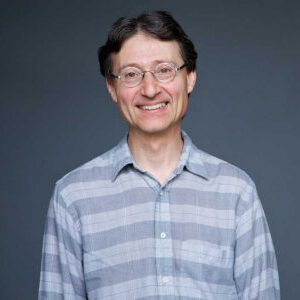
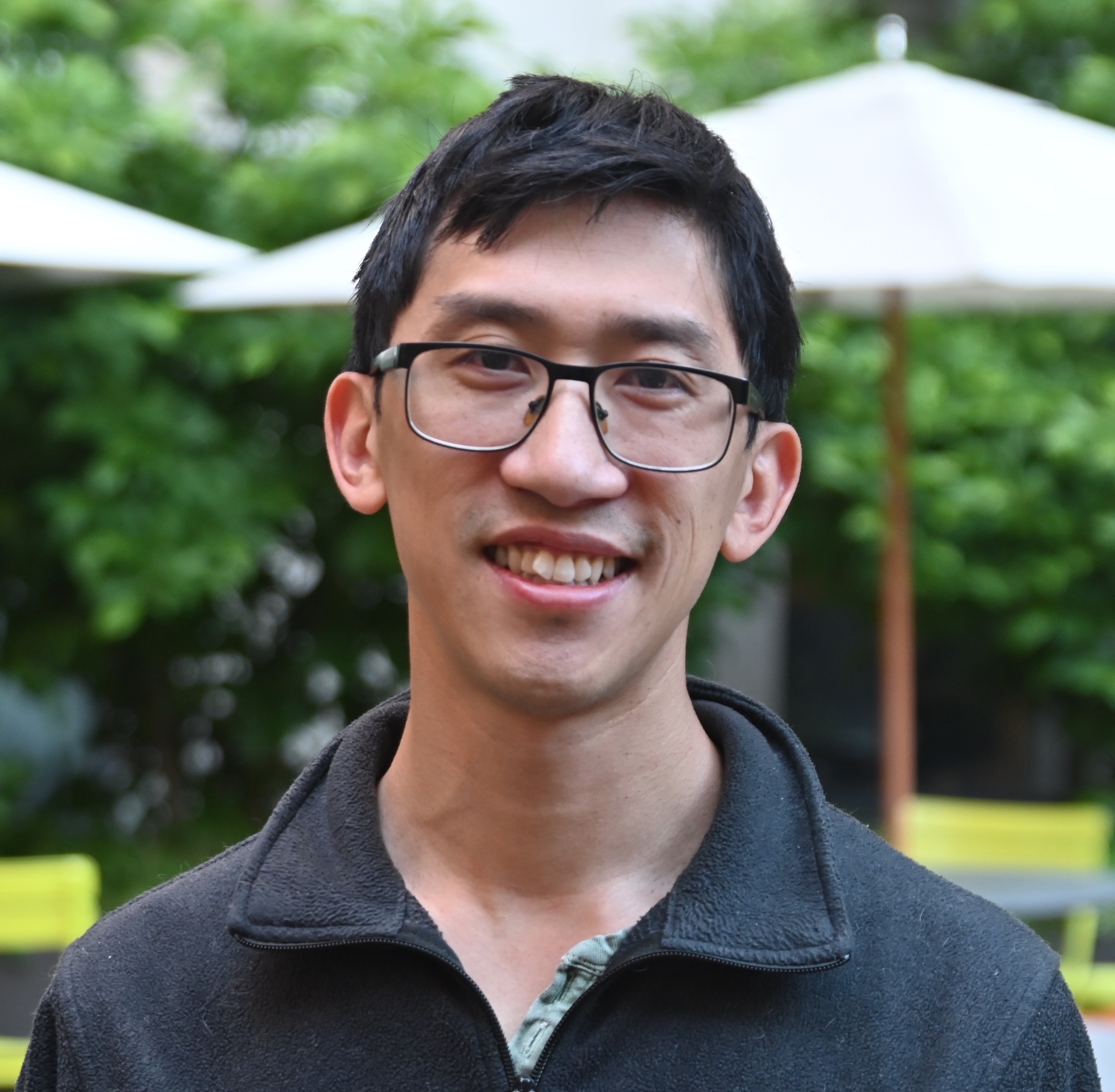
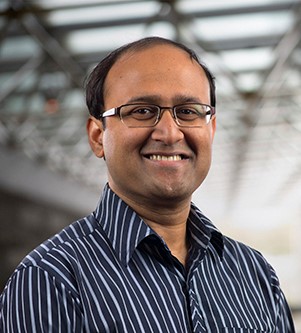
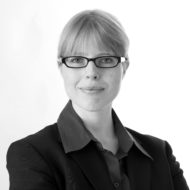
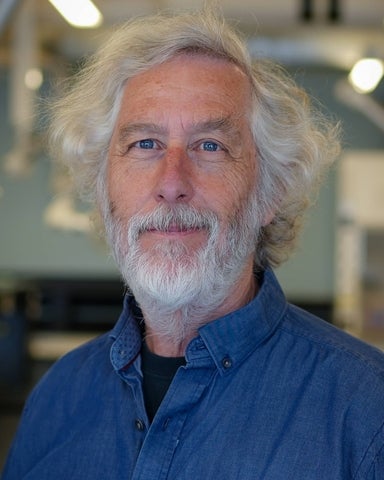
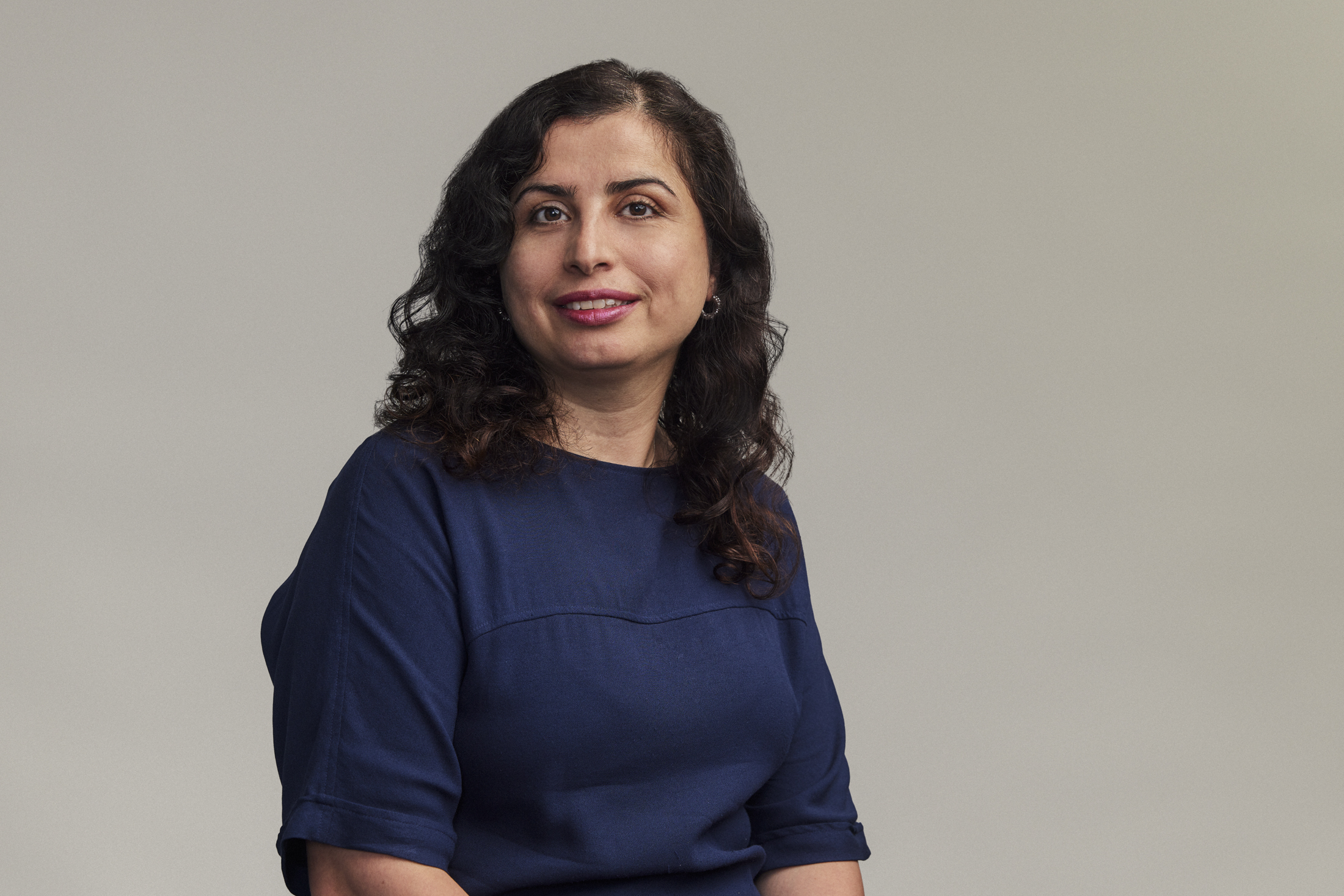
Professor Harry E. Ruda holds the Stanley Meek Chair in Advanced Nanotechnology at the University of Toronto's Faculty of Applied Science and Engineering. He directs the Centre for Advanced Nanotechnology and leads the Electronic-Photonic Materials Group. His research spans semiconductor nanostructures, focusing on nanoelectronics and nanophotonics, with notable contributions to nanowire growth, quantum transport, and plasmonic effects. Education: B.Sc. in Physics, Imperial College London Ph.D. in Physics, MIT His research interests include: Semiconductor nanowire growth via VLS process Quantum transport and spintronics Nonlinear optical effects in quantum dots/nanowires Surface state control through passivation Photonic crystal structures for optical devices Carrier dynamics in low-dimensional systems Recent publications highlight advancements in InAs nanowire sensors, Coulomb impurity effects, photonic crystal design, and hybrid superconducting/semiconductor devices. His work bridges fundamental electron dynamics and applied quantum technologies. Scientific Awards: Fellow, Canadian Academy of Engineering Fellow, Royal Society of Canada Fellow, Institute of Physics (UK) Fellow, Institute of Nanotechnology Fellow, Institution of Engineering and Technology Fellow, Institute of Materials, Minerals and Mining Fellow, Canadian Academy of Engineering Teaching: MSE335: Materials Physics MSE490: Professional Ethics and Practice MSE1023: Quantum Transport
Prof. Norbert Lütkenhaus is a Professor and Executive Director of the Institute for Quantum Computing (IQC) at the University of Waterloo, cross-appointed to the Department of Applied Mathematics. He holds affiliations with Perimeter Institute and the Centre for Applied Cryptographic Research. His research focuses on quantum communication theory, particularly quantum key distribution (QKD) and quantum repeaters. He has pioneered methods to bridge abstract quantum protocols with practical optical implementations, emphasizing secure key rate calculations and overcoming quantum channel limitations. Education: PhD (2003) in Physics from University Erlangen-Nürnberg, MSc (1993) and BSc (1990) from Ludwig-Maximilians-Universität München and RWTH Aachen, respectively. Awards include the 2015 American Physical Society Outstanding Referee Award and a 2009 University of Waterloo Excellence Award. Research interests span QKD protocols (e.g., decoy-state BB84, phase-error mitigation), quantum repeater architectures, and entanglement verification. He develops numerical tools for key rate analysis and addresses implementation security loopholes. His work includes theoretical frameworks for long-distance quantum communication and practical QKD system optimizations. Teaching includes courses on quantum information processing (PHYS 768/QIC 890) and mechanics (PHYS 115). He contributes to international standards via ETSI’s QKD-ISG and the QCrypt steering committee. His patents cover QKD system designs and phase-randomization techniques.
Henry Yuen is the Srivani Family Associate Professor of Computer Science at Columbia University, with affiliations in the CS Theory group, Data Science Institute, and Columbia Quantum Initiative. His work bridges theoretical computer science and quantum information, focusing on the computational foundations of quantum systems. Yuen received his BA in Mathematics from the University of Southern California (2010) and PhD in Computer Science from MIT (2016). His research explores quantum complexity theory, quantum cryptography, and quantum information through both theoretical frameworks and practical applications. His recent publications reveal a strong focus on quantum pseudorandomness, quantum circuit complexity, and quantum cryptographic primitives. The research trajectory demonstrates increasing sophistication in connecting quantum computational models with fundamental questions in complexity theory, particularly through the lens of quantum interactive proofs and quantum state complexity. His work frequently intersects with operator algebras and quantum information theory, reflecting the interdisciplinary nature of modern quantum computing research. NSF CAREER award Sloan Fellowship Yuen actively mentors graduate students, with several PhD students having graduated to postdoctoral positions or faculty roles. His service includes co-organizing the Columbia CS Theory Seminar and serving on program committees for major conferences including QIP, STOC, and ITCS. He has organized multiple workshops on quantum computing challenges and cryptography. As a member of the Columbia Quantum Initiative, Yuen contributes to Columbia's growing quantum ecosystem, collaborating across departments to advance both theoretical foundations and potential applications of quantum information processing.
Dr. Crystal Senko is an Assistant Professor and Canada Research Chair in Trapped Ion Quantum Computing at the Institute for Quantum Computing (IQC) , University of Waterloo. Her research focuses on quantum simulations, quantum computing with trapped ions, and qudit-based systems. She holds a Ph.D. in Physics from the University of Maryland (2014) and a B.Sc. in Physics from Duke University (2009). Her research interests span Quantum Computing , Quantum Simulation , Trapped Ion Manipulation , and Photonics . Key projects include optimizing qudit-based quantum computing protocols and developing photonic crystal waveguides for atom-photon interactions. Recent work emphasizes trapped ion efficiency, laser noise mitigation, and programmable quantum simulators. Dr. Senko has authored influential papers on trapped ion systems, including studies on multi-level qudit control, nanophotonic cavity coupling, and non-thermalization in spin chains. Her work bridges theoretical quantum models and experimental advancements in scalable quantum hardware. Awards: Canada Research Chair (Trapped Ion Quantum Computing) Teaching: Courses include Quantum Physics 2 (PHYS 334), Quantum Mechanics 1 (PHYS 701), and Special Topics in Quantum Information Processing (PHYS 768/QIC 890). Labs/Teams: Affiliated with IQC and previously contributed to Harvard’s Center for Ultracold Atoms.
Jonathan Baugh is a Professor in the Department of Chemistry at the University of Waterloo, serving as Director of the Quantum Information Graduate Program. His research focuses on quantum devices, nanoelectronics, and molecular electronics with affiliations at the Institute for Quantum Computing and Waterloo Institute for Nanotechnology. He leads the Baugh Research Lab, exploring quantum control, semiconductor spin qubits, and superconducting hybrid systems. Research interests include quantum information processing, nanoscale charge transport, and the development of next-generation photonic sources. His work bridges quantum physics and materials science, with recent breakthroughs in dopant-free semiconductors and single-molecule transistors. Publications emphasize scalable quantum architectures, noise mitigation in quantum control, and phase-coherent molecular electronics. Current projects involve cryogenic CMOS device modeling and topological quantum computing in silicon-based systems. No awards are explicitly listed, though his work has been highlighted in invited reviews and special sessions on quantum systems. Advising focuses on graduate students in quantum nanotechnology and condensed matter physics. His lab collaborates on integrated quantum networks and III-V/Si nanowire photodetectors. Labs/Teams: Baugh Research Lab (Quantum Nanoelectronics Group), Institute for Quantum Computing (IQC), Waterloo Institute for Nanotechnology (WIN).
K. Rajibul Islam is an Associate Professor at the University of Waterloo, affiliated with the Institute for Quantum Computing (IQC) and the Department of Physics and Astronomy. He holds a joint appointment with the Perimeter Institute for Theoretical Physics and co-founded Open Quantum Design and Lightflow Optics Inc. His research focuses on quantum information processing, quantum simulation, and trapped ion systems, with applications in quantum computing and entanglement studies. Education: Ph.D. in Physics (2012, University of Maryland), M.Sc. in Physics (2007, Tata Institute of Fundamental Research), B.Sc. in Physics (2005, Jadavpur University). Postdoctoral research at Harvard University (2012–2015) and MIT (2015–2016). Research Interests : Quantum simulation of spin models, quantum computing with trapped ions, entanglement measurement, frustrated spin systems, and quantum materials. His lab, QITI (Quantum Information with Trapped Ions), develops scalable quantum simulators and open-access quantum computers like 'QuantumIon.' Awards : Fellow of the American Physical Society (2024), VAIBHAV Fellowship (2024), Excellence in Teaching Award (2024), Early Researcher Award (2019), and Distinguished PhD Dissertation Award (2012–13). Teaching : Courses include PHYS 701 (Graduate Quantum Physics), PHYS 234 (Quantum Physics I), PHYS 393 (Physical Optics), and PHYS 256 (Geometrical and Physical Optics). He emphasizes outreach via initiatives like Bigyan.org.in , a Bengali-language science platform. Lab and Collaborations : Active in developing trapped-ion quantum hardware, including ion trap designs, optical addressing systems, and holographic control methods. Collaborates on quantum algorithms, machine learning for quantum systems, and experimental quantum thermodynamics.
Georges Kaddoum is a Professor at École de technologie supérieure (ÉTS) , specializing in Electrical Engineering. He holds the Canada Research Chair in Unlocking the Power of IoT 6G-Networks and the LACIME – Communications and Microelectronic Integration Laboratory affiliation. His work bridges wireless communications, IoT, and machine learning. Research Interests include wireless communication systems, physical layer security, machine learning for networking, and 6G technologies. He focuses on optimizing network performance in challenging environments (impulsive noise, underwater, non-terrestrial networks) and developing AI-driven solutions for jamming mitigation, resource allocation, and secure IoT frameworks. Recent Publications highlight 6G-enabled vehicular networks, quantum-safe blockchain integration, federated learning for transportation systems, and deep learning-based receivers for chaotic communication systems. His work emphasizes semantic communication, interference management, and digital twin applications. Awards IEEE TCSC Award for Excellence in Scalable Computing (2022) Prix d’excellence de la relève (Université du Québec, 2018) Prix d’excellence en recherche (ÉTS, 2018) Multiple IEEE Exemplary Reviewer and Best Paper Awards (2014–2022) Supervision includes 15+ PhD/Master’s students working on topics like index modulation, physical layer security, UAV communications, and intelligent resource management. Research Units Ultra Research Chair on Intelligent Tactical Wireless Networks LACIME Laboratory Canada Research Chair in IoT 6G-Networks
Na Young Kim is an Associate Professor in the Department of Electrical and Computer Engineering at the University of Waterloo with affiliations at the Institute for Quantum Computing (IQC) and Waterloo Institute for Nanotechnology. She holds cross-appointments in the Departments of Physics and Astronomy and Chemistry. Her research focuses on developing large-scale quantum processors using novel materials and advanced technologies, including semiconductor quantum processors and multi-functional nanoscale devices. Dr. Kim leads the Quantum Innovation (QuIN) laboratory, pioneering projects in planar architecture design for quantum devices integrating electrical, optical, thermal, and mechanical functionalities. Prior to academia, she worked at Apple Inc. on small display technologies. She earned a BS in Physics from Seoul National University and a PhD in Applied Physics from Stanford University, where she specialized in mesoscopic transport in nanostructures. Her postdoctoral work expanded into quantum optics and nanophotonics through collaborations with international researchers. Current teaching includes courses on quantum mechanics, quantum computing algorithms, quantum information processing devices, and photonic systems. She actively supervises graduate students in quantum technology development and is accepting new applications. Research activities span quantum artificial intelligence, quantum security protocols, and nanotechnology applications. Her work bridges theoretical frameworks with experimental implementations in solid-state quantum systems.
William Sulis is an Associate Clinical Professor in the Department of Psychiatry and an Associate Member of the Department of Psychology at McMaster University, where he also directs the Collective Intelligence Lab (CILab). With a unique interdisciplinary background spanning mathematics, physics, and psychiatry, Dr. Sulis bridges the gap between theoretical science and clinical practice. His educational journey is exceptionally diverse: B.Sc. (Hon) in Mathematics with minor in Theoretical Physics, Carleton University (1976) M.D., University of Western Ontario (1980) M.A. in Mathematics, University of Western Ontario (1984) Ph.D. in Mathematics, University of Western Ontario (1989) FRCPC in Psychiatry (1984) Ph.D. in Theoretical Physics, University of Waterloo (2014) CRCPC in Geriatric Psychiatry (2015) Dr. Sulis's research explores the intersection of complex systems theory with psychological and psychiatric phenomena. His work on Collective Intelligence investigates how group dynamics emerge from individual interactions, while his research on Temperament and Psychobiology examines the continuum between normal personality variations and mental illness. He has made significant contributions to understanding Synchronization in Complex Systems and developed the concept of Transient Induced Global Response Synchronization (TIGoRS) , which has implications for neural coding and information processing. His theoretical work extends to Quantum Foundations and Process Algebra Theory , where he proposes novel approaches to quantum mechanics. Analysis of his recent publications reveals a consistent thread connecting complex systems theory with psychological and psychiatric applications. His work increasingly focuses on bridging the gap between temperament theory and clinical psychiatry, using mathematical and computational approaches to understand mental illness. Simultaneously, he continues to develop theoretical frameworks in quantum physics through process algebra models, demonstrating remarkable interdisciplinary range. Dr. Sulis has received several prestigious awards including The Governor General's Medal for having the highest overall grade point average in his graduating class, the Henry Marshall Tory Scholarship, and multiple Harry Stevenson Southam Scholarships. Throughout his career, Dr. Sulis has mentored numerous students across disciplines, supervising research projects spanning collective intelligence, semantic space modeling, network dynamics, and temperament studies. His Collective Intelligence Lab has served as a hub for interdisciplinary research connecting computer science, psychology, and psychiatry. Dr. Sulis has also been actively involved in professional organizations, serving as President of The Society for Chaos Theory in Psychology and the Life Sciences (1996-1998) and holding editorial positions for several journals including "Dynamical Psychology" and "Nonlinear Dynamics in Psychology and the Life Sciences." As Director of the Collective Intelligence Lab at McMaster University, Dr. Sulis fosters research exploring how complex adaptive systems can model cognitive and social phenomena. The lab serves as an intellectual nexus where mathematics, computer science, psychology, and psychiatry converge to address fundamental questions about intelligence, both individual and collective.
Dr. Amir Keyvan Khandani is a Professor and Senior Ciena-NSERC Industrial Research Chair in the Department of Electrical and Computer Engineering at the University of Waterloo. He holds prestigious research chairs including Tier 1 Canada Research Chair in Wireless Communications and former Senior NSERC Chairs with Blackberry and Nortel. His research focuses on information theory, wireless and optical communications, and signal processing, emphasizing foundational principles and practical applications. Dr. Khandani earned his BEng and MEng from Tehran University (1985) and PhD from McGill University (1992). He joined Waterloo in 1993, supervising over 45 PhD students, 35 master’s candidates, and numerous postdoctoral researchers. His alumni work globally in academia and industry. Research interests include Network Information Theory , Media-Based Modulation , Full-Duplex Systems , and Quantum-Safe Encryption . Recent work explores secure key generation, interference management, and next-generation wireless innovations. Notable awards include NSERC/Ciena Industrial Research Chair and multiple Canada Research Chairs. His publications span foundational and applied topics in communications, with recent focus on cybersecurity and 5G/6G technologies. Dr. Khandani actively contributes to conferences, consults for industry/government, and teaches ECE 307 - Probability Theory and Statistics . His lab develops cutting-edge solutions in wireless networks, optical systems, and secure communication protocols.
Soumaya Cherkaoui is a Full Professor in the Department of Computer Engineering and Software Engineering at Polytechnique Montréal. Previously, she served as a Full Professor at Université de Sherbrooke and held industrial roles as an aerospace project manager. Her research integrates artificial intelligence with telecommunications, focusing on quantum computing, frugal edge intelligence, and applications in connected vehicles and IoT. Current Position: Full Professor, Polytechnique Montréal Prior Academic Role: Full Professor, Université de Sherbrooke Industry Experience: Aerospace Project Manager Research Interests: Convergence of AI and communications, quantum computing for networking, frugal intelligence at the edge, and applications in autonomous vehicles, industrial IoT, and smart grids. She leads government and industry-funded projects, including a $6 million quantum initiative in 2025. Recent Publication Trends: Her 2025–2024 work emphasizes quantum-enhanced anomaly detection (via QGANs), Open RAN slicing with quantum optimization, and reinforcement learning for secure cognitive radio networks. Topics span 5G/6G, vehicular networks, and zero-trust architectures. Scientific Awards: IEEE Communication Society Distinguished Lecturer (2020) ACM Mirela Notare Award (2023) IEEE Bio-Inspired Computing STC Leadership Award (2023) N2Women: Stars in Networking and Communications (2023) Best Paper Awards at IEEE ICC 2017, IEEE LCN 2021, ICCSPA 2024 Advising and Grants: Supervised 3 Master's students in 2024, with research on quantum GANs and federated learning for vehicular networks. Secured grants like the $6 million quantum project (2025) and participated in CFI-QC government funding (2022). Editorial and Leadership: Served as Associate Editor for IEEE, Wiley, and Elsevier journals. Chaired conferences like IEEE LCN 2019 and IEEE ICC2025, and held leadership roles in IEEE Communications Society committees.
Christine Muschik is an Associate Professor at the Institute for Quantum Computing (University of Waterloo) and Associate Faculty at Perimeter Institute for Theoretical Physics. Her research bridges quantum technologies with particle physics to develop hybrid quantum-classical simulation techniques. University of Waterloo (2017–present) Perimeter Institute (2019–present) University Research Chair (2022–present) Her work focuses on quantum simulation, quantum sensing, and high-dimensional quantum computing (qudits). Key applications include lattice gauge theories, quantum chemistry, and fundamental particle interactions. Recent publications highlight advancements in qudit-based simulation of vacuum dynamics and SU(2) hadron models. Awards include the CIFAR Azrieli Global Scholar Fellowship (2020–2022), Sloan Fellowship (2019), and Emmy Noether Fellowship (2018). Nature Physics 2025: Qudit simulation of lattice gauge theories Nature Communications 2021: SU(2) hadron modeling Nature 2016: Few-qubit lattice gauge simulations She teaches advanced quantum physics courses at the University of Waterloo and leads the "Quantum Interactions" research group.
Roman Krems is a Professor and Distinguished University Scholar at the University of British Columbia (UBC) in the Department of Chemistry, with affiliations to the Stewart Blusson Quantum Matter Institute. His research focuses on the intersection of quantum physics, machine learning, and chemistry, particularly in quantum materials and quantum technologies such as quantum computing and sensing. Key Roles: Professor at UBC (2013–present), Distinguished University Scholar (2017–present) Education: Ph.D. from Göteborg University (2002), Postdoctoral Fellow at Harvard-MIT Center for Ultracold Atoms (2003–05) Research Interests include: Quantum machine learning (QML) for solving complex physics problems Quantum scattering theory in electromagnetic fields Applications of quantum computing to chemistry Developing machine learning algorithms for quantum dynamics Recent publications highlight advancements in extrapolating quantum observables, Gaussian process models for collision dynamics, and quantum walks in disordered systems. His work bridges theoretical physics, computational methods, and experimental applications in cold molecule research. Scientific Awards include the UBC Killam Teaching Prize (2017), election as Fellow of the American Physical Society (2015), and the Keith Laidler Award (2013). He has held editorial board positions for journals such as Machine Learning: Science & Technology and New Journal of Physics . Research Group members include graduate students and postdocs working on quantum technologies, machine learning, and molecular scattering. He also contributes to outreach through invited talks and seminars at institutions like MIT and Lawrence Berkeley National Laboratory.
David Cory is a Professor and Canada Excellence Research Chair Laureate in Quantum Information Processing at the University of Waterloo's Department of Chemistry. He is affiliated with the Institute for Quantum Computing and the Waterloo Institute for Nanotechnology. His research focuses on quantum information science, neutron interferometry, structured light applications, and spin systems. Cory's work bridges quantum physics, materials science, and biomedical imaging, with contributions to quantum control, entanglement, and advanced neutron beam technologies. He has pioneered methods for generating structured neutrons and developing quantum measurement devices, including phase grating neutron interferometers. Scientifically, Cory has advanced quantum simulations of mesoscopic systems, explored thermal state structures in quantum models, and applied structured light for biomedical diagnostics. His recent articles highlight innovations in neutron Airy beam generation, robust micro-macro entanglement, and psychophysical studies of light perception. Awards include the Canada Excellence Research Chair, recognizing his leadership in quantum technologies. Awards: Canada Excellence Research Chair Laureate in Quantum Information Processing Labs/Teams: Institute for Quantum Computing, Waterloo Institute for Nanotechnology
Dr. Mojgan A. Jadidi serves as Associate Professor in the Teaching Stream and Director of Common Engineering & BSc Science within the Department of Civil Engineering at York University's Lassonde School of Engineering. A Professional Engineer (P.Eng) and founder of the GeoVA Lab, she leads research at the intersection of geospatial analytics, digital infrastructure, and innovative engineering education aligned with UN Sustainable Development Goals. Education: PhD in Geomatics, Université Laval (2014) MSc in Earthquake and Seismology Engineering, ROSE Center (Italy) & Université Joseph Fourier (France) BSc in Civil-Survey Engineering, Iranian University of Science and Technology Research Focus: Her pioneering work in Geospatial Visual Analytics spans 2D/3D environments, Building Information Modeling (BIM) and 3D GIS integration, and Spatial Quantum Computing applications for smart cities. She develops Infrastructure Digital Twins using sensor data fusion while revolutionizing engineering education through gamification and augmented/virtual reality pedagogies that transform complex spatial concepts into immersive learning experiences. Research Trends: Recent publications (2021-2023) demonstrate convergent innovation across three domains: (1) Building energy optimization through BIM-graph analytics, (2) Transportation safety via AI-driven situational awareness, and (3) Educational technology using VR sandboxes and visual-verbal comics. These works consistently integrate quantum computing principles and UN SDG frameworks to solve urban sustainability challenges. Scientific Recognition: ASEE Zone III Best Paper Award (2023) ASEE Saint Lawrence Best Research Paper & Poster (2022) 3D GeoInfo Conference Best Paper (2018) NSERC Postdoctoral Fellowship (2016) ESRI Student Award (2011) Erasmus Mundus Scholarship (2006) Research Leadership: As Associate Director of York's ESRI Center of Excellence, she manages multi-source funding from NSERC, Mitacs, and York University internal grants. Her professional service spans global organizations including ISPRS Commission IV (Secretary), IEEE Women in Engineering (Member), PEO Etobicoke (Chair), and buildingSMART Canada (Committee Member), driving standards for BIM and digital twin implementation in urban infrastructure. Lab Innovation: The GeoVA Lab develops cutting-edge tools including the TopoSurvey Game for immersive surveying education, PAN-Lassonde XR Sandbox for virtual lab experiences, and quantum computing frameworks for bike-sharing optimization, establishing new paradigms in spatial data interaction and engineering pedagogy.