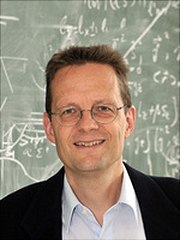
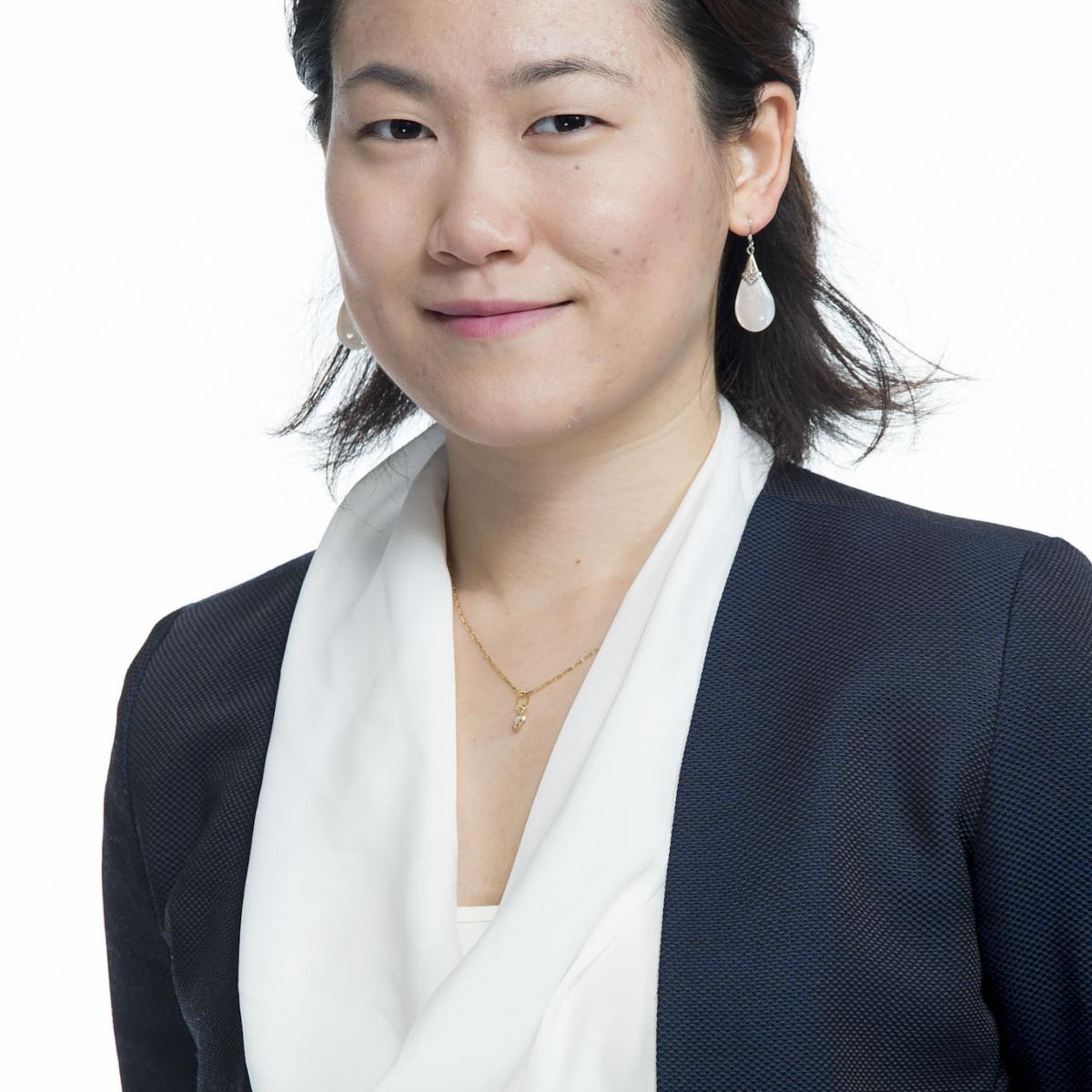
Mingshuai Chen is an Assistant Professor at Zhejiang University, leading the Formal Verification Group. He previously held a postdoctoral position at RWTH Aachen University. Education: Ph.D. in Computer Science from Institute of Software, Chinese Academy of Sciences (2019) B.Sc. in Computer Science from Jilin University (2013) His research focuses on formal verification, synthesis, programming theory, and probabilistic/quantum systems. Notable contributions include Exact Bayesian Inference and Lower Bounds for Probabilistic Programs . Scientific awards include: NSFC Excellent Young Scientists Fund Program (Overseas) Distinguished Paper Award at ATVA 2018 Best Paper Award at FMAC 2019 CAS-President Special Award (2019) 2nd Prize@ChinaSoft'24 He serves on program committees for OOPSLA 2026, TACAS 2026, and multiple other conferences.
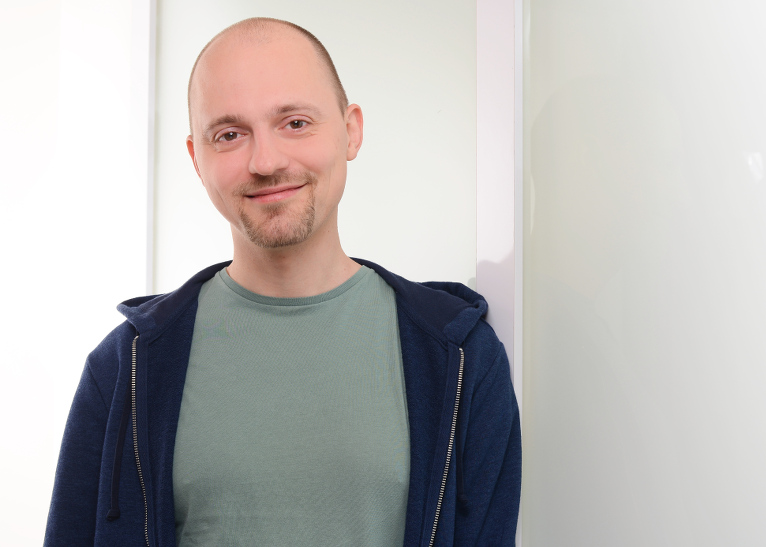
Patrick Gelß is a Postdoctoral Researcher at Zuse Institute Berlin, working in the AI in Society, Science, and Technology department. He leads the iol.QUANT research group focused on quantum-inspired and tensor-based methods, with affiliations to Freie Universität Berlin and collaborative projects like MATH+ Cluster of Excellence. Diploma in Mathematics/Physics (2013, Freie Universität Berlin) PhD in Mathematics (2017, summa cum laude, Freie Universität Berlin) Postdoctoral roles at Zuse Institute Berlin (2020-present) and CRC 1114 (2017-2022) His research bridges tensor decompositions, quantum computing, and dynamical systems, with notable contributions to: Graph Isomorphism: Continuous optimization approaches via doubly stochastic matrices and Frank-Wolfe algorithms Quantum Simulation: Tensor network representations for quantum circuits and the open-source WaveTrain package KvN Mechanics: Mathematical analysis of existence/uniqueness solutions for bounded domains Fredholm Networks: Novel training paradigms for neural networks using integral equations Scientific achievements include: Developing Scikit-TT for tensor-train computations Organizing major workshops (QML@SC2024, TMQS 2024) Leading the Thematic Einstein Semester 2024 on Mathematics for Quantum Technologies His work spans chemical kinetics, quantum dynamics, and quantum machine learning, with applications to CO oxidation models, exciton-phonon systems, and mutational hierarchies in medicine.
Professor Martin Loebl is a distinguished academic at the Department of Applied Mathematics, Faculty of Mathematics and Physics, Charles University in Prague. His extensive teaching portfolio includes Discrete and Continuous Optimization, Linear Programming, Nonlinear Optimization, Game Theory for intelligent networks, and Linear Algebra. His office is located in room S 325 on the 3rd floor in Lesser Town, Malostranské nám. 2/25, Prague 1. Loebl's research spans the breadth of discrete mathematics with particular emphasis on graph theory, combinatorial optimization, and applications to statistical physics. His work bridges theoretical mathematics with practical applications in network optimization, market equilibria, and critical distribution systems. He has made significant contributions to Kasteleyn theory, dimer models, Ising model applications, matroid theory, and matching theory. Analysis of his recent publications reveals a strong focus on the intersection of discrete mathematics with economic and social systems. His work increasingly addresses real-world challenges such as resource allocation during crises, market design, and fair division problems. The publications demonstrate sophisticated applications of graph theory and combinatorial optimization to game-theoretic models and distribution systems, with growing emphasis on practical implementations of theoretical frameworks. Scientific Awards: Prize of Rector of Charles University for the book 'Topics in Discrete Mathematics: Dedicated to Jarik Nešetřil on the Occasion of his 60th birthday' Professor Loebl coordinates the H2020-MSCA-RISE-2018 project 'Combinatorial Structures and Processes (CoSP)' and previously coordinated the Czech Ministry of Interior's 'Critical Distribution System (CRISDIS)' project motivated by the COVID-19 pandemic. His research has practical applications in winter road maintenance routing, market equilibria design, and critical goods distribution systems. He maintains an active research laboratory focused on discrete mathematics applications, with particular emphasis on translating theoretical results into practical algorithms for optimization problems in network design, resource allocation, and market mechanisms. His group has produced significant work on dimer models, Kasteleyn orientations, and their applications to statistical physics problems.
Peter Schmelcher is a Professor at the Institute for Quantum Physics at the University of Hamburg, where he serves as Head of the Theory Group of Fundamental Processes in Quantum Physics. He is also affiliated with the Hamburg Centre for Ultrafast Imaging (CUI) and the Center for Optical Quantum Technologies (ZOQ), where his position is currently active until September 2025. His research focuses on quantum physics, quantum optics, ultracold atoms, many-body quantum systems, and quantum simulation. Schmelcher's work explores fundamental quantum processes, Rydberg physics, quantum dynamics of ultracold atomic systems, and quantum information processing. He has made significant contributions to understanding topological states in optical lattices, few-body correlations in quantum mixtures, and entanglement phenomena in lattice-trapped systems. His recent publications (2021-2025) demonstrate a strong focus on quantum computing applications, topological quantum states, quantum dynamics, and Rydberg molecule physics. The research spans theoretical developments with potential applications in quantum information processing and quantum simulation. Peter Schmelcher leads an active research group with numerous publications in high-impact journals including Physical Review A, Physical Review Letters, and New Journal of Physics. His work contributes to Sustainable Development Goals 3 (Good Health and Well-being) and 7 (Affordable and Clean Energy).
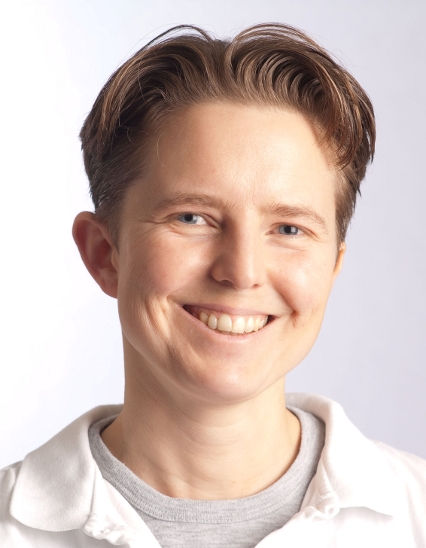
David Earl Roberson is an Associate Professor at the Department of Applied Mathematics and Computer Science, Technical University of Denmark (DTU). His research focuses on graph theory, quantum computing, and algorithms, with particular emphasis on quantum strategies for graph-based nonlocal games and the interplay between graph isomorphism and algebraic structures. He is affiliated with the Algorithms, Logic and Graphs research center and the Center for Quantum Technologies. His educational background is not explicitly detailed, but his professional activities include supervision of PhD candidates such as P. Nigam Kar in projects exploring quantum strategies and nonlocal games. His work often intersects with mathematical physics, leveraging tools from operator algebras and permutation groups. Office: Richard Petersens Plads 322, 2800 Kgs. Lyngby, Denmark ORCID: 0000-0002-4463-8095 Website: compute.dtu.dk Key research themes include quantum automorphism groups of graphs, Lasserre hierarchy applications to graph isomorphism, and transitive nonlocal games. His work bridges theoretical computer science and quantum information theory, with publications in venues like Journal of the London Mathematical Society and Mathematical Programming . Collaborations involve international teams exploring quantum permutation groups and homomorphism indistinguishability, with recent focus on algebraic characterizations of graph properties and optimization models in quantum computing.
Karl Bringmann is a Professor at Saarland University since November 2019 and is affiliated with the Max Planck Institute for Informatics, where he works in the Department of Algorithms and Complexity. He has established himself as a leading researcher in theoretical computer science, particularly in fine-grained complexity and algorithm design. His work bridges theoretical insights with practical applications in optimization problems. Bringmann's research focuses on conditional lower bounds (often based on the Strong Exponential Time Hypothesis) and algorithm design, with particular emphasis on optimization problems, string algorithms, and computational geometry. His work has significant implications for fundamental problems like Subset Sum, Knapsack, and Integer Programming, with applications ranging from scheduling to post-quantum cryptography. He develops innovative approaches combining modern algorithmic techniques, mathematical structure theory, and fine-grained complexity to design faster algorithms and establish optimality. His publication record shows a consistent trend toward developing near-optimal algorithms for fundamental problems, with significant contributions to fine-grained complexity theory. His work often establishes tight conditional lower bounds while simultaneously providing matching upper bounds, creating a comprehensive understanding of problem complexity. He has made notable advances in string algorithms (particularly edit distance), geometric problems, and optimization. ERC Starting Grant 2019: Technology Transfer between Integer Programming and Efficient Algorithms (TIPEA) EATCS Presburger Award for Young Scientists 2019 Heinz Maier-Leibnitz-Prize 2019 EATCS Distinguished Dissertation Award 2015 Google European Doctoral Fellowship 2012-2014 Bringmann leads the ERC-funded TIPEA project (2019-2024), which investigates fundamental optimization problems with the goal of developing next-generation industrial solvers. He advises several PhD students including Nick Fischer, Alejandro Cassis, and Vasileios Nakos, and has served on numerous program committees for top theoretical computer science conferences including STOC, FOCS, SODA, and ICALP. His teaching includes advanced courses on Fine-Grained Complexity Theory and Competitive Programming.
Youming Qiao is an Associate Professor at the School of Computer Science, University of Technology Sydney (UTS), specializing in theoretical computer science. He obtained his PhD from Tsinghua University in 2012 under Andrew Yao and László Babai, followed by postdoctoral work at Singapore's Centre for Quantum Technologies. His research spans computational complexity, algebraic computation, cryptography, quantum information, and group theory, with a focus on tensor isomorphism, group isomorphism algorithms, and their applications in post-quantum cryptography. PhD in Computer Science, Tsinghua University (2012) Bachelor's in Computer Science, Tsinghua University Postdoc at Centre for Quantum Technologies, National University of Singapore His recent work includes polynomial-time algorithms for matrix tuple canonical forms, improved p-group isomorphism testing, and novel reductions bridging tensor isomorphism with graph theory. He actively supervises Master's and PhD students, including Euan Mendoza and Gang Tang, and contributes to quantum algorithms and complexity theory through grants like the ARC Discovery Project (2020-2024) and SQA Scholarships. Qiao is affiliated with UTS's Centre for Quantum Software and Information (QSI) and has developed practical post-quantum signature schemes.
Carsten Thomassen is a Professor in the Department of Applied Mathematics and Computer Science at the Technical University of Denmark (DTU), where he is affiliated with the Algorithms, Logic and Graphs section. His work bridges theoretical mathematics and computer science, with a strong emphasis on structural and algorithmic graph theory. His research interests lie primarily in Graph Theory , Combinatorics , and Discrete Mathematics . He investigates fundamental properties of graphs, including connectivity, coloring, planarity, and structural decomposition. His work often addresses long-standing conjectures and provides constructive proofs with algorithmic implications. The recent publications highlight a consistent focus on graph connectivity, coloring, and dynamic algorithms. Key trends include the study of edge-connectivity augmentation, group coloring, 3-colorings in planar graphs, and dynamic arboricity decomposition. These works fall under broader disciplines such as Discrete Mathematics, Theoretical Computer Science, and Combinatorics, with specific subfields like structural graph theory, network reliability, and algorithm design. Carsten Thomassen actively supervises multiple PhD students across various projects involving graph algorithms, quantum strategies in nonlocal games, and combinatorial geometry. He contributes to research grants and collaborative projects, often serving as a supervisor in interdisciplinary efforts combining mathematics and computer science. He is involved in several active research labs and teams at DTU, particularly within the Algorithms, Logic and Graphs group. This team focuses on combinatorial algorithms, graph-based models, and theoretical foundations of computing, fostering collaboration between mathematicians and computer scientists.
J.P. McCarthy is a Lecturer in the Department of Mathematics at Munster Technological University (MTU), Ireland. His research focuses on Quantum Groups, Random Walks on Finite Quantum Groups, and related areas in Operator Algebras and Mathematical Physics. He completed his PhD in Mathematics at University College Cork (UCC) in 2017 under the supervision of Dr. Stephen Wills, with a thesis titled Random Walks on Finite Quantum Groups — Diaconis-Shahshahani Theory for Quantum Groups . He also holds an MSc by Research and BSc in Joint Honours Mathematics & Physics from UCC. McCarthy’s work explores quantum symmetries, ergodic theory on quantum groups, and applications of representation theory. Recent publications include advancements in the Frucht property for quantum groups, state-space approaches to quantum permutations, and ergodic theorems for random walks on quantum structures. He has supervised research students in data science and analytics, including topics like mortality rate smoothing and sports betting clustering. Teaching interests span engineering mathematics, data science, and foundational courses for teachers. He contributes actively to mathematics education through initiatives like the Transposition Project and engages with online communities (e.g., Math.StackExchange, MathOverflow). Affiliations include the MIC-MTU-UCC Quantum Mathematics research group and participation in international workshops/conferences on quantum groups and noncommutative probability. He is a regular speaker on topics like quantum permutation groups and the philosophy of pure mathematics in applied contexts.
Laura Mancinska is an Associate Professor in the Department of Mathematical Sciences at the University of Copenhagen. Her research focuses on quantum computing, quantum information theory, and quantum entanglement. She explores how quantum technologies outperform classical methods in tasks like communication and computation, with a particular emphasis on nonlocal games and Bell inequalities. Current projects include ERC-funded research on quantum information processing and Villum-backed work on trustworthy quantum technologies. She leads the VERIqTAS consortium for quantum verification and has received grants from QuantERA. Her work spans interdisciplinary fields such as mathematical physics and theoretical computer science. Education: PhD in Quantum Information (2013, University of Waterloo), postdoctoral roles at the Centre for Quantum Technologies (Singapore) and the University of Bristol. Awards include ERC Starting Grant (2023–2028) and Villum Young Investigator Grant (2021–2026). Active in mentoring PhD/postdoc researchers and publishing in top journals like Nature Physics and Communications in Mathematical Physics. Research outputs include breakthroughs in quantum self-testing, entanglement applications, and quantum algorithms. Her lab collaborates internationally on topics like quantum device verification and complexity theory.
Dr. Krystal Guo is an Assistant Professor of Discrete Mathematics at the Korteweg-de Vries Institute for Mathematics , University of Amsterdam. Her research spans algebraic graph theory, quantum computing, and spectral graph theory, with a focus on eigenvalues of graphs and digraphs. She is also affiliated with QuSoft , the Dutch research center for quantum software. Education: PhD in Mathematics (2015) from Simon Fraser University under Bojan Mohar. Prior Positions: Postdoctoral stints at Université de Montréal (2019-2020), Université Libre de Bruxelles (2017-2019), and University of Waterloo (2015-2017). Her research bridges linear algebra and combinatorics, with applications to quantum information theory, directed graphs, and linear optimization. She actively explores connections between graph polynomials, association schemes, and quantum walks. Recent publications span graph isomorphism complexity, quantum error correction, and four-color theorem proofs using generating functions. She serves as Managing Editor of the Electronic Journal of Combinatorics since 2022 and organizes the General Mathematics Colloquium at UvA with Eni Musta and Jeroen Zuiddam. Key Scientific Awards: 2013 finalist in Simon Fraser University’s 3MT thesis competition. She maintains an active research blog, Graphs on Napkins , and contributes to open-source mathematics via GitHub repositories containing cubic graph census data and computational tools.
Dr. Luca Zanetti is a Lecturer at the University of Bath's Department of Mathematical Sciences and a member of the Institute for Mathematical Innovation (IMI). His research focuses on the intersection of machine learning, discrete probability, and theoretical computer science, with an emphasis on designing efficient network analysis algorithms. He holds a PhD and is affiliated with multiple research institutions. Key research interests include algorithm design for unsupervised/supervised learning on graphs, Markov chain analysis, graph clustering, and spectral methods. His work bridges theoretical foundations with practical applications in network science and computational mathematics. Zanetti's recent publications explore topics like Boltzmann transport algorithms, Elo rating systems via Markov chains, and geometric bounds for mixing times. He leads the EPSRC-funded project 'Balanced Allocation Meets Queueing Theory' (2024–2025), demonstrating expertise in both theoretical and applied research. He is actively supervising doctoral students on network analysis and machine learning topics. His research has been recognized with Open Access publications and collaborations across mathematics, computer science, and engineering disciplines.
Professor Vern Paulsen is affiliated with the Department of Pure Mathematics and the Institute for Quantum Computing at the University of Waterloo , Canada. His research focuses on Operator Algebras , Operator Theory , and their applications to Quantum Information Theory (QIT) , including topics like Frame Theory , Reproducing Kernel Hilbert Spaces , and Quantum Computation . Co-editor of The Functional Analysis of Quantum Information Theory (2014) and author of the textbook An Introduction to the Theory of Reproducing Kernel Hilbert Spaces (2016). Recent publications explore operator systems , quantum games , and entanglement , with applications to Connes' Embedding Problem and Kadison-Singer Theory . He has delivered invited talks at institutions such as BIRS , Vanderbilt University , and the Institut Henri Poincaré , discussing quantum probabilities, synchronous games, and operator systems.
Stefan Klus is an Associate Professor at the School of Mathematical & Computer Sciences, Department of Mathematics, Heriot-Watt University. He holds a concurrent position as a Fellow at the Free University of Berlin (2022–2026). His research focuses on data-driven model reduction, transfer operator approximation, and applications in dynamical systems, molecular dynamics, and fluid mechanics. Key interests include spectral graph theory, tensor decompositions, and high-performance computing. Klus is actively involved in advancing machine learning methodologies for analyzing complex systems and networks. His work contributes to UN Sustainable Development Goals through interdisciplinary applications in ecology and climate science. He accepts PhD students and maintains collaborations across multiple institutions, with a strong emphasis on bridging theoretical mathematics and real-world computational challenges. External Positions: Fellow, Free University of Berlin (1 July 2022 – 30 June 2026) Research Interests: Data-driven modeling and transfer operators Kernel-based learning and statistical theory Quantum mechanics and molecular dynamics simulations Spectral graph theory and network dynamics Low-rank tensor decompositions and real-time computing Recent Research Trends: Klus’s 2023–2025 articles emphasize spatiotemporal network analysis, Koopman operator applications, and optimization methods for graph problems. His work bridges abstract operator theory with practical challenges in ecology, climate modeling, and agent-based systems.
Nicole Schweikardt is a full Professor at the Department of Computer Science, Humboldt-Universität zu Berlin, since 2014. She previously held positions at Goethe-Universität Frankfurt (W2/W3 Professor for Theory of Complex Systems, 2007-2014) and served as Junior-Professor for Logic and Database Theory at HU Berlin (2005-2007). Her research focuses on logic in computer science, particularly database theory and complexity theory. Key contributions include algorithmic meta-theorems for bounded degree structures, efficient query evaluation techniques, and analysis of first-order logic extensions with counting quantifiers. She explores query languages' expressivity, document spanners, and locality properties in logic. Recent work (2025) covers event stream query discovery, color refinement for relational structures, and learning aggregate queries via first-order logic. Earlier studies (2018-2022) address FO+MOD queries under updates, Hanf normal forms, and enumeration algorithms over sparse graphs. GI-Dissertationspreis (2002) Emmy-Noether Fellowship (2005) Heinz Maier-Leibnitz-Prize (2007) Teaching Award (2015) She has supervised 6 PhD theses and contributed to database conferences (PODS, ICDT, LICS) as PC member and workshop organizer. Her affiliations include DFG Fachkollegium Informatik (since 2024) and editorial boards of Acta Informatica and ACM SIGLOG Education Committee.