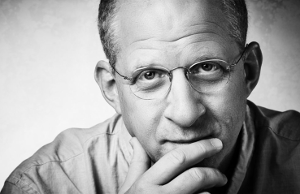
Professor Ulrik Lund Andersen heads the quantum information group at DTU Physics, Technical University of Denmark. His research develops quantum technologies including quantum computation, secure communication, and quantum-enhanced measurement systems. His group generates entangled optical states and investigates diamond-photon interactions for quantum nonlinearities. Key research areas: Quantum computing architectures Continuous-variable quantum information Quantum key distribution Quantum-enhanced sensing Solid-state quantum systems Recent work advances error correction, quantum state engineering, and quantum sensing algorithms. Publications demonstrate consistent focus on practical quantum technology implementation. Awards include multiple Sapere Aude research grants and the Eliteforsk Award from the Danish Ministry of Science.
Seth Lloyd is a Professor of Mechanical Engineering at the Massachusetts Institute of Technology (MIT), where he directs the Center for Extreme Quantum Information Theory (xQIT). His work bridges theoretical physics, quantum information science, and complex systems theory. He has made significant contributions to the foundations of quantum computing and quantum information processing. Lloyd received his education from prestigious institutions: B.A. from Harvard College (1982) M.Phil from Cambridge University (1984) as a Marshall Scholar Ph.D. in Physics from Rockefeller University (1988) Lloyd's research focuses on quantum information science, particularly quantum computation and quantum communications. He has pioneered work in quantum analog computation, quantum error correction, and quantum metrology. His research explores how quantum mechanics can be harnessed for information processing tasks, with applications ranging from quantum computing to understanding biological processes like photosynthesis. Lloyd is also known for his work on complex systems and the relationship between information and physical systems, arguing that the universe itself can be viewed as a quantum computer. His publication record shows a clear progression from foundational quantum computing work to applications in quantum machine learning and quantum biology. The most recent articles reveal a strong focus on quantum algorithms for machine learning, quantum metrology, and the intersection of quantum mechanics with biological systems. His work on the HHL algorithm for solving linear systems has been particularly influential in quantum machine learning, though its practical advantages have been debated following Ewin Tang's classical algorithms. Lloyd has received numerous scientific honors: Lindbergh Fellow (1994) Finmeccanica Professorship (1996) Edgerton Prize (2001) Fellow of the American Physical Society (2007) Quantum Communication Award (2012) International Quantum Communication Award (2012) Throughout his career, Lloyd has mentored numerous students and researchers in quantum information science. He has secured significant research funding for his work in quantum computing and complex systems. His research has been supported by various foundations and government agencies interested in advancing quantum technologies. Lloyd has also been involved in interdisciplinary collaborations, particularly with biologists studying quantum effects in photosynthesis. Lloyd directs the Center for Extreme Quantum Information Theory (xQIT) at MIT, which brings together researchers from physics, computer science, and engineering to tackle fundamental challenges in quantum information processing. His lab has been at the forefront of developing theoretical frameworks for quantum computing and exploring practical implementations of quantum information protocols.
Daniel Stilck França is an Associate Professor at the Department of Mathematical Sciences within the Faculty of Natural and Life Sciences at the University of Copenhagen . He is affiliated with the QMATH Centre for Quantum Mathematics and related research networks. His research focuses on quantum information and computation , particularly on noise characterization in quantum systems, its impact on computational tasks, and quantum-inspired convex optimization algorithms. Recent work explores tensor networks and quantum error mitigation limitations. Key publications (2023-2025) address topics like Pauli channel estimation, Hamiltonian parameter learning, and quantum simulator scalability. His work has been featured in Nature Communications , Nature Physics , and ACM/IEEE conferences.
Rasmus Pagh is a Professor at the Department of Computer Science, University of Copenhagen, specializing in algorithms and complexity. His career includes a 2002 PhD from Aarhus University under Peter Bro Miltersen and a tenure at IT University of Copenhagen until 2020. He leads theoretical research with practical applications in big data, databases, and modern computer architecture parallelism. His research interests span algorithms, data structures, and privacy-preserving computing. Recent work includes the ERC-funded project on Scalable Similarity Search and contributions to the BARC center for basic algorithms research. He has collaborated with Google Research (2019-2020) and focuses on theoretical foundations with real-world impact. Key research trends in his 2023-2024 publications include privacy-preserving data analysis probabilistic data structures distributed secure computation noise-robust coding hashing efficiency continual privacy mechanisms Scientific recognition includes 2024 ACM Fellowship ERC grant leadership multiple top-tier conference publications
Charles Marcus is a Professor at the University of Copenhagen's Niels Bohr Institute, holding the Villum Kann Rasmussen Chair in Quantum Sciences. He directs the Center for Quantum Devices and Microsoft Station Q – Copenhagen, while affiliating with the Niels Bohr International Academy. Education : Stanford University (B.S. 1984), Harvard University (Ph.D. 1990), IBM Postdoctoral Fellow (1990-92) Employment : Faculty at Stanford (1992-2000), Harvard (2000-2011), and UCPH (2012-present) His research focuses on experimental condensed matter physics, particularly quantum coherent electronics in semiconductors/superconductors. Key areas include spin qubits for quantum computing, Majorana modes in nanowires, quantum Hall systems, and superconductor-semiconductor hybrids. Recent work explores topological quantum information schemes and novel magnetic resonance imaging approaches. Scientific publications span quantum devices, Josephson junctions, and topological materials. Awards include the H.C. Ørsted Gold Medal, AAAS Newcomb-Cleveland Prize, and fellowships from AAAS and APS. He serves on advisory boards for quantum technology centers globally. Significant Awards : H.C. Ørsted Gold Medal (2020) Industry Prize, Danish Academy of Natural Sciences (2019) Member, National Academy of Sciences (2018) Award for Research Excellence in Nanotechnology (2014) Professional Roles : Director, Center for Quantum Devices (2012-2019) Lab Director, Microsoft Quantum (2016-2021) Scientific Director, Harvard Center for Nanoscale Systems (2004-2009)
Luka Radic is a Researcher in the Machine Learning Section at the Department of Computer Science, University of Copenhagen. His work bridges theoretical and applied research in machine learning, with a focus on quantum machine learning , large language models , and fairness in AI systems.
Sophia Natasha Wilson is a Research Fellow in the Department of Computer Science (DIKU) at the University of Copenhagen, specializing in machine learning applications across interdisciplinary domains. She is affiliated with the SCIENCE AI Centre and holds a cross-departmental position at the Niels Bohr Institute . Her research bridges theoretical machine learning with practical implementations in healthcare, quantum computing, and environmental sustainability. University of Copenhagen Department of Computer Science (DIKU) Niels Bohr Institute SCIENCE AI Centre Her research focuses include: Quantum-enhanced machine learning algorithms Explainable AI for healthcare applications Environmental sustainability in computing Emotion-aware language models Quantum computing hardware optimization Public health risk modeling Her recent publications demonstrate cross-disciplinary work in quantum machine learning (hybrid optical processors, qubit stabilization), health informatics (hypothyroidism analysis, nursing values evaluation), and ethical AI (sustainable AI, fairness in recommender systems). Technical work also appears in non-Euclidean generative models and real-time adaptive systems . Current projects include quantum dot array simulation (QDarts platform) and federated learning for personalized medicine . She contributes to the TreeSense center for remote sensing of global tree resources and works on climate-aware AI frameworks.
Ingemar Johansson Cox serves as a Professor within the Machine Learning section at the Department of Computer Science, University of Copenhagen. His research bridges theoretical machine learning foundations with practical applications across medical data analysis, information retrieval, remote sensing, and sustainability initiatives. His research portfolio emphasizes machine learning applications in high-impact domains, particularly medical data analysis (e.g., early detection of gynecological malignancy using online search activity) and sustainability (e.g., reducing AI's carbon footprint). The Machine Learning section actively contributes to the university's SCIENCE AI Centre, focusing on both algorithmic innovation and real-world problem-solving in biological modeling and environmental monitoring. Recent publication trends reveal expanding work in quantum computing applications for biomolecular modeling, sustainable AI frameworks, and cross-cultural NLP systems. His 2024-2025 output demonstrates strong interdisciplinary collaboration, especially in medical informatics and climate-related AI research. Professor Cox operates within the Department of Computer Science's robust research ecosystem, which includes dedicated compute clusters and specialized initiatives like TreeSense for global tree resource monitoring through remote sensing and deep learning. The department's infrastructure supports large-scale machine learning projects requiring significant computational resources.
Jonas Vinther is a Research Fellow at the Department of Computer Science , University of Copenhagen, specializing in Machine Learning and its intersections with quantum computing, medical data analysis, and sustainability. He is also an external PhD student in the Quantum Information Science & Technology program at the Niels Bohr Institute. Email: jonas.vinther@nbi.ku.dk , jonas.vinther@di.ku.dk Location: Universitetsparken 1, 2100 København Ø His research spans quantum machine learning , AI ethics , medical imaging , and environmentally sustainable AI , with recent publications on topics ranging from quantum neural networks to fairness in recommender systems . He contributes to the SCIENCE AI Centre and collaborates on initiatives like TreeSense for global tree resource monitoring.
Dr. Daniel Malz is an Assistant Professor at the Department of Mathematical Sciences, University of Copenhagen. His research focuses on quantum many-body systems, quantum optics, and quantum computing, with affiliations to research groups QA, QMATH, and QfL. His work bridges theoretical physics and mathematical modeling, addressing topics like superradiance, entanglement dynamics, and quantum state preparation. Key research interests include quantum information theory, non-Markovian dynamics, and the development of efficient quantum simulation techniques. His recent publications explore advanced topics such as photonic cluster states, tensor network simulations, and cross-platform quantum network verification. Much of his work addresses foundational questions in quantum mechanics while maintaining practical relevance for quantum technologies. His contributions span both theoretical derivations and numerical methods, with a focus on bridging classical and quantum many-body dynamics.
Lasse Bjørn Kristensen is a Research Fellow at the Department of Computer Science, University of Copenhagen, specializing in Machine Learning with a focus on quantum computing applications. Research Interests His work bridges quantum computing, machine learning, and computational biology, with contributions to: Quantum neural networks and spiking neurons Quantum error correction and circuit robustness Quantum chemistry simulations Information flow in parametrized quantum systems Notable Research Trends Kristensen's publications reveal a strong emphasis on quantum-classical hybrid models, entanglement-enhanced devices, and computational methods for chemistry and physics. His recent work explores error-driven learning paradigms and quantum eigensolvers. Contact Email: lakr@di.ku.dk Address: Universitetsparken 1, 2100 Copenhagen Ø
Jaron Skovsted Gundersen is a Research Assistant at the Department of Electronic Systems, within The Technical Faculty of IT and Design at Aalborg University, Denmark. He is actively involved in the Automation & Control group and the Learning and Decisions Lab, focusing on privacy-preserving distributed systems, quantum coding, and decentralized control for infrastructure resilience. His research centers on advanced topics in secure computation and machine learning, including privacy-preserving distributed consensus , secure multi-party computation using Shamir secret sharing , federated learning , and quantum stabilizer codes . His work integrates theoretical foundations with practical applications in critical systems such as water and power distribution networks. The trend in his publications shows a strong emphasis on data privacy in distributed machine learning , leveraging techniques like subspace perturbation and differential quantization. His recent articles span high-impact journals such as IEEE Transactions on Information Forensics and Security and IEEE Journal on Selected Areas in Information Theory, reflecting contributions to both theoretical and applied aspects of information security and control systems. He has been a project participant in the SWIFT research initiative (2019–2024), which investigates decentralized control solutions for electric and water distribution systems. His activities include multiple conference presentations, participation in academic workshops, and public engagement through events like the PDJF Grundfos Prize 'The Stars of Tomorrow' EXPO. He also delivered a lecture on technological solutions in water technology at a national climate meeting in 2022. PhD graduate (March 2021) Active researcher in privacy-preserving machine learning and quantum coding Contributor to resilient infrastructure control systems Regular participant in international conferences and workshops Gundersen is affiliated with the Learning and Decisions Lab at Aalborg University, where he collaborates on cutting-edge research in distributed intelligence, secure computation, and adaptive control systems. The lab fosters interdisciplinary work combining control theory, information theory, and machine learning for real-world applications.
Love Alexander Mandla Pettersson is a Research Fellow at the Niels Bohr Institute , University of Copenhagen , specializing in Quantum Optics and Photonics . His work focuses on quantum computing protocols leveraging graph states and quantum emitters . Research Interests : Quantum state generation, fusion-based photonic quantum computing, loss-tolerant graph codes, and Bell state measurement applications. Publications highlight collaborations with leading researchers (e.g., Sørensen, Paesani) and innovations in deterministic graph code generation, resource-efficient state synthesis, and quantum communication resilience. Labs/Teams : Affiliated with the Quantum Optics group at the Niels Bohr Institute, advancing experimental and theoretical frameworks for photonic quantum systems.
Anasua Chatterjee is a researcher at the Center for Quantum Devices, part of the Niels Bohr Institute at the University of Copenhagen. Her work focuses on quantum dot arrays, spin qubits, and semiconductor-based quantum computing platforms. She collaborates with leading quantum research groups and contributes to advancements in quantum device calibration, optimization, and noise mitigation. Affiliation: Center for Quantum Devices, Niels Bohr Institute, University of Copenhagen Her research spans quantum device automation, charge sensing, and real-time control of qubit fluctuations. Recent publications highlight her expertise in radio-frequency reflectometry, gate voltage optimization, and topological superconductivity in hybrid devices. Key article trends include autonomous calibration of quantum dots using evolutionary algorithms, spin qubit control via FPGA-based feedback systems, and integration of superconducting elements with semiconductor platforms. These studies often involve collaborations with institutions in the U.S. and Europe. While no formal awards are listed in the provided texts, her work appears integral to scaling quantum processors and improving qubit coherence for fault-tolerant systems.
Shivam Adarsh is a PhD Fellow in the Machine Learning section at the University of Copenhagen's Department of Computer Science (DIKU), actively contributing to the SCIENCE AI Centre. Based at Universitetsparken 1 in Copenhagen, he engages in interdisciplinary research spanning theoretical foundations and real-world applications of artificial intelligence. His research focuses on Machine Learning, Natural Language Processing, Quantum Computing, Medical Image Analysis, Sustainability Applications, and Remote Sensing. Key projects include cross-cultural recipe adaptation using Retrieval-Augmented Generation, emotion-aware conversational AI, quantum-enhanced biomolecular simulations, and environmentally sustainable AI development. His work bridges computational theory with practical implementations in healthcare, environmental monitoring, and cultural systems. Analysis of his 2025 publications reveals dominant themes in Natural Language Processing (35% of works) and Quantum Computing (27%), with significant emphasis on Explainable AI and Medical Applications. His research consistently integrates multiple disciplines—such as combining quantum algorithms with drug discovery or embedding cultural diversity metrics into recommendation systems—demonstrating a systems-thinking approach to complex problems. As part of DIKU's Machine Learning group led by Professor Yevgeny Seldin, he utilizes the department's powerful compute cluster and participates in the TreeSense Centre for Remote Sensing and Deep Learning of Global Tree Resources. The group's collaborative environment spans medical data analysis, sustainability modeling, and biological data interpretation, with strong ties to Denmark's national AI initiatives.