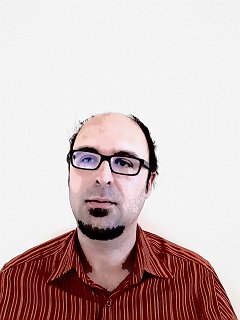
Philippe Delachartre is a Professor at INSA Lyon (University of Lyon) in the Department of Electrical Engineering and researcher at CREATIS (Center for Research and Applications in Image and Signal Processing). He obtained his MS (1990) and PhD (1994) in Signal and Image Processing from INSA Lyon, joining the faculty in 1995 as Associate Professor before being promoted to Professor. His research focuses on medical image processing including: Advanced signal processing for ultrasound and MRI Motion estimation and segmentation algorithms Hypercomplex signal theory applications Deep learning for medical image analysis Real-time data acquisition systems With 30+ years of experience, he's contributed to over 100 publications. Recent publications (2018-2025) show strong focus on: Deep learning applications in medical signal classification Advanced segmentation methods (phase-field, CNN) Mathematical frameworks using hyperquaternions 3D ultrasound analysis for neurology and dermatology Cardiac motion estimation algorithms Research grants include: Regional project on emboli classification with deep learning (€170k) ANR LabCom project on Doppler ultrasound (€300k) Dermis characterization contract with Institut Pierre Fabre (€45k) Prostate segmentation project (€21k) Image denoising research (€100k) He has supervised 9 PhD students and leads research activities at CREATIS laboratory focusing on innovative medical imaging solutions.
Neil Julien Ross is an Associate Professor in the Department of Mathematics at Dalhousie University. His research primarily focuses on quantum computing and quantum programming languages, with extensive contributions to quantum circuit design, optimization, and formal verification methods. He maintains an active research profile with numerous publications in top-tier quantum computing conferences and journals. His research interests span: Quantum circuit synthesis and optimization techniques Formal methods for quantum programming languages (e.g., Proto-Quipper) Algebraic structures in quantum computation Quantum gate universality and resource theory Category theory applications in quantum information Ross's recent publications demonstrate a consistent focus on advancing quantum circuit design methodologies, particularly through symbolic synthesis techniques and formal verification approaches. His work frequently bridges theoretical computer science, algebraic structures, and practical quantum implementation challenges.
Roland Donninger is a Professor of Analysis of Partial Differential Equations at the University of Vienna , affiliated with the Faculty of Mathematics and Department of Mathematics. He coordinates the Vienna Master Class Mathematical Physics and leads the Research Group Dispersive PDEs. Current research focuses on nonlinear partial differential equations, particularly wave maps, Yang-Mills equations, and Schrödinger equations. His work bridges mathematical physics, general relativity, and geometric analysis, utilizing spectral theory, harmonic analysis, and numerical simulations. Analysis of recent publications reveals trends in blowup dynamics , self-similar solutions , and stability theory for supercritical and energy-critical PDEs. Themes include geometric PDEs, harmonic map flow, and rigorous computer-assisted methods. Roland supervises PhD and Master’s theses in dispersive PDEs, with former students including Matthias Ostermann and Ziping Rao. His group is funded by the FWF (Austrian Science Fund) through projects P 34560, P 36455, and others.
Junior Professor Dr. Julia Westermayr leads the Theoretical Chemistry of Materials Design group at the Wilhelm-Ostwald-Institute for Physical and Theoretical Chemistry (Leipzig University). Her interdisciplinary research bridges machine learning , quantum chemistry , and materials science to advance molecular simulations and reaction mechanism discovery. Academic rank: Assistant Professor (Junior Professor) Research focus: AI-driven excited-state dynamics, interatomic potentials, CO₂ conversion, and photocatalysis Key collaborators: Bell Flavors & Fragrances GmbH, ScaDS.AI, TU Berlin, University of Vienna Her team develops transferable ML models for nonadiabatic molecular dynamics , enabling long-timescale simulations of photodriven processes at metal surfaces and solvent environments . Recent work includes equivariant neural networks for UV absorption spectra and generative AI for molecular design . The group actively trains PhD students like Daniel Bitterlich, Peter Fichtelmann, and Robin Curth, while hosting international researchers from institutions like Bologna and Vienna. Research trends span Computational Chemistry (15/15 articles), with subfields including Excited-State Nonadiabatic Dynamics , Interatomic Potential Modeling , Photochemistry , Semiconductor Design , Reaction Mechanism Discovery , and ML-Augmented Quantum Simulations . The group participates in major scientific collaborations (DFG Cluster of Excellence, ScaDS.AI) and industry partnerships (Bell Flavors & Fragrances GmbH). They host regular research stays (e.g., Sascha Mausenberger from Vienna) and student internships , while maintaining active presence at conferences like PsiK2025 .
Klaus Braagaard Moller is a Professor at the Department of Chemistry, Technical University of Denmark (DTU Chemistry). His research focuses on theoretical and computational physical chemistry, particularly chemical dynamics involving quantum theory, semi-classical mechanics, reaction dynamics, and ultrafast experimental techniques. He collaborates with groups at DTU Chemistry, DTU Physics, the University of Copenhagen, and international institutions in France, Spain, Germany, South Korea, and the USA. Education: Ph.D. in Chemistry (1994-1997), Technical University of Denmark M.Sc. in Chemistry (1988-1993), Technical University of Denmark His research explores the quantum-classical boundary, ultrafast processes in photochemistry, and computational methods like ab initio calculations, molecular dynamics simulations, and semi-classical trajectory methods. Recent highlights include time-resolved x-ray imaging of chemical bond formation and unraveling internal conversion dynamics in molecular systems. He employs proprietary codes and commercial software for simulations, emphasizing applications in solar cells and photocatalysis. His group is part of DTU Chemistry's Theoretical, Computational and Femtochemistry research area and welcomes collaborations and new members.
Chris Mundy is a Lab Fellow and Physicist at Pacific Northwest National Laboratory (PNNL), specializing in theoretical and computational approaches to complex interfacial systems. His research integrates statistical mechanics and molecular simulations to address fundamental challenges in electrolyte behavior, solvation phenomena, and energy-related materials science under the Department of Energy's Basic Energy Sciences portfolio. His educational background includes a PhD in Chemistry from the University of California, Berkeley (1992) and a BS in Chemistry from Montana State University (1988). Mundy has held significant leadership roles including Chair of the Gordon Research Conference on 'Chemistry and Physics of Liquids' (2025), Chair of the Theoretical Chemistry Subdivision of the American Chemical Society (2022), and Vice Chair (2020-2021). Mundy's research focuses on bridging molecular-scale phenomena to macroscopic outcomes in electrolytes and interfacial systems. His work spans computational modeling of ion hydration, solvation dynamics, and nanoscale assembly processes relevant to energy storage and environmental systems. Recent publications demonstrate strong emphasis on advanced simulation techniques applied to battery electrolytes, biomimetic materials, and aqueous interfaces. His 15 most recent publications reveal consistent focus on computational chemistry methods applied to interfacial phenomena, with growing integration of machine learning and advanced spectroscopy techniques. Key themes include ion-specific effects at interfaces, solvation structure characterization, and predictive modeling of electrolyte behavior across concentration regimes. American Physical Society Fellow (2014) Mundy actively contributes to professional service through leadership in Gordon Research Conferences and ACS subdivisions. His work at PNNL connects fundamental theoretical chemistry to Department of Energy mission areas including energy storage, environmental remediation, and materials science. Current research leverages high-performance computing resources to develop predictive frameworks for complex fluid systems. As a senior researcher at PNNL, Mundy collaborates extensively across national laboratory teams and academic institutions, focusing on theoretical development that informs experimental design in interfacial science and electrochemistry. His group utilizes advanced molecular simulation techniques to probe systems ranging from battery electrolytes to biological interfaces.
Jan-Niklas (Nik) Boyn is an Assistant Professor in the Department of Chemistry at the University of Minnesota, having joined the faculty in March 2024. His research program focuses on computational and theoretical chemistry with applications spanning quantum information science, carbon capture technologies, and catalysis. Professor Boyn's research interests include: Chemical Theory and Computation: electronic structure theory, potential surfaces & force-fields, chemical reactivity Energy and Catalysis: simulation of homogeneous catalysis and carbon capture materials Inorganic & Organometallic Chemistry: simulation of electronic and magnetic properties of metal complexes and clusters Chemical Biology: modeling of metalloproteins His work centers on developing multi-level correlated electronic structure algorithms, particularly utilizing Reduced-Density-Matrix Methods and Multi-Level Embedding approaches. These computational techniques allow his group to study complex systems that would be prohibitively expensive with traditional methods, enabling research in quantum materials for information science, carbon capture processes, and metalloenzyme function. Professor Boyn's research has significant implications for quantum computing, sustainable energy technologies, and biocatalysis. His group employs a combination of theoretical development and applied simulations to address fundamental questions in these areas. As a new faculty member at the University of Minnesota, Professor Boyn is establishing his research program focused on computational chemistry approaches to solve challenging problems in materials science and catalysis.
Dr. Marek Wójcikowski serves as Associate Professor and Head of the Department of Microelectronic Systems within the Faculty of Electronics, Telecommunications and Informatics at Gdańsk University of Technology, where he leads academic and research initiatives in microelectronics and sensor development. His research specializes in creating low-cost autonomous platforms for environmental monitoring, with emphasis on nitrogen dioxide (NO 2 ) and particulate matter (PM) detection in urban settings. He pioneers machine learning techniques for sensor calibration and correction, while extending expertise to radiation-tolerant electronics for space applications like satellite quantum key distribution systems. This interdisciplinary work bridges environmental science, embedded systems engineering, and data analytics to address critical air quality challenges affecting public health. Analysis of his 2024-2026 publications reveals consistent focus on real-world sensor deployment, machine learning optimization for field correction, and space-grade FPGA implementations. Key trends include urban air quality monitoring for drivers/public, integration of global data correlation methods, and development of cost-efficient measurement infrastructure targeting respiratory health impacts. Scientific Awards: No awards were documented in the source material. Advising and Grants: The provided text contains no information regarding graduate students, research grants, or funded projects under Dr. Wójcikowski's supervision. Labs and Teams: While his departmental leadership role implies oversight of Microelectronic Systems research infrastructure, specific laboratory names, team compositions, or collaborative groups are not disclosed in the available content.
Maxim Evgenievich Beketov is a Research Fellow at the Faculty of Computer Science of the National Research University Higher School of Economics (HSE), where he has been working since 2020. He is affiliated with the Institute of Artificial Intelligence and Digital Sciences and the International Laboratory of Stochastic Algorithms and Multidimensional Data Analysis, contributing to cutting-edge research in computational methods and artificial intelligence. His educational background includes: Master's degree (2017) in Applied Mathematics and Physics from Moscow Institute of Physics and Technology Bachelor's degree (2015) in Applied Mathematics and Physics from Moscow Institute of Physics and Technology Beketov's research spans multiple interdisciplinary fields with a strong mathematical foundation. His primary interests include topological data analysis, machine learning, mathematical and Bayesian statistics, differential geometry, and computational neuroscience. He applies these methods to problems in dimensionality reduction, variety assessment, and graph neural networks. His work bridges theoretical mathematics with practical applications in artificial intelligence and neuroscience, particularly in understanding cognitive processes through topological approaches. An analysis of his recent publications reveals a strong focus on topological methods in machine learning, with increasing emphasis on applications to neuroscience and cognitive mapping. His work demonstrates a progression from theoretical mathematical foundations toward practical implementations in spiking neural networks, traffic control systems, and music information retrieval. The interdisciplinary nature of his research connects computer science, mathematics, and neuroscience through topological approaches. His scientific achievements include: High Professional Potential Group (HSE Personnel Reserve), Category: New Researchers (2025) Beketov has been actively involved in academic teaching, offering courses including Introduction to Discrete Differential Geometry and Mathematical Analysis. His research is supported through the HSE University Basic Research Program, as acknowledged in his publications. He collaborates with researchers across multiple institutions, as evidenced by his co-authorship on papers with numerous collaborators. He is a core member of the International Laboratory of Stochastic Algorithms and Multidimensional Data Analysis, where he contributes to projects involving topological data analysis, machine learning, and computational neuroscience. His work in the laboratory focuses on developing advanced mathematical methods for analyzing complex data structures, with applications ranging from cognitive neuroscience to transportation systems.
Alina Ostafe is an Associate Professor in the School of Mathematics and Statistics at The University of New South Wales (UNSW) in Sydney, Australia. She joined UNSW in 2013 as a Postdoc and has steadily progressed through the academic ranks to her current position as Associate Professor since January 2023. Her research focuses on the intersection of number theory and dynamical systems, with particular emphasis on arithmetic properties of polynomial iterations and Diophantine problems. Dr. Ostafe received her PhD in 2010 from the Institute of Mathematics at the University of Zurich, Switzerland, following an MSc from the University of Bucharest, Romania in 2007. Her academic journey includes postdoctoral positions at both UNSW and Macquarie University before her appointment to the faculty. Her research interests span several interconnected areas within number theory and dynamical systems. She investigates Diophantine problems, polynomials and rational functions over local and global fields, finite fields, and arithmetic statistics of matrices. Within dynamical systems, her work focuses on the arithmetic properties of elements in orbits and algebraic properties of iterates. This research bridges classical number theory with modern dynamical systems theory, yielding insights into the distribution of special points in algebraic dynamical systems. An analysis of her recent publications reveals a strong focus on counting problems in arithmetic statistics, particularly concerning matrices with number-theoretic constraints. Her work frequently examines multiplicative dependence in various contexts, including linear recurrence sequences, rational values modulo finitely generated groups, and superelliptic equations. She also investigates the distribution of special points in dynamical systems, with applications to quantum ergodicity and character sums. Dr. Ostafe has received significant recognition through multiple competitive grants: Australian Research Council Future Fellowship (2026-2029) Multiple Australian Research Council Discovery Projects (2018-2026) UNSW Science Faculty Research Grants (2015-2025) UNSW Start-up Grant (2017) UNSW Vice-Chancellor's Postdoctoral Fellowship (2013-2016) Swiss National Science Foundation Grants (2010-2013) As an advisor, Dr. Ostafe currently supervises PhD student Muhammad Afifurrahman and has mentored several postdoctoral researchers including Subham Bhakta, Kamil Bulinski, Ali Mohammadi, Ayreena Bakhtawar, and Jorge Mello. She is actively involved in the mathematical community through her editorial role at Research in Number Theory and her organization of numerous conferences and seminars, including the Number Theory Web Seminar and the UNSW Number Theory Seminar. Dr. Ostafe is a key organizer of the UNSW Number Theory Seminar, which has been running since 2015, and has co-organized multiple international conferences including workshops at BIRS, MFO, and CIRM. Her leadership in the number theory community extends to her role as co-organizer of the Number Theory Web Seminar, which has built an international platform for researchers in the field.
Emil Thomasen serves as a Guest Researcher in the Department of Biology within the Biomolecular Sciences unit at the University of Copenhagen's Faculty of Science. His research integrates computational methods with experimental structural biology approaches to investigate complex biomolecular systems. Position: Guest Researcher Institution: University of Copenhagen Department: Department of Biology Research Unit: Biomolecular Sciences Contact: fe.thomasen@bio.ku.dk | +4535323586 Thomasen's research focuses on developing and applying computational methodologies to understand protein structure, dynamics, and interactions. His work bridges quantum mechanics, molecular dynamics simulations, and experimental techniques including small-angle X-ray scattering (SAXS) and cryo-electron microscopy. He has made significant contributions to coarse-grained modeling, particularly with the Martini force field, and has pioneered approaches combining machine learning with quantum mechanical calculations for large molecular assemblies. His publication record demonstrates a clear trajectory in computational structural biology, with recent work emphasizing the integration of multiple experimental and computational techniques to characterize complex protein systems. The research shows increasing sophistication in handling large-scale biomolecular assemblies and applying advanced statistical methods like Bayesian inference for model refinement. Thomasen has established strong collaborative networks, frequently working with Professor K. Lindorff-Larsen and other researchers across computational chemistry and structural biology disciplines. His work has appeared in high-impact journals including Nature Communications, eLife, and Journal of Chemical Theory and Computation. As a recently completed Ph.D. graduate (2024), Thomasen continues to advance his research program as a Guest Researcher, building on his doctoral work focused on integrating coarse-grained molecular dynamics with SAXS data for characterizing multidomain protein assemblies.
Dr. Toma STOICA is a Senior Researcher I at the National Institute of Materials Physics (NIMP), where he leads research at the Laboratory of Atomic Structures and Defects in Advanced Materials (LASDAM). He has maintained continuous research positions at NIMP since 1972 and held a Senior Researcher position since 1990. His international experience includes research at Forschungszentrum Julich in Germany (2001-2014) and Humboldt Research Fellowships. His research spans semiconductor physics, solid state phenomena, and photonics, with particular expertise in amorphous semiconductors, quantum effects in low-dimensional structures, and optoelectronic applications. Dr. STOICA has made significant contributions to the understanding of transport phenomena, optical absorption, and photoelectric properties in semiconductor materials. His work has evolved to focus increasingly on nanoscale phenomena, including the growth and properties of nanowires, quantum dots, and nanocrystals for infrared detection and memory applications. Analysis of his recent publications reveals a consistent focus on short-wave infrared (SWIR) photodetection using Group IV semiconductor nanocrystals, particularly Ge, SiGe, and GeSn alloys embedded in various oxide matrices. His work demonstrates sophisticated understanding of how material composition, nanostructure formation, and interface engineering affect optoelectronic properties. The research shows progression from fundamental semiconductor physics toward practical device applications, especially in memory technologies and infrared photodetectors. Humboldt Research Fellowship (1992) Romanian Academy Prize for Physics, 'Constantin Miculescu' 1993 for studies on quantum SiGe structures Member of Humboldt Foundation Club Dr. STOICA's research has been supported by multiple projects including 'Multifunctional optoelectrical sensor based on two-dimensional MoS2 atomically thin layers' (PED, 2022-2024), 'Nano-Structured GeSn Coatings for Photonics' (M-ERA.NET, 2016-2019), and 'Photo-Electric Capacitor Memory based on Ge-Nanocrystals' (PED, 2017-2018). His work bridges fundamental semiconductor physics with practical applications in photonics and memory technologies. At LASDAM, he directs research on semiconductor nanostructures with applications in optoelectronics and memory devices. His laboratory utilizes advanced techniques including magnetron sputtering, rapid thermal annealing, and comprehensive characterization methods to develop and analyze novel semiconductor materials and devices.
Sébastien Bardin is a Senior Researcher and CEA Fellow at the Software Safety and Security Laboratory of Commissariat à l'Energie Atomique (CEA) in Paris-Saclay, France, with affiliation to University Paris-Saclay. He leads significant research initiatives including the BINSEC group on binary-level security analysis (since 2012) and the QBricks group on quantum program verification (since 2020), and served as Head of the Software Quantum Program at CEA LIST from 2021-2023. His research focuses on formal methods and automatic program analysis with applications in software security. Key areas include binary-level security analyses such as vulnerability detection & assessment, reverse engineering, and malware deobfuscation, as well as quantum programming and verification. His methodological expertise spans symbolic execution, abstract interpretation, software model checking, and SMT solving. Bardin's publications demonstrate consistent impact across top venues in security and formal methods, with notable papers at ESOP, CAV, ICSE, NDSS, and S&P. His work on robust symbolic execution, directed fuzzing, and binary-level analysis has established him as a leading researcher in security-oriented program analysis. Recent publications show growing emphasis on quantum program verification alongside continued contributions to binary security analysis. Scientific Awards: ICSE 2021 ACM SIGSOFT Distinguished Paper Award RTAS 2021 Best Paper Award CAV 2021 Selected Paper CEA Fellow (2021-present) ACM Senior Member (2021-present) Bardin actively mentors PhD students and has advised numerous researchers who have received recognition including GDR Sécurité and GDR GPL PhD awards. His service to the community is extensive, with leadership roles in GDR Sécurité, RESSI, and organizing major conferences including CAV 2023 (sponsor co-chair) and FIC 2023 (scientific program chair). He also contributes to multiple program committees across security and formal methods venues.
Prof. Dr. Andreas Hennig is a Professor of Medical Sensor Systems at the Institute of Measurement and Sensor Technology, Ruhr West University of Applied Sciences since 2022. He serves as Program Director for the Master's program in Sustainable Health Technologies and previously held leadership roles at Fraunhofer IMS from 2006-2022 as Group Leader for Wireless Sensorics and Program Manager for Sustainable Production. He earned his Master of Science in Electrical Engineering from Bergische Universität Wuppertal (2001-2006) and completed his PhD at the University of Duisburg-Essen (2006-2009) on optimizing transmission methods for implantable telemetry sensor systems. His research pioneers non-contact sensing through inductive techniques, quantum magnetometry, and machine learning for medical diagnostics (neonatal vital monitoring, biomagnetic sensing), Industry 4.0 applications (predictive maintenance, sustainable production), and Smart City infrastructure. Current projects focus on quantum sensors for electromagnetic tracking and inductive methods for industrial process monitoring in steel manufacturing. Publications reveal an evolution from biomedical wireless sensors (2010-2015) toward industrial quantum sensing (2018-2024), with recent work emphasizing microscale electromagnetic tracking and magnetic property evaluation in hot-rolling mills. Prof. Hennig supervises theses on vital parameter monitoring for newborns, quantum biomagnetic sensing, and sustainable industrial process monitoring. He has secured funding for projects including SmartNeonatalCare, GenSATIon-EDGE, INNERVATE, and FabLab collaborations (QuFabLab, QuMiniLabs), demonstrating strong grant acquisition capabilities. He directs the LASIMM research laboratory equipped for PCB prototyping (reflow/SMD assembly), 3D printing, and advanced measurement (Impedance/Network Analyzers). His team comprises six scientific staff members including Anika Nietert, Christine Bremer, and Thomas Thuilot, supporting both academic research and student projects.