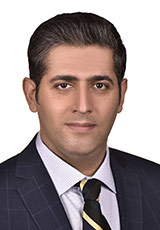
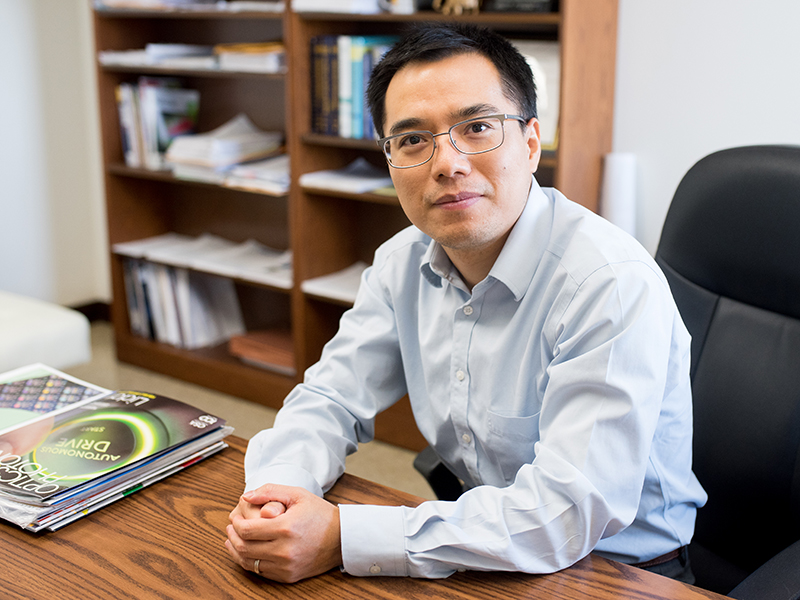
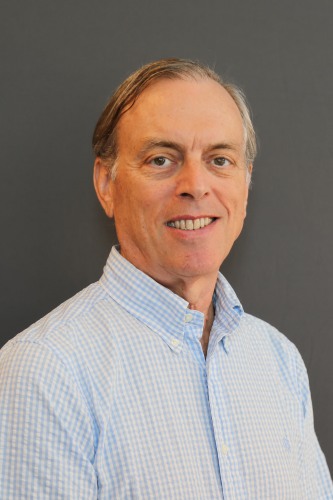
Roozbeh Razavi-Far is an Assistant Professor at the Faculty of Computer Science and the Canadian Institute for Cybersecurity at the University of New Brunswick. His research focuses on machine learning, big data analytics, and cybersecurity of cyber-physical systems and IoT devices. He has authored/co-authored over 150 publications and is listed by Stanford as among the top 2% of most cited researchers (2022). His work spans federated learning, transfer learning, quantum machine learning, and dependable AI systems. He serves as an Associate Editor for Neurocomputing, Machine Learning with Applications, and IEEE Transactions on Industrial Cyber-Physical Systems, among others. As an IEEE Senior Member, he chairs IEEE Computational Intelligence and Systems, Man, and Cybernetics Societies. Previously, he directed the Learning System and Cybernetics Group at the University of Windsor (2016–2022). His research interests emphasize security in non-stationary environments, adversarial machine learning defenses, and real-time analytics for smart grids. Awards include NSERC-DG, NSERC-ECR, and USRG grants. He has mentored students who received NSERC Alexander G. Bell, MITACS, and Ontario Graduate Scholarships. His recent publications highlight advancements in privacy-preserving split learning, blockchain-based federated learning security, and graph-based malware detection. He also explores quantum computing applications in AI and cybersecurity frameworks for cyber-physical systems.
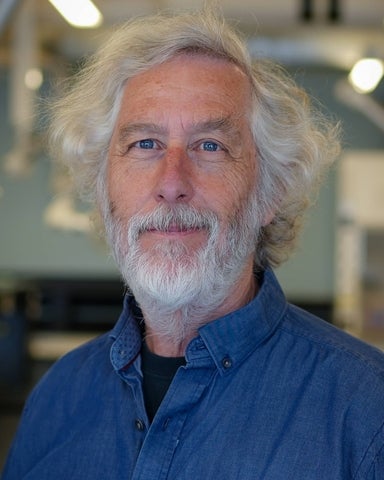
David Cory is a Professor and Canada Excellence Research Chair Laureate in Quantum Information Processing at the University of Waterloo's Department of Chemistry. He is affiliated with the Institute for Quantum Computing and the Waterloo Institute for Nanotechnology. His research focuses on quantum information science, neutron interferometry, structured light applications, and spin systems. Cory's work bridges quantum physics, materials science, and biomedical imaging, with contributions to quantum control, entanglement, and advanced neutron beam technologies. He has pioneered methods for generating structured neutrons and developing quantum measurement devices, including phase grating neutron interferometers. Scientifically, Cory has advanced quantum simulations of mesoscopic systems, explored thermal state structures in quantum models, and applied structured light for biomedical diagnostics. His recent articles highlight innovations in neutron Airy beam generation, robust micro-macro entanglement, and psychophysical studies of light perception. Awards include the Canada Excellence Research Chair, recognizing his leadership in quantum technologies. Awards: Canada Excellence Research Chair Laureate in Quantum Information Processing Labs/Teams: Institute for Quantum Computing, Waterloo Institute for Nanotechnology
Oleg Shpyrko is a Professor and Department Chair in the Department of Physics at the University of California, San Diego (UCSD). He leads a research group focused on nanoscale structural dynamics using advanced x-ray scattering techniques. His work bridges hard and soft condensed matter systems, including magnetic materials, energy storage materials, and biophotonic nanostructures. Shpyrko earned his Ph.D. in Physics from Harvard University in 2004. His research leverages national facilities like the Advanced Photon Source (APS) and Linac Coherent Light Source (LCLS). Key areas include coherent x-ray imaging, domain dynamics in magnetic systems, and operando studies of battery materials. His research interests span: Coherent X-ray Scattering and Imaging Magnetic Domain Dynamics Nanostructured Materials Energy Storage (battery cathodes) Biophotonic Structures Phase Transitions Notable achievements include pioneering X-ray Photon Correlation Spectroscopy (XPCS) for antiferromagnetic domain studies and revealing dislocation dynamics in battery materials. His work has been featured in Nature , Science , and Physical Review Letters . Shpyrko has mentored over 15 graduate students and postdocs, many of whom have become faculty at top institutions. Awards include the NSF CAREER Award (2010), Hellman Fellowship (2009), and the Rosalind Franklin Young Investigator Award (2008). His group operates facilities including Dynamic Light Scattering labs, AFM/EFM microscopes, and collaborates with synchrotron and neutron sources globally.
Gonzalo Manzano Paule is a Ramón y Cajal tenure-track researcher at IFISC (Instituto de Física Interdisciplinar y Sistemas Complejos), a joint research institute of CSIC (Consejo Superior de Investigaciones Científicas) and UIB (University of the Balearic Islands), where he has been working since January 2023. He previously held a Juan de la Cierva Incorporation fellowship (2021-2023), was an ESQ Postdoc at IQOQI Vienna (2020-2021), and a Postdoc at ICTP Trieste (2018-2020) funded by Scuola Normale Superiore. He obtained his PhD in Physics from Universidad Complutense de Madrid in July 2017, followed by a short Postdoc at IFISC (2017-2018). His research interests focus on quantum and stochastic thermodynamics, open quantum systems, information theory, and the foundations of nonequilibrium statistical physics and quantum mechanics. He is particularly interested in applying concepts from nonequilibrium thermodynamics to understand classical and quantum complex systems. While his work is primarily theoretical, he actively seeks collaborations with experimentalists. His research has been featured in popular science journals including Physics, Quanta Magazine, and Diario de Mallorca. He has also collaborated with artist Evarist Torres to merge art and science and has written a popular science article for Investigación y Ciencia (Scientific American). Manzano Paule's recent publications demonstrate a strong focus on quantum thermodynamics, fluctuation theorems, and quantum information processing. His work spans theoretical foundations of quantum thermodynamics to applications in quantum heat engines and molecular motors. A notable pattern in his research is the exploration of how quantum effects can enhance thermodynamic processes and the relationship between information theory and thermodynamics. His scientific achievements have been recognized through prestigious fellowships including the Ramón y Cajal program, Juan de la Cierva Incorporation fellowship, and ESQ Postdoc fellowship. His work has also garnered attention in popular science media, indicating its broader impact beyond academic circles. As an educator, Manzano Paule supervises Master's students and teaches advanced courses including Open Quantum Systems for the Master's Degree in Advanced Physics and Applied Mathematics and the Master's Degree in Physics of Complex Systems. His teaching portfolio also includes Quantum Collective Phenomena, Quantum and Nonlinear Optics, Thermodynamics, and Atomic and Molecular Physics. He currently leads the research project 'QTD-InFlexity Quantum thermodynamics: information, fluctuations and complexity' and participates in the 'CoQuSy Complex Quantum Systems' project. He is also part of the María de Maeztu Unit of Excellence at IFISC, which has received continuous funding since 2008.
William Newman is a Professor in the Department of Earth, Planetary, and Space Sciences at the University of California, Los Angeles (UCLA), currently on sabbatical at the Institute for Advanced Study in Princeton. His primary academic home resides within UCLA's geoscience and planetary science division. His educational credentials include: B.Sc. (Hon.) in Physics from the University of Alberta, Canada (1971) M.Sc. in Physics from the University of Alberta, Canada (1972) M.S. in Astronomy and Space Science from Cornell University (1975) Ph.D. in Astronomy and Space Science from Cornell University (1979) Professor Newman applies theoretical physics and applied mathematics to solve critical real-world problems across multiple disciplines. His research spans statistical techniques for climate change assessment, earthquake hazard modeling, solar system evolution (including collision risks from trans-Jovian bodies), astrophysical jet dynamics, and pattern emergence in complex systems. This interdisciplinary work bridges geophysics, planetary science, and astrophysics through rigorous mathematical frameworks. His publication record (2024-2016) reveals three dominant research thrusts: (1) Semiconductor electron emission physics (GaAs nanotips, photoemission sources), (2) Solar system dynamics and celestial mechanics (N-body simulations, impact hazards), and (3) Complex systems analysis (earthquake patterns, statistical record-breaking events). These intersect physics, earth sciences, and computational mathematics through shared methodologies in statistical modeling and nonlinear dynamics. At UCLA, Newman developed innovative courses including a natural disasters undergraduate GE course (satisfying diversity requirements) and graduate-level planetary atmospheres and continuum mechanics curricula. His academic contributions include over 100 refereed papers and graduate textbooks published by Princeton and Cambridge University Presses, focusing on mathematical methods for geophysics and space physics.
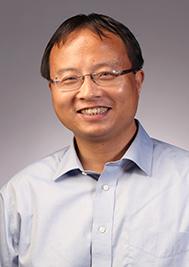
Dr. Jonathan Hu is a Professor in the Department of Electrical and Computer Engineering at Baylor University's School of Engineering and Computer Science. He holds a PhD from the University of Maryland Baltimore County (2008) and completed a postdoctoral fellowship at Princeton University (2009–2011). He is an active researcher in optics and photonics, leading the Photonics Research Laboratory and advising both graduate and undergraduate research assistants. Research Interests: Nanophotonics and metamaterials for photovoltaic and biomedical applications Mid-IR supercontinuum generation using chalcogenide photonic crystal fibers 2D materials such as graphene and their alignment via magnetic fields Coherent optical communication and quantum optical Fredkin gates Numerical simulation of electromagnetic problems and leaky mode analysis His recent publications (2019–2024) demonstrate a strong focus on quantum plasmonics, specialty optical fibers, optofluidics, and nonlinear optical phenomena, with high-impact work in journals like Science Advances , ACS Photonics , and Advanced Materials . The research shows a clear trend toward integrating photonics with 2D materials and quantum systems, with applications in sensing, communication, and materials characterization. Scientific Awards and Recognition: 35 Baylor faculty named among top 2% most cited researchers (2023) Editor’s Pick, Journal of Applied Physics (2018) Top three downloads in OSA journals for three consecutive months (2009) NSF Graduate Research Fellowship (awarded to advisee) Chinese Government Award for Outstanding Self-Financed Students Abroad (awarded to advisee) Second Place in FiO + LS Student Competition (awarded to advisee) Advising and Grants: Dr. Hu actively mentors students at all levels, with current graduate research assistants including Wei Zhang, Zhihao Hu, and Sterling Walzel. His lab is supported by external funding, though specific grants are not detailed in the text. He has advised PhD students such as Joshua Young, Chao Niu, and Chengli Wei, many of whom have gone on to successful academic and industry careers. His teaching includes core courses like EGR 1302, ELC 2320, and ELC 4320, as well as advanced topics in computational photonics and integrated photonics. Labs and Teams: He leads the Photonics Research Laboratory at Baylor University, located at the BRIC facility. He is also involved with the Baylor University Optica Student Chapter, promoting optics outreach and networking among students and researchers.
Paul R. Genssler is a Dr.-Ing. researcher at the Chair of AI Processor Design (AI-Pro) within the Technical University of Munich (TUM), actively advancing hardware solutions for artificial intelligence under Prof. Hussam Amrouch. His work bridges computer engineering and emerging technologies, focusing on overcoming fundamental limitations in conventional computing architectures through brain-inspired paradigms. His research spans critical domains in next-generation computing: Hyperdimensional Computing for robust pattern recognition and bioinformatics applications Neuromorphic and In-Memory Computing architectures for energy efficiency Reliability engineering for emerging memory technologies (FeFET, etc.) Quantum computing support systems including cryogenic embedded electronics Machine learning-driven transistor aging prediction and mitigation Analysis of his 15 most recent publications (2023-2024) reveals a dominant trend toward hyperdimensional computing as a unifying framework for addressing reliability challenges in emerging technologies. His work consistently integrates in-memory computing techniques to bypass von Neumann bottlenecks while targeting real-world applications like genome matching and unsupervised learning. A significant portion focuses on error-resilient implementations for unreliable nanoscale devices, demonstrating exceptional cross-stack expertise from transistor physics to algorithm design. As a core member of TUM's AI Processor Design group affiliated with the Munich Institute of Robotics and Machine Intelligence (MIRMI), Genssler collaborates extensively on projects spanning cryogenic quantum control systems, FPGA-based AI resilience, and monolithic 3D integration. The team operates at the intersection of semiconductor physics, computer architecture, and machine learning, with strong industry connections evident through publications at DATE, ASP-DAC, and ICCAD.
Fabrizio Lombardi is the ITC Endowed Professor at Northeastern University's Department of Electrical and Computer Engineering, part of the College of Engineering. He previously held faculty positions at Texas Tech University, University of Colorado-Boulder, and Texas A&M University. He earned his B.Sc. from the University of Essex (1977), M.Sc. and Ph.D. from the University of London (1982). His research focuses on fault-tolerant computing, VLSI CAD, quantum computing, and configurable computing systems. He has led major projects like the NSF-funded Neural-Network-based Stochastic Computing Architectures for Machine Learning . He holds leadership roles including President of the IEEE Nanotechnology Council (2022-2023), IEEE Computer Society Vice President (2021), and IEEE PSPB member. His 200+ publications span IEEE Transactions on Computers, Nanotechnology, and Design & Test. Awards include IEEE Fellow, Søren Buus Outstanding Research Award, and multiple research fellowships. His work bridges theory and application, emphasizing defect-tolerant nanosystems and energy-efficient computing hardware. Recent innovations include approximate computing methodologies and secure PUF-based hardware designs.
Adilson Motter is the Charles E. and Emma H. Morrison Professor of Physics and Astronomy and (by courtesy) Engineering Sciences and Applied Mathematics at Northwestern University. He serves as Director of the Center for Network Dynamics (CND) and has been a faculty member since March 2006. His academic appointments include affiliations with the Chemistry of Life Processes Institute (CLP), Molecular Biophysics Program, NSF-Simons National Institute for Theory and Mathematics in Biology (NITMB), Paula M. Trienens Institute for Sustainability and Energy, Graduate Program in Applied Physics, Center for Interdisciplinary Exploration and Research in Astrophysics (CIERA), Institute for Quantum Information Research and Engineering (INQUIRE), and Northwestern Institute on Complex Systems (NICO). Professor Motter received his Ph.D. in 2002 from UNICAMP (University of Campinas), Brazil, where he worked with Professor Patricio S. Letelier. Prior to joining Northwestern, he held positions as Guest Scientist at the Max Planck Institute for the Physics of Complex Systems in Germany and as Director's Funded Postdoctoral Fellow at the Center for Nonlinear Studies at Los Alamos National Laboratory. Professor Motter's research focuses on the dynamical behavior and control of complex systems and networks. His work spans theoretical and computational approaches to understanding phenomena in physical, biological, and engineered systems. Key research areas include: Cascading dynamics and network resilience Spontaneous synchronization and symmetry phenomena Network control theory and applications Quantum networks and information transfer Machine learning applications to network science Data-driven discovery in complex systems Applications to quantitative biology, biomedical research, renewable energy, smart power grids, microfluidics, and metamaterials Analysis of Professor Motter's recent publications reveals a strong interdisciplinary focus spanning physics, engineering, biology, and computer science. His work demonstrates consistent innovation in network science, with recent contributions advancing quantum networking architectures, understanding power grid limitations for electric vehicle integration, developing machine learning approaches for genetic analysis, and exploring fundamental synchronization phenomena. A notable trend is the increasing application of his theoretical frameworks to real-world challenges in energy systems, biomedical research, and quantum information technology. Professor Motter has received numerous prestigious awards and honors: Alfred P. Sloan Research Fellowship (2009) Weinberg Award for Excellence in Mentoring Undergraduate Research (2009) Northwestern-Argonne Early Career Investigator Award for Energy Research (2010) NSF Faculty Early Career Development (CAREER) Award (2011) Erdös-Rényi Prize in Network Science (2013) Fellow of the American Physical Society (2013) Simons Foundation Fellowship in Theoretical Physics (2015) Fellow of the American Association for the Advancement of Science (2015) Scialog Fellow (2015) Outstanding Referee, American Physical Society (2016) Fellow of the Network Science Society (2020) Senior Scientific Award, Complex Systems Society (2022) Professor Motter has demonstrated exceptional commitment to mentoring, as evidenced by the Weinberg Award for Excellence in Mentoring Undergraduate Research. His research group has received significant funding through multiple NSF grants, including his CAREER award, and collaborations with Argonne National Laboratory. Current research directions include mechanical metamaterial networks, quantum network science, and other areas of complex systems. The group has been actively recruiting postdoctoral researchers and has seen students recognized with awards and research grants. As Director of the Center for Network Dynamics (established September 2023), Professor Motter leads a multidisciplinary team exploring network phenomena across various domains. The Center has hosted significant events including the 'Brain Architecture and Computing 2024' workshop and is organizing the 2025 CDC Workshop on Neurocomputation and Dynamics in Rio de Janeiro. The Motter Group maintains active collaborations with experimentalists and researchers from diverse disciplines, facilitating the translation of theoretical insights into practical applications.
Yuebing Zheng is a Professor of Mechanical Engineering & Materials Science and Engineering at the University of Texas at Austin, holding the Cullen Trust for Higher Education Endowed Professorship. He leads a research group innovating optical nanotechnologies for applications in health, energy, and manufacturing. His work focuses on light-matter interactions, optically active materials, and interdisciplinary training. Key roles include Graduate Advisor for the Materials Science Program and past leadership as Associate/Assistant Professor since 2013. Education: PhD in Engineering Science and Mechanics (2010), Penn State University Postdoctoral Researcher (2010-2013), UCLA (Chemistry and Biochemistry) MSc in Physics (2003), National University of Singapore BSc in Physics (2001), Nankai University Research Interests: Optical manipulation technologies (e.g., optothermal tweezers) Nanophotonics and metamaterials Machine learning for materials discovery Biomedical applications (e.g., cell analysis, chiral sensing) Clean energy systems Recent Article Trends: Focus on AI-driven materials design, optothermal microrobotics, and advanced optical systems for energy and biomedical applications. Key innovations include photonic batteries, graphene moiré systems, and steerable active particle swarms. Awards: 2025 SPIE Fellow 2024 Optica Fellow 2017 NIH New Innovator Award 2014 Beckman Young Investigator Multiple best paper awards (2019–2023) Advising & Grants: Supervised over 20 PhD students/postdocs. Active grants from NIH, NSF, ONR, NASA, and industry partnerships. Current lab focuses on optical manipulation, metamaterials, and AI-integrated nanotechnology. Labs/Teams: Director of the Zheng Research Group, affiliated with the Texas Materials Institute. Collaborates on projects merging nanoscience with machine learning and biomedical engineering.
Rod Beresford is a Professor of Engineering at Brown University's School of Engineering, where he has held several leadership positions including Senior Associate Dean for Academic Programs and Associate Provost for Academic Space. He earned his B.S. (1979) and M.S. (1981) in electrical engineering from Yale University and his Ph.D. (1990) from Columbia University. In 2020/21, he served as an IEEE/AAAS Congressional Fellow working on the Senate Energy and Natural Resources Committee. His research focuses on semiconductor nanostructures, including synthesis, modeling, integration with microelectronics, and applications, with a particular emphasis on molecular beam epitaxy. Beresford has published over 80 scientific papers and has worked on molecular beam epitaxial growth of III-V semiconductors since 1987. His current research emphasizes engineering innovations for decarbonization and electrification of the economy. Professor Beresford's scholarly work spans semiconductor materials and devices, quantum structures, nanomaterials, microfluidics, and biosensing. His recent publications demonstrate a strong focus on quantum dot arrays, nanowire electrical properties, and biosensing applications. The research shows evolution from fundamental semiconductor physics toward practical applications in sensing and energy technologies. His honors and awards include: Tau Beta Pi (1978) Sheffield Fellowship (Yale University, 1980–81) Office of Naval Research Fellowship (Columbia University, 1987–90) Sigma Xi (1991) BBV Foundation Chair (Visiting Professor, Polytechnic University of Madrid, 1996) Institute of Electrical and Electronics Engineers, Senior Member (2002) Professor Beresford has been instrumental in Brown's academic infrastructure development, including facilitating the successful development of the Engineering Research Center, an 80,000-sf lab building completed in October 2017. He has served as Academic Director for the Master of Science in Technology Leadership program and has introduced new courses in VLSI Design and Nanoelectronics. His research has been supported by significant grants including: Nanoelectronics Research Initiative / National Science Foundation: "Direct-Write Synthesis of Graphene Devices" (PI, $400,000) National Science Foundation Materials Research Science and Engineering Center: "Micro- and Nano-Mechanics of Electronic and Structural Materials" (co-PI, $9,360,000) Air Force Office of Scientific Research Multidisciplinary University Research Initiative: "Direct Nanoscale Conversion of Biomolecular Signals into Electronic Information" (co-PI, $5,609,969) Professor Beresford leads a research group focused on semiconductor nanostructures and collaborates extensively with colleagues including Jingming Xu, Eric Chason, Brian Sheldon, Alexander Zaslavsky, and David Paine. His laboratory includes molecular-beam epitaxy systems for advanced materials research.
Dr. Nicolas Francois is an Associate Professor in the Department of Materials Physics at Australian National University (ANU), specializing in experimental geomaterials physics, soft matter, and fluid hydrodynamics. He leads the X-ray Tomography and Applications Research Group, combining curiosity-driven and applied research in out-of-equilibrium systems. ARC Industry Fellow (2024-2030): Improving Australian iron ore comminution for green steel production ARC DECRA Fellow (2016-2018): Biofilms in two-dimensional turbulent flows His research spans fundamental questions in: Fragmentation of solid materials Autonomous devices powered by chaotic flows Hydrodynamic waves Stochastic thermodynamics Granular matter Polymer rheology and applied areas in: Comminution of geomaterials Mechanics of fractured rocks Wave-energy conversion Environmental fluid mechanics Publications reveal a trajectory focused on X-ray tomography applications, granular dynamics, and turbulence-driven systems. He utilizes advanced imaging techniques to study material failure mechanisms and fluid-structure interactions, contributing to fields ranging from green steel production to biofilm dynamics. Current student projects and grants emphasize sustainable resource processing and fundamental fluid physics.
Cihan Tepedelenlioglu is an Associate Professor at Arizona State University's School of Electrical, Computer and Energy Engineering. His work bridges wireless communications, statistical signal processing, and renewable energy systems, with a focus on photovoltaic array monitoring, fault detection, and optimization. PhD, MS, and BS in Electrical Engineering from University of Minnesota, University of Virginia, and Florida Institute of Technology 2001 NSF CAREER Award recipient Research interests span wireless communications , graph signal processing , stochastic optimization , and machine learning applications to solar energy systems . Key projects include quantum machine learning for PV topology optimization, consensus algorithms for distributed networks, and real-time fault detection using neural networks. Recent articles emphasize machine learning in energy systems (2023-2025), with 12 publications on photovoltaic monitoring and 3 on consensus algorithms. Earlier work focused on channel estimation in OFDM systems and fading models in wireless communications. Scientific awards : NSF CAREER Award (2001) Major grants include NSF funding for networked solar array management (2013-2016), nonlinear distributed consensus (2013-2016), and statistical processing of solar data (2009-2012). Teaching roles include EEE 350 Random Signal Analysis and graduate research supervision in signal processing and wireless communications. Collaborates extensively with Andreas Spanias, Mahesh Banavar, and other researchers on cyber-physical systems for energy applications.
Ramses Martinez is an Assistant Professor in the Department of Industrial Engineering and Biomedical Engineering at Purdue University . He holds a B.A. in Applied Physics from Universidad Autonoma de Madrid (2004) and a Ph.D. in Physics and Materials Science from the Spanish National Research Council (CSIC) in 2009. Prior to joining Purdue, he conducted postdoctoral research in the lab of Prof. George M. Whitesides at Harvard University, focusing on nanofabrication, microfluidics, and soft robotics. Education B.A. in Applied Physics, Universidad Autonoma de Madrid (2004) Ph.D. in Physics and Materials Science, Spanish National Research Council (CSIC) (2009) His research bridges soft robotics , flexible electronics , and nanofabrication , with a focus on creating self-powered e-textiles , omniphobic paper-based devices , and programmable mechanical metamaterials . His work has led to over 25 publications and 9 patents, emphasizing practical applications in health monitoring and industrial automation . Notable projects include waterproof electronic decals for biofluid monitoring, smart bandages for chronic wound detection, and laser nanoforming methods for scalable metallic structures. His research has been recognized through the Fulbright Fellowship and the Marie Curie IOF Grant .
Dr. Adelina Ilie is a Research Professor in the Department of Physics at the University of Bath, where she leads research in Nanoscience and Nanotechnology through multiple interdisciplinary centers including the Centre for Nanoscience and Nanotechnology, Condensed Matter Physics CDT, Centre for Therapeutic Innovation, Condensed Matter and Quantum Materials group, and NanoBioElectronics research. Her research spans fundamental to applied studies of functional nanomaterials with designed atomic-scale behavior. Specializing in graphene and related 2D materials as well as 2D molecular networks, her group employs advanced scanning probe microscopy techniques under ultra-high vacuum and cryogenic conditions to engineer quantum properties for novel applications in nanoelectronics, spintronics, and biomedical sensing. Her recent publications reveal strong trends in quantum materials engineering, particularly in superlattice structures, hybrid 2D systems, and bio-nano interfaces. The research demonstrates sophisticated manipulation of electronic, optical, and thermal properties at the atomic scale, with increasing focus on biomedical applications in recent years. Dr. Ilie actively supervises doctoral students and has served as external examiner for PhD theses at prestigious institutions including University of Cambridge (2024, 2021), University of Oxford (2018), and University of Southampton (2011). Her research is supported by significant grants from EPSRC, MRC, Sir Halley Stewart Foundation, and University of Bath. Her laboratory maintains state-of-the-art facilities for atomically-resolved scanning probe microscopy (STM and AFM) in ultra-high vacuum and cryogenic environments, complemented by chemical vapor deposition systems for nanomaterial fabrication. She maintains active collaborations across Bath's departments of Pharmacy & Pharmacology, Chemistry, and Biology & Biochemistry, as well as with international research institutes specializing in nanoscience.