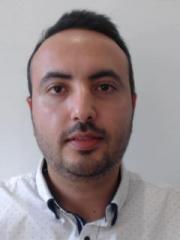
Dr. Amin Darvazehban is an Adjunct Research Fellow at the School of Electrical Engineering and Computer Science, The University of Queensland. His research focuses on electromagnetic antenna design for biomedical imaging systems, particularly targeting torso and liver diagnostics. Key Research Areas: Medical microwave imaging systems Metasurface and reconfigurable antenna technologies Dielectric property analysis for diagnostics Biomedical electromagnetic sensors Quantum signal processing applications Publication Trends: Recent work highlights electromagnetic solutions for non-invasive steatotic liver detection, torso imaging optimization, and metasurface-based antenna systems. His articles span IEEE journals in Antennas, Microwaves in Medicine, and Biosensors. Education: Completed his PhD thesis in 2021 on 'Reconfigurable antennas for electromagnetic torso imaging' at the School of Information Technology and Electrical Engineering, The University of Queensland. Patent: Co-inventor of an apparatus for electromagnetic characterization of internal features (US20230228917A1, 2023).
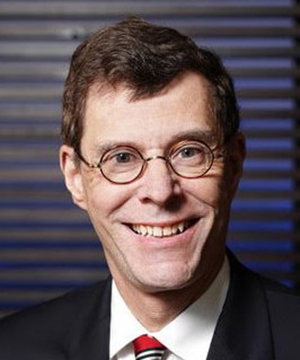
Professor Boris Kuhlmey is a Professor at the School of Physics, University of Sydney, and a member of the Sydney Nano Institute. His research focuses on metamaterials, photonic crystals, and terahertz technology, with applications in imaging, waveguides, and energy transfer. He has authored the book Foundations of Photonic Crystal Fibres and over 100 peer-reviewed publications. Key projects include developing terahertz imaging techniques, exploring light sails for interstellar travel, and advancing metamaterial fabrication through fiber-drawing methods. His work bridges fundamental physics with practical applications, spanning photonics, nanotechnology, and aerospace engineering. Notable contributions include subwavelength imaging via virtual superlensing and 3D-printed terahertz couplers that improve signal quality. He leads grants on superconducting cavities for quantum coupling and nanostructured textiles for sustainable energy solutions. Professor Kuhlmey collaborates widely, with recent conference presentations at META Conferences and SPIE events. His research has been featured in Science & Vie , Universe Today , and New Scientist , highlighting breakthroughs in invisibility cloaks and stable lightsail propulsion systems.
Robert Boyd is a Professor of Optics and Physics at the University of Rochester and holds a Canada Excellence Research Chair at the University of Ottawa. He leads major research initiatives in nonlinear optics, quantum optics, and metamaterials. His work spans theoretical and applied optics, with focus on nonlinear optical interactions, epsilon-near-zero materials, and advanced imaging techniques. Education: BS in Physics from MIT (1977), PhD in Physics from UC Berkeley (1977), supervised by Charles Townes. He joined the University of Rochester faculty in 1977 and expanded his research to the University of Ottawa in 2010. His research group operates in both institutions, emphasizing interdisciplinary collaborations. Research interests include nonlinear optical properties of materials, quantum optics, nanophotonics, and metamaterials. His team explores applications like optical imaging, plasmonic devices, and high-efficiency nonlinear processes in novel materials. Awards include Fellowships from the Optical Society of America and American Physical Society. He authored seminal textbooks such as Nonlinear Optics (1992) and holds nine US patents. His group’s work has produced over 350 publications and trained 33 PhD students. Labs and teams: The Boyd Group operates at both universities, with teams focused on nonlinear optics, quantum photonics, and metamaterials. Active projects include epsilon-near-zero-based devices, high-harmonic generation, and turbulence-resilient optical communications.
Professor Andrew N. Jordan is a Full Professor of Physics at the University of Rochester. He holds affiliations with the Center for Quantum Information, Center for Coherence and Quantum Optics, and Institute for Quantum Studies at Chapman University. He received his BS in Physics and Mathematics (1997) from Texas A&M University and his PhD in Theoretical Physics (2002) from the University of California, Santa Barbara. His postdoctoral work included a fellowship at the University of Geneva (2002–2005) and a Research Scientist position at Texas A&M (2005–2006). He joined the University of Rochester in 2006, advancing to Associate Professor (2012) and Full Professor (2015). His research focuses on quantum optics, condensed matter physics, and nanophysics, with emphasis on quantum measurement theory, quantum information, and statistical physics. Notable contributions include studies on superoscillations, weak measurements, and quantum thermodynamics. He co-authored the textbook Quantum Measurement: Theory and Practice (2024) and holds patents in quantum refrigeration and sensing technologies. Recent work explores superresolution imaging, optimal quantum control, and entanglement dynamics in open systems. His articles span foundational quantum theory and applied technologies, including radar ranging, quantum error correction, and AI-driven quantum systems. Awards and grants are not explicitly listed, but his research is supported by grants from institutions like the National Science Foundation. Collaborations include teams at Chapman University, Texas A&M, and international partners. His lab designs quantum sensors and refrigeration systems, advancing both theoretical and experimental quantum science.
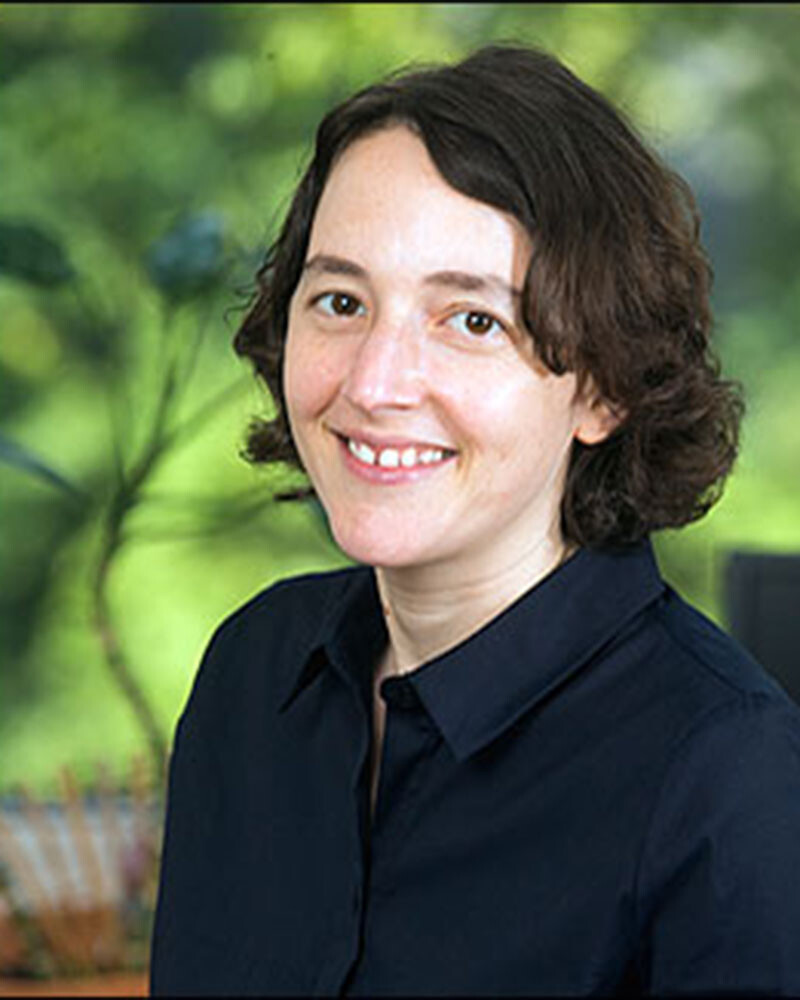
Sharon M Weiss is the Cornelius Vanderbilt Professor of Engineering and holds joint appointments in Electrical Engineering, Materials Science & Engineering, and Physics at Vanderbilt University's School of Engineering. She directs the Vanderbilt Institute of Nanoscale Science and Engineering. Her research focuses on light-matter interaction, silicon photonics, porous silicon biosensors, and nanotechnology. She earned a B.S., M.S., and Ph.D. in Optics from the University of Rochester. Her work spans advanced photonic crystal designs, ultra-sensitive biosensors, and radiation-tolerant optical components for aerospace applications. Recent projects include photonic metacrystals for high-Q cavities and porous silicon sensors for rapid diagnostics. She has pioneered integration of phase-change materials like VO₂ in silicon photonics for ultrafast optical switching. Publications emphasize subwavelength photonics, biosensing innovations, and space-qualified optoelectronics. Her lab develops hybrid waveguides, nanobeam cavities, and AI-enhanced sensing systems. Collaborations include NASA and industry partners for biomedical and defense applications.
Professor Duncan Paul Hand is a distinguished academic at Heriot-Watt University, holding dual appointments in the School of Engineering & Physical Sciences and the Institute of Photonics and Quantum Sciences. He specializes in applied photonics, with expertise in laser technology and its applications across diverse sectors including aerospace, medical devices, and defense. He leads the £12M Medical Device Manufacturing Centre (MDMC) and directs a £1M project on ultra-short pulsed laser welding. His career includes roles such as Assistant Vice Principal Research and Impact, and Acting Deputy Principal (Pro-VC) Research and Impact. Education: BSc in Physics with Electronics (University of St Andrews, 1986); PhD in Optical Fibres (University of Southampton, 1991). Professional milestones include promotions from Research Associate (1991) to Professor of Applied Photonics (2003), alongside leadership in academic administration. His research focuses on photonics-enabled manufacturing, laser material processing, and sustainable engineering solutions aligned with UN SDGs. Research interests emphasize industrial collaborations with firms like Renishaw and Leonardo, advancing applications in medical device fabrication, optical materials, and energy-efficient technologies. Recent work includes innovations in laser welding of optical materials and stress management in bonded components. He oversees the Pico Second Laser Machining facility and has contributed to over 398 research outputs, with datasets and activities highlighting advancements in microfluidics, anti-counterfeiting holography, and laser beam shaping.
Eray S. Aydil is the Senior Vice Dean of the NYU Tandon School of Engineering and holds the Alstadt Lord Mark Professorship in Chemical and Biomolecular Engineering. He previously served as Executive Officer of the Department of Chemical Engineering and Materials Science at the University of Minnesota and held faculty roles at UC Santa Barbara. His research focuses on electronic/optoelectronic materials, plasma synthesis, and renewable energy technologies, particularly photovoltaics and solar cells. He earned his B.S. degrees in Chemical Engineering and Materials Science from UC Berkeley (1986) and his Ph.D. in Chemical Engineering from the University of Houston (1991). Affiliations: NYU Tandon School of Engineering, American Vacuum Society Fellow, Editor-in-Chief of Journal of Vacuum Science and Technology Education: UC Berkeley (B.S.), University of Houston (Ph.D.) Research interests include semiconductor synthesis for solar energy applications, plasma-assisted materials processing, and nanomaterials characterization. Key projects involve hybrid perovskite materials, pyrite solar cells, and plasma synthesis techniques. Recent work emphasizes lead-free perovskites, quantum cutting materials, and insulator-metal transition phenomena in nanocrystals. Over 200 publications highlight contributions to perovskite optoelectronics, nanocrystal networks, and photovoltaic materials. Awards include the Peter Mark Award and Plasma Prize from the American Vacuum Society. His lab explores energy-efficient materials, solar cell efficiency, and sustainable chemical processes.
Professor Hong Koo Kim is a distinguished academic at the University of Pittsburgh's Swanson School of Engineering, serving as the Graduate Program Director. He holds the Bell of PA/Bell Atlantic Professorship, a prestigious title spanning over 15 years (2008–present). His research focuses on nano-optics, nano-electronics, and quantum technologies, with applications in energy-efficient computing and communications. Research Highlights: Quantum-dot light sources for quantum information processing Plasmonic metamaterials for integrated quantum photonics Nano-vacuum transistors for extreme environments Nanoscale integration of systems for multifunctional operations He has been recognized with the Pitt Innovator Award (multiple years) and the Beitle-Veltri Memorial Award for Teaching Excellence. His leadership roles include organizing international symposia and advising committees for nanotechnology initiatives.
Prof. Andrea Hofmann is an Assistant Professor at the University of Basel's Department of Physics, within the Philosophisch-Naturwissenschaftliche Fakultät. Her research group focuses on quantum transport phenomena in semiconductor devices, including spin-orbit interactions, superconductivity in Ge/SiGe systems, and spin qubit development. She holds a PhD from ETH Zurich (2017), awarded with the ETH Medal and Swiss Physical Society Prize, and has held postdoctoral positions at IST Austria and Swiss Reinsurance Company. She leads the FG Hofmann research group and collaborates with institutions like the Basel Quantum Center. Education: BSc and MSc in Physics from ETH Zurich (2011–2013), PhD in Physics from ETH Zurich (2017). Professional Experience: Postdoc at IST Austria (2018–2020), Risk Modeller at Swiss Re (2020–2021), Tenure-track Assistant Professor at University of Basel (2021–present). Research Interests: Quantum dots, spin qubits, superconductivity-semiconductor hybrids, and nanoscale transport. Specific projects include NCCR SPIN (spin qubits in silicon) and bilayer graphene quantum dots. Her work addresses challenges like quantum coherence, proximity effects, and device tunability. Publications highlight advancements in Ge hole gas superconductivity, Majorana states, and qubit dynamics. Awards include the Marie Curie Fellowship and ETH Medal. Her lab actively recruits researchers at all academic levels. Key collaborations involve ETH Zurich and the Swiss Nanoscience Institute. Ongoing projects explore quantum dot thermometry, valley qubits, and scalable quantum devices.
Haiyan Ou is an Associate Professor and Group Leader of the Wide Bandgap Semiconductor Photonics group at the Department of Electrical and Photonics Engineering, Technical University of Denmark (DTU). She is based in Kgs. Lyngby, Denmark, and maintains an active research profile in advanced photonic materials and systems. Research Interests: Her work centers on nanophotonics and quantum photonics with a focus on silicon carbide (SiC), gallium nitride, and lithium niobate. She investigates nonlinear optics, integrated photonics, optical frequency combs, high-Q cavities, and single-photon emitters, aiming to develop CMOS-compatible quantum photonic integrated circuits. Her research contributes to UN Sustainable Development Goals in technology and education. Recent Publications Trends: The most recent articles highlight her pioneering work in SiC-based nonlinear photonics, including experimental demonstrations of optical frequency combs, microring resonators, and spontaneous parametric down-conversion on integrated platforms. These efforts are pushing the boundaries of quantum photonics using wide bandgap semiconductors. Supervision and Projects: She actively supervises multiple PhD students and leads significant research projects such as 'Silicon carbide based quantum photonic integrated circuit' and 'CMOS Compatible and Ultrabroad on-chip SiC Frequency Comb'. Her leadership spans both fundamental research and applied technologies, including space applications. Laboratory: Wide Bandgap Semiconductor Photonics Group, DTU Research Focus: Development of next-generation photonic devices using SiC for quantum and high-power applications
Mikael Östling is a Professor at KTH Royal Institute of Technology, holding a position in the Division of Electronics and Embedded Systems within the School of Information and Communication Technology. He earned his MSc (1980) and PhD (1983) in engineering physics from Uppsala University. Since 1984, he has been a faculty member at KTH, serving as Deputy President (2017–2022), Dean of the School of ICT (2004–2012), and Head of the Department of Microelectronics and Information Technology (2000–2004). He has held visiting roles at Stanford University and the University of Florida. His research focuses on silicon/silicon germanium devices, wide bandgap semiconductors (e.g., silicon carbide), and high-power/high-frequency applications. He has authored over 600 papers, 10+ book chapters, and a textbook. Key achievements include co-founding TranSiC (2005), securing the ERC Advanced Investigator Grant (2009), and serving as Editor-in-Chief of IEEE Journal of Electron Devices Society (2016–2019). He is an IEEE and ECS Fellow. Östling has supervised 50 PhD theses and contributed to innovations like high-temperature silicon carbide circuits and graphene-based sensors. His work spans academic leadership, industry collaboration, and global research advisory roles in EU frameworks and the European Research Council.
Professor Daniele Faccio is Professor of Quantum Technologies at the University of Glasgow's School of Physics & Astronomy since December 2017. He also serves as adjunct professor at the University of Arizona and was elected Fellow of the Royal Society of Edinburgh in 2017. Previously, he was at Heriot-Watt University (2010-2017) and has held visiting positions at MIT and ICFO, Barcelona. Professor Faccio leads the Extreme Light Group, focusing on quantum technologies applied to imaging and sensing. His research spans quantum-enhanced imaging through complex media, photon transport in biological tissues, and analogue gravity phenomena where intense laser pulses create artificial black holes and 'expanding universes' in laboratory settings. His work bridges fundamental physics with practical applications in biomedical imaging, security, and quantum information processing. Recent publications reveal a strong trend toward quantum-enhanced imaging techniques, machine learning applications in optical sensing, and biomedical applications of advanced optical technologies. His research integrates quantum optics, computational imaging, and photonics to develop novel sensing modalities with applications ranging from non-invasive medical diagnostics to quantum information processing. Professor Faccio has received numerous prestigious awards including the Philip Leverhulme Prize in Physics (2015) and the Royal Society of Edinburgh Senior Public Engagement Medal (2017). He was an ERC fellow from 2012-2017 and a Marie-Curie fellow at ICFO, Barcelona. As principal investigator, Professor Faccio has secured significant research funding supporting his interdisciplinary team. His work on quantum imaging, analogue gravity, and computational optics has attracted substantial grant support from major research councils. He actively mentors postdoctoral researchers and PhD students in the interdisciplinary field spanning physics, engineering, and computational science. The Extreme Light Group maintains state-of-the-art laser laboratories with capabilities in ultrafast optics, quantum optics, and computational imaging. Current projects focus on quantum-enhanced imaging for biomedical applications, non-line-of-sight imaging through scattering media, and exploring fundamental physics through optical analogues of gravitational phenomena.
Ali W. Elshaari is an Associate Professor at the Royal Institute of Technology (KTH) in Stockholm, Sweden. He holds a B.S. in Electrical Engineering from the University of Benghazi (2007) and a Ph.D. in photonics from the Rochester Institute of Technology (2011). His postdoctoral research at TU Delft’s Kavli Institute of Nanoscience focused on quantum transport. Currently, he leads the Quantum Nano Photonics Group, pioneering work in topological and quantum integrated photonics to develop high-performance circuits for communication, sensing, and metrology. His research spans hybrid quantum photonics, strain-tunable systems, and superconducting detectors, with applications in quantum communication and quantum materials characterization. Elshaari's research interests include integrating single-photon emitters into CMOS-compatible platforms, exploring quantum phenomena like entanglement and coherence, and developing advanced photonic materials (e.g., hexagonal boron nitride and Cu₂O). He has contributed to on-chip single-photon generation/filtering, strain-tunable photonic circuits, and slow-wave superconducting detectors. His work bridges experimental and theoretical approaches, leveraging imaging techniques and phase retrieval algorithms. Elshaari is an editorial board member for Nature Portfolio - Scientific Reports , Wiley Advanced Quantum Technologies , and EPJ Quantum Technology . He teaches courses in quantum technology, electromagnetism, and optical physics. His funding includes grants from the Wallenberg Foundation, Swedish Research Council, Vinnova, and the European Research Council. His lab actively recruits students for bachelor’s and master’s projects in quantum photonics and nanophotonics.
Dr. Shanmuga Sundar Dhanabalan is an Adjunct Senior Fellow in the School of Engineering at RMIT University, specializing in flexible/stretchable electronics, wearable biosensors, and photonics. His research focuses on smart medical devices like Smart Mattresses for aged care and Smart Eye Patches for chronic eye disease management. He collaborates extensively with industry and holds roles in research supervision and curriculum development. **Affiliations**: Functional Materials and Microsystems Research Group, RMIT University (Melbourne, Australia). **Research Interests**: Wearable sensors, optical communications, photonics, antennas, and sustainable nanomaterials. His work bridges materials science with healthcare technologies, emphasizing practical industry applications. **Awards**: Fondecyt Postdoctoral Fellowship (2018), TEQIP Doctoral Scholarship (2013), and fellowships with the Optical Society of India and Computer Science Teacher Association. **Supervision & Grants**: Active in mentoring postgraduate research projects (e.g., smart sensors, bioelectronic devices). His publications span over 60 peer-reviewed articles in journals like Optical and Quantum Electronics and Renewable and Sustainable Energy Reviews . **Labs/Teams**: Engaged in cross-disciplinary teams developing wearable health monitoring technologies and sustainable materials for electronics.
Prof. Thomas Weiland is a Full Professor of Computational Electromagnetics at the Technische Universität Darmstadt since 1989. His research focuses on numerical methods, computational engineering, and multiphysics simulation techniques, particularly in accelerator physics and beam dynamics. He holds a Dr.-Ing. from TU Darmstadt and has held postdoctoral and research positions at CERN and TU Darmstadt. His work includes pioneering contributions to electromagnetic field simulations, including advanced finite element methods, discontinuous Galerkin techniques, and boundary element approaches. Education highlights include his Diplom in Electrical Engineering from TU Darmstadt (1975) and a Habilitation in Experimental Physics from the University of Hamburg (1984). His research spans computational electromagnetics, accelerator physics, and numerical methods for electromagnetic field problems. Notable areas of innovation include transparent boundary conditions, eigenmode calculations, and high-performance simulation frameworks for rotating systems and particle accelerators. His publications emphasize advancements in electromagnetic simulation tools, such as the MagPEEC method and Trefftz-discontinuous Galerkin approaches. Collaborative projects include modeling RF photoinjectors for light sources and electrohydrodynamic droplet dynamics. Technical contributions also extend to wake field analysis in particle accelerators and SAR distribution studies in bioelectromagnetics. Research interests further include multiphysics coupling (thermal-electromagnetic effects in surge arresters), stochastic modeling of electromagnetic systems, and field-circuit co-simulation techniques. His work addresses challenges in large-scale eigenvalue problems, adaptive mesh optimization, and high-precision numerical methods for complex geometries.