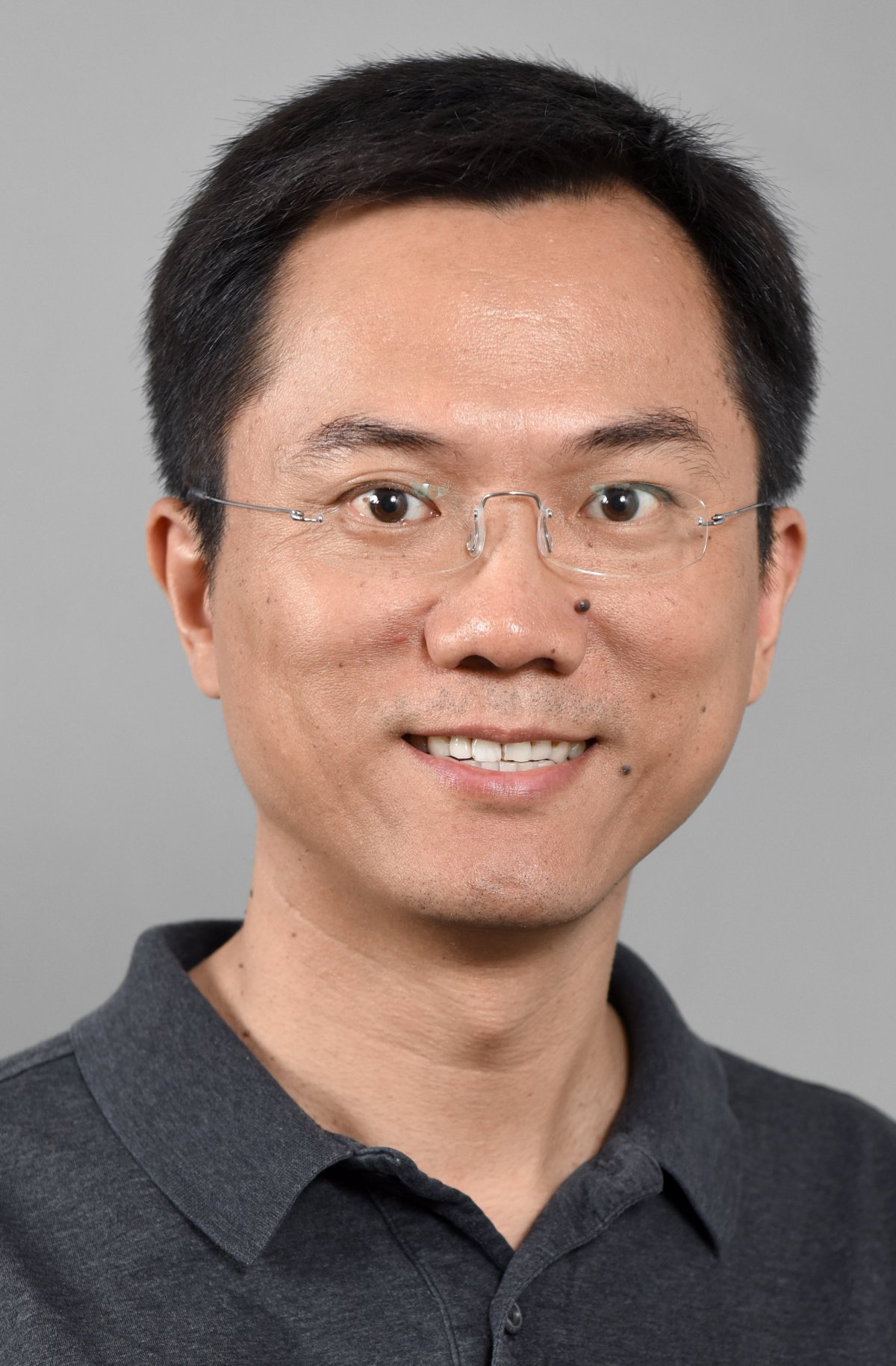
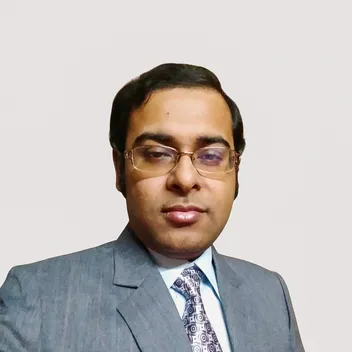
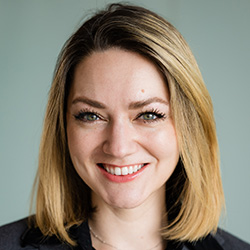
Associate Professor Jarryd Pla is an experimental physicist and electrical engineer at the University of New South Wales, specializing in quantum information processing and quantum technologies. He holds a PhD in Electrical Engineering from UNSW (2013) and a first-class honors BEng in Photonic Engineering (2009). Current ARC Future Fellow Former Bragg Gold Medal recipient His research focuses on: Spin-based quantum computation in silicon Superconducting quantum circuits Quantum-noise-limited microwave amplifiers Hybrid quantum systems for quantum memory Quantum sensing and spectroscopy Recent publications highlight: Room-temperature maser amplifiers Kinetic inductance parametric amplifiers Coherent control of donor spins Quantum-limited electron spin resonance Scientific Awards: ARC Future Fellowship (2024-2028) Bragg Gold Medal His grants include: ARC DECRA (2019-2022): Superconducting hybrid quantum technologies ARC Discovery Project (2021-2024): Quantum sensing with semiconductor devices ARC Future Fellowship (2024-2028): Room-temperature diamond-based microwave detection
Susan Spesyvtseva is a Knowledge Exchange Fellow and Associate Dean (Knowledge Exchange) in the Faculty of Science at the University of Strathclyde, based in the Department of Physics. Her work bridges academic research and industrial innovation, focusing on photonics, quantum technologies, space, and applied physics. She plays a key role in facilitating collaborations between industry, government, and academia through mechanisms such as consultancy, KTPs, CPD, and Innovate UK projects. Education: Doctor of Philosophy (PhD) in Applications of Cylindrical Vector Beams to Optical Micromanipulation, University College London (2013) Master of Physics (MPhys), University of St Andrews (2008) Susan's research interests lie at the intersection of photonics and real-world applications. She specializes in optical trapping, beam shaping, and plasmonics, with a strong emphasis on use-inspired research. Her work enables technologies in medical devices, space instrumentation, and advanced manufacturing. She actively promotes knowledge transfer and innovation through partnerships with RTOs and industry. Her recent publications focus on optical manipulation techniques, particularly using structured light and vector beams to control nanoparticles. The research demonstrates trends in precision control of micro- and nano-objects, with applications in biophysics, materials science, and lab-on-a-chip systems. Key themes include rotational dynamics, photothermal effects, and chirality-selective optical forces. Scientific Awards: British Science Association Media Fellowship (2015) Carey Foster Prize (2013) UK Physics Student of the Year, World Leadership Forum (2008) Susan advises on and manages multiple research grants and innovation projects, including those funded by the Wellcome Trust and internal university schemes. She leads initiatives such as the Space Photonics project and the Cultures of Collaborative Research project. As a Knowledge Exchange expert, she supports PhD student projects, proof-of-concept studies, and CPD programs, particularly in laser technologies. She is also involved in professional activities including consultancy, conference organization, and public engagement. She is associated with the Space Academic Network (SPAN) and contributes to Strathclyde’s leadership in photonics and quantum technologies. Her role as Associate Dean enhances cross-faculty collaboration, especially in science and engineering domains. She is a central figure in building innovation ecosystems around emerging technologies.
Thorsten Ackemann is a Professor of Nonlinear Photonics in the Department of Physics at the University of Strathclyde, United Kingdom. He has been a faculty member since 2005 and was promoted to full Professor in 2012. His research lies at the intersection of nonlinear optics, quantum optics, and complex systems, with strong affiliations to the Institute of Photonics and Quantum Sciences (IPaQS) and SUPA (Scottish Universities Physics Alliance). His research focuses on self-organization in light-matter systems, particularly in cold atoms and semiconductor lasers. Key themes include the formation of spontaneous patterns and phase transitions in cold atomic gases, simulation of condensed matter phenomena, realization of supersolids, and the study of solitons and structured light in vertical-cavity surface-emitting lasers (VCSELs). His work often bridges fundamental physics with technological applications in photonics and quantum technologies. The recent publications highlight a strong trend in quantum-enhanced interferometry, entanglement generation, optomechanical coupling, and complex soliton dynamics. These works reflect a deep engagement with quantum simulation, nonlinear feedback systems, and collective behavior in nonequilibrium systems. Fellow of the Institute of Physics (IOP), 2012 Fellow of the Optical Society (OSA), 2013 Professor Ackemann has led multiple research projects as Principal Investigator, including EU Horizon 2020 and Leverhulme Trust grants, often in collaboration with leading institutions across Europe and the US. He has supervised several PhD students and postdoctoral researchers, though specific names are not listed in the provided text. He is active in organizing international conferences and workshops, such as the ColOpt Winter School, and serves on professional committees. He is involved in several research groups and networks, including the Photonics Group at Strathclyde, and participates in large-scale collaborative efforts like the Stanford-Scotland Photonics Innovation Collaboration. His lab focuses on experimental and theoretical investigations of nonlinear optical phenomena, particularly in cold atom systems and semiconductor lasers.
Yu [Kevin] Cao is the Louis John Schnell Professor in the Department of Electrical and Computer Engineering at the University of Minnesota. His research focuses on microelectronics co-design for energy-efficient computing, spanning integrated circuit design, semiconductor physics, and machine learning methodologies. He leads the Microelectronics Co-design Research Group and actively collaborates with institutions like Georgia Institute of Technology, Sandia National Laboratories, and Notre Dame. His research interests include AI hardware acceleration , in-memory computing , cryogenic CMOS design , and 3D integration of heterogeneous chiplets . Current initiatives explore reconfigurable on-package systems for AI, spiking neural networks on neuromorphic hardware, and low-temperature logic technologies. Recent publications and projects highlight advancements in AI accelerators , RRAM-based compute-in-memory , graph convolutional networks , and 3D integration . His group develops tools like MN-SIM 2.0 for memristor modeling and investigates novel materials for neuromorphic systems. Grants include collaborative NSF funding for chiplet-based AI systems, CoCoSys center funding from SRC, and DOE/Sandia projects on neuromorphic hardware. Future work emphasizes scalable co-design frameworks for intelligent systems and heterogeneous integration challenges.
Loïc Rondin is a Lecturer at the University of Paris-Saclay, teaching at the IUT d'Orsay while conducting research at the LuMIn Laboratory (Laboratory of Materials, Interfaces, and Nanophotonics). His work focuses on multi-scale light-matter interactions, spanning atomic to device-level phenomena, within the domains of nanophotonics, materials science, and spectroscopy. Key Affiliations: Institution: University of Paris-Saclay Teaching Unit: IUT d'Orsay Research Lab: LuMIn Laboratory Research Interests: Driven by the study of nanophotonics and quantum optics, Loïc Rondin's research explores how light interacts with materials at nanoscale and mesoscopic levels. This includes spectroscopic techniques to analyze atomic-scale phenomena and device engineering for photonic applications. Laboratory Context: The LuMIn Laboratory specializes in interdisciplinary research combining materials science, nanotechnology, and photonic interactions, aligning with Rondin's focus on scalable optical systems and material characterization.
Marco Vacca is an Associate Professor in the Department of Electronics and Telecommunications (DET) at Politecnico di Torino and a member of the Interdepartmental Center PIC4SeR - PoliTO Interdepartmental Centre for Service Robotics. His work bridges electronics, nanotechnology, and computing architecture with a focus on innovative solutions to the memory wall problem. His research spans Logic-in-memory computing, Machine learning hardware acceleration, and Nanocomputing with specific emphasis on circuit architectures for probabilistic computing, magnetic devices, hybrid technologies integration, and CAD tools for emerging technologies. Dr. Vacca leads research in RISC-V extensions, hardware accelerators for AI, and autonomous robot systems for agricultural applications through the VLSILAB research group. Recent publications reveal a strong trend toward solving fundamental computing challenges through nanoscale innovations, particularly in memory-centric architectures, molecular field-coupled computing, and novel transistor technologies. His work demonstrates how logic-in-memory approaches can overcome traditional von Neumann limitations while improving energy efficiency for AI workloads. Editorial board member of ELECTRONICS (2021-2023) Program committee member for Design, Automation and Test in Europe Conference (DATE) 2020-2021 Dr. Vacca supervises PhD student Alessandro Varaldi working on 'Hardware AI Accelerators for Automotive Applications' and has led significant research projects including 'Device for Storage and Processing Data and Related Method' (2020-2021) and 'Quantum Computing and Quantum Communication: State of the Art and Applications in the Telco Sector' (2020). His grant portfolio shows strong industry and competitive funding support. As a core member of the VLSILAB research group, Dr. Vacca contributes to advancing VLSI theory and design applications with particular focus on implementing Big Data, Machine Learning, and Neural Networks in specialized hardware architectures that push the boundaries of conventional computing.
Professor David A Ritchie is a Fellow in Natural Sciences (Physics) and Professor of Experimental Physics at the University of Cambridge. He leads the Semiconductor Physics Group at the Cavendish Laboratory, focusing on quantum physics and semiconductor technology. Education: MA in Physics (University of Oxford, 1980), DPhil in Low-Temperature Liquid Helium Physics (University of Sussex, 1985) His research explores semiconductor physics, quantum dots, and terahertz technology, with contributions to spintronics and low-dimensional electron systems. Recent work addresses quantum entanglement and artificial bandstructures in GaAs heterostructures. He has published extensively on THz modulation, quantum cascade lasers, and electron correlation effects. His awards include the 2008 Tabor Medal and Prize from the Institute of Physics. Current publications analyze quantum Hall systems, spin-resolved magnetic focusing, and scalable entangled photon generation. Ritchie’s group develops cryogenic THz delivery systems and hybrid superconducting-semiconducting nanostructures.
Mircea Rastei is an Assistant Professor in the Department of Organic Materials (DMO) at IPCMS (Institut de Physique et Chimie des Matériaux de Strasbourg), University of Strasbourg. His research focuses on the electronic, magnetic, optical, and quantum mechanical properties of nanostructures using advanced atomic force microscopy techniques. Dr. Rastei's primary research interests include light-matter interaction, local photovoltaic effects, inversion symmetry breaking-driven charge generation, ferroelectric materials for data storage, and the discretization of interactions between solid-state nanostructures. His work bridges fundamental physics with practical applications in nanotechnology and materials science. His recent publications (2020-2025) demonstrate a consistent focus on ferroelectric Bi 2 FeCrO 6 thin films, photovoltaic effects, magnetic properties of nanoparticles, and advanced atomic force microscopy techniques. The research spans multiple disciplines including condensed matter physics, materials science, and nanotechnology, with significant contributions to understanding nanoscale phenomena. Dr. Rastei actively supervises PhD students including Antoine Bagard (2024), X. Henning (2024), M. D. Pichois (2022), and M. A. Hurier (2021), guiding research in ferroelectric materials, photovoltaic effects, and nanoscale characterization techniques. His laboratory features two specialized Atomic Force Microscopes coupled with wavelength-tunable lasers for optical excitation studies from 350-900 nm, enabling advanced photoinduced force microscopy/spectroscopy techniques (hν-CAFM, hν-KPFM, hν-PFM, PiFM-vis).
Philippe Tassin is a Professor of Physics at Chalmers University, specializing in electromagnetic structured media and computational electrodynamics. He teaches optics, quantum mechanics, and computer science courses, earning recognition through the Golden Chalk award and Chalmers' Pedagogical Prize. M.Sc. and Ph.D. (summa cum laude) from Free University of Brussels Postdoctoral work at Iowa State University and Ames Laboratory (US DOE national lab) His research spans metamaterials, plasmonics, and nanophotonics, with significant contributions to inverse design methodologies using machine learning. He has authored influential papers in Science , Nature Photonics , and Physical Review Letters , and frequently presents at international conferences. Recent publications highlight advancements in liquid metal composites for electromagnetic absorption, AI-driven metasurface design, and adaptive meshing for photonic simulations. His work integrates computational physics with experimental validation across multiple electromagnetic domains. KAW Fellowship Swedish Research Council Grant IEEE & SPIE Fellowships BAEF Alumni Award Frans Van Cauwelaert Award (Royal Flemish Academy) As editor of Photonics and Nanostructures , member of the Young Academy of Sweden, and vice-chair of IEEE Photonics Sweden Chapter, he actively contributes to academic leadership and public science communication.
Biplab Sanyal is a Senior Lecturer at the Department of Physics and Astronomy, Uppsala University, specializing in Materials Theory. His research focuses on ab initio simulations of 2D materials , multiferroics , clusters , and organometallic systems with applications in spintronics, nanoscience, and energy materials. His work integrates density functional theory and time-dependent electron dynamics to explore phenomena such as spin-phonon coupling , defect engineering , and molecule-substrate interactions . Current projects include structure prediction of 2D materials and oxide heterostructures . 2025 : Field-free spin-orbit torque in van der Waals magnets 2024 : Polar skyrmions in Janus CrInX3, enhanced ferromagnetism in Ni-doped Fe5GeTe2 Scientific awards include the FP7 Marie Curie IAPP project NU-MATHIMO (New Materials for High Moment Poles and Shields), a collaboration with University of Duisburg-Essen and Seagate Technology. His teaching includes courses on DFT and electronic structure calculations .
Dr. Hrishit Banerjee is a theoretical physicist working as an Assistant Professor in Physics at the University of Dundee's School of Science and Engineering since January 2024. His academic journey includes a PhD from University of Calcutta, postdoctoral research at CNR Instituto SPIN in Italy, Graz University of Technology, and University of Cambridge. His educational background includes a Doctor of Philosophy from University of Calcutta (awarded March 2019), Master in Science from Jadavpur University (awarded December 2012), and Bachelor of Science from Jadavpur University (awarded December 2010). Banerjee's research focuses on theoretical methods to study electronic structure of materials using Density Functional Theory, Dynamical Mean Field Theory, and GW Approximation. His primary interests include exotic phenomena in novel materials such as spin crossover polymers, 2D electron gases, magnetism in low-dimensional materials, and energy materials including Li-ion batteries and hybrid perovskite solar cells. He believes energy transition is essential for planetary survival and focuses on degradation mechanisms in energy storage and conversion devices. His recent publications reveal a strong emphasis on battery cathode materials, with particular focus on electronic correlations in layered oxides, oxygen hole formation in nickel-based cathodes, and degradation mechanisms. His work bridges fundamental condensed matter physics with practical energy applications. Best Oral Presentation BOSEFEST 2016 Best Poster at Conference on Physics and Chemistry of Materials: Computation and Experiments, 2014 Best Poster Presentational BOSEFEST 2014 Early-Stage Program: Research - Innovation - Training (ESPRIT) Fellowship (December 2023) IOP Trusted Reviewer Status (January 2025) Banerjee teaches Introduction to Programming and Condensed Matter Physics at Dundee, and previously taught Theoretical Techniques at Cambridge. He actively supervises PhD students with projects on battery degradation mechanisms. His external positions include Honorary Research Fellow at University of Birmingham (2024-2027) and Visiting Scientist at University of Cambridge (2024-2025). He participates in public engagement activities like the Dundee Science Festival and serves as a peer reviewer for journals including Journal of Physical Chemistry Letters.
Dr. Florian Merget is a senior researcher ( Oberingenieur ) at the Institut und Lehrstuhl für Integrierte Photonik at RWTH Aachen University since 2011. His research spans silicon photonics , photonic integrated circuits (PICs) , and their applications in biomedical imaging , quantum optics , and optical communication systems . Education : Diplom-Ingenieur and PhD in Electrical Engineering from RWTH Aachen University Research Areas : Photonic device design (grating couplers, modulators, external cavity lasers), optical packaging, quantum interfaces, and biomedical photonics His recent publications focus on silicon nitride components for biomedical and quantum applications, alignment-tolerant optical couplers , and nonlinear optical transmission systems . Collaborations include work with Jeremy Witzens, Alvaro Moscoso Martir, and other photonics experts. Key contributions involve photonic interposer technology , resonant modulator design , and spin qubit-photon interfaces . He has also filed patents related to optical alignment and photonic integration .
Kate Smith is an Assistant Professor of Computer Science at Northwestern University, affiliated with the McCormick School of Engineering. She holds a PhD in Electrical Engineering from Southern Methodist University (SMU), along with MS and BS degrees in Electrical Engineering and Mathematics from the same institution. Her research focuses on quantum computing, specifically in system architecture, optimized compilation, error mitigation, and security. Prior to joining Northwestern in 2024, she worked at Infleqtion managing the Superstaq compiler team and as a postdoctoral scholar at the University of Chicago under the CQE/IBM program. She has contributed to over 25 peer-reviewed publications and served on technical committees for major conferences like MICRO, ISCA, and DAC. Education: SMU (PhD 2019, MS 2015, BS in EE/Math 2014). Professional experience includes roles at EPFL (Switzerland), Texas Instruments, and the Darwin Deason Institute for Cyber Security. Her honors include the 2022 HPCA Best Paper Award, MIT EECS Rising Star (2021), and the IEEE TC-MVL Early Career Award (2021). Research interests span quantum compilation, distributed systems, qudit processing, and quantum security. She co-organized the 2023 CCC Workshop on Next Steps in Quantum Computing and chaired the 2022 ISMVL conference. Her work emphasizes bridging hardware-software gaps to enable scalable quantum systems. Grants and collaborations include the EPiQC group at the University of Chicago and projects funded by the Swiss NSF. Teaching experience includes courses on quantum computing fundamentals and digital design at SMU, University of Chicago, and adjunct roles.
Wolfgang Pfaff is an Assistant Professor in the Department of Physics at the University of Illinois Urbana-Champaign, affiliated with the Grainger College of Engineering. His research focuses on quantum networks, superconducting circuits, and distributed quantum computing. He holds a PhD from Delft University of Technology (2013) and a Diplom (MSc) from the University of Regensburg (2009). Prior to UIUC, he was a Postdoctoral Associate at Yale University and a Researcher at Microsoft Quantum. Education: PhD, Applied Physics, Delft University of Technology, Netherlands, 2013 Diplom (MSc), Physics, University of Regensburg, Germany, 2009 Research Interests: Wolfgang’s work centers on quantum networks and distributed quantum computing, leveraging superconducting circuits and hybrid quantum systems. He has pioneered protocols for scalable quantum interconnects and remote entanglement stabilization. Key themes include open quantum systems, quantum optics, and quantum information processing. Grants & Funding: - $5.8M grant to develop modular quantum computing platforms - AFOSR $2.5M grant for stabilized entanglement research - Air Force Office of Scientific Research $1M grant - NSF QLCI HQAN funding Labs & Teams: He leads the Pfaff Lab , focusing on scalable quantum systems and hybrid architectures. Collaborations include Microsoft Quantum, Yale University, and TU Delft.
David Bolst is a Research Fellow at the School of Physics, University of Wollongong, within the Faculty of Engineering and Information Sciences. His research focuses on medical physics, radiation therapy, and computational modeling with applications in both clinical and space environments. Dr. Bolst has contributed significantly to the development and validation of Geant4-based models for hadron therapy, microdosimetry systems, and radiation protection technologies. Research Interests: His work spans medical physics (radiation therapy dosimetry, particle therapy modeling), radiation-matter interactions (secondary fragmentation, LET analysis), and space radiation protection (astronaut shielding, galactic cosmic ray studies). He has pioneered the use of silicon-on-insulator (SOI) microdosimeters for radiation quality assessment in diverse environments. Funding & Collaborations: He leads projects including the 'Advanced microdosimetry for particle therapy and space medicine' (2021-2022) and 'Anthropomorphic Phantom Ionising Radiation Modelling and Simulation' (2021-2022). Collaborations include institutions like CATANA and the Geant4 Medical Simulation Benchmarking Group. Grants: RevITAlise Research Grant Scheme (RITA): Advanced microdosimetry for particle therapy and space medicine (2021) Defence Materials Technology Centre: Anthropomorphic Phantom Modelling (2021) Labs/Teams: Involved in the G4-Med system development and the SOI microdosimeter project teams. Engaged with international collaborations in radiation physics and space medicine.