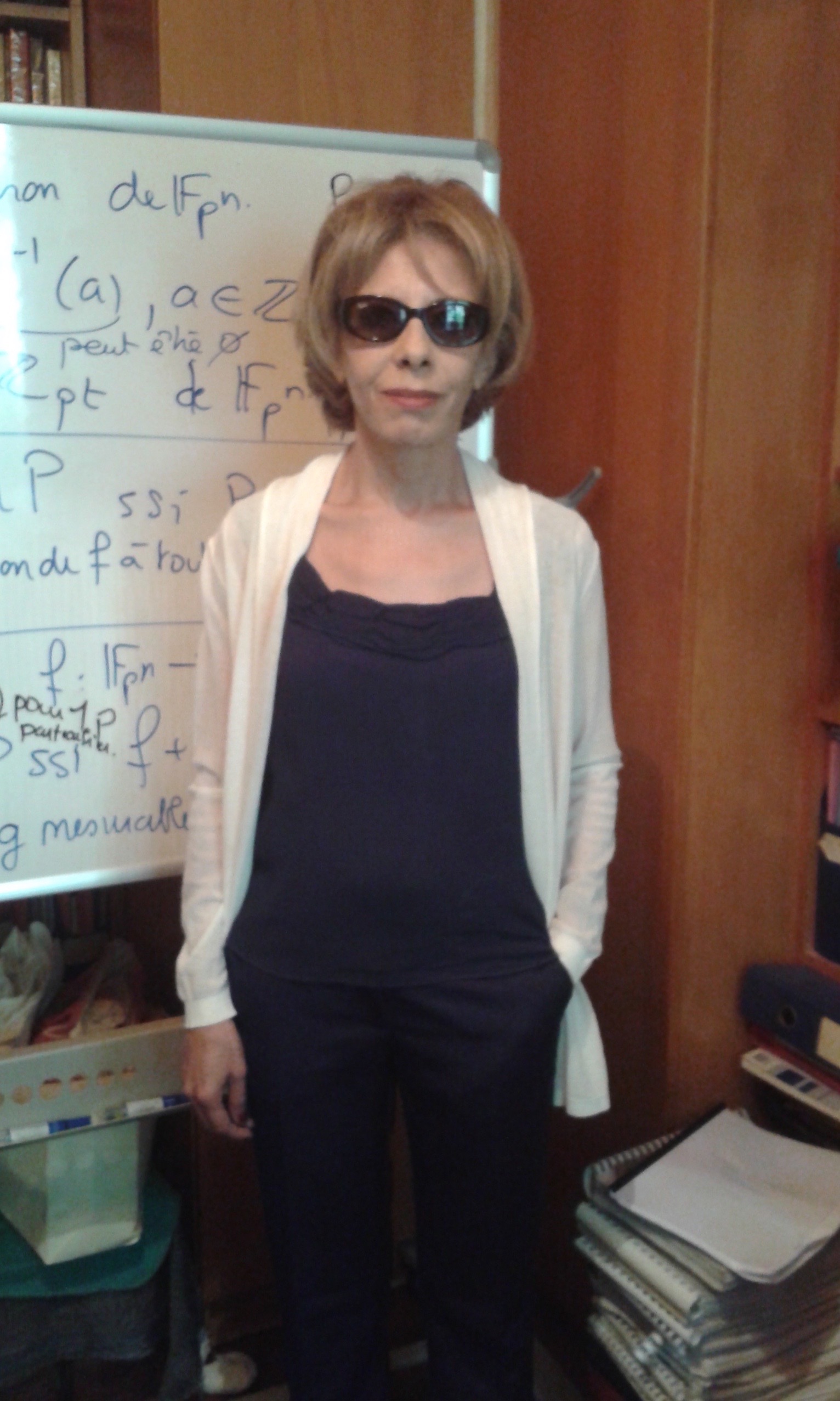
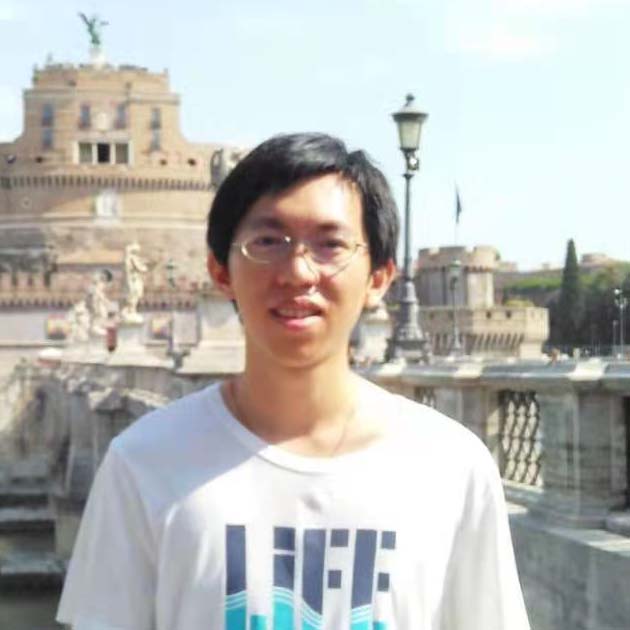
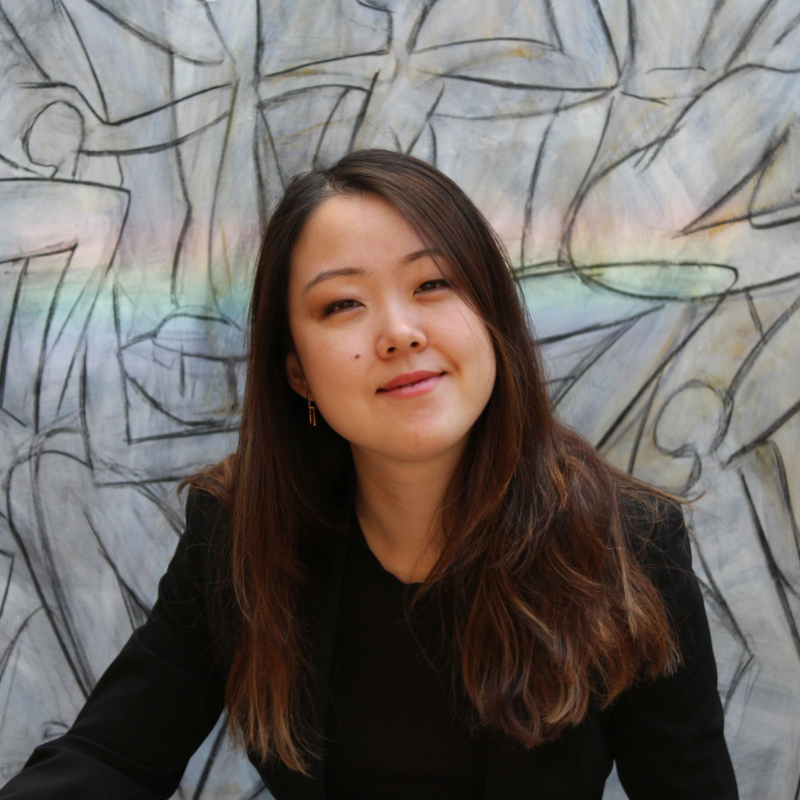
Dr. Rachel Player is a Senior Lecturer in the Department of Information Security at Royal Holloway, University of London . Her research focuses on post-quantum cryptography, lattice-based cryptographic schemes, homomorphic encryption, and quantum algorithm applications in cryptanalysis. She holds a PhD in Information Security from Royal Holloway, supervised by Prof. Carlos Cid and Prof. Sean Murphy. Education: PhD in Information Security, Royal Holloway, University of London (supervisors: Prof. Cid & Prof. Murphy) Research Interests: Rachel explores cutting-edge areas in cryptography with a focus on privacy-preserving technologies. Her work bridges theoretical advancements and practical implementations, particularly in homomorphic encryption and post-quantum security protocols. Recent efforts emphasize applying quantum algorithms to cryptanalytic challenges. Professional Activities: Rachel actively contributes to standards development in cryptography, including organizing HomomorphicEncryption.org meetings and participating in ISO/IEC JTC 1/SC 27/WG 2 (cybersecurity standards). She also serves as an editor for the Designs, Codes and Cryptography journal. Labs/Teams: Collaborations include the PolSys team at Sorbonne Université (Paris) and the EU H2020 PROMETHEUS project. Current research is anchored in Royal Holloway's Information Security Department.
John Clark is a Professor of Computer and Information Security at the University of Sheffield since 2017 and Director of the Siemens Digital MINE. Previously, he held roles as Professor of Critical Systems at the University of York (1992–2017) and worked at Logica in security R&D. He studied Mathematics and Applied Statistics at the University of Oxford. His research focuses on cybersecurity, software engineering, and AI applications, particularly in threat modeling, intrusion detection, quantum cryptanalysis, and secure autonomous systems. Clark leads the Security of Advanced Systems research group and has secured grants totaling over £36 million. Notable projects include the EPSRC-funded DAASE (2012–2019) and the Active Building Centre (2018–2022). His work on phishing detection (e.g., analyzing user behavior) and malware analysis has been widely recognized. He has been awarded the Royal Society Wolfson Merit Award (2013), GEECO medals (2005, 2013), and multiple best-paper prizes. Clark’s research spans theoretical and applied domains, including evolutionary computation for cryptanalysis, robotic system security, and smart grid protection. His labs explore areas like digital twin authentication and privacy-aware energy theft detection. He has supervised numerous grants and maintains active collaborations with industry and academia.
Berk Sunar is a Professor of Electrical & Computer Engineering and the founder of the Vernam Applied Cryptography and Cybersecurity Laboratory at Worcester Polytechnic Institute (WPI). He joined WPI in 2000 after holding postdoctoral and research roles at Oregon State University (OSU) and Trust Inc. His work focuses on applied cryptography, microarchitectural security, AI security, post-quantum cryptography, and homomorphic encryption. Sunar received his BSc from Middle East Technical University (1995) and PhD from Oregon State University (1998). Research interests include vulnerabilities in hardware (e.g., Rowhammer, TPM-FAIL), side-channel attacks, and cryptographic implementations. Notable contributions include discovering flaws in Intel CPUs and TPM chips affecting billions of devices, as well as developing defenses like cuHE (GPU-accelerated homomorphic encryption). Publications highlight breakthroughs in transient execution attacks (e.g., LVI, RIDL), post-quantum signature schemes (Dilithium), and cloud security (Firecracker VMM vulnerabilities). Awards include NSF CAREER (2002) and IBM Pat Goldberg Best Paper (2007). Advised over 30 graduate students, many of whom hold senior roles in academia and industry. Current research addresses AI security, quantum-resistant algorithms, and automated attack detection via machine learning. The Vernam Lab remains a hub for cybersecurity innovation.
Prof. Dr. Willi Meier serves as a Lecturer for mathematics and cryptology at the Institute for Sensors and Electronics within the School of Engineering and Environment at FHNW (University of Applied Sciences and Arts Northwestern Switzerland) in Windisch, Switzerland. With an extensive publication record spanning over three decades (1988-2025), he maintains an active research profile in cryptographic analysis. Dr. Meier's research primarily focuses on cryptanalysis of symmetric cryptographic primitives, with particular expertise in stream ciphers, block ciphers, and hash functions. His work frequently employs algebraic techniques, differential cryptanalysis, and mathematical modeling approaches to analyze cryptographic security. Recent research has centered on analyzing modern ciphers like Grain, Keccak, RIPEMD-160, and various lightweight cryptographic designs, often developing novel attack methodologies such as coefficient grouping and algebraic meet-in-the-middle approaches. His publication trends over the last five years show consistent high productivity in top-tier venues including CRYPTO, EUROCRYPT, ASIACRYPT, and IACR Transactions on Symmetric Cryptology. The research spans both theoretical advancements in cryptanalytic techniques and practical applications to real-world cryptographic standards. A significant portion of his recent work involves collaborations with international researchers, particularly Fukang Liu, Takanori Isobe, and Santanu Sarkar, reflecting his integration within the global cryptographic research community. Dr. Meier's work has practical implications for cryptographic standardization and implementation security, with analyses of protocols used in telecommunications (TETRA), lightweight IoT applications, and post-quantum cryptographic candidates. His research continues to contribute to the fundamental understanding of symmetric cryptographic primitives and their security margins.
Nadia Heninger is a Professor in the Computer Science and Engineering department at the University of California, San Diego. Previously, she was an assistant professor at the University of Pennsylvania from 2013 to 2018. Her research focuses on mathematical and empirical cryptanalysis of public-key cryptographic systems, with significant contributions to identifying vulnerabilities in widely deployed cryptographic implementations. Her primary research interests include cryptography, cryptanalysis, and security, with particular emphasis on mathematical cryptanalysis aimed at real-world applications. Her work frequently employs lattice techniques, computational number theory, coding theory, and network measurement to uncover weaknesses in cryptographic systems. She has made notable contributions to understanding the security of RSA, Diffie-Hellman, and ECDSA implementations in practice. Heninger's research output shows a consistent focus on practical cryptanalysis, with recent work including the Blast-RADIUS vulnerability discovery, SSH key compromise via lattice techniques, and analyses of cryptographic implementations in blockchain systems like Bitcoin. Her publications span top security and cryptography venues including Crypto, Eurocrypt, Usenix Security, and CCS, often receiving best paper awards. Among her scientific achievements are an NSF CAREER award and multiple best paper awards from premier conferences including Crypto, PKC, CCS, and Usenix Security, as well as test of time awards from Crypto and Usenix Security. These accolades reflect the significant impact of her work on the field of cryptography and security. She advises several PhD students including Miro Haller, Laura Shea, Adam Suhl, and George Sullivan, and has a substantial list of notable alumni who have gone on to successful careers in academia and industry. Her research has been supported by various grants, including an Amazon Research Award for work on 'Bringing Modern Security Guarantees to End-to-End Encrypted Cloud Storage.'
Diego F. Aranha is an Associate Professor in the Department of Computer Science at Aarhus University . His research focuses on cryptographic systems, cybersecurity, and privacy-preserving technologies with applications in voting systems, post-quantum cryptography, and secure computation. He has contributed extensively to homomorphic encryption, secure multiparty computation (MPC), and cryptanalysis of cryptographic implementations. Key projects include: MPCC (2025-2028) : Multi-Party Computation in the Confidential Cloud SCI (2024-2027) : Secure Computation Infrastructures for the Retail Industry RENAIS (2021-2026) : Residue Number Systems for Cryptography His work emphasizes practical efficiency and formal verification of cryptographic protocols. Recent publications highlight advancements in lattice-based cryptography, secure voting schemes, and mitigating side-channel vulnerabilities in post-quantum algorithms. He actively collaborates on open-source cryptographic libraries and standards, with a focus on bridging theoretical security and real-world implementation challenges.
Jonathan Bootle is a cryptography researcher in the Foundational Cryptography group at IBM Research – Zurich , specializing in efficient zero-knowledge proofs. He holds a PhD from University College London and a Mathematics degree from Clare College, University of Cambridge . Education : PhD (UCL), Mathematics (Part III, Cambridge) His research focuses on zero-knowledge proofs , lattice-based cryptography , and error-correcting codes , with applications in post-quantum security. Recent work includes formal verification of protocols, elastic SNARKs, and generalized key exchange mechanisms. Key publication trends: 2024: Formal verification of sumcheck protocol 2023: Lattice-based credentials and succinct arguments 2022: Gemini SNARKs and DualDory linkable signatures He teaches the 2024 ETH Zurich course on Zero-Knowledge Proofs , covering sigma protocols, Fiat-Shamir transformations, and polynomial commitments. Labs/Teams: Foundational Cryptography group, IBM Security Department Collaborations with UC Berkeley (Alessandro Chiesa) and UCL (Jens Groth)
Jeremiah M. Blocki is an Associate Professor in the Department of Computer Science at Purdue University. His research focuses on cryptography, usable privacy and security, and authentication protocols. He joined Purdue in Fall 2016, previously completing his PhD at Carnegie Mellon University and a postdoc at Microsoft Research New England. Education: PhD in Computer Science, Carnegie Mellon University, 2014 Bachelor of Science in Computer Science, Carnegie Mellon University, 2009 Research Interests: Dr. Blocki’s work emphasizes applying theoretical computer science to practical security challenges, including password management, memory-hard functions, and differential privacy. His recent projects include developing distribution-aware password throttling and analyzing the post-quantum security of cryptographic algorithms. Publications: His research spans cryptographic protocols, security mechanisms, and privacy-preserving algorithms. Notable contributions include advancements in memory-hard functions (e.g., CRYPTO 2016, 2019) and differential privacy techniques (e.g., ITCS 2025). Recent work explores the intersection of cryptography with quantum computing and sublinear-time algorithms. Awards: NSF CAREER Award (2021) Purdue Seed for Success Award (2019) Allen Newell Award for Excellence in Undergraduate Research (2009) Advising & Grants: Supervised multiple PhD students and postdocs. Key grants include the NSF CAREER award ($591k) and a $10.7M HACCLE project (IARPA) for secure multi-party computation. Labs/Teams: Co-leads the HACCLE project, focusing on high-assurance cryptographic languages and environments. Active in Purdue’s CERIAS security initiatives.
Rahul Jain is a Professor in the Department of Computer Science at the National University of Singapore (NUS), School of Computing. He was promoted to full Professor from January 2020, having previously served as Associate Professor (July 2013-July 2013) and Assistant Professor (November 2008-July 2013). He is also a Principal Investigator at the Centre for Quantum Technologies (CQT), Singapore since November 2008. Dr. Jain earned his Ph.D. in Computer Science from Tata Institute of Fundamental Research, Mumbai (2003) and B.Tech. in Electrical & Electronics Engineering from Indian Institute of Technology, Mumbai (1997). Prior to joining NUS, he conducted postdoctoral research at UC Berkeley (2004-2006) and at the Institute for Quantum Computing, University of Waterloo, Canada (2006-2008). His research spans quantum computation, information theory, complexity theory, communication complexity, and cryptography. Dr. Jain has made significant contributions to quantum information theory, particularly in quantum communication complexity, quantum key distribution, and quantum algorithms. His work bridges theoretical computer science with quantum information processing, exploring fundamental limits of quantum computation and communication. His research demonstrates strong expertise in both theoretical proofs and practical applications of quantum information principles. Analysis of Dr. Jain's recent publications (2022-2025) reveals a consistent focus on quantum cryptography foundations, quantum communication protocols, and quantum information theory. His work frequently appears in top theoretical computer science venues including FOCS, STOC, and QIP, as well as leading journals like IEEE Transactions on Information Theory. Key themes include non-malleable quantum codes, quantum state redistribution, quantum communication complexity, and quantum cryptographic protocols with rigorous security proofs. Award under the VISITING ADVANCED JOINT RESEARCH FACULTY SCHEME (VAJRA) 2017-18 by Department of Science and Technology, Government of India BEST of 2016 by ACM Computing Reviews Young Researcher Award, National University of Singapore, 2012 Best paper award at STOC 2010 IBM Distinguished Dissertation Award, 2005 TAA-Sasken Best Thesis Award, 2005-2006 Dr. Jain has supervised numerous graduate students who have secured positions at Harvard University, IBM, JPMorgan Chase, University of Waterloo, and other prestigious institutions. His research is supported by significant grants including the VAJRA Faculty Scheme award. He serves as Associate Editor for the Journal of Computer and System Sciences and on program committees for major conferences including ITCS 2025, FOCS 2022, and QIP 2022-2014. At CQT, he leads research in quantum information theory and quantum algorithms, contributing to Singapore's position as a regional hub for quantum computing research.
Sihem Mesnager is a University Professor of Mathematics at the University of Paris VIII, affiliated with the Laboratory of Analysis, Geometry and Applications (LAGA) at Paris XIII (CNRS) and the AGC3 research group (Algebra, Geometry, Combinatorics) . She holds an adjunct professorship at Télécom Paris within the MIC2 Mathematics team of the Computer Science and Networks department (INFRES). Her work bridges pure mathematics and applied cryptography, focusing on Boolean functions, bent functions, and coding theory for secure communication and data protection. PhD in Mathematics, University of Pierre and Marie Curie (Paris VI), Sorbonne University (2002) Habilitation (HDR) in Mathematics, University of Paris VIII (2012) Research Interests Dr. Mesnager specializes in symmetric cryptography and coding theory , particularly their applications to secure digital communication, error correction, and post-quantum cryptographic protocols. Her algebraic approach employs finite fields, exponential sums, algebraic geometry, and finite geometry to analyze and construct cryptographic primitives like S-boxes, APN functions, and optimal linear codes. She also investigates algorithmic aspects of computer algebra in these domains. Scientific Awards George Boole International Prize (2020) PEDR Excellence Scientific Award (2019-2022) PEDR Excellence Scientific Award (2014-2017) Publications & Projects Her recent work includes constructing weightwise perfectly balanced Boolean functions for the FLIP cipher, optimizing Inner Product Masking schemes via coding theory, and developing post-quantum secure functional encryption using multivariate cryptography. She has contributed to Reed-Muller codes, BCH codes, and Gaussian sum-based linear codes with one-dimensional hulls, emphasizing their applications in side-channel attack resistance and quantum error correction.
Weiqiang Wen is an assistant professor at Telecom Paris , affiliated with the Cybersecurity and Cryptography (C²) team within the Information Processing and Communication Laboratory (LTCI) . His academic journey includes a PhD from ENS Lyon under Damien Stehlé (2019), postdoctoral work at IRISA (2019-2021), and a research engineer role at TII (2021). Research Interests: Weiqiang Wen specializes in post-quantum cryptography and lattice-based cryptography . His work explores the hardness of lattice problems and their implications for cryptographic security , particularly in quantum-resistant systems. He has contributed to advancements in Module-NTRU , LWE , and cryptanalysis . Publications: Wen’s research spans lattice reduction algorithms (e.g., BKZ, uSVP), cryptographic constructions (e.g., threshold ring signatures, NIZK), and quantum verification protocols. His work bridges theoretical lattice problems with practical cryptographic implementations, focusing on security reductions , zero-knowledge proofs , and key exposure attacks .
Kai-Min Chung is a Distinguished Research Fellow at the Institute of Information Science (IIS), Academia Sinica, Taiwan. His research focuses on quantum cryptography, complexity theory, and pseudorandomness. Prior to this role, he completed a postdoctoral fellowship at Cornell University (supported by the Simons Foundation) and earned his Ph.D. in computer science from Harvard University under Salil Vadhan. Education Ph.D. in Computer Science, Harvard University (Advisor: Salil Vadhan) Postdoctoral Researcher, Cornell University Research Interests Chung's work bridges quantum computing and cryptography, addressing challenges in secure communication, post-quantum cryptography, and complexity-theoretic foundations. His contributions include groundbreaking results on quantum-resistant protocols, zero-knowledge proofs, and cryptographic primitives resilient to quantum adversaries. Recent research emphasizes the theoretical limits of quantum algorithms and their implications for cryptographic security. Professional Activities Program Committee Chair: Asiacrypt 2024, ITC 2023 Membership on committees for CRYPTO, EUROCRYPT, STOC, FOCS, and others Awards Best Student Paper Award at TCC 2010 Distinguished Paper Award at PLDI 2023 Simons Postdoctoral Fellowship Teaching & Mentoring Chung teaches advanced courses on modern cryptography and advises students in theoretical computer science. He actively recruits postdoctoral researchers and students to his lab, focusing on cutting-edge quantum and classical cryptographic systems.
Martin Albrecht is a Professor of Cybersecurity and Chair of Cryptography in the Department of Informatics at King's College London, Faculty of Natural, Mathematical & Engineering Sciences. He is also a Principal Research Scientist for SandboxAQ, demonstrating his strong industry-academia connections in the cybersecurity field. His research focuses on lattice-based cryptography, post-quantum cryptography, applied cryptography, social foundations of cryptography and information security, and computational mathematics. Albrecht's work bridges theoretical cryptography with practical security concerns, examining cryptographic implementations 'in the wild' and addressing vulnerabilities in widely used communication platforms like WhatsApp, Telegram, and Matrix. His Erdős–Bacon Number is 6, reflecting his interdisciplinary connections. Recent publications reveal a strong trend toward practical cryptographic analysis of real-world systems while advancing theoretical foundations of post-quantum cryptography. His work spans from breaking end-to-end encryption implementations to developing new lattice-based cryptographic primitives resistant to quantum computing threats. Much of his recent research addresses the urgent need for quantum-resistant cryptography as demonstrated by his European-funded project developing algorithms to protect data encryption against future quantum computers. IEEE Symposium on Security and Privacy distinguished paper award (2023) for work revealing security vulnerabilities in popular chat platforms Major European funding (2023) for advancing encryption technology against quantum computing threats Professor Albrecht leads the Cybersecurity research group at King's which studies design, modeling, analysis, verification and testing of networks and systems, and is part of the Security Hub that consolidates security-related research. His work has demonstrated critical vulnerabilities in widely used platforms including WhatsApp, Matrix, and Nextcloud, with findings reported as recently as July 2025 regarding WhatsApp's persistent vulnerabilities. He has supervised numerous PhD students and maintains active collaborations across the cryptographic research community. Through his open-source projects including FPLLL, FPyLLL, G6K, Lattice Estimator, M4RI, and M4RIE, Albrecht has made significant contributions to the cryptographic tools ecosystem, providing researchers and practitioners with essential resources for lattice-based cryptography and computational mathematics.
Sunoo Park is an Assistant Professor in Computer Science at NYU Courant Institute of Mathematical Sciences, with a secondary affiliation at NYU School of Law. He directs the DeTaIL Lab , focusing on security, privacy, and transparency in digital technologies. His educational background includes a J.D. from Harvard Law School, a Ph.D. in Computer Science from MIT, and a B.A. from the University of Cambridge. He is a licensed attorney in New York. His research bridges computer science and technology law , with core interests in cryptography, election security, AI ethics, blockchain, and digital policy. Recent work emphasizes legal risks in security research, verifiable voting systems, and adversarial robustness in AI. Park's publications (2017–2025) reveal strong trends in cryptographic applications for societal challenges , including election auditing, deniable encryption, and blockchain vulnerabilities. He consistently addresses tensions between technological capabilities and legal/policy frameworks. Teaching includes graduate courses on Digital Technology Law and AI Ethics , alongside clinical work in NYU's Technology Law & Policy Clinic. Service roles include program committees for IEEE Security & Privacy and NeurIPS (Ethics Committee).
Stefan Rass is a Professor at the Institute of Networks and Security within the Faculty of Engineering & Natural Sciences at Johannes Kepler University Linz (JKU), where he leads the LIT Secure and Correct Systems Lab. As Principal Investigator for FFG-funded projects including reSilienz (digital supply chain resilience, 2023–2025) and ITPUK (AI signature verification, 2022–2024), he bridges theoretical game theory with practical cybersecurity solutions for critical infrastructures and robotics systems. His research spans game-theoretic security models (patrolling games, defense-in-depth strategies), quantum cryptography (QKD network architectures), and cyber deception frameworks like Honeyquest for measuring honeypot effectiveness. Recent work addresses robotics security benchmarking (RobotPerf), cryptographic instruction chaining for control flow protection, and risk assessment methodologies for interdependent infrastructures. His mathematical decision-making approach integrates bounded rationality and stochastic modeling to solve real-world security challenges. Professor Rass actively shapes the field through program committee roles (ARES 2023), peer reviews, and invited talks on security transparency. His current projects focus on cost-benefit-aware monitoring for cyber-physical systems and quantum key distribution standardization, reflecting Austria’s strategic priorities in digital resilience. The LIT Secure and Correct Systems Lab under his direction develops foundational theories while deploying tools for industrial applications, particularly in critical infrastructure protection and secure robotics workflows.