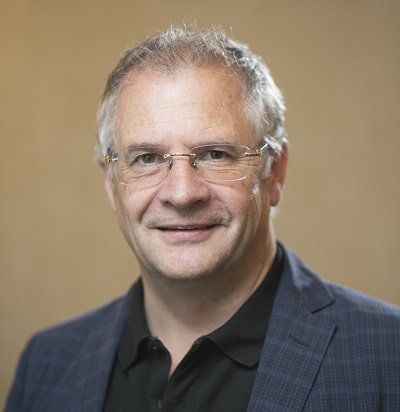
Dr. Jason Jue is Professor of Computer Science at UT Dallas' Erik Jonsson School of Engineering and Computer Science. He chairs the IEEE Communications Society Technical Committee on Optical Networking and leads research in optical networking, 5G systems, and network virtualization. His substantial publication record (2022-2025) demonstrates evolving focus on network slicing for 5G, reinforcement learning applications in network management, and quantum-secured optical networks. Recent articles increasingly integrate machine learning with networking challenges, particularly for resource allocation and slice provisioning in multi-domain environments. Significant awards include: NSF CAREER Award (2002) Best Paper Award, Optical Network Design and Modeling (2010) Best Paper Award, IEEE Globecom (2005) Research funding highlights: NSF: $449,651 for resilient network slicing (2021) Multiple NSF grants exceeding $800,000 total Industry funding from Fujitsu
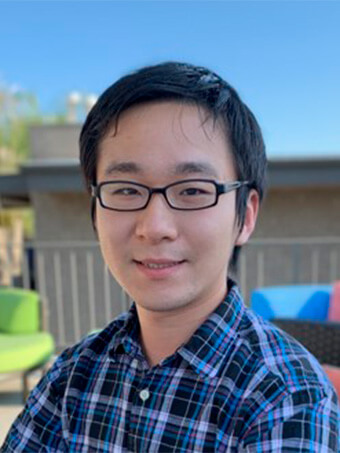
Duarte Ananias is a Researcher at CiCECO (University of Aveiro) since June 2009. He holds a Ph.D. in Chemistry (2004) and an Undergraduate Degree in Chemistry (1999), both from the University of Aveiro. His research focuses on lanthanide-based materials, particularly luminescent properties, porous/nanoscale systems, and applications in sensing and nanotechnology. Education : Ph.D. in Chemistry (2004), University of Aveiro Undergraduate Degree in Chemistry (1999), University of Aveiro Experience : Postdoctoral Fellowships at University of Linköping (Sweden) and University of Aveiro (2005–2008) Research Interests : Ananias explores lanthanide ions' unique optical and magnetic properties, developing luminescent materials for applications in thermometry, sensing, and catalysis. His work integrates porous materials (e.g., MOFs, silicates) with nanotechnology, emphasizing structural design and functionalization. Key themes include energy transfer mechanisms, multifunctional materials, and environmental applications. Projects : Development of luminescent nanothermometers and multifunctional MOFs Optimization of lanthanide separation in novel solvents Labs/Teams : Based at CiCECO, he collaborates on interdisciplinary projects involving materials synthesis, characterization, and applications in energy and environmental science.
Igor L. Kuskovsky is a Professor & Chair in the Department of Physics at Queens College of the City University of New York (CUNY). He holds a Ph.D. in Applied Physics/Solid State (1998) and an M.S. in Materials Science and Engineering (1995), both from Columbia University. His research focuses on nanoscale materials, particularly type-II quantum dots and their applications in photonic devices, solar energy, and biomedicine. His work includes pioneering studies on the optical Aharonov-Bohm effect in ZnTe/ZnSe quantum dots and developing high-efficiency intermediate-band solar cells. He leads the Laboratory for Fundamental and Applied Nanoscale Physics (LAFANP), collaborating with institutions like Hunter College on bio-detection systems using quantum dots. Key research areas include excitonic phenomena, magnetooptical properties, and colloidal ZnO nanostructures. His team investigates quantum dot stacks, nanowire growth via CVD, and dielectric confinement effects. He teaches PHYS 225: Solid State Electronics and advises graduate students in experimental condensed matter physics. The group’s work bridges fundamental physics with applied nanotechnology, emphasizing interdisciplinary applications.
Barbara Sharanowski is a Professor in the Department of Biology at the University of Central Florida (College of Sciences). Her research integrates phylogenetics, genomics, and ecology to study parasitic Hymenoptera evolution, particularly Braconidae wasps, with applications in biodiversity conservation and biocontrol. She directs an active lab developing mobile tools for integrated pest management. Education includes advanced degrees in Entomology/Evolutionary Biology. Research focuses on: Macroevolutionary patterns in parasitic wasps Genome evolution and viral symbionts in insects Biocontrol optimization using digital solutions Publications emphasize insect systematics, with recent work exploring genomic adaptations in parasitoids and field applications for sustainable agriculture. Awards include leadership of the International Society of Hymenopterists and NSF grants. Mentorship spans 6+ graduate students studying wasp taxonomy and tri-trophic interactions. Lab activities include international fieldwork and bioinformatics tool development.
Dr. Dirk Dorfs is an Associate Professor at Leibniz University Hannover, working within the Faculty of Natural Sciences at the Institute of Physical Chemistry and Electrochemistry. He serves as Group Leader of the Section Colloid Chemistry of Metals and Semiconductors, Spectroscopic Effects, and is part of the lecturing staff. His research spans multiple areas of nanoscience and physical chemistry with a particular focus on colloidal nanoparticle synthesis and characterization. Dr. Dorfs' primary research interests include shape and composition control in colloidal nanoparticle synthesis, alternative plasmonic materials, and temperature gradients on the nanometer scale. His work bridges fundamental nanomaterial science with practical applications in electrocatalysis, energy conversion, and optoelectronics. He has developed expertise in creating complex nanostructures including cryogels, semiconductor-metal hybrid systems, and plasmonic nanomaterials. His publication record demonstrates consistent research output over two decades, with recent work focusing on cryogel-based electrocatalysts, plasmonic nanocrystals, and semiconductor-metal hybrid systems. The research trends show a progression from fundamental nanocrystal synthesis to more applied materials for energy conversion and catalysis. Dr. Dorfs has contributed significantly to advances in colloidal chemistry, particularly in the areas of nanoparticle-based cryogels, plasmonic nanomaterials, and semiconductor heterostructures. His work has been published in high-impact journals including ACS Nano, Small, Journal of Physical Chemistry, and Advanced Materials. He leads research activities focused on developing novel nanomaterials with controlled properties for applications in energy conversion, catalysis, and optoelectronics. His group investigates the fundamental physical and chemical processes that govern nanomaterial behavior while developing practical applications for these advanced materials.
Kostas Magoutis is Professor and Chair of the Computer Science Department at the University of Crete and collaborating researcher with FORTH-ICS. His research focuses on distributed systems, scalable data processing, IoT, and cloud computing, with projects including GreenInCities for urban regeneration and STREAMSTORE for stateful stream processing systems. Research interests include: Distributed computer systems architecture Elastic stream processing platforms Quantum-enhanced computing applications Multi-cloud application lifecycle management Recent publications demonstrate strong focus on federated data systems, quantum computing applications, and IoT-enhanced infrastructure, with consistent output in high-impact conferences and journals. Awards and distinctions: Multiple best paper awards from USENIX conferences Grand Challenge Audience Award at DEBS 2022 Marie Curie Fellowship and IBM Research awards Advises over 20 PhD and MSc students in distributed systems research. Leads multiple EU-funded projects and serves on program committees for top conferences including SOSP, EuroSys, and IEEE BigData. Directs research groups in distributed systems and cloud computing at FORTH-ICS.
Yvo Desmedt is the Jonsson Distinguished Professor in Computer Science at the University of Texas at Dallas and Director of the Cyber Security Research and Education Institute. An IACR Fellow and member of the Belgium Academy of Science, he invented e-Passports and e-Visas in 1988. His research spans cryptography, quantum computing, network security, and critical infrastructure protection. Desmedt pioneered techniques in binary software hardening including control-flow integrity and object flow integrity protections. Recent innovations include crook-sourcing for intrusion detection improvement and confidential computing for deep learning inference. His work bridges theoretical cryptography with practical security applications, earning recognition including the NSF IUCRC Technology Breakthrough Award. With over 200 publications, he has chaired major conferences including Crypto and Public Key Cryptography. Current projects examine vulnerability detection using graph learning and renewable control-flow integrity mechanisms for software security.
Jinho Kim is an Assistant Professor in the Department of Biomedical Engineering at Stevens Institute of Technology. He holds positions at the Charles V. Schaefer, Jr. School of Engineering and Science. His research focuses on advanced medical technologies including image-guided drug delivery systems, tissue-engineered lungs, and microfluidic diagnostic devices. He has led grants from the NSF and NIH, and his work bridges bioengineering with clinical applications. Education: PhD (2013) in Mechanical Engineering from Columbia University; MS and BS (2009, 2007) in Mechanical Engineering from Temple University. He has held roles as a Postdoctoral Research Scientist (2013–2017) and Associate Research Scientist (2017–2018) at Columbia University’s Department of Biomedical Engineering. Research Interests: Kim’s lab develops ex vivo lung regeneration platforms, minimally invasive cell replacement therapies, and smart medical devices for disease diagnosis. Recent innovations include lung-mimetic hydrofoam sealants and sound-guided pulmonary leak detection systems. Awards: NSF CAREER Award (2022) American Thoracic Society Innovation Award (2019) Columbia Translational Fellows Award (2016) Grants & Entrepreneurship: $1.2M+ in NSF/NIH funding. Participated in NSF I-Corps (2023) and secured patents for lung tissue engineering and imaging technologies. His team includes collaborations with medical device startups XYLYX BIO and Strategic Pacing Systems. Labs & Teams: Leads the Bioengineering Innovations Lab at Stevens, affiliated with the Center for Health Innovation. Active in training students through courses like BME 750 (Lab-on-a-Chip Technology) and BME 520 (Cardiopulmonary Mechanics).
Dr. Chanchal K. Roy is a Professor of Software Engineering/Computer Science at the University of Saskatchewan (USask), Canada, and Director of the NSERC CREATE SOAR program. He leads the Software Research Lab (SRLab) and is renowned for his work on code clone detection (NiCad tool) and software maintenance. His research spans software evolution, big data analytics, and quantum computing applications in software engineering. Dr. Roy holds a Ph.D. from Queen’s University, an M.Sc. from RWTH Aachen University, and a B.Sc. from Khulna University. Research interests include software clone detection, maintenance, and evolution, with emphasis on semantic analysis and cross-language clones. He has published over 240 papers (h-index 52) and attracted $6M+ in funding, including NSERC grants and CFI-JELF support. Awards include the GSA Advising Excellence Award, Outstanding Young Computer Science Researcher Award, and multiple Most Influential Paper awards. Key contributions include developing NiCad, advancing Stack Overflow search techniques, and leading collaborative projects in software analytics. His work has been featured in ACM Tech News, TechRepublic, and Stack Overflow blogs. Dr. Roy actively engages in keynotes at conferences like WCRE, IWSC, and BIM.
Dr. Kevin Schneider is a Professor in the Department of Computer Science at the University of Saskatchewan. His research focuses on software architecture, evolution, analysis, and visualization, with notable work in quantum computing applications and machine learning. He also explores collaborative software teams and domain-specific languages to enhance development processes. Education: Ph.D., Computing and Information Science, Queen’s University (2000) Research Associate, Computing and Information Science, Queen’s University (1991–94) M.Sc., Computing and Information Science, Queen’s University (1990) B.Sc.(Hon), Computational Science, University of Saskatchewan (1980) Research interests include software design principles, maintenance strategies, and the integration of AI/quantum computing into software engineering. He emphasizes reproducibility in scientific workflows and tools like VizSciFlow. His work often bridges theory and practice, addressing challenges in code clone stability, user feedback management, and healthcare-related machine learning frameworks. Scientific Awards: Most Influential Paper at SCAM 2001 for his work on software engineering via source transformation. Advising and grants: While no specific advisees are listed, his research involves large-scale projects such as the Nutrient App and automated polyp segmentation tools. He collaborates on grants related to quantum computing applications and cloud-based software systems. Labs and teams: His work centers on collaborative scientific data analysis groups and developing tools for real-time groupware systems in complex workflows. He contributes to projects like CloneCognition and FSECAM, aiming to improve software design and maintenance through advanced analytics.
Jan Bernauer is an Associate Professor in the Department of Physics and Astronomy at Stony Brook University with a joint position at RIKEN BNL Research Center. He obtained his Ph.D. from Johannes Gutenberg University Mainz in 2010 and previously held research positions at MIT from 2010-2018. Education: Ph.D. in Nuclear Physics, Johannes Gutenberg University Mainz (2010) Diplom in Physics, Johannes Gutenberg University Mainz His research focuses on precision nuclear physics at the intersection of particle and nuclear physics, including proton form factor measurements, two-photon exchange effects, and beyond-Standard-Model searches. Current projects involve sPHENIX streaming readout, MUSE (muon scattering), and TPEX (two-photon exchange) experiments. Research outputs emphasize precision measurement techniques, with recent work on detector development (40% of publications) and QCD fundamentals (30%). Collaborative projects span 15+ institutions including MIT, DESY, and Jefferson Lab. Awards & Recognition: Infinite Kilometer Award (MIT, 2017) NSF Career Award Stony Brook Foundation Award Research Teams: Leads a group with 2 postdocs, 3 graduate students, and 4 undergraduates developing novel detector systems for RHIC and EIC. Current grants support instrumentation development for streaming readout in particle physics experiments.
Dr. LI Xinwei serves as Assistant Professor and NUS Presidential Young Professor in the Department of Electrical and Computer Engineering at the National University of Singapore's College of Design and Engineering. His laboratory develops laser-based ultrafast optical techniques to investigate emergent quantum electronic orders in solids. His research focuses on three interconnected domains: Cavity Polaritons : Engineering hybrid light-matter systems to create quasi-particles with tunable properties Nonlinear Optics : Building ultra-sensitive detection systems for symmetry-breaking phase transitions through harmonic generation and frequency conversion Metastable Phases : Inducing thermally inaccessible electronic states in quantum materials through light-driven control His publication record demonstrates consistent leadership in probing light-matter interactions in quantum materials, with emphasis on polariton systems, Mott insulators, and terahertz phenomena. Recent work shows increasing sophistication in manipulating nonequilibrium electronic structures. Scientific recognition includes: NUS Presidential Young Professorship Dr. Li actively recruits PhD students, postdocs, and undergraduates for experimental research in ultrafast quantum optics. His group maintains strong collaborations with leading institutions including Rice University and Caltech.
Blanka Horvath is a Lecturer at King's College London and Honorary Lecturer at Imperial College London's Department of Mathematics (Faculty of Natural Sciences). Her research focuses on stochastic analysis and mathematical finance, particularly in numerical methods, machine learning applications, and volatility modeling (e.g., SABR and rough volatility models). She holds a PhD from ETH Zurich (2015), a Diplom in Mathematics from the University of Bonn, and an MSc in Economics from the University of Hong Kong. She has organized major conferences such as the SIAM MMF 2017 mini-symposium and co-organized the Rough Volatility Meeting at Imperial College. Her honors include the 2019 Risk Rising Star Award and the 2024-25 LMS Emmy Noether Fellowship. She collaborates with institutions like UBS, The Alan Turing Institute, and Quantennium LTD. Her teaching includes courses on numerical methods in finance and Python/R programming. She supervises PhD and MSc students in areas like rough volatility, machine learning, and quantitative finance. Recent work explores quantum GANs for option pricing and regime detection using Wasserstein distances.
Associate Professor Benjamin Turnbull is Deputy Head of School at UNSW Canberra's School of Systems & Computing. His research focuses on cybersecurity, simulation, and emerging technologies, aiming to develop decision support systems for cyber resilience. He leads large-scale research projects funded by organizations like CSIRO, Australian Defence Force, and the US Naval Research Laboratory, totaling over $3 million AUD in grants. Teaching contributions include co-creating the Bachelor of Cyber Security program and directing multiple postgraduate cybersecurity offerings. His educational design emphasizes industry-relevant courses, from undergraduate to executive programs like the UNSW Online Cyber Security Masters. He has extensive experience in curriculum design, content development, and online education. Research interests span cyber situation awareness, secure simulation platforms, and automated learning from big datasets. Notable projects include the UNSW-MG24 microgrid cybersecurity dataset and frameworks like OQFL (quantum-based federated learning) for intelligent transportation systems. His work bridges theory and practice, with outputs including software tools and policy recommendations for cyber resilience in critical infrastructure. Key collaborations include the Cyber Cooperative Research Centre and DST Group. He has authored over 100 peer-reviewed publications, focusing on IoT security, blockchain-enabled learning, and cyber-physical-social systems resilience. His grants emphasize applied research with direct societal impact, such as mitigating supply chain cyber risks and enhancing microgrid cybersecurity.
Professor Dominic O'Brien is a Professor of Engineering Science at the University of Oxford and Senior Research Fellow at Balliol College. He serves as Director of the UK National Hub in Quantum Computing and Simulation. His research focuses on optoelectronics, optical wireless communications, and quantum key distribution. He leads the optical communications group and has authored over 200 publications in these areas. His work emphasizes high-speed free-space optical systems, UV-based secure communication, and beam-steering technologies. Education: MA and PhD from the University of Cambridge, followed by a DPhil from the University of Oxford. His research interests include quantum networks, photonics, and energy-efficient optical systems. Notable projects include handheld low-cost quantum key distribution systems and terabit-per-second fiber-wireless links. He collaborates on initiatives like the WORTECS project for virtual reality applications using optical wireless. Publications span topics from UV solar-blind OWC to liquid crystal beam steering. His work bridges academic and industrial applications, addressing challenges in both classical and quantum communication systems. He contributes to standards for visible light communications and next-generation wireless infrastructure.