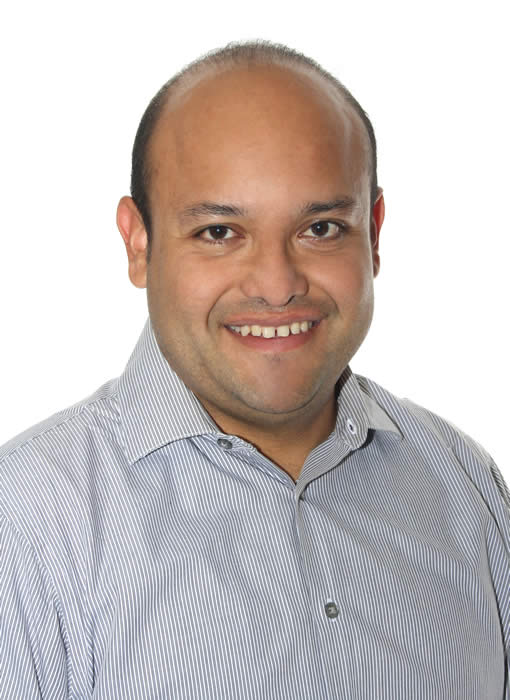
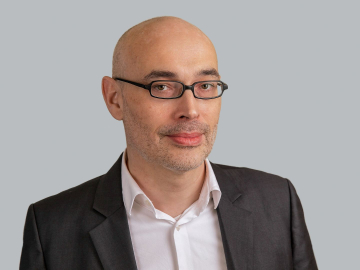
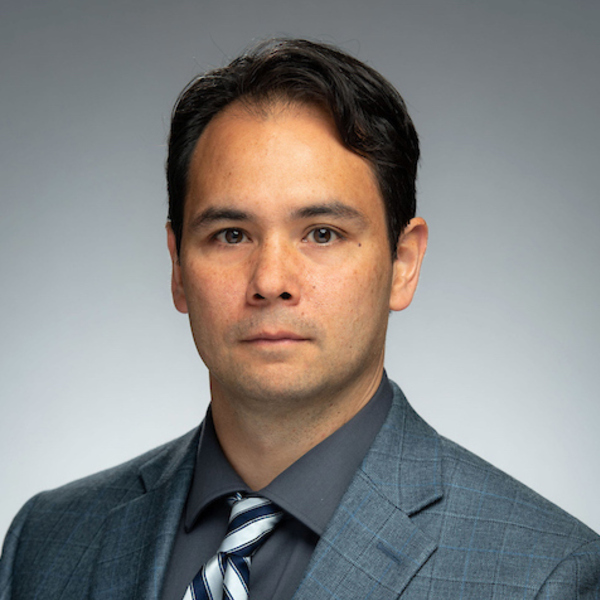
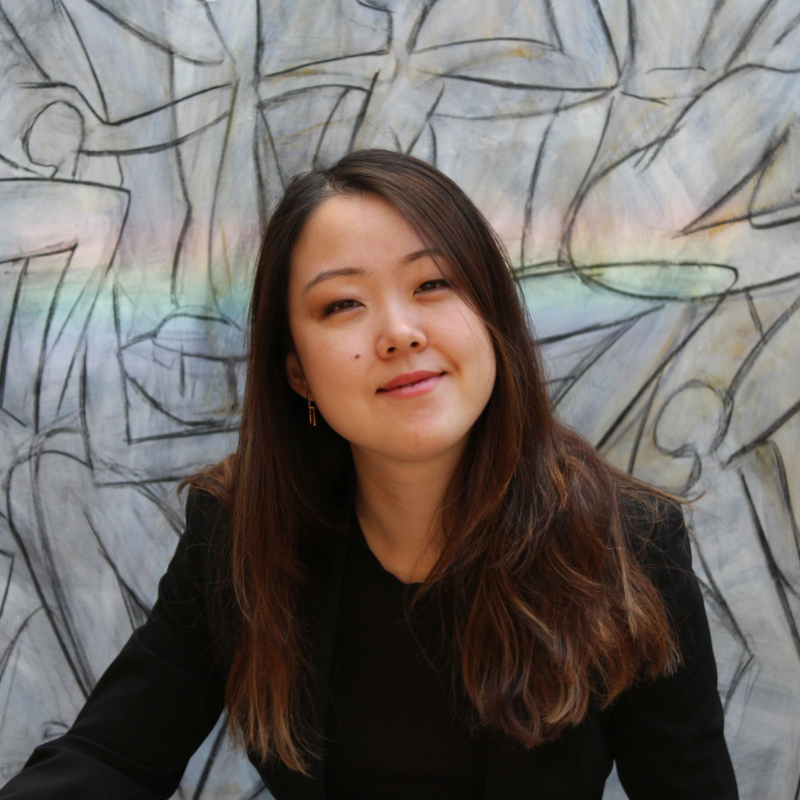
Dr. Artem Odobesko is a Research Fellow in Experimental Physics II at the University of Würzburg, Germany. He holds a PhD (Dr. rer. nat.) in Physics from the Kotel'nikov Institute of Radio-engineering and Electronics of RAS (Russia) and prior degrees from the Moscow Institute of Physics and Technology (B.Sc. 2003, M.Sc. 2005). His research focuses on topological materials, scanning tunneling microscopy (STM), and superconductivity. Key interests include manipulating Dirac points in topological insulators, probing chiral symmetry, and enhancing STM resolution through novel probe designs. He contributes to the Experimental Physics II team under Prof. Matthias Bode, collaborating on projects involving topological domain walls, electronic interactions in 1D systems, and surface engineering. His work spans experimental and theoretical studies of quantum materials, with publications in journals like Nano Letters , Science Advances , and Nature Physics . He has developed advanced STM techniques and explored phenomena such as Yu-Shiba-Rusinov states and anisotropic vortices. Odobesko’s research also addresses strain effects in epitaxial films and surface preparation for superconductors.
Miguel Angel Fernandez Sanjuan is a Full Professor of Physics at Rey Juan Carlos University (since 2002) and holds a Professor position in Applied Informatics at Kaunas University of Technology (since 2016). He has held visiting roles at University of Maryland (Fulbright Scholar), Beijing Jiaotong University, and Lanzhou University. Current affiliations: Rey Juan Carlos University (Physics), Kaunas University of Technology (Applied Informatics) Previous institutions: University of Maryland, Beijing Jiaotong University, Universidad Politécnica de Madrid His research spans nonlinear dynamics, chaos theory, and complex systems with applications in: Physics: Chaotic oscillators, Hamiltonian scattering, time-delay systems Neuroscience: Map-based neuron models, synchronization dynamics Engineering: Fault diagnosis, image processing via resonance phenomena Mathematics: Basin entropy, Wada basin analysis Recent publications focus on AI-driven chaos control, aperiodic resonance mechanisms, and biomedical applications. He has over 605 publications and 141k reads on ResearchGate. Scientific honors include: 2024: Foreign Academician, Serbian Academy of Nonlinear Sciences 2023: Full Academician, Spanish Royal Academy of Sciences 2022: James Yorke Award 2020: Chieh-Su Hsu Award Active in editorial roles (International Journal of Bifurcation and Chaos) and international collaborations. Leads the Miguel A.F. Sanjuan Lab researching complex systems and nonlinear phenomena.
Börge Göbel is a postdoctoral researcher at the Institute of Physics, Martin Luther University Halle-Wittenberg, within the Quantum Theory of the Solid State group led by Prof. Ingrid Mertig. He is affiliated with the Faculty of Natural Sciences II - Chemistry, Physics and Mathematics and conducts theoretical research in condensed matter physics, focusing on topological spin textures and their applications in spintronics and orbitronics. PhD in Physics (summa cum laude, 2020), Max Planck Institute Halle MSc in Physics (1.1, 2016), Martin Luther University Halle-Wittenberg BSc in Physics (1.2, 2014), Martin Luther University Halle-Wittenberg Abitur (1.0, 2011) His research centers on the interplay between topology and transport in magnetic systems, particularly skyrmions, antiskyrmions, bimerons, and hopfions. He investigates their stability, emergent electrodynamics (e.g., topological Hall effect), and dynamics under current drive, with applications in racetrack memory, neuromorphic computing, and quantum devices. A major focus is on two-dimensional materials and electron gases, where he studies spin- and orbital-to-charge interconversion. He has pioneered work in orbitronics, demonstrating the orbital Hall effect accompanying the quantum Hall effect and topological orbital Hall effects in skyrmion systems. The most recent publications show a strong trend toward the exploration of orbital angular momentum in quantum transport, the stabilization of skyrmions in van der Waals materials, and the development of neuromorphic computing concepts using biskyrmions. His work bridges fundamental theoretical insights with potential technological applications in next-generation electronics. Börge Göbel is funded by the EIC Pathfinder OPEN Grant "Orbital engineering for innovative electronics" and is a co-supervisor in the EU Horizon 2020 project "SPEAR". He has co-supervised 2 PhD, 2 master's, and 4 bachelor's students and teaches quantum mechanics, including online courses with over 30,000 participants. Co-PI, EIC Pathfinder OPEN Grant: "Orbital engineering for innovative electronics" Co-Supervisor, EU Horizon 2020 project "SPEAR" Network Postdoc, EU project "OBELIX" He collaborates extensively with experimental groups worldwide, including those of Prof. Stuart Parkin, Prof. Claudia Felser, Dr. Manuel Bibes, and Prof. Albert Fert, and has presented at major conferences such as MMM, JEMS, Gordon, DPG, and SPICE.
Ata Zadehgol is an Associate Professor (promoted to Full Professor in 2025) in the Department of Electrical and Computer Engineering at the University of Idaho, College of Engineering. He is the founding director of the Applied Computational Electromagnetics and Signal/Power Integrity (ACEM-SPI) Laboratory. His academic journey includes a Ph.D. from the University of Illinois at Urbana-Champaign (2011), an M.S. from UC Davis (2006), and a B.S. from the University of Washington (1996). He spent over a decade in the microelectronics industry before joining academia. Ph.D., Electrical and Computer Engineering, University of Illinois at Urbana-Champaign, 2011 M.S., Electrical and Computer Engineering, University of California, Davis, 2006 B.S., Electrical Engineering, University of Washington, Seattle, 1996 Dr. Zadehgol's research focuses on computational electromagnetics , signal and power integrity , and modeling of multi-scale and stochastic systems . His work spans from low-frequency to terahertz regimes, with recent expansion into quantum electrodynamics and photonics. He develops advanced computational algorithms for efficient and stable modeling of electromagnetic systems, including FDTD methods, reduced-order modeling, and machine learning applications. The research articles highlight a consistent focus on electromagnetic modeling , signal integrity , and computational efficiency . Key themes include FDTD sub-gridding, stochastic surface roughness in waveguides, stability of transfer functions, and macro-modeling for antennas and interconnects. The publications span IEEE Transactions, Applied Mathematics and Computation, and Electronics, reflecting interdisciplinary work bridging engineering, physics, and numerical methods. Best Poster-Paper Award, IEEE EDAPS, 2016 University of Idaho Presidential Mid-Career Award, 2020 Outstanding Faculty Award, College of Engineering, 2025 NSF Recognition for Novel Algorithm for Optical Interconnects, 2018 Dr. Zadehgol has secured significant research funding from the National Science Foundation (NSF) , NASA , Micron Technology , and Schweitzer Engineering Laboratories (SEL) . He advises graduate students in the ACEM-SPI Lab, though specific names are not listed. His lab supports research in computational electromagnetics, signal/power integrity, and quantum engineering applications. Future work includes advancing modeling techniques for quantum systems and high-frequency electronics. The Applied Computational Electromagnetics and Signal/Power Integrity (ACEM-SPI) Laboratory , which he founded and directs, serves as the central hub for his research group. The lab focuses on algorithm development for electromagnetic simulation, signal integrity analysis, and emerging applications in quantum science. It is supported by federal and industrial grants and collaborates with partners in academia and industry.
Marco Polverini is an active computer networking researcher with a prolific publication record spanning over a decade, with 59 publications documented from 2012 to 2025. His work primarily focuses on advanced networking technologies including Segment Routing, Software Defined Networking, and Network Function Virtualization. His research interests center around network routing optimization, traffic engineering, and network monitoring. He has made significant contributions to Segment Routing technology, developing novel behaviors for low-latency communication, black hole detection mechanisms, and traffic matrix assessment techniques. His recent work integrates artificial intelligence approaches, particularly reinforcement learning, with traditional networking protocols to create more adaptive and efficient network systems. He has also been exploring the application of Digital Twin technology for network management and optimization. Analysis of his publication trends shows a clear evolution from foundational work on energy-efficient networking and traffic engineering to more recent innovations in Segment Routing, in-band network telemetry, and AI-driven network optimization. His publications consistently appear in top networking venues including IEEE JSAC, IEEE Transactions on Network and Service Management, INFOCOM, and NOMS, demonstrating his standing within the networking research community. Throughout his career, Polverini has maintained strong collaborative relationships, particularly with Antonio Cianfrani (54 joint publications), Marco Listanti (33 publications), and Francesco Giacinto Lavacca (16 publications), suggesting he works within a well-established research group focused on next-generation networking technologies.
Paul McKenna is a Professor in the Department of Physics, Faculty of Science, at the University of Strathclyde, where he currently serves as Deputy Associate Principal (Research & Knowledge Exchange). He previously held leadership roles as Vice Dean (Research) in the Faculty of Science (2021–2023) and Head of the Department of Physics (2018–2021). His work is central to advancing ultra-intense laser-plasma science and its applications. His research focuses on ultra-intense laser-plasma interactions , particularly the development of laser-driven particle and radiation sources , plasma optics and photonics , and high field science . His work bridges fundamental physics with practical applications in medicine, materials science, and fusion energy. He is actively involved in major international laser facilities, serving on advisory boards such as the Program Advisory Committee for the Extreme Light Infrastructure-Nuclear Physics (ELI-NP) and previously at the Central Laser Facility, Harwell. Recent publications highlight a strong trend in laser-driven proton acceleration , beam diagnostics using machine learning , plasma-based collimation , and structured light generation . His work increasingly integrates computational methods, such as Bayesian optimization and neural networks, to enhance experimental outcomes in high-energy-density physics. Fellow of the Royal Society of Edinburgh (2020) High Power Laser Science and Engineering Outstanding Contribution Award (2023) McKenna has secured significant research funding, notably from EPSRC, and leads multiple active projects including those on relativistic plasma apertures and Bayesian optimization in fusion simulations. He contributes extensively to researcher development and postgraduate research strategy. He has supervised numerous early-career researchers and PhD students, though specific names are not listed in the provided data. He is also involved in interdisciplinary efforts to foster collaborative research cultures in technological universities. He leads or participates in advanced research facilities such as the SCAPA (Scottish Centre for the Application of Plasma-based Accelerators) and contributes to the development of high-repetition-rate laser systems. His lab’s work is highly collaborative, involving partnerships across the UK and internationally, with strong ties to institutions like Queens University Belfast and national laboratories.
Dr. Enrico Da Como is a Reader (equivalent to Associate Professor) in the Department of Physics at the University of Bath, UK, where he has been since 2012. He serves as Head of the Condensed Matter and Quantum Materials Group and is affiliated with the Centre for Photonics and Photonic Materials. His research focuses on the interaction of light with condensed matter systems, particularly using advanced spectroscopic techniques to study fundamental excitations in quantum materials. His academic journey includes: University Assistant (W1) at the Department of Physics, LMU Munich (Germany), 2008-2012 Visiting Scientist at the Department of Physics, University of Utah (USA), 2008 Post-Doc at the Photonics and Optoelectronics Group, LMU Munich (Germany), 2006-2007 PhD from C.N.R. and University of Bologna (Italy), 2003-2006 MSc from University of Modena (Italy), 2002 Da Como's research primarily investigates the interaction of light with condensed matter, with a focus on fundamental excitations such as excitons, plasmons, polarons and phonons in molecular solids and nanostructures. His work employs a range of experimental techniques from single molecule spectroscopy to femtosecond nonlinear optical methods. This fundamental research is complemented by collaborations with industry partners exploring applications in solar energy conversion, sensing technologies, and information systems. His current research emphasizes charge density wave materials, quantum phase transitions, and the development of novel spectroscopic approaches to probe non-equilibrium states in quantum materials. Analysis of his most recent publications reveals a strong focus on charge density wave systems, particularly 1T-TaSe 2 and related materials. His work combines ultrafast spectroscopy with theoretical modeling to understand the interplay between electronic, lattice, and magnetic degrees of freedom in quantum materials. A significant portion of his research investigates non-equilibrium phenomena, using light to induce and probe metastable states in quantum materials, with potential applications in next-generation electronic and optoelectronic devices. Da Como has secured significant research funding from prestigious organizations: Principal Investigator for "New quantum platforms for nanomagnetic sensing in 2D" (UK Research & Innovation, 2025-2027) Principal Investigator for "Light induced metastable phases in quantum materials" (The Royal Society, 2022-2025) Principal Investigator for "Controlling Charge Density Waves with Light and 2D Self Assembly" (The Royal Society, 2017-2019) Co-Investigator for "Pyroelectric water splitting and water treatment using ferroelectric materials" (The Leverhulme Trust, 2019-2021) As an active supervisor, Da Como is accepting doctoral students and has supervised 10 research projects. His laboratory combines advanced optical techniques with low-temperature and high-pressure methodologies to probe quantum materials under extreme conditions. His group collaborates extensively with researchers across Europe and the United States, contributing to the international effort to understand and harness quantum phenomena for future technologies.
Oscar Vazquez Mena is an Assistant Professor in the Department of Electrical and Computer Engineering at the University of California, San Diego (UCSD), within the Jacobs School of Engineering. His research integrates cutting-edge nanomaterials and 2D atomic layers for applications in optoelectronics, biosensing, and biomedical devices. Education: Ph.D. in Physics, Swiss Federal Institute of Technology of Lausanne (EPFL), Switzerland Postdoctoral Research, University of California, Berkeley, Department of Physics (2011–2014) Postdoctoral Research, Institute of Photonic Sciences, Barcelona (2015, Marie Sklodowska-Curie Fellow) M.S. in Physics, Chalmers University of Technology, Sweden (thesis at Delft University of Technology) B.S. in Physics Engineering, Monterrey Institute of Technology, Mexico His research focuses on 2D materials (especially graphene), acoustic metamaterials , quantum dots , and 3D nano-architectures . He explores how these materials can be hybridized to create novel functionalities in photovoltaics, biosensing, and non-invasive brain interfaces. His work bridges fundamental physics with practical engineering applications. The recent publications highlight a strong trend in hybrid nanomaterial systems —particularly combining graphene with quantum dots or silicon microstructures—to achieve tunable optoelectronic responses and advanced acoustic control. These works fall within broad disciplines of nanotechnology, materials science, and applied physics, with subfields including negative-index materials, carrier dynamics, and nanofabrication. Scientific Awards: NSF CAREER Award (2021) DARPA Director's Fellowship (2020) DARPA Young Faculty Award (2018) Emerging Scholar, Diverse Journal (2020) Marie Sklodowska-Curie Fellowship (2015) Prof. Vazquez-Mena has successfully mentored multiple Ph.D. students to graduation, including Jiaying Wang, Malcolm Lockett, and Wenjun Chen. His research is supported by significant grants from the National Science Foundation (NSF) , DARPA , and the UCSD Center for Brain Activity Mapping . These grants fund work on acoustic metamaterials, graphene/quantum dot photodetectors, and non-invasive brain interfaces. He leads a dynamic research group at UCSD focused on nanofabrication and integration of 2D materials, with specialized expertise in developing acoustic metamaterials for high-frequency applications, hybrid graphene/quantum dot devices , and 3D nanostructured systems . The lab leverages semiconductor fabrication tools to push the boundaries of nanoscale material design, aiming to emulate biological complexity in engineered systems.
Francis de Véricourt is Professor of Management Science and the founding Academic Director of the Institute for Deep Tech Innovation (DEEP) at ESMT Berlin, where he also holds the Joachim Faber Chair in Business and Technology. He has held faculty positions at Duke University and INSEAD and was a post-doctoral researcher at MIT, reflecting a global academic footprint across France, the USA, Germany, and Singapore. His educational background includes a PhD from Université Paris VI and an engineering degree from ENSIMAG (Grenoble Institute of Technology), establishing a strong foundation in applied mathematics and computer science. Francis's research focuses on decision science, analytics, and operations, with impactful applications in healthcare, sustainability, and human-AI interaction. He investigates how mental models—'framing'—enable individuals and organizations to transcend data and generate better alternatives for decision-making. His work emphasizes cognitive agility, translational innovation, and the role of human intuition in the age of artificial intelligence. The analysis of his recent publications reveals a consistent trajectory in understanding cognitive frameworks in decision-making, the integration of AI in human contexts, and the ethical and strategic dimensions of deep-tech innovation. His writings bridge academic rigor with practical insight, targeting both scholarly and industry audiences. ENRE Best Publication Award, INFORMS MSOM Best Publication Award, INFORMS He has been a Department Editor for Operations Research and MSOM , and his academic leadership includes establishing the Center for Decisions, Models, and Data at ESMT. He has received multiple teaching awards for his work with MBA and Executive MBA students and is deeply engaged in executive education and corporate learning solutions. His book Framers , published by Penguin Random House and listed among the Financial Times' Best Books, has amplified his influence in both academic and public spheres. Francis leads DEEP—the Institute for Deep Tech Innovation—which fosters research, education, and entrepreneurial action in areas like AI, quantum computing, and biotechnology. The DMD Center, now integrated into DEEP, explores how modeling and representation enhance decision-making beyond data. These initiatives reflect his commitment to cultivating cognitive and entrepreneurial capabilities within scientific and business communities.
MG Han is a Researcher in the Condensed Matter Physics and Materials Science Department at Brookhaven National Laboratory. With expertise in cryogenic (S)TEM, phase imaging, STEM spectroscopy, and topological magnetic systems, their work focuses on studying complex materials under extreme conditions (electric/magnetic fields, temperature extremes) using advanced electron microscopy techniques. Education : Ph.D. in Materials Science (2007) from Arizona State University Research Interests span ferroelectricity , ferromagnetism , and topological spin textures in nanoscale systems. Key areas include: Atomic-scale imaging of structural defects Magnetic domain dynamics under in situ fields Topological Hall effect in kagome lattices Spin-structure coupling in chiral magnets Controlled domain wall engineering in bismuth ferrite Helical/skyrmion textures in doped semiconductors Recent Publications highlight their work on magnetic superstructures, topological effects in van der Waals materials, and domain wall control in ferroelectric heterostructures. Their expertise combines experimental techniques like off-axis electron holography with computational analysis of spin textures. Lab Affiliation : Condensed Matter Physics and Materials Science Department, Brookhaven National Laboratory
David Go is the Vice President and Associate Provost for Academic Strategy at the University of Notre Dame, where he also holds the Viola D. Hank Professorship in Aerospace and Mechanical Engineering. He oversees implementation of the University Strategic Framework and manages faculty appointment processes, with administrative oversight of institutes including the Lucy Institute for Data and Society and the Fitzgerald Institute for Real Estate. His research focuses on plasma science, heat transfer, fluid dynamics, and chemical analysis, with significant contributions to plasma-electrochemistry and sustainable chemical synthesis. Education: B.S. (2001) and M.S. (2004) from University of Notre Dame, Ph.D. (2008) from Purdue University His work explores plasma-liquid interfaces, solvated electron dynamics, and plasma-assisted catalysis, particularly for light hydrocarbon conversion. Recent publications highlight advancements in non-aqueous plasma electrolysis, machine learning-enhanced plasma sintering, and interfacial transport phenomena. Awards include the Air Force Young Investigator Award, NSF CAREER award, and multiple honors for teaching and innovation. Current research trends integrate plasma physics with chemical engineering and materials science, focusing on sustainable energy solutions and microscale manufacturing. Scientific recognitions include: Fellow of the American Society of Mechanical Engineers Senior Member of IEEE IEEE Early Achievement Award First-Source Bank Commercialization Award Go has supervised graduate studies and received patents for technologies in plasma-assisted synthesis and microfluidic diagnostics. His leadership roles involve committees addressing academic governance, risk management, and foreign influence in research.
Prof. Dr. Daniel Slamanig is a Full Professor of Cryptology at the Universität der Bundeswehr München (UniBw M) in its Department of Computer Science and Research Institute Cyber Defense (CODE). He heads the Quantum Safe & Advanced Cryptography (QuSAC) Lab and focuses on the development of provably secure cryptographic primitives with applications to real-world security challenges. Prof. Slamanig obtained his PhD in computer science from the University of Klagenfurt in 2011 (with distinction). Prior to his current position, he worked as a Scientist and then Senior Scientist at the AIT Austrian Institute of Technology, and as a Senior Researcher and PostDoc at Graz University of Technology's IAIK. Prof. Slamanig's research spans the foundations and applications of cryptography, with special focus on provably secure public-key cryptographic primitives (including digital signatures) with strong security guarantees against quantum attacks, and privacy-friendly cryptographic mechanisms such as zero-knowledge proofs. His work consistently emphasizes the connection between theoretical foundations and practical implementations, ensuring cryptographic solutions are both secure and applicable to real-world scenarios. His recent publications demonstrate a strong emphasis on post-quantum cryptography (particularly isogeny-based approaches), privacy-preserving technologies, anonymous credentials, and structure-preserving cryptographic protocols. A notable contribution is his work on the Picnic family of post-quantum digital signature schemes, which reached the final round of NIST's post-quantum cryptography standardization project. Prof. Slamanig has received several prestigious awards for his contributions to cryptography: "netidee SCIENCE" award of the Internet Foundation (2018) Best Paper Award at CANS 2021 Top Reviewer Award at the 30th ACM SIGSAC Conference on Computer and Communications Security (CCS 2023) Prof. Slamanig actively mentors the next generation of cryptographers, currently supervising PhD students Thomas den Hollander, Sebastian Spindler, and several others. His research is supported by numerous grants from EU Horizon programs, including PiQASO, SUNRISE, and EDOCC, as well as national funding agencies like FFG. He serves on program committees for top cryptography conferences including CRYPTO, EUROCRYPT, and ACM CCS, and reviews for leading journals such as the Journal of Cryptology. At Universität der Bundeswehr München, Prof. Slamanig leads the Quantum Safe & Advanced Cryptography (QuSAC) Lab within the Research Institute Cyber Defense (CODE), where his team works on cutting-edge research in post-quantum cryptography, privacy-enhancing technologies, and practical implementations of cryptographic protocols for real-world security challenges.
Sunoo Park is an Assistant Professor in Computer Science at NYU Courant Institute of Mathematical Sciences, with a secondary affiliation at NYU School of Law. He directs the DeTaIL Lab , focusing on security, privacy, and transparency in digital technologies. His educational background includes a J.D. from Harvard Law School, a Ph.D. in Computer Science from MIT, and a B.A. from the University of Cambridge. He is a licensed attorney in New York. His research bridges computer science and technology law , with core interests in cryptography, election security, AI ethics, blockchain, and digital policy. Recent work emphasizes legal risks in security research, verifiable voting systems, and adversarial robustness in AI. Park's publications (2017–2025) reveal strong trends in cryptographic applications for societal challenges , including election auditing, deniable encryption, and blockchain vulnerabilities. He consistently addresses tensions between technological capabilities and legal/policy frameworks. Teaching includes graduate courses on Digital Technology Law and AI Ethics , alongside clinical work in NYU's Technology Law & Policy Clinic. Service roles include program committees for IEEE Security & Privacy and NeurIPS (Ethics Committee).
Maria Loi is a Professor at the Faculty of Science and Engineering , University of Groningen, leading the Photophysics and OptoElectronics group. With over 321 research outputs and 17 datasets, her work focuses on the photophysics and optoelectronics of novel semiconductors including perovskites and quantum dots. Her research aims to understand and optimize semiconductor properties for applications in solar cells, LEDs, and photodetectors. Notable contributions include advancements in tin-based perovskites and unraveling hot carrier dynamics that challenge Shockley-Queisser limits. Scientific Awards : ERC Advanced Grant (2022) ERC Starting Grant (2013) Physica Prijs (2018) Fellowships: American Physical Society (2020), KNAW (2022), Royal Society of Chemistry (2022), EURASC (2022) Recent Trends : 2024-2025 publications emphasize defect passivation , scalable fabrication methods , hot carrier dynamics , and neuromorphic device applications in tin-lead and low-dimensional perovskites.
Gediminas Juzeliūnas is a Distinguished Professor at the Institute of Theoretical Physics and Astronomy within the Faculty of Physics at Vilnius University. His research spans quantum optics, ultracold atoms, and condensed matter physics, with particular expertise in quantum simulations and synthetic gauge fields. Professor Juzeliūnas's research program focuses on creating artificial gauge fields for neutral atoms, enabling quantum simulation of complex condensed matter phenomena. His seminal Reviews of Modern Physics article on artificial gauge potentials has become foundational in the field. Current research explores subwavelength optical lattices, topological quantum matter, and spin-orbit coupling phenomena in ultracold atomic systems. His theoretical work often bridges fundamental concepts with experimental feasibility, making it highly influential in both theoretical and experimental communities. Analysis of his recent publications reveals a clear trajectory toward exploring topological phenomena in ultracold atomic systems through subwavelength structures and Raman lattices. Juzeliūnas has pioneered approaches to create and manipulate synthetic gauge fields that simulate condensed matter physics, with applications ranging from quantum simulation to precision measurement technologies. His work frequently addresses the interplay between geometrical frustration, long-range interactions, and topological order in quantum many-body systems. True member of the Lithuanian Academy of Sciences (since 2019) Jucys Prize for Theoretical Physics (2014) Vilnius University Rector's award (2010, 2025) National State Prize for Science of Lithuania (2007) Professor Juzeliūnas has supervised multiple doctoral students including Edvinas Gvozdiovas (working on subwavelength optical lattices), Tomas Andrijauskas (researching artificial magnetic fields), and Hamid Reza Hamedi (studying slow light phenomena). He currently leads four major research projects funded by the Lithuanian Research Council, including "Ultracold atoms in unconventional optical lattices" (2024-2027) and "Quantum dynamics of interacting ultracold atoms in complex sub-wavelength potentials" (2024-2026), demonstrating his leadership in advancing quantum simulation techniques. His research group at the Institute of Theoretical Physics and Astronomy collaborates extensively with international partners, including Japanese, Latvian, and Taiwanese scientists, reflecting the global significance of his work. Professor Juzeliūnas regularly presents at major international conferences and has chaired significant events including the Humboldt Kolleg on Synthetic Quantum Matter (2023) and the 14th European Conference on Atoms Molecules and Photons (2022).