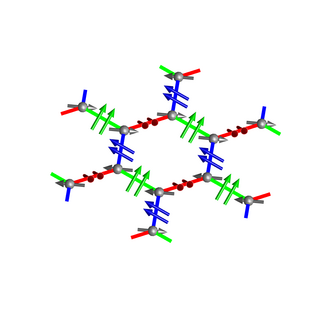
Professor Markus Braden is a distinguished faculty member at the University of Cologne's Institute of Physics, where he leads the X-ray and Neutron Scattering Group. His research focuses on understanding the structural and magnetic properties of complex materials using advanced scattering techniques, with particular emphasis on strongly correlated electron systems and quantum materials. Braden's research interests span condensed matter physics, with special focus on unconventional superconductors, materials exhibiting strong spin-orbit coupling, and multiferroic compounds. His group employs both X-ray and neutron scattering methods to investigate crystal structures and excitation spectra in transition metal compounds, particularly those with 4d and 5d elements like ruthenates and iridates. The group has made significant contributions to understanding the magnetic interactions in α-RuCl3 as a candidate for Kitaev physics, the magnetic properties of Sr2RuO4 as a potential unconventional superconductor, and the complex behavior of multiferroic materials where magnetic order couples with ferroelectric polarization. Recent publications reveal Braden's leadership in polarized neutron scattering techniques, particularly in studying magnetic excitations with chiral properties and directional dependencies. His work on ruthenates has demonstrated how spin-orbit coupling creates highly anisotropic magnetic interactions, while research on multiferroics has revealed novel domain dynamics and electric field control mechanisms. The group frequently collaborates with international neutron facilities including MLZ in Garching and ILL in Grenoble. Braden supervises multiple PhD students and postdoctoral researchers, fostering expertise in neutron and X-ray techniques. His laboratory utilizes advanced instrumentation including the KOMPASS spectrometer, a cold triple-axis neutron spectrometer optimized for polarization analysis developed in collaboration with Prof. Böni's group, as well as X-ray diffractometers and crystal growth facilities for sample preparation.