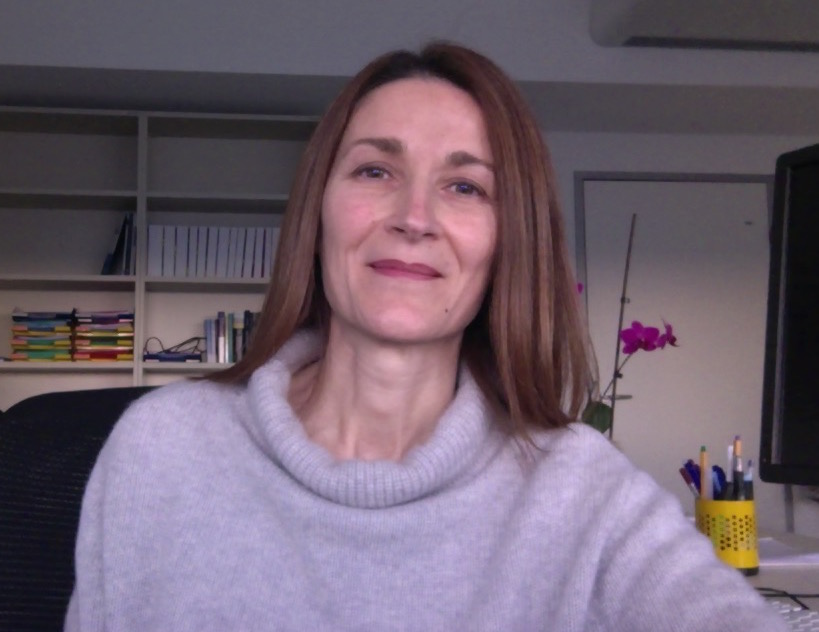
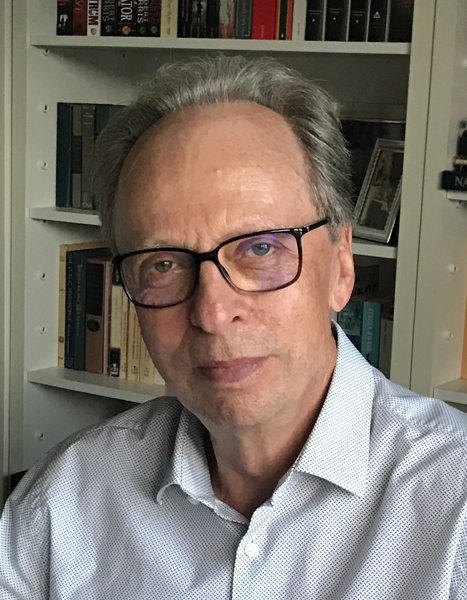
Univ.-Prof. Dr. Hans J. Briegel is a Professor at the Institute of Theoretical Physics within the Faculty of Mathematics, Computer Science and Physics at the University of Innsbruck. His research group focuses on Quantum Information and Computation . He can be contacted via Hans.Briegel@uibk.ac.at and is located in Room 4S15.
Dr. Yunjie Yang is an Associate Professor at the University of Edinburgh's School of Engineering, with affiliations at the Edinburgh Futures Institute (EFI), the Edinburgh Generative AI Laboratory (GAIL), and the Edinburgh Centre for Robotics. He previously held the Chancellor's Fellow in Data Driven Innovation (2018-2023) and Bayes Innovation Fellow (2023-2024) positions. His research focuses on AI-powered sensing and imaging, machine learning, and soft sensors & electronics for robotics. Yang received his PhD in Engineering Electronics from the University of Edinburgh, MSc in Control Science & Engineering from Tsinghua University, and BEng in Measurement & Control Engineering from Anhui University. After his PhD, he worked as a Postdoctoral Research Associate in Chemical Species Tomography before securing his lectureship. His research interests center on developing intelligent sensing systems that replicate human perception capabilities for robotics and intelligent systems. He pioneers flexible sensing and imaging technologies across various scales through innovative multi-modal sensors, soft electronics, and their modeling using machine learning approaches. His work aims to enable autonomous physical artificial intelligence by bridging the gap between robotic systems and human-like perception. Analysis of his recent publications reveals a strong focus on soft robotics perception, particularly through electrical impedance tomography (EIT) and transformer-based architectures. His research spans medical imaging applications, digital twin modeling for industrial processes, and machine learning approaches for sensor data interpretation. The trend shows increasing integration of physics-informed deep learning with traditional tomographic techniques to achieve higher accuracy and efficiency. European Research Council (ERC) Starting Grant (2024) IEEE J. Barry Oakes Advancement Award (2024) IEEE I&M Society Graduate Fellowship Award (2015) Multiple Best Paper Awards Senior Member of IEEE Fellow of the International Society for Industrial Process Tomography Fellow of the Higher Education Academy ESI highly cited papers Dr. Yang serves as Associate Editor for IEEE Transactions on Instrumentation and Measurement and holds editorial positions with Scientific Reports and IEEE Sensors Journal. His research has been licensed to overseas research institutes and industry partners and received wide media coverage including BBC, EFE, USA Today, and STV. He has secured significant grant funding including the prestigious ERC Starting Grant. He leads the Edinburgh SMART Lab (Sensing/imaging + Machine Learning + Robotics), which aims to replicate human perception capabilities for robotics and advance flexible sensing technologies through innovative multi-modal sensors and machine learning approaches. The lab focuses on enabling autonomous physical artificial intelligence with applications spanning medical diagnostics, industrial monitoring, and advanced robotics systems.
Andrea C. Ferrari is a Professor of Nanotechnology at the Department of Engineering, University of Cambridge, UK. He holds multiple leadership roles, including Director of the Cambridge Graphene Centre and EPSRC Centre for Doctoral Training in Graphene Technology, and serves as Science and Technology Officer for the EU Graphene Flagship. Education: PhD, University of Cambridge (2001) Laurea in Nuclear Engineering, Politecnico di Milano (1997) Ferrari’s research focuses on graphene, 2D materials, and their applications in nanotechnology, photonics, optoelectronics, and Raman spectroscopy. His work bridges fundamental studies and industrial translation, emphasizing scalable synthesis and characterization techniques. His publications span over 390 peer-reviewed articles, including groundbreaking studies on graphene photonics, quantum emitters, and advanced optoelectronic devices. These works are highly cited, with an H-index of 115 and over 116,000 total citations. Scientific Awards: IMR-Lee Hsun Lecture Award (2018) Nanosmat Award (2017) Knight Officer of the Order of the Star of Italy (2017) ERC Synergy Grant (2013) EU-40 Materials Prize (2011) Royal Society Wolfson Research Merit Award (2010) ERC Starting Grant (2008) Philip Leverhulme Prize (2005) Ferrari has secured over £60M in research funding, including leadership roles in the EU Graphene Flagship and the EU Quantum Technology Flagship. He is a Fellow of the Optical Society, Materials Research Society, Institute of Physics, and American Physical Society.
Nori Franco serves as Professor in the Department of Physics at the University of Michigan and Chief Scientist at RIKEN's Theoretical Quantum Physics Laboratory in Japan. His dual appointments reflect his significant contributions to both American and Japanese academic communities, with continuous service at Michigan since 1990 and at RIKEN since 2002. His research spans quantum information, condensed matter physics, and quantum optics, with particular focus on light-matter interactions, superconducting qubits, optomechanics, and quantum open systems. Franco's work bridges theoretical foundations with experimental implementations, especially in circuit quantum electrodynamics and quantum computing applications. Analysis of his recent publications reveals a strong emphasis on non-Hermitian quantum systems, quantum control techniques, and applications of quantum information science to fundamental physics problems. His research group consistently produces highly cited work, with publications appearing in top journals across quantum physics and condensed matter disciplines. Scientific Awards: Charles Hard Townes Medal (2024) - sole recipient for fundamental contributions to quantum optics and quantum information processing Research Doctorate Honoris Causa from University of Messina (2024) Highly Cited Researcher for eight consecutive years (2017-2024) Member of Academia Europaea (2023) Willis E. Lamb Medal (2023) for quantum electronics research Throughout his career, Franco has secured significant research funding and mentored numerous students and postdoctoral researchers. His work has received international recognition through invitations to deliver prestigious lectures including the Stanislav Ulam Lecture and Sir Nevill Mott Lecture in 2024. His research group maintains strong collaborations across multiple continents, reflecting his global impact on quantum physics. At RIKEN, Franco leads the Quantum Information Physics Theory Research Team within the Quantum Computing Center, directing cutting-edge theoretical work that complements experimental efforts in quantum computing hardware development.
Dr. Li Baowen is Chair Professor at Southern University of Science and Technology (SUSTech) with joint appointments in the Department of Physics and Department of Materials Science and Engineering. A pioneer in phononics and thermal metamaterials, he previously held endowed professorships at University of Colorado Boulder and UC Berkeley. His research focuses on controlling heat transfer at nano scales, developing thermal metamaterials like thermal cloaks, and applying complex networks to physical systems. Dr. Li has published over 400 papers including 3 in Reviews of Modern Physics and 30 in Physical Review Letters, with more than 34,800 citations (H-index 98). He is recognized with the Brillouin Medal from the International Phononics Society and is a Fellow of the American Physical Society. He founded research centers including the China-EU Joint Lab for Nanophononics at Tongji University. His current research explores quantum phononics, machine learning applications in thermal materials, phonon lasers, and quantum sensing technologies.
Massimiliano Di Ventra is a Professor of Physics at the University of California, San Diego, holding this position since 2006 after serving as Associate Professor (2004-2006) and moving from Virginia Tech where he was Assistant Professor (2000-2002) and Associate Professor (2003). His academic journey includes research roles at IBM T.J. Watson Research Center and Vanderbilt University. Education: Undergraduate degree in Physics, summa cum laude, University of Trieste, Italy (1991) PhD in Physics, Swiss Federal Institute of Technology, Lausanne (1993-1997) Di Ventra's research bridges theoretical physics with practical applications, focusing on quantum transport in nanoscale systems, non-equilibrium statistical mechanics, and DNA sequencing/polymer dynamics in nanopores. His pioneering work on memory effects in nanostructures has driven innovations in unconventional computing and biophysics, resulting in over 300 refereed publications and significant commercial impact through memcomputing technologies. His scientific awards include: Senior member, National Academy of Inventors (2025) Humboldt Research Award (2024) Fellow, American Association for the Advancement of Science (2022) IEEE Nanotechnology Council Distinguished Lecturer (2022) Fellow, IEEE (2022) George W. and Carol A. Lattimer Research Fellow (2021) Member of Academia Europaea (2020) Feynman Prize for Theory in Nanotechnology (2020) APS Outstanding Referee (2019) Highly Cited Researcher (2018) Di Ventra has secured major research funding including an NSF CAREER Award and Ralph E. Powe Award, holds 11 granted patents, and co-founded MemComputing, Inc. His mentorship extends to numerous graduate students and postdoctoral researchers within his active research group at UCSD. He maintains a globally recognized research presence through visiting professorships at institutions including École Normale Supérieure of Paris (2024), Technion (2017), and Technical University of Dresden (2015), and has delivered over 350 invited talks including 20 plenary/keynote presentations worldwide.
Vlatko Vedral is a Professor of Quantum Information Science at the University of Oxford and a Professor of Physics at the National University of Singapore. He is a Governing Body Fellow at Wolfson College, Oxford, and a Principal Investigator at the Centre for Quantum Technologies (CQT), Singapore. His research spans quantum physics, quantum information, quantum computation, and many-body physics, with foundational work on quantum entang *ul> for education and leadership roles. PhD in physics at Imperial College of Science, Technology and Medicine (1995-1998), supervised by Prof. Sir Peter L. Knight, FRS. Thesis: 'Quantum Information Theory of Entanglement', summarized in a review article in Rev. Mod. Phys. (2002). BSc in physics (first class) at Imperial College, specializing in Theoretical Physics (1992-1995). Vedral has organized major international conferences such as Foundations of Physics (Leeds 2007), Theoretical Quantum Computation (Singapore 2009), and Quantum Discord (2011). He has led international collaborations, including a group of 15 Oxford academics at the James Martin School on 'Bio-inspired quantum technologies' and served on editorial boards for Annalen der Physik and JPhysA . With over 300 publications, including 44 in Physical Review Letters , 13 in Nature , and six invited reviews on quantum information, Vedral's work has been cited over 25,000 times, with an h-index of 62. He has delivered around 300 invited lectures globally, including plenary talks at major conferences and public lectures for Café Scientifique (2007) and New Scientist (2016). Scientific Awards and Honors Fellowship at the UK Institute of Physics (2017) Chair Professorship at Tsinghua University, Beijing (2015) Award 'Srpski Krivak', Belgrade (2015) Marko Jaric Award, Serbian Institute of Physics (2010) World Scientific Medal and Prize, Singapore IOP (2009) Royal Society Wolfson Research Merit Award (2007-2009) Finalist, John Archibald Wheeler competition, Princeton (2002) Abdus Salam Award, Imperial College (1997) Overseas Research Student Award, Imperial College (1995-1998) University of London Knight Trust Scholarship (1996-1998) He has supervised 40 PhD students and numerous undergraduates across the UK, US, and Singapore through programs like SURF Caltech exchange and Stanford University collaborations. His leadership roles in academia highlight his influence in advancing quantum information theory and fostering global research initiatives.
Dr. Borivoje Dakic is an Associate Professor at the University of Vienna , affiliated with the Faculty of Physics and the Quantum Optics, Quantum Nanophysics and Quantum Information department. His research spans foundational and applied aspects of quantum theory. Operational reconstruction of quantum formalism Quantum interference as a resource for communication Tomography of large-scale quantum systems Macroscopic quantum phenomena His work includes scalable verification techniques for quantum devices and collaborations with experimental teams like Philip Walther’s and Markus Aspelmeyer’s groups. He received the Marko Jarić Prize (2025) for his contributions. Recent projects focus on diagnostics of quantum devices (FWF BeyondC SFB), information-theoretic foundations of quantum interference (FWF P36994), and local operations in quantum field theory (Cluster of Excellence QuantA). His research on quantum coherence in networks and macroscopic entanglement challenges traditional assumptions about quantum-classical boundaries. Publications emphasize resource-efficient tomography, device-independent verification, and foundational frameworks for quantum statistics and field theory. Teaching: Quantum Information (2025W), Theory in Quantum Optics (2025S), VCQ Summerschool Labs: Dakić Group at University of Vienna
Dario Vretenar is a Professor of Physics at the Department of Physics, Faculty of Sciences, University of Zagreb (since 2001). He has held academic roles including Associate Professor (1997-2001) and Assistant Professor (1993-1997). His research focuses on theoretical nuclear physics, particularly energy density functional theory, nuclear weak interactions, and computational physics. He has held visiting positions at institutions such as Technical University Munich (Visiting Professor, 1999-2000) and University of Tokyo (2010). Education: Ph.D. in Theoretical Nuclear Physics (University of Zagreb, 1988); M.Sc. in Physics (University of Zagreb, 1982). Postdoctoral fellowships included Yale University (1990) and Alexander von Humboldt Fellowships at Technical University Munich (1991-1993, 1997). Research Interests: Algebraic structure models for high-angular momentum states Low-energy nuclear effective field theory Nuclear astrophysical applications Development of relativistic energy density functionals Publications: Over 210 peer-reviewed articles (h-index 43, 7,000+ citations), 8 books, and 100+ conference contributions. Notable works include studies on nuclear clustering, quantum phase transitions, and neutron skin structure. Awards: Croatian Academy of Science and Arts Award for Science and Mathematics (2002) Croatian National Award for Science (2003) Fellow of the Croatian Academy of Sciences and Arts (2012) Service Roles: President of the Croatian Science Foundation (2013–present) Chair of the Physics Committee, Agency for Science and Higher Education, Croatia (2009–present) Board Member of Euroschool on Exotic Beams (2012–present) Teaching: Courses include Quantum Physics, Nuclear Structure, and Nuclear Astrophysics at undergraduate and graduate levels. Supervised numerous students in theoretical nuclear physics.
Cesare Franchini is a full Professor at the University of Vienna's Faculty of Physics, leading the Computational Materials Physics research group. His work focuses on theoretical understanding and computational modeling of quantum materials using first principles methods, particularly VASP. He maintains an active research program with numerous postdocs, PhD students, and collaborations across multiple institutions including the University of Bologna. Professor Franchini's research centers on quantum materials with many interacting degrees of freedom (lattice, spin, and electron orbital) that enable novel electronic and magnetic phases. His specific interests include metal-insulator transitions, polaron physics (electron-phonon interactions), non-collinear spin orderings, topological Dirac/Weyl phases, multiferroism, and superconductivity. He has increasingly incorporated machine learning data-driven tools and diagrammatic Monte Carlo techniques into his computational approaches. Analysis of his recent publications (2024-2025) reveals a strong focus on polaron physics across multiple material systems, with significant work on hematite, titanium dioxide, and quantum paraelectrics like KTaO3. His research increasingly integrates machine learning with traditional first-principles methods, particularly for studying hydrogen diffusion, surface science phenomena, and electronic structure calculations. There's also substantial work on single-atom catalysis and the application of advanced computational techniques to understand fundamental charge transport mechanisms in energy materials. Professor Franchini actively supervises numerous PhD students and postdocs, including Andrea Angeletti, Viktor Birschitzky, Lorenzo Celiberti, and several others working on diverse aspects of computational materials physics. He leads or participates in major research projects including TACO (Taming Complexity in Materials Modeling), DCAFM (Doctoral College Advanced Functional Materials), and the recently launched Spin-orbit entangled anharmonic polarons project. His group maintains strong collaborations with experimentalists at Charles University, Technical University of Vienna, and other international institutions.
François Peeters is a Full Professor of Physics at the University of Antwerp, Belgium, holding the position since 2000 (with Dutch title 'gewoon hoogleraar' since 2003). He previously served as Research Director (FWO-VI) at the University of Antwerp (1996-1999), Research Leader (NFWO) (1992-1996), and Senior Research Assistant (NFWO) (1988-1992), establishing a distinguished academic career spanning over three decades. His educational background includes a Ph.D. in Physics from the University of Antwerp (1982), followed by a Habilitation (Hoger aggregaat) from the same institution (1987), and a postdoctoral fellowship at Bell Laboratories in Murray Hill, New Jersey (1982-1983). His academic journey also featured research periods at prestigious institutions including the High Magnetic Field Laboratory in Grenoble, University of California Berkeley, Oxford University, and several Brazilian and Australian universities. Peeters' research focuses on theoretical condensed matter physics , specializing in the electronic, optical, and magnetic properties of nanostructured systems. His work encompasses semiconductors , superconductors , graphene , and hybrid quantum systems , with particular emphasis on strong correlations in both classical (colloids, dusty plasma) and quantum (quantum dots) environments. His theoretical frameworks bridge fundamental quantum mechanics with practical nanotechnology applications, driving innovations in spintronics and quantum device design. Analysis of his publication record reveals a clear evolution from foundational work on polaron physics and quantum Hall systems in the 1980s-1990s toward contemporary research on graphene, topological materials, and programmable quantum nanodevices. His most cited works demonstrate consistent leadership in mesoscopic physics, with recent publications showing increased focus on spin-dependent transport phenomena and two-dimensional material systems. His scientific recognition includes: Fellowship in the American Physical Society (2005) APS Outstanding Referee award (2008) Doctor Honoris Causa from University of Szeged, Hungary (2009) Peeters has supervised 26 completed PhD theses and currently leads the Condensed Matter Theory research group comprising 3 ZAP researchers, 16 PhD students, and 8 postdocs. His grant portfolio includes coordination of an EU Marie Curie Training site on 'Electrons on helium', participation in multiple EU projects, COST actions, and ESF networks, demonstrating sustained success in securing competitive international funding. The Condensed Matter Theory group maintains extensive international collaborations, evidenced by Peeters' research visits to over 10 institutions worldwide and regular hosting of 3-4 international visitors at postdoc or professorial levels. The group's output of over 770 refereed publications with 12,000+ citations reflects its position at the forefront of theoretical condensed matter physics research.
Ilaria Perugia is a University Professor (Univ.-Prof.) and Chair of Numerics of PDEs at the Department of Mathematics, Faculty of Mathematics, University of Vienna. She also serves as Deputy Head of the Research Platform Erwin Schrödinger International Institute for Mathematics and Physics. Her research focuses on numerical methods for partial differential equations with applications in computational physics and engineering. Professor Perugia's primary research interests include: Numerical methods for PDEs Finite element methods Discontinuous Galerkin methods Trefftz methods Virtual element methods Space-time methods Computational electromagnetics Wave propagation problems Nonlinear reaction-diffusion problems Her work spans theoretical analysis, algorithm development, and practical implementation of numerical methods for solving complex physical phenomena. Her recent publications demonstrate a strong focus on space-time methods, virtual element methods, and structure-preserving discretizations for wave equations, heat equations, and other PDEs. She has made significant contributions to the development of stable and efficient numerical schemes that preserve important physical properties of the underlying continuous problems, particularly in the context of wave propagation and computational electromagnetics. Professor Perugia leads a research group comprising several researchers and students including Mattia Corti, Matteo Ferrari, Monica Nonino, Andrea Scaglioni, Paul Stocker, Enrico Zampa, and Marco Zank. Her group actively collaborates on projects related to numerical analysis and scientific computing, with particular emphasis on developing novel discretization techniques for challenging PDE problems.
Marco Canteri is a Researcher in the Department of Experimental Physics at the University of Innsbruck, Austria. He holds an MSc degree and contributes to quantum information science with a focus on trapped-ion systems for quantum computing and networking. His educational background includes a Master of Science degree. The specific institution is not provided in available sources. Canteri's research spans quantum networking, quantum communication, and quantum sensing using trapped ions. Key areas include ion-photon interfaces, quantum memory, entanglement distribution, and scalable quantum hardware. His work addresses challenges in noise resilience and long-distance quantum links through experimental implementations of multiqubit systems and telecom-wavelength interfaces. Analysis of his 12 recent publications (2020-2025) reveals consistent advancement in trapped-ion quantum technologies. Notable achievements include entanglement distribution over 101 kilometers, multimode quantum networking, and development of ten-qubit quantum registers. The research demonstrates strong interdisciplinary integration of atomic physics, quantum optics, and quantum information theory for practical quantum network applications. No scientific awards are listed in the available information. Information regarding students advised or research grants obtained by Marco Canteri is not provided in current sources. He operates within the quantum information research group of the Department of Experimental Physics, utilizing advanced laboratories equipped for trapped-ion quantum computing experiments including optical cavities, precision laser systems, and single-photon detection infrastructure under department head Hanns-Christoph Nägerl.
Jürgen Gauss is a Professor of Theoretical Chemistry at Johannes Gutenberg-Universität Mainz, Germany. With over 350 publications and an h-index of 85 (ISI WebOfScience)/96 (Google Scholar), his work focuses on high-accuracy quantum-chemical methods for energy and property calculations. Education: PhD in Theoretical Chemistry (1988), Universität zu Köln Positions: Full Professor (2001-present), Associate Professor (1995-2001), Research Associate (1991-1995), Postdoctoral Researcher (1990-1991) His research revolutionized NMR chemical shift calculations through the GIAO-MP2 scheme, extended to Cholesky decomposition techniques. He pioneered the first CCSD(T)-level analytic second derivatives for magnetic properties and developed the HEAT protocol for sub-kJ/mol thermochemical accuracy. Scientific Awards: Carl-Duisberg Gedächtnispreis (1996) Medal of International Academy of Quantum Molecular Science (1997) Akademiepreis (2003) Gottfried-Wilhelm Leibniz-Prize (2005) Foreign Member, Norwegian Academy of Science and Letters (2018) Advisees: Current PhD students include Sophia Burger, Florian Mast, Max Erichsen, and Malte Hellmann. His group develops the widely-used CFOUR quantum chemistry software package (over 1,000 licenses).
Professor Celso Grebogi, Sixth Century Chair in Nonlinear & Complex Systems at the University of Aberdeen, is a globally recognized leader in nonlinear dynamics , chaos theory , and systems biology . He founded the Institute for Complex Systems and Mathematical Biology and co-founded the Aberdeen-Lanzhou-Tempe Research Centre. His career spans institutions including University of Maryland, University of São Paulo, and Max-Planck-Society (External Scientific Member since 1998).