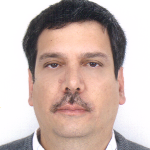
Prof. Peter Y A Ryan is a Full Professor in Computer Science and Communication (Applied Security) at the University of Luxembourg's Faculty of Science, Technology and Medicine, within the Department of Computer Science. His research focuses on cryptography, information security, and secure voting systems, emphasizing verifiability, privacy, and coercion resistance in e-voting. He leads projects on post-quantum cryptography, lightweight security protocols for IoT, and DNA-based data preservation. Key research areas include: Cryptography: Post-quantum algorithms, secure key exchange, and cryptographic protocol design E-Voting Systems: End-to-end verifiability, coercion mitigation, and usability studies Security Foundations: Privacy-preserving technologies, formal verification, and ransomware prevention His recent work explores: Hyperion/Selene voting systems with transparent verifiability X2065 and AVRNTRU protocols for constrained IoT devices Optical unclonable tags for artifact authentication Publications span 2020–2024, addressing topics like quantum-resistant cryptography, e-voting usability, and ransomware mitigation strategies. He contributes to international conferences such as E-Vote-ID and SECITC.
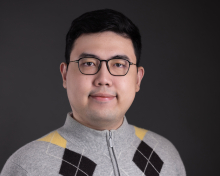
YoungMin Kwon is an Associate Professor in the Department of Computer Science at SUNY Korea. He holds a Ph.D. (2006) from the University of Illinois at Urbana-Champaign, an M.E. (1998) and B.E. (1996) from Korea University. Previously a software engineer at Microsoft (2006–2016), he joined SUNY Korea in 2016. His research focuses on Cyber-Physical Systems (CPS), quantum computing, and formal methods for system verification. Education: Ph.D. Computer Science, University of Illinois at Urbana-Champaign (2006), Advisor: Prof. Gul Agha M.E. Mechatronics, Korea University (1998), Advisor: Prof. Tae-Woong Yoon B.E. Electrical Engineering, Korea University (1996) Research interests include developing tools for CPS, quantitative model checking, middleware for networked systems, and quantum computing applications. Notable contributions include the ActorNet platform for wireless sensor networks and the iLTLChecker model checker. He teaches courses on compilers, operating systems, quantum computing, and data structures. Advising and grants include supervision of Ph.D. candidates Seonghwan Jeong and Yousun Shin, along with multiple undergraduate researchers. His work has been supported by grants from DARPA and NSF. Labs/Teams: IoT Lab @SUNYK and Open Systems Laboratory (OSL) @UIUC collaborations.
Fatemeh Rezaeibagha is Senior Lecturer in Cyber Security at Murdoch University's School of Information Technology. Her research develops cryptographic solutions for blockchain systems, IoT security, and privacy-preserving protocols. Awards include the Associate Fellow teaching certificate (2019) and Murdoch Fellowship (2023). Recent publications focus on: privacy-enhanced data sharing for medical IoT; redactable blockchain architectures; attribute-based access control; and lattice-based cryptography. Applied contributions include traceability-revocation schemes for industrial IoT and accountable systems for vehicular networks. Research emphasizes efficiency and post-quantum security in distributed environments.
Elif Surer is an Associate Professor and Associate Director at Middle East Technical University's Graduate School of Informatics, Department of Multimedia Informatics. She leads the Entertainment Computing and Interactive Systems Laboratory (ECISLab) and actively contributes to METU's entrepreneurship initiatives through GIMER (Entrepreneurship Research Center). Her academic leadership extends to international projects including EU Horizon Europe initiatives and collaborations with institutions like Stanford University's University Innovation Fellows program. Dr. Surer's research focuses on the intersection of game technologies, extended reality, and practical applications across diverse domains. Her work spans serious games for CBRNe (Chemical, Biological, Radiological, Nuclear, and Explosive) training, virtual reality applications for mining safety, archaeological visualization, and educational technology. She has developed frameworks for heterotopias as discursive playgrounds, modular serious game development for virtual laboratories, and advanced techniques in persona building for game design. Her interdisciplinary approach bridges computer science with fields like archaeology, healthcare, and occupational safety, creating innovative solutions that address real-world challenges through immersive technologies. Her publication record demonstrates consistent contributions to top journals including IEEE Transactions on Games, Virtual Reality, and JMIR Serious Games. Recent work shows increasing focus on biological network visualization in XR environments, advanced testing frameworks for deep learning systems, and sophisticated persona modeling techniques that go beyond traditional approaches. Her research trajectory reflects growing integration of AI with immersive technologies, particularly in specialized training applications and scientific visualization. METU Performance Awards (2020, 2021) Best Poster award at METU Graduate School of Informatics Open Research Day TÜBİTAK Above-Threshold-Awards Featured in Researchers Active in Technical Games Research list Dr. Surer actively supervises numerous graduate students across multiple projects, with recent completions including theses on clickbait detection, VR for mining safety, and adaptive serious games for children with learning difficulties. She leads significant research funding including EU Horizon Europe projects like eNOTICE-2 (focused on CBRNe training), the MR4MS project for mine safety, and the Quantum Flagship project QuTE4E. Her laboratory environment fosters collaboration between computer science, architecture, and other disciplines, creating opportunities for students to engage in cutting-edge research with practical applications. As director of ECISLab, she maintains strong connections with industry partners including METU Teknokent, and actively participates in entrepreneurship initiatives through METU GIMER. Her work with the University Innovation Fellows program demonstrates commitment to developing entrepreneurial skills among students, while her research on virtual reality applications continues to expand into new domains including healthcare, archaeology, and emergency response training.
James Glimm is a Distinguished Professor and Chair of the Department of Applied Mathematics and Statistics at Stony Brook University. He holds a PhD in Mathematics from Columbia University (1959) and has held positions at MIT, the Rockefeller University, and the Courant Institute. His research spans mathematical physics, fluid dynamics, computational science, and turbulence modeling. Glimm is renowned for contributions to nonlinear analysis (earning the AMS Steele Prize), quantum field theory (Heineman Prize), and computational fluid dynamics (DOE adoption of his front-tracking method). A member of the National Academy of Sciences and recipient of the National Medal of Science, he has also served as AMS President (2007–2009). His work integrates theoretical analysis with high-performance computing, addressing challenges in multiphase flows, shock dynamics, and turbulent mixing. Key collaborations include projects with Brookhaven National Lab, ARO, and DOE, focusing on multiscale physics and inertial confinement fusion. Glimm’s methodologies, such as front-tracking algorithms, are foundational in simulating complex fluid interfaces and instabilities. His research also extends to biomedical applications, including cardiac electrophysiology simulations. Awarded over 20 grants, his funding includes DOE support for multiphase flow simulations in nuclear reactors and hypersonic systems. Mentoring over 30 PhD students, Glimm has shaped interdisciplinary research in applied mathematics, with notable contributions to both academic and industrial challenges.
Hyunkyung Lim is a Research Assistant Professor at Stony Brook University's Department of Computational Applied Mathematics. Her research focuses on multiphase turbulent mixing of compressible and incompressible fluids, numerical methods for fluid interface tracking, and computational fluid dynamics analysis. She holds a Ph.D. from 2009. Expertise: Turbulent mixing simulations, front-tracking methods, quantum computing algorithms, and biomedical modeling Key Projects: Cybercardia cardiac device modeling, inertial confinement fusion studies, and quantum amplitude estimation Her work bridges computational mathematics with applications in energy systems (fusion research), medical devices, and quantum computing. Recent studies include quantum algorithm implementations on NISQ devices and MRI-based finite element modeling. Publications highlight contributions to both classical fluid dynamics and emerging quantum computing fields. No specific grants or awards are listed in the provided materials.
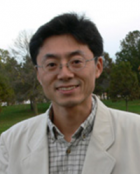
Dr. Sezer Goren is an Associate Teaching Professor in Electrical and Computer Engineering at the University of Massachusetts Dartmouth. She holds a PhD in Computer Engineering from UC Santa Cruz and BS/MS in Electrical Engineering from Bosphorus University. Her teaching focuses on digital VLSI design, real-time embedded systems, reconfigurable computing, and VLSI verification. Research interests include FPGA-based quantum key distribution, hardware security, deep learning applications, and automated parking systems. Before academia, Dr. Goren worked as a senior verification engineer at technology companies including Apple, Cadence, and SynTest. She previously served as department chair and IEEE Computer Society chapter chair in Turkey. With over 85 publications and supervision of 14 MS/4 PhD students, her work bridges industry experience and academic research in digital systems design.
Khaled Elleithy is the Dean of the College of Engineering, Business & Education, Associate Vice President for Graduate Studies and Research, and Professor of Computer Science and Engineering at the University of Bridgeport. He holds multiple administrative roles in addition to his academic responsibilities. Dr. Elleithy has extensive experience in teaching and research, having developed courses and laboratories in quantum computing, network security, and embedded systems design. He holds a B.Sc. in Computer Science and Automatic Control from Alexandria University (1983), an M.S. in Computer Networks from the same institution (1986), and subsequent M.S. and Ph.D. degrees in Computer Science from the University of Louisiana at Lafayette (1988 and 1990). His research focuses on wireless sensor networks, mobile communications, quantum computing, and formal design verification. He has published over 350 papers and edited 12 Springer books, showcasing his expertise in these areas. Notable research topics include quantum cryptography protocols, energy-efficient robotics algorithms, and assistive technologies for visually impaired individuals. Dr. Elleithy has received prestigious awards such as the 2015 Connecticut Quality Improvement Award (CQIA) Gold Innovation Prize and the 2006-2007 Distinguished Professor of the Year. His students have won over 20 awards from IEEE, ACM, and ASEE for their work in steganography, robotics, and network security. He has secured grants totaling over $2.5 million as Principal Investigator or Co-Investigator, including projects on hybrid projectiles, mobile content management, and enterprise network security. His work often bridges theoretical computer science with practical applications like defense systems and healthcare technologies. Elleithy has established multiple teaching/research laboratories and contributed to the development of hybrid educational conferences like the Annual International Joint Conferences on Computer, Information, and Systems Sciences. He is a Senior Member of the IEEE Computer Society and has held leadership roles in organizing major international conferences since 2005.
Colin Alexander Boyd is Professor in the Department of Information Security and Communication Technology at the Norwegian University of Science and Technology (NTNU). With an MSc and PhD in Discrete Mathematics from Eindhoven University of Technology, his career includes faculty positions at Queensland University of Technology and University of Manchester. Research specializes in cryptographic protocols, authentication mechanisms, and key exchange systems. Recent work develops secure outsourcing frameworks for network functions and updatable encryption schemes. Publications demonstrate consistent focus on formal security verification, protocol efficiency, and practical implementations for cloud, blockchain, and voting systems. Authored the comprehensive reference 'Protocols for Authentication and Key Establishment' and maintains active research in post-quantum cryptography. Work bridges theoretical cryptography with real-world security challenges in networked systems.
Panayiotis Frangos is a Professor in the Division of Information Transmission Systems and Material Technology at the School of Electrical and Computer Engineering, National Technical University of Athens. His research focuses on electromagnetic theory, radar systems, signal processing, and wave propagation, with applications in telecommunications and remote sensing. Education highlights: Ph.D., Moore School of Electrical Engineering, University of Pennsylvania, 1986 M.Sc., Moore School of Electrical Engineering, University of Pennsylvania, 1985 Diploma in Electrical Engineering, National Technical University of Athens, 1983 Research interests span radar technology, electromagnetic scattering, signal processing algorithms, and antenna design, with recent work emphasizing: Theoretical and experimental analysis of wave propagation Advanced signal processing for remote sensing Computational solutions for electromagnetic problems Fractal-based environmental characterization techniques Recent publications demonstrate strong trends in electromagnetic wave modeling, radar-based environmental monitoring, and computational ethics for medical devices. Articles frequently integrate theoretical frameworks with experimental validation across electromagnetics, signal processing, and regulatory compliance domains. Dr. Frangos directs the Radar Systems and Remote Sensing Laboratory, conducting research on synthetic aperture radar (SAR), radio coverage modeling, and electromagnetic measurements. The lab actively contributes to international collaborations advancing radar technologies and computational methods.
Rickard Ewetz is an Associate Professor in the Department of Electrical and Computer Engineering at the University of Florida. His research develops novel computing paradigms including in-memory processing and hardware accelerators for AI applications. Research focuses on: Nanoscale crossbar architectures for energy-efficient computation Robust deep learning hardware resistant to adversarial attacks Formal verification methods for emerging computing systems Quantum circuit synthesis and optimization Honors include multiple Best Paper nominations at premier conferences and the 2024 Research Incentive Award. His group collaborates with industry partners to bridge theoretical innovations with practical hardware implementations.
Runzhou Tao is an Assistant Professor in the Department of Computer Science at the University of Maryland, College Park, and a Fellow at the Joint Center for Quantum Information and Computer Science (QuICS). He earned his Ph.D. in Computer Science from Columbia University in 2024 and a Bachelor's degree from the Yao Class at Tsinghua University in 2019. His research focuses on quantum computing, programming languages, operating systems, and formal verification, with notable contributions to quantum compiler verification, distributed protocol analysis, and algorithm design. Education: Ph.D., Computer Science, Columbia University, 2024 B.Eng., Yao Class, Tsinghua University, 2019 Research Interests: At the intersection of quantum computing and software engineering, Tao develops tools for formal verification of quantum compilers and distributed systems. His work emphasizes practical error analysis, automated invariant synthesis, and optimizing quantum algorithms. Current projects include synthesizing recursive quantum unitary programs and verifying multiprocessor hypervisors on Arm hardware. Awards: Jay Lepreau Best Paper Award (DistAI, 2021) Best Paper Award (Edge-Weighted Online Bipartite Matching, 2020) Labs/Teams: Active contributor to the Joint Center for Quantum Information and Computer Science (QuICS). Collaborates with industry partners like IBM (Qiskit compiler verification) and academic teams on formal methods in distributed systems. Leads research initiatives in quantum software engineering and algorithmic optimization.
Hai Wang is a Professor of Mechanical Engineering at Stanford University with a distinguished career in combustion science, high-speed propulsion, and renewable energy conversion. His research spans combustion chemistry of conventional and renewable fuels, detonation dynamics, quantum-chemistry guided battery materials design, and transport theories in nanoparticle systems. Education : Ph.D. in Fuel Science from Pennsylvania State University (1992), M.S. in Chemical Engineering from Michigan Technological University (1986), B.Eng. in Polymer Materials from East China University of Science and Technology (1984). He has authored seminal works on soot formation in flames, catalytic oxidation of methane, and laminar flame speed modeling. His recent publications address interdisciplinary challenges such as eco-anxiety and advanced data plane verification. Notable administrative roles include co-founding Hestia Tec, LLC (2010-2014) and serving as President of the Combustion Institute (2024-present). Wang’s work has been recognized with the Humboldt Senior Research Award (2019), Mercator Fellow (2019), and multiple fellowships. He mentors doctoral and master’s students and leads research initiatives like the Combustion Energy Frontier Research Center (2010-2014).
Michael Lawler is an Adjunct Associate Professor of Physics at Cornell University's College of Arts and Sciences and an Associate Professor of Physics at State University of New York at Binghamton. His research bridges condensed matter physics and quantum information science, with a focus on quantum spin liquids, frustrated magnetic systems, and quantum liquid crystals. Dr. Lawler earned his B.Sc. in Engineering Physics from Queen's University in 1999 and his Ph.D. in Physics from the University of Illinois at Urbana-Champaign in 2006. He completed postdoctoral training at the University of Toronto from 2006-2008 before joining Cornell University as an Adjunct Assistant Professor (2008-2017) and later as an Adjunct Associate Professor (2017-present). Concurrently, he has held positions at SUNY Binghamton, progressing from Assistant Professor (2008-2016) to Associate Professor (2016-present). His research centers on two fundamental problems in condensed matter physics: identifying how quantum spin liquids form in frustrated magnetic insulators and proposing experimental verification methods, and understanding collective phenomena in strongly interacting electron systems. His group employs quantum field theory techniques to study electronic liquid crystal phases with emphasis on quantum criticality and breakdown of the quasiparticle picture. Recent work has expanded into quantum computing applications, exploring how quantum algorithms behave like condensed matter systems and vice versa. Analysis of his publication record reveals a clear evolution from traditional condensed matter theory toward quantum information applications. Early work (2016-2017) focused on frustrated quantum mechanical systems and quantum liquid crystals, while more recent publications (2022-2025) demonstrate a significant shift toward quantum computing, quantum error correction, and machine learning applications in physics. This progression reflects the growing intersection between condensed matter physics and quantum information science. John Bardeen Award for outstanding contributions to electronic materials (2006) Dr. Lawler actively mentors graduate students including Gaurav Gyawali, Jiabao Yang, Po-Wei Lo, and Eric Aspling, who work on topics spanning quantum computing algorithms, frustrated magnets, and relativistic quantum information. His group has secured funding for research at the interface of condensed matter physics and quantum information science, supporting multiple graduate students and postdocs. The Lawler Group maintains active collaborations between Cornell and Binghamton, with undergraduate researchers contributing to projects at both institutions. The Lawler Group operates at both Cornell University and SUNY Binghamton, with physical spaces in Clark Hall at Cornell and the Smart Energy Building at Binghamton. The group maintains an active blog discussing quantum computing, materials science, neural networks, and information theory, reflecting their interdisciplinary approach to modern physics problems.
Andreas Wallraff is a Full Professor in the Department of Physics at ETH Zurich, where he leads cutting-edge research in quantum optics and quantum information processing using superconducting electronic circuits. His work focuses on large-bandwidth microwave techniques at ultra-low temperatures, leveraging ETH's FIRST laboratory clean room facilities for device fabrication. He actively collaborates within the Quantum Systems for Information Technology (QSIT) program and teaches advanced courses such as 'Quantum Science with Superconducting Circuits' (Autumn 2025). Education: Imperial College London and RWTH Aachen (B.Sc. equivalent in Physics, 1994) RWTH Aachen (Diploma in Physics/M.Sc. equivalent, 1997) University of Erlangen-Nuremberg (Ph.D. in Physics, 2000) Wallraff's research centers on quantum-coherent phenomena in superconducting circuits, with emphasis on quantum optics implementations, qubit control, and quantum information processing. His group pioneers experimental techniques for observing quantum effects like energy level quantization and tunneling in macroscopic systems, building on his early work with Josephson vortex oscillators. Current efforts integrate microwave engineering with quantum error correction, multi-qubit architectures, and hybrid quantum systems involving semiconductors and graphene quantum dots. His recent publications reveal a strong trend toward scalable quantum computing solutions, particularly in quantum error correction (surface codes, lattice surgery), multi-module processor integration, and real-time feedback control. Work spans fundamental quantum optics (photon-qubit coupling) to engineering challenges (flux control calibration, leakage reduction), with increasing focus on practical implementations for fault-tolerant systems. Scientific Awards: Nicholas Kurti European Science Prize (2006) for 'decisive and innovative experiments on quantum mechanical effects in superconducting circuits' Wallraff leads an active research group integrated into ETH's QSIT initiative, securing substantial grants for quantum processor development and cryogenic infrastructure. His team maintains collaborations across ETH on semiconductor quantum dots, atomic cavity QED, and single-molecule spectroscopy, while developing novel fabrication techniques like polymer spacer processes for 3D-integrated circuits. Future work targets loophole-free Bell tests, quantum networks, and real-time reinforcement learning for quantum control. The group operates within ETH's Laboratorium für Festkörperphysik (HPF D 9), utilizing advanced cryogenic setups for 100-qubit-scale systems. They maintain close ties with Yale University (where Wallraff was a postdoc) and contribute to international quantum computing roadmaps through publications in high-impact journals.


/prod01/production-cdn-pxl/media/umassdartmouth/profiles/engineering/electrical-amp-computer/sezer.jpg)