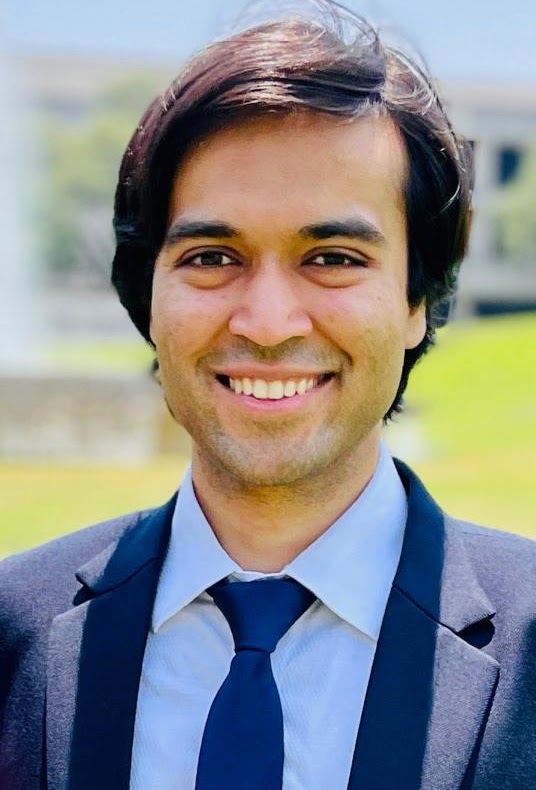
Jonas Bylander is a Professor at Chalmers University of Technology in the Department of Microtechnology and Nanoscience, specifically within the Quantum Technology division. He leads a research group focused on developing quantum computers using superconducting circuits.
Dr. Borivoje Dakic is an Associate Professor at the University of Vienna , affiliated with the Faculty of Physics and the Quantum Optics, Quantum Nanophysics and Quantum Information department. His research spans foundational and applied aspects of quantum theory. Operational reconstruction of quantum formalism Quantum interference as a resource for communication Tomography of large-scale quantum systems Macroscopic quantum phenomena His work includes scalable verification techniques for quantum devices and collaborations with experimental teams like Philip Walther’s and Markus Aspelmeyer’s groups. He received the Marko Jarić Prize (2025) for his contributions. Recent projects focus on diagnostics of quantum devices (FWF BeyondC SFB), information-theoretic foundations of quantum interference (FWF P36994), and local operations in quantum field theory (Cluster of Excellence QuantA). His research on quantum coherence in networks and macroscopic entanglement challenges traditional assumptions about quantum-classical boundaries. Publications emphasize resource-efficient tomography, device-independent verification, and foundational frameworks for quantum statistics and field theory. Teaching: Quantum Information (2025W), Theory in Quantum Optics (2025S), VCQ Summerschool Labs: Dakić Group at University of Vienna
Rishab Goyal is an Assistant Professor in the Computer Sciences Department at the University of Wisconsin-Madison , affiliated with the School of Computer, Data & Information Sciences . His research spans Cryptography , Computer Security , and Theoretical Computer Science , with a focus on post-quantum cryptography , lattice-based systems , and the policy implications of advanced cryptography . Research interests include secure systems with advanced capabilities and cryptographic proof systems. Teaching graduate and undergraduate courses in cryptography and theoretical computer science. His work on functional encryption , traitor tracing , and obfuscation has been published in top venues like CRYPTO, STOC, and FOCS. He has served on program committees for EUROCRYPT, TCC, PKC, FOCS, and ASIACRYPT. Scientific Awards : Invited to STOC 2018 special issue in SIAM Journal on Computing. Rishab collaborates with PhD students including Jiaqi Cheng , Abtin Afshar , and Saikumar Yadugiri , and hosts visiting researchers from institutions like GMU and IIT Madras.
Cecilia Boschini is a Researcher affiliated with the Institute for Theoretische Informatik (Theoretical Computer Science) at ETH Zürich. Her work focuses on advanced cryptographic systems, particularly in post-quantum cryptography, lattice-based protocols, and privacy-preserving technologies. She contributes to developing secure digital signature schemes, threshold cryptography, and efficient cryptographic algorithms resistant to quantum computing threats. Her research bridges theoretical foundations with practical applications in cybersecurity and distributed systems. Key contributions include innovations in fail-stop signatures, two-round threshold signatures (Ringtail), and lattice-based multi-signature systems (MuSig-L). Boschini’s work emphasizes balancing security with efficiency, often addressing challenges in mobile device security and memory encryption. She has published extensively in top-tier venues, with a focus on cryptographic protocols that enhance privacy and data integrity without compromising usability.
Serge Fehr is a Senior Researcher in the Cryptology Group at CWI (Centrum Wiskunde & Informatica) in Amsterdam and a part-time Professor at the Mathematical Institute of Leiden University. His research focuses on foundational aspects of cryptology, including post-quantum cryptography, information-theoretic security, zero-knowledge proofs, and secure multiparty computation. He participates in AMSec (Amsterdam Cyber Security Center) and leads work packages in the NWO-funded HAPKIDO consortium. Education: M.Sc. in Mathematics from ETH Zürich (1998) Ph.D. in Cryptography from ETH Zürich and University of Aarhus (2003) Postdoc at Macquarie University (2003-2004) Research Interests: Post-quantum cryptographic primitives (e.g., digital signatures, lattice-based schemes) Quantum-resistant protocols (e.g., non-resignable signatures, Fiat-Shamir transforms) Foundational security proofs in the quantum random oracle model (QROM) Secure multiparty computation and privacy-preserving healthcare systems Key Activities: Editorial Board Member: Journal of Cryptology , IEEE Transactions on Information Theory Program Committee Co-Chair: EUROCRYPT 2025 Steering Committee Member: Beyond IID Information Theory, QCrypt Co-organizer: Symposium Series on Post-Quantum Cryptography Grants/Awards: NWO Cybersecurity consortium grant (HAPKIDO - 2021) NWO Veni Grant (2005) NWO Open & Free Competition Grants (2008, 2013) Students/Advising: Supervised or served on committees for over 15 Ph.D. students, including work on post-quantum signatures, MPC applications, and lattice-based cryptography. Labs/Teams: Active in CWI’s Cryptology Group and Leiden’s Mathematical Institute, collaborating with industry partners (e.g., KPN, Microsoft) in cybersecurity initiatives.
Cem Say is a Professor in the Department of Computer Engineering at Boğaziçi University's Faculty of Engineering, where he has established himself as a leading researcher in theoretical computer science and artificial intelligence. His academic journey began with the completion of his doctoral dissertation titled Qualitative System Identification in 1992, which was the first thesis of Boğaziçi University's Computer Engineering PhD program. Professor Say's research interests span multiple domains of computer science, with significant contributions to quantum computing, artificial intelligence, and theoretical computer science. His early work focused on qualitative reasoning and simulation, particularly through the QSIM algorithm, where he made significant improvements to filtering techniques and addressed challenges in representing physical systems. Over time, his research evolved toward quantum computation, where he has made substantial contributions to quantum finite automata theory, space-bounded quantum computation, and quantum complexity classes. His recent work explores the energy complexity of computation, bridging theoretical computer science with thermodynamics. His publication record shows a clear evolution from classical AI and qualitative reasoning toward quantum computation. The most recent articles demonstrate his focus on space-bounded quantum computation, energy complexity of regular languages, and interactive proof systems with minimal resources. His work consistently addresses fundamental questions about computational limits, particularly in quantum and sublogarithmic-space models. Professor Say has also made significant contributions to science communication through several books written for general audiences, including 50 Soruda Yapay Zekâ (2018), Yeni Dünya, Yeni Ağ (2020), and En Hakiki Mürşit (2021), which explain complex concepts in artificial intelligence and scientific methodology in accessible terms. Throughout his career, Professor Say has been actively involved in the Turkish academic community, editing proceedings for multiple Turkish symposia on artificial intelligence and neural networks. His doctoral dissertation established foundational work in qualitative system identification, and his subsequent research has consistently pushed boundaries in theoretical computer science, particularly in quantum computation where he has collaborated extensively with Abuzer Yakaryılmaz and other researchers.
Alexander Russell is a Professor of Computer Science and Mathematics at the University of Connecticut, serving as Director of Graduate Affairs in the School of Computing and Director of the UConn Voting Technology Research Lab. He holds a Ph.D. in Mathematics and an S.M. in Computer Science from MIT, alongside dual B.A. degrees in Mathematics and Computer Science from Cornell University. His research focuses on cryptographic protocols, blockchain security, quantum computing, algorithms, and election auditing. Key areas include consensus algorithms, complexity-theoretic cryptography, and applied cryptography in voting systems. Recent work emphasizes low-variance risk-limiting audits and adaptive security mechanisms for blockchains. Notable contributions span provably secure blockchain protocols (e.g., Ouroboros), election integrity methods, and smartphone-based depression prediction models. His articles address topics like settlement bounds in longest-chain consensus, Byzantine-resilient gossip protocols, and energy-efficient neighbor discovery in mobile networks. Russell advises on interdisciplinary projects at the Voting Technology Research Center and collaborates on grants involving quantum-resistant cryptography and healthcare analytics. His work bridges theoretical computer science with practical applications in secure systems and public infrastructure.
Lin Zhong is the Joseph C. Tsai Professor of Computer Science at Yale University, leading the Efficient Computing Lab. He holds a Ph.D. from Princeton University and M.S./B.S. degrees from Tsinghua University. Previously, he served at Rice University from 2005 to 2019. His research focuses on optimizing computing efficiency, quantum error correction, operating systems, and mobile systems. Education: Ph.D., Princeton University M.S., Tsinghua University B.S., Tsinghua University Research Interests: His work spans quantum computing (e.g., decoding algorithms for surface codes), operating systems (safety, correctness, and lightweight kernels), and mobile/networking systems (massive MIMO, energy-efficient designs). Recent trends include integrating large language models (LLMs) into robotics and securing cloud-based AI workflows. Awards: NSF CAREER Award ACM SIGMOBILE RockStar (2014) and Test of Time (2022) Fellowships from IEEE and ACM Best Paper Awards at ACM MobileHCI, IEEE PerCom, ACM MobiSys, and more Lab & Teams: His Efficient Computing Lab explores systems for quantum error correction (e.g., FPGA-based decoders), secure embedded systems, and LLM-driven robotics. Projects include TimelyLLM (real-time LLM serving) and Blindfold (confidential memory management).
Sebastian Pokutta is a Professor at Technische Universität Berlin, Vice President at the Zuse Institute Berlin (ZIB), and Chair of the Cluster of Excellence MATH+ and MODAL. His research lies at the intersection of Artificial Intelligence, Optimization, and Machine Learning, with applications in sustainability, quantum computing, and mathematical discovery. Research Interests: Development of novel optimization algorithms, particularly Frank-Wolfe and Conditional Gradient methods. Integration of machine learning with decision-making and combinatorial optimization. AI for Science (AI4Science), including applications in quantum mechanics and ecology. AI and creativity, human-AI co-creativity, and social science modeling using multi-agent LLMs. His recent publications (2025) demonstrate a strong focus on scalable optimization, interpretability, and algorithmic foundations. The work spans theoretical advances in convergence analysis, practical implementations in Julia (FrankWolfe.jl), and real-world deployments in biomass estimation and quantum certification. Scientific Awards: Gödel Prize (2023) STOC Test of Time Award (2022) Science Prize of the Association for Pediatric Orthopedics (2025) Google Research Awards (2021, 2020) NSF CAREER Award (2015) He advises a vibrant research group, with former students and postdocs securing faculty positions at institutions like Inria, Carlos III University, and James Madison University. His group has received funding from Google, DFG, and Math+, and he leads major collaborative efforts such as the Thematic Einstein Semester on Mathematical Optimization for Machine Learning. Labs and Teams: Interactive Optimization and Learning Lab at TU Berlin and ZIB. Leadership in MODAL and MATH+ research clusters, fostering interdisciplinary collaboration in mathematical optimization and AI.
Dimitris Mitropoulos is an Assistant Professor at the National and Kapodistrian University of Athens (NKUA) in the Department of Business Administration, where he teaches courses on Distributed Ledger Technologies, Data Security and Privacy, Algorithms and Business Analytics, and Introduction to Programming. He also serves as Head of the Reliability Engineering Directorate at the National Infrastructures for Research and Technology (GRNET), Greece's national research and education network organization. Previously, he was a Postdoctoral Researcher in the Computer Science Department at Columbia University. Dr. Mitropoulos received his Ph.D. degree in Secure Software Development Technologies from the Athens University of Economics and Business (AUEB) in 2014. His doctoral research was supported by the Heracleitus II Scholarship, co-financed by the European Union and Greek national funds. He is a member of prestigious professional organizations including ACM, IEEE, and USENIX. Dr. Mitropoulos conducts pioneering research at the intersection of software engineering and cybersecurity, with particular expertise in secure software development, vulnerability analysis, and blockchain security. His work spans multiple dimensions of software security including code injection attacks, infrastructure as code security, smart contract analysis, and dependency management in software ecosystems. His research methodology combines static and dynamic analysis techniques with empirical studies of real-world software systems, particularly focusing on Java, Python, and Solidity ecosystems. His recent work has made significant contributions to understanding security vulnerabilities in modern software development practices and infrastructure management. Dr. Mitropoulos has received numerous prestigious awards for his research contributions, including the Research Excellence Award from NKUA (2025), Distinguished Paper and Artifact Awards at PLDI '22, Best Data Showcase Award at MSR 2018, and multiple postdoctoral research funding scholarships. His work on "Finding typing compiler bugs" was recognized with both Distinguished Paper and Artifact Awards at PLDI '22, highlighting the significance and reproducibility of his research. He has also received recognition for his service to the academic community, including a Certificate of Appreciation from ESEC/FSE '21 for his contributions to conference organization. Dr. Mitropoulos has been actively involved in securing research funding and leading significant research projects. He currently serves as Principal Investigator for the SecOPERA project (2023-Today), funded by the European Commission under Horizon Europe. Previously, he contributed to several major EU and US-funded projects including eSSIF-Lab (2019-2022), FASTEN (2019-2022), PRIViLEDGE (2018-2021), CERTCOOP (2017-2020), PANORAMIX (2016-2019), and TREDISEC (2016-2018). His research has been supported by diverse funding sources including the European Commission's Horizon 2020 program, the National Science Foundation, and the Defense Advanced Research Projects Agency (DARPA). Dr. Mitropoulos plays an active role in the international research community through various leadership positions. He serves on program committees for top-tier conferences including OOPSLA (2026), ICSE (2026), ESEC/FSE (2025), and ISSTA (2025). He has previously served as Workshop Co-Chair for ISSTA 2025 and Student Volunteer Chair for ESEC/FSE 2021. His contributions to mentoring the next generation of researchers include serving as a mentor for the ICSE Student Mentoring Workshop (2022) and supervising Google Summer of Code projects (2017).
Amir Shaikhha is an Associate Professor (Reader) in the School of Informatics at the University of Edinburgh. He was previously an Assistant Professor (Lecturer) at the same institution from 2020 to 2024 and a Departmental Lecturer at the University of Oxford until August 2020. He is also a Junior Research Fellow at University College, Oxford. His academic journey began with a Ph.D. from EPFL in 2018, where he was awarded the Google Ph.D. Fellowship in structured data analysis and a Ph.D. thesis distinction. His research centers on the design and implementation of data-analytics systems, drawing upon techniques from databases, programming languages, compilers, and machine learning. He develops high-performance systems such as SDQL.py, StructTensor, and VecHT, focusing on the compilation of data science workloads and optimization of tensor operations. His work bridges the gap between high-level abstractions and efficient execution, particularly in sparse and probabilistic computing domains. The recent publications highlight a strong trend in compiler-driven optimizations for data-intensive applications, including automatic differentiation, loop fusion, probabilistic programming, and domain-specific language (DSL) restaging. His research integrates machine learning for systems decisions and emphasizes reproducibility and performance. He has published consistently in top venues like PLDI, OOPSLA, SIGMOD, and CGO, reflecting sustained impact in programming languages and database systems. Dahl-Nygaard Junior Prize, 2025 Google Research Scholar Award, 2025 Most Influential Paper Award, GPCE 2024 Best Paper Award, GPCE 2017 Most Reproducible Paper Award, SIGMOD 2017 Google Ph.D. Fellowship, 2017 Amir Shaikhha has advised PhD students including Hesam Shahrokhi and has been nominated for Best Supervisor of the Year at the University of Edinburgh. He leads research projects that have received recognition and support through awards and grants, including the Google Research Scholar Award. He actively serves the community through program committees (e.g., GPCE, DBPL, DRAGSTERS), editorial roles, and peer review for premier journals. His leadership in organizing workshops and conferences underscores his role as a central figure in the programming languages and databases research communities. He leads a research group focused on compiler and database systems, with recent open-source releases such as StructTensor and VecHT. His team collaborates with researchers from institutions like MIT, EPFL, and TU Berlin, and he co-chairs workshops like Sparse@PLDI and DRAGSTERS. His lab emphasizes innovation in how data-intensive programs are compiled and executed efficiently across modern hardware.
Professor Vedran Dunjko is a faculty member at the Leiden Institute of Advanced Computer Science (LIACS), Leiden University, with affiliations to the Leiden Institute of Physics (LION). He leads the Applied Quantum Algorithms group and co-founded the Quantum@LIACS initiative, focusing on the intersection of quantum computing, machine learning, and artificial intelligence. His research interests include quantum machine learning, quantum-enhanced reinforcement learning, quantum heuristics, and the application of AI to quantum computing challenges. Dunjko's work bridges theoretical foundations with experimental implementations on near-term quantum devices, exploring both quantum advantages in learning and the use of classical AI for quantum system design. The recent publications show a strong trend toward proving quantum advantages in learning tasks, optimization, and topological data analysis, with publications in Nature , Nature Communications , and NeurIPS . Key themes include quantum policy gradients, quantum TDA, and reinforcement learning for quantum circuit optimization. ERC Consolidator Grant (2024) PNAS Cozzarelli Prize (2018) Editor’s Suggestion in Physical Review Letters (2014, 2018) Featured in Physics (American Physical Society) (2014, 2018) Dunjko advises several PhD candidates and postdocs, including Rahul Bandyopadhyay, Sofiene Jerbi, and Lea Trenkwalder. He has received competitive grants, most notably the ERC Consolidator Grant in 2024. His group fosters international collaborations with institutions across Europe and industry partners. The Applied Quantum Algorithms group and the Quantum@LIACS team combine theoretical investigations with practical implementations on quantum hardware, focusing on scalable quantum algorithms and AI-driven quantum discovery.
Carlos Toxtli is an Assistant Professor at Clemson University where he leads the Human-AI Empowerment Lab. His research applies Human-Centered AI to create fair workplace tools, focusing on NLP, computer vision, and crowdsourcing ethics. He holds a PhD in Computer Science from Northeastern University and previously worked at Google, Microsoft Research, and Snap Inc. Education: Ph.D. Computer Science, Northeastern University M.S. Innovation & Technological Entrepreneurship, Monterrey Institute of Technology MBA, IEDE Business School B.S. Computer Science, University of the Valley of Mexico B.S. Computer Engineering, National Autonomous University of Mexico Research Focus: Dr. Toxtli develops AI systems promoting workplace fairness through ethical frameworks. His work spans: 1) Human-AI collaboration for task management, 2) Bias mitigation in gig economies, 3) Multimodal interfaces for accessibility, and 4) Culturally adaptive systems. His lab explores how AI can augment human capabilities while ensuring transparency. Publication Trends: Recent works demonstrate strong focus on LLM reliability (7 papers), human-AI teaming (4 studies), and ethical AI frameworks (3 publications). Over 60% of 2024-2025 output addresses real-world deployment challenges. Awards: UNESCO IRCAI Global Top 100 project Google Apps Developer Challenge 1st Place Facebook Developers World Hack 1st Prize Intel Innovation Latin App 1st Prize NSF STIR Labs Research Grant Leadership: Founded the Human-AI Empowerment Lab securing $1.2M in NSF/industry grants. Supervises 8 PhD students in human-centered computing projects. Previously co-founded 5 tech startups including ComproPago (acquired by Coca-Cola FEMSA).
Thomas E. Bittner serves as an Associate Professor in the Department of Philosophy at the University at Buffalo, specializing in formal and applied ontology with particular focus on spatial and temporal reasoning. His academic work bridges philosophy, computer science, and geographic information systems. His research interests encompass Formal and Applied Ontology , Ontology of Space, Time and Spatial Entities , Spatio-Temporal Reasoning , and Bio-Medical Ontology . He investigates fundamental questions about spatial relations, vagueness in geographic boundaries, and quantum-inspired models for geographic information systems, developing rigorous formal frameworks applicable to both philosophical and computational domains. His publication record demonstrates consistent engagement with cutting-edge topics in ontology, particularly exploring quantum geography concepts and computational implementations of formal ontologies. Key themes across his work include the representation of spatial vagueness, quantum-inspired geographic modeling, and verifiable computational ontology systems. Bittner holds a PhD from the Technical University of Vienna and teaches courses including Logic and Spatial Ontology. His contact information lists office location at 109 Park Hall on UB's North Campus with phone (716) 645-5149.
Nai-Hui Chia is an Assistant Professor in the Department of Computer Science at Rice University. Previously, he held positions at Indiana University Bloomington (2021-2022), the University of Maryland's Joint Center for Quantum Information and Computer Science (2020-2021), and the University of Texas at Austin (2018-2020). He earned his Ph.D. in Computer Science and Engineering from Penn State University (2018) and a Bachelor's degree from National Taiwan University (2010). His research focuses on quantum algorithms, quantum complexity theory, and quantum cryptography. Key questions include exploring quantum advantages, computational limits, and the impact of quantum computing on computer science. He has contributed to foundational work on quantum circuit complexity, verification, and cryptographic protocols resilient to quantum attacks. Dr. Chia has received prestigious awards, including the NSF CAREER Award (2024), DOE Quantum Testbed Pathfinder Award (2023), and Google Scholar Award (2023). He actively participates in program committees for major conferences like TQC, Asiacrypt, and Crypto. Advising includes students like Yu-Ching Shen and Chia-Ying Lin, along with postdoctoral researchers. His work bridges theoretical computer science and quantum computing, with grants supporting research into quantum circuit size problems and post-quantum cryptography.