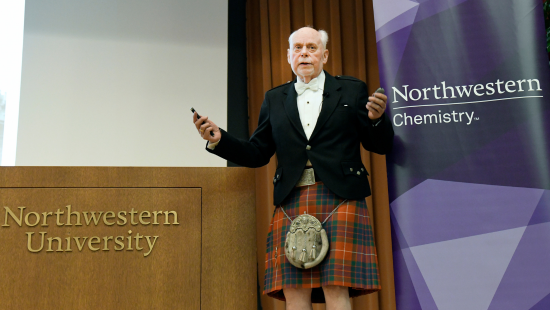
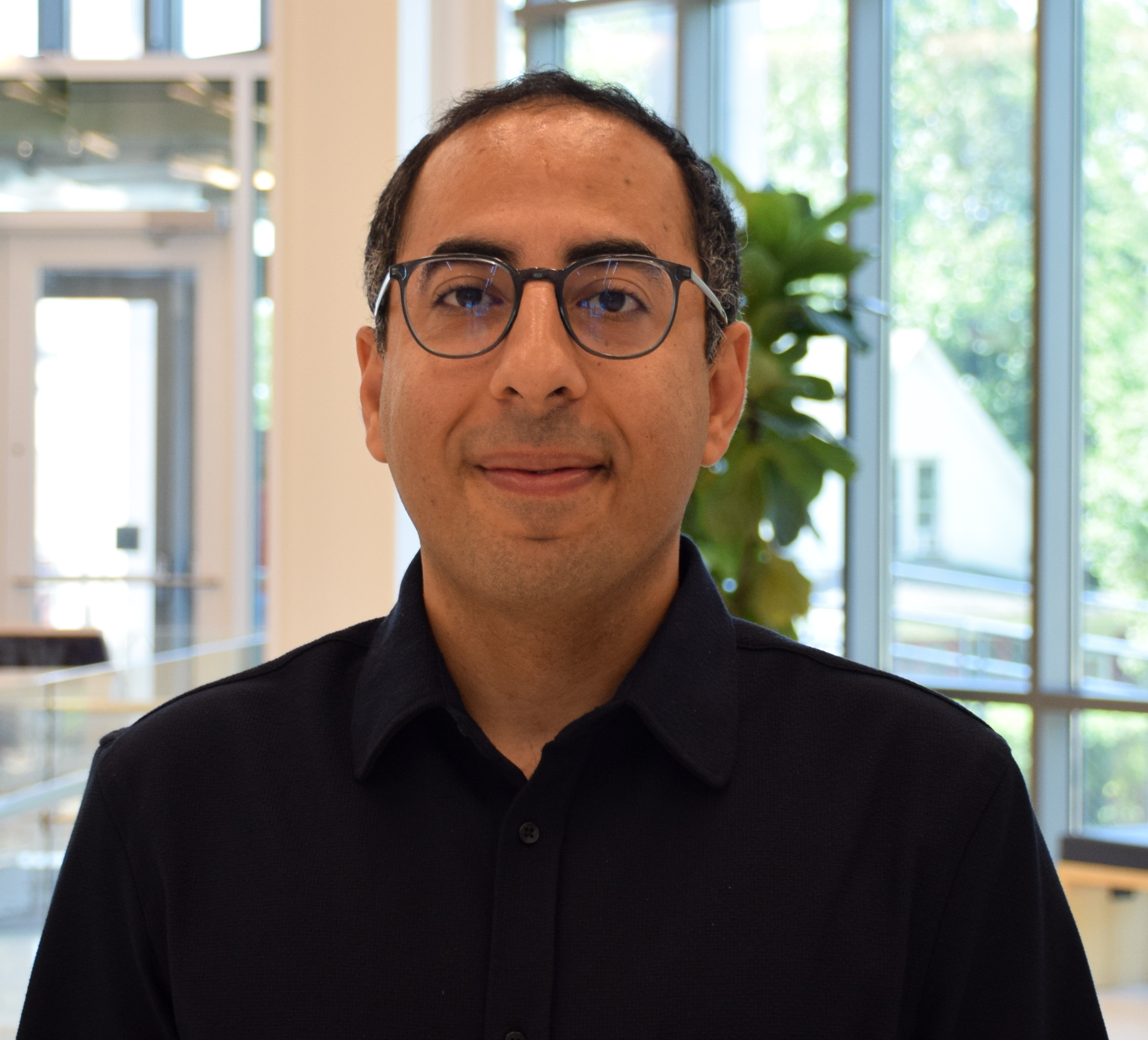
Sir Fraser Stoddart (1942-2024) was the Board of Trustees Professor of Chemistry and Director of the Center for the Chemistry of Integrated Systems at Northwestern University. A pioneer in supramolecular chemistry, he pioneered mechanical bonds and molecular machines, co-winning the 2016 Nobel Prize in Chemistry. Education: B.S. and Ph.D. from University of Edinburgh (1964/1966), followed by honorary doctorates from multiple institutions globally. Research focused on molecular recognition, self-assembly, and mechanically interlocked molecules, leading to innovations in molecular switches, rotaxanes, and nano-electronic devices. His work enabled molecular lifts, muscles, and advanced computer chip technologies. Major awards include the Nobel Prize, Royal Medal, Davy Medal, and knighthood from Queen Elizabeth II. He established a laboratory at Hong Kong University and led Northwestern's chemistry department to international prominence. Known for mentorship, he inspired generations of researchers through his energy and vision. His legacy includes over 1,400 publications and foundational contributions to nanotechnology and molecular engineering.
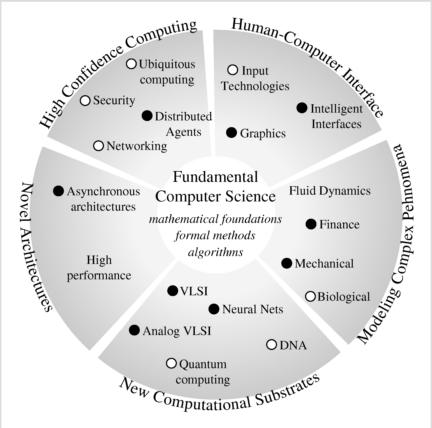
Alan H. Barr is a Professor of Computer Science at the California Institute of Technology (Caltech), affiliated with the Division of Engineering and Applied Science and the Computation & Neural Systems (CNS) department. He is a founding member of the Caltech Computer Graphics Group and a leader in developing mathematically rigorous methods for computer graphics and predictive modeling. His research focuses on enhancing computational modeling accuracy through approaches like interval analysis and constraint-based systems. Notable contributions include deformable models, quaternion interpolation, and cellular simulation frameworks. He has advised over 20 graduate students, many of whom became industry leaders at Pixar, Microsoft Research, and academic institutions like NYU and Brown University. Awards include the ACM SIGGRAPH Achievement Award (1988) and ACM Fellow (1995). Research Interests: Predictive modeling with error bounds Scientific visualization and MRI data analysis Biophysical systems simulation (e.g., cellular organelles) Self-assembling robotic structures for space colonization Mathematically robust computer graphics techniques Key Collaborations: Caltech Biological Imaging Center (Beckman Institute) JPL (Jet Propulsion Laboratory) New computational substrates research (quantum/DNA computing) Recent Work: Expanding into computational biology, medical imaging optimization, and high-confidence systems for managing complex computational interactions. Active in interdisciplinary projects across Caltech divisions.
Lucila Ohno-Machado, MD, PhD, MBA, is the Waldemar von Zedtwitz Professor of Medicine and Biomedical Informatics and Data Science at Yale University. She serves as Deputy Dean for Biomedical Informatics and Chair of the Department of Biomedical Informatics and Data Science at the Yale School of Medicine. Her leadership roles include overseeing informatics infrastructure for Yale’s academic health system and fostering interdisciplinary collaboration across departments such as Medicine and the Halicioğlu Data Science Institute (previously at UCSD). Ohno-Machado holds an MD from the University of São Paulo (Brazil), an MBA from Fundação Getúlio Vargas (Brazil), and a PhD in Medical Information Sciences and Computer Science from Stanford University. She has held faculty positions at Harvard Medical School, MIT’s Health Sciences and Technology Division, and the UCSD Health Department of Biomedical Informatics, where she pioneered federated learning and privacy-preserving AI methodologies. Her research focuses on predictive analytics, federated learning, quantum computing in healthcare, and blockchain applications to enhance data security. She emphasizes addressing algorithmic bias and promoting health equity through data-driven solutions. Recent work includes developing frameworks for medical device safety evaluation and guiding principles to mitigate disparities in algorithmic healthcare applications. Key achievements include the Inaugural Helen M. Ranney Award (2024), election to the National Academy of Medicine (2024), and the William W. Stead Award (2019). She has led NIH-funded informatics centers and contributed to the first large-scale clinical data-sharing initiative across five UC medical systems. Her grants span AHRQ, PCORI, NSF, and blockchain-related initiatives through the IT/NIST Challenge Award. Ohno-Machado advises on translational research strategies and mentors teams in YBIC (Yale Biomedical Informatics & Computing). Her lab collaborates globally, leveraging federated models and AI to advance personalized medicine while prioritizing patient privacy. She also chairs the OHER Awards for Yale Research Excellence, promoting interdisciplinary health equity research.
Zohreh Davoudi is an Associate Professor in the Department of Physics at the University of Maryland, College Park. She holds additional roles as a Fellow of the Joint Center for Quantum Information and Computer Science (QuICS) and Associate Director for Education at the NSF Institute for Robust Quantum Simulation. Her research focuses on simulating strongly interacting systems using lattice quantum chromodynamics (LQCD), quantum simulation, and quantum computing. She earned her B.Sc. and M.Sc. from Sharif University of Technology in Iran, followed by a Ph.D. in Theoretical Physics from the University of Washington (2014), and served as a postdoctoral researcher at MIT's Center for Theoretical Physics before joining UMD in 2017. Her research interests include developing computational frameworks to study nuclear and particle physics phenomena, such as neutrino interactions, dark matter scattering, and neutron star dynamics. She has pioneered efforts to leverage quantum computing to address the 'sign problem' in fermionic systems and simulate real-time dynamics of early universe matter. Notable awards include the 2025 Presidential Early Career Award, 2024 Simons Emmy Noether Fellowship, and 2019 Alfred P. Sloan Fellowship. Her educational contributions include leading training programs in quantum information science and fostering collaborations across institutes like RIKEN (2017–2021) and the NSF Quantum Simulation Institute. She supervises a dynamic research group focused on lattice gauge theory, quantum algorithms, and interdisciplinary applications such as neutrinoless double-beta decay calculations.
Dr. Jonathan Hu is a Professor in the Department of Electrical and Computer Engineering at Baylor University's School of Engineering and Computer Science. He holds a PhD from the University of Maryland Baltimore County (2008) and completed a postdoctoral fellowship at Princeton University (2009–2011). He is an active researcher in optics and photonics, leading the Photonics Research Laboratory and advising both graduate and undergraduate research assistants. Research Interests: Nanophotonics and metamaterials for photovoltaic and biomedical applications Mid-IR supercontinuum generation using chalcogenide photonic crystal fibers 2D materials such as graphene and their alignment via magnetic fields Coherent optical communication and quantum optical Fredkin gates Numerical simulation of electromagnetic problems and leaky mode analysis His recent publications (2019–2024) demonstrate a strong focus on quantum plasmonics, specialty optical fibers, optofluidics, and nonlinear optical phenomena, with high-impact work in journals like Science Advances , ACS Photonics , and Advanced Materials . The research shows a clear trend toward integrating photonics with 2D materials and quantum systems, with applications in sensing, communication, and materials characterization. Scientific Awards and Recognition: 35 Baylor faculty named among top 2% most cited researchers (2023) Editor’s Pick, Journal of Applied Physics (2018) Top three downloads in OSA journals for three consecutive months (2009) NSF Graduate Research Fellowship (awarded to advisee) Chinese Government Award for Outstanding Self-Financed Students Abroad (awarded to advisee) Second Place in FiO + LS Student Competition (awarded to advisee) Advising and Grants: Dr. Hu actively mentors students at all levels, with current graduate research assistants including Wei Zhang, Zhihao Hu, and Sterling Walzel. His lab is supported by external funding, though specific grants are not detailed in the text. He has advised PhD students such as Joshua Young, Chao Niu, and Chengli Wei, many of whom have gone on to successful academic and industry careers. His teaching includes core courses like EGR 1302, ELC 2320, and ELC 4320, as well as advanced topics in computational photonics and integrated photonics. Labs and Teams: He leads the Photonics Research Laboratory at Baylor University, located at the BRIC facility. He is also involved with the Baylor University Optica Student Chapter, promoting optics outreach and networking among students and researchers.
Robert M. Westervelt is the Mallinckrodt Professor of Applied Physics and Physics at Harvard University, holding dual appointments in the Department of Applied Physics and the Department of Physics. He directs the NSF Science and Technology Center for Integrated Quantum Materials and the Center for Nanoscale Systems. His research focuses on quantum materials, nanoelectronics, and biomedical microfluidics. Education: PhD in Physics from University of California, Berkeley (1977), followed by a postdoctoral appointment at Berkeley before joining Harvard. Research Interests: His work includes scanning probe microscopy of nanostructures, programmable microfluidic chips for cell manipulation, and quantum engineering using atomic-layer materials and topological insulators. Current projects aim to develop atomic-scale electronics and photonic devices using quantum materials like diamond nitrogen vacancy centers. Grants/Recognition: NSF grants support his quantum engineering and AI initiatives. The Center for Nanoscale Systems provides advanced nanofabrication facilities under his leadership. Labs/Teams: Directs the Westervelt Research Group and oversees shared facilities at the Center for Nanoscale Systems, fostering interdisciplinary collaboration in nanotechnology and quantum science.
Mohsen Heidari is an Assistant Professor in the Department of Computer Science at Indiana University, Bloomington. He is affiliated with the IU Quantum Science and Engineering Center (QSEc) and the NSF Center for Science of Information (CSoI). He previously held positions as a Visiting Assistant Professor at Purdue University and as a Postdoctoral Research Associate at CSoI. Ph.D. in Electrical Engineering (2019) and M.Sc. in Applied Mathematics (2017) from the University of Michigan His research focuses span quantum computing, theoretical machine learning, and information theory. Key themes include: Quantum algorithm design and sample complexity Fourier-based learning frameworks Quantum-classical duality in learning problems Information-theoretic approaches to biological systems Article trends show a strong emphasis on quantum-classical learning intersections (6/15 papers), Fourier analysis applications (5/15), and information-theoretic foundations (12/15). Notable venues include NeurIPS, IEEE Transactions, and ISIT. He directs research involving: Quantum Neural Network development Quantum measurement simulation Quantum data compression techniques Quantum algorithm implementation constraints
Jim Crutchfield is a Distinguished Professor of Physics at the University of California, Davis, where he also serves as Director of the Complexity Sciences Center. He holds additional affiliations as President and Scientific Director of the Art & Science Laboratory in Santa Fe, External Faculty at the Santa Fe Institute, General Member of the Telluride Science Research Center, and Visiting Scholar at the Redwood Center for Theoretical Neuroscience. His work bridges physics, computation, and complex systems. Education: B.A. summa cum laude in Physics and Mathematics, University of California, Santa Cruz (1979) Ph.D. in Physics, University of California, Santa Cruz (1983) Crutchfield's research centers on computational mechanics , a framework he pioneered to quantify how natural systems store, process, and transmit information. His interests span nonlinear dynamics, evolutionary dynamics, information engines, quantum computation, and pattern discovery. He explores how structure emerges in complex systems, from cellular automata to biological evolution and neural networks. His recent work focuses on thermodynamic computing, causal inference, and the physics of intelligence. His publications reveal a consistent focus on the interplay between information, energy, and computation in physical systems. Themes include the thermodynamics of information engines, causal architecture in time series, emergent organization, and intrinsic computation in quantum and classical domains. These works span disciplines such as physics, computer science, biology, and cognitive science. Scientific Recognition: Postdoctoral Fellow, Miller Institute for Basic Research in Science IBM Postdoctoral Fellow, Condensed Matter Physics Distinguished Visiting Research Professor, Beckman Institute Bernard Osher Fellow, San Francisco Exploratorium NSF Graduate Fellow UCB Chancellor’s Fellow Crutchfield has advised over two dozen PhD students in physics, computer science, and mathematics, contributing significantly to the next generation of complexity scientists. He has led major interdisciplinary initiatives, including NSF-funded museum exhibits and workshops on network dynamics, collective cognition, and evolutionary dynamics. He has also been active in public discourse through talks, films, and publications on the philosophy of complexity. He leads research groups exploring the dynamics of learning, pattern discovery, and distributed intelligence, often in collaboration with institutions like the Santa Fe Institute and Caltech. His work continues to shape the theoretical foundations of complex systems science.
Fabrizio Lombardi is the ITC Endowed Professor at Northeastern University's Department of Electrical and Computer Engineering, part of the College of Engineering. He previously held faculty positions at Texas Tech University, University of Colorado-Boulder, and Texas A&M University. He earned his B.Sc. from the University of Essex (1977), M.Sc. and Ph.D. from the University of London (1982). His research focuses on fault-tolerant computing, VLSI CAD, quantum computing, and configurable computing systems. He has led major projects like the NSF-funded Neural-Network-based Stochastic Computing Architectures for Machine Learning . He holds leadership roles including President of the IEEE Nanotechnology Council (2022-2023), IEEE Computer Society Vice President (2021), and IEEE PSPB member. His 200+ publications span IEEE Transactions on Computers, Nanotechnology, and Design & Test. Awards include IEEE Fellow, Søren Buus Outstanding Research Award, and multiple research fellowships. His work bridges theory and application, emphasizing defect-tolerant nanosystems and energy-efficient computing hardware. Recent innovations include approximate computing methodologies and secure PUF-based hardware designs.
Jao van de Lagemaat is a Center Director II-Technical at the Chemistry and Nanoscience Center of the National Renewable Energy Laboratory (NREL) , with affiliations as a Lecturer in the Department of Physics at the University of Colorado at Boulder . He holds dual fellowships at the Renewable and Sustainable Energy Institute and the Materials Science and Engineering Program at CU Boulder. Education: PhD in Physical Chemistry , Utrecht University (1998) Research Interests focus on semiconductor physics , quantum dots , and plasmonic-enhanced energy systems . His work bridges nanoscale charge transport in solar cells and molecular-level electrochemical processes for renewable fuels. Current projects include two-dimensional material engineering and perovskite stability analysis . Publication Trends show expertise in transition metal dichalcogenides , quantum tunneling in nanoparticles, and photovoltaic material degradation . His recent studies emphasize Molybdenum disulfide scalability and nitrogen fixation catalysts . Scientific Awards Fellow, Renewable and Sustainable Energy Institute (2020–present) Fellow, Materials Science and Engineering Program, University of Colorado at Boulder (2020–present) Advising & Collaboration includes mentorship of co-authors like Eric Miller and Joseph Berry , with interdisciplinary partnerships across materials modeling , organic-inorganic interfaces , and advanced microscopy techniques.
Elena Niculina Dragoi is a Lecturer at the Faculty of Chemical Engineering and Environmental Protection 'Cristofor Simionescu' at Gheorghe Asachi Technical University in Iasi, Romania. Her academic work integrates Artificial Intelligence and Machine Learning tools for solving complex problems in Chemical Engineering and Environmental Protection . With over 30 published papers and six active research projects, her contributions span process optimization, nanomaterials, and sustainable technologies. Teaches Applied Informatics (Years 1 & 4) and Artificial Intelligence at the Faculty of Chemical Engineering Contributes to Programming Engineering at the Faculty of Computer Science, University 'Alexandru Ioan Cuza' Engaged in interdisciplinary courses at the Faculty of Automatic Control and Computer Engineering Research Interests : Elena's work focuses on modelling and optimization (90% emphasis) of chemical processes using AI methodologies, with cross-disciplinary applications in environmental engineering (70%) and chemical engineering (95%). Her recent publications highlight innovations in: 3D-printed nanocomposite adsorbents for pollutant removal Metaheuristic optimization algorithms for industrial processes Hydrogen generation via nanocatalysts Electrochemical biosensors for environmental and health monitoring AI-driven wastewater treatment systems Green chemistry applications in pharmaceutical and dye removal
Mohammed Y Niamat is a full-time Professor in the Department of Electrical Engineering and Computer Science at the University of Toledo's College of Engineering . His research focuses on hardware security, FPGA vulnerabilities, and blockchain applications in cybersecurity. Research Interests : Physical Unclonable Functions (PUFs), FPGA Security, Blockchain-based Security Frameworks, IoT Security, Smart Grid Authentication, Machine Learning Vulnerability Analysis Publications : Over 85 publications from 1986-2024, with recent works on integrations of blockchain and PUFs for secure supply chains, neural network modeling attacks on PUFs, and hardware Trojan detection techniques. Collaborations : Co-authored with Junghwan Kim (4), Weiqing Sun (2), Richard Molyet (1). Recent Article Trends : 2024 works on zero-trust architecture for FPGA supply chains using blockchain and ROPUFs; 2023 studies on IoT device authentication, hardware Trojan detection, and NFT-based IP protection; 2021-2019 research on machine learning attacks against PUFs, lightweight cryptographic designs for IoT, and BER optimization in wireless systems.
Richard E. Borcherds is a Professor in the Department of Mathematics at the University of California, Berkeley , appointed in 1993. His research spans algebra, vertex algebras, and automorphic forms, with deep connections to theoretical physics and number theory.
Armin Grunwald serves as Head of the Institute for Technology Assessment and Systems Analysis (ITAS) at Karlsruhe Institute of Technology (KIT) and Head of the Office of Technology Assessment at the German Bundestag (TAB). Since 2007, he has held the Chair of Philosophy and Ethics of Technology at KIT's Institute of Philosophy, building on his previous professorship at the University of Freiburg (1999-2007). His leadership positions include membership in the German Ethics Council, the National Advisory Board for Repository Search, and the Science-Policy Advisory Board of ETH Zürich. Grunwald's research focuses on the theory and practice of technology assessment, ethics of technology, sustainability concepts, and digital transformation. His work explores humanity's relationship with technology, particularly examining how digitalization challenges human self-understanding and autonomy. He investigates philosophical questions surrounding artificial intelligence, anthropocentrism in the Anthropocene, and the ethical dimensions of technological progress. His extensive publication record demonstrates consistent scholarly output across multiple disciplines. Recent work shows increasing focus on AI ethics, the philosophical implications of digital transformation, and technology assessment methodologies for addressing grand societal challenges. His publications span philosophical analyses, empirical studies on technology implementation, and policy-relevant assessments for governmental bodies. Grunwald has supervised numerous doctoral students across interdisciplinary fields including energy transition, AI governance, urban sustainability, and technology ethics. His leadership extends to directing major research initiatives through ITAS, which serves as Germany's parliamentary technology assessment body providing scientific advice to the Bundestag on emerging technologies and their societal implications.
Prof. Ady Arie is a Professor of Electrical Engineering at Tel Aviv University, where he serves as the Head of the Tel Aviv University Center for Light-Matter Interaction and holds the Marko and Lucie Chaoul Chair in Nano-Photonics. He has been a faculty member at the Iby and Aladar Fleischman Faculty of Engineering since 1993, previously serving as Head of the School of Electrical Engineering (2013-2017) and Vice Dean of Research (2011-2013). His educational background includes: B.Sc. in Mathematics and Physics from Hebrew University of Jerusalem (1983) M.Sc. in Physics from Tel-Aviv University (1986) Ph.D. in Engineering from Tel-Aviv University (1992) Prof. Arie's research spans multiple frontiers of optics and photonics. His work in nonlinear optics focuses on advanced frequency conversion techniques and shaping of light parameters using nonlinear photonic crystals. In quantum optics , he develops quantum light sources based on spontaneous parametric down conversion and explores applications in quantum sensing and communication. His plasmonics research investigates manipulation of surface plasmon polaritons on metal surfaces. In electron optics , he studies electron-matter-light interactions and techniques for sculpting electron wave functions. His lab also explores hydrodynamics through quantum simulations with water waves, creating analogies to quantum mechanical phenomena. Analysis of Prof. Arie's recent publications (2023-2025) reveals a strong focus on quantum technologies, particularly in quantum light generation, quantum sensing, and quantum information processing. His work increasingly integrates concepts from nonlinear optics, electron microscopy, and quantum physics, with growing emphasis on practical applications in quantum communication and computation. The research shows sophisticated manipulation of light-matter interactions across multiple platforms including nonlinear photonic crystals, plasmonic structures, and electron beams. Prof. Arie has received significant recognition for his work: Kadar Foundation Award for Excellence in Research (2016) Fellow of the Optical Society of America Editorial roles including Topical Editor of Optics Letters (2008-2014) and Associate Editor of Optica (since 2018) Prof. Arie leads the Nonlinear Optics and Wave Propagation Laboratory at Tel Aviv University, where his team investigates diverse wave phenomena from light frequency conversion to electron beam manipulation. He has served as chair of the national steering committee of the Israeli Planning and Budgeting Committee on Quantum Science and Technology. His research has been supported by various grants enabling the development of novel optical technologies and quantum systems. While specific grant details aren't provided in the text, his extensive publication record and leadership positions suggest substantial research funding. Prof. Arie's laboratory focuses on the intersection of classical and quantum wave phenomena. The lab investigates light manipulation through nonlinear optical processes, plasmonic structures, and electron microscopy techniques. Current research directions include quantum light generation, electron-photon interactions, and hydrodynamic analogs to quantum systems. The lab appears well-equipped for advanced optical experimentation with capabilities spanning visible to infrared wavelengths, nonlinear crystal engineering, and electron beam characterization.