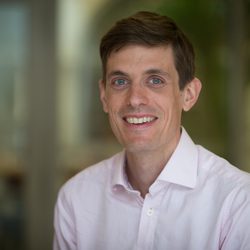
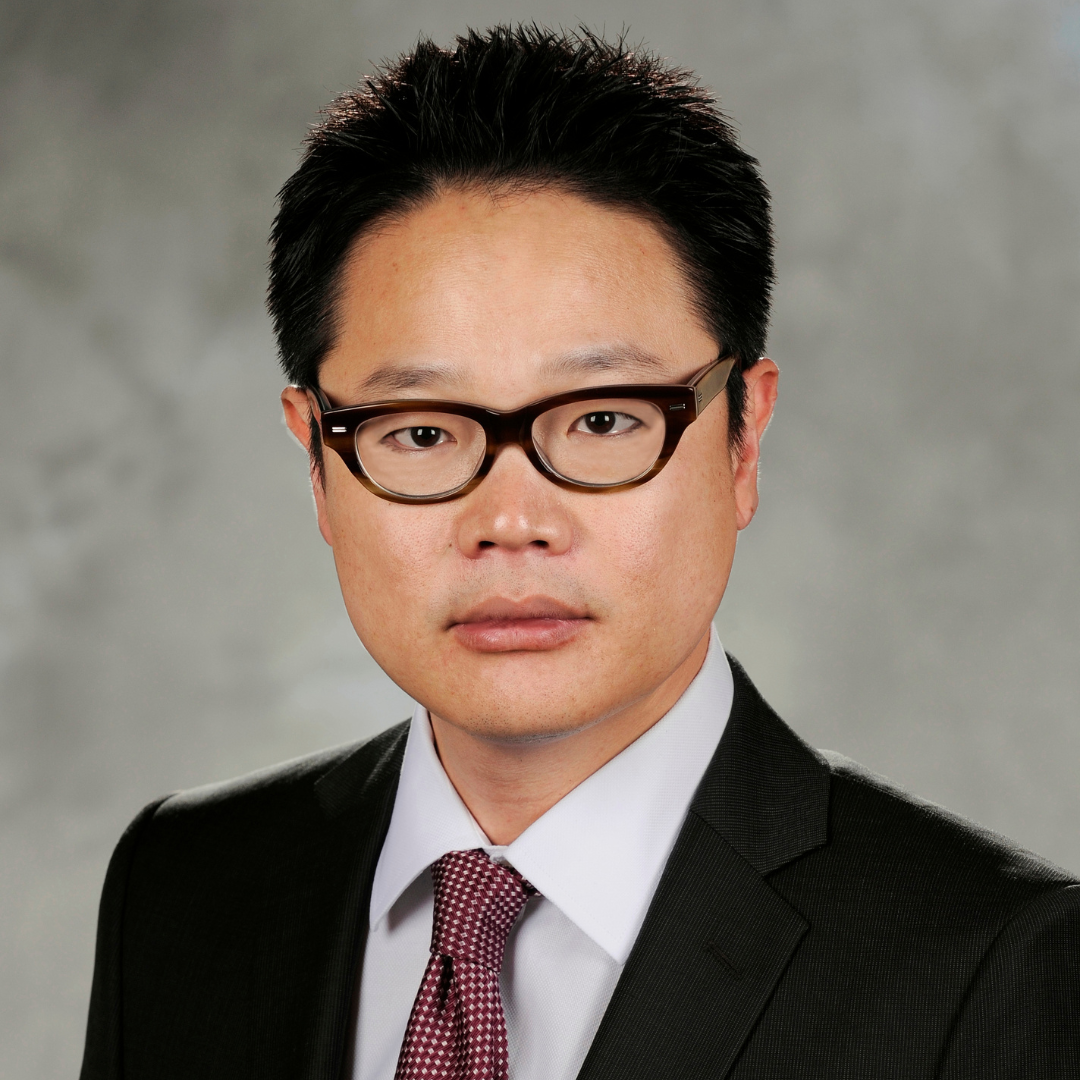
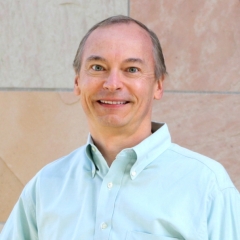
Michael A Osborne is Professor of Machine Learning at the University of Oxford and leads the Bayesian Exploration Lab . He serves as Director of the EPSRC Centre for Doctoral Training in Autonomous Intelligent Machines and Systems and co-directs the Oxford Martin AI Governance Initiative. His research focuses on Bayesian optimization, Gaussian processes, and probabilistic numerics with applications in quantum devices, battery modeling, and AI governance. Key Positions: Professor of Machine Learning, University of Oxford Official Fellow, Exeter College Co-founder of Mind Foundry Lead Researcher, Oxford Martin Programme on Technology and Employment Research Themes: Probabilistic modeling for quantum systems Uncertainty quantification in energy storage AI safety and societal impact analysis Automated experimental design Quantum device calibration Probabilistic numerical methods Technical Contributions: Bridging reality gap in quantum devices Efficient Bayesian quadrature techniques Personalized neurostimulation algorithms Automated measurement protocols Quantum-classical hybrid ML
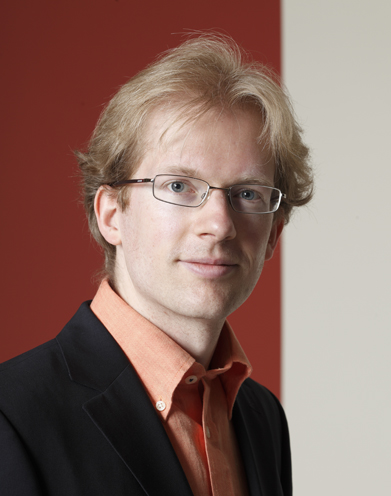
Harvey B. Meyer is a Professor of Theoretical Physics at Johannes Gutenberg University Mainz since 2014. Previously, he held positions including Junior Professor at Mainz (2010), Fellow at CERN's Theoretical Physics Division (2009), Research Scientist at MIT (2008), and postdoctoral roles at MIT (2006-2008) and DESY (2004-2006). He earned his D.Phil. in Theoretical Physics from the University of Oxford (2001-2004) and a Diplome de Physique from the University of Lausanne (1996-2001). His research focuses on lattice field theory, QCD phase diagrams, thermal field theory, and hadron structure. He leads the NEPhEuQCD collaboration and has received the ERC Consolidator Grant (2018) for the SIMDAMA project. Meyer teaches courses in theoretical physics and mathematical methods at Mainz, including 'Theoretische Physik 4' and 'Mathematische Rechenmethoden'. His work integrates advanced computational techniques to address fundamental questions in particle and nuclear physics. Key achievements include pioneering studies on the muon's anomalous magnetic moment, hadronic light-by-light scattering, and quark-gluon plasma dynamics. Collaborations include MIT, CERN, and institutions globally through lattice QCD projects. His lab and team contributions are central to the PRISMA+ Cluster of Excellence at Mainz.
Raul Vicente Zafra is a Professor of Data Science at the University of Tartu, Faculty of Science and Technology, Institute of Computer Science, where he has been working since 2013. His research spans computational neuroscience, artificial intelligence, and data science, with a particular focus on bridging biological and artificial models of intelligence. Education: PhD in Physics (2001-2006), University of the Balearic Islands BSc in Physics (1997-2001) Professor Zafra's research interests center on computational neuroscience and artificial intelligence, with specific expertise in brain-computer interfaces, reinforcement learning, neural modeling, and explainable AI. His work bridges the gap between biological and artificial intelligence systems, exploring how neural principles can inform machine learning algorithms and vice versa. He has made significant contributions to understanding neural coherence, time interval learning in neural systems, and the application of information theory to brain-computer interfaces. His research often involves interdisciplinary collaboration between computer science, neuroscience, and medicine. Analysis of Zafra's recent publications reveals a strong focus on the intersection of artificial intelligence and neuroscience. His work spans explainable AI methods, brain-computer interfaces, reinforcement learning models that mimic cognitive processes, and neurophysiological studies of brain activity. A notable trend is his exploration of how biological principles of neural computation can inform and improve artificial intelligence systems, particularly in areas like time-based learning, consciousness modeling, and neural coherence. Scientific Awards: 2012: Attendee at the 62nd Lindau Nobel Laureate Meeting 2007: Quantum Electronics and Optics Division Prize of the European Physical Society for the best PhD Thesis in Applied Optics in Europe 2006: PhD Extraordinary Award of the Physics Department of the University of the Balearic Islands 2001: Physics Degree Extraordinary Award (First Class Honors, best GPA) 1997: Bronze Medal in the "8th Spanish Physics Olympiad" Professor Zafra has been principal investigator on numerous significant research projects including the Estonian Centre of Excellence in Artificial Intelligence, Cardiovascular Stress Impacts On Neuronal Function, and Bridging biological and artificial models of vision. His grant portfolio demonstrates strong funding support from the Estonian Research Council, European Commission, and other major funding bodies. He has supervised multiple PhD students and mentored early-career researchers in computational neuroscience and AI. His laboratory work focuses on developing computational models of neural systems and applying these insights to artificial intelligence. Current research directions include explainable AI methods, brain-computer interfaces, modeling of consciousness and cognitive processes, and the application of AI to healthcare challenges.
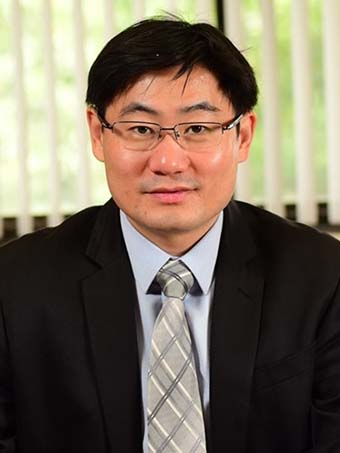
Professor Ulrik Lund Andersen heads the quantum information group at DTU Physics, Technical University of Denmark. His research develops quantum technologies including quantum computation, secure communication, and quantum-enhanced measurement systems. His group generates entangled optical states and investigates diamond-photon interactions for quantum nonlinearities. Key research areas: Quantum computing architectures Continuous-variable quantum information Quantum key distribution Quantum-enhanced sensing Solid-state quantum systems Recent work advances error correction, quantum state engineering, and quantum sensing algorithms. Publications demonstrate consistent focus on practical quantum technology implementation. Awards include multiple Sapere Aude research grants and the Eliteforsk Award from the Danish Ministry of Science.
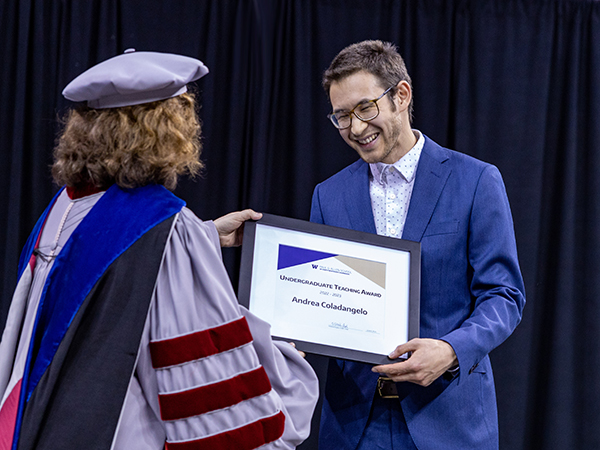
Andrea Coladangelo is an Assistant Professor at the Allen School of Computer Science & Engineering , University of Washington , co-leading the Quantum group and contributing to the Theory and Crypto groups. He coordinates the NSF-funded Quantum@UW REU program , fostering undergraduate research in quantum information. Previously, he was a postdoctoral researcher at UC Berkeley and the Simons Institute , advised by Umesh Vazirani , following a PhD in Computer Science at Caltech under Thomas Vidick . His academic journey began with a B.A. in Mathematics from Oxford and a Master in Mathematics from Cambridge . He co-founded qBraid , a platform for quantum computing education. Research Interests : Andrea explores the intersection of quantum computation and cryptography , focusing on foundational questions in entanglement , quantum correlations , and quantum learning theory . His work investigates quantum pseudorandomness , device-independent security , quantum algorithms , and quantum copy-protection , often leveraging computational assumptions to bridge quantum information theory with cryptographic applications. Scientific Awards : 2025 Google Research Scholar Program Award in Quantum Computing 2023 CSE Undergraduate Teaching Award for his course on quantum computation 2019 Best Student Paper Award at QIP Teaching & Outreach : Andrea designed and taught CSE 434: Intro to Quantum Computation (Spring 2023, 2024, 2025), CSE 534: Quantum Information and Computation (Autumn 2023), and CSE 599C: Quantum Learning Theory (Winter 2025). He also delivered lectures at the 22nd Bellairs Crypto Workshop (2024) and led a quantum programming tutorial using qBraid . Labs & Teams : As co-leader of the Quantum group at the Allen School, he collaborates with researchers in Theory and Crypto , advancing quantum computing through interdisciplinary projects and educational initiatives.
Professor Anders C. Hansen is a mathematician at the University of Cambridge and University of Oslo, leading the Applied Functional and Harmonic Analysis group. His work bridges functional analysis, artificial intelligence, and computational mathematics, focusing on the Solvability Complexity Index (SCI) hierarchy and stability issues in deep learning. He has held prestigious fellowships, including a Royal Society University Research Fellowship and Peterhouse Bye-Fellowship. Educated at the University of Cambridge, UC Berkeley, and the Norwegian University of Science and Technology Developed groundbreaking theories in compressed sensing and deep learning, revealing algorithmic instability paradoxes Organized workshops on computational mathematics and AI interpretability His research explores the SCI hierarchy , exposing computational barriers in AI, quantum mechanics, and inverse problems. Key projects include Smale’s 18th problem and analyzing neural network stability. His work has transformed understanding of compressed sensing, particularly in medical imaging. Recent scientific awards include the Whitehead Prize (2019), IMA Prize (2018), and Leverhulme Prize (2017). Collaborations span institutions like Caltech, MIT, and the University of Vienna. As an educator, he teaches NST Part IA Mathematical Methods , Part II Numerical Analysis , and a Part III course on Compressed Sensing . His group has mentored 17 PhD and postdoctoral researchers since 2012.
Professor CHEN Wei (National University of Singapore) holds the Provost's Chair Professorship (2023-2026) and serves as Vice-Dean (Research) with joint appointments in the Departments of Chemistry and Physics. His research focuses on molecular-scale interface engineering for 2D materials-based devices and interface-controlled nanocatalysis in energy/environmental applications. PhD in Material Science, NUS (2004) Lee Kuan Yew Research Fellow (2006-2008) Established Surface and Interface Lab (2009) Director, NUS Research Institute (Fuzhou) His work on 2D optoelectronic memory (Nat. Comm. 2018), Kagome lattice design (Nano Lett. 2020), and single-atom catalysis (Nat. Comm. 2021) has been recognized by multiple high-impact publications and the Clarivate Highly Cited Researcher status (2017-2021). Awards include the NRF Investigatorship (2023) , Mitsui Chemicals-SNIC Industry Award (2020) , and Singapore Young Scientist Award (2012) . Grants from NUS, Singapore MOE, CREATE/CRP programs, and A*STAR support his exploration of interface engineering for neuromorphic computing and energy-efficient nanocatalysts . Current projects include monolayer blue phosphorus synthesis and solid electrolyte interphase engineering for lithium batteries.
Bo Li is an Associate Professor at the University of Illinois at Urbana-Champaign, affiliated with the Siebel School of Computing and Data Science. Her research focuses on trustworthy machine learning, emphasizing robustness, privacy, and security in AI systems. She leads the Secure Learning Lab (SL²), exploring adversarial attacks and defenses across digital and physical domains. Key contributions include foundational work on adversarial examples, robust learning frameworks, and privacy-preserving techniques. Her academic roles include advisory board positions at the Center for Artificial Intelligence Innovation (CAII) and membership in the Information Trust Institute (ITI). She collaborates with institutions like the Advanced Digital Science Center (ADSC) and the Quantum Information Science and Technology Center (IQUIST). Notable recognitions include the IJCAI Computers and Thought Award (2022), MIT Technology Review's 35 Innovators Under 35 (2020), and multiple best paper awards. Recent work addresses AI safety through frameworks like ShieldAgent and AutoRedTeamer, aiming to enhance system resilience against adversarial threats. Her research spans theoretical guarantees, practical defenses, and ethical AI deployment. Students advised include Chulin Xie, Linyi Li, and Boxin Wang, who have received prestigious fellowships such as the IBM PhD Fellowship and Rising Stars in ML Awards. Advising: Guides PhD students in adversarial ML, privacy, and security. Labs/Teams: Secure Learning Lab (SL²), collaboration with ALERT program. Grants/Funding: NSF CAREER Award, Amazon/Google Faculty Awards, and industry partnerships.
Jon Simon is the Joan Reinhart Professor and Professor of Applied Physics at Stanford University . He leads the Simon Lab , which explores the convergence of condensed matter physics , quantum optics , and quantum information science , focusing on creating synthetic materials from light and investigating topological and strongly correlated quantum systems. His research spans constructing photonic materials in quantum circuits, studying small quantum systems with strong correlations, and applying Hamiltonian engineering to realize exotic states of matter. The lab has achieved milestones like the first Mott insulator of photons and topologically insulating circuits . Collaborative projects with the Schuster Lab leverage superconducting quantum circuits for synthetic matter studies. Jon's students include Adam Shaw (PhD, now at Stony Brook) Lavanya Taneja (PhD, now at Atom Computing) Ruichao Ma (Postdoc, now faculty at Purdue) among others. The lab's recent publications focus on cavity arrays, hybrid quantum systems, and topological photonics. Research is supported by grants and affiliations with Stanford's Department of Applied Physics and interdisciplinary institutes.
Lijie Chen is an Assistant Professor in the Department of Electrical Engineering and Computer Sciences at UC Berkeley, where he is part of the Berkeley Theory Group. Previously, he was a Miller Research Fellow at UC Berkeley, hosted by Avishay Tal and Umesh Vazirani, and earned his Ph.D. from MIT under Ryan Williams. His research focuses on theoretical computer science, particularly computational complexity theory, with applications to quantum physics and AI safety. Education: Ph.D. in Computer Science from MIT (2022), B.Sc. from Yao Class at Tsinghua University. Research Interests: Complexity theory, quantum complexity, derandomization, circuit lower bounds, and foundational aspects of AI safety. Chen has made significant contributions to understanding fundamental questions in complexity theory, including circuit lower bounds and the connections between randomness and computation efficiency. His work often bridges theoretical insights with practical implications in quantum computing and algorithm design. Awards and Honors: Machtey Award for Best Student Paper (2019). Danny Lewin Best Student Paper Award (2019). Invited to SICOMP Special Issues for FOCS and STOC papers. He has organized workshops on complexity theory and derandomization, and his research has been recognized in venues like STOC, FOCS, and the Journal of the ACM.
Dr. Fei Teng is an Associate Professor in the Department of Electrical and Electronic Engineering at Imperial College London and Director of Education at the Energy Futures Lab, a pan-university hub for interdisciplinary energy research. He holds visiting positions at MINES ParisTech, PolyU Hong Kong, and KTH Sweden. His research focuses on software-defined power networks, stability-constrained optimization, cyber-resilient decision-making, and privacy-preserving data exchange in low-inertia grids. Dr. Teng has authored over 100 publications in top-tier journals and conferences, with funding from EPSRC, Innovate UK, the Royal Society, and industry partners like Hitachi and National Grid ESO. His work addresses critical challenges in grid stability, cybersecurity, and renewable energy integration. He has received prestigious awards, including the IEEE Early Career Award and Royal Society Kan Tong Po Fellowship. Research interests include high-penetration power electronics, uncertainty modeling in power systems, and data privacy in smart grids. His interdisciplinary approach integrates machine learning, quantum computing, and cyber-physical systems to enhance grid resilience and efficiency. Key contributions include frameworks for stability-constrained optimization, cyber-resilient control, and synthetic inertia from electric vehicles. He advocates for software-defined grids to revolutionize decision-making frameworks for NetZero systems.
Ewain Gwynne is a Professor of Mathematics at the University of Chicago, affiliated with the Committee on Computational and Applied Mathematics (CCAM) and the Statistics Department. He previously held postdoctoral positions at the University of Cambridge and earned his Ph.D. from MIT in 2018 under Scott Sheffield. His research focuses on probability theory, particularly random geometric structures in statistical mechanics, including Schramm-Loewner evolution (SLE), Liouville quantum gravity (LQG), and random planar maps. Education: Ph.D. in Mathematics, MIT (2018); M.Sc., MIT (2015); B.Sc., Northwestern University (2013). Research Interests: Random geometric objects in statistical mechanics Liouville quantum gravity and its metric properties Random planar maps and their scaling limits SLE and its relationship with LQG Random walks on random planar maps Percolation and permutons His recent articles explore topics such as supercritical LQG, Gaussian curvature on random maps, and harmonic balls in LQG. He has advised multiple Ph.D. students and serves as an associate editor for Probability and Mathematical Physics . His work bridges probability theory, geometry, and mathematical physics, with applications to understanding critical phenomena in random systems.
Giovanni De Micheli is a Full Professor at École Polytechnique Fédérale de Lausanne (EPFL), holding appointments in both the School of Computer and Communication Sciences (IC) and the School of Engineering (STI). He is affiliated with the Integrated Systems Laboratory (LSI) and serves as Scientific Director of EcoCloud. His primary office is located in INF 341 building at EPFL's Lausanne campus where he conducts research and teaching activities. Professor De Micheli's research spans multiple domains in electronic design automation and integrated circuit design. His primary interests include: Integrated Circuit Design and Hardware Synthesis Logic Optimization and Boolean Methods Nanoelectronics and 2D Electronics Quantum Computing and Emerging Technologies Low-Power Electronics and Energy-Efficient Systems Electronic Design Automation for Novel Computing Paradigms His recent publications demonstrate a strong focus on advancing logic synthesis techniques for both conventional and emerging technologies. Professor De Micheli's work bridges theoretical foundations with practical applications, particularly in adapting traditional EDA methods to novel computing paradigms like quantum computing and superconducting electronics. His research group has made significant contributions to the development of efficient algorithms for circuit optimization across multiple technology domains, with particular emphasis on area, power, and delay optimization while maintaining functional correctness. Professor De Micheli has supervised numerous doctoral students throughout his career at EPFL, mentoring over 40 PhD candidates whose research spans various aspects of electronic design automation, circuit design, and emerging technologies. His students have gone on to make significant contributions in both academia and industry. As Scientific Director of EcoCloud, Professor De Micheli leads research initiatives focused on energy-efficient computing systems and sustainable cloud infrastructure. His laboratory, the Integrated Systems Laboratory, serves as a hub for interdisciplinary research connecting computer science, electrical engineering, and materials science, with particular focus on next-generation computing technologies.
Sung-Kyu Lim is a Professor and the Motorola Solutions Foundation Professor in the School of Electrical and Computer Engineering at the Georgia Institute of Technology, where he serves as director of the GTCAD Laboratory. His educational background includes: B.S. in Computer Science from the University of California, Los Angeles (UCLA) in 1994 M.S. in Computer Science from UCLA in 1997 Ph.D. in Computer Science from UCLA in 2000 Professor Lim's research focuses on advancing VLSI design automation through physical design methodologies, 3D circuit integration, quantum circuit layout, micro-architecture exploration, and reconfigurable circuit optimization. His work bridges theoretical graph theory with practical electronic design automation challenges to improve circuit performance and scalability. His notable scientific distinctions include: NSF CAREER Award (2006) Advisory Board Member of ACM SIGDA (since 2003) Technical Program Committee roles for ICCD, ISPD, ISCAS, ASPDAC, and GLSVLSI conferences He leads the GTCAD Laboratory at Georgia Tech, driving innovation in computer-aided design tools for next-generation integrated circuits and systems.
Chris G. Van de Walle is the Herbert Kroemer Distinguished Professor in the Department of Materials at the University of California, Santa Barbara's College of Engineering. As a member of the National Academy of Engineering and fellow of multiple prestigious scientific societies including the American Physical Society and Materials Research Society, he leads the Computational Materials Group which is part of UCSB's strong computational science cluster within the Materials Department. His research interests focus on novel electronic materials, particularly wide-band-gap semiconductors (III-V nitrides, II-VI compounds), transparent conductors, complex oxides, loss mechanisms in light emitters, two-dimensional conductors, quantum information science, and the physics and chemistry of hydrogen interactions with solids. His group uses first-principles computational techniques to study atomic and electronic structure of crystalline, polycrystalline and amorphous materials, interfaces, surfaces, defects, and heterojunctions. Analysis of his recent publications reveals a strong focus on semiconductor materials for quantum technologies, with particular emphasis on GaN, Ga 2 O 3 , and related compounds. His work combines computational materials science with applications in optoelectronics, quantum information, and energy technologies, demonstrating consistent innovation in understanding defects and their role in material properties. Major Awards and Recognitions: Aneesur Rahman Prize for Computational Physics (APS) Materials Theory Award (MRS) Vannevar Bush Faculty Fellowship (DoD) John Bardeen Award (TMS) Medard W. Welch Award (AVS) Highly Cited Researcher (Clarivate Analytics) Professor Van de Walle has mentored numerous successful researchers, including Dr. Fangzhou Zhao (Corbett Prize winner) and Dr. Mark Turiansky (APS Nicholas Metropolis Award recipient). His group maintains strong connections with the UCSB Quantum Foundry and the Solid State Lighting and Energy Electronics Center, demonstrating collaborative research efforts across multiple disciplines. The group actively investigates defects for quantum information science, loss mechanisms in light emitters, nitride semiconductors, halide perovskites, oxides, and hydrogen interactions with materials.