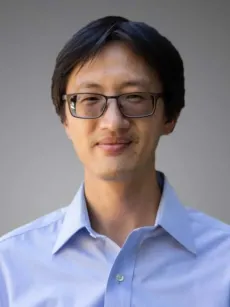
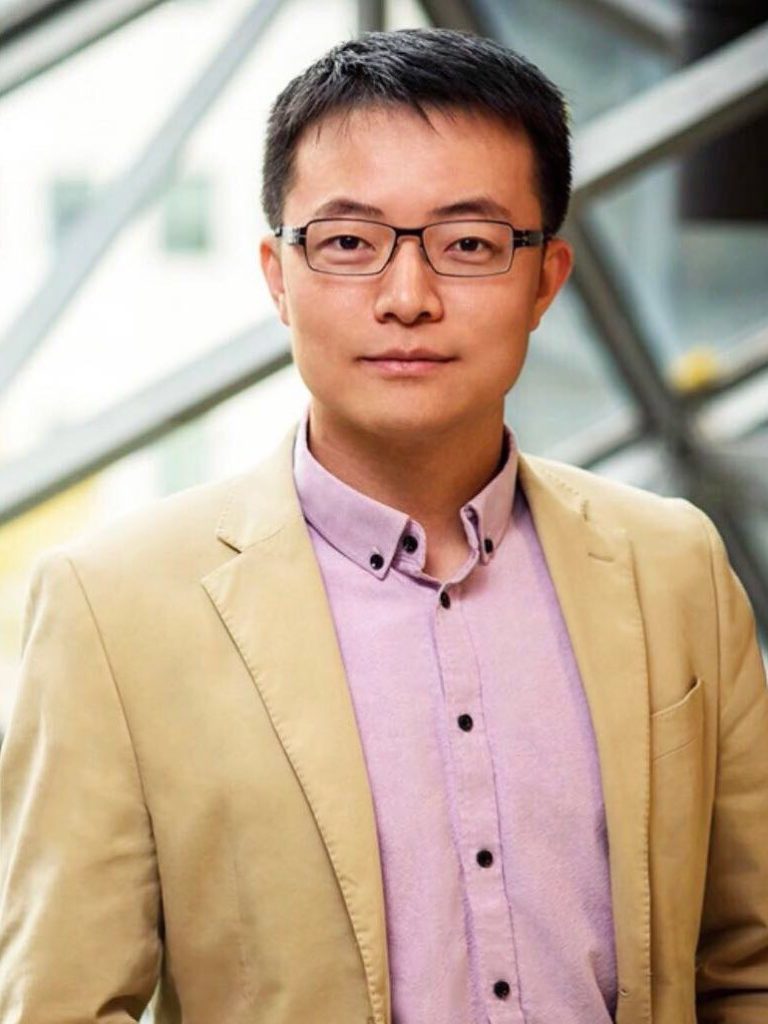
Jonathan Chisum is an Associate Professor in the Department of Electrical Engineering at the University of Notre Dame's College of Engineering. His research focuses on developing advanced millimeter-wave (MMW) circuit and antenna systems for wireless communications and sensing, leveraging cutting-edge materials and technologies to achieve unprecedented performance and functionality. MMW artificial materials/metamaterials for GRIN lens antennas in satcom and 5G networks Phase-change materials for programmable antennas and circuits Nonlinear microwave/magnetic transceivers and sensors for low-power applications He has contributed to hybrid optimization workflows for lens design, 3D-printed GRIN lenses, and energy-efficient wireless solutions. His work has been recognized through awards such as the ONR Senior Research Fellow designation. ONR Senior Research Fellow
Katarzyna Rycerz is a Lecturer at the Institute of Computer Science within the Faculty of Computer Science at AGH University of Science and Technology in Kraków, Poland. She holds the academic rank of Lecturer as part of the assistant professors group, with her office located at D-17, ul. Kawiory 21, room II, 3.54. Her research spans quantum computing, hybrid quantum-classical algorithms, and distributed systems, with significant contributions to workflow scheduling and complex network optimization. Dr. Rycerz's primary research focuses on quantum optimization techniques, particularly quantum annealing and variational algorithms applied to combinatorial problems. Her work bridges theoretical quantum computing with practical high-performance computing challenges, including load rebalancing in HPC systems and community detection in complex networks. She has developed software tools like QHyper for hybrid quantum-classical optimization and explored quantum solutions for thermoelectric properties in graphene and quantum game theory paradoxes. Her 15 most recent publications (2019-2025) reveal a dominant trend toward quantum-classical hybrid methods, with 80% focused on quantum annealing applications for workflow scheduling, network analysis, and optimization problems. Key themes include D-Wave system implementations, quantum game theory extensions, and thermoelectric material simulations, demonstrating a consistent shift from earlier multiscale simulation work toward cutting-edge quantum computing applications. No scientific awards are documented in the available information. Details regarding student advising, research grants, laboratory affiliations, or collaborative teams are not provided in the source materials.
John Preskill is the Richard P. Feynman Professor of Theoretical Physics at the California Institute of Technology, where he leads foundational research in quantum information science. His work spans Theoretical Physics with deep specialization in Quantum Computing , Quantum Error Correction , and Quantum Gravity . He pioneered concepts like ‘quantum supremacy’ and developed fault-tolerant quantum computing frameworks essential for real-world quantum hardware. Preskill founded Caltech’s Institute for Quantum Information and Matter (IQIM) , a National Science Foundation Physics Frontiers Center driving collaborative research across quantum disciplines. Scientific Awards: Dirac Medal (2016) for advancing quantum information theory Oliver E. Buckley Prize (2015) for quantum many-body physics contributions Dannie Heineman Prize (2021) recognizing lifetime achievements He advises doctoral students through Caltech’s physics program and directs multimillion-dollar grants from NSF, DOE, and IQIM industry partners like Google and Microsoft to scale quantum technologies.
Weigang Wang is a Professor of Physics and Electrical and Computer Engineering at the University of Arizona, serving as Director of Graduate Studies. His research focuses on nanoscale spin and charge transport phenomena with direct applications in next-generation magnetic memory and logic technologies. His educational background includes a Ph.D. in Physics from the University of Delaware (2008). His research group specializes in voltage-controlled magnetism, spin-orbit torque effects, and magnetic tunnel junction engineering for ultra-low-power spintronic devices. Wang's experimental work bridges fundamental condensed matter physics and practical device engineering, emphasizing energy-efficient switching mechanisms through novel materials and nanostructure fabrication techniques including electron-beam lithography and self-assembly processes. His publications demonstrate consistent innovation in reducing switching energy barriers for nanomagnetic systems. His research trajectory shows increasing focus on antiferromagnetic spintronics, topological materials interfaces, and cryogenic-compatible magnetic memory since 2020, with significant contributions to voltage-controlled magnetic anisotropy and spin-transfer torque efficiency. Notable honors include: CSM Fellow (2024) University of Arizona Distinguished Scholar Award (2022) Department of Physics Outstanding Undergraduate Teaching Award (2018) NSF CAREER Award (2016) As Director of Graduate Studies, Wang oversees advanced degree programs while leading an experimental lab focused on magnetic device characterization and nanofabrication. His NSF-funded research explores voltage-mediated control of magnetic states, with implications for non-volatile memory and neuromorphic computing architectures. The lab maintains collaborations with national facilities for advanced characterization of spintronic materials.
Mario Stipčević is a senior scientist at the Ruđer Bošković Institute (RBI) in Zagreb, Croatia, where he heads the Photonics and Quantum Optics Laboratory within the Division of Experimental Physics. Holding the Croatian rank of scientific advisor in permanent position —equivalent to full professor—he has led national and international research efforts spanning quantum optics, quantum-information science, and high-energy neutrino physics. Education 2011–2012: Visiting Specialization in Experimental Quantum Information, University of California, Santa Barbara, USA 2010–2011: Fulbright Scholar, Experimental Quantum Information, University of California, Santa Barbara, USA 1994: PhD in Particle Physics, Université de Savoie, Chambéry, France 1991: BSc in Theoretical Nuclear Physics, Faculty of Science, University of Zagreb Research Interests His work focuses on quantum communication , quantum randomness , single-photon detection , quantum key distribution , and quantum holography . Early in his career he contributed to neutrino oscillation experiments (NOMAD, OPERA) and calorimetry R&D for the LHC. Scientific Awards Fulbright Scholarship (2010–2011) Golden Medal ARCA 2005, Zagreb International Autumn Fair Golden Medal, Salon International de Inventions, Geneva 2005 Young Investigator Award, Ministry of Science and Technology, Croatia (1998) Projects & Leadership Since 2014 he has been Head of the Photonics and Quantum Optics Research Unit at the RBI Centre of Excellence for Advanced Materials and Sensing Devices. Earlier projects include the Croatian Ministry of Science grant Experiments in Quantum Communication and Quantum Information (2007–2014) and World-Bank-funded development of a Quantum Random Bit Generator (2004–2005). Laboratory & Teams At RBI he directs the Photonics and Quantum Optics Laboratory , a multi-disciplinary group developing photon-counting detectors, entangled-photon sources, and quantum-network testbeds. The lab participates in European initiatives such as the European Quantum Internet Alliance and the ESSnuSB neutrino super-beam design study .
Andreas H. Hielscher is Professor and Chair of the Department of Biomedical Engineering at the New York University Tandon School of Engineering. He leads the recently established Department of Biomedical Engineering and directs research in his Clinical Biophotonics Laboratory (CBL). Prior to joining NYU Tandon in summer 2021, he spent 20 years at Columbia University where he chaired the Provost's Tenure Track Advisory Committee and built a distinguished career in biomedical optics research. Dr. Hielscher received his education from the following institutions: Postdoctoral Fellow, Division Biosciences and Biotechnology, Los Alamos National Laboratories (1995-1998) Ph.D., Department of Electrical and Computer Engineering, Rice University (1991-1995) "Diplom" (~Master of Science), Department of Quantum Optics, University of Hannover, Germany (1989-1991) Dr. Hielscher's research focuses on developing optical tomography as a viable biomedical imaging modality for clinical practice. His work centers on creating patient-centered approaches that address modern precision medicine through cutting-edge imaging hardware and software. His team develops technology that provides 3-dimensional distributions of physiologically relevant parameters such as oxygen saturation and total hemoglobin concentrations, including wearable devices for continuous patient monitoring. The Clinical Biophotonics Laboratory applies this technology in clinical and preclinical studies focusing on breast cancer, arthritis, peripheral artery disease (PAD), diabetic foot syndrome (DFS), and real-time brain activity monitoring. Analysis of Dr. Hielscher's recent publications reveals a strong translational research trajectory, moving from fundamental algorithm development to clinical validation across multiple medical specialties. His work demonstrates particular innovation in developing practical, wearable, and non-contact imaging systems that can be readily implemented in clinical settings, with significant contributions to breast cancer monitoring during chemotherapy, vascular medicine (PAD and DFS), and rheumatology (arthritis and lupus). Dr. Hielscher has received research support from multiple prestigious funding sources: National Heart, Lung, and Blood Institute (Grant No. NHLBI-1R01-HL115336) Wallace H. Coulter Foundation Society of Vascular Surgery Columbia University Fu Foundation School of Engineering and Applied Science New York University Tandon School of Engineering Dr. Hielscher's laboratory includes researchers such as Nisha Maheshwari and Alessandro Marone, and maintains strong collaborations with clinicians to develop state-of-the-art biomedical optical imaging technology. The laboratory's recent work has demonstrated significant clinical impact, particularly in the 2022 study that achieved 93% accuracy in predicting wound healing outcomes for peripheral artery disease patients within one month after surgical intervention.
Kun Qin is a Doctoral Candidate and Research Associate at the Technical University of Munich , affiliated with the IH02 Chair of Computer Architecture and Operating Systems (CAOS) and the I10 Chair of Computer Architecture and Parallel Systems (CAPS). His work focuses on Hardware/Software Codesign , RISC-V Architecture , and Quantum Computing . Current affiliation: Department of Computer Engineering, School of Computation, Information and Technology Research areas: FPGA/ASIC design, quantum-based systems, open-source hardware Teaching: Courses on HDL, Computer Architecture, and Operating Systems (WS23/24–WS24/25) Kun actively participates in academic service as Web Co-Chair for the ACM International Conference on Computing Frontiers (CF'24, CF'25). His research includes FPGA acceleration for RTL verification and quantum control processors. Key scientific achievement: Best Poster Award at SERESSA (2023) . Publications span topics like RISC-V verification frameworks, FPGA-based timing systems, and quantum control processors for superconducting qubits.
Song Han is an Associate Professor in the Department of Electrical Engineering and Computer Science (EECS) at the Massachusetts Institute of Technology (MIT). His research focuses on efficient deep learning computing, bridging algorithm and hardware design to enable scalable AI systems. PhD in Electrical Engineering from Stanford University Research Interests Efficient Deep Learning Neural Network Compression Hardware-Aware Transformers Sparse Attention Mechanisms Quantization Techniques Edge and IoT Computing Recent Publication Trends highlight advances in LLM optimization, diffusion model quantization, and quantum-classical co-design. His work emphasizes reducing computational costs while maintaining model fidelity. Scientific Awards Best Paper, ICLR and FPGA Symposium NSF CAREER Award MIT Technology Review 35 Innovators Under 35 Collaborations include the MIT-IBM Watson AI Lab, focusing on AI hardware and system co-design. Many of his techniques are integrated into commercial AI chips.
Alfonso Alejandro Sanchez Macian Perez serves as an Associate Professor in the Telematics Engineering Department at Carlos III University of Madrid, specializing in cutting-edge telecommunications and cybersecurity research. His work spans optical networking, fault-tolerant systems, and space applications, with significant contributions to 6G infrastructure development and privacy-preserving data structures. His research focuses on optical networking innovations for next-generation communications, including space-division multiplexing and multi-band migration techniques critical for 6G deployment. In cybersecurity , he investigates vulnerabilities in probabilistic data structures like Bloom filters and KMV sketches, developing countermeasures against privacy attacks. His space systems research addresses radiation-hardened memory architectures and FPGA reliability for spacecraft applications, with emphasis on error correction and fault tolerance. As principal investigator for major projects including FUN4DATE Redes (2023-2026), Agile uLtra Low EnerGy secuRe netwOrks (2023-2026), and PROTEUS-6G (2024-2026), he leads EU and nationally funded initiatives advancing optical transport networks and sustainable high-capacity infrastructure. His publication record shows consistent high-impact output across IEEE Transactions and optical networking journals, with growing emphasis on 6G-enabling technologies since 2021. His laboratory work centers on the Telematics Engineering Research Group at UC3M, collaborating with Telefónica Innovation Digital and European Commission agencies on photonic integrated circuits and non-terrestrial networks. Current efforts focus on programmable optical transport for 6G services and self-managed sustainable optical networks through the SEASON project.
Alexander May is a Professor at Ruhr-University Bochum, affiliated with the Faculty of Mathematics and the Horst Görtz Institute for IT-Security. His research focuses on cryptanalysis, post-quantum cryptography, and lattice-based security, with extensive work on cryptographic attacks targeting schemes like LWE, NTRU, McEliece, and RSA. Research Interests: May specializes in: Developing optimized attacks on lattice-based cryptosystems (e.g., Kyber, Dilithium) Side-channel vulnerability analysis in post-quantum schemes Quantum algorithm applications in cryptanalysis Efficient decoding attacks for code-based cryptography His recent publications (2021-2025) demonstrate consistent focus on: Practical cryptanalysis with reduced computational resources Novel approaches to breaking NIST post-quantum candidates Quantum-speedup techniques for key recovery Side-channel attacks on hardware implementations PhD Supervision: May has supervised over 15 doctoral students including recent graduates like Carl Schneider (2024), Önder Askin (2024), and Floyd Zweydinger (2023). Their work spans lattice cryptography, coding theory, and quantum cryptanalysis.
Luca Caucci is an Assistant Research Professor in Medical Imaging at the University of Arizona, affiliated with the Arizona Health Sciences Center (AHSC). His research integrates optical sciences and computational imaging to advance medical imaging technologies, particularly in nuclear medicine and 3D imaging . He has pioneered methods for photon-processing detectors and stochastic modeling in oncology and virology. Research Trends: His publications focus on positron emission tomography (PET) , machine learning for image reconstruction , and radiance sensor development . Key themes include GPU acceleration , list-mode data processing , and statistical decision theory in biomedical imaging. His work addresses challenges in 3D imaging , noise reduction , and task performance optimization . Collaborative Efforts: While the text does not explicitly mention lab teams or grants, his contributions to FastSPECT III calibration and alpha/beta emission tomography suggest active involvement in interdisciplinary projects bridging optical engineering and medical diagnostics .
Vijaykrishnan Narayanan is a Distinguished Professor in the Department of Computer Science and Engineering at Pennsylvania State University . His research focuses on ferroelectric memory systems , energy-efficient computing , and neuromorphic engineering , with applications in deep learning , edge computing , and secure hardware design . He leads projects such as EFRI BRAID (Neuroscience-Inspired Visual Analytics) and FuSe-TG (Heterogeneous Ferroelectronics for Big Data Analytics). Research Interests Compute-in-Memory (CIM) architectures Ferroelectric Field-effect Transistors (FeFETs) Low-power VLSI design Hardware security mechanisms Scientific Contributions Over 707 research outputs and 26 grants Key contributor to UN Sustainable Development Goals via energy-efficient computing NSF grants for projects like Ferro-CoDE (combinatorial optimization) and INSECT NET (entomology-computer science collaborations)
Reza Moheimani is Professor and James Von Ehr Distinguished Chair in the Department of Systems Engineering within the Erik Jonsson School of Engineering and Computer Science at The University of Texas at Dallas. He leads cutting-edge research in nanotechnology and precision control systems, directing the Laboratory for Dynamics and Control of Nanosystems (LDCN). His work bridges theoretical systems engineering with practical applications in micro- and nano-scale instrumentation. Moheimani holds a PhD and Master's in Electrical Engineering from the University of New South Wales, Australia, and a Bachelor's from Shiraz University, Iran. His academic journey includes establishing the LDCN at the University of Newcastle, Australia, where he was an Australian Research Council Future Fellow. His research focuses on control systems for nanoscale manipulation, particularly in MEMS and atomic-scale devices. Key areas include nanopositioning accuracy (achieving atomic-scale precision of 0.25nm), scanning probe microscopy, and micro-mechatronic systems. Recent work emphasizes high-bandwidth control, sensor design, and atomic-scale fabrication techniques for semiconductor devices. Analysis of his recent publications reveals a strong trend toward hybrid control methodologies (e.g., HIGS systems), real-time estimation for nanoscale imaging, and multi-actuator integration for precision motion. His work spans theoretical control frameworks and hardware implementations, with increasing focus on AI-driven optimization and quantum-scale applications. IEEE Control System Technology Award IFAC Industrial Achievement Award (2023) ASME Nyquist Lecture Award (2022) Fellow of IEEE, IFAC, and Institute of Physics (UK) Moheimani mentors PhD students in MEMS and nanosystems research, with recent graduates like Hazhir Mahmoodi Nasrabadi (now at Apple) and Hamed Alemansour. His DARPA-funded work through Zyvex Labs' Atoms to Product Program drives innovation in atomic-scale manufacturing, while his laboratory develops instrumentation for nanotechnology commercialization. The Laboratory for Dynamics and Control of Nanosystems (LDCN) employs a multidisciplinary team to advance nanoscale interrogation and manipulation technologies, with recent breakthroughs in silicon-tip STM and high-speed AFM imaging.
Michael Antonacci is an Associate Professor of Physics at Saint Vincent College , where he teaches courses ranging from General Physics to Condensed Matter Physics. His research focuses on Ultra-Low and Earth's Field Nuclear Magnetic Resonance (NMR) techniques, particularly using hyperpolarized media for biomedical applications and educational innovations. Education : PhD in Physics (University of North Carolina at Chapel Hill), MDiv (Saint Vincent Seminary), BS in Physics and Mathematics (Saint Vincent College) Antonacci's work on Signal Amplification by Reversible Exchange (SABRE) hyperpolarization methods has led to significant advancements in low-field NMR sensitivity. His team recently achieved 450-fold signal enhancement in aqueous solutions using novel catalysts, paving the way for in vivo bioprobes. He also investigates physics education reform , implementing asynchronous lab formats and assessing their pedagogical effectiveness. Key publications demonstrate his expertise in MR thermometry for brown adipose tissue studies, open-source NMR spectrometer design , and AI integration in physics pedagogy . Collaborations with chemistry departments highlight his interdisciplinary approach to catalyst development. Antonacci's lab provides undergraduate students hands-on experience in organometallic synthesis , magnetic resonance hardware , and scientific communication . Current projects include constructing an ultra-low field NMR spectrometer based on the OCRA open-source console and expanding SABRE-SHEATH techniques for 13 C hyperpolarization.
Magnus Karlsson is a Professor of Photonics at Chalmers University of Technology and serves as Deputy Dean of the Department of Microtechnology and Nanoscience (MC2), responsible for research and graduate education. He co-leads the fiber optics research group with Prof. Peter Andrekson and co-founded the Chalmers Center for Optical Communication (FORCE) in 2010 alongside Prof. Erik Agrell. Karlsson teaches courses in Wireless and Photonics System Engineering and Photonics and Lasers, and holds editorial leadership as Editor-in-Chief of the IEEE/Optica Journal of Lightwave Technology. His research centers on optical fiber communication systems with expertise in light propagation, polarization dynamics, and nonlinear optical effects. Current investigations focus on capacity-enhancing techniques including Voronoi constellation geometric shaping, silicon nitride integrated photonics for microwave applications, and machine learning-driven polarization sensing. His work bridges theoretical modeling of phase-noise channels with experimental validation of novel receiver architectures for deep-space communication through atmospheric turbulence. Recent publications reveal strong trends in overcoming nonlinear transmission limits through multidimensional modulation and MIMO processing for coupled-core fibers. His group pioneers integrated photonic solutions for high-frequency signal generation while advancing real-time network monitoring capabilities in operational fiber infrastructure. Key themes include power-efficient signaling, distributed sensing, and computational methods for channel compensation. Karlsson's leadership in the fiber optics group and FORCE drives collaborative research in next-generation optical networks. His editorial role and ECOC program committee membership position him as a key influencer in shaping global optical communication standards and disseminating cutting-edge research advancements.