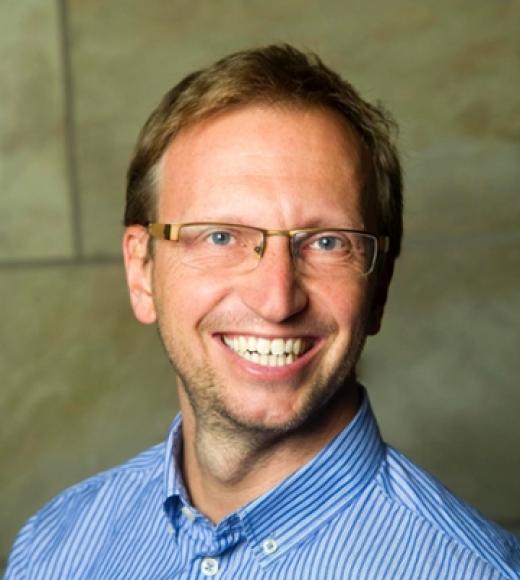
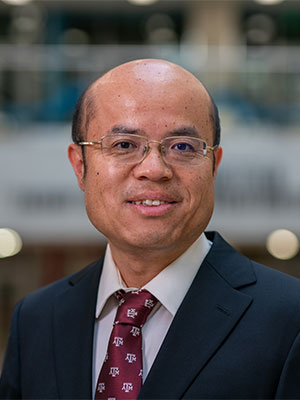
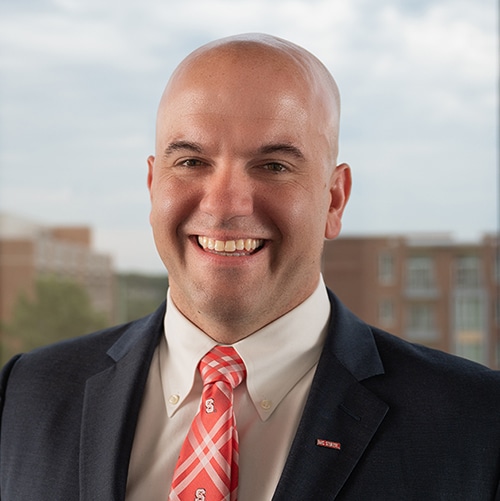
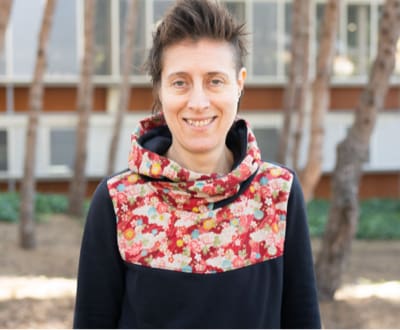
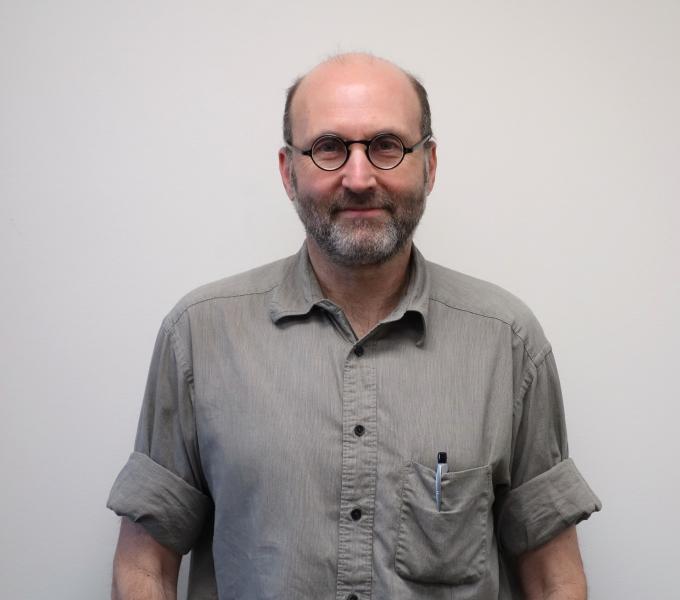
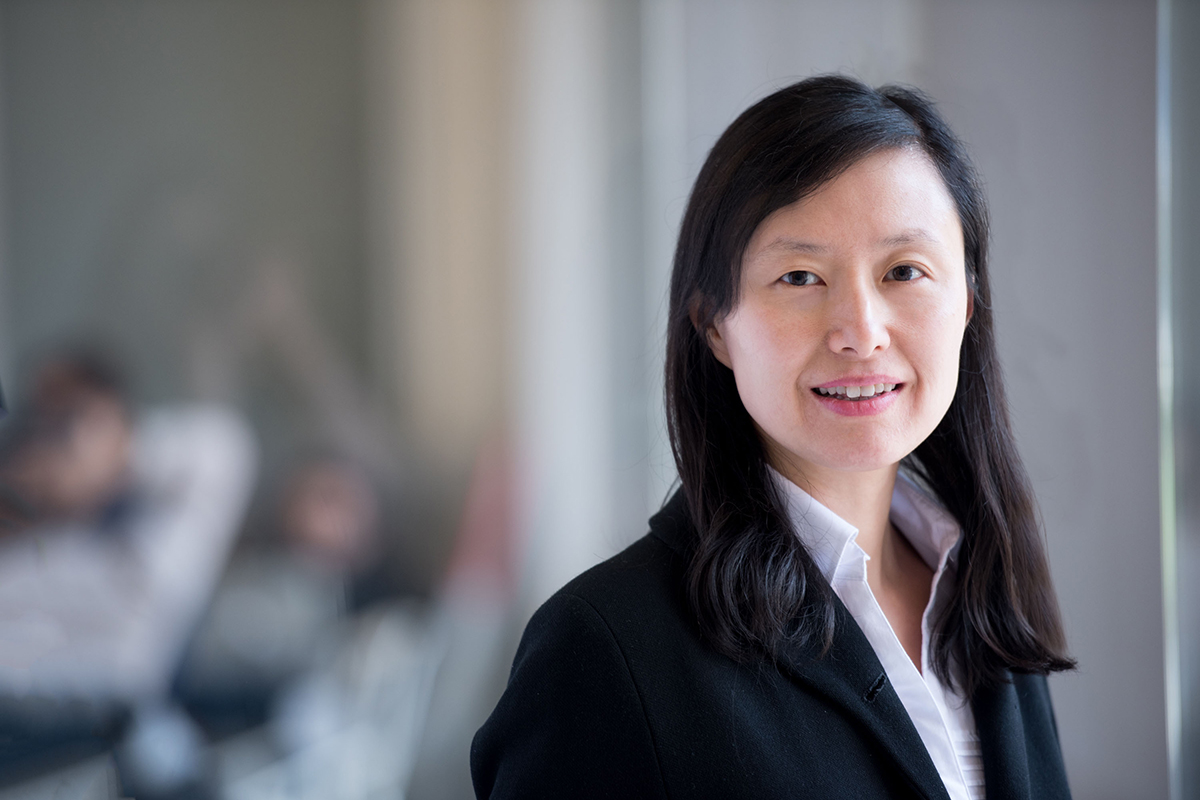
Davide Donadio is a Professor of Chemistry at the University of California, Davis. His research focuses on molecular modeling and simulations of materials, particularly in non-equilibrium processes, thermal transport, and nanostructure assembly. He leads the Naotheory Group, which develops predictive multiscale models for energy-related materials. Education : Habilitation in Materials Science, Italian Ministry for University and Research (2013) Ph.D. in Materials Science, University of Milano (2003) M.S. in Physics, University of Milano (1998) Research Interests : His work spans molecular-level understanding of energy conversion, thermal management, and nanostructure formation. Key areas include phononics, thermoelectrics, and interfacial phenomena in materials like ice surfaces, semiconductors, and clathrates. He employs machine learning and first-principles methods to bridge simulation and experiment. Awards : UC Davis Hellman Fellow (2017–2018) Young Scientist Award, Italian Institute for the Physics of Matter (1998) Grants & Labs : His funding and collaborations drive advancements in nanostructured materials and computational tools like PLUMED tutorials. The Naotheory Group actively publishes in high-impact journals and collaborates internationally on thermal transport and materials design.
N. Asger Mortensen is a Professor and D-IAS Chair at the Danish Institute for Advanced Study , University of Southern Denmark. He serves as Scientific Director of the DNRF Center of Excellence POLIMA , focusing on polariton-driven light-matter interactions. His career spans leadership roles at SDU and DTU, including VILLUM Investigator grants. Education : Dr. scient. (2021) University of Copenhagen; Dr. techn. (2006), PhD (2001), MSc (1998) from Technical University of Denmark. Research Interests : Quantum plasmonics, nanophotonics, metamaterials, optofluidics, and light-matter interactions in structured materials. His work bridges classical electrodynamics and quantum physics, emphasizing nonlocal effects and polaritonic phenomena. Recent Articles : Explore nonlocality in photonic materials, plasmonic systems in 2D materials, and polariton dynamics. Keywords include Nanophotonics , Quantum Optics , and Condensed Matter , with subfields like Surface Plasmons , Exciton Polaritons , and Topological Insulators . Scientific Awards : Fyens Stiftstidendes Forskerpris (2023) Elected Member, Royal Danish Academy of Sciences and Letters (2022) VILLUM Investigator (2017) European Optics Prize (2008, 2004) Grants : Leads DNRF CoE (2023-2029, ~60 MDKK) and VILLUM Investigator (2017-2023, ~40 MDKK). Co-applicant on numerous international collaborations. Editorial Roles : Associate Editor for Science Advances and Nanophotonics , with past roles at Optics Express and Journal of Physics: Condensed Matter .
Shuiwang Ji is a Professor and Truchard Family Endowed Chair in the Department of Computer Science & Engineering at Texas A&M University, where he also holds Presidential Impact Fellow and Chancellor EDGES Fellow titles. He specializes in machine learning, AI for science/engineering, and language models/agents. His research bridges theoretical advances and practical applications in materials science, quantum chemistry, and biomedical engineering. Education: Ph.D. in Computer Science from Arizona State University (2010). Research focuses on equivaraint neural networks for symmetry-aware learning, graph-based molecular modeling, and generative AI for scientific discovery. He develops algorithms that integrate physics principles with deep learning, addressing challenges in materials design, PDE solving, and biomolecular structure prediction. Publications emphasize symmetry-aware architectures (e.g., equivariant Fourier neural operators), efficient interatomic potential computations, and diffusion models for protein/DNA design. Recent work explores trustworthiness in LLMs and causal reasoning in graph neural networks. Awards include NSF CAREER Award (2014), IEEE Fellow (2023), and Texas A&M teaching excellence awards. His work has been recognized in top venues like NeurIPS, ICML, and ICLR. His research group collaborates on projects funded by NSF, NIH, and industry partners, advancing AI applications in healthcare, robotics, and environmental science.
Jim Pfaendtner is a Professor in the Department of Chemistry and serves as the Louis Martin-Vega Dean of Engineering at North Carolina State University. His research focuses on computational molecular science and engineering, with particular emphasis on biomimetic materials, nanoparticle self-assembly, and machine learning applications in chemistry. He leads interdisciplinary projects integrating molecular simulations, advanced materials design, and catalytic processes. Education details are not explicitly provided in the text, but his academic roles suggest advanced training in chemical engineering or chemistry. His work spans theoretical and experimental collaborations, including studies on peptoid-based materials, quantum dot superlattices, and enzyme engineering. Key research themes include: (1) biomimetic mineralization using sequence-defined polymers, (2) computational design of corrosion inhibitors and sustainable materials, (3) machine learning models for interatomic potentials and molecular design, and (4) electrochemical systems in energy storage. His team employs advanced simulation techniques like metadynamics and molecular dynamics to probe complex systems. Notable recent achievements include the FOMMS Medal Lecture (2024), leadership in developing predictive models for silica nanoparticle assembly, and contributions to chemical recycling of plastics via novel catalytic methods. His group actively publishes in high-impact journals like Journal of Physical Chemistry and Nano Letters . Current projects include: (1) hierarchical materials from high-information macromolecules, (2) AI-driven retrosynthetic pathway analysis, and (3) dynamic control of bioinspired nanomaterials. He collaborates with industry on sustainable chemical processes and biocatalyst development.
Dr. Elisabet Romero is a Group Leader at the Institute of Chemical Research of Catalonia (ICIQ) , where she leads research in bio-inspired solar energy conversion . Her work focuses on designing chromophore-protein assemblies capable of efficiently converting sunlight into electrochemical energy, mimicking natural photosynthesis. She is supported by prestigious grants, including an ERC Starting Grant and a Marie Curie Fellowship . Education: PhD in Biophysics, VU Amsterdam (2011) Master’s in Chemistry, Institute of Advanced Chemistry of Catalonia BSc in Chemistry (Physical Chemistry specialization), University of Barcelona (2003) Research Interests: Dr. Romero’s research lies at the intersection of physical chemistry, photophysics, and sustainable energy . She investigates the quantum mechanical principles underlying energy and electron transfer in photosynthetic systems, applying this knowledge to engineer artificial systems for solar fuel production. Her group uses ultrafast spectroscopy techniques like transient absorption and 2D electronic spectroscopy to probe femtosecond-scale dynamics. Publications & Research Trends: Her recent publications reflect a strong trend in de novo protein design for artificial light harvesting , excitonic coupling in chromophore systems , and quantum effects in biological energy transfer . Collaborative work with leading institutions highlights her role in advancing synthetic biology and quantum bio-inspired materials. Scientific Awards: European Research Council (ERC) Starting Grant Marie Curie Fellowship Advising and Grants: Dr. Romero mentors a dynamic team of PhD students, postdoctoral researchers, and master’s students . Her group has secured competitive funding from the ERC, Severo Ochoa Programme, and Marie Skłodowska-Curie Actions , supporting innovative research in renewable energy technologies. Labs and Teams: Her laboratory at ICIQ is equipped with state-of-the-art ultrafast spectroscopy facilities. The team fosters a collaborative and inclusive environment, combining rigorous scientific inquiry with social engagement and cultural exchange.
Eugene Wang is the Abby Aldrich Rockefeller Professor of Asian Art at Harvard University and Founding Director of Harvard FAS CAMLab. He specializes in Buddhist visual culture, medieval Chinese art, and contemporary Chinese art and cinema. His research explores intersections of art with cognitive science, ecology, and technology, particularly through CAMLab’s projects like Digital Gandhara and Shadow Cave. Wang earned recognition for Shaping the Lotus Sutra (2005), which received Japan’s Sakamoto Nichijin Award. His work bridges historical art analysis with modern interdisciplinary approaches, including motion capture for Dunhuang dance and quantum network simulations. He serves as art history editor for the Encyclopedia of Buddhism and has held a Guggenheim Fellowship (2005). Key Awards: Guggenheim Fellowship (2005), Sakamoto Nichijin Academic Award (2005) Labs/Teams: Harvard FAS CAMLab (Cognition-Aesthetics-Mindscape Lab) Grants/Projects: Digital Gandhara (Afghanistan/Pakistan Buddhist site mapping), Shadow Cave (cognitive Buddhist cave studies) Wang’s focus on biocentric art and cognitive frameworks redefines art historical methodologies. His recent work integrates sensorial media with spiritual experience, reflecting his commitment to pushing interdisciplinary boundaries.
Prof. Joaquin GARCIA ALFARO is a Professor at Telecom SudParis, affiliated with the SCN department. His research focuses on cybersecurity, network security, quantum computing applications, and resilience engineering in cyber-physical systems. He has contributed to advancements in intrusion detection systems, blockchain integration in cellular networks, and privacy-preserving frameworks for IoT and healthcare. University: Telecom SudParis Key Research Areas: Cybersecurity, Quantum Computing, IoT Security, Resilience Engineering Labs: SAMOVAR laboratory His work emphasizes practical solutions for real-world challenges, including secure data provenance, digital twin implementations, and energy-efficient edge computing. Recent research explores quantum-resistant protocols and collaborative drone systems.
Oliver Bühler is a Professor of Mathematics and Atmosphere/Ocean Science at New York University. His research focuses on theoretical fluid dynamics, particularly asymptotic methods applied to geophysical fluid systems. He holds a Ph.D. in Applied Mathematics from the University of Cambridge (1996), an M.S. in Aerospace Engineering from the University of Michigan (1990), and a B.S. in Physical Engineering from Technical University Berlin (1988). Education: Ph.D., Applied Mathematics, University of Cambridge, 1996 M.S., Aerospace Engineering, University of Michigan, 1990 B.S., Physical Engineering, Technical University Berlin, 1988 His research interests include nonlinear wave-vortex interactions, climate dynamics, and applications of fluid dynamics to quantum mechanics and particle diffusion. He authored a seminal textbook on waves and mean flows and has contributed to high-impact studies in Physics of Fluids and Journal of Fluid Mechanics . While no awards or grants are explicitly listed, his work is part of the Center for Atmosphere Ocean Science at NYU.
John D. Norton is a Distinguished Professor in the Department of History and Philosophy of Science (HPS) at the University of Pittsburgh, where he has been a faculty member since 1983. He served as Chair of the department from 2000 to 2005 and as Director of the Center for Philosophy of Science from 2005 to 2016. His work bridges the history and philosophy of physics, with deep engagement in Einstein’s relativity, quantum theory, statistical mechanics, and foundational issues in scientific reasoning. His educational background includes a PhD in the School of History and Philosophy of Science from the University of New South Wales (1982) and a Bachelor of Engineering in Chemical Engineering from the same institution (1974). Before transitioning to philosophy, he worked as a technologist at the Shell Oil Refinery in Sydney. Norton is renowned for his development of the material theory of induction , which challenges formalist approaches by asserting that inductive inferences are warranted by domain-specific facts rather than universal logical rules. He has also made significant contributions to the philosophy of spacetime, particularly through his analysis of the hole argument , and has published extensively on thought experiments, causation, and the thermodynamics of computation. His recent publications (2021–2025) reflect a sustained focus on induction, spacetime ontology, and the limits of thermodynamic reversibility and information processing. Key themes include the critique of Bayesianism, the historical development of thermodynamics, and the philosophical implications of time travel models in general relativity. His two major books— The Material Theory of Induction (2021) and its sequel The Large-Scale Structure of Inductive Inference (2024)—form a comprehensive philosophical framework for understanding scientific reasoning beyond formal logic. Co-Founder and Executive Committee Member, philsci-archive.pitt.edu Editor for Philosophy of Physics (Space and Time, General Physics), Stanford Encyclopedia of Philosophy Contributing Editor, Archive for History of Exact Science (1996–present) Associate/Co-Editor, Studies in History and Philosophy of Modern Physics Contributing Editor, Collected Papers of Albert Einstein , Volumes 3 and 4 Norton has advised numerous graduate students and has been instrumental in shaping the academic landscape of philosophy of science through editorial leadership and archival initiatives. His teaching includes graduate seminars on confirmation theory and the popular undergraduate course Einstein for Everyone , for which he maintains a freely available online textbook.
Diana Gratiela Berbecaru is an External Collaborator and External Lecturer at the Department of Control and Computer Science (DAUIN), Politecnico di Torino, where she contributes to teaching and research in cybersecurity and digital identity. She is affiliated with the TORSEC Security Group and actively participates in EU-funded research projects such as Q-FENCE, focusing on quantum-resistant cryptography. She teaches core courses including Security and Privacy for Digital Identity Frameworks and Information Systems Security , and has been recognized with the Italian national scientific habilitation as Associate Professor in 2025, affirming her academic standing. Full Name: Diana Gratiela Berbecaru University: Politecnico di Torino Department: Department of Control and Computer Science (DAUIN) Academic Rank: Associate Professor (habilitated) Teaching Status: Part-time External Lecturer Email: diana.berbecaru@polito.it Her research focuses on cybersecurity, identity management, and trusted computing, with specific interests in authentication, authorization, data privacy, network security, and trusted computing in distributed and IoT environments. She investigates practical implementations of digital identity systems using the eIDAS infrastructure, certificate validation, TLS security, and post-quantum cryptography. Her work bridges theoretical security models with real-world deployment challenges. Her recent publications (2022–2025) reflect a strong focus on TLS security, X.509 certificate analysis, anomaly detection using AI, remote attestation for IoT, and post-quantum migration strategies. These works are published in high-impact venues such as IEEE Access, IEEE ISCC, and ARES, indicating active and influential contributions to the cybersecurity research community. The research trend shows a consistent emphasis on practical tools and frameworks for enhancing trust and security in digital systems. Scientific Awards and Recognition: Italian National Scientific Habilitation as Associate Professor (Abilitazione Scientifica Nazionale, II fascia), 2025 She serves as an Associate Editor for IEEE Transactions on Network and Service Management and IEEE Access , and as a Guest Editor for Electronics and Computer Networks . She chairs and co-chairs international workshops such as TrustAICyberSec and IMTrustSec, and is a frequent member of program committees for major conferences including ARES, IDC, and ISCC. These roles demonstrate her active engagement in academic leadership and knowledge dissemination. Labs and Research Groups: TORSEC - Security Group (DAUIN): Core research group focusing on cybersecurity, trusted systems, and digital identity.
Dr. Nicolas Francois is an Associate Professor in the Department of Materials Physics at Australian National University (ANU), specializing in experimental geomaterials physics, soft matter, and fluid hydrodynamics. He leads the X-ray Tomography and Applications Research Group, combining curiosity-driven and applied research in out-of-equilibrium systems. ARC Industry Fellow (2024-2030): Improving Australian iron ore comminution for green steel production ARC DECRA Fellow (2016-2018): Biofilms in two-dimensional turbulent flows His research spans fundamental questions in: Fragmentation of solid materials Autonomous devices powered by chaotic flows Hydrodynamic waves Stochastic thermodynamics Granular matter Polymer rheology and applied areas in: Comminution of geomaterials Mechanics of fractured rocks Wave-energy conversion Environmental fluid mechanics Publications reveal a trajectory focused on X-ray tomography applications, granular dynamics, and turbulence-driven systems. He utilizes advanced imaging techniques to study material failure mechanisms and fluid-structure interactions, contributing to fields ranging from green steel production to biofilm dynamics. Current student projects and grants emphasize sustainable resource processing and fundamental fluid physics.
Lili Qiu is a Professor in the Department of Computer Science at The University of Texas at Austin, where she has been a faculty member since January 2005. She is an active member of the Wireless Networking and Communications Group (WNCG) and has made significant contributions to the field of networking research. Dr. Qiu previously spent 2001-2004 as a researcher at Microsoft Research in Redmond, WA, before joining UT Austin. Dr. Qiu's research spans Internet and wireless networking with a current focus on wireless network management and content distribution in mobile networks. Her work extends into diverse applications including acoustic imaging, metasurface applications, healthcare sensing technologies, and AI systems. She has pioneered research in areas such as acoustic motion tracking, passive RFID sensing, and wireless network optimization. Her research demonstrates a consistent pattern of innovation that bridges theoretical networking concepts with practical real-world applications, particularly in mobile and wireless systems. Her extensive publication record shows a clear evolution from fundamental networking research to increasingly interdisciplinary work that combines wireless systems with healthcare applications, AI, and novel sensing technologies. Recent publications demonstrate growing integration of machine learning techniques with traditional networking problems, as well as expansion into healthcare applications like Parkinson's disease modeling and non-invasive glucose monitoring. ACM Fellow IEEE Fellow National Academy of Inventors (NAI) Fellow ACM Distinguished Scientist NSF CAREER award Google Faculty Research Award Best paper award at ACM MobiSys'18 Best paper award at IEEE ICNP'17 Dr. Qiu has supervised numerous students, including a PhD dissertation that won the SIGMOBILE best dissertation award in 2020. She has served in significant leadership roles including chair of ACM SIGMOBILE, General co-chair for ACM MobiCom 2025, and various conference chair positions for IEEE ICNP, ACM CoNEXT, and other major networking conferences. Her research has been supported by substantial grants from NSF, Google, and other organizations, enabling her to lead cross-disciplinary research teams. As a member of the Wireless Networking and Communications Group at UT Austin, Dr. Qiu leads research efforts that combine networking expertise with innovations in sensing technologies, metasurfaces, and AI systems. Her lab has produced numerous influential results in mobile networking, wireless sensing, and network management, with applications spanning healthcare, consumer electronics, and communication infrastructure.
Javier Sánchez Cañizares is a Spanish physicist, theologian, Catholic priest, and full professor at the University of Navarra since 2022. He works in the Mind-Brain (MB) Group at the Institute for Culture and Society (ICS) and leads the Science, Reason and Faith (CRYF) Group . He holds two Ph.D.s: one in Physics from Universidad Autónoma de Madrid (1999) and another in Theology from Pontifical University of the Holy Cross (2006). Education Ph.D. Physics, Universidad Autónoma de Madrid (1999) Ph.D. Theology, Pontifical University of the Holy Cross (2006) Research Interests : His work bridges science and religion, focusing on the philosophy of nature , quantum mechanics , and interdisciplinary studies between physics, theology, and ethics. He explores emergence in complex systems , integrated information theory , and causation in natural processes. Awards : Expanded Reason Award (2018) for Universo singular Projects : He directed the Science and Religion in Spanish Schools project (2018-2021) funded by the John Templeton Foundation. He is co-editor of the journal Scientia et Fides and author of Naturaleza creativa (2018).
Kohei Nakajima is an Associate Professor at the Department of Intelligent Mechano-Informatics, Graduate School of Information Science and Technology, The University of Tokyo. He holds concurrent positions at the Department of Creative Informatics and the Next Generation Artificial Intelligence Research Center (AI Center). As an Endowed Chair in Advanced Artificial Intelligence Education, he leads the Physical Intelligence Lab, which focuses on the intersection of soft robotics, nonlinear dynamics, and physical computing. His research interests center on Physical Reservoir Computing (PRC), a paradigm that exploits the natural dynamics of physical systems for computation, with applications in soft robotics, spintronics, and quantum machine learning. Nakajima's work demonstrates how physical systems can inherently process information without traditional digital computation, leveraging phenomena like chaos, bifurcations, and embodied intelligence. Nakajima's publications reveal a strong focus on understanding how physical systems can perform computational tasks. His recent work spans from biological applications (jellyfish cyborgs, ostrich-inspired robotics) to fundamental theoretical advances in reservoir computing. The research demonstrates how physical phenomena can be harnessed for information processing, with implications for energy-efficient computing and novel robotic control paradigms. As the organizer of the Reservoir Computing Seminar, Nakajima has built a vibrant research community exploring the nature of information processing across disciplines. His lab actively recruits graduate students and postdocs, indicating strong research momentum and institutional support for his work in physical intelligence.
Duong Nguyen serves as an Assistant Professor in the School of Electrical, Computer and Energy Engineering at Arizona State University. His research integrates operations research, artificial intelligence, economics, and engineering to develop mathematical models for decision-making in large-scale networked systems including cloud/edge computing, smart grids, and crowdsourcing. He directs the NEMO research group focused on building intelligent multi-agent platforms through optimization and market design. His educational credentials include: Ph.D. in Electrical and Computer Engineering from the University of British Columbia (2020) M.Sc. in Telecommunications from INRS, University of Quebec (2014) B.Sc. in Electronic and Telecommunications from Hanoi University of Science and Technology (2011) Dr. Nguyen's research spans Operations Research, Artificial Intelligence, Decision-Making, Market Design, and Optimization with applications in edge computing, power systems, and network economics. His work emphasizes robust algorithms for uncertain environments and secure multi-agent platforms, recently expanding into quantum machine learning and privacy-preserving distributed systems. Current projects address decentralized federated learning, dynamic pricing, and EV charging network design. Analysis of his publication record reveals consistent focus on distributed optimization techniques for edge/cloud systems, with increasing integration of game theory and quantum computing. His work demonstrates strong methodological innovation in handling spatio-temporal uncertainty while addressing practical challenges in energy flexibility and secure genomic computation. His scientific recognition includes: Finalist for Best Student Paper Award at American Control Conference (ACC) 2024 Finalist for Best Paper Award at International Symposium on Modeling and Optimization in Mobile, Ad Hoc, and Wireless Networks (WiOpt) 2023 Dr. Nguyen actively mentors Ph.D. students including Jiaming Cheng and Long Vu, with student-led research achieving significant recognition. His NEMO group collaborates with institutions including ETH Zurich on projects spanning autonomous driving, edge AI, and quantum optimization. Current research directions emphasize fair resource allocation, privacy-preserving learning, and dynamic pricing frameworks for next-generation networked systems.