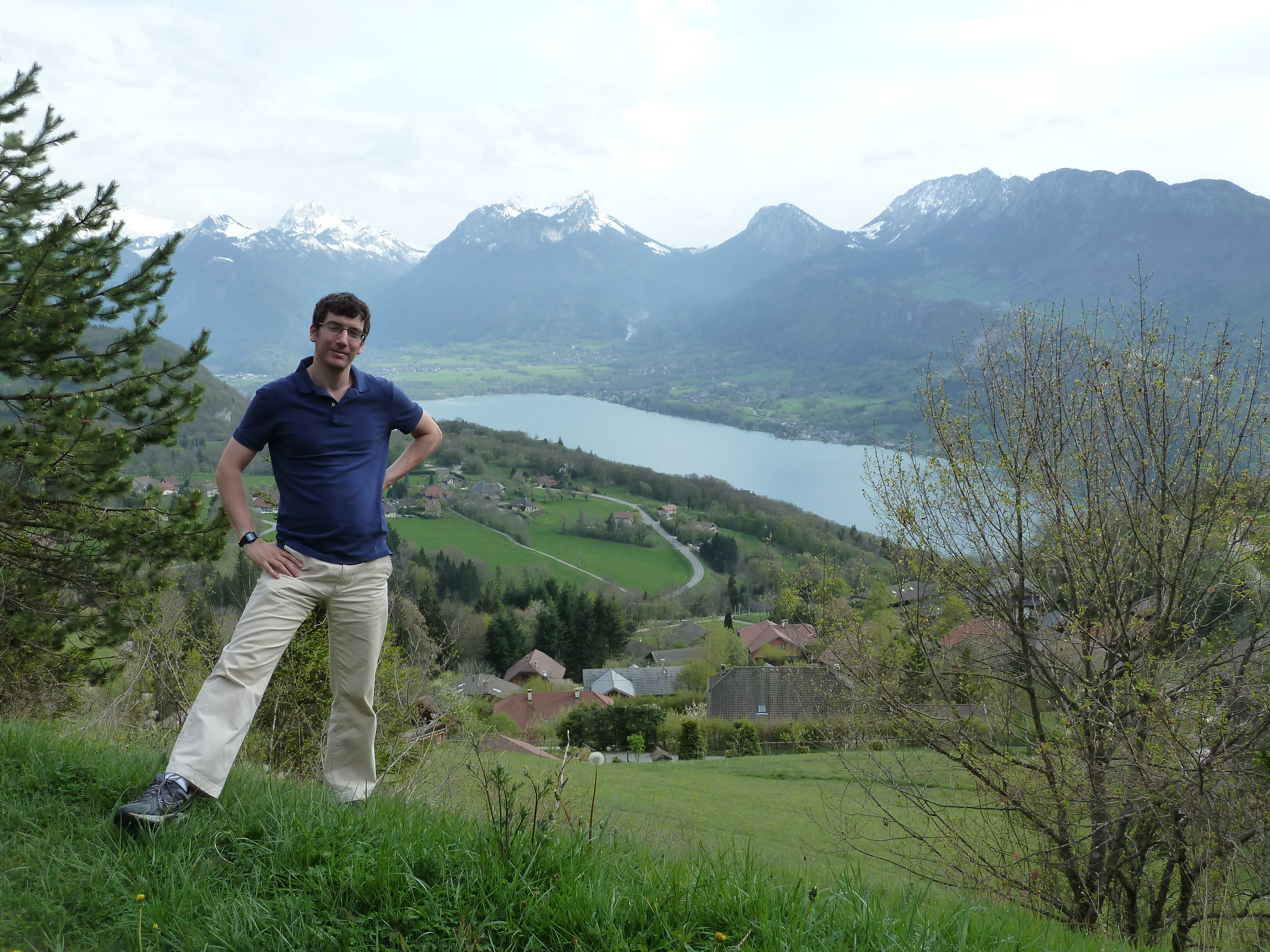
Timothy Jackson is a Professor of Chemistry at the University of Kansas, specializing in bioinorganic and bio-inspired chemistry. He investigates metalloenzyme mechanisms involving manganese, iron, and copper, focusing on oxidative transformations critical to biological and industrial processes. Ph.D. (2004) and B.S. (2000) in Chemistry NIH Postdoctoral Fellow (2007) at the University of Minnesota Research Interests: His lab combines synthetic, spectroscopic, and computational methods to study metal-oxygen species like Mn III -hydroxo and Mn IV -oxo complexes. Key areas include C-H and O-H bond cleavage, dioxygen activation, and green catalysis using earth-abundant metals. Recent Publications: His team explores ligand sphere perturbations in manganese complexes, hydrogen-atom tunneling mechanisms, and non-macrocycle-based cobalt catalysts for selective O 2 reduction. Articles emphasize spectro-structural correlations and environmentally benign oxidation processes. Collaborations: Active partnerships with labs at Roosevelt University, University of Montana, Université Paris Diderot, and Univ. Grenoble Alpes focus on electronic structure analysis and high-valent metal reactivity. Lab Members: Current graduate students include Markell Lomax, Zahra Aghaei, Anagha Puthiyadath, and Purti Patel. Former students hold positions at institutions like Ohio State University and companies like Intel and Catalent.
Lu Zhouguang is a tenured Professor in the Department of Materials Science and Engineering at Southern University of Science and Technology . He is a Fellow of the Royal Society of Chemistry (FRSC), Shenzhen Pengcheng Scholar Distinguished Professor, Fulbright Scholar, and Shenzhen Peacock Program High-Level B Talent. Current research focuses on molecular design, precision synthesis, and electrochemical reaction mechanisms of advanced energy materials Specializes in nanostructured electrodes for lithium/sodium-ion batteries and lithium-air batteries Investigates phase/morphology transformations during electrochemical reactions Develops micro-nano battery devices and solid waste recycling technologies His publications in journals like Nature Communications and Angewandte Chemie demonstrate expertise in radical intermediates, defect engineering, and electrocatalyst development. With 260+ SCI papers, 10,000+ citations, and 30+ invention patents, he leads cutting-edge research in energy storage and conversion. Recipient of 2017 SUSTech Outstanding Research Award 2016 SUSTech Young Scientist Award Top 2% Scientist Worldwide (2011) As Deputy Secretary-General of China Energy Storage & Power Batteries Committee and council member of Guangdong lithium-ion battery innovation alliance, he actively shapes industry standards. The Shenzhen Hydrogen Energy Key Laboratory , which he co-leads, drives nanomaterials research for next-generation batteries.
Ron Peled is a Full Professor in the School of Mathematical Sciences at Tel Aviv University. Starting in summer 2024, he will serve as a Brin Professor in the Department of Mathematics at the University of Maryland, on leave from Tel Aviv University. During the 2022-2024 academic years, he visited Princeton University and the Institute for Advanced Study. His research spans multiple areas of probability theory and statistical physics, with significant contributions to understanding random surfaces, first-passage percolation, spin systems, and disordered models. Peled's research interests primarily focus on Probability Theory and Statistical Physics. His work examines the behavior of random systems, particularly in the presence of disorder or constraints. He has made significant contributions to understanding minimal surfaces in random environments, the structure of geodesics in first-passage percolation, phase transitions in spin systems, and the properties of random surfaces. His research often combines deep probabilistic insights with connections to statistical mechanics and mathematical physics, revealing universal behaviors in complex random systems. Analysis of Peled's recent publications reveals a strong focus on understanding the effects of disorder in statistical physics models. His work spans multiple domains including first-passage percolation, random surfaces, spin systems, and random matrix theory. A recurring theme is the investigation of how microscopic randomness affects macroscopic properties, with particular attention to phase transitions, correlation decay, and geometric structures emerging in random environments. His research often employs sophisticated probabilistic techniques combined with insights from statistical mechanics. Peled has received significant recognition through prestigious grants including multiple Israel Science Foundation grants (1048/11, 861/15, 1971/19, 2340/23), a Marie Skłodowska-Curie Actions International Reintegration Grant (SPTRF), an ERC Starting Grant (LocalOrder), and an ERC Consolidator Grant (Transitions). These awards reflect the importance and impact of his research in the mathematical community. Peled has supervised numerous students and postdocs throughout his career. His Ph.D. students include Daniel Hadas (joint with Wojciech Samotij) and Yinon Spinka (graduated August 2018). His Master's students include Michal Bassan (joint with Shoni Gilboa), Daniel Hadas, Yoav Bar Nir, Dor Elboim (who went on to do a Ph.D. at Princeton), Vital Kharash, Omri Cohen-Alloro, Alexey Gladkich, and Yinon Spinka. He has also mentored postdoctoral fellows including Lakshmi Priya, Paul Dario, Matan Harel, Raimundo Briceño, Alexander Glazman, Alexander Magazinov, Xiaolin Zeng, Nishant Chandgotia, Jeremiah Buckley, Wojciech Samotij, and Tom Ellis. Peled is actively involved in the academic community, serving as one of the organizers of the online Joint Israeli Probability Seminar and previously organizing the Horowitz Seminar on Probability, Ergodic Theory and Dynamical Systems. He has also organized several workshops and conferences including "Challenges in probability and statistical mechanics" at the Technion in 2022, the "Workshop on Strongly Correlated Random Interacting Processes" at Oberwolfach in 2018, and "Elegance in probability: A conference honoring Russell Lyons' 60'th birthday" at Tel Aviv University in 2017.
Nikolaos Papaspyrou is a Professor at the School of Electrical and Computer Engineering of the National Technical University of Athens (NTUA) and a member of the Software Engineering Laboratory . His research focuses on the theory and implementation of programming languages, including semantics, type systems, compilers, static analysis, and formal verification. Since October 2021, he has been on leave from NTUA, working as a Software Engineer for Google in the memory management team for the V8 JavaScript and WebAssembly engine. He previously served as Director of the Division of Computer Science (2017-2019) and was on sabbatical with Google's compiler group in Munich (2015-2016). His work includes the RELEASE project (EU FP7 STREP) for reliable large-scale server software and uncertainty handling in distributed databases (European Social Fund). Ph.D. and Diploma in Electrical and Computer Engineering from NTUA M.Sc. in Computer Science from Cornell University His research interests span programming languages , software engineering , and formal verification , with recent publications on coinductive proofs in Liquid Haskell, concurrency semantics, and quantum compilation. He has supervised over 50 diploma projects and mentored numerous students now at institutions like MIT, Princeton, and UC Berkeley. Awards include conference organizing and program committee roles, though no formal scientific prizes are listed.
Dr. Amit Verma serves as an Associate Professor in the Department of Electrical Engineering at the Indian Institute of Technology Kanpur (IIT Kanpur). His research focuses on advanced materials for semiconductor applications, with particular expertise in oxide materials and device fabrication. Research Focus: Dr. Verma's work primarily centers on materials growth for semiconductor device fabrication, characterization, and modeling. His research spans thin film growth, epitaxy, semiconductor device fabrication, electron transport phenomena, and oxide semiconductors. His expertise bridges fundamental materials science with practical electronic device applications. Research Trends: Analysis of Dr. Verma's publications reveals a consistent focus on complex oxide materials, particularly strontium titanate (SrTiO 3 ) and related compounds. His work explores electron transport mechanisms, ferroelectric properties, and device applications of these materials. The research demonstrates a progression from fundamental material characterization to practical device implementation, with significant contributions to understanding electron density modulation in oxide semiconductors. IIT (BHU) Varanasi Medal (2013) Outstanding Graduate Student Teacher Award , University of Notre Dame (2011) Academic Contributions: Dr. Verma teaches EE210 Tutorial (Microelectronics - I) and ESC201 Tutorial and Lab (Introduction to Electronics) at IIT Kanpur. His professional experience includes research positions at Cornell University (May 2015-June 2016) and NUSNNI, National University of Singapore (July 2016-November 2016). His educational background includes a PhD in Electrical Engineering from the University of Notre Dame (2015) with thesis on 'Modulating Extreme Electron Densities in Complex Oxides' under Dr. Debdeep Jena, and an Integrated M.Tech in Engineering Physics from IIT (BHU), Varanasi (2010).
K. Srihari is a Professor in the Department of Chemistry at the Indian Institute of Technology Kanpur. He has held academic positions at IIT Kanpur since 1997, advancing from Assistant Professor to Associate Professor (2003–2010), and then to Full Professor (2010–present). Previously, he was a Postdoctoral Researcher at Cornell University (1995–1996). Education: PhD, University of California, USA (1994) M.S., Villanova University (1989) Research Focus: His work centers on physical chemistry , specifically intramolecular vibrational energy redistribution (IVR) in molecules. He investigates classical/semiclassical dynamics, quantum eigenstates, nonlinear resonance networks, and dynamical tunneling to control molecular reactions. Key themes include energy flow pathways, resonance-assisted transport, and quantum-classical correspondence in molecular systems. Publication Trends: His articles (2005–2014) predominantly explore vibrational energy dynamics, quantum tunneling, and molecular phase-space behavior. Research integrates theoretical chemistry, quantum mechanics, and dynamical systems to decipher energy transport mechanisms in complex molecular structures. Awards: Chemical Research Society of India (CRSI) Bronze Medal (2015)
Professor Noah Linden is a faculty member in the School of Mathematics at the University of Bristol , holding the title of Professor of Theoretical Physics. His research focuses on Quantum Information Theory , Mathematical Physics , and related areas in quantum computing and thermodynamics. He has contributed to 105 research outputs and leads projects such as Reliable and Robust Quantum Computing and Compilation and Verification of Quantum Software . Key research themes include quantum scrambling, entanglement dynamics, and applications in biophysics. His work has been cited in studies on quantum dots, qubit manipulation, and nonlocality limits. He has also contributed datasets on exciton dynamics in purple bacteria and collaborated on projects analyzing decoherence and disorder effects in photosynthetic systems. Professor Linden serves as an editor for the Journal of Physics A: Mathematical and General and maintains active collaborations across quantum information, quantum computing, and interdisciplinary physics. His research output includes foundational studies on quantum error correction, measurement theory, and computational advantages.
Pierre Sagaut is a Professor at Aix-Marseille Université , leading research in the Instabilities, Turbulence and Couplings team. He serves as Editor-in-Chief of the Journal "Computers and Fluids" and holds editorial roles at Journal of Computational Physics , Journal of Turbulence , and Journal of Scientific Computing . His academic leadership extends to roles in the Scientific Council of the AFM (President) and ERCOFTAC (Vice-President). Research Interests focus on Lattice Boltzmann Method (LBM) for compressible/turbulent flows Aerodynamics, aeroacoustics, and aerothermics Uncertainty quantification and data assimilation Immersed boundary techniques for complex geometries Scientific Awards include the 2024 CNRS Bronze Medal Senior Member, Institut Universitaire de France Article Trends highlight LBM applications in nuclear reactor safety, urban pollutant dispersion, helicopter intake dynamics, and transonic flows. Recent works address mass leakage correction, hybrid RANS/LES turbulence modeling, and quantum-inspired lattice gas algorithms. Grants & Collaborations involve partnerships with CNRS, ERCOFTAC, and AFM, focusing on computational fluid dynamics and turbulence modeling.
Professor Moon Dong-ho is a Professor in the Department of Mathematics and Statistics at Sejong University, South Korea, holding this position since March 1999. He teaches undergraduate courses including Modern Algebra, Linear Algebra, and Graduation Research and Career, the latter involving direct student advising for 4th-year undergraduates. Education: B.S. in Mathematics, Seoul National University (February 1991) Ph.D. in Mathematics, University of Wisconsin - Madison (May 1998) Research Focus: Professor Moon's work centers on algebraic combinatorics and representation theory , with expertise in Littlewood-Richardson coefficients , tensor invariants , diagram algebras , and combinatorial proofs . His research bridges abstract algebraic structures with discrete combinatorial objects, yielding novel insights into reduction formulas, hive models, and graph-theoretic interpretations of tensor operations. Publication Trends: His 15 most recent publications (2005-2018) demonstrate sustained contributions to combinatorial representation theory. Published in journals like Journal of Algebra and Annals of Combinatorics , his work consistently explores connections between symmetric functions, tensor products, and discrete structures, with recurring emphasis on bijective proofs and algebraic graph theory. Advising: Through the Graduation Research and Career course, Professor Moon provides structured guidance to undergraduate students on research methodologies, thesis development, and career pathways in mathematical sciences. Research Laboratory: He maintains an active research laboratory in Young 309, Yeongsil Hall, serving as the primary workspace for his ongoing investigations in combinatorial algebra.
Carsten Milsmann is an Associate Professor in the Department of Chemistry & Biochemistry at the University of Delaware , where he leads the Milsmann Lab since August 2024. Previously affiliated with West Virginia University, his research focuses on replacing precious metal-based photosensitizers with Earth-abundant elements. Education Ph.D., Max-Planck-Institute for Bioinorganic Chemistry & Ruhr University Bochum Alexander von Humboldt Postdoctoral Fellow, Princeton University Research Specializations combine: Design of photoluminescent molecules using early transition metals (Zr, Hf) and main-group elements (Si, Ge) Development of ligand frameworks enabling long-lived excited states through TADF mechanisms Applications in photoredox catalysis, solar energy conversion, and sustainable chemical processes Photochemical C-C bond formation and C-H activation under visible light Investigation of intersystem crossing rates and excited state dynamics Uncovering unique reactivity patterns in iron and actinide complexes Notable Contributions include: First demonstration of Zr(IV) complexes with LMCT excited states for photoredox catalysis (JACS 2016) Advancing TADF mechanisms in d 0 metals (Nature Chemistry 2020) Developing molecular systems for photon upconversion with record quantum efficiencies (Chemical Science 2021) Creating novel actinide-based luminescent materials (Inorganic Chemistry 2024) Contact milsmann@udel.edu Milsmann Lab Website
Umut A. Acar is a Professor at the Computer Science Department , Carnegie Mellon University , and an Amazon Scholar. His research focuses on bridging formal methods with systems , algorithms , and AI , aiming to integrate safety and performance in parallel computing. His research spans multiple domains: Quantum Computing : Developing optimization techniques for quantum circuits (e.g., Quartz , Atlas ). Self-Adjusting Computation : Advancing dynamic algorithms and incremental programming frameworks (e.g., Diderot , MPL ). Concurrency & Parallelism : Designing efficient scheduling mechanisms and disentanglement strategies. Recent publications highlight his work on parallel functional programming , quantum simulation , and cache coherence optimization . Notable awards include Best Paper (QCE 2025) , Distinguished Paper (POPL 2024) , and the Intel Award (2022) . He advises PhD students like Pengyu Liu and Mingkuan Xu , and has mentored alumni now at institutions such as NYU , Google , and Inria . His lab collaborates on projects like Diderot (AI/ML) and MPL (parallelism management).
Jon Thomson is an Associate Professor (Reader) in Fine Art at the Slade School of Fine Art, University College London, where he works with MA/MFA and PhD students. He is a visual artist specializing in digital and new media art, collaborating with Alison Craighead since 1993 under the name Thomson & Craighead. Their work explores how internet and communications networks transform our understanding of the world, examining the relationship between physical and digital space and how the internet alters our socio-political understanding of reality. Thomson studied at Duncan of Jordanstone College of Art in Dundee. In 1995, he co-founded The Slade Centre for Electronic Media in Fine Art (SCEMFA), bringing together artist-researchers working digitally on the cutting edge of contemporary art practice. He has maintained this research focus while developing his collaborative practice with Craighead. Thomson's research examines how the development of the internet has transformed perception of the world, particularly how our constant ability to be physically somewhere but virtually anywhere affects our understanding. His work considers the tension between global and local perspectives, and how modern communications inform our sense of place and self. Recent projects increasingly examine the impact of Big Data on society and how individuals can measure their experience against unfathomably large bodies of information and inhuman timescales. Thomson & Craighead's extensive exhibition history shows a consistent exploration of networked communication, with works spanning from early internet-based projects to contemporary explorations of genomic data and nuclear culture. Their practice demonstrates an evolution from examining basic internet infrastructure to addressing complex issues of data sovereignty, deep time, and the societal impacts of pervasive networked technologies. Thomson's research has been supported by significant funding including: AHRC small grant in the creative and performing arts (2007) Wellcome Trust Arts Award (£38,000) for Stutterer (2014) Collaborations with Channel 4 Television, Animate Projects, New Media Scotland, and Creative Scotland for Flat Earth Trilogy Thomson advises MA/MFA and PhD students at the Slade School of Fine Art. His collaborative practice has resulted in numerous exhibitions worldwide and three published monographs. They have developed innovative approaches to using live data streams, social media content, and scientific information as artistic materials, creating works that challenge conventional boundaries between art, technology, and science. Thomson co-founded SCEMFA, which remains a significant research center bringing together artist-researchers working at the intersection of digital technology and fine art. His work often involves interdisciplinary collaborations, such as with computational biologists at the University of Dundee and participation in the Nuclear Culture research project with Arts Catalyst London.
Professor Sandhya Samarasinghe is a leading researcher at Lincoln University's School of Landscape Architecture where she directs the Complex Systems, Big Data and Informatics Initiative (CSBII). With expertise spanning computational biology, AI, and complex systems modeling, she bridges theoretical frameworks with practical applications across biological, agricultural, and environmental domains. PhD, Virginia Tech, Blacksburg, United States MS, Virginia Tech, Blacksburg, United States MSc, International University of Moscow, Moscow, Russia Professor Samarasinghe's research centers on developing advanced computational methodologies for modeling complex systems. Her work explores how soft computing techniques—including neural networks, fuzzy systems, and machine learning—can unravel complexity in biological networks and environmental systems. She advances the view of living organisms as evolved information systems and develops conceptual frameworks for understanding biological complexity from molecular to organismal levels. Her research has significant applications in medical diagnostics, sustainable agriculture, and environmental management. Analysis of her recent publications reveals a strong emphasis on neural network applications across diverse domains, with particular focus on biological systems modeling, Alzheimer's disease research, agricultural technology, and environmental sustainability. Her work consistently integrates theoretical computational approaches with practical problem-solving. Fellow of Modelling and Simulation Society of Australia and New Zealand Senior Member of IEEE Visiting Fellow at Oxford University Visiting Fellow at Princeton University Visiting Fellow at Stanford University Visiting Fellow at CSIRO Professor Samarasinghe has supervised over 25 postgraduate students across diverse research areas including mastitis detection in dairy cattle, neural modeling of cell cycles, autonomous self-repair systems, and computational approaches to vaccine development. She leads the Complex Systems, Big Data and Informatics Initiative which develops cutting-edge computing solutions for complex biological and environmental challenges.
Olexandr Isayev is the Carl and Amy Jones Professor of Chemistry at the Department of Chemistry, Carnegie Mellon University (CMU), within the Mellon College of Science. He holds affiliate roles at the Scott Institute for Energy Innovation and the CMU-Pitt Computational Biology Program. His research focuses on applying artificial intelligence (AI), machine learning (ML), and computational chemistry to solve complex problems in drug discovery, materials science, and quantum mechanics. Notable collaborations include work with the CMU Cloud Lab and the development of the AIMNet2 molecular potential. Education: Postdoctoral Fellow at Case Western Reserve University (2009–2012), PhD in Theoretical Chemistry from Jackson State University (2008), M.S. in Chemistry from Dnepropetrovsk National University (2002). His research interests span generative AI for molecular design, ML-driven chemical intuition, and autonomous experimental platforms. Key achievements include groundbreaking work on universal ML potentials for quantum mechanics and GenAI methods for inverse molecular design. Awards include the Scialog Fellowship (2023) and NVIDIA GPU Computing Award (2014). Future goals aim to advance 'Chemical Intelligence' by integrating AI with expert decision-making frameworks. Awards: Scialog Fellow (2023) ACS Emerging Technology Award (2017, 2014) Eshelman Institute for Innovation Award (2016) Labs/Teams: Directs the Isayev Lab, which pioneers AI-driven molecular discovery through synergies between automated experiments and ML agents.
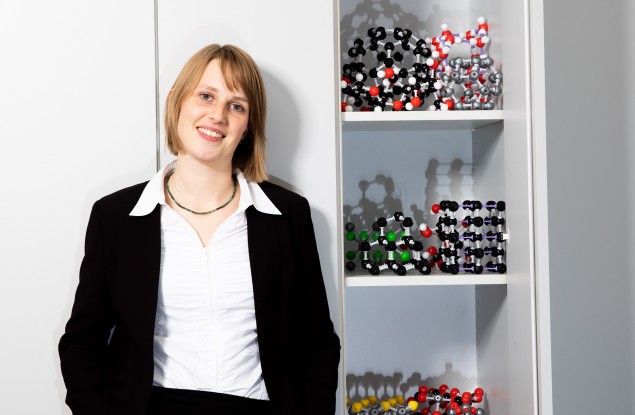
Prof. Dr. Vera Krewald is a Professor for Quantum Chemistry at Technische Universität Darmstadt, Department of Chemistry. She leads a research group focused on theoretical and quantum chemistry approaches to understand electronic structures and properties of inorganic and transition metal complexes. Her work bridges computational methods with experimental spectroscopy to explore magnetic interactions, electron transfer processes, and catalytic mechanisms. Professor for Quantum Chemistry (W3) at TU Darmstadt (since 11/2023) Professor for Theoretical Chemistry (W2, tenure track) at TU Darmstadt (12/2018-10/2023) Research Group Leader at University of Bath (01/2017-11/2018) Prof. Krewald's research focuses on applying quantum chemistry methods to understand the electronic structure and functioning of inorganic complexes. Her group makes predictions about spectroscopic, magnetic, and other measurable properties of transition metal complexes, with particular interest in systems that exhibit unexpected properties, magnetic coupling, challenging molecular transformations, or promising catalytic activity. Key research areas include electron transfer processes, photophysics and photochemistry of transition metal complexes, nitrogen activation and splitting, oxygen reduction catalysis, and the development of theoretical methods like the Angular Overlap Model. Analysis of Prof. Krewald's recent publications reveals a strong focus on iron-based catalysis, particularly for energy-related applications like the oxygen reduction reaction in fuel cells. Her work frequently combines computational quantum chemistry with experimental spectroscopy, especially Mössbauer spectroscopy, to characterize active sites in catalysts. There's also significant emphasis on electron transfer processes, photochemical activation of small molecules like dinitrogen, and the development of computational tools for analyzing magnetic properties and metal-ligand bonding. 2022: Dozentenpreis from the chemical industry fund (Fonds der Chemischen Industrie) 2021: Award from the Dr. Hans Messer Stiftung for early career researchers 2021: ADUC Award from the German association of university professors in chemistry 2014: Otto Hahn Medal of the Max-Planck-Society 2013: Participant at 63rd Lindau Nobel Laureate Meeting 2008-2013: German National Academic Foundation fellowship Prof. Krewald leads a research group with 2 postdocs, 6 PhD candidates, and several B.Sc./M.Sc. students. Her group has secured funding from multiple sources including the DFG, Leverhulme Trust, Merck'sche Gesellschaft für Kunst und Wissenschaft e.V., NHR Verein e.V., and Deutsche Bundesstiftung Umwelt. She serves as vice-speaker of SFB 1487 "Iron, upgraded!" (2022-2025), demonstrating her leadership in coordinated research efforts. Her group actively collaborates with experimental researchers to elucidate reaction mechanisms and identify catalytically active species. The Krewald Research Group operates within the Department of Chemistry at TU Darmstadt, with strong connections to collaborative research centers including SFB 1487 "Iron, reimagined!", SFB 1633 "Pushing Electrons with Protons", and SPP 2491 "Interactive Switching of Spin States". The group is also involved in the Quantum Bio-Inorganic Chemistry Society, which Prof. Krewald co-founded and serves as Secretary General. Their work combines high-level quantum chemical calculations with experimental validation to address fundamental questions in inorganic chemistry and catalysis.