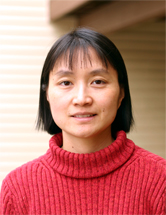
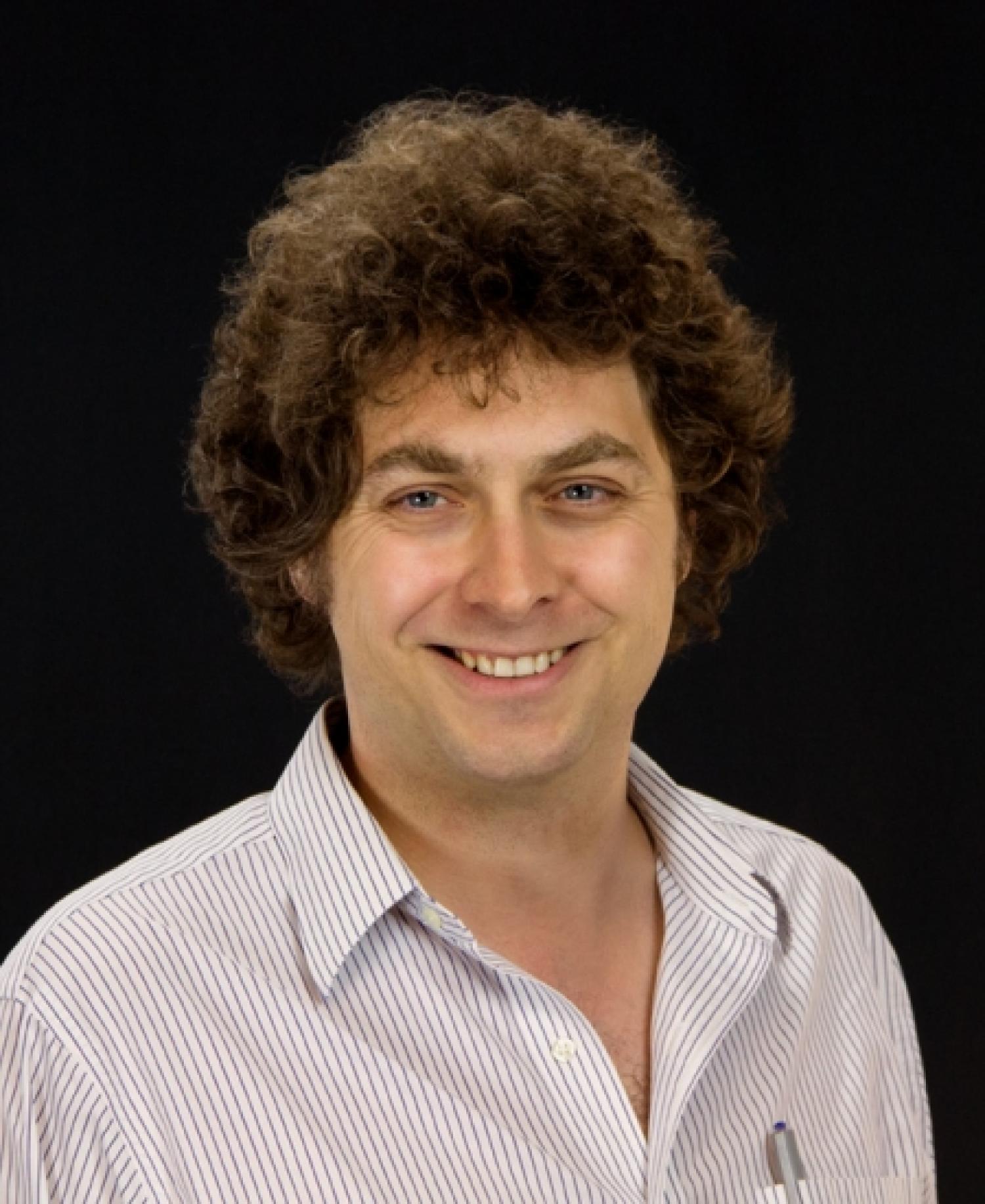
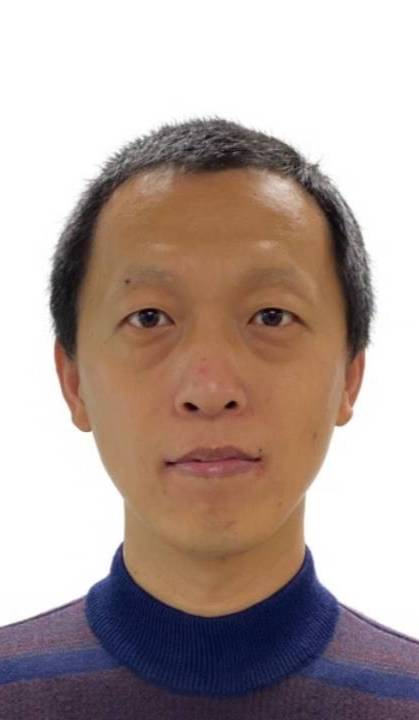
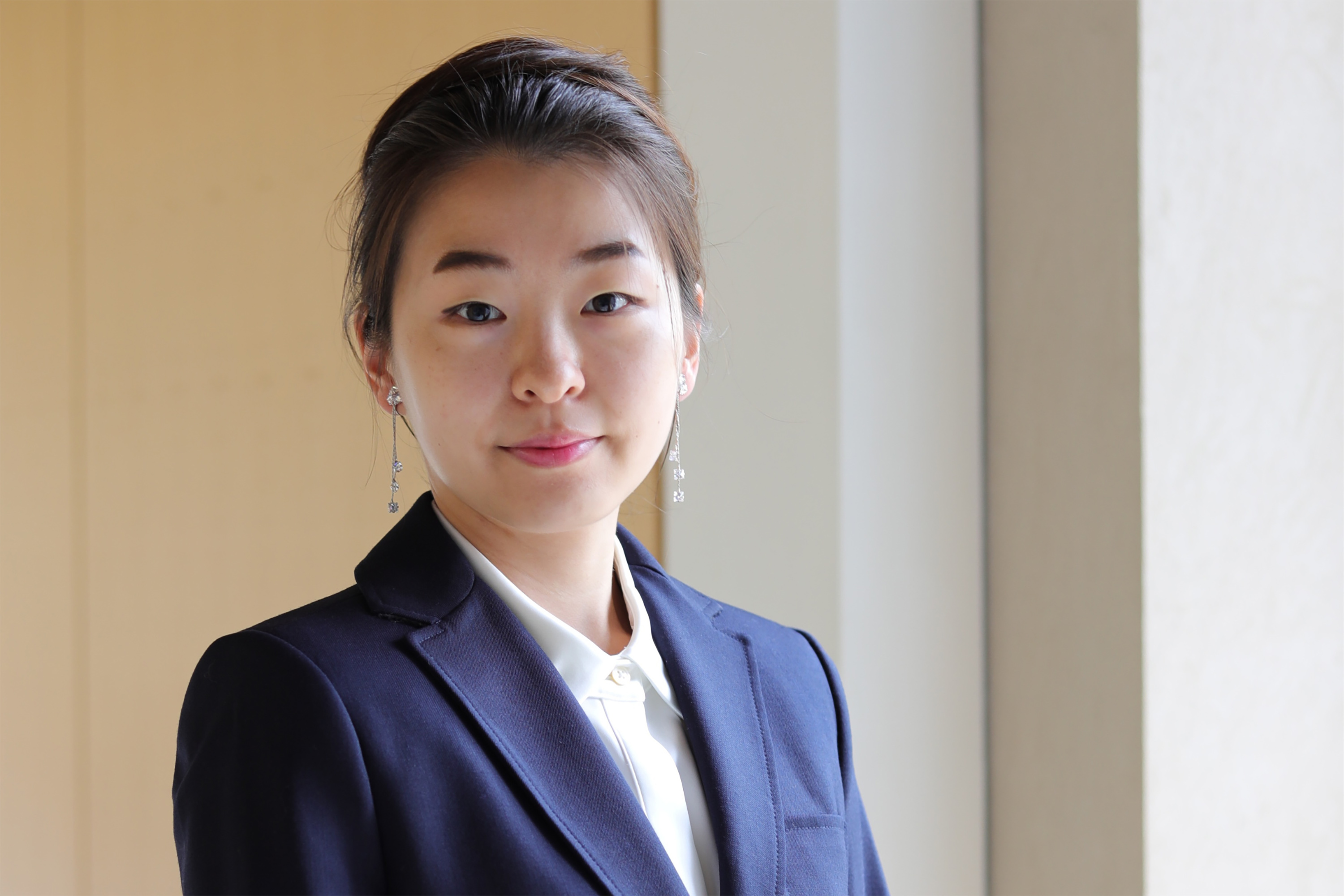
Ranieri Nery is a Researcher at the Institute of Photonic Sciences (ICFO), affiliated with the Quantum Information Theory research group. He holds a PhD in Physics from Universidade Federal do Rio de Janeiro (Brazil). His primary role involves advancing theoretical and foundational aspects of quantum mechanics, with a focus on nonlocality, entanglement, and quantum causality. Key research interests include quantum nonlocality beyond Bell scenarios, quantum causal structures, device-independent protocols, and applications of quantum information to finance. He has contributed to frameworks for quantifying quantum resources like nondivisibility and ergotropy, as well as developing witnesses for nonclassicality in causal networks. His recent work (2020–2025) explores novel paradigms in quantum communication complexity, quantum thermodynamics, and foundational questions about event nonabsoluteness. Notable contributions include methodologies for classicality certification and semi-device-independent entanglement verification in superdense coding. Nery’s research integrates abstract theoretical concepts with practical applications, such as quantum finance tutorials and experimental validations of multipartite steering. His studies often bridge quantum foundations with quantum technologies, emphasizing operational approaches to quantum phenomena.
Professor Bing Wang is a faculty member in the Computer Science & Engineering Department at the University of Connecticut. He leads the Computer Networking Research Group, focusing on computer networking, ubiquitous computing, multimedia streaming, network security, and quantum communications. His research integrates machine learning for depression treatment prediction using smartphone data and explores secure quantum key distribution systems. Research interests span quantum networks, adaptive bitrate streaming optimization, wireless network routing strategies, and leveraging mobile sensory data for mental health diagnostics. His work addresses challenges in network security (e.g., BGP hijacking defenses), energy-efficient streaming, and resilient microgrid systems through programmable networks. Publications emphasize cross-disciplinary applications of networking principles, including depression symptom prediction via smartphone sensors and quantum repeater security. Notable contributions include frameworks like C2 for ABR streaming and BGP-Isec for routing security. His group actively develops methodologies for optimizing network performance while balancing resource usage and user experience.
Graeme Smith is an Associate Professor in the Department of Physics at the University of Colorado Boulder and an Associate Fellow at JILA, a joint research institute between the university and the National Institute of Standards and Technology (NIST). His research focuses on quantum information and quantum computing, exploring fundamental limits imposed by physics on communication, computation, and sensing technologies. He investigates topics such as error correction, quantum channel capacities, and entropy properties, aiming to bridge practical technological applications with foundational physics principles. His work spans theoretical and applied aspects of quantum mechanics, including quantum annealing characterization and novel methods for analyzing information processing. Notable contributions include studies on quantum sensing limitations, entropy transfer dynamics, and the development of quantum algorithms for complex systems like the Vlasov equation. Smith’s publications reflect a strong emphasis on interdisciplinary quantum science, with recent papers addressing broadband sensing opportunities, quantum channel superadditivity, and mechanical systems leveraging electro-optic correlations. His research has implications for advancing quantum communication networks and quantum computing architectures.
Haijun Gong, Ph.D., is a Professor of Statistics at Saint Louis University (SLU), tenured in the Department of Mathematics and Statistics, College of Arts and Sciences. He holds a Ph.D. in Physics from Carnegie Mellon University (CMU) and has held academic positions at SLU since 2012, including roles as Associate Professor (2017–2025) and Assistant Professor (2012–2017). He also served as an Associate Professor at the Australian National University (ANU) from 2018 to 2019. His research interests span Statistics, Bioinformatics, Machine Learning, Deep Learning, Quantum Computing , and Model Checking . Dr. Gong’s work focuses on dynamic gene regulatory networks, time-series analysis, and computational biology, with notable contributions to single-cell RNA-Seq data imputation and high-dimensional data integration. His GitHub repositories, such as f-DyGRN , reflect his emphasis on developing computational tools for systems biology and network analysis. Dr. Gong’s articles highlight advancements in statistical methods for biological network inference and verification, alongside applications in oncology and cellular systems. His research bridges theoretical statistics, computational methods, and real-world biological challenges. Education: Ph.D. in Physics (CMU, 2009), Postdoctoral Fellow in Computer Science (CMU, 2009–2012) under Dr. Edmund Clarke (2007 ACM Turing Award laureate). His work integrates interdisciplinary approaches, leveraging machine learning and probabilistic models to address complex biological questions. Collaborative projects include developing R packages like LONGO for gene length-dependent analysis in neuroscience. Dr. Gong’s GitHub contributions further emphasize reproducible research and open-source tool development for the scientific community.
Hang Trung Dinh is an Associate Professor at the Department of Computer and Information Sciences, Indiana University South Bend. He specializes in Quantum Computing, Post-Quantum Cryptography, and Theoretical Computer Science Education. He co-founded ExtentWorld, a social media platform emphasizing privacy-conscious design. Education: PhD in Computer Science from the University of Connecticut (2010), advised by Professor Alexander Russell. His research bridges quantum computing fundamentals, heuristic search optimization, and educational methodologies in computing theory. Research Interests: Quantum Algorithms and Lower Bounds Post-Quantum Cryptographic Systems Algorithmic Analysis of Heuristic Search Methods Computer Security & Cryptography Innovative Course Development in Discrete Mathematics Publications highlight contributions to quantum-resistant encryption (e.g., McEliece Cryptosystem analysis) and heuristic search efficiency studies. His work has been featured in venues like Quantum Information & Computation and AAAI. Grants: Secured two IUSB Faculty Research Grants ($8,500 each) for projects on heuristic search empirical analysis (2011) and algorithmic pedagogy (2013).
Mark Braverman is a Professor at Princeton University, known for his contributions to theoretical computer science, computational complexity, and information theory. He holds a PhD from the University of Toronto (2008), where his dissertation focused on computability and complexity of Julia sets. His research spans a wide range of topics including interactive communication protocols, pseudorandomness, distributed computing, algorithmic game theory, and quantum computing. Key areas of focus include developing error-correcting codes for interactive communication, establishing lower bounds in computational complexity, and exploring the interplay between information theory and algorithm design. Braverman has co-authored over 240 publications and has collaborated extensively with researchers such as Klim Efremenko, Anup Rao, and Omri Weinstein. His work has been recognized through prestigious venues like STOC, FOCS, and SODA, and has addressed foundational questions in theoretical computer science, including the limits of parallel repetition in games and the design of resilient computational systems. Recent research highlights include advancements in quantum communication complexity, fault-tolerant circuit design, and algorithmic approaches to matching markets. His interdisciplinary work bridges mathematical theory with practical applications in distributed systems and economics. Braverman also contributes to the academic community through editorial roles and conference organization, furthering the development of computational theory and its applications.
Al T. Williams is a Professor at DemoVivo University with extensive interdisciplinary research spanning Materials Science, Biochemistry, and Astronautics. His scholarly contributions appear across high-impact journals including Nature , Science , Advanced Materials , and Acta Astronautica . Williams' research interests focus on Materials Science (particularly nanomaterials and polymer chemistry), Neuroscience , Biochemistry (protein folding and metabolic pathways), and Astronautics (spacecraft design and orbital mechanics). His work demonstrates significant cross-disciplinary integration, frequently bridging engineering principles with biological systems. Analysis of his 15 most recent publications reveals strong emphasis on advanced materials development (37% of articles), biological systems (29%), and space applications (19%). His work consistently addresses fundamental scientific questions while maintaining practical engineering relevance, particularly in nanomaterial applications for medical devices and spacecraft components. Williams maintains active collaboration across multiple disciplines as evidenced by co-authorship patterns spanning Chemistry, Physics, and Medical journals. His publication record shows consistent output from 1979-2017 with notable productivity peaks in 2016-2017.
Stefano Paesani is an Associate Professor at the University of Copenhagen, affiliated with the Niels Bohr Institute (Department of Quantum Optics) within the Faculty of Science. His research focuses on quantum photonics, quantum computing, and integrated photonic systems. He explores scalable quantum architectures leveraging quantum emitters and graph states, with a particular emphasis on error correction, photonic nonlinearity, and high-dimensional entanglement. His work includes developing fusion-based photonic computing schemes, optimizing loss-tolerant architectures, and advancing programmable silicon-nitride integrated circuits for quantum information processing. Recent contributions address deterministic photon source interfacing, reconfigurable nonlinear circuits, and high-speed lithium niobate processors. His research also intersects quantum machine learning and Hamiltonian learning, utilizing quantum systems to model complex physical phenomena. Stefano collaborates with interdisciplinary teams across the University of Copenhagen’s Quantum Hub, contributing to initiatives in quantum communication, quantum simulation, and quantum sensing. His experimental setups often involve solid-state quantum emitters and advanced photonic platforms, aiming to bridge theoretical models with practical quantum technologies.
Dr. Dayoung Kim is an Assistant Professor in the Department of Engineering Education within the College of Engineering at Virginia Tech. She also serves as Director of the LABoratory for Innovative and REsponsible ENgineering workforce (LAB-IREEN), where she leads research on engineering practice, workforce development, and engineering ethics. Dr. Kim's educational background includes: Ph.D. in Engineering Education from Purdue University (2022) M.S. in Chemical Engineering from Purdue University (2021) B.S. in Chemical Engineering from Yonsei University in Seoul, South Korea (2017) Her research focuses on engineering practice and workforce development across various employment settings, including business organizations (e.g., startup companies) and government agencies. She investigates how emerging technologies like artificial intelligence and quantum technologies influence engineering practice and workforce needs. Dr. Kim also examines engineering ethics, social responsibility, and related policy concerns, with the overarching goal of identifying effective strategies to cultivate an innovative and responsible engineering workforce through educational initiatives and science & technology policy. Her work explores critical questions regarding essential engineering competencies, ethical design practices with emerging technologies, and strategies for fostering responsible engineering professionals. Dr. Kim's recent publications analyze trends in AI ethics policies, engineering students' career interests, and the intersection of lifelong learning with workforce development. Her research employs quantitative, qualitative, and mixed-methods approaches to address complex questions at the nexus of engineering practice, education, and policy. Dr. Kim has received numerous honors including: Honorable Mention Best Paper Award at IEEE-ETHICS 2023 Conference Apprentice Faculty Grant from ASEE's Educational Research and Methods Division (2023) +Policy Research Fellowship from Virginia Tech's Institute for Society, Culture, and Environment Christine Mirzayan Science & Technology Policy Graduate Fellowship from the National Academies (2022) College of Engineering Outstanding Graduate Student Research Award from Purdue University (2022) Dr. Kim serves as Principal Investigator on multiple significant research grants: National Science Foundation grant #2417377: 'Investigating the Impact of Scaffolded Ethics Autobiography on Engineering Identity and Students' Career Interests' National Science Foundation grant #2412398: 'Exploring How AI Engineers Perceive and Develop Translational Ethical Competency' (as Co-PI) National Science Foundation grant #2321188: 'Building Capacity for Research in Technology-Based Social Entrepreneurship Education for the Next Generation of Engineering Leaders' 4-VA grant: 'Fostering Regional Innovation Ecosystem in the State of Virginia' ISCE-PDA grant: 'Exploring AI Ethics Policy Concerns and Career Pathways of the AI Professionals' Dr. Kim leads the LAB-IREEN research group at Virginia Tech, which includes Ph.D. students Bailey McOwen, Emad Ali, and Arsalan Ashraf. The lab's mission is to conduct transformative research that guides the development of an innovative and responsible engineering workforce across diverse areas including technology entrepreneurship, engineering ethics, and the educational implications of emerging technologies.
Dr. Jamie Sikora is an Assistant Professor in the Department of Computer Science at Virginia Polytechnic Institute and State University (Virginia Tech), within the College of Engineering. His research focuses on quantum computing, quantum information, quantum cryptography, semidefinite programming, and convex optimization. He holds a Ph.D. in quantum computing from the University of Waterloo, Canada. His work addresses foundational and applied challenges in quantum information science, including cryptographic protocols, error mitigation, and optimization techniques. Recent research has explored quantum state exclusion, secure sampling, and device-independent protocols. His contributions span theoretical frameworks for quantum algorithms and cryptographic systems, with implications for post-quantum security and quantum communication. He has published extensively in top venues, including the Conference on the Theory of Quantum Computation and the Physical Review series. His articles often bridge quantum theory with practical cryptographic and computational applications, emphasizing rigor in protocol design and analysis.
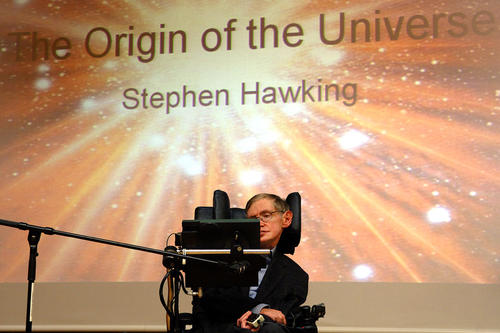
Stephen W. Hawking was the renowned Lucasian Professor of Mathematics at the University of Cambridge, a position once held by Isaac Newton. He is celebrated for his groundbreaking contributions to cosmology and theoretical physics, particularly his work on black holes and the origins of the universe. His seminal works, such as A Brief History of Time and The Universe in a Nutshell , popularized complex scientific concepts among the general public. Despite being diagnosed with amyotrophic lateral sclerosis (ALS) at age 22, he continued his academic and research activities with unwavering dedication. Education: Bachelor’s degree in Physics at Oxford University Continued studies in Theoretical Physics at the University of Cambridge Research Interests: Hawking’s research focused on the interplay between quantum mechanics and general relativity, particularly exploring the nature of black holes and the universe’s origins. He proposed theories on Hawking radiation and the no-boundary hypothesis, reshaping modern cosmology. His work bridges fundamental physics with philosophical questions about the universe’s structure and fate. In 2005, Hawking delivered the 2nd Einstein Lecture Dahlem at the Freie Universität Berlin as part of the Einstein Year 2005, commemorating the centenary of Einstein’s theory of relativity. The event highlighted his global influence in science and his ability to communicate intricate ideas to broader audiences.
Cécile Repellin is a Research Fellow at the Centre National de la Recherche Scientifique (CNRS) working at the Laboratoire de Physique et Modélisation des Milieux Condensés (LPMMC), affiliated with the University of Grenoble Alpes. She maintains her research office in location G-411 at the LPMMC facilities. Her primary research domains include: Condensed Matter Physics Quantum Physics Theoretical Physics Statistical Mechanics Complex Systems As a CNRS Research Fellow, Dr. Repellin contributes to LPMMC's mission of advancing fundamental understanding of condensed matter systems through theoretical and experimental approaches. The laboratory's work spans quantum phenomena, statistical physics, and complex systems with applications in materials science and quantum technologies. Her research environment includes collaboration with Research Directors, University Professors, Postdoctoral Fellows, and Doctoral students across multiple physics disciplines. Dr. Repellin works within LPMMC's permanent research staff structure alongside other CNRS researchers including Research Directors and Engineers, contributing to the laboratory's research output and academic training mission through supervision of doctoral candidates and participation in the broader physics research community.
Andreas (Andi) Bergen is an Assistant Professor in the Department of Computer Science at the University of Toronto's Mathematical and Computational Sciences School. His work focuses on computer science education, software engineering, and energy-efficient computing. He is actively involved in the Computer Science Student Community (CSSC) and teaches courses that emphasize writing instruction and practical programming skills. His research spans topics like integrating AI tools into education, optimizing software energy consumption in cloud environments, and leveraging visualization tools for complex data analysis. He has contributed to projects such as Galyleo, an extensible visualization solution, and explored methods for documenting software knowledge via screencasts. While no scientific awards are listed, Bergen's articles reflect a commitment to advancing pedagogical strategies and sustainable computing practices. He advises no listed students and no grants are mentioned, though his involvement with CSSC highlights his dedication to student engagement. He is based in DH-3084 and reachable at andi.bergen@utoronto.ca.
Tao E. Li is an Assistant Professor in the Department of Physics and Astronomy at the University of Delaware (UD), part of the College of Arts & Sciences. He leads the T.E.L. Group, focusing on light-matter interactions using advanced theoretical and computational tools. Previously, he held postdoctoral positions at Yale University (2021–2023) and completed his Ph.D. in Chemistry at the University of Pennsylvania (2021) under Prof. Joseph E. Subotnik. His undergraduate studies in Chemistry at Nanjing University included an Erasmus exchange at Uppsala University in Sweden. Education includes a B.S. from Nanjing University's Kuang Yaming Honors School (2012–2016), a Ph.D. in Chemistry from the University of Pennsylvania (2016–2021), and postdoctoral research at Yale University (2021–2023). Awards include the AWS Cloud Credits for Research (2023), John G. Miller Fellowship (2020), and Erasmus Mundus Scholarship (2015). Research interests span computational polaritonics, nuclear quantum effects in complex environments, and integrating emerging technologies like AI and quantum computing into chemical physics. The T.E.L. Group develops tools such as nonadiabatic dynamics simulations and electronic structure theory to study molecular polaritons and energy transfer mechanisms. Grants & Funding: AWS Cloud Credits for Research (2023) Labs/Teams: Principal Investigator of the T.E.L. Group at UD Physics & Astronomy Current advisees include Ph.D. students Xinwei Ji (2024) and Andres Felipe Bocanegra Vargas (2025), and undergraduate researcher Sofia Londoño Toro (2025). The group actively recruits graduate students and postdocs interested in theoretical chemical physics and polariton dynamics.
Joseph P. Near is an Associate Professor in the Department of Computer Science at the University of Vermont's College of Engineering and Mathematical Sciences. He maintains his office in E458 Innovation Hall and is actively engaged in teaching, research, and service activities. His work bridges theoretical computer science with practical privacy-preserving technologies. His educational background includes a B.S. in Computer Science from Indiana University and both M.S. and Ph.D. degrees in Computer Science from MIT. Ph.D., Massachusetts Institute of Technology M.S., Massachusetts Institute of Technology B.S., Indiana University Near's research focuses on practical applications of data privacy, particularly differential privacy, secure computation techniques, and programming language approaches to security. His work addresses real-world challenges in implementing privacy-preserving systems that maintain data utility while protecting individual information. He has developed frameworks for differential privacy implementation and has extensively studied the usability challenges faced by practitioners implementing privacy protections. His recent publications reveal a strong focus on making differential privacy more practical and accessible, with numerous contributions to choreographic programming for secure computation, language-based security approaches, and tools for evaluating privacy guarantees. The research trajectory shows increasing attention to usability issues alongside technical innovations, reflecting a maturing field where practical adoption challenges are becoming as important as theoretical advances. Near actively mentors multiple Ph.D. students through the UVM PLAID lab and the UVM Center for Computer Security and Privacy. His service contributions include organizing workshops like TPDP (Theory and Practice of Differential Privacy) and serving on program committees for major security conferences including CCS, USENIX Security, and PETS. His teaching portfolio includes specialized courses on Data Privacy and Secure Distributed Computation, reflecting his research expertise. He has co-authored significant educational resources including the book "Programming Differential Privacy" and is working on "Differential Privacy for Databases," demonstrating his commitment to making these complex topics accessible to practitioners.