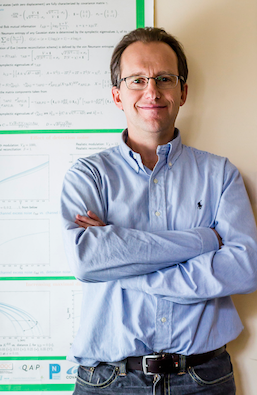
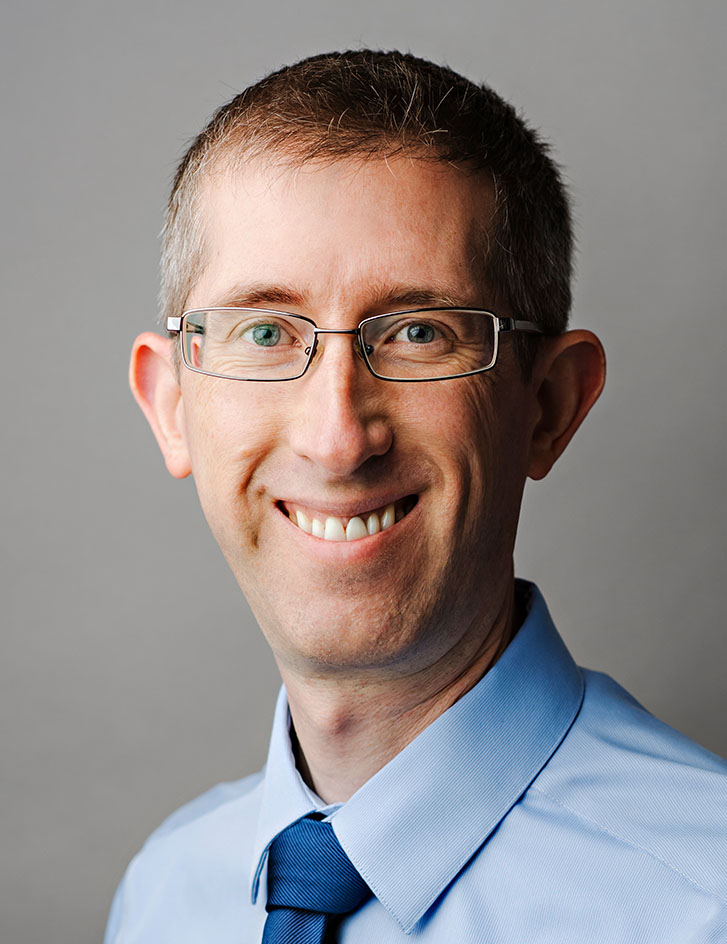
Philip Dutré is a full professor at the Department of Computer Science , Faculty of Engineering Science , KU Leuven. He leads the Computer Graphics Research Group and chairs the Human-Computer Interaction division . His teaching portfolio includes courses on algorithms, data structures, and computer graphics fundamentals. Research Focus : Rendering algorithms, photo-realistic and image-based rendering, perceptual-based rendering, material models, and intuitive controls for computer animation. He explores deep learning applications in global illumination and uses quantum field theory for efficient light transport in participating media. Publications : Recent work includes advancements in temporal coherence for light transport (2017–2023), functional integrals for scattering models (2025), and optimization of spatial data structures (2019). Teaching Innovations : Advocate for ungrading (feedback-only assignments), flipped classroom techniques, and interactive learning. His approach emphasizes conceptual understanding over rote memorization, with structured, self-contained lessons and active student engagement. Leadership : Serves on multiple academic councils and committees including the Commission on Research Integrity and Student Services Council .
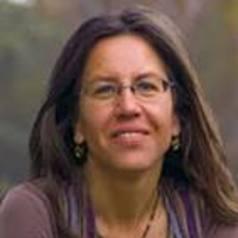
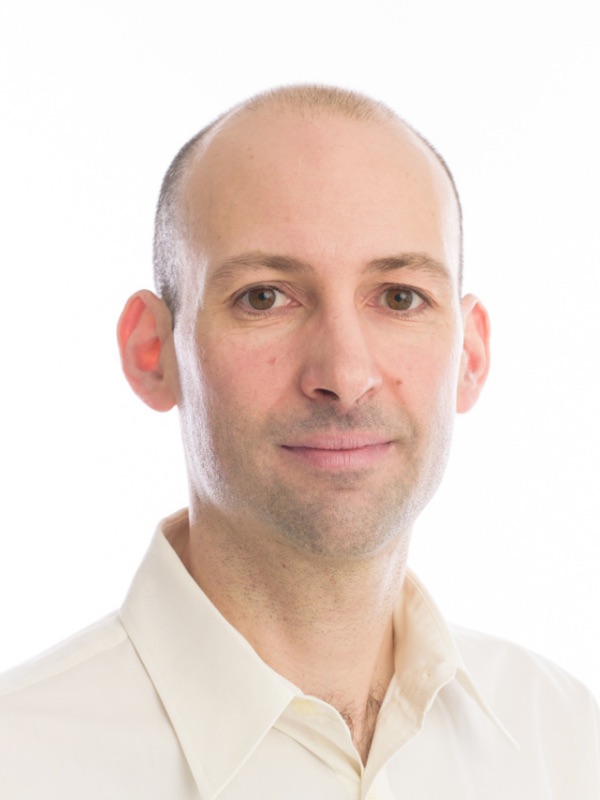
Liane Gabora is a Full Professor in the Department of Psychology at the University of British Columbia's Okanagan Campus, affiliated with the Irving K. Barber Faculty of Arts and Social Sciences. She holds additional research affiliations with the Australian National University's School of Music, University of Waterloo's Institute for Complexity & Innovation, and Free University of Brussels' Centre Leo Apostel for Interdisciplinary Studies. Her educational background includes a BSc from the University of Western Ontario, PhD from the Free University of Brussels, and postdoctoral positions at UC Berkeley and the Free University of Brussels. Gabora's research program explores creativity, cultural evolution, and cognitive transitions through interdisciplinary approaches. Her work examines: How concepts combine and adapt to new contexts The origins of modern cognition and human creativity Computational models of cultural evolution Quantum formalisms for concept interactions Self-Other Reorganization (SOR) theory of cultural evolution Honing theory of creativity integrating complex systems and memory Her publications demonstrate strong cross-disciplinary integration spanning psychology, physics, anthropology, and computer science. Major research awards include the 2011 Berlyne Award from the American Psychological Association for outstanding research by a junior scholar. She has secured over $1 million in funding from NSERC, SSHRC, and private donors. Gabora supervises graduate students in Psychological Science and Digital Humanities programs and leads research on cognitive transitions underlying cultural evolution. Her laboratory focuses on mathematical and computational modeling of creativity mechanisms, with ongoing projects exploring AI creativity, quantum models of cognition, and the evolution of behavioral modernity through autocatalytic network frameworks.
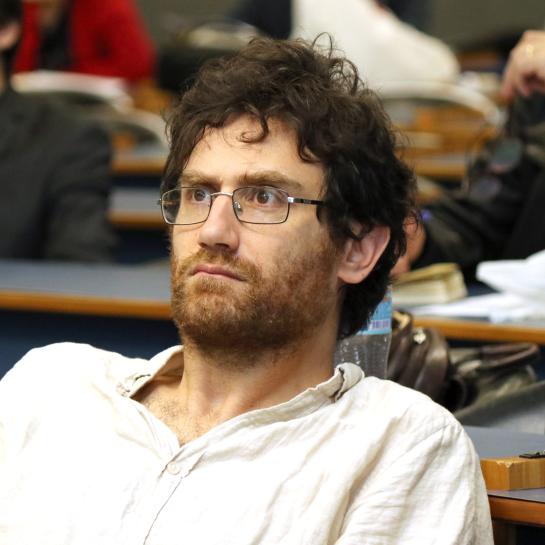
Dirk Nuyens is a Senior Lecturer in the Department of Computer Science at the Faculty of Engineering Sciences, KU Leuven, Belgium. He is affiliated with the Numerical Analysis and Applied Mathematics (NUMA) research unit and is a member of the iSi Health Institute for Physics-based Modeling for In Silico Health. He also serves on the Faculty Council of Engineering Sciences and the Programme Committees for Engineering Sciences and Computer Science. Education: While specific degrees are not listed, his expertise and research output indicate advanced training in numerical analysis, computational mathematics, and applied mathematics. Research Interests: His primary research focuses on numerical analysis, computational mathematics, and quasi-Monte Carlo (QMC) methods. Specific areas include high-dimensional integration and approximation, lattice rules, low-discrepancy sequences, uncertainty propagation, and financial engineering. He develops algorithms for efficient sampling, integration, and approximation in high-dimensional spaces, with applications in uncertainty quantification, Bayesian inversion, and PDEs with random coefficients. Research Trends: His recent publications emphasize the construction and analysis of embedded lattice-based algorithms for multivariate function approximation and integration. There is a strong focus on achieving higher-order convergence rates, particularly in Korobov and Sobolev spaces, and on developing randomized lattice rules for improved error bounds. His work bridges theoretical developments in numerical analysis with practical implementations in scientific computing and engineering. Scientific Contributions: He has authored or co-authored numerous influential papers in top-tier journals such as Mathematics of Computation , Journal of Complexity , SIAM Journal on Numerical Analysis , and Journal of Computational Physics . His work on lattice rules, QMC methods, and high-dimensional integration has been widely cited and used in fields ranging from computational finance to theoretical physics. Projects and Funding: He leads or co-leads several ongoing and completed research projects funded by national and international agencies. These include projects on turbulence reconstruction from partial observations, uncertainty quantification for climate control in buildings, computational methods for infinite-dimensional Bayesian inversion, circularity improvements in scrap analysis, and ML-based sensitivity analysis. Software Development: He maintains and contributes to open-source software repositories for QMC point generation, including the Magic Point Shop and QMC4PDE projects. These provide efficient implementations of lattice and digital sequence generators in MATLAB, C++, and Python. Institutional Service: Beyond research, he contributes to academic governance through his roles in faculty and departmental councils, influencing curriculum development and strategic planning in engineering and computer science education at KU Leuven.
Andreas Debrouwere is affiliated with the Department of Mathematics at the Vrije Universiteit Brussel . His research focuses on mathematical analysis, particularly in the areas of ultradifferentiable functions, ultradistribution theory, and surjectivity of differential operators. Projects: Applied harmonic analysis and partial differential equations (2023-2027), Bilateral cooperation for joint PhD (2023-2027), Francqui Chair Fellowship (2023-2024) Debrouwere's work explores functional analysis , operator theory , and weighted spaces . His recent publications analyze surjectivity conditions for differential operators and topological invariants in function spaces. Collaborations with researchers like Thomas Kalmes and Jasson Vindas highlight his contributions to partial differential equations and harmonic analysis. Scientific Awards: Francqui Chair Fellowship (2023-2024) As an advisor, he guided the master's thesis on representation theory of classical Type I groups and quantizations. His research also intersects with applications in image processing and mathematical physics.
Moharram Challenger is a tenure-track Assistant Professor in the Department of Computer Science at the University of Antwerp's Faculty of Sciences. Previously, he served as an assistant professor at Ege University (2017-2018) and as a post-doctoral researcher at the University of Antwerp (2019-2020) working on Flanders Make projects PACo and DTDesign. His academic journey includes R&D leadership roles at UNIT IT Ltd. (2012-2016), post-doctoral research at Wageningen University (2016-2017), and tenure-track faculty positions at IAU-Shabestar University (2005-2009). His research spans Cyber-physical Systems , Multi-agent Systems , and Domain-specific Modeling Languages , with recent publications focusing on quantum machine learning, digital twinning, and IoT optimization. Key projects include ITEA ModelWriter, ITEA Assume, and Flanders Make initiatives. His work demonstrates strong integration of model-driven engineering with emerging technologies like quantum computing and reinforcement learning. Challenger actively contributes to the academic community as a member of IEEE and ACM . His publication record shows consistent output across top venues, with 2025 featuring significant work in quantum-enhanced learning and CPS security. Current research emphasizes practical applications in drone energy modeling, medical diagnostics, and industrial IoT systems. His advising activities focus on cyber-physical systems and agent-based modeling, supported by grants from TUBITAK and Flanders Innovation & Entrepreneurship. Key collaborations include European ITEA projects and partnerships with industrial entities through UNIT IT Ltd. Challenger maintains active development through GitHub repositories related to code refactoring, model-driven engineering, and legacy system modernization, reflecting his commitment to practical software engineering solutions.
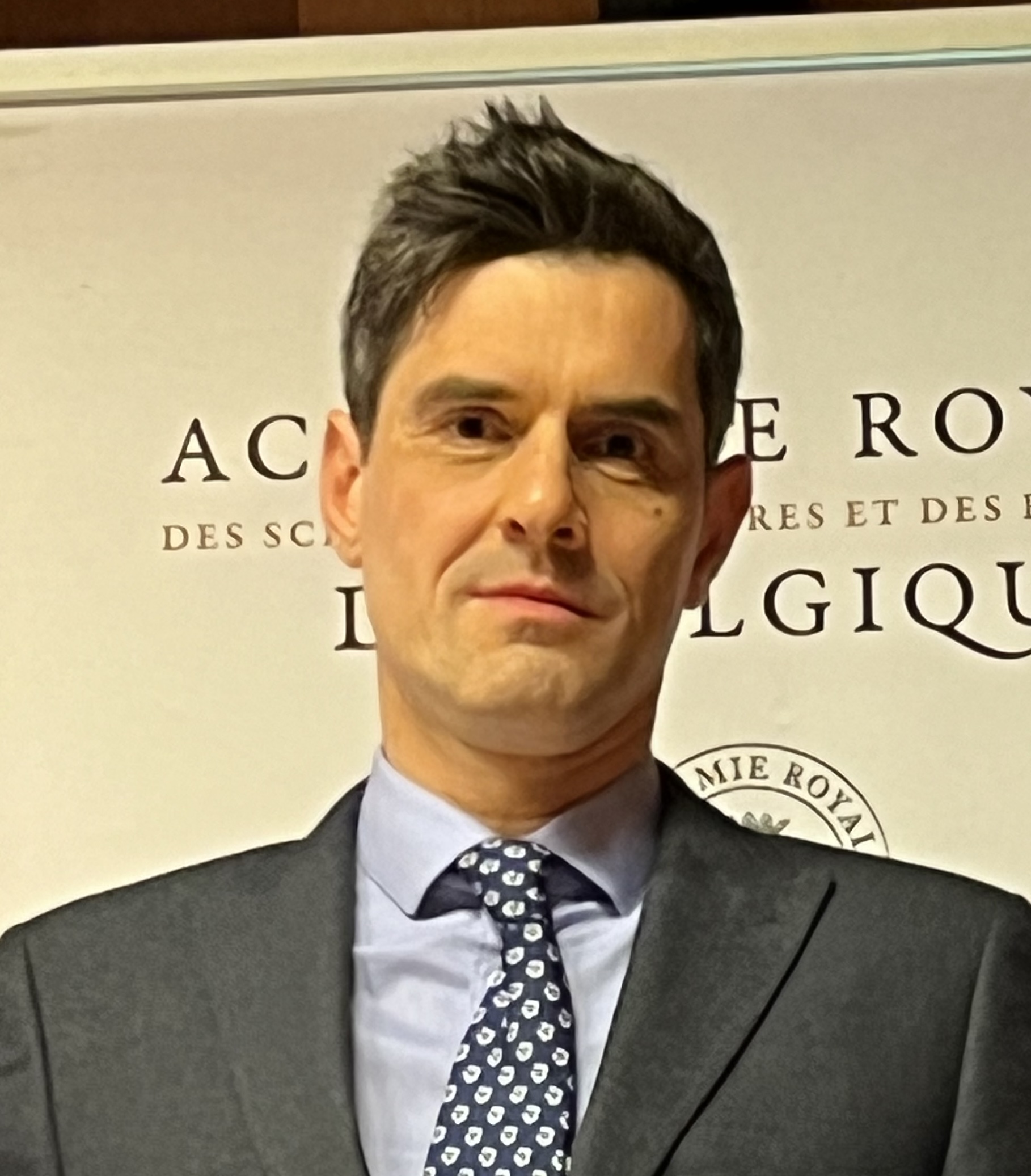
Nicolas Cerf is a Full Professor at the Ecole Polytechnique de Bruxelles, Université Libre de Bruxelles (ULB), where he heads the Centre for Quantum Information and Communication (QuIC). He has been a faculty member at ULB since 1998, initially as an associate professor and promoted to full professor in 2009. Cerf maintains visiting appointments at Caltech, MIT, and the University of Arizona, demonstrating his international standing in the quantum information community. His educational background includes a M.Eng. in Electronics and Telecommunication (1987), M.Sc. in Physics (1988), and Ph.D. in Physics (1993), all from ULB. After his PhD, he was awarded a Marie Curie fellowship and worked at the University of Paris XI, followed by research faculty positions at Caltech before returning to ULB. Nicolas Cerf's research focuses on quantum information science, with significant contributions including the discovery of the role of negative (conditional) entropies in quantum information theory, development of continuous-variable quantum cloning and cryptographic protocols, invention of the adiabatic quantum search algorithm, and establishing the fundamental quantum limit on information transmission via Gaussian bosonic channels. His work spans quantum information theory, quantum cryptography, quantum computation, quantum optics, and quantum foundations. His recent publications (2023-2025) demonstrate continued innovation in quantum information processing, particularly in boson sampling validation, Wigner entropy theory, majorization applications, and quantum channel capacities. These works show a consistent focus on both theoretical foundations and practical applications of quantum information principles. Marie Curie Excellence Award (2006) Caltech President's Fund award (1997) Alcatel-Bell scientific prize (1999) Prize of the Wernaers fund awarded by the Belgian National Fund for Scientific Research (FNRS) (2000) Elected member of the Royal Academies for Science and the Arts of Belgium (2009) COVAQIAL project nominee for 2007 Descartes Prize Nicolas Cerf has supervised numerous PhD students including Sofyan Iblisdir, Jérémie Roland, Gilles Van Assche, and many others. He has hosted many postdocs and senior scientists. His research has been supported by numerous European projects across multiple Framework Programs, including EQUIP, CHIC, RESQ, SECOQC, COVAQIAL, QAP, COMPAS, HIPERCOM, QALGO, QUCHIP, ShoQC, and AppQInfo. As head of QuIC, Cerf leads a research team exploring cutting-edge topics in quantum information. The group maintains strong international collaborations and has been instrumental in establishing Belgium as a significant player in quantum information research. The team's work bridges theoretical developments with potential applications in quantum communication, quantum computing, and quantum cryptography.
Wim Casteels is a Lecturer and researcher at AP University College, specializing in AI and data science. He transitioned from quantum physics research at the University of Antwerp and Paris to roles in data science at Argenta's Data Analytics Office and imec's IDLab research group. His work focuses on applying AI to education, transportation, and environmental monitoring. He leads projects like AI4UX (user pattern detection), LAP! (learning analytics dashboards), and AI4Care (AI for youth care support). Education: PhD in Physics (University of Antwerp), followed by postdoctoral research on quantum systems in Antwerp and Paris. Transitioned to data science roles in industry and academia. Research Interests: Machine Learning, Deep Learning, Learning Analytics, and AI applications in education and transportation. Projects include developing AI-driven road weather models using vehicle sensor data, predictive student success models, and energy-efficient building control systems. His work emphasizes ethical AI implementation and data-driven decision-making. Key Projects: AI4UX (2023–2025), AHUMAIN (2023–2025), LAP! (2019–2023), and AI4Care (2024–2026). His research is supported by grants like the Industrial Research Fund. Labs/Teams: Part of AP University College's Media, Design and IT Knowledge Center, previously affiliated with imec's IDLab group and Argenta's Data Analytics Office.
Prof. Alexandre Mayer is a faculty member at the University of Namur, affiliated with the Department of Physics. His research focuses on interdisciplinary topics such as genetic algorithms, quantum mechanics, and optical engineering. He leads major projects like PHOENIX (2024–2029) and Bessel-CNNs (2023–2024), advancing machine learning and materials science. He has been recognized with the Quantum Project Stipend (2000) and Fenia Berz Award (2003). His work contributes to UN Sustainable Development Goals via photovoltaic innovations and materials optimization. Education: Doctor of Sciences (1998), DEA in Physics and Material Chemistry (1996), Master in Physics (1995). Research Interests: Mayer’s expertise spans computational intelligence, high-performance computing, and nanotechnology. Recent efforts include optimizing nanopyramidal absorbers and developing 2D quaternion convolutions for 3D image processing. His work intersects physics, computer science, and engineering, with applications in cosmology and historical document analysis. Grants & Activities: Principal Investigator of €5M+ projects, including PNV+ (2016–2020) and LED (2015–2019), focusing on photovoltaics and nanostructured devices. Active in conferences like SPIE Photonics Europe (2024) and workshops on quantum technologies. Labs & Affiliations: Namur Institute of Structured Matter (NISM) and Namur Institute for Complex Systems (naXys), fostering interdisciplinary research in materials science and computational physics.
Ognyan Oreshkov serves as a permanent Researcher at the Quantum Information Center (QuIC) within the Brussels School of Engineering at Université libre de Bruxelles. Funded by the F.R.S.-FNRS, he maintains active research collaborations across Europe through major grants from the Templeton Foundation and Wallonia-Brussels Federation. His research spans quantum foundations with emphasis on causal structures in quantum theory, quantum reference frames, and quantum error correction. Oreshkov investigates how quantum mechanics handles temporal ordering, developing frameworks for processes with indefinite causal order that challenge classical notions of spacetime. His work bridges theoretical physics and quantum information science, particularly in quantum gravity implications and quantum computation applications. Analysis of his 15 most recent publications reveals a dominant focus on causal structures (73%), quantum reference frames (40%), and error correction frameworks (27%). Key trends include operational approaches to time reversal, mathematical characterization of process matrices, and experimental implications of indefinite causal order for quantum technologies. Marie Curie Intra-European Fellowship for Career Development F.R.S.-FNRS Chargé de Recherches Fellowship Oreshkov leads research within QuIC's quantum foundations group, supported by the Excellence of Science Consortium project "Creating highly entangled quantum states in the NISQ era" and the ARC Consolidation Grant "Quantum Physics and Information with Indefinite Causal Structure". His current work develops mathematical frameworks for quantum causal models applicable to quantum gravity and next-generation quantum computing architectures. Based at QuIC's facilities within the Brussels School of Engineering, his laboratory focuses on theoretical quantum information with connections to experimental quantum optics groups through the University of Vienna and Oxford collaborations.
Roles & Affiliations : Associate Professor (2018–present) in the Department of Combinatorics & Optimization at the University of Waterloo. Scientific Advisor to SandboxAQ (2022–present). Former roles include Senior Lecturer at Queensland University of Technology (2013–2016) and Assistant Professor at McMaster University (2016–2018). Education : PhD in Combinatorics & Optimization (2004–2009), University of Waterloo. MSc in Mathematics (2003–2004), University of Oxford. Bachelor's degree (not specified), University of Waterloo (undergraduate research assistant, 2001–2003). Research Interests : Focuses on applied cryptography, including post-quantum key exchange, elliptic curve cryptography, and internet security protocols (TLS, SSH, Tor). Specializes in transitioning quantum-resistant cryptography into real-world standards. His work emphasizes practical implementations and performance optimization for secure communication systems. Grants & Funding : NSERC Alliance Consortia Quantum Grant ($4.15M, 2023–2027). NSERC Discovery Grant ($240K, 2022–2027). NSERC Alliance Grant ($400K, 2021–2022) for quantum-safe networking. Conference Roles : Served as Program Committee Co-Chair for Crypto 2024 and General Chair for Real World Cryptography 2024. Active on editorial boards of IACR Communications in Cryptography and Designs, Codes and Cryptography. Co-founder of Ontario Cryptography Day. Software Contributions : Co-founder of the Open Quantum Safe project. Contributed to OpenSSL and NSS toolkits during his tenure at Sun Microsystems (2001–2003).
Guy Van Der Sande is a postdoctoral researcher in the Applied Physics and Photonics department at the Vrije Universiteit Brussel 's Faculty of Engineering . His work spans photonic computing, reservoir computing, and semiconductor laser dynamics. Active in 2025 with projects like Integrated photonic Ising machines Collaborates with institutions like UGent and KU Leuven Research Interests : Photonics, semiconductor lasers, and optical feedback systems, focusing on Ising machines for optimization problems and reservoir computing for machine learning. His work bridges classical and quantum photonic networks. Scientific Awards : VUB Prize Ignace Vanderschueren (2008) for doctoral research V. Ir. Br. Prize for Best Master Thesis (2001) Advising & Collaborations : Supervises PhD students like Robbe De Prins and Ian Bauwens. Involved in workshops and conferences (2024: Improving photonic Ising machines talk).
Jérémie Roland is a Professor at the School of Engineering, Université Libre de Bruxelles (ULB), since October 2011. He is affiliated with the Quantum Information and Communication (QuIC) research group and has held positions at NEC Laboratories America, University of California, Berkeley, and FNRS (Belgian National Fund for Scientific Research). Education: Engineering in Physics (ULB & Ecole Centrale de Lille, 1999), Advanced Studies in Theoretical Physics (ULB, 2000) Research interests focus on quantum algorithms, particularly continuous-time quantum walks, adiabatic quantum computation, and quantum communication complexity. His work explores optimal spatial search algorithms, Hamiltonian simulation, and cryptographic protocols. Scientific awards include the Best of 2016 award for contributions to information theory and a BELSPO Return Grant in 2011. He has collaborated extensively with institutions in France, Canada, and the USA. Teaching roles include Quantum Information and Computation (INFO-H-514), Information and Complexity Theory (INFO-H-422), and mathematics courses like Analyse II (MATH-H-2000). His research is supported by grants including the BELSPO Return Grant.
Federico Holik serves as a Research Fellow at Argentina's National Scientific and Technical Research Council (CONICET) with primary affiliation to Vrije Universiteit Brussel (VUB) in Belgium. His institutional presence is anchored through VUB's CRIS profile and publications portal, reflecting active engagement in quantum research despite the absence of specified departmental or school affiliations within the university structure. His research program critically examines the logical, algebraic, and geometrical frameworks underpinning quantum mechanics, with concentrated efforts in quantum information theory and foundational probability interpretations. Key investigations include quantum resource management for NISQ-era devices, ontological indistinguishability of quantum entities, and the development of quantum mereology to address part-whole relationships in quantum systems. His interdisciplinary reach extends to quantum-inspired AI through quasi-set theory and epidemiological applications via information quantifiers in pandemic data analysis. Analysis of his 2023-2025 publications reveals two dominant trajectories: (1) practical quantum computing challenges centered on resource optimization, error mitigation, and software engineering frameworks for noisy hardware, and (2) deep foundational inquiries into quantum ontology, probability structures, and mereological paradoxes. This dual focus bridges theoretical rigor with emerging quantum technologies while maintaining strong connections to philosophical questions about quantum identity and agency.
Muriel Lepere is a Researcher at the Institute of Life-Earth-Environment (ILEE) of the University of Namur, Belgium, managing the Technological Platform Optics, Lasers and Spectroscopy. She serves as Principal Investigator for major projects including IRSpectroLabForAtmos (2024-2025) analyzing water vapor and methane for satellite missions, and Etude de la dépendence en pression et en température (2020-2026) using dual-comb and quantum cascade laser techniques to study atmospheric gas mixtures. Her academic credentials include a Doctor of Science from Université de Paris-Sud (1999) with thesis on methyl fluoride collisional broadening coefficients. Research spans high-precision molecular spectroscopy for atmospheric science, focusing on line shape parameters, temperature dependence, and collisional effects in gases like CO 2 , CH 4 , H 2 O, and N 2 O using quantum cascade lasers and dual-comb systems to improve spectroscopic models for climate monitoring and space missions. Recent work reveals increasing emphasis on non-Voigt profile modeling and satellite data validation, particularly for Venus atmosphere studies (2024) and methane retrieval in thermal infrared. Her 148 research outputs demonstrate consistent output since 1995 with spikes in 2022 (17 outputs) and 2024 (11 outputs), reflecting sustained leadership in atmospheric spectroscopy. Award highlights: Winifred Cullis Fellowship (1996) French Community of Belgium Travel Grant (1994) Charles Courtoy Prize for Physics doctoral thesis (2000) Lepere has supervised 44 works and secured funding for 34 projects since 2001, including HighTempSpectroAtmos (2020-2021) on hydrocarbons and Spectroscopy and forward model error improvement for CH 4 retrieval (2019-2020). Her grant portfolio shows strong focus on NASA/ESA-relevant atmospheric validation. She directs the Optics, Lasers and Spectroscopy Technological Platform, providing critical infrastructure for high-resolution gas-phase studies. This facility supports 167 documented activities including international conference presentations and collaborative Venus atmosphere research with teams from France and the US.
Nathalie Grandjean is a Researcher affiliated with the Faculty of Arts at the University of Namur, specializing in critical examinations of technology, embodiment, and feminist philosophy. Her work centers on the Centre Vulnerabilites et societes (Center for Vulnerabilities and Societies), with additional connections to the Faculty of Law through interdisciplinary projects addressing societal impacts of digital transformation. Her research focuses on feminist philosophy and Science and Technology Studies (STS) , particularly through the lens of Donna Haraway's work on cyborgs, diffraction, and multispecies entanglements. Key interests include: Critical analysis of metaphors in robotics education Gender dimensions in pandemic response and digital society Embodiment and sensory experience in digital environments Feminist epistemology and objectivity in scientific practice Ethical implications of surveillance technologies Her publications reveal a consistent trajectory examining how technological systems shape human experience through gendered and embodied perspectives. Grandjean actively contributes to public discourse through media engagements including radio interviews on transhumanism (2014) and expert commentary on gender-inclusive pandemic recovery (2020). She participates in significant academic initiatives like the Care Ethics Research Consortium and Collège Belgique lecture series, demonstrating commitment to translating theoretical work into societal impact. Her collaborative projects—including HISR (Health in Smart Rurality), INSPEX (Spatial Exploration Systems), and TRUEDEV (Trust in End User Devices)—highlight interdisciplinary work bridging humanities with computer science, often addressing ethical dimensions of emerging technologies. As a Doctor of Philosophy (2018), she maintains strong ties to academic communities through conference presentations and symposium participation.