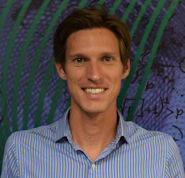
Seiichiro Tani is a Professor at Waseda University's Faculty of Education and Integrated Arts and Sciences since April 2024. He previously held prominent roles at NTT Communication Science Laboratories (2003-2024), including Leader of the Computing Theory Research Group and Project Manager of the Research Center for Theoretical Quantum Information. He has also served as a Visiting Professor at Tokyo Institute of Technology (2022-2024) and a researcher at JST's ERATO projects (2004-2009). His academic journey includes a Ph.D. in Computer Science from the University of Tokyo (2006), preceded by M.E. and B.E. degrees from the University of Tokyo and Kyoto University, respectively.
German Saez Moreno is a Professor in the Department of Mathematics at the Universitat Politècnica de Catalunya (UPC), affiliated with the Barcelona School of Telecommunications Engineering. He is a core member of the ISG-MAK (Information Security Group - Mathematics Applied to Cryptography) and the MAK research group. His work focuses on cryptography, information security, and their applications in cybersecurity and distributed systems. Research Interests: Cryptography and cryptanalysis of advanced cryptographic protocols Secret sharing schemes and access structure design Secure communication protocols and post-quantum cryptography Distributed key management and self-healing systems Cybersecurity education and curriculum development Recent Publications Trends: His 2025 work on (k,n)-consecutive access structures advances secret sharing theory. Recent projects (2023-2022) emphasize cybersecurity education and post-quantum cryptographic solutions. Earlier contributions (2010-2005) include foundational work on threshold schemes, proxy signatures, and self-healing key distribution mechanisms. Grants & Projects: Lead researcher in multiple competitive R&D projects including 'Criptografía para retos digitales emergentes' (2022), 'Hacia una sociedad digital segura' (2014), and EU-funded 'European Network of Excellence for Cryptology II' (2010). Active in curriculum innovation through the SPACE project (2023). Lab/Team: Co-leads the ISG-MAK group focusing on applied cryptography and information security solutions.
Dr. Rachel Player is a Senior Lecturer in the Department of Information Security at Royal Holloway, University of London. Her research focuses on post-quantum cryptography, lattice-based cryptographic schemes, and homomorphic encryption. Previously, she held postdoctoral roles in the EU H2020 PROMETHEUS project and conducted research at Sorbonne Université's PolSys team in Paris. She earned her PhD in Information Security from Royal Holloway, supervised by Professors Carlos Cid and Sean Murphy. Research interests include privacy-enhancing technologies and the application of quantum algorithms in cryptanalysis. She actively contributes to standardization efforts and has published extensively in cryptography journals and conferences. Dr. Player is an editor for Designs, Codes and Cryptography and participates in ISO/IEC standards meetings. Her work emphasizes practical homomorphic encryption systems and secure implementation guidelines. Collaborations span international institutions, reflecting her role in advancing cryptographic research and its real-world applications.
Sebastian Bitzer is a researcher at the Technical University of Munich (TUM), affiliated with the Chair of Coding and Cryptography led by Prof. Wachter-Zeh. He is part of the Institute of Communications Engineering within the Faculty of Electrical Engineering and Information Technology. His work focuses on cryptography, coding theory, and error-correcting codes with applications in post-quantum security and algorithmic design. Key research interests include code-based cryptography, decoding algorithms for non-binary cyclic codes, and the development of secure cryptographic protocols. Recent studies explore zero-knowledge proofs, syndrome decoding attacks, and error structure-aware decoding methods. Bitzer has contributed to submissions for NIST post-quantum cryptography standardization and advanced decoding techniques in parallel channels. Publications highlight innovations in signature schemes (e.g., FuLeeca), burst error correction, and metric-based coding strategies. His work bridges theoretical coding advancements with practical cryptographic implementations. No specific grants or awards are explicitly mentioned in the provided texts, though his active publication record suggests ongoing academic engagement. Labs/Teams: Active member of the TUM Chair of Coding and Cryptography, collaborating on projects involving post-quantum cryptography and error-correcting code applications.
Neil Hanley is a Principal Engineer at the Queen's University Belfast , affiliated with the Secure Digital Systems group under the School of Electronics, Electrical Engineering and Computer Science . His work focuses on hardware security, cryptography, and side-channel analysis, particularly in FPGA implementations and physically unclonable functions (PUFs). Research Interests: Neil specializes in Side-Channel Analysis (SCA) , Post-Quantum Cryptography (PQC) , Quantum Key Distribution (QKD) , and Machine Learning Applications in Security . He investigates hardware vulnerabilities, designs secure cryptographic systems, and evaluates entropy sources for PUFs. Scientific Contributions: Developed hybrid quantum-safe cryptographic protocols integrating QKD and PQC. Advanced machine learning techniques for detecting and mitigating side-channel attacks. Evaluated FPGA-based PUFs for uniqueness and entropy optimization. Scientific Awards: Recipient of the INVENT2015 Prize for innovative contributions to cybersecurity. Collaborations: Neil collaborates with researchers like Maire O'Neill, Ali Khalid, and James Grant on projects involving hardware security, cryptographic algorithm optimization, and quantum-safe systems. He contributes to datasets like the PicoPUF Dataset and participates in international conferences such as SECRYPT and ISCAS.
Michael Gruber is a researcher and teaching associate at the Lehrstuhl für Sicherheit in der Informationstechnik (Chair for Security in Information Technology) at Technische Universität München (TUM) , under Prof. Georg Sigl. His role involves conducting advanced research in hardware security and teaching specialized courses in cryptographic implementations. Research Focus: Gruber's work centers on fault attacks , side-channel attacks , and secure implementations of cryptographic systems, with applications in embedded security and cryptanalysis . He actively contributes to projects involving hardware reverse engineering , FPGA security , and post-quantum cryptography . Teaching Contributions: He co-leads the SmartCard Laboratory and teaches Secure Implementation of Cryptographic Algorithms , providing hands-on experience in secure hardware design and vulnerability assessment. Publications: Gruber has authored numerous peer-reviewed papers (2017–2024) in top-tier venues like HOST , FDTC , and ASPDAC , focusing on novel attack methodologies and countermeasures for secure hardware. Collaborations: His work often involves collaboration with PhD students and industry partners, as evidenced by co-authored papers with researchers like Matthias Probst, Patrick Karl, and Georg Sigl.
Jean-François Biasse is Professor in the Department of Mathematics & Statistics at University of South Florida and Director of the Center for Cryptographic Research. His research specializes in computational number theory and post-quantum cryptography, particularly lattice-based and isogeny-based cryptographic schemes. He holds a PhD from École Polytechnique and has held positions at University of Waterloo and University of Calgary. His research develops: Algorithms for class group and unit group computation Cryptanalysis of post-quantum schemes Quantum-resistant cryptographic protocols Efficient implementations of number-theoretic algorithms He has contributed significantly to isogeny-based cryptanalysis. His publications address: Quantum attacks on cryptographic assumptions Subexponential algorithms in number theory Security of code-based signatures Ideal lattice problems in cyclotomic fields Recent work examines tradeoffs between classical and quantum attacks. Dr. Biasse leads research on privacy-preserving technologies through projects like Trace- and homomorphic encryption systems. He serves as associate editor for the International Journal of Computer Mathematics: Computer Systems Theory.
Alex Lombardi is an Assistant Professor of Computer Science at Princeton University, specializing in cryptography and theoretical computer science. He joined Princeton in 2023 after a Simons-Berkeley postdoctoral fellowship hosted by Shafi Goldwasser. His PhD in computer science from MIT (2022) was advised by Vinod Vaikuntanathan. His research focuses on the theoretical foundations of classical and quantum cryptography, with a strong emphasis on cryptographic protocols, complexity theory, and post-quantum security. Education: PhD in Computer Science, MIT (2022); Postdoctoral Fellowship at Simons Institute for the Theory of Computing (Berkeley). Prior academic roles include teaching at MIT (2018–2019) and serving as a teaching assistant for Cryptography and Cryptanalysis courses. Research interests span cryptographic proof systems (e.g., succinct arguments, zero-knowledge proofs), lattice-based cryptography, quantum-resistant algorithms, and complexity-theoretic hardness assumptions. His work often bridges cryptography with computational complexity, exploring topics like PPAD hardness, indistinguishability obfuscation, and the Fiat-Shamir heuristic. Recent publications highlight contributions to SNARGs (succinct non-interactive arguments), post-quantum security analyses, and foundational studies of cryptographic protocols under advanced assumptions (e.g., LWE, Decisional Diffie-Hellman). Key trends include advancing succinct verification techniques, analyzing quantum computational threats, and formalizing cryptographic assumptions via complexity reductions. Awards: No explicit awards listed, though his prolific publication record in top venues (STOC, CRYPTO, EUROCRYPT) reflects academic recognition. Teaching: Taught COS 533 (Advanced Cryptography) in 2023 and COS 433/533 (Cryptography) in 2024. Previously, led courses at MIT on cryptographic proofs and foundations. Service: Served on program committees for STOC 2025, EUROCRYPT 2025, and multiple CRYPTO and TCC events. Active in reviewing for leading cryptography and theoretical computer science conferences.
Assoc Prof Anupam Chattopadhyay is an Associate Professor in the College of Computing & Data Science at Nanyang Technological University (NTU), Singapore. He also holds a courtesy appointment in the School of Physical & Mathematical Sciences. His research focuses on computer architecture, security, design automation, and quantum computing. Anupam received his PhD from RWTH Aachen University in 2008, followed by roles at CoWare R&D and RWTH Aachen as a Junior Professor before joining NTU in 2014. Education: B.E., Jadavpur University, India MSc, ALaRI, Switzerland PhD, RWTH Aachen University, Germany Research Interests: Anupam’s work spans quantum computing, hardware security, AI security, post-quantum cryptography, and emerging technologies. His contributions include novel high-level synthesis techniques for cryptography, reliability estimation flows for embedded processors, and exploration of coarse-grained reconfigurable architectures. His research has been featured in major outlets like The Economist and Asian Scientist. Awards: Borcher's plaque (2008) for outstanding doctoral dissertation Nomination for Best IP Award (ACM/IEEE DATE 2016) Nomination for Best Paper Award (International Conference on VLSI Design 2018) Advising & Grants: Anupam leads a team of over 20 researchers, overseeing projects funded by various grants. He has advised numerous doctoral students and collaborates with institutions like Temasek Labs and the Indian Statistical Institute. Labs & Teams: His research group focuses on advanced topics in secure computing, quantum-resistant systems, and hardware-software co-design, leveraging cutting-edge tools and platforms for next-generation technologies.
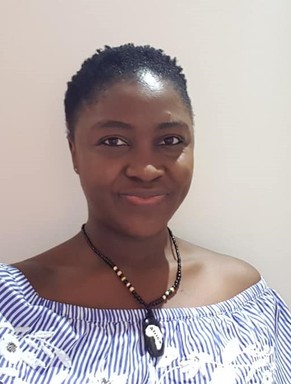
Rahinatou Njah is a Doctoral Researcher at Aalto University's School of Science, affiliated with the Department of Mathematics and Systems Analysis and the Algebra and Discrete Mathematics research group. She focuses on cryptography, particularly homomorphic encryption and cryptanalysis, with contributions to post-quantum security and algebraic structures. Education: Pursuing a doctoral degree in Mathematics/Computer Science at Aalto University. Research Interests: Cryptographic protocol design, lattice-based cryptography, security analysis of encryption schemes, and applications of algebraic structures in cryptography. Her work bridges theoretical mathematics and practical security challenges in the quantum era. Publications: Recent work includes studies on efficient polynomial arithmetic in homomorphic encryption systems and classical security analysis of abelian group-based encryption. Her research spans topics like cryptanalysis of cyclotomic structures and post-quantum cryptography verification. Collaborations: Collaborates internationally with researchers in cryptography and algebra, including institutions involved in Women in Numbers Europe initiatives.
Associate Professor Serdar Boztas is affiliated with RMIT University's School of Science in Australia. His academic rank is Associate Professor. He is actively involved in teaching Information Theory, Cryptography and Security, Advanced Topics in Cryptography, and Smartcard Cryptosystems. His research interests span Coding and Information Theory, Cryptography, Information Security, Wireless Communications, and Complex Networks. Research highlights include work on Reed-Solomon codes, insider threat detection, and sequence design with applications in cryptography and signal processing. His recent publications focus on error correction, network security, and algorithmic improvements in coding theory. He has supervised PhD projects on Lightweight Encryption and Insider Threat Mitigation, with notable completed projects in malware analysis and cryptographic countermeasures. Service & Engagement: Committee roles in IEEE workshops, international conferences, and advisory boards (e.g., ISC, AAECC, SECIA). Teaching: Courses emphasize Information Theory, Cryptography, and Security applications. Grants & Funding: Active in securing research funding for projects in cybersecurity and communication systems. Boztas' work bridges theoretical foundations with practical applications in information security, network efficiency, and cryptographic systems. His contributions to sequence design and threat detection methodologies are widely recognized in the field.
Sorina Ionica is a Lecturer at the University of Picardie Jules Verne, specializing in Cryptography , Mathematics , and Artificial Intelligence . Her research focuses on the application of optimization techniques and algebraic geometry to cryptographic protocols, particularly in the context of genus 3 curves and isogeny-based cryptography. Research Interests: Cryptography, isogeny graphs, complex multiplication, index calculus, and AI-driven optimization algorithms. Projects: Involved in BforSAT (application of SAT solvers to cryptographic problems) and POSTCRYPTUM (post-quantum cryptography research). Recent Articles: Her work spans mathematical cryptography (e.g., CM curves and Weil descent attacks), algorithm optimization (Crossbred algorithm), and AI integration in cryptanalysis (tree search and SAT solvers). Labs: Sorina is affiliated with the OCIA Lab (Optimization and Cryptography, AI).
Carlo Sanna is an Associate Professor at the Department of Mathematical Sciences (DISMA) of Politecnico di Torino, Italy. His research focuses on algebraic and analytic number theory, cryptography, and their intersections, particularly in post-quantum and public-key cryptographic systems. Research Interests : Algebraic Number Theory, Analytic Number Theory, Cryptanalysis, Post-Quantum Cryptography, Public-Key Cryptography, Discrete Mathematics. Teaching : He teaches Linear Recurrences (PhD level) and Advanced Cryptography (Master's level) at Politecnico di Torino, while also lecturing Linear Algebra and Geometry for Aerospace and Management Engineering. Publications : His recent work spans Fibonacci partitions, Lucas sequences, post-quantum cryptographic algorithms, and properties of linear recurrences. Supervised PhD Students : Leonardo Errati (Post-Quantum Cryptography, 2025) Giulia Salvatori (2024) Federico Accossato and Enrico Guglielmino (2022) Giuliano Romeo (2021-2025, p-adic continued fractions) Research Projects : Algebraic Methods in Cryptanalysis (2025-2027, Scientific Director) QUBIP (Quantum-oriented browser updates, 2023-2026, Scientific Head) SERICS Spoke 5 (Cybersecurity, 2023-2025, Scientific Manager) Email : carlo.sanna@polito.it
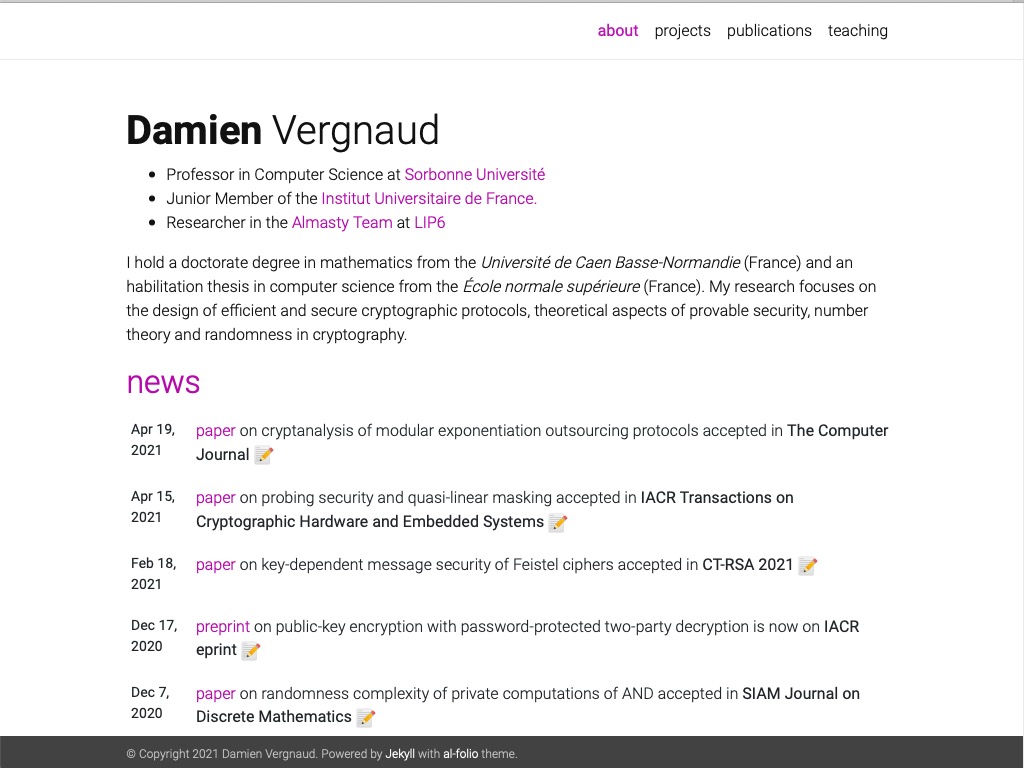
Dr. Damien Vergnaud is a Full Professor at Sorbonne University since September 2017, affiliated with the ALMASTY research team within LIP6 (Laboratoire d'Informatique de Paris 6), the Computer Science department of the Faculty of Science. His office is located at 4 place Jussieu, Paris, France, in Couloir 24-25, Étage 4, Bureau 412. Dr. Vergnaud holds a doctorate degree in mathematics from Université de Caen Basse-Normandie and an habilitation thesis in computer science from École normale supérieure. His research focuses on the design of efficient and secure cryptographic protocols, theoretical aspects of provable security, number theory, and randomness in cryptography. His work spans multiple domains including post-quantum cryptography, zero-knowledge proofs, secure implementation techniques against side-channel attacks, and cryptographic protocol analysis. He actively investigates how quantum computing impacts traditional cryptographic assumptions and protocols, as evidenced by his supervision of PhD students working on quantum-related cryptographic topics. Dr. Vergnaud's recent publications demonstrate a strong focus on post-quantum cryptographic techniques, zero-knowledge argument systems, and secure implementation methodologies. His research output shows consistent collaboration with both academic researchers and industry partners, particularly in practical cryptographic implementations. His work bridges theoretical foundations with practical security considerations, addressing challenges in modern cryptographic systems including resistance to quantum computing threats and side-channel analysis. Dr. Vergnaud actively supervises PhD students, currently mentoring three doctoral candidates and having successfully guided four students to completion in recent years. His supervision spans diverse topics within cryptography, including post-quantum cryptographic techniques, zero-knowledge arguments, secure implementations against physical attacks, and mathematical studies of pseudorandom number generators. He has served on numerous PhD defense committees, indicating his active role in the academic community. Dr. Vergnaud is a member of the ALMASTY research team at LIP6, which specializes in cryptographic algorithms and protocols. The team works on both theoretical foundations and practical implementations of cryptographic systems, with particular emphasis on security against various attack vectors including quantum computing threats and side-channel analysis.
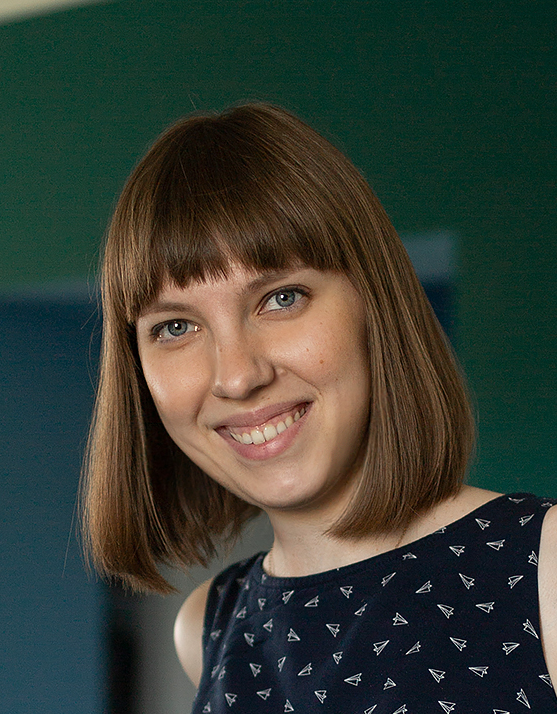
Elena Kirshanova is a part-time Lecturer at I.Kant Baltic Federal University and Lead Cryptographer at Technology Innovation Institute. Her research focuses on practical and theoretical cryptanalysis of lattice-based and code-based cryptographic primitives, with applications to post-quantum security. Research interests include: Lattice-based cryptanalysis Quantum algorithms for cryptographic problems Decoding attacks on McEliece variants Sieving techniques for codes and lattices She teaches courses in lattice-based cryptography, coding theory, and information security. Dr. Kirshanova serves on program committees for major cryptography conferences including Crypto, Eurocrypt, and PQCrypto. Her work bridges theoretical cryptanalysis with practical implementations for post-quantum cryptographic schemes.