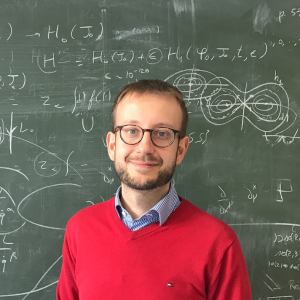
Dr. Stefan Keppeler is a researcher at the Department of Mathematics, University of Tübingen, within the Faculty of Mathematics and Natural Sciences. His work bridges mathematical physics, differential geometry, and quantum field theory with specific applications in quantum chromodynamics and semiclassical methods. Equal Opportunities Officer Research interests include: Semiclassical quantization Trace formulae with spin Geometric phases in quantum systems Color decomposition in particle physics Applications of differential geometry to quantum chaos Recent publications focus on: Wigner 6j symbols for SU(N) Tensor decomposition in gauge theories Spin network formalisms Spectral statistics in quantum systems Mathematical methods in particle physics Teaching includes advanced courses in Mathematical Physics and Quantum Theory.
Kamal Barley serves as a Visiting Professor at Arizona State University, affiliated with the Mathematical and Theoretical Biology Institute (MTBI). His work bridges applied mathematics with life and social sciences through rigorous quantitative modeling approaches. His research spans Infectious Disease Modeling (pertussis, tuberculosis, Ebola, HIV-malaria co-infections), Mathematical Biology (glial cell dynamics, wildlife disease ecology), Social Sciences Modeling (romantic relationships, political instability), and recently Quantum Mechanics. Barley employs differential equations, stochastic processes, and computational methods to address complex biological and social phenomena, with emphasis on transmission dynamics and system behavior under uncertainty. Analysis of his 15 most recent publications reveals a strategic evolution from epidemiological focus (2010-2020) toward quantum mechanics (2022-2025), while maintaining core expertise in infectious disease modeling. His work consistently integrates interdisciplinary collaboration, particularly through MTBI's student-focused research programs, demonstrating methodological versatility across biological, physical, and social domains. Barley actively contributes to the Mathematical and Theoretical Biology Institute at Arizona State University, where he mentors students through technical report projects spanning disease modeling, ecological dynamics, and mathematical physics. His collaborative approach involves co-authoring with diverse teams across institutions, reflecting MTBI's mission of advancing theoretical biology through inclusive research training.
Ipsita Das is a PCCM Postdoctoral Fellow at Princeton University, focusing on quantum materials and graphene-based systems. Her research explores correlated electron phenomena, twisted bilayer graphene, and advanced materials processing. Key areas of investigation include electron-electron interactions in graphene, superconductivity, and quantum phase transitions under magnetic fields. Her work combines experimental techniques such as quantum twisting microscopy, high-energy ball milling, and advanced electrical characterization. Notable contributions involve fabricating high-quality twisted bilayer graphene devices and studying their electronic properties under extreme conditions. She also investigates novel composite materials, including medium-entropy alloys reinforced aluminum composites. Recent studies highlight reentrant correlated insulators, symmetry-broken Chern insulators, and quantum noise-limited amplification using graphene Josephson junctions. These findings bridge fundamental physics with potential applications in quantum electronics and low-loss microwave systems. Ipsita’s research also extends to strange metal behavior and the interplay of superconducting and insulating orders in magic-angle graphene bilayers. Her work is supported by experimental data from cutting-edge facilities, emphasizing reproducible fabrication and precise characterization.
Prof. Zhaoyuan Ma is a tenured professor at the School of Automation and Intelligent Manufacturing, Southern University of Science and Technology (SUSTech), with prior appointments at Tsinghua University's Future Lab (2018-2022), University of Sheffield (2017-2020), and Chinese Academy of Sciences (2009-2015). He holds a PhD in Atomic and Laser Physics from the University of Oxford (2005) and a B.Sc. in Nuclear Physics from Peking University (2001). Education: D.Phil., Atomic and Laser Physics, University of Oxford (2005) B.Sc., Nuclear Physics, Peking University (2001) His research spans Smart Manufacturing , Quantum Control , and Artificial Intelligence , with notable work on quantum engineering in microgravity environments and AI-driven biomedical imaging systems. Recent publications focus on coronary artery segmentation algorithms, optical lattice design for quantum systems, and cold atom dynamics. Key trends in his 15 most recent articles include AI applications in cardiovascular disease diagnosis, precision cooling techniques for quantum gases in microgravity, and optical lattice manipulation for quantum simulations. His work bridges theoretical quantum physics with practical manufacturing innovations. Scientific Awards: Hundred Talents Professor of Chinese Academy of Sciences (2009) Fellow of the Institute of Physics Prof. Ma has held leadership roles including Assistant Dean of Tsinghua Shenzhen International Graduate School (2020-2021) and directed the Data Driving Manufacturing Research Center at Tsinghua University's Future Lab (2018-2022). His career includes postdoctoral research at NIST, University of Maryland, UC Berkeley, and University of Oxford.
Antonio Vicino is a Full Professor of Control Systems at the Department of Information Engineering and Mathematical Sciences, University of Siena, Italy. He has held several significant leadership positions including Head of Department (1996-1999), Dean of the Engineering Faculty (1999-2005), Director of the Center for Complex Systems Studies (1999-2012), Director of the PhD Program in Information Engineering and Science (2016-2021), and President of the Italian University Council (2019-2023). Professor Vicino earned his Laurea Degree in Electrical Engineering with honors from Politecnico di Torino in 1978, followed by fellowships with CSS-ATA (1979-1980) and ENEL-Politecnico di Torino (1981-1982). His academic career progressed from Assistant Professor at Politecnico di Torino (1983-1987) to his current position at the University of Siena. His research focuses span Control Systems, Robust Control, System Identification, Smart Grids, Energy Systems, Systems Biology, Time Series Analysis, Nonlinear Systems, and Applied System Modeling. His work has evolved from foundational theoretical contributions in robust control to practical applications in energy systems and biological modeling. Recent work demonstrates a strong emphasis on smart grids, electric vehicle integration, and energy storage optimization. Professor Vicino's extensive publication record reveals an evolution from theoretical control systems research to applied energy systems work. His recent publications (2018-2024) primarily focus on smart grid applications, electric vehicle integration, and energy storage optimization, reflecting the growing importance of renewable energy integration and sustainable technologies. Fellow of the IFAC (2008) Life Fellow of the IEEE (2000) Associate Editor of Automatica (1995-present) Associate Editor at Large of IEEE Transactions on Automatic Control (1998-2008) Professor Vicino has advised 23 PhD students and 10 Research Associates, along with over 150 Master's theses. His research has been supported by numerous grants including EC-FP7 Project ADDRESS (2008-2013), MPS Foundation projects, and multiple national government research projects. He has established four research laboratories: Mobile Robotics Lab, Haptics and Medical Robotics Lab, Process Control Lab, and Automatic Control Telelab (ACT), which has received international recognition including featuring on the cover of IEEE Control Systems Magazine.
Mark Walton is a Professor in the Department of Physics and Astronomy at the University of Lethbridge, where he has been a faculty member since January 1991. His research focuses on theoretical and mathematical physics, particularly the quantum-classical relation and phase-space quantum mechanics. Education: B.Sc. (Honours) in Physics from Dalhousie University M.Sc. and Ph.D. (1987) in Theoretical High-Energy Physics from McGill University Mark Walton's research centers on the foundations of quantum mechanics, particularly the quantum-classical relation. He investigates how classical mechanics emerges from quantum theory using phase-space quantum mechanics. His work also includes conformal field theory, string theory, and applications of Lie algebras and groups to physical systems. His recent publications (2018-2022) focus on phase-space quantum mechanics and the quantum-classical relation. Key topics include dynamical brackets, canonical quantum-classical dynamics, and the role of star products. His work often involves collaboration with students and addresses foundational issues in quantum theory. Scientific Awards: NSERC Postdoctoral Fellowship Prof. Walton has advised students including M Amin and M P G Robbins. He has been an NSERC Grantholder since 1992. His current grants include: NSERC Discovery Grant (2022-2027): $24,000/year for Phase-Space Quantum Mechanics and the Quantum-Classical Relation NSERC Alliance - Alberta Innovates Advance Programs (2022-2024): $16,000/year for the same project
Mauro Melchiades Dória is a Full Professor at the Instituto de Física, Universidade Federal do Rio de Janeiro (UFRJ), Brazil. He holds a CNPq Research Productivity Scholarship (Level 1C), recognizing his contributions to condensed matter physics. His office is located in Room A-432/1, and he can be contacted via email at mmd@if.ufrj.br. Education: He earned his PhD in Physics from Yale University. Research Interests: Prof. Dória specializes in superconductivity, magnetism, and fluid dynamics, with a focus on vortex behavior in mesoscopic systems. His work combines theoretical modeling (e.g., Ginzburg-Landau theory) with computational techniques to study: Vortex patterns in superconductors under magnetic fields Topological states in layered materials Quantum fluid dynamics using lattice Boltzmann methods Magnetic-superconductor heterostructures Publications: His recent articles (2010–2014) explore vortex dynamics, electronic states in superconductors, and geometric approaches to quantum phenomena. A consistent theme is the interplay between magnetic fields and superconducting phases in confined geometries. Awards: CNPq Research Productivity Scholarship – Level 1C (Brazil’s prestigious research grant) Advising & Memberships: He has supervised Master’s and PhD students on topics spanning vortex matter and computational physics. He is an active member of: The University Council of UFRJ (Consuni) Multisuper Network Núcleo de supercondutividade teórica e computacional
Andrea Campoleoni is a tenured Researcher at the University of Mons, holding a permanent position as a research associate of the F.R.S.-FNRS since 2018. His academic career spans postdoctoral fellowships at the Max Planck Institute for Gravitational Physics (Potsdam), Université libre de Bruxelles, and ETH Zurich, following a PhD from Scuola Normale Superiore under Augusto Sagnotti. His research centers on higher-spin gauge theories and gravitational physics in three dimensions , with pioneering work on asymptotic symmetries in higher-spin gravity systems. He investigates how gravitational waves emerge in these frameworks and develops algebraic structures for symmetry characterization. Analysis of his publications reveals sustained focus on the intersection of higher-spin symmetries and low-dimensional gravity, with increasing emphasis on Carrollian/Galilean conformal algebras and higher-dimensional extensions. His work consistently bridges abstract algebraic structures with physical gravitational phenomena. Scientific Awards: Renato Musto Award for Theoretical Physics (2015) FNRS incentive grant in scientific research – MIS (2019) Dr. Campoleoni teaches Statistical Physics (BAC3), General Relativity (MA1), and Advanced Topics in Gravitation (MA2) at the University of Mons. His research is institutionally supported through FNRS funding mechanisms, and he maintains active collaborations across European theoretical physics institutions.
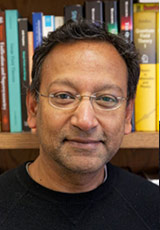
Gautam Vemuri serves as Professor in the Department of Physics at Indiana University, where his research focuses on laser physics and nonlinear optics with emphasis on semiconductor laser dynamics and quantum optical phenomena in waveguide arrays. His academic credentials include: Ph.D. in Physics from Georgia Institute of Technology (1990) M.S. in Physics from Brown University (1986) B.Sc. (Honors) in Physics from Delhi University, India (1984) Dr. Vemuri's research spans Atomic, Molecular and Optical Physics, investigating statistical properties of lasers and quantum effects in evanescently coupled systems. His work addresses semiconductor laser instability from optical feedback and explores phenomena including Anderson localization, Bloch oscillations, and PT-symmetry in finite lattices, with applications in optical communications and quantum physics testing. Analysis of his 2004-2013 publications reveals consistent focus on semiconductor laser dynamics under filtered optical feedback and quantum effects in waveguide arrays, with recurring themes of nonlinear dynamics, disorder effects, and symmetry properties across optical physics and condensed matter disciplines. He directs the Optical Physics Lab equipped with state-of-the-art instrumentation including argon-pumped Ti:Sapphire lasers, ultra-stable diode lasers, Erbium-doped fiber lasers, high-finesse optical cavities, and advanced data acquisition systems for experimental research. No public information is available regarding Dr. Vemuri's student advising activities or research grant funding.
Dr. Robert Kerwin Billones is an Associate Professor and Graduate Studies Coordinator at De La Salle University in Manila, Philippines. He is affiliated with the Department of Manufacturing Engineering and Management and serves as a faculty researcher under the Center for Engineering and Sustainable Development Research. Dr. Billones leads the Intelligent Systems Laboratory and is actively engaged in research collaboration and partnerships. Dr. Billones earned his Doctor of Philosophy in Electronics and Communications Engineering from De La Salle University. His academic journey demonstrates a strong foundation in engineering principles with a focus on communications and electronic systems. His research interests span multiple cutting-edge domains including artificial intelligence, computer vision, biomedical engineering, cloud computing, data engineering, intelligent transport systems, and smart cities. His work bridges theoretical concepts with practical applications across various industries. He has made significant contributions to machine learning applications in medical diagnostics, transportation systems, agricultural optimization, and sustainable energy solutions. With 112 publications to his name and over 108,0059 reads on ResearchGate, Dr. Billones has established himself as a prominent researcher in his fields of interest. His recent work shows a strong focus on AI ecosystems, digital twinning for smart infrastructure, and optimization of renewable energy systems using linear programming approaches. Dr. Billones has been actively involved in numerous research collaborations, as evidenced by his extensive co-author network across various departments at De La Salle University. His work demonstrates interdisciplinary approaches that connect engineering principles with real-world problem solving.
Bin Chen is a researcher at the Department of Electrical Engineering, Eindhoven University of Technology (TU/e), focusing on optical communications, signal processing, and information theory. He holds a PhD from University College Dublin (2015), supported by the China Scholarship Council and Science Foundation Ireland. His roles include Postdoc positions in the Signal Processing Systems (SPS) and Electro-Optical Communication Systems (ECO) groups at TU/e, and a current guest researcher affiliation. His research emphasizes geometric shaping, coded modulation, and nonlinear channel mitigation in optical systems. Education: B.Sc. Electronic Information Science and Technology, Hefei University of Technology (2010) Ph.D. Electronics and Communications Engineering, University College Dublin (2015) Affiliations: Signal Processing Systems Group (SPS) Electro-Optical Communication Systems (ECO) Group ICT Lab Research interests include optical communication systems, cooperative communications, channel coding, and network coding. Key achievements include over 60 peer-reviewed publications and awards such as the Asia Communications and Photonics Conference Best Paper Awards (2018, 2022). He has contributed to projects like PATRIOT (coded modulation optimization) and NLCAP (nonlinear capacity maximization in optical channels). Grants and collaborations span EU-funded initiatives and industry partnerships. His work on multidimensional constellations and fiber nonlinearity models has advanced long-haul transmission systems. Current projects explore neural network-based demappers and hybrid decoding techniques.
Matthieu ARZEL is an Associate Professor in the Department of Mathematical and Electrical Engineering at IMT Atlantique. He holds an HDR (2021), PhD (2006), and Engineer degree (2002) from Telecom Bretagne/ENST. His research focuses on iterative processing for digital communications, low-power integrated circuits, high-speed digital circuits, and FPGA implementations in domains like neural networks, medical engineering, and communication systems. Key research interests include neuromorphic hardware, neural network pruning, federated learning compression, and energy-efficient signal processing. He has supervised 18 PhD students and contributed to projects like Ouessant coprocessor architectures and clique-based neural network circuits. His work bridges algorithm-architecture interactions, emphasizing low-power and embedded system applications. Recent publications highlight innovations in FPGA-based deep learning deployment and efficient neural network compression techniques. Publications span topics from real-time semantic segmentation on FPGA to collusion-resistant watermarking. His contributions address challenges in hardware-software co-design, iterative decoders for MIMO systems, and biomedical signal processing.
Professor Derek Abbott is a faculty member in the School of Electrical and Mechanical Engineering at the University of Adelaide, within the Faculty of Sciences, Engineering and Technology. He holds the academic rank of Professor and is actively involved in supervising Masters and PhD students. His research interests span a wide range of interdisciplinary fields, including biomedical engineering, optical systems, game theory, quantum mechanics, stochastic phenomena, computational neuroscience, and forensic engineering. Professor Abbott has also contributed to energy systems optimization and space-based sensor technology. His recent work includes studies on neural network robustness, gravitational redshift measurement, and cardiovascular disease prediction using machine learning. His research often bridges theoretical concepts with practical applications in engineering and healthcare. Key research areas include the development of terahertz technology, bio-inspired engineering systems, and quantum game theory frameworks. He has published extensively on topics ranging from deep learning security to renewable energy grid optimization. His interdisciplinary approach integrates principles from physics, mathematics, and computer science to address complex real-world problems. Professor Abbott is eligible to supervise postgraduate research students and collaborates internationally on projects related to forensic genealogy, platonism in science, and energy storage solutions. His work often emphasizes the intersection of technology and societal challenges, such as climate change and healthcare innovation.
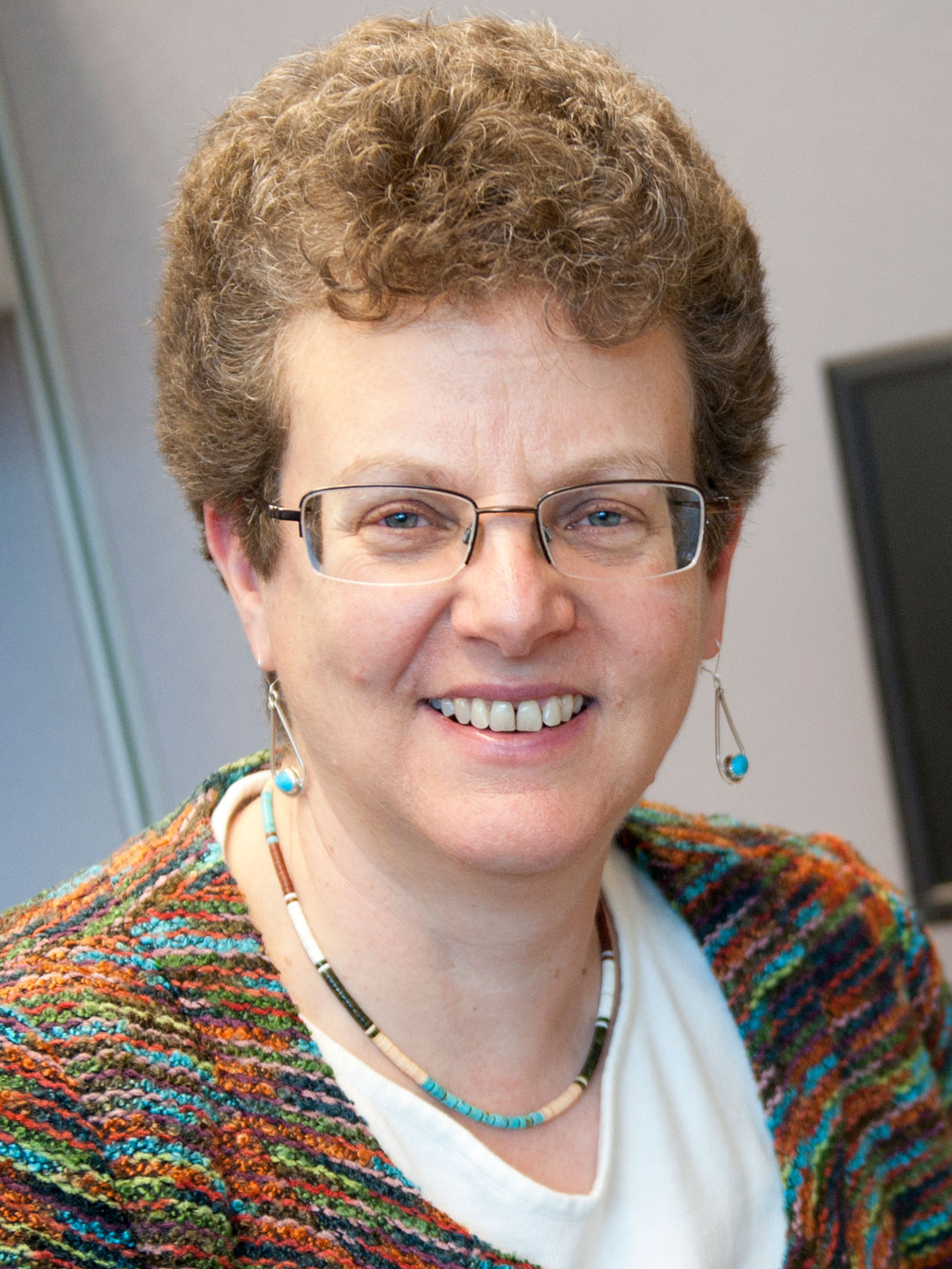
Miriam Leeser is a Professor and Associate Chair of Research in the Department of Electrical and Computer Engineering at Northeastern University. She leads the Reconfigurable and GPU Computing Lab, focusing on heterogeneous architectures, FPGA accelerators, and their applications in wireless communications, machine learning, and data privacy. Her work emphasizes practical implementations of theoretical advancements, such as cloud-edge computing frameworks and secure multi-party computation using FPGAs. Leeser holds a PhD in Computer Science from the University of Cambridge and a BS in Electrical Engineering from Cornell University. She has been at Northeastern since 1996 and is a Senior Member of both the IEEE and ACM. Notable recognitions include the National Science Foundation Young Investigator Award and her status as a Charter Member of the IEEE Computer Society Distinguished Contributor Program. Her research portfolio includes projects funded by the NSF on topics like resilient cloud infrastructure (CAREFREE), cross-layer wireless coexistence, and FPGA-enabled secure computation. The Reconfigurable Computing Lab develops tools and libraries to simplify accelerator usage, particularly for emerging applications in IoT, medical imaging, and 5G/6G systems. Key Projects: CAREFREE, P4-based FPGA Testbeds, Secure Function Evaluation via FPGAs, MIMO Systems Acceleration Grants: Over $2M in NSF awards for cloud infrastructure and cybersecurity Labs: Reconfigurable and GPU Computing Lab (RCL) Leeser’s publications span FPGA optimization, hardware-software co-design, and privacy-preserving technologies. Recent work highlights include accelerating large language models with token-adaptive quantization and low-latency optical wireless transceivers.
Viqar Husain is a Professor in the Department of Mathematics and Statistics at the University of New Brunswick. His research centers on quantum gravity, seeking a unified theory of gravitation and quantum mechanics. This involves re-examining classical notions of space and time, with applications to black holes and cosmology. He also explores mathematical finance and scientific computing. Research includes black hole-white hole transitions, semiclassical cosmology, quantum entanglement in cosmological bounces, and geometrodynamics. His publications frequently address singularity resolution and quantum gravity corrections to general relativity. Side interests involve Ising models in gravitational contexts and dark matter cosmology. No scientific awards, students, or grants are detailed in the source material.