

Michael Arnold is Professor of Business Informatics, specializing in Algorithmics and Software Development at Leibniz University of Applied Sciences. His research centers on digital watermarking, multimedia security, and information forensics, with extensive publications in IEEE Transactions and major security conferences. Professor Arnold's innovations include phase-based audio watermarking techniques robust to acoustic transmission and methods for evaluating watermark attacks. His seminal work established foundational approaches for protecting digital audio through quantization and modulation techniques. He has contributed to standardization efforts through benchmark comparisons and developed security frameworks adopted in copyright protection systems. His book 'Techniques and Applications of Digital Watermarking and Content Protection' remains a key reference in multimedia security.
جستوجوی استاد و پژوهشگر
استاد راهنما، استاد دانشگاه یا پژوهشگر مناسب برای مسیر پژوهشیتان را پیدا کنید و با او ارتباط بگیرید.
نمایش ۱۲۱-۱۳۵ از ۱۳۷ استاد راهنما
اطلاعات این پروفایلها از صفحات عمومی دانشگاهها جمعآوری شده و ممکن است بهروز نباشد.

- Statistics of Stochastic Processes
- Quantization for Probability Distributions
- Invariance Structures in Probability and Statistics
Harald Luschgy is a Professor in the Department of Mathematics at the University of Trier's Faculty IV. His research focuses on statistical methods for stochastic processes, probability distribution quantization, and invariance structures in probability and statistics. Email: luschgy@uni-trier.de He maintains active research affiliations and has published works in his areas of expertise. Further details about his publications and professional activities are available through his institutional profile.
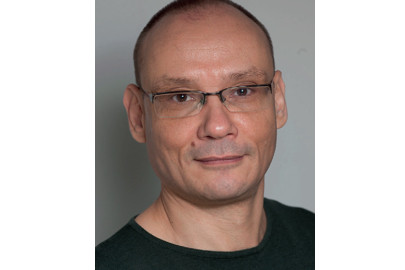
Prof. Roger Bielawski is a Professor at the Institute of Differential Geometry within the Faculty of Mathematics and Physics at Leibniz University Hannover. He serves as Spokesperson of the Riemann Center for Geometry and Physics and is a member of its leadership. His research focuses on differential geometry, mathematical physics, and hyperkähler manifolds, with contributions to monopole theory, complex geometry, and geometric analysis. He has organized major conferences such as the 2019 'Geometric and Analytic Aspects of Moduli Spaces' and the 2011 'Variational Problems in Differential Geometry.' His work bridges algebraic geometry, geometric analysis, and theoretical physics, emphasizing structures like spectral curves, integrable systems, and geometric moduli spaces. Roles: Spokesperson (Riemann Center), Professor (Institute of Differential Geometry), Deputy Representative (Faculty Council). Research Interests: Hyperkähler metrics, monopole dynamics, geometric structures in algebraic geometry, and integrable systems. Publications span over three decades, with recent works addressing vector bundles on real curves, quiver representations, and hypercomplex limits. He actively contributes to academic governance and maintains collaborative networks through the Riemann Center and Institute initiatives.
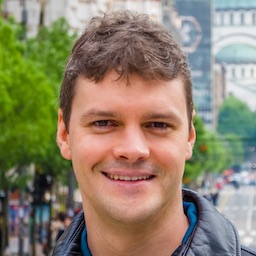
Marco Canini is Professor of Computer Science at KAUST's Computer, Electrical and Mathematical Sciences & Engineering division. His research creates next-generation computing infrastructure for distributed AI/ML systems, focusing on network programmability and efficient large-scale computation. Research interests span distributed systems, cloud computing, and programmable networks, with current focus on systems support for distributed machine learning. His work develops practical implementations deployable in real-world environments. Recent publications demonstrate strong trends in optimizing distributed training through hardware acceleration (SmartNICs), communication efficiency (quantization methods), and privacy-preserving techniques (federated/split learning).

Debasmita Loharمشاهده پروفایل
پژوهشگر ارشد
Debasmita Lohar is a Postdoctoral Researcher at Karlsruhe Institute of Technology (KIT), working with Bernhard Beckert in the Application-oriented Formal Verification group at KASTEL — Institute of Information Security and Dependability. She is set to join the IT University of Copenhagen as an Assistant Professor starting December 2024. Her educational background includes: PhD from Saarland University in collaboration with the Max Planck Institute for Software Systems (MPI-SWS), Saarbrücken, advised by Eva Darulova Graduate studies at the Indian Institute of Technology (IIT) Kharagpur, advised by Soumyajit Dey Dr. Lohar's research focuses on the intersection of program analysis, approximate computing, and probabilistic analysis, with applications spanning embedded systems, scientific computing, and machine learning. Her work addresses critical challenges in numerical error analysis, particularly in the context of finite-precision arithmetic and its implications for system reliability and safety. She has made significant contributions to sound static program analysis techniques for neural networks and cyber-physical systems, developing novel approaches for mixed-precision tuning and quantization that balance computational efficiency with numerical accuracy guarantees. Her recent publications demonstrate a strong trajectory in formal methods for numerical programs, with increasing focus on neural networks and cyber-physical systems. The research shows a clear progression from fundamental numerical error analysis to practical applications in machine learning systems, reflecting the growing importance of formal verification in AI safety-critical domains. Her scientific recognition includes: Selected to participate in the 10th Heidelberg Laureate Forum, 2023 Best Presentation Award (iFM PhD Symposium), 2019 Dr. Lohar has extensive teaching experience across multiple institutions, having taught courses on Floating-Point Analysis, LLMs in Formal Verification, Neural Networks in Formal Verification at KIT, Advanced Program Analysis and Program Analysis at Saarland University, and Fault Tolerant Systems, Theory of Computation, and Computer Organization and Architecture Lab at IIT Kharagpur. Her research is supported through her position at KASTEL and likely through competitive research grants given her publication record in top-tier venues. She leads research in the Application-oriented Formal Verification group at KASTEL, collaborating with researchers like Bernhard Beckert, Eva Darulova, and others. Her work on the Aster project demonstrates her leadership in developing practical tools for sound mixed fixed-point quantization of neural networks.

Prof. Dr. Stefan Heim leads the Neuroanatomy of Language working group at Research Center Jülich's Institute of Neuroscience and Medicine (INM-1). His research bridges cognitive neuroscience and computational approaches to language processing. Research Focus His work investigates the structural and functional organization of language networks in the brain, combining neuroanatomical approaches with advanced computational methods. Current projects explore machine learning applications in neuroscience and computational linguistics. Publication Trends Recent publications focus on machine learning innovations including large language models, efficient training techniques, and applications in scientific domains like plasma physics and renewable energy.
- Video Coding
- Energy Efficiency
- HEVC
- +۴ مورد دیگر
Christian Herglotz is a researcher affiliated with the University of Erlangen-Nuremberg , Germany. His work focuses on energy efficiency in video coding and decoding systems, with a particular emphasis on HEVC and VVC standards. He has published extensively in IEEE journals and conferences like ICIP, ICASSP, and QoMEX, often collaborating with André Kaup and Matthias Kränzler. Key research themes: energy-aware video compression, decoding power optimization, rate-energy-distortion modeling. Co-edited special sections on deep learning-based video coding. Recent Publications (2022-2025): Explored power reduction in HDR video encoding, motion prediction for 360-degree video, and heterogeneous quantization for DNN accelerators. His studies integrate machine learning with traditional codec design to improve energy efficiency. Technical Contributions: Developed models for decoding energy estimation, analyzed carbon impact of streaming devices, and proposed methods for viewport-adaptive motion compensation. Collaborative work spans thermal imaging for power analysis and reliability-aware DNN hardware optimization.

Dr.-Ing. Steffen Steiner is a Doctoral Researcher at the Institute of Communications Engineering , University of Rostock, Germany, since 2018. His work focuses on communications engineering and sensor network optimization. Education : B.Sc. in Information Technology / Technical Computer Science from University of Rostock (2012-2016) M.Sc. in Information Technology / Technical Computer Science from University of Rostock (2016-2017) Research Interests : Sensor Networks Distributed Compression Information Bottleneck Method Quantization Optimization Data Transmission Efficiency Network Protocols Publication Trends : His recent work (2018-2023) centers on sensor network compression, information bottleneck applications, and algorithm optimization for distributed systems. Key themes include wireless communication, data transmission efficiency, and signal processing methodologies.
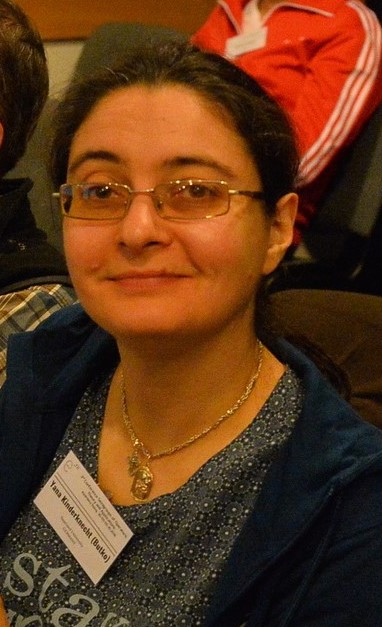
Dr. Yana Kinderknecht (née Butko) is an Associate Professor at the Department of Mathematics , Universität des Saarlandes . Her work bridges Functional Analysis , Stochastic Analysis , and Mathematical Physics , with a focus on Partial Differential Equations (PDEs) and Operator Theory . She has authored 22 publications since 2004, including preprints in zbMATH Open , and actively contributes to Chernoff approximation methods for semigroups.

Prof. Wolfgang Utschick is a full Professor at the Technische Universität München (TUM), holding the professorship for Methods of Signal Processing since 2002. He is affiliated with the TUM School of Computation, Information and Technology and the Department of Electrical Engineering and Information Technology (EI). Since 2017, he has served as Dean of the EI Department, overseeing academic and research activities. His research integrates applied mathematics into signal processing applications across wireless communications, radar technology, vehicle safety, and machine learning. Prof. Utschick earned his doctorate after industry experience and completed postdoctoral studies at TUM and ETH Zurich. He has led numerous industrial and DFG-funded projects, resulting in patents in signal processing and over 150 peer-reviewed publications. Notable contributions include advancements in channel estimation, MIMO systems, and quantum radar technology. His research interests emphasize the intersection of mathematical theory and practical engineering, with a focus on optimizing communication systems and safety-critical applications. Awards include IEEE Fellow (2021), TUM Sabbatical for Teaching Excellence (2014), and multiple IEEE publication awards. Prof. Utschick’s work bridges academia and industry, addressing challenges in 5G/6G networks, radar innovation, and machine learning-driven signal processing. He remains active in curriculum development and departmental leadership at TUM.
Jens-Michalis Papaioannou is a prominent Researcher in clinical natural language processing (NLP) and medical informatics, with extensive publications in top-tier venues like ACL, LREC, and EMNLP. His work focuses on improving clinical decision support systems through advanced machine learning techniques. 2024 : Revisiting clinical outcome prediction for MIMIC-IV with biomedical transformers 2023 : Developing MEDBERT.de for German medical NLP and MedAlpaca conversational AI 2022 : Introducing ProtoPatient for interpretable diagnosis prediction 2021 : Creating self-supervised knowledge integration frameworks for admission note analysis His research spans seven major themes : Clinical outcome prediction from admission notes Cross-lingual knowledge transfer in medical NLP Prototypical network applications Data drift analysis in longitudinal datasets Knowledge integration techniques Model optimization for healthcare LLM interpretability frameworks He has collaborated with Wolfgang Nejdl, Alexander Löser, and Betty van Aken on 13+ publications , with over 445 citations. Notable contributions include: Novel patient similarity modeling approaches ICD code hierarchy integration methods Multilingual clinical model strategies Adversarial robustness analysis Medical conversational AI frameworks

Peter Schupp is a full Professor of Physics in the School of Science at Constructor University in Bremen, Germany, a position he has held since 2002. He previously served as visiting fellow and lecturer at Princeton University (1997-1999) and as assistant professor at the University of Munich (1994-1997, 1999-2002). His office is located in Research III, Room 65 on the Constructor campus. Education: PhD (Physics), University of California at Berkeley, 1990–1993 MSc (Physics), California Institute of Technology, 1989–1990 Vordiplom (Physics), University of Heidelberg, 1986–1989 Habilitation, University of Munich, 2001 Research Interests span a broad range of topics in mathematical and theoretical physics, including: Classical and quantum gravity Quantum field theory and string theory Generalized, graded and non-commutative geometry Coherent states, entropy and quantum information Non-geometric fluxes and nonassociative structures Cosmological data analysis (CMB anisotropy & non-Gaussianity) His publications reveal a steady focus on non-commutative and nonassociative extensions of geometry and gravity, as well as their implications for quantum field theory and cosmology. Recent work couples sophisticated algebraic techniques (graded Poisson algebras, Hopf algebras) to concrete physical problems such as CMB entropy measures and axion-gravity interactions. Scientific Awards & Fellowships : Heisenberg Fellowship, Deutsche Forschungsgemeinschaft (DFG), 2002 Studienstiftung des deutschen Volkes, 1986–1992 Max-Kade-Foundation Fellow, 1997–1998 Theodore S. Brown & Edith N. Brown Fellowship / Ephraim Weiss Scholarship, 1991–1992 Dora Garibaldi Scholarship, 1990–1991 Earl C. Anthony Fellowship, Caltech, 1989–1990 University Fellow, Renker GmbH & Co. KG, 1989–1991 International Physics Olympiad Silver Medal (Portorož 1985, 7th overall) International Physics Olympiad Bronze Medal (London 1986) Contact & Collaboration : Prof. Schupp welcomes inquiries at pschupp@constructor.university or by phone at +49 421 200-3224. While the text does not list specific PhD advisees, his long tenure and extensive publication record indicate active supervision of graduate researchers in theoretical and mathematical physics.

Thomas Villmann is a Professor of Computational Intelligence and Techno-Mathematics at Mittweida University of Applied Sciences in Germany. He serves as Deputy Spokesperson for the Mathematics Department, AI Coordinator at the university, Director of the Saxon Institute for Computational Intelligence and Machine Learning (SICIM), and President of the German Chapter of the European Neural Network Society (GNNS). His academic credentials include the German 'Dr. rer. nat. habil.' designation, indicating both doctoral and habilitation qualifications in natural sciences. Professor Villmann's research focuses on computational intelligence with particular emphasis on vector quantization, learning vector quantization, neural networks, and interpretable machine learning. His work spans theoretical developments in mathematical foundations of machine learning algorithms as well as practical applications in bioinformatics, remote sensing, medical diagnostics, and autonomous systems. He has developed mathematically sound methods for data-based analysis (clustering), decision support systems, data-based prediction models, and visualization of complex data. His recent publication record demonstrates a strong trend toward interpretable and explainable AI, with emphasis on vector quantization techniques applied across diverse domains including medical diagnostics (particularly breast cancer detection), fairness in machine learning, satellite remote sensing, and autonomous vehicle systems. Villmann's work consistently bridges theoretical mathematics with practical applications, maintaining a focus on making machine learning models more transparent, reliable, and ethically sound. As Director of SICIM and leader of the Computational Intelligence Research Group, Professor Villmann oversees an integrated research ecosystem focused on problem-oriented intelligent data analysis. His institutes aim to stimulate interest in computational intelligence among students and young researchers while supporting public institutions, authorities, and companies in data analysis both regionally and internationally. His leadership extends to organizing academic events and workshops, including serving as president of the German Chapter of the European Neural Network Society.
Chenzi Jinمشاهده پروفایل
پژوهشگر ارشد
Chenzi Jin serves as a Veblen Research Instructor at Princeton University and the Institute for Advanced Study, a prestigious postdoctoral fellowship supporting independent research at the intersection of complex differential geometry and algebraic geometry. His appointment reflects exceptional promise in mathematical research, with full institutional backing from two leading centers for theoretical mathematics. He completed his Ph.D. at the University of Maryland, College Park under Prof. Yanir Rubinstein, establishing foundational expertise in geometric analysis. This training directly informs his current investigations into stability conditions and asymptotic methods. Dr. Jin's research program focuses on the interface of complex differential and algebraic geometry, emphasizing differential, convex, and discrete geometric techniques. He examines Kähler metrics, stability thresholds, and geometric structures through asymptotic analysis and PDE methods, addressing core problems like Tian's stabilization conjecture and Okounkov body asymptotics. His work reveals profound connections between combinatorial structures and continuous geometric phenomena. His 2024-2025 publications demonstrate cohesive progress across geometric analysis, with recurring emphasis on stability conditions for algebraic varieties and asymptotic behavior in metric geometry. These works collectively advance understanding of how discrete combinatorial frameworks govern continuous geometric structures. Funded entirely by the Veblen Instructorship, Dr. Jin operates with dedicated research support from Princeton and IAS. While not independently advising students, he collaborates with senior faculty including Prof. Rubinstein and Prof. Tian, offering engagement pathways for graduate researchers through joint projects and seminar participation.
Prof. Dr. Hugo Reinhardt is a faculty member at the University of Tübingen, affiliated with the Department of Physics in the Faculty of Science. He leads the Reinhardt group at the Institute for Theoretical Physics, focusing on Quantum Chromodynamics (QCD) and Yang-Mills theory in Coulomb gauge. University: University of Tübingen School: Faculty of Science Department: Department of Physics Academic Rank: Professor His group employs three main approaches to study QCD and Yang-Mills theory: the canonical formalism (via Hamiltonian analysis), lattice discretization (numerical simulations), and functional methods (Dyson-Schwinger equations). These frameworks are cross-validated to address theoretical challenges, with a special emphasis on analytical solutions in 1+1 dimensions as benchmarks for higher-dimensional techniques. The Reinhardt group includes postdocs such as Giuseppe Burgio, Davide Campagnari, and Markus Quandt, as well as PhD students like Ebadati, Heffner, and Safari. Alumni from the group, including Prof. Christian Fischer and Dr. Oliver Schröder, hold prominent positions in academia. Contact details: Email: hugo.reinhardt@uni-tuebingen.de Office: Raum D7A40, Gebäude D, Ebene 7