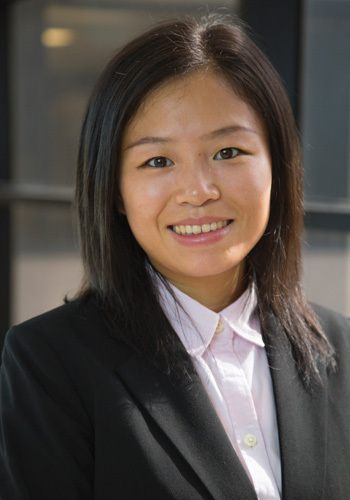
Dr. Xin Fu is a Professor in Electrical and Computer Engineering at the University of Houston's Cullen College of Engineering, holding a PhD from the University of Florida. His research spans computer architecture, energy-efficient systems, machine learning acceleration, and hardware reliability, with applications in edge computing and quantum systems. Awarded the NSF CAREER Award and named Miller Scholar, he leads innovations in heterogeneous computing architectures. Research focuses on optimizing hardware-software co-design for AI workloads, with current projects in federated learning optimization, quantum computing reliability, and neural network acceleration. Recent publications demonstrate cross-cutting work in mobile AI deployment, adversarial defense mechanisms, and quantum error correction. Honors include: NSF Faculty Early CAREER Award (2014) Four-time recipient of competitive NSF research grants Miller Scholar recognition for teaching and research excellence
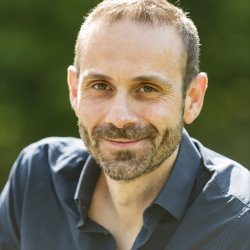
Professor Ferrante Neri is a faculty member at the University of Surrey, holding the positions of Professor of Machine Learning and Artificial Intelligence and Associate Dean (International) for the Faculty of Engineering and Physical Sciences (FEPS). He is affiliated with the Nature Inspired Computing and Engineering Research Group, Surrey Institute for People-Centred AI (PAI), and the Computer Science Research Centre within the School of Computer Science and Electronic Engineering. His research focuses on optimization, explainable AI, and machine learning, with contributions to memetic computing and differential evolution. Since 2010, he has chaired the IEEE Task Force on Memetic Computing. He advises PhD students in topics like dynamic multi-objective optimization and AI-driven applications. His teaching expertise includes mathematical foundations for computer science. He has supervised students such as Aisha E S E Saeid and Pengjin Wu. Notable research areas include evolutionary algorithms, neural architecture search, and applications in robotics and environmental monitoring. Labs and teams include the Nature Inspired Computing group, which explores AI-driven solutions for complex problems. His work bridges theoretical advancements and practical applications in fields like autonomous systems and deep learning.
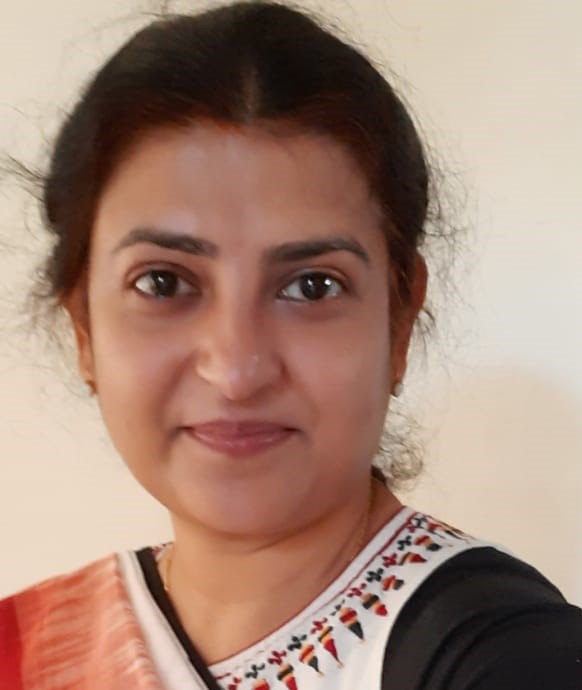
Dr. Dipanwita Thakur serves as Assistant Professor at the Department of Computer Engineering, Modeling, Electronics and Systems (DIMES) at the University of Calabria, Italy since July 2023. She is an active member of the European Cooperation in Science & Technology (COST Action CA22104) focusing on cybersecurity and serves in the IEEE Future Networks Working Group for Artificial Intelligence/Machine Learning. Previously, she held a 15-year Assistant Professor position at Banasthali University, Rajasthan, and has industry experience at TechMahindra and C-DAC. Education: Ph.D. in Smart Healthcare from West Bengal University of Technology, Kolkata M.Tech. in Software Engineering from Banasthali Vidyapith MCA from NIELIT, Government of India B.Sc. from University of Calcutta Her research pioneers Green Artificial Intelligence with emphasis on energy-efficient federated learning and smart healthcare applications. She develops privacy-preserving human activity recognition systems using multimodal data fusion, focusing on performance evaluation and environmental sustainability. Her work bridges theoretical machine learning with practical healthcare solutions, optimizing AI systems for reduced carbon footprint while maintaining clinical efficacy through hardware-algorithm co-design and quantization techniques. Recent publications reveal a strong trajectory toward sustainable AI, with increasing focus on energy-aware federated learning frameworks, multimodal medical segmentation, and non-IID data handling. Her work consistently addresses the critical balance between model accuracy, convergence speed, and energy consumption across edge devices, with growing emphasis on quantization techniques and hardware-algorithm co-design for real-world deployment. Scientific Awards: Elevated to IEEE Senior Member (2024) Dr. B.C. Roy Memorial Scholarship for outstanding 10th Board results (1992) Student Science Seminar Award by West Bengal Government (1990) Dr. Thakur actively mentors students as evidenced by her congratulations to advisee Farwa for paper acceptances. She serves as Associate Editor for Information Fusion (Elsevier) and IEEE Sensors Journal, and holds editorial roles at Scientific Reports. Her research is advanced through COST Action CA22104 and IEEE working groups, though specific grant details aren't listed in the source material. She has organized key workshops including Green-Aware AI 2024 and Green Federated Learning at IJCNN 2025. She leads research within the MONAI community on data quality and federated learning, and contributes to IEEE IoT and Future Networks initiatives. Her work with the COST Action CA22104 Behavioral Next Generation in Wireless Networks connects cybersecurity with sustainable AI development, while her Missouri S&T visiting scholar position focuses on energy optimization for federated learning systems.
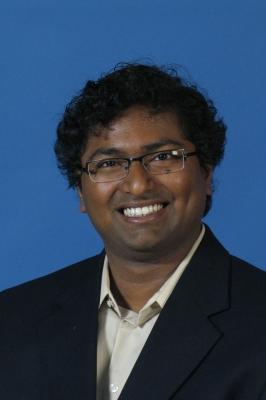
Dr. Saibal Mukhopadhyay is a Professor in the Department of Electrical and Computer Engineering at the Georgia Institute of Technology, where he joined in 2007. He holds the Joseph M. Pettit Professorship and is recognized as an IEEE Fellow for his contributions to low-power and reliable VLSI systems. Education: BEng (Jadavpur University, India), Ph.D. (Purdue University) Labs: Gigascale Reliable Energy Efficient Nanosystem (GREEN) Lab His research focuses on VLSI Systems , Nanotechnology , and Low-Power Electronics , with emphasis on technology-circuit co-design for energy-efficient computing. Recent work explores Compute-in-Memory (CIM) architectures and Spiking Neural Networks for edge AI. Key article themes include Transformer Model Acceleration , Quantum Computing Calibration , 3D Object Detection , and Device Aging Analysis , reflecting his interdisciplinary approach bridging hardware design and machine learning. Scientific Awards IEEE Fellow (2018) ONR Young Investigator (2012) NSF CAREER Award (2011) IBM Faculty Awards (2009, 2010) Best Paper Awards (IEEE-Nano 2003, ICCD 2004)
Heiner Giefers is a Professor for Cloud Computing at the Department of Computer Science and Natural Sciences at Southwestphalia University of Applied Sciences since 2018. Prior to this position, he worked as a Research Staff Member at IBM Research - Zürich (2013-2018), focusing on hardware acceleration in cloud environments, implementation of big data algorithms on FPGAs, and development of hardware platforms for approximate and in-memory computing. Dr. Giefers received his doctorate (Dr. rer. nat.) from Universität Paderborn in 2012 with a dissertation titled "Design and Programming of Reconfigurable Mesh based Many-Cores." His academic journey at Universität Paderborn includes serving as an Academic Council Member (Akademischer Rat a.Z.) from 2008-2013 and as a Scientific Staff Member from 2006-2012, where he taught digital technology and computer architecture. Professor Giefers' research focuses on energy-efficient computing, particularly through hardware acceleration using FPGAs for cloud and AI workloads. His work spans cloud computing infrastructure, hardware-software co-design, approximate computing, in-memory computing, and energy-efficient implementations of machine learning algorithms. He has made significant contributions to the field of reconfigurable hardware for high-performance computing applications. His recent publications show a strong trend toward applying hardware acceleration techniques to artificial intelligence and machine learning workloads, with a particular focus on energy efficiency. His work bridges the gap between theoretical computer science and practical hardware implementation, often resulting in patented technologies that address real-world computing challenges in cloud environments. Best Paper Award for "Stochastic Matrix-Function Estimators: Scalable Big-Data Kernels with High Performance" (2016) Best Paper Award Nomination for "Energy-Efficient Stochastic Matrix Function Estimator for Graph Analytics on FPGA" (2016) Best Paper Award Nomination for "Analyzing the energy-efficiency of dense linear algebra kernels by power-profiling a hybrid CPU/FPGA system" (2014) Best Paper Award Nomination for "A Triple Hybrid Interconnect for Many-Cores: Reconfigurable Mesh, NoC and Barrier" (2010) Professor Giefers actively supervises numerous Bachelor's and Master's students, with over 50 completed theses covering topics from machine learning and cloud computing to IoT systems and hardware acceleration. He leads the "Energy-efficient AI" project (eki), which aims to increase the energy efficiency of AI systems through approximation techniques for FPGA implementation. Additionally, he collaborates with Prof. Dr. Christian Plessl on the "Digital teaching materials with Jupyter Notebooks" project, creating interactive learning materials that integrate teaching content, program code, and results into a single document. His work extends to practical applications through multiple patents related to FPGA implementations, neural networks, and memory systems, demonstrating his commitment to translating research into real-world solutions.
Colleen Bailey is an Assistant Professor in the Department of Electrical Engineering at the University of North Texas. Her research focuses on the intersection of machine learning, signal processing, and energy systems, with applications spanning biomedical imaging, environmental monitoring, and edge computing. Research Interests: Machine learning optimization for edge devices Entropy-based image compression techniques Attention mechanisms in vision transformers Urban air pollution prediction models Land surface temperature super-resolution Publication Trends: Recent works emphasize compact AI architectures (e.g., MHATT network, entropy bottleneck models) for efficient processing in resource-constrained scenarios. Applications include medical imaging (Chest X-ray analysis), environmental monitoring (air quality, Martian dust storms), and energy systems (household prediction, power quality classification). Contact: Email: Colleen.Bailey@unt.edu Office: Discovery Park B252 Phone: 940-891-6874
Antonio Maria Gonzalez Colas is a Full Professor at the Universitat Politècnica de Catalunya (UPC), affiliated with the Department of Computer Architecture within the Faculty of Computer Science of Barcelona (FIB). He leads the ARCO research group focused on Microarchitecture and Compilers and is actively engaged in high-impact research in computer architecture, GPUs, and energy-efficient computing. His collaborations extend to the Barcelona Supercomputing Center and various national and European research initiatives. Research Interests: His primary research areas include computer architecture, microarchitecture, compilers, GPUs, and processor design. He focuses on energy-efficient computing, deep neural network (DNN) accelerators, GPU simulation and optimization, memory systems, and architectural support for machine learning and autonomous systems. His work often integrates compiler techniques with hardware design for performance and efficiency. Scientific Production Trends: His recent publications demonstrate a strong focus on energy-efficient hardware for AI workloads, particularly DNN and speech recognition acceleration, GPU architectural innovations, memory optimization, and real-time rendering. He frequently publishes in top-tier venues such as ISCA, MICRO, HPCA, and IEEE/ACM journals. ICREA Academia Award 2024 HiPEAC 2024 Paper Award ACM Senior Member (2020) Advising and Grants: He has advised numerous PhD students whose theses cover topics like energy-efficient architectures for autonomous driving, speech recognition, and neural networks. He leads competitive R&D projects, including an ERC Advanced Grant and projects funded by the Spanish National Program and the ICREA Academia program, focusing on domain-specific architectures and cognitive computing units. Labs and Teams: He is the principal investigator of the ARCO (Microarchitecture and Compilers) research group at UPC, a leading team in computer architecture research in Spain. The group is part of a larger collaborative network within UPC and with international partners.
Massimo Poncino is a Full Professor at the Department of Control and Computer Science (DAUIN) within the Faculty of Engineering at Politecnico di Torino. He serves as Scientific Advisor for the STMicroelectronics partnership and coordinates basic engineering subjects. A Senior Member of IEEE since 2012 and Fellow since 2012, he has served on editorial boards for IEEE Transactions on Computer-Aided Design, IEEE Design & Test of Computers, and ACM Transactions on Design Automation. Education: Laurea in Electronic Engineering (1989) and PhD in Computer and Systems Engineering (1993) from Politecnico di Torino Academic Career: Visiting Scientist University of Colorado (1993-1994), Researcher at Politecnico di Torino (1995-2001), Associate Professor at University of Verona (2001-2004), Full Professor at Politecnico di Torino (2006-present) His research focuses on energy-efficient digital systems , including design automation of SoCs, hardware-aware AI, battery management, cyber-physical systems, and embedded systems. Recent publications highlight advancements in digital twins for batteries , low-power neural network deployment , and IoT privacy . Scientific Awards: Recognition of Service Award - ACM (2013) Certificate of Appreciation - IEEE Circuits and Systems Society (2006, 2008, 2009) IEEE Fellow (2012-) Research Involvement: EU H2020, VI/VII Framework Programs evaluator Scientific Director for projects: Approxim@ction, EMBAI, DISLO-MAN, DAMASCO Member of EDA research group Teaching: Course director for Energy Management for IoT (2019-2025) Lecturer for Computer Science courses (2003-2025)
Marina Zapater Sancho is a researcher at the Embedded Systems Laboratory (ESL) within the School of Engineering at École Polytechnique Fédérale de Lausanne (EPFL) . She specializes in computer architecture, with a focus on energy-efficient systems, AI accelerators, and memory-centric computing paradigms. Research Interests: Compute-Near-Memory (CnM) : Pioneering architectures like SideDRAM and processing-near-bank designs to reduce energy consumption and latency in DRAM systems. AI Accelerators : Frameworks such as LIONHEART for analog-digital hybrid systems, and Gem5-AcceSys for exploring interconnects in ML accelerators. System Simulation : Contributions to RISC-V full-system simulation validation (gXR5) and component-level calibration methodologies. Her work bridges software and hardware, addressing challenges in heterogeneous systems, thermal management in 2.5D/3D packages, and virtual memory optimization for cache-intensive workloads. Recent trends emphasize energy-proportional computing and edge AI deployment . Grants & Collaborations: Funded by EU H2020 programs and the ACCESS-AI Chip Center (Hong Kong), her research is conducted within the ESL team led by Prof. David Atienza Alonso.
Torsten Hoefler is a Full Professor of Computer Science at ETH Zurich, Switzerland, with an adjunct appointment in Electrical Engineering. He previously held roles at the National Center for Supercomputing Applications (University of Illinois at Urbana-Champaign) and Indiana University. Full Professor of Computer Science, ETH Zurich (2020–present) Adjunct Professor of Electrical Engineering, ETH Zurich (2020–present) Member at Large, ACM SIGHPC Executive Committee (2013–present) Leadership roles in the MPI Forum and Blue Waters project His research focuses on performance-centric system design , with emphasis on scalable networking, parallel programming models, and performance modeling. Key contributions include the Slim Fly network topology, Data-Centric Python framework, and innovations in parallel graph computations and RDMA-based systems. Recent publications span topics like LLM training networks , quantization geometry , chiplet interconnects , and AI-driven climate modeling , reflecting his interdisciplinary approach combining HPC, AI, and hardware-software co-design. ACM Gordon Bell Prize (2019) ERC Consolidator Grant (2020) IEEE TCSC Award for Excellence (2019) SIAM SIAG/SC Junior Scientist Prize (2012) Latsis Prize of ETH Zurich (2015) He has received multiple best paper awards at top conferences (SC10, SC13, SC14, SC19, IPDPS'15, HPDC'15, OOPSLA'16) and contributed to MPI-3 standardization.
Xuan Zhang serves as Associate Professor in Electrical and Computer Engineering at Northeastern University, leading the Sensory AI Lab since joining in January 2024. Her research bridges computer architecture, integrated circuits, and artificial intelligence to develop miniaturized AI systems for autonomous physical platforms. She earned her PhD in Electrical and Computer Engineering from Cornell University in 2012. Her educational background forms the foundation for her interdisciplinary work spanning hardware and software co-design. Dr. Zhang's research focuses on artificial intelligence hardware, machine vision sensors, and security for autonomous systems. She pioneers techniques for efficient in-sensor computing, analog circuit optimization via machine learning, and hardware-level privacy preservation. Her work addresses critical challenges in energy efficiency, robustness, and security for edge AI deployment, particularly in resource-constrained environments like medical devices and autonomous vehicles. Analysis of her 2023-2025 publications reveals three dominant trends: (1) hardware-accelerated privacy mechanisms for sensors, (2) machine learning-driven analog circuit design automation, and (3) energy-efficient architectures for neural network inference. These works consistently target real-world applications in healthcare, autonomous systems, and semiconductor design. Her accolades include the prestigious NSF CAREER Award (2020) and leadership in a $10 million federal semiconductor initiative. She contributes to national efforts in AI-powered chip design through the National Center for the Advancement of Semiconductor Technology. Dr. Zhang advises graduate researchers in the Sensory AI Lab, securing significant funding for projects spanning hardware security, in-sensor computing, and autonomous system assurance. Her lab collaborates with federal agencies and industry partners on cutting-edge semiconductor research. The Sensory AI Lab operates at the hardware-software interface, developing novel architectures for intelligent edge devices. Current projects include optical privacy preservation, robust analog design tools, and energy modeling frameworks for in-sensor visual computing systems.
Mircea R. Stan is a Professor of Electrical and Computer Engineering at the University of Virginia, serving as Director of Computer Engineering and Virginia Microelectronics Consortium (VMEC) Professor. He leads the High-Performance Low-Power (HPLP) lab and is an associate director of the Center for Automata Processing (CAP). His research focuses on AI hardware, Processing in Memory, Low Power Design, Cyber-Physical Systems, and Spintronics. Education: Ph.D. (1996) and M.S. (1994) from UMass Amherst; Diploma (1984) from Politehnica University, Bucharest. Research interests include energy-efficient computing architectures, IoT systems, and emerging technologies like magnetic skyrmions and memristors. He has pioneered work on asynchronous stochastic computing, thermal-aware microarchitecture, and microfluidic cooling for 3D-ICs. Key awards include the 2024 A. Richard Newton Technical Impact Award, 2018 ISCA Influential Paper Award, and IEEE Fellow (2014). He has held editorial roles at IEEE TVLSI, IEEE TNano, and IEEE Design & Test. Notable contributions include the HPLP lab’s advancements in low-power logic computing, the VCRFID framework for Industry 4.0, and thermal-aware design tools like Hot-LEGO and Cool-3D.
Chenjuan Guo is an Associate Professor at the Department of Computer Science, Aalborg University, within The Technical Faculty of IT and Design. She is affiliated with the Data Engineering, Science and Systems group and the AI for the People initiative, and is part of the Daisy - Center for Data-intensive Systems. Her research focuses on machine learning, data engineering, spatio-temporal data analysis, and time series forecasting. Key projects include the Villum Foundation-funded 'Explainable AI for Complex Microbial Community Interactions and Predictions' (2021-2024) and the Astra project on time series analytics in spatial networks (2018-2021). Her research interests span representation learning, autoencoders, path representation, outlier detection, trajectory data analysis, and time series modeling. She has supervised 3 PhD students and contributed to over 60 publications, with a recent emphasis on transformer-based forecasting, neural architecture search, and continuous learning frameworks for spatio-temporal data. Her work bridges theoretical advancements with practical applications in environmental science, cloud computing, and urban mobility systems. Key achievements include developing frameworks like AutoCTS++ for automated time series forecasting and LightGTS for lightweight models. She actively collaborates internationally, contributing to conferences like ECML PKDD and CVPR. Her research is supported by grants from the Villum Foundation and other institutions.
Andrea Migliorati is a Fixed-term Assistant Professor at the Department of Electronics and Telecommunications (DET) of Politecnico di Torino. He specializes in telecommunications and industrial/information engineering (IINF-03/A - Area 0009), with a focus on machine learning applications in signal processing and neural network optimization. Academic Role: Assistant Professor Department: Electronics and Telecommunications Research Branch: Telecommunications (IINF-03/A) University: Politecnico di Torino Migliorati's research explores neural network sparsification, quantization techniques, and robust training methods for secure systems. His work bridges telecommunications engineering with modern machine learning, targeting applications in wearable biometrics and edge computing. Key trends include: Advancing sparse trainable neural networks through concave regularization Developing ternary/binary quantization approaches for model compression Enhancing gait identification systems for wearable devices Improving adversarial robustness via Gaussian class-conditional training
Marianne Winslett is a Professor at the University of Illinois' Siebel School of Computing and Data Science, affiliated with the Department of Computer Science since 1987. Her research focuses on data security, information management, and privacy in cyber-physical systems. She co-led the TrustBuilder project, advancing access control and authentication in open computing environments, and directed the Advanced Digital Sciences Center (ADSC) in Singapore from 2009–2013, addressing challenges in data analytics and smart grids. Her work includes pioneering methods to ensure privacy in biomedical data analysis. Education: Earned her doctorate in Computer Science from Stanford University and worked at Bell Labs before joining Illinois. Awards: ACM Fellow (2006), NSF Presidential Young Investigator (1989), University Scholar, and Stanley H. Pierce Award for advising. She has supervised 24 PhD theses and mentored numerous graduate students, particularly supporting female scholars. Research Interests Secure data management in distributed systems Privacy-preserving techniques for biomedical data Adversarial attack detection in cyber-physical systems like smart grids Elastic resource scheduling in cloud environments Query optimization under differential privacy constraints Key Contributions Developed frameworks for self-supervised learning in smart grid cybersecurity Pioneered causal mechanism transfer networks for mechanical system domain adaptation Advanced auto-scaling strategies for real-time stream processing (DRS/Elasticutor systems) Labs & Teams Former Director of the Advanced Digital Sciences Center (ADSC), a University of Illinois research outpost in Singapore focusing on data analytics and IoT applications.