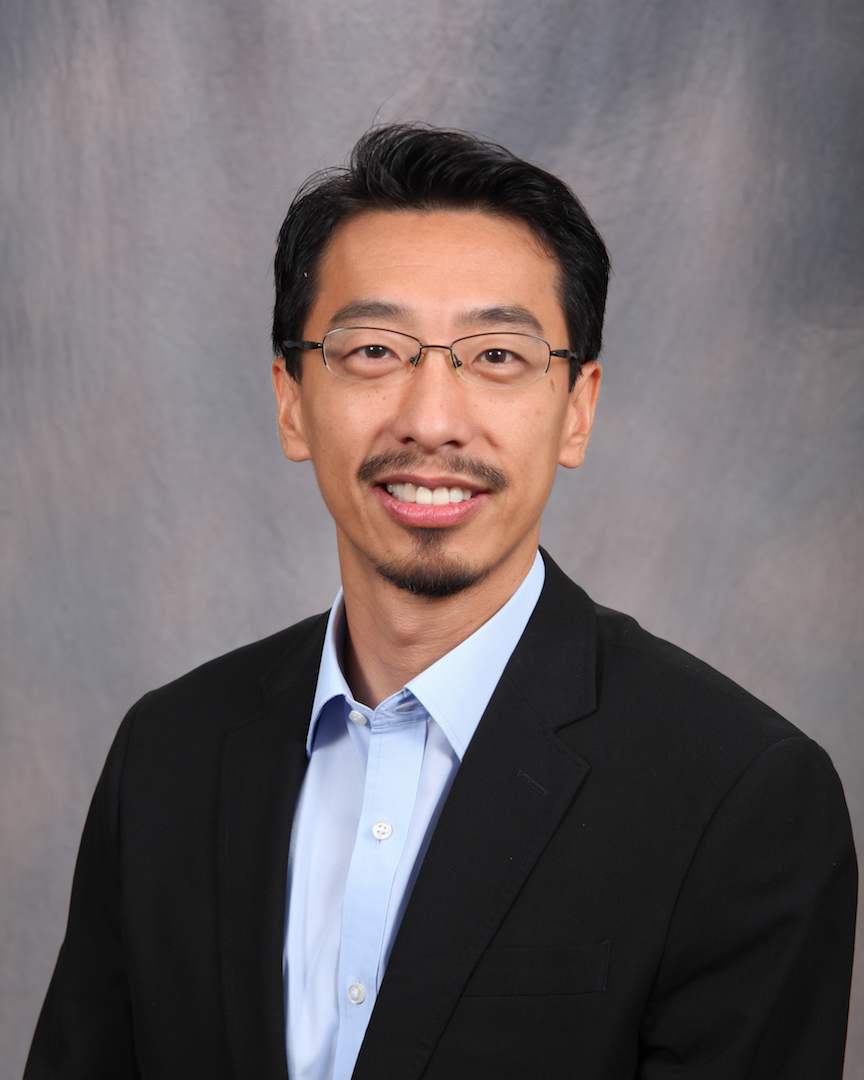
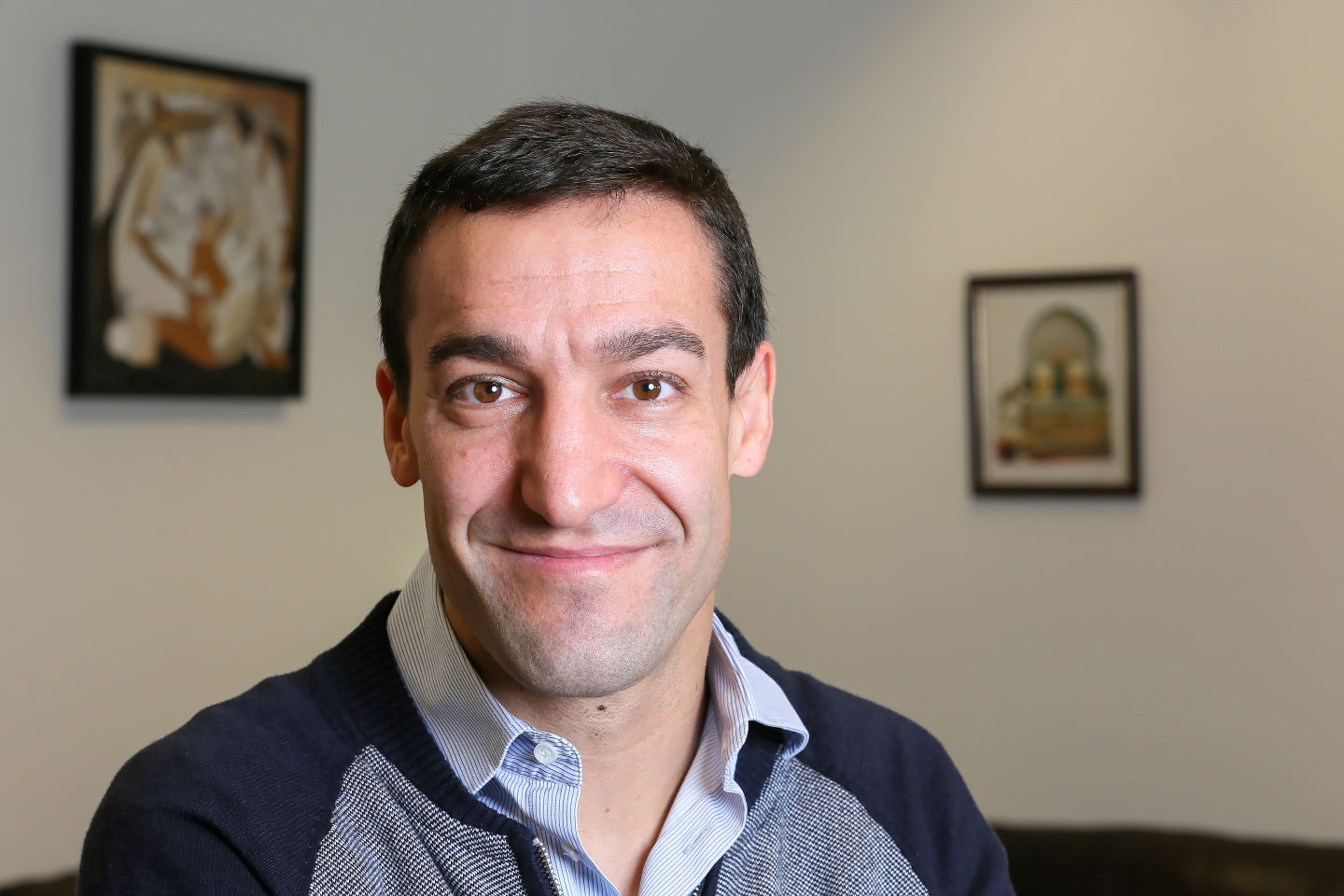
Jonathan Ragan-Kelley is the Esther and Harold E. Edgerton Assistant Professor of Electrical Engineering & Computer Science at MIT and an Assistant Professor of EECS at UC Berkeley. He leads the Visual Computing group at CSAIL, focusing on high-efficiency visual computing, compilers, and architectures for image processing, machine learning, and 3D rendering. His research bridges systems, compilers, and hardware design, emphasizing scalable solutions for computational challenges. Education: PhD in Computer Science from MIT (2014), postdoc at Stanford University, and visiting researcher at Google. He co-created the Halide language and has developed multiple domain-specific languages (DSLs) and compiler systems. Research interests include compiler optimization, scheduling languages (e.g., Exo), and efficient computing frameworks. He has received awards such as the NSF CAREER Award and ACM SIGGRAPH’s Significant New Researcher Award. Awards: ACM SIGGRAPH Award, NSF CAREER, Intel Outstanding Researcher Award Key Contributions: Halide compiler framework, Exo scheduling language, machine learning acceleration techniques Labs/Teams: Visual Computing at MIT CSAIL
Luca Sterpone is a Full Professor at the Department of Control and Computer Science (DAUIN), Politecnico di Torino. He serves as Head of the Control and Computer Engineering Department (2023-2027), coordinates the Aerospace and Safety Computing Lab, and is a member of the Academic Senate and Power Electronics Innovation Center (PEIC). His research spans reconfigurable computing, fault tolerance, and radiation effects analysis in electronic systems. Professor since 2021 Department Head (DAUIN) since 2023 Coordinates international collaborations with ESA, AMD Xilinx, NVIDIA, and Thales Alenia Space Develops radiation-hardened FPGA tools (SETA, VERI-Place, PyXEL) 2007 EDAA Outstanding Dissertation Award and 2005 IEEE Best Paper Award Research Focus : Designing radiation-tolerant systems for aerospace, including fault-tolerant AI accelerators, FPGA reliability, and software-based error mitigation. He investigates soft error propagation in nanoscale circuits and develops tools for radiation sensitivity analysis in VLSI. His work integrates hardware-software co-design for mission-critical applications. Awards : EDAA Outstanding Dissertation Award (2007) IEEE European Test Symposium Best Paper (2005) SMACD Best EDA Tool Award (2018) ARC Best Paper candidate (2018) Teaching : He leads courses in Reconfigurable Computing (PhD level), GPU Programming , and Operating Systems . He has formal responsibility for teaching roles across 9 bachelor's and 7 master's years, and mentors multiple PhD students. Collaborations : Coordinates with the European Space Agency (ESA), University of Bielefeld, Universidad de Sevilla, and industrial partners like AMD Xilinx, NVIDIA, and General Motors. He leads projects such as RESCHIP4EU, VEGAS, and TERRAC for radiation-hardened computing solutions.
Professor Ahmed Hemani is a faculty member at the Division of Electronics and Embedded Systems, KTH Royal Institute of Technology, affiliated with the Digital Futures Faculty. He holds the role of PI for the project 'New Chip Architectures for Industrial Vision' and leads research in reconfigurable computing, memristor-based systems, and hardware acceleration for AI and edge computing. His work bridges theoretical computer science with practical VLSI design and embedded systems development. He actively contributes to cross-disciplinary initiatives at Digital Futures, a joint center with Stockholm University and RISE Research Institutes of Sweden focused on digital innovation. His research emphasizes scalable FPGA/HPC architectures, low-power neuromorphic systems, and optimization techniques for custom silicon solutions. Current projects include a Lego-inspired edge AI framework and memristor-driven MIMO acceleration. Teaching responsibilities span advanced courses in SOC design, digital system verification, and embedded systems. He supervises advanced-level degree projects across computer engineering and ICT innovation specializations, emphasizing hands-on hardware-software co-design methodologies. Recent publications highlight innovations in memristor applications, FPGA-based acceleration, and reconfigurable architectures for neural networks and bioinformatics. His work addresses challenges in dark silicon utilization, energy-efficient computation, and high-performance embedded systems.
Baris Kasikci is an Associate Professor in the Paul G. Allen School of Computer Science & Engineering at the University of Washington. Previously (2017-2023), he was a Morris Wellman Assistant Professor in the Electrical Engineering and Computer Science Department at the University of Michigan. His research focuses on building efficient and trustworthy computer systems through innovative combinations of approaches from systems, computer architecture, and programming languages. Dr. Kasikci received his PhD in Computer Science at EPFL and has held research positions at Microsoft Research Cambridge, Google, Intel, and VMware. His work addresses critical challenges in system reliability, security, and performance in increasingly complex software ecosystems. His research interests center on improving the efficiency of datacenter applications and machine learning systems, analyzing and fixing failures, and enhancing hardware security. His lab develops techniques for automated bug detection, formal verification of distributed systems, and building systems support for heterogeneous hardware architectures. Recent projects include Whisper (profile-guided branch misprediction elimination), Huron (taming false sharing), and Agamotto (automatic detection and repair of bugs in persistent memory applications). Analysis of his recent publications shows a strong trend toward optimizing large language model serving, hardware security, and performance optimization for modern heterogeneous architectures. His work bridges traditional systems research with emerging AI infrastructure needs, particularly in efficient LLM serving, security vulnerabilities in modern hardware, and performance optimization for heterogeneous computing environments. NSF CAREER award Microsoft Research Faculty Fellowship Intel Rising Star Award VMware Early Career Faculty Grant Google Faculty Award Roger Needham PhD Award (best PhD thesis in computer systems in Europe) Patrick Denantes Memorial Prize (best PhD thesis at EPFL) Best Paper Award at OSDI'18 Best Paper Award at MICRO'22 Dr. Kasikci has advised numerous PhD students who have gone on to prestigious positions in academia and industry, including Tanvir Ahmed Khan (Assistant Professor at Columbia University), Akshitha Sriraman (Assistant Professor at CMU), and Jiacheng Ma (AMD). His research has been supported by significant grants from NSF, DARPA, Intel, Google, Microsoft, VMware, and Amazon. His lab, the EfesLab, focuses on building tools and techniques that make computer systems more reliable, secure, and efficient. The EfesLab, led by Dr. Kasikci, brings together postdocs, PhD students, and undergraduate researchers to tackle fundamental challenges in systems reliability and performance. The lab has developed numerous influential tools including Whisper, Huron, and Agamotto that address critical performance and reliability issues in modern computing systems. Current research directions include efficient LLM serving, security of emerging hardware technologies, and automated debugging techniques.
Kohei Nakajima is an Associate Professor at the Department of Intelligent Mechano-Informatics, Graduate School of Information Science and Technology, The University of Tokyo. He holds concurrent positions at the Department of Creative Informatics and the Next Generation Artificial Intelligence Research Center (AI Center). As an Endowed Chair in Advanced Artificial Intelligence Education, he leads the Physical Intelligence Lab, which focuses on the intersection of soft robotics, nonlinear dynamics, and physical computing. His research interests center on Physical Reservoir Computing (PRC), a paradigm that exploits the natural dynamics of physical systems for computation, with applications in soft robotics, spintronics, and quantum machine learning. Nakajima's work demonstrates how physical systems can inherently process information without traditional digital computation, leveraging phenomena like chaos, bifurcations, and embodied intelligence. Nakajima's publications reveal a strong focus on understanding how physical systems can perform computational tasks. His recent work spans from biological applications (jellyfish cyborgs, ostrich-inspired robotics) to fundamental theoretical advances in reservoir computing. The research demonstrates how physical phenomena can be harnessed for information processing, with implications for energy-efficient computing and novel robotic control paradigms. As the organizer of the Reservoir Computing Seminar, Nakajima has built a vibrant research community exploring the nature of information processing across disciplines. His lab actively recruits graduate students and postdocs, indicating strong research momentum and institutional support for his work in physical intelligence.
Anuj Pathania serves as an Assistant Professor in the Parallel Computing Systems (PCS) group within the Informatics Institute at the University of Amsterdam's Faculty of Science. His research pioneers sustainable computing systems operating under severe power, thermal, and reliability constraints, with significant contributions to energy-efficient hardware design and embedded systems. Education: PhD in Computer Science (2018), Karlsruhe Institute of Technology MSc in Computer Science (2012), National University of Singapore B.Tech in Computer Science (2009), Maharaja Agrasen Institute of Technology Pathania's research centers on low-power design and sustainable systems for constrained environments, with particular expertise in thermal management of 3D-stacked architectures and energy-efficient machine learning inference . His work bridges electronic design automation with real-world reliability challenges, developing novel power budgeting techniques like T-TSP that incorporate transient temperature effects ignored by conventional methods. Current projects include EU-funded initiatives on energy labeling for digital services, addressing ecological impacts through technological, behavioral, and legal frameworks. His publication trajectory reveals a strategic evolution toward zero-waste computing , with recent work (2023-2025) focusing on hardware-software co-design for edge AI, energy modeling across computing continua, and parameter-efficient neural adaptation. Key themes include thermal-aware scheduling for S-NUCA many-cores, cooperative processor utilization in heterogeneous systems, and sustainability metrics for digital services. Scientific Recognition: Best Paper Award Nomination at IEEE Computer Society Annual Symposium on VLSI 2023 for 3D-TTP power budgeting technique Pathania actively mentors 4 PhD students (Ehsan Aghapour, Saeedeh Baneshi, Sudam Wasala, Yixian Shen) and has successfully supervised 5 Master's theses (including Cum Laude defenses by Joris op ten Berg and Jurre Wolff). His research is supported by major grants including Energy Labels for Ecologically Sustainable Digital Services (2023-2024) and Towards Zero-Waste Computing (2021-2025), developing simulation frameworks like HotSniper and CoMeT for thermal analysis. The PCS group maintains strong industry collaborations with ARM and NVIDIA, particularly through tools like ARM-CO-UP for heterogeneous processor utilization.
Lukas Einhaus is a Researcher and PhD student in the Embedded Systems department at the University of Duisburg-Essen since April 2020, affiliated with the Intelligent Embedded Systems (IES) research group and contributing to initiatives including Elastic AI and the IoT Garage. His academic background includes: Bachelor of Science from University of Duisburg-Essen, thesis focused on programming abstractions for concurrent embedded systems Master of Science from University of Duisburg-Essen, specializing in distributed and reliable systems with thesis research on quantizing neural networks Einhaus's research centers on designing neural networks for efficient hardware implementation on FPGAs, with primary expertise in quantized or low-precision neural networks that reduce bit depth (typically 1-3 bits) for computations and information flow. This work enables energy-efficient AI solutions for embedded and IoT devices where resource constraints are critical. His publication record from 2021-2025 reveals consistent innovation in FPGA-based neural network optimization, with applications spanning fluid flow estimation, time-series analysis, and real-time stream processing. Core themes include Elastic AI for adaptive systems, precomputation techniques for convolutional layers, and hardware-aware neural architecture design. He previously contributed to the BMBF-funded project "KI-Sprung: LUTNet" (until March 2022), developing energy-efficient AI networks using elementary lookup tables for FPGA deployment. Einhaus actively mentors students through the IoT Garage initiative, supervising practical projects including drink-mixing machines, exoskeletons, and ball-challenge systems.
Kurt Keutzer is a Professor in the Department of Electrical Engineering and Computer Science at the University of California, Berkeley, and a key member of the Berkeley AI Research Lab (BAIR). He holds a Ph.D. in Computer Science from Indiana University (1984) and was previously Chief Technical Officer at Synopsys, Inc. His research focuses on systems issues in deep learning, particularly for computer vision, speech recognition, NLP, and finance. He has published over 250 refereed articles and six books, and is a highly cited author in hardware and design automation. Keutzer has received multiple IEEE Fellowships, DAC awards, and best paper accolades at conferences like Embedded Vision Workshop and ICPP. Educations: 1984, PhD, Computer Science, Indiana University Kurt Keutzer's research interests span Artificial Intelligence , Computer Architecture , and Scientific Computing , with a focus on computational efficiency in AI systems. His work explores hardware-aware neural architecture search, domain adaptation, and quantization techniques to optimize models from edge to cloud. Recent publications highlight advancements in vision transformers , LLM inference efficiency , and autonomous driving . He also contributes to multimodal AI and self-supervised learning frameworks. Scientific Awards: Institute of Electrical & Electronics Engineers (IEEE) Fellow (1996) DAC's Most Influential Paper Award (2023) Top Ten Cited Author and Paper at DAC Best Paper Awards at Embedded Vision Workshop and ICPP Kurt Keutzer has advised numerous Ph.D. and Master’s students, including Forrest Iandola (co-founder of DeepScale), Sheng Shen, and Michael Murphy. His research teams have pioneered hardware-efficient deep learning solutions like SqueezeNet and FireCaffe. Current projects include optimizing large language models (LLMs) for edge deployment and advancing 3D reconstruction for autonomous vehicles. He is also involved in diffusion models , sparse attention mechanisms , and multi-agent coordination for complex tasks.
Fenglong Ma is an Associate Professor at Pennsylvania State University, affiliated with the Institute for Computational and Data Sciences and the Center for Socially Responsible Artificial Intelligence. His research focuses on data mining, healthcare informatics, machine learning, natural language processing, and multimodal learning. He holds a Ph.D. from the University at Buffalo (2019) and degrees from Dalian University of Technology. His work addresses challenges in federated learning, medical AI, adversarial robustness, and multimodal systems. Key contributions include innovations in quantization for large language models, federated knowledge injection, and medical vision-language benchmarking. Recent publications explore topics like collaborative fairness in federated learning, robust medical vision-language models, and adversarial attack mitigation. His research bridges theory and practical applications in healthcare, cybersecurity, and personalized recommendation systems. He leads the PSU Data Science Lab and collaborates on projects involving AI ethics, multimodal data integration, and scalable medical foundation models.
Dr. Chao Tian is an Associate Professor in the Department of Electrical and Computer Engineering at Texas A&M University, part of the College of Engineering. He holds a Ph.D. from Cornell University (2005) and a B.E. from Tsinghua University (2000). His research focuses on information theory, distributed storage systems, coding theory, and machine learning applications, including large language models (LLMs) and privacy-preserving techniques like steganography and private information retrieval (PIR). He has received notable awards, including the 2017 IEEE Jack Wolf ISIT Best Student Paper Award and the 2014 IEEE ComSoc DSTC Best Paper Award. Dr. Tian’s work bridges theoretical foundations and practical applications, such as optimizing storage codes for distributed systems, developing secure PIR protocols, and exploring LLMs in energy and steganographic contexts. His group has pioneered methods for variable-order Markov chain modeling with transformers and designed quantization techniques for perceptual quality. Recent activities include a faculty development leave at MIT/Harvard and delivering distinguished lectures globally on AI and information theory. He advises students on cutting-edge topics like LLM-based steganography and diffusion models. His publications span journals like IEEE Transactions on Information Theory and conferences such as NeurIPS and ISIT, with a focus on coding theory, privacy, and machine learning. He has also contributed to open-source tools like the CAI toolbox for investigating information-theoretic limits. Current projects include optimizing cryptocurrency mining in energy markets and advancing federated learning with adversarial robustness.
Annachiara Ruospo is a Assistant Professor at the Department of Control and Computer Engineering (DAUIN) at Politecnico di Torino. She holds a Fixed-Term Researcher position under Italian Law 240/10, art.24-A, and is actively involved in teaching and research projects. Research Interests : AI Safety, Reliability of AI Systems, Testing of Digital Circuits, Statistical Reliability Investigations. Her recent research focuses on hardware reliability for AI systems , including fault injection methodologies, quantized neural networks, and side-channel vulnerabilities. She collaborates on EU-funded projects like REACT and commercial contracts such as TC4xx NVM Test Strategies . Scientific Awards : None explicitly mentioned. Supervised Students : Antonio Porsia (PhD candidate, Reliability and Security of AI-Based Systems) and Vittorio Turco (PhD candidate, Reliability Evaluation and Hardening of AI Accelerators). She contributes to AI hardware security through patents like A Shannon-Hartley-Based Approach to Measure the Criticality of Synaptic Weights and actively participates in conferences such as the IEEE Latin American Test Symposium and IEEE VLSI Test Symposium .
Eric P. Xing is a Professor at the Language Technologies Institute of Carnegie Mellon University , and currently serves as President of the Mohamed bin Zayed University of Artificial Intelligence . His work bridges machine learning methodology with computational biology and large-scale AI systems . Research Focus: Developing machine learning theory for high-dimensional, dynamic data Building foundation models for biology (AIDO, scLong, ProteinAligner) Designing scalable AI architectures (Pollux, LLM360, PAN) Advancing interpretable and controllable NLP systems Scientific Leadership: Founded the SAILING Lab at CMU Co-chaired ICML 2014 and ICML 2019 Recipient of the Jay Lepreau Best Paper Award (OSDI 2021) Education & Mentorship: Advises PhD students across machine learning and computational biology Alumni include faculty at ETH Zurich, University of Chicago, and UC San Diego
David Atienza is a Professor in the Department of Electrical Engineering at the School of Engineering, Swiss Federal Institute of Technology in Lausanne (EPFL), renowned for pioneering embedded systems education and research in ultra-low power computing. His innovative teaching methods, including using Nintendo DS consoles and smartphones to teach embedded systems, earned him the 2015 EPFL Teaching Award in Electrical Engineering. His research focuses on Embedded Systems , Edge AI , and Wearable Healthcare , with breakthroughs in energy-efficient hardware-software co-design for biomedical applications. Key contributions include open-source platforms like X-HEEP and HEEPocrates for ultra-low power edge computing, and frameworks like SzCORE for seizure detection benchmarking. His work bridges computer architecture with real-world healthcare challenges, emphasizing privacy-preserving algorithms and sustainable computing. Recent publications (2023-2025) reveal a dominant trend toward biomedical edge AI and sustainable computing , with 70% of articles targeting healthcare wearables (seizure detection, cough monitoring) and 30% addressing energy efficiency in data centers and edge devices. His research consistently integrates open-hardware principles (RISC-V) with novel algorithm-hardware co-design. Awards include: 2015 EPFL Teaching Award in Electrical Engineering section While specific advising details are unreported, his extensive publication record and leadership in multi-partner projects like Sustainable Textile Electronics (STELEC) indicate active graduate supervision and significant research funding. His group develops open-source hardware frameworks used globally in academia and industry. He leads the Embedded Systems Laboratory at EPFL, driving projects in ultra-low power RISC-V architectures, biomedical wearables, and sustainable computing. Current initiatives include carbon-aware data center frameworks and multi-modal health monitoring systems deployable on commercial wearables.
Lesley Shannon is an Associate Professor in the School of Engineering Science at Simon Fraser University (SFU), specializing in computing system design and reconfigurable computing. She leads the Reconfigurable Computing Lab (RCL), focusing on FPGA-based architectures, heterogeneous multicore systems, and CAD tools. Her academic journey includes a B.Sc. from the University of New Brunswick (1999), M.A.Sc. and Ph.D. from the University of Toronto (2001 and 2006). Her research spans FPGA CAD algorithms, Networks-on-Chip (NoCs), dynamic partial reconfiguration (DPR), and application-specific architectures. Key projects include FUSE (OS abstraction for hardware accelerators), PolyBlaze (multicore system emulation), and uROAMs (microfluidic reconfigurable devices). She has secured funding from NSERC, Xilinx, and Altera, among others. Education: B.Sc., Electrical Engineering (Computer Option), University of New Brunswick, 1999 M.A.Sc., Applied Science, University of Toronto, 2001 Ph.D., Applied Science, University of Toronto, 2006 Roles: NSERC Chair for Women in Science and Engineering (BC/Yukon) Faculty Advisor, SFU WEST (Women in Engineering, Science, and Technology) Her lab employs 5 current students and has graduated 7, including work on FPGA CAD, microfluidics, and embedded systems. Courses taught include Advanced Digital Systems Design and Real-Time/Embedded Systems. Her research emphasizes reducing design time through on-chip profiling and CAD tools, with applications in biomedical imaging and quantum computing. Awards & Grants: NSERC Discovery Grant NSERC Strategic Grant (Lead PI, 2009; Co-PI, 2010) SFU Startup Grant and President’s Research Grant Lab & Collaborations: The RCL develops silicon and non-silicon architectures, including quantum computing and microfluidic systems. Partnerships include industry collaborations and open-source tools like Odin II synthesis framework.
Tudor Dumitras is an Affiliate Associate Professor at the University of Maryland, College Park, holding appointments in the Department of Electrical and Computer Engineering (ECE) and the Department of Computer Science (CS). He is affiliated with The Maryland Cyber Security Center (MC2), where he leads research initiatives in cybersecurity and cryptography. His work focuses on malware detection, system security, and analyzing real-world vulnerabilities like the Heartbleed bug. Dumitras has collaborated with institutions such as Northeastern and Stanford Universities on critical security challenges, including SSL certificate reissuance and revocation strategies. His research interests span machine learning applications in cybersecurity, network security protocols, and adversarial attack mitigation. Notable contributions include developing automated tools for vulnerability exploitation prediction (SCAVY) and investigating the robustness of machine learning models against adversarial examples. Dumitras advises PhD students Simge Tekin and Kamala Varma, focusing on advancing cybersecurity through data-driven approaches. Key projects include analyzing software adoption patterns, studying zero-day attacks, and improving PKI security. His work often bridges academic research with industry practices, leveraging big data from sources like Symantec's WINE system. Dumitras has published extensively on topics ranging from malware behavior analysis to hardware fault attacks on neural networks.