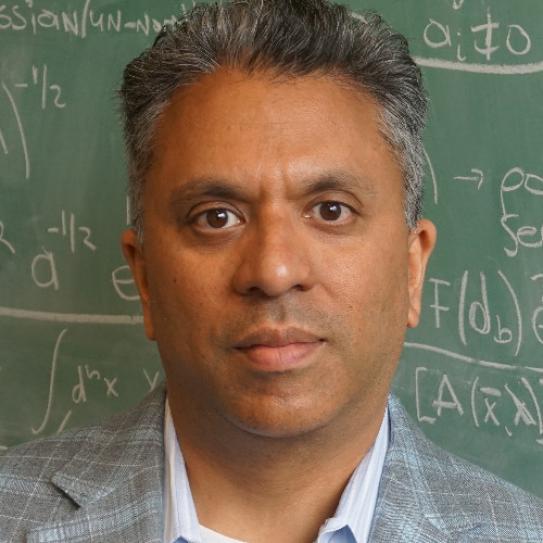
Professor Stuart Cavill is a faculty member in the School of Physics, Engineering and Technology at the University of York, serving as the CMMP Group Lead. He holds a BSc from the University of Nottingham (1996) and a PhD in Physics from the same institution (2000). His academic roles include Senior Beamline Scientist at Diamond Light Source (2005) and Lecturer in Condensed Matter Physics at York (2013). His research focuses on magnetic materials, multiferroics, magnetization dynamics, and soft X-ray spectroscopy, with applications in data storage and spintronic devices. Research interests include the development of strain-controlled magnetisation dynamics and the exploration of novel multiferroic materials for low-energy data storage solutions. He leads projects on hybrid spintronics and magnetoelectric hexaferrites. Current funded initiatives include the QUANtum Transport for Advanced Spintronics and Altermagnetism: a new phase for Spin physics projects. Teaching responsibilities include undergraduate courses on Electrons in Solids and First Year Laboratories. He has advised several PhD students, including James Beevers and Ohoud Alsaqer. Collaborations span international institutions, with recent work highlighted in 84 peer-reviewed publications and 12 research projects. His lab facilities include advanced X-ray spectroscopy tools and nanomaterial characterization equipment.
Professor Archil Kobakhidze is a theoretical particle physicist at the Department of Physics, University of Sydney. His research focuses on the electroweak symmetry breaking mechanism, dark matter, gravitational waves, and cosmological models. He has contributed to studies of the Higgs boson properties, the strong CP problem, and the interplay between particle physics and cosmology. **Research Interests:** Properties of the Higgs-like particle and electroweak symmetry breaking Dark matter and dark energy models Gravitational wave physics and cosmological applications Supersymmetry and naturalness in particle physics Quantum gravity and spacetime structure **Grants & Collaborations:** 2021: Electroweak phase transition: A cosmological window to new particle physics (ARC DP) 2019: Cosmological phase transitions and Higgs physics (U Sydney collaboration) 2016: New Physics and Astrophysics in light of the LHC data (IRCA) 2013: In search of the origin of mass at the Large Hadron Collider (ARC FT) **Advising:** Current students include Alex Aguilar Nieto (gravitational waves), Christian Canete (gauge symmetry), Josh Cesca (gravitational instantons), and Elden Loomes (topology and anomalies).
Weilin Li is an Assistant Professor in the Department of Mathematics at the City College of New York (CUNY). His research focuses on applied and computational harmonic analysis, with emphasis on super-resolution, quantization methods, and signal processing. He holds a PhD in Mathematics from the University of Maryland, College Park, and was previously a Courant Instructor at New York University. Education PhD in Mathematics, University of Maryland, College Park (201X) Courant Instructor, New York University, 201X-201X Research Interests Dr. Li's work bridges pure mathematics and applied sciences, with key areas including nonharmonic Fourier analysis, spectral super-resolution, and compressed sensing. His methods address challenges in signal reconstruction under quantization constraints and subspace estimation techniques. Recent Trends in Publications Recent work explores optimality of spectral estimation algorithms (e.g., Gradient-MUSIC), stability of Fourier matrices, and applications of scattering transforms in hyperspectral imaging. His research often intersects with machine learning, particularly in understanding approximation capabilities of neural networks under quantization. Awards & Grants Recipient of the 2021 Charles Chui Young Researcher Best Paper Award Funded by NSF, PSC-CUNY, and City College Foundation grants Academic Engagement Co-organizer of the One World MINDS Seminar, CUNY GC Harmonic Analysis and PDE Seminar, and CUNY analysis learning seminars. Active in mentoring graduate students, including Ben Tupper who joined the PhD program in 2025.
Dr. Xingwen Yi is a Senior Lecturer in the School of Computer Science & Engineering at Bangor University, specializing in photonics, optical communications, and signal processing. His research focuses on advanced optical networking systems, including fiber-wireless convergence, coherent optical transceivers, and nonlinear signal processing. Dr. Yi has contributed to innovative studies on sub-wavelength switching, mmWave generation, and noise mitigation in high-speed optical networks. His work spans experimental and theoretical investigations, with recent emphasis on dynamic network architectures and energy-efficient optical interconnects. Key projects include seamless fiber-wireless access networks and low-complexity coherent systems leveraging machine learning and advanced coding techniques. Dr. Yi collaborates internationally on topics such as erbium-doped waveguide amplifiers and interference mitigation in optical fiber systems. Publications highlight his expertise in photonics engineering, covering areas like raised cosine filters, DFT-spread OFDM systems, and long-haul transmission compensation. Awards and grants are not explicitly mentioned, but his research impacts next-generation optical communication infrastructure.
Mihai Macovei is an Associate Professor and the Head of the Laboratory of Quantum Photonics at the Institute of Applied Physics, National Academy of Sciences of Moldova. He also serves as a Principal Scientific Researcher in the same laboratory. His research focuses on quantum optics, optomechanical systems, and collective quantum dynamics. Current roles include overseeing the Quantum Photonics Lab and leading projects on hybrid optomechanical devices and quantum thermal engines. His work explores topics such as photon-phonon interactions, quantum coherence in thermal baths, and collective effects in multi-emitter systems. Notable projects include investigations into long-lived phonons in hybrid devices and enhanced phonon lifetimes via optical control. He has contributed to the understanding of quantum dynamics in cavity systems and the design of high-efficiency quantum thermal engines. Dr. Macovei has published extensively on topics like two-quanta processes in quantum-dot cavities, dipole-coupled emitters, and optomechanical systems. His research often bridges theoretical quantum mechanics with experimental applications in photonics and acoustics. He is involved in collaborative projects funded by programs such as FP7, H2020, and international partnerships (e.g., ERA.Net, STCU). These projects emphasize interdisciplinary approaches to quantum technologies and their societal applications.
Igor Podlesny is an Associate Professor and Leading Scientific Researcher at the Laboratory of Quantum Photonics, Institute of Applied Physics (IFA), University of Moldova. His research focuses on quantum photonics, magnetoexcitons, and condensed matter physics, with a particular emphasis on spin-orbit coupling, Landau quantization, and quantum interference effects. Affiliations: Laboratory of Quantum Photonics, IFA, University of Moldova Roles: Leading Scientific Researcher, Associate Professor Podlesny’s work explores theoretical and experimental aspects of two-dimensional electron-hole systems, cavity polaritons, and magnetoexciton interactions under magnetic fields. Key themes include the influence of Rashba spin-orbit coupling, quantum point vortices, and Dirac cone dispersion laws on optical and quantum phenomena. His research also addresses Bose-Einstein condensation and metastable bound states in semiconductor microcavities. Podlesny has contributed to numerous collaborative projects, including bilateral and international initiatives such as ANCD-funded programs and STCU grants. His publications span journals and conference proceedings, highlighting advancements in quantum photonics and condensed matter dynamics. He has also authored commemorative articles honoring notable scientists like Academician Sveatoslav A. Moskalenko and Professor Piotr Khadzhi. His lab facilities at IFA support cutting-edge research in optoelectronics, semiconductor compounds, and advanced materials characterization.
Rupak Chatterjee is an Industry Assistant Professor in the Department of Applied Physics at New York University's Tandon School of Engineering. His research bridges quantum information/computation and mathematical physics, with a focus on quantum algorithms for machine learning, optimization, operator algebras, and quantum mechanical systems. Education: Postdoctoral Scholar, Physics (James Franck Institute, University of Chicago) Ph.D. & M.S., Physics (Stony Brook University) M.Math., Mathematics (University of Waterloo) B.Sc., Physics (University of Calgary) Chatterjee's research explores quantum systems for machine learning, quantum optimization protocols, and mathematical frameworks like C∗-algebras and supersymmetric quantum mechanics. His work integrates theoretical rigor with applications in quantum computing and complex physical systems. His recent publications (2019–2024) demonstrate a strong emphasis on quantum entanglement, chaos in optomechanical systems, adiabatic quantum optimization, and relativistic quantum mechanics. Several publications also apply quantum methods to finance and diffusion modeling. No awards, student advising, or grant information is documented in the provided text.
Jens Wittsten is a Researcher affiliated with the Department of Engineering at the University of Borås' Academy of Textiles, Technology and Economics. He serves as the main supervisor for doctoral student Markus Klintborg and holds office in room C801. His work bridges applied mathematics, materials science, and computational engineering. Research interests include modeling phenomena in moiré heterostructures (e.g., twisted graphene layers), semiclassical quantization in strained lattices, and seismic data processing techniques. He has contributed to understanding electronic phase transitions, magic angles in bilayer graphene systems, and numerical methods for wave propagation modeling. His publication trends reflect interdisciplinary focus: recent works address both fundamental physics (e.g., Hofstadter butterfly studies) and applied engineering challenges (e.g., warehouse optimization via GPU-accelerated routing). Jens advises one doctoral candidate and maintains an active research portfolio spanning over 25 peer-reviewed articles since 2010. His methodological innovations include contributions to seismic apparition techniques and dealiasing algorithms.
Livieris Ioannis is an Assistant Professor in the Department of Statistics and Insurance Science at the University of Piraeus. He holds academic positions including Adjunct Professorships at the University of the Peloponnese and Technological Educational Institute of Western Greece. His research focuses on optimization methods for neural networks, machine learning, ensemble techniques, and their applications in healthcare, finance, education, and environmental science. Education: Ph.D. in Mathematics (2012), University of Patras M.Sc. in Computational Mathematics & Informatics in Education (2008), University of Patras B.Sc. in Mathematics (2006), University of Patras Research Interests: Dr. Livieris specializes in developing optimization algorithms for neural networks, semi-supervised learning, and ensemble methods. His work emphasizes practical applications such as time series forecasting (financial, environmental), medical image analysis (cancer detection, X-ray classification), and educational data mining (student performance prediction). He also explores explainable AI frameworks to enhance transparency in deep learning models. Key Contributions: He has contributed to over 50 peer-reviewed articles, including work on weight-constrained neural networks, gradient-based optimization, and CNN-LSTM models for cryptocurrency forecasting. His research has been recognized with inclusion in Stanford’s top 2% scientists (2020–2023) and a best paper award at HERCMA ’09. Awards & Roles: Associate Editor, Evolving Systems (Springer) Reviewer for 50+ journals including Neurocomputing and IEEE Transactions on Neural Networks Grants & Projects: Principal investigator in EU-funded projects like NEUROCLIMA (climate resilience via AI), ORBIS (democratic participation via AI), and PVAdapt (sustainable energy systems). He also leads initiatives in explainable AI for medical imaging and causal effect estimation in social science. Labs & Teams: Active in interdisciplinary teams at the University of Piraeus, focusing on AI-driven solutions in education, healthcare, and environmental monitoring. Collaborates with institutions like the IEEE and the Hellenic Association of ICT in Education.
Andrey F. Vilesov serves as Professor of Chemistry and Physics and Astronomy at the University of Southern California within the Dornsife College of Letters, Arts and Sciences, holding a primary appointment in the Department of Chemistry. His office is located in the Seeley G. Mudd Building (SSC 723), and he maintains an active research profile with publications extending to 2025. His educational background includes: Ph.D. in Physics from St. Petersburg State University (1985) Habilitation (H.D.R.) in Chemical Physics from the University of Göttingen (1999) Vilesov's research pioneers the spectroscopic investigation of quantum systems in superfluid helium environments, specializing in infrared and x-ray techniques to study molecular ions, clusters, and carbocations at near-absolute zero temperatures. His work bridges physical chemistry and quantum physics, focusing on solvation dynamics, ion-molecule reactions, and the structural properties of quantum fluids. The Vilesov Research Group develops advanced methodologies for isolating reactive species in helium nanodroplets, enabling unprecedented observation of transient chemical intermediates. Analysis of his 2022-2025 publications reveals three dominant research thrusts: (1) high-resolution infrared spectroscopy of cationic clusters (e.g., CH 5 + , C 2 H + , water dimer cations), (2) quantum fluid dynamics including vortex formation and phase separation in rotating droplets, and (3) x-ray free electron laser applications for imaging ionization dynamics and nanoplasma evolution. His group consistently advances techniques for generating large, vortex-free helium droplets and characterizing solute aggregation in quantum solvents. The Vilesov Research Group operates specialized cryogenic beam facilities at USC, collaborating with international x-ray laser facilities to probe ultrafast dynamics in quantum systems. Their experimental approach combines molecular beam techniques with advanced spectroscopy to investigate fundamental processes in isolated quantum environments, with implications for astrochemistry, quantum computing, and nanoscale material synthesis.
Dr. Ory Schnitzer is an Associate Professor in Applied Mathematics at Imperial College London's Department of Mathematics , within the Faculty of Natural Sciences. His research focuses on mathematical modeling, asymptotic analysis, and singular perturbation techniques applied to fluid dynamics, transport phenomena, and wave phenomena. He offers PhD projects in these areas and has contributed to understanding complex systems such as electrohydrodynamic instabilities, plasmonic resonances in nanomaterials, and superhydrophobic surface dynamics. Education & Affiliations: PhD (implied by academic rank) Affiliations: Applied Mathematics and Mathematical Physics; Fluid Dynamics Research Interests: Mathematical modeling of multiphase systems (e.g., droplets, bubbles) Asymptotic methods for singular perturbation problems Electrokinetic and thermocapillary phenomena Plasmonic resonances in nanostructures Superhydrophobic surfaces and slip flow Recent Article Trends: Recent work explores finite-time singularities in electrohydrodynamics, spontaneous locomotion of microswimmers, and plasmonic resonances in slender nanostructures. These studies bridge applied mathematics with fluid mechanics and nanophotonics, emphasizing analytical solutions and asymptotic approaches. Awards: 2024 John Ockendon Prize for outstanding contributions to applied mathematics Grants & Labs: Active in collaborative projects with researchers like E. Yariv and R. Brandão. Research funded through Imperial College's Department of Mathematics and UK-based grants. His work often involves experimental validation and industry partnerships in nanotechnology and fluid dynamics.
Qazi Hoq is a Professor of Mathematics at Western New England University. His research focuses on solitary waves, mathematical physics, and nonlinear dynamics, particularly in the context of quantization of spin direction and symmetry breaking phenomena. Education B.A., Angelo State University M.S., Texas Tech University Ph.D., University of North Texas Research Interests Multidimensional solitary waves and their existence, stability, and quantization properties Applications in nonlinear optics and Bose-Einstein condensates Dynamical systems and nonlinear partial differential equations Continuum theory, including embeddings of tree-like continua in the plane Article Trends Hoq's work spans mathematical physics, focusing on discrete and continuous nonlinear systems. His research includes stability analysis of solitons, vortex dynamics, and collapse behaviors in higher-dimensional lattices. He frequently collaborates on numerical simulations and theoretical models for nonlinear wave propagation.
Dr. Michael V. Pak is an Assistant Professor at the Air Force Institute of Technology's Graduate School of Engineering, Department of Engineering Physics, and affiliated with the Center for Directed Energy (CDE). His research bridges theoretical physics and quantum chemistry, focusing on quantization theory, topological quantum computing, and matter-antimatter interactions. He holds dual PhDs in Quantum Chemistry (Iowa State University, 2002) and Theoretical Physics (St. Petersburg State University, 1996), alongside an MS in Theoretical Chemistry (St. Petersburg State University, 1992). PhD, Quantum Chemistry, Iowa State University (2002) PhD, Theoretical Physics, St. Petersburg State University, Russia (1996) MS, Theoretical Chemistry, St. Petersburg State University, Russia (1992) Dr. Pak's research explores the quantum theory of multi-component systems, particularly methods to describe positron annihilation in complex environments and temperature-dependent beta decay modeling for nuclear explosion scenarios. His work on topological quantum computing emphasizes Majorana states and fault-tolerant gate operations, while nanowire architectures and Kohn-Sham systems under finite-temperature DFT are also key topics. His scientific awards include the Department of Energy Research Fellowship (2002), Nobel Foundation Scholarships (1992, 1995), and the V.A. Steklov Mathematical Institute Award (1992). He has published extensively on electron-positron correlation, hydrogen transfer, and quantum computational methods. At AFIT, Dr. Pak contributes to the Center for Directed Energy, advancing research in quantum theory and computational physics. His teaching interests align with theoretical physics and quantum mechanics education.
Theodore J. Allen is a Professor of Physics at Hobart & William Smith Colleges (HWS), where he has been a faculty member since 1998. He currently serves as Chair of the Physics Department and holds a Ph.D. in Theoretical Physics from Caltech (1988). His academic journey includes prior positions at SUNY Utica/Rome, University of Wisconsin-Madison, and postdoctoral fellowships at Syracuse and Wisconsin. Ph.D., Theoretical Physics, California Institute of Technology (1988) M.S., Physics, California Institute of Technology (1984) B.S., Applied Mathematics, Engineering and Physics, University of Wisconsin-Madison (1982) Allen's research is centered in theoretical high-energy physics, with a focus on Quantum Chromodynamics (QCD), string theory, and the quantization of constrained systems. His work explores the dynamics of QCD strings, pseudoclassical models, and meson spectroscopy, contributing to our understanding of quark confinement and hadronic structure. He has published extensively in leading journals such as Physical Review D and Journal of Mathematical Physics . His recent publications, spanning from 2021 to 1991, reveal a sustained research program in theoretical particle physics. The articles consistently address topics in QCD string models, quantization techniques, and hadron dynamics. Key themes include the behavior of spinning and curved strings in QCD, the transition between scalar and string confinement, and the vibrational modes of flux tubes. The work employs advanced mathematical methods in quantum field theory and constrained systems, demonstrating deep theoretical insight. Allen has received several honors, including the National Science Foundation Graduate Fellowship and multiple academic excellence awards during his undergraduate and graduate studies. He was elected to Phi Beta Kappa, Phi Kappa Phi, and Tau Beta Pi, reflecting early recognition of his academic excellence. National Science Foundation Graduate Fellow - Caltech (1982-1985) University Academic Excellence Award - UW-Madison (1982) University Academic Excellence Award - UW-Madison (1981) Radtke Prize Scholarship in Physics - UW-Madison (1981) Elected Phi Beta Kappa (1981) Elected Phi Kappa Phi (1981) Elected Tau Beta Pi, National Engineering Honor Society (1981) Frank D. Cady Scholarship in Mathematics - UW-Madison (1979 & 1980) National Merit Scholar - UW-Madison (1978-1982) Westinghouse Science Talent Search Honors Group (1977) He has advised graduate students, including Dennis B. Crossley (Ph.D., UW-Madison, 1994), and has held significant service roles such as Department Chair at HWS (2004–2006, 2008–2009, 2013–2019) and Career & Professional Development Liaison to the American Physical Society (2001–Present). He has taught a wide range of courses including Quantum Mechanics, Classical Mechanics, and Advanced Laboratory, and has been actively involved in curriculum development and academic computing. Allen is a member of the American Physical Society and has served as a referee for major journals including Physical Review Letters and Physical Review D . His research has been presented at numerous national and international conferences, including the MRST series, Confinement III, and meetings at Duke, Syracuse, and Fermilab.
Amin Alipour is an Associate Professor in the Department of Computer Science at the University of Houston, where he directs the Software Engineering Research Group. He holds a Ph.D. from Oregon State University and multiple advanced degrees from institutions in Iran and the U.S. His work focuses on improving safety and user experience of AI-assisted software engineering tools, with funding from NSF and IARPA. Prior to joining the U.S., he taught at the University of Kashan and Shiraz University in Iran. Education: Ph.D. in Computer Science, Oregon State University (Advisor: Alex Groce) M.S. in Computer Science, Michigan Technological University M.S. in Computer Engineering, Tarbiat Modares University B.S. in Computer Engineering, Petroleum University of Technology (Iran) Research interests include: Secure AI systems, particularly in code LLMs Trojan detection and mitigation in neural models Educational impacts of AI tools in programming education Formal methods for software verification Human-AI collaboration in programming tasks His recent articles explore cybersecurity in AI, student interactions with LLMs, and adversarial attacks on code models. He currently serves on program committees for ICER 2025 and ICSME 2025. His research group develops tools like FeatureExtractor and ProgramTransformer for analyzing neural code intelligence models.