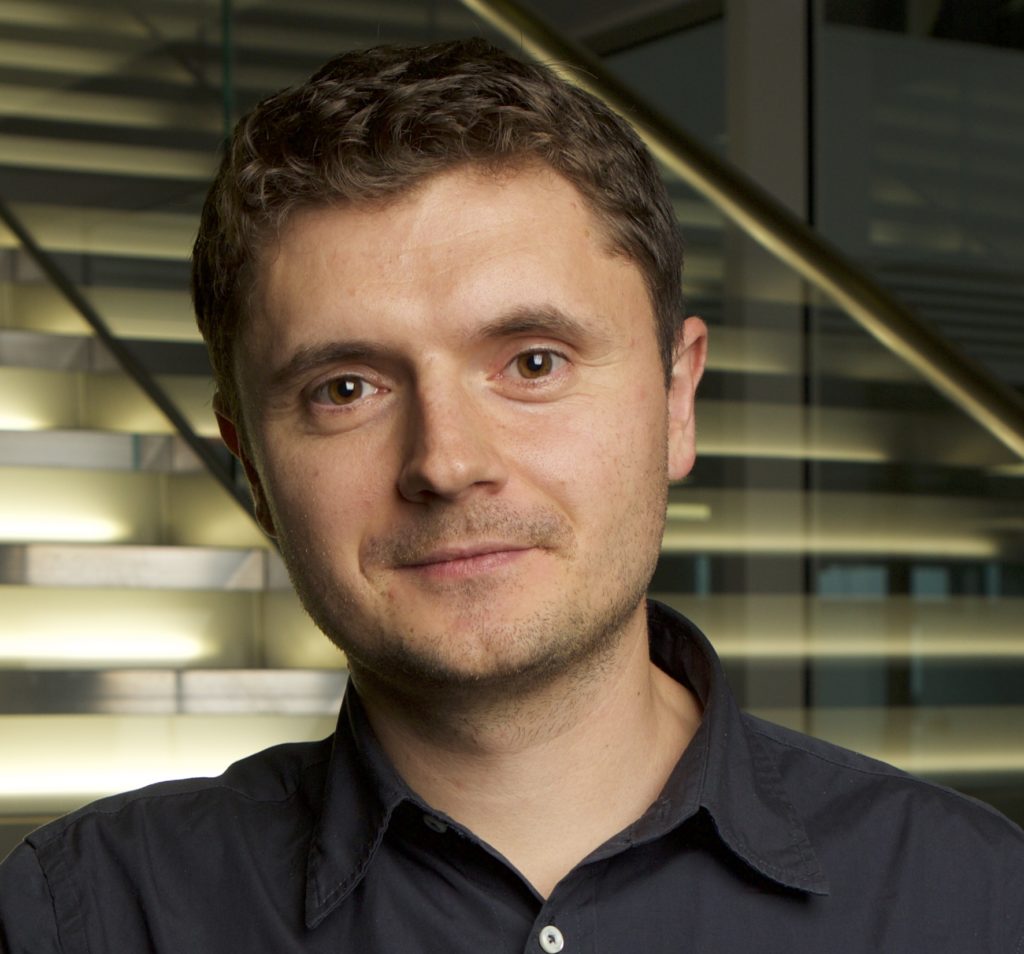
Nicola Tonellotto is a researcher at the University of Pisa, Department of Information Engineering, focusing on Information Retrieval , Federated Learning , and Edge Computing . He has collaborated extensively with institutions like CNR, City University of London, and Sapienza University of Rome. Key research areas: Query Processing , Conversational Search , Dense Retrieval , Distributed Learning His recent work addresses challenges in Sequential Recommender Systems , Cross-Modal Query Suggestion , and Energy-Aware Resource Management for FaaS platforms. Notable contributions include FedCMD for emotion recognition and ColBERT-PRF for semantic relevance feedback. As a coauthor, he has advanced GPU-based parallelization for tree ensembles and SIMD extensions to accelerate document scoring. He also explores reproducibility in IR research, emphasizing scientific integrity.
Dr. Frank Hannig is a Professor at the Department of Computer Science, Friedrich Alexander University Erlangen-Nuremberg (FAU), Germany. He serves as the Head of the Architecture and Compiler Design Group within the Hardware-Software-Co-Design department (Department 12). With a career spanning over two decades at FAU since 2003, he has established himself as a leading researcher in hardware-software co-design, compiler design, and embedded systems. Dr. Hannig received his Diploma degree in Electrical Engineering/Computer Science from the University of Paderborn in 2000, followed by his Dr.-Ing. degree in Computer Science from FAU in 2009 with a thesis on "Scheduling Techniques for High-Throughput Loop Accelerators." He completed his habilitation (Dr.-Ing. habil.) in 2018 with a thesis titled "Domain-specific and Resource-aware Computing," which qualifies him for a full professorship in the German academic system. His research focuses on hardware-software co-design, compiler design for embedded systems, reconfigurable computing, parallel systems, and machine learning acceleration. Dr. Hannig has made significant contributions to domain-specific and resource-aware computing, with applications in image processing, automotive systems, and edge AI. His work bridges the gap between high-level programming models and efficient hardware implementations, particularly for resource-constrained environments. Dr. Hannig's recent publications reveal a strong trend toward efficient machine learning deployment on embedded devices and microcontrollers, with particular emphasis on memory optimization, hardware acceleration, and low-precision computing. His research spans multiple domains including computer architecture, machine learning, and embedded systems, with a focus on practical implementations for real-world applications. Dr. Hannig serves as an Associate Editor for IEEE Embedded Systems Letters and the Journal of Real-Time Image Processing. He has organized numerous prestigious conferences including SLOHA 2021, ARC 2021, and Euro-Par 2021, demonstrating his leadership in the academic community. As an educator, Dr. Hannig teaches courses on Domain-Specific and Resource-Aware Computing on Multicore Architectures, Parallel Systems, and Embedded Systems. He has supervised numerous students through lectures, exercises, and seminars covering electronic system level design and multi-core architectures. Dr. Hannig leads several significant research projects including InvasIC (DFG Transregional Collaborative Research Centre), ExaStencils (Advanced Stencil-Code Engineering), and HBS (DFG Research Training Group on Heterogeneous Image Systems). His work with the HIPAcc open-source project has contributed to domain-specific language and compiler development for image processing applications.
Dr. Ana Oprescu is a Visiting Professor at the Informatics Institute of the University of Amsterdam. Her research focuses on the intersection of software engineering, AI, energy efficiency, and data privacy, with particular emphasis on sustainable computing practices. University of Amsterdam, Faculty of Science Key Research Areas: Green software engineering for AI systems, energy-efficient code generation using Large Language Models, privacy-preserving machine learning techniques, and sustainable data processing methods. She actively explores trade-offs between energy consumption, data privacy, and algorithmic accuracy. Her recent publications demonstrate a strong focus on environmentally sustainable computing, with articles covering quantisation effects on AI energy consumption, k-anonymisation impacts on machine learning, and dynamic federated learning approaches. She has also contributed to educational initiatives in green software practices. Scientific Recognition: Recipient of VENI-2014 research grant Dr. Oprescu works at the intersection of software optimization, security, and sustainability, with a particular interest in microservice architectures, model-based testing, and energy-aware system design. She has published extensively on topics like energy-driven software engineering, code clone refactoring, and distributed tracing.
Dr. Yanmin Gong serves as an Associate Professor in the Department of Electrical and Computer Engineering within the Margie and Bill Klesse College of Engineering and Integrated Design at The University of Texas at San Antonio (UTSA). Based in the Biotechnology Science and Engineering Building (BSE 1.536), he maintains active research and teaching responsibilities with contact available through (210) 458-5086 and yanmin.gong@utsa.edu. His academic foundation includes a Ph.D. from the University of Florida, positioning him at the forefront of distributed systems research. Dr. Gong's research program centers on critical challenges in next-generation computing infrastructures, with primary emphasis on: Federated learning architectures for heterogeneous edge environments Privacy-preserving distributed training via differential privacy mechanisms Quantum-assisted optimization for satellite-aerial-terrestrial networks Resource allocation and communication efficiency in mobile edge computing Machine learning applications in healthcare analytics and disaster response Analysis of his 2024-2025 publications reveals three dominant research trajectories: (1) integration of large language models with federated frameworks for resource-constrained devices, (2) quantum-inspired solutions for network optimization challenges, and (3) healthcare-focused applications addressing medication adherence and opioid use disorder. His work consistently bridges theoretical innovation with practical constraints like device heterogeneity and regulatory privacy requirements. While no specific scientific awards are documented in the source materials, Dr. Gong's prolific publication record in high-impact venues demonstrates significant scholarly contribution. The absence of listed advisees or laboratory facilities suggests his current research is conducted through collaborative projects rather than a standalone research group, with future work likely expanding quantum-federated learning intersections and public health applications.
Corentin Dumery is a Doctoral Assistant at École Polytechnique Fédérale de Lausanne (EPFL) , affiliated with the Computer Vision Laboratory (CVLAB) and Machine Learning and Optimization Laboratory (MLO) within the School of Computer and Communication Sciences . His research bridges Computer Vision and Computer Graphics , focusing on 3D scene reconstruction, garment modeling, and neural rendering techniques. Previously, he interned at Meta Redmond , worked at CEA Paris-Saclay on polycube mapping, and was a visiting researcher at ETH Zurich under Prof. Olga Sorkine-Hornung . Corentin holds dual MSc degrees in Computer Science from National University of Singapore (NUS) and Télécom Paris . His work emphasizes 3D content creation for AR/VR Diffusion models for garment reconstruction Neural radiance field optimization Polycube mapping for hexahedral meshing His recent publications (2022–2025) span top venues like SIGGRAPH , ICCV , and CVPR , addressing challenges in 3D Gaussian splatting, view-consistent NeRF training, and single-view garment recovery. He also contributes to academic service as an Outstanding Reviewer at CVPR25 and co-organizes workshops like OpenSUN3D . At EPFL, he serves as Head Teaching Assistant for courses CS433 Machine Learning (2023–2024) and CS442 Computer Vision (2023–2024). Additionally, he is the VP/Treasurer of EPIC , EPFL's computer science PhD association.
Irida Shallari is a Lecturer in the Department of Computer and Electrical Engineering (DET) at Mid Sweden University, specializing in Intelligence Partitioning for IoT systems. Her research spans Deep Learning , Embedded Systems , and Data Fusion , with applications in Edge Computing , 6G , and Smart Agriculture . Education: Doctoral Thesis (2021): "Intelligence Partitioning for IoT : Design Space Exploration for a Data Intensive IoT Node" (Mid Sweden University) Licentiate Thesis (2019): "Intelligence Partitioning for IoT : Communication and Processing Inter-Effects for Smart Camera Implementation" (Mid Sweden University) Her research focuses on optimizing IoT node architectures, balancing Communication vs. Computation trade-offs, and deploying Deep Learning in resource-constrained environments. Recent work includes Time-dependent Clustering for neural network quantization, ArUco Marker Calibration , and Generative AI in Education ethics. The 15 most recent publications (2025-2024) highlight trends in Distributed CNN Optimization , Model Evaluation for industrial IoT, and cross-disciplinary applications in Environmental Monitoring and Academic Integrity . No scientific awards are explicitly mentioned in the provided text.
Amir Gholaminejad is a Research Fellow at UC Berkeley, affiliated with the Berkeley Artificial Intelligence Research (BAIR) Lab and Sky Lab, and co-director of the Pallas Lab. He earned his PhD from UT Austin, where his dissertation on large-scale bio-physics-based image segmentation won the university's 2018 Outstanding Dissertation Award. His research spans quantized neural networks , neural ODEs , large-scale agentic systems , and scientific machine learning . Melosh Medal Finalist Amazon Machine Learning Research Award (2020) Best Student Paper Award (SC'17) Gold Medal (ACM Student Research Competition) Research trends focus on Transformer optimization , context length extension , memory-efficient AI , and physics-informed neural networks . He mentors PhD, Masters, and undergraduate students, with alumni now at institutions like Microsoft, Apple, and Google. Recent work includes SqueezeLLM and LLMCompiler for ICML'24, and he teaches AI Systems at Berkeley.
Jason Eshraghian is an Assistant Professor at the Department of Electrical and Computer Engineering, University of California, Santa Cruz. He leads the UCSC Neuromorphic Computing Group, focusing on brain-inspired circuits for AI acceleration and spiking neural networks. His work bridges biological principles with hardware implementation to solve computational challenges in AI efficiency. Assistant Professor, Electrical and Computer Engineering UCSC Neuromorphic Computing Group leader Research intersections: Neuromorphic engineering, AI hardware, spiking networks Research Interests: Dr. Eshraghian's work centers on neuromorphic computing and spiking neural networks for AI acceleration. His lab explores Hardware-software co-design for ultra-low-power systems Memristor-based neural architectures Event-driven medical diagnostics Spiking language models (e.g., SpikeGPT) Closed-loop neurostimulation Article Trends: Recent publications emphasize Scalable neuromorphic architectures for AI (2025: Ising machines, FPGA implementation) Medical applications including cytometry and brain-computer interfaces Energy-efficient designs for language models and tracking systems Hybrid attention mechanisms and temporal learning frameworks
Gilles Venturini is a Professor in Computer Science at the University of Tours, France, affiliated with PolytechTours and the Computer Science Lab. He has held this position since 1998 following his appointment as Assistant Professor from 1994-1998. His academic credentials include a Research Supervisor Degree (HdR) from the University of Tours (1997), a PhD in Computer Science from the University of the South of Paris (1994) supervised by Yves Kodratoff, and dual qualifications in Computer Science (MSc, 1990) and Electrical Engineering (ESIEE, 1990). Professor Venturini's research concentrates on information visualization, machine learning, and data mining with emphasis on genetic algorithms, neural networks, and computer vision. His work develops practical tools for visual data exploration, automatic dashboard generation, and analysis of large datasets, particularly addressing usability challenges for novice users in open data contexts. His 2023-2025 publications reveal sustained innovation in ternarization of vision-language models for edge devices, few-shot object detection, and backpropagation alternatives for binary neural networks. These contributions bridge theoretical machine learning advancements with applications in cultural heritage visualization and human resources analytics. No scientific awards were documented in the source materials. While specific grant details and student supervision records are absent from the provided text, his professorial role implies active involvement in research funding acquisition and academic mentoring. His work frequently intersects with interdisciplinary teams, particularly in digital humanities projects. He remains operationally active within the University of Tours' Computer Science Lab, driving research in visualization techniques and machine learning applications through this primary institutional affiliation.
Dr Mustansar Ali Ghazanfar is an Associate Professor at the Department of Computer Science and Digital Technologies, School of Architecture, Computing and Engineering, University of East London. He leads the MSc Artificial Intelligence program, which has attracted over 50 students in two years. Research Focus: Artificial Intelligence, Machine Learning, Recommender Systems, Big Data, Cyber Security Key Contributions: 70+ international publications, h-index of 28, 2500+ citations Media Engagement: Industry 4.0 expert featured on GB News London and Faculti, Kay2Tv Pakistan His research spans Artificial Intelligence and Data Science , emphasizing machine learning , deep learning , and predictive modeling . Recent publications highlight reinforcement learning in recommender systems, sentiment-driven cryptocurrency prediction , and security applications of generative AI. Scientific contributions include: Developing scalable context-aware recommender systems using kernel methods Advancing time series forecasting for stock markets via neural networks Innovating masked facial recognition algorithms during the pandemic Pioneering dimensionality reduction techniques for big data analytics
Jing Gao is an Associate Professor at the Elmore Family School of Electrical and Computer Engineering , Purdue University , West Lafayette, Indiana. She serves as the Director of Graduate Admissions and focuses on data mining, machine learning, and their applications in healthcare, biology, and societal systems. Research Interests Data veracity analysis and multi-source data integration Knowledge graphs and large language models Fairness, interpretability, and efficiency in AI Federated learning and transfer learning Applications in healthcare, education, and criminal justice Recent Article Trends Her work emphasizes large language models (LLMs) with innovations in knowledge editing, federated learning, and fairness-aware systems. Key themes include: Improving LLM efficiency via sparse adaptation and quantization Advancing privacy-preserving federated learning architectures Developing fairness-aware algorithms through counterfactual reasoning Integrating knowledge graphs for factuality validation Optimizing multi-agent reasoning and self-reflective confidence Technical Areas Her research spans computer engineering domains including: Signal & Image Processing Communications & Networking AI/ML Model Efficiency
Vladimir Loncar is a researcher specializing in machine learning, FPGA optimization, and high-energy physics computing. His work focuses on accelerating neural networks and scientific algorithms using hardware-aware techniques. Notably, he contributes to the hls4ml framework for FPGA deployment of machine learning models, and has applied these methods to particle physics experiments like LHCb and the HL-LHC. His research spans symbolic regression, recurrent neural networks, and real-time data processing for large-scale physics detectors. Key projects include developing resource-efficient inference systems (e.g., Tailor for CNN optimization), benchmarking frameworks for GNN-based surrogate models, and latency-critical implementations for collider experiments. Loncar's work bridges theoretical physics and computational engineering, emphasizing practical applications in experimental particle physics, quantum simulations, and autonomous detector control. He collaborates extensively with institutions like CERN and the sPHENIX collaboration.
Hui Guan is an Assistant Professor at the Manning College of Information and Computer Sciences (CICS) at the University of Massachusetts Amherst. Currently on leave, she works at Amazon AWS developing LLM systems. She holds a PhD in Electrical Engineering from North Carolina State University (2020) and is a member of the PLASMA lab at UMass. Education: PhD in Electrical Engineering, North Carolina State University, 2020 Research Interests: Focuses on machine learning systems, optimizing deep multitask and graph learning. Aims to improve efficiency, scalability, and reliability of ML through system innovations. Leverages principles like composability and locality awareness to democratize ML applications. Awards: NSF CAREER Award (2024) Amazon Research Award (2022) NCSU ECE Distinguished Dissertation Award (2020) IBM PhD Fellowship (2015-2018) Grants and Projects: Includes NSF support for projects like Adaptive Deep Learning Systems and Memory-Driven Collaboration for Embedded Systems. Received grants from Adobe and Dolby. Students and Advising: Advises PhD students including Lijun Zhang, Kunjal Panchal, and Qizheng Yang. Collaborates with students from other groups like Sohaib Ahmad. Labs and Teams: Active member of the PLASMA lab, focusing on programming languages and systems research.
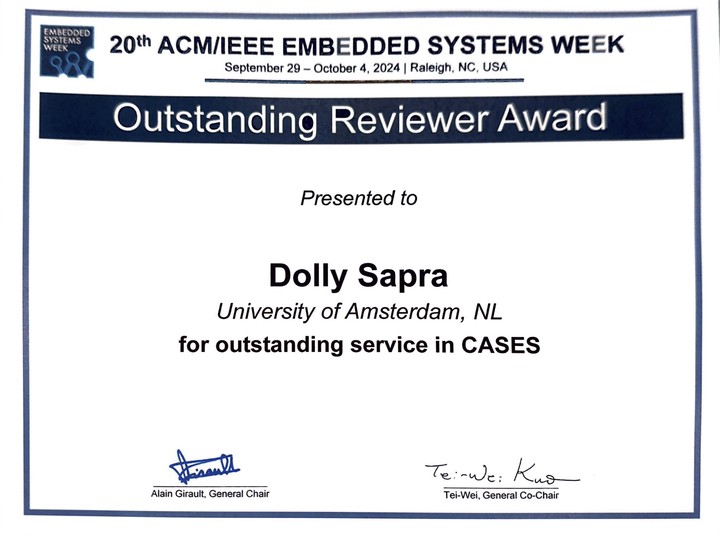
Dolly Sapra is a researcher at the University of Amsterdam , affiliated with the Department of Computer Science under the Faculty of Science . Her work focuses on adaptive deep learning, secure neural inference, energy-efficient computing, and fault-aware systems. She received the IEEE/ACM CASES '24 Outstanding Reviewer Award . Her research spans Machine Learning , Edge Computing , and Embedded Systems , with a focus on Model elasticity for CNNs Privacy-preserving edge intelligence Power-efficient inference Transformer optimization Climate-aware computing . The 15 most recent articles highlight her leadership in adaptive neural architectures , secure multi-party inference , and sustainable computing , with applications in embedded systems and real-time environments .
Dan Alistarh is a Professor at the Institute of Science and Technology Austria (ISTA) and ML Research Lead at Neural Magic, Inc. His research focuses on efficient algorithms and systems for machine learning, spanning theoretical foundations to practical implementations. He holds a PhD from EPFL and has held postdoctoral positions at MIT CSAIL and researcher roles at ETH Zurich and Microsoft Research. Education: PhD in Computer Science from EPFL (advisor: Prof. Rachid Guerraoui), Postdoctoral Associate at MIT CSAIL (advisor: Prof. Nir Shavit). Research interests include distributed systems, optimization algorithms, neural network compression (quantization, pruning), and parallel computing. His work bridges theory and practice, with impactful contributions to LLM efficiency, such as GPTQ, Marlin, and SparseGPT. He leads a lab at ISTA with active collaborations and visiting researchers from top institutions. Key scientific awards include the Best Paper Award at DISC 2021 (for work on leader election algorithms) and a Distinguished Paper Award at SPAA 2023. His research is supported by grants from FWF BILAI, ERC, NVIDIA, Google, and Amazon. Advising and grants: Supervises PhD students and postdocs focusing on ML efficiency. Open positions exist for interns, PhD candidates, and postdocs with backgrounds in CS/Math. Recent lab achievements include 4 NeurIPS 2024 acceptances, including an oral presentation for PV-Tuning. Labs/Teams: IST-DASLab, known for open-source contributions (GitHub: IST-DASLab) and innovations in LLM compression. Collaborations span academia and industry, with alumni progressing to roles at OpenAI, Neural Magic, and top universities.