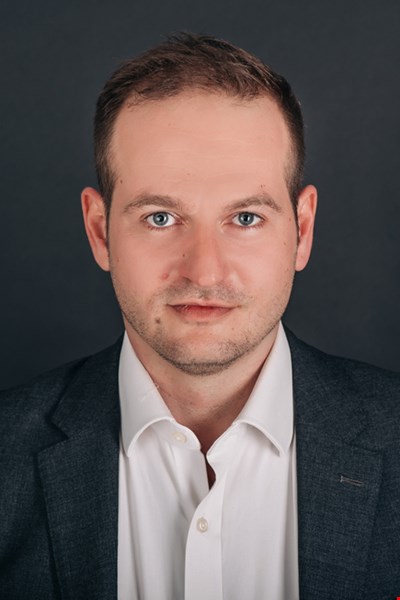
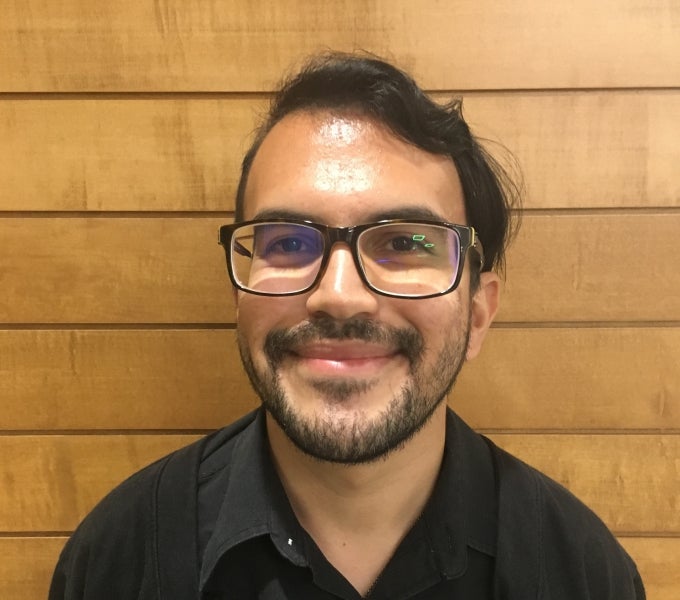
Professor Hendrik Vollmer is a faculty member in the Accounting Group at Warwick Business School , University of Warwick, since 2020. He previously served as Head of the Accounting Division at the University of Leicester (2015–2020) and worked at Bielefeld University in Germany for 16 years. His research bridges accounting, sociology, and environmental studies, focusing on accounting as a social practice and its role in addressing ecological challenges. Senior Fellow of the Higher Education Academy Associate Editor of European Accounting Review Member of editorial boards for Zeitschrift für Soziologie, Accounting, Organizations and Society, and Social and Environmental Accountability Journal Active in sustainability accounting research and education Contributor to interdisciplinary accounting literature Recent publications explore accounting's role in climate change mitigation, public value creation, and the spatialization of worth. His teaching modules include Accounting for Sustainability, People, Planet and Financial Accounting: Theory and Context .
Fahui Wang is the Cyril & Tutta Vetter Alumni Professor in the Department of Geography & Anthropology at Louisiana State University (LSU). He holds a B.S. in Geography from Peking University (1988), an M.A. in Economics (1993), and a Ph.D. in City & Regional Planning (1995), both from The Ohio State University. His research focuses on spatially-integrated social sciences, public policy, and GIS applications in healthcare, urban planning, and public safety. He has authored/co-authored multiple influential books and peer-reviewed articles, including works on computational methods in GIS and healthcare accessibility analysis. Professor Wang’s work has been supported by grants from the National Institutes of Health, National Science Foundation, and U.S. Departments of Housing and Urban Development and Justice. His accolades include LSU’s Distinguished Research Master Award (2023) and CPGIS Distinguished Scholar (2023). He teaches advanced courses in GIS, urban geography, and quantitative methods, and leads research initiatives in the LSU Geoscience department. His lab focuses on geospatial technologies for addressing societal challenges in healthcare access, urban planning, and crime analysis.
Apostolos Fasianos is a Lecturer in Economics at Brunel University London, specializing in macroeconomic implications of household financial behavior. Prior roles include economist positions at the Hellenic Ministry of Finance (2017-2020) and Central Bank of Ireland (2016-2017) , with collaborative research spanning the Bank of England and Reserve Bank of New Zealand . PhD in Economics, University of Limerick MSc in Economic Development, University of Glasgow MPhil in Economics, University of Athens Research focuses on household finance , housing economics , monetary policy , and economic inequalities . Recent work explores AI-enabled technological shocks on UK labor markets via Bayesian VAR modeling and textual patent analysis. Publications span topics like wealth inequality , housing market asymmetries , and financialization trends . Selected publications highlight interdisciplinary approaches, merging macroeconomic theory with empirical analysis of crises (e.g., Covid-19 ), housing markets, and historical financial trends. Key methodologies include textual analysis , VAR modeling , and spatial econometrics . Active in policy analysis, Fasianos represented Greece in international forums such as the EPC - Ageing Working Group and OECD Working Party 1 . Current projects include a 2023-2024 BRIEF AWARDS grant on AI’s macroeconomic impacts.
Lance Freeman is the Penn Integrates Knowledge (PIK) Professor of City and Regional Planning and Sociology at the University of Pennsylvania's School of Arts & Sciences. His research focuses on neighborhood dynamics, gentrification, urban poverty, housing policy, and the interplay between the built environment and public health. He holds a Ph.D. in City and Regional Planning from the University of North Carolina at Chapel Hill (1997), an MRP in Regional Planning (1991), and a B.S. in Business Administration from SUNY Buffalo (1987). Prior to academia, he worked at Mathematica Policy Research and as a City Planner at the New York City Housing Authority. Freeman teaches courses on urban planning theory, quantitative methods, and community development at Columbia University and the University of Delaware. His research interests include understanding neighborhood change, leveraging social media and technology for urban analysis, and promoting equitable urban development. Key publications include There Goes the Hood: Views of Gentrification from the Ground Up (2006), A Haven and a Hell: The Ghetto in Black America (2019), and co-authored Planning and Control of Land Development (2020). He has contributed to debates on inclusionary zoning, racial equity planning, and the impacts of urban policies on marginalized communities. Freeman's work intersects urban sociology, policy analysis, and spatial demography. His recent studies explore gentrification migration patterns, the role of social media in neighborhood change, and historical segregation dynamics. He advocates for evidence-based planning to address urban inequality and spatial injustice.
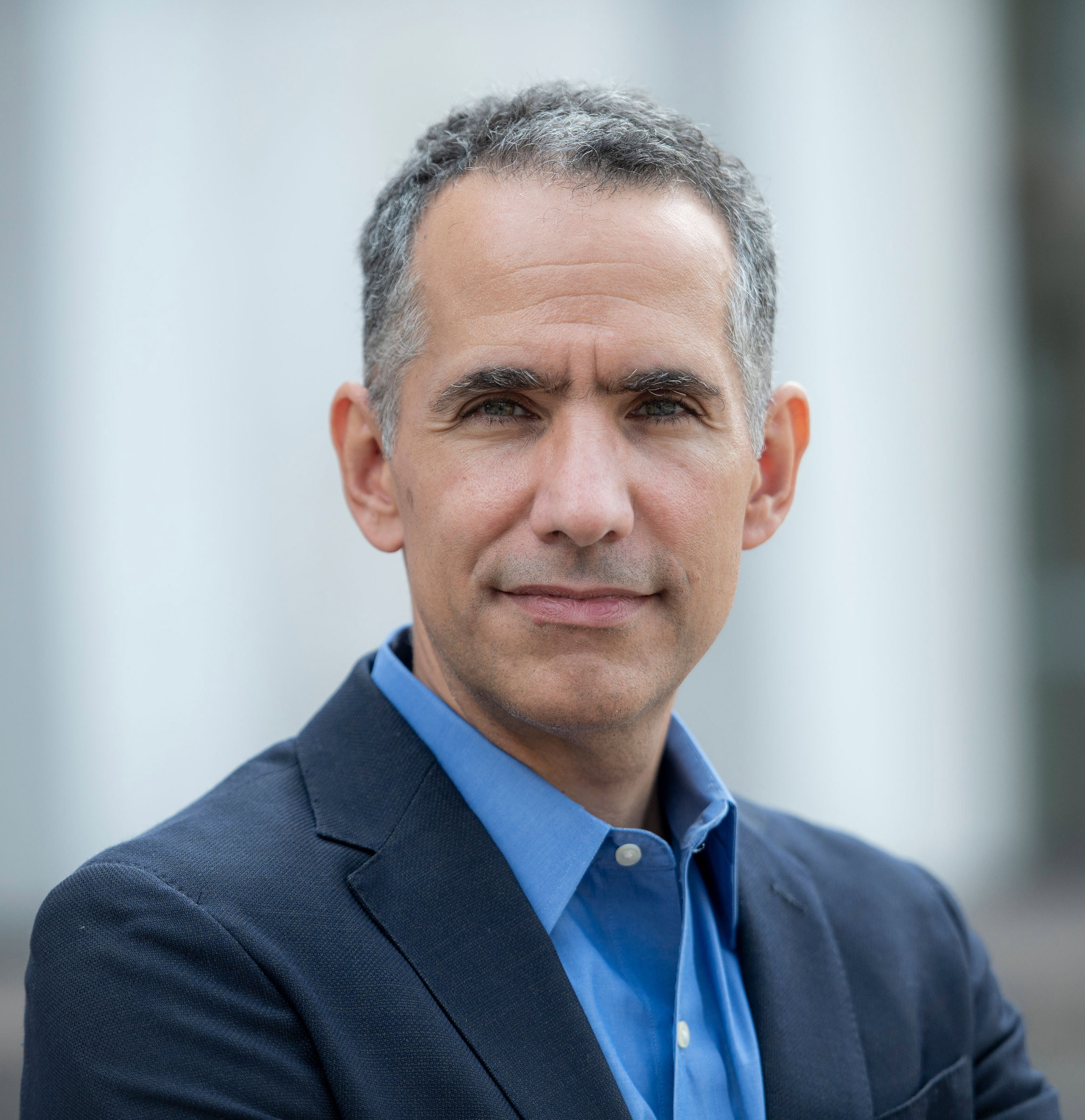
Esteban Rossi-Hansberg is the Glen A. Lloyd Distinguished Service Professor of Economics at the University of Chicago's Kenneth C. Griffin Department of Economics (since 2021). Previously, he held professorships at Princeton University (2005–2021) and Stanford University (2002–2005). He earned his Ph.D. in Economics from the University of Chicago in 2002. He serves as a Research Associate at the National Bureau of Economic Research (NBER) and a Research Fellow at the Center for Economic Policy Research (CEPR). He co-directs the Becker Friedman Institute's International Economics and Economic Geography Initiative and is Lead Editor of the Journal of Political Economy . His research focuses on international trade, regional and urban economics, growth, organizational economics, and climate change. Key topics include city structure, offshoring impacts, spatial frictions, climate adaptation, and agglomeration effects. His work has been published in major economics journals, and he has received prestigious awards such as the Alfred Sloan Fellowship (2007), August Lösch Prize (2010), and election to the American Academy of Arts and Sciences (2022). Recent work explores the economic geography of climate change, including adaptation strategies and migration dynamics. He has analyzed spatial distribution of economic activity under climate scenarios and the role of carbon taxes in reshaping global economies. His studies often use dynamic spatial models to quantify local and global economic impacts. His contributions span theoretical frameworks and empirical analyses, addressing policy questions like optimal industrial strategies, spatial equity, and adaptation to environmental challenges. He collaborates widely, with co-authors including Klaus Desmet, Stephen Redding, and others, producing influential papers on migration, trade, and urban systems.
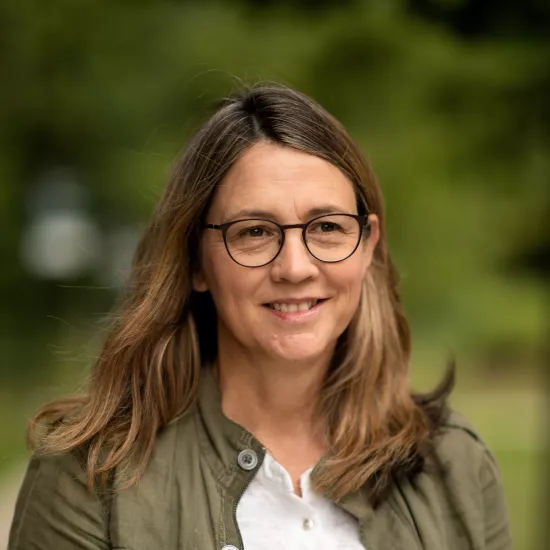
Dr. Johan P Larsson serves as a Lecturer in Economics and Public Policy within the Department of Land Economy at the University of Cambridge, concurrently holding a Fellowship and Director of Studies position in Land Economy. His academic profile bridges theoretical and empirical research in spatial economic phenomena, with emphasis on policy-relevant investigations of regional competitiveness and urban dynamics. His educational foundation includes: PhD from Jönköping University Dr. Larsson's research program centers on economic geography and regional science, specializing in urban economics and entrepreneurship. He examines how historical industrial structures, neighborhood effects, and policy interventions shape economic integration and innovation ecosystems. Methodologically, he combines quantitative analysis of large-scale datasets with natural experiments (e.g., pandemic-induced remote work) to isolate causal mechanisms in spatial economic processes. His recent publication trajectory (2021-2025) reveals consistent focus on three interconnected domains: evaluation of place-based policies (e.g., City Deals), analysis of the entrepreneurial state's role in innovation, and investigation of immigrant integration dynamics. These works predominantly utilize Scandinavian and English case studies while generating globally applicable theoretical insights, demonstrating methodological sophistication through spatial econometrics and policy counterfactuals. Recognition for his scholarly contributions includes: The JIBS Student Association’s Pedagogical Prize (2017) The Martin Beckmann Award from Regional Science International (2015) Jan Wallander scholar designation (2015) His teaching portfolio spans Microeconomics, Macroeconomics, Urban economics, and Applied statistics, reflecting his interdisciplinary expertise. While doctoral advisees aren't explicitly listed, his Director of Studies role indicates active undergraduate supervision within Cambridge's collegiate system. Current research appears focused on post-pandemic labor geography and mission-oriented innovation policy evaluation, though dedicated laboratories or formal research teams aren't mentioned in available materials.
Roberta Sinatra is a Professor in Social Data Science at the University of Copenhagen, with part-time affiliations at ITU Copenhagen, ISI Foundation (Italy), and CSH (Austria). She co-founded the NERDS Research Group at ITU and co-leads the Pioneer Centre for AI in Copenhagen. Research Interests: Her work spans computational social science, network science, and data science, focusing on fairness in AI, scientific careers, and human mobility. Recent projects include analyzing child protection algorithms and modeling urban bicycle networks. Scientific Awards: ERC Consolidator Grant Villum Young Investigator Grant Complex Systems Society Junior Prize DPG Young Scientist Award for Socio- and Econophysics Sapere Aude: Starting Grant Publications: Her research, often in top-tier venues like Nature and Science , explores interdisciplinary themes, including AI ethics, gender disparities in science, and social network dynamics. Labs & Teams: She leads research initiatives at the Center for Social Data Science (KU) and co-founded the NERDS Research Group at ITU, fostering international collaboration in network science and AI ethics.
Assoc Prof Ying Chen is an Associate Professor at the National University of Singapore , affiliated with the Department of Mathematics, Asian Institute of Digital Finance (as Academic Director of PhD Program in Digital FinTech 2022–2024), Risk Management Institute (2019–2023), Department of Statistics and Data Science (2019–2023), and Department of Economics (2018–2023). She also contributes to NUS Graduate School for Integrative Sciences and Engineering since 2016. Research Interests include: AI forecasting and quantum computing for finance Nonstationary time series and functional data analysis Energy data analytics and precision medicine Network autoregression and spatial-temporal modeling Explainable AI and citation metrics Portfolio liquidation and market-making algorithms Article Trends demonstrate expertise in: Adaptive forecasting for gas flows and electricity prices Blockchain network influence detection Quantum computing applications in finance Functional autoregression with mixed predictors Credit rating fairness and explainability High-resolution implied volatility modeling Scientific Awards include: ISI Elected Member (2016–) International Statistical Institute Council (2023–2027) IASC Scientific Secretary (2017–2019, 2023–2025) Advisory roles for EU FIN-TECH and xAIM projects
Matthew D. Potts is the S.J. Hall Chair in Forest Economics and Professor at UC Berkeley's Department of Environmental Science, Policy, & Management. He also serves as Associate Director for Sustainable Development at the Blum Center for Developing Economies. With interdisciplinary training in mathematics, ecology, and economics, his research focuses on nature-based climate solutions and ecosystem service co-production. Research addresses carbon sequestration through forest management, biodiversity conservation, land use planning, and sustainable development in tropical ecosystems. Recent work examines cost-effectiveness of reforestation, climate-driven migration patterns, and plantation carbon modeling. Publications demonstrate strong focus on quantitative analysis of land-use impacts, with methodological innovations in remote sensing applications and spatial modeling for carbon accounting. Awards include recognition for young faculty research and leadership in international environmental assessments. Leads the Potts Research Group, mentoring graduate students working on tropical ecology, restoration, and climate adaptation projects.
Tracey Galloway is an Associate Professor in the Department of Anthropology at the University of Toronto Mississauga (UTM), where she conducts critical research on Indigenous health disparities and policy interventions in northern Canada. Her work bridges medical anthropology, public health, and community-based participatory research to address systemic inequities affecting circumpolar populations. Education: PhD, McMaster University, 2008 MA (institution unspecified) BA (institution unspecified) BScN (institution unspecified) Dr. Galloway's research program centers on chronic disease risk assessment and health system improvement in Indigenous communities, with specific expertise in nutrition transition, food security, child growth patterns, and public health policy evaluation. She examines the impact of federal programs like Nutrition North Canada while developing community-led solutions for health equity. Her methodological approach combines quantitative analysis of health outcomes with qualitative community engagement, emphasizing Indigenous research sovereignty and decolonizing methodologies. Her publication record reveals consistent thematic focus across 15 recent articles, demonstrating interdisciplinary collaboration between anthropology, epidemiology, and health economics. Key trends include rigorous evaluation of colonial impacts on Indigenous food systems, innovative analysis of subsidy program effectiveness, and centering Indigenous patient experiences in healthcare design. Her work consistently prioritizes community-defined research questions and actionable policy recommendations. Dr. Galloway actively mentors graduate students including Darci Belmore, Carly Checholik, Neda Maki, and Hiliary Monteith, guiding research on Indigenous health determinants and policy interventions. While specific grant details aren't publicly enumerated, her collaborative projects involve partnerships with Indigenous communities across Northern Canada and interdisciplinary teams addressing complex health system challenges. She maintains strong community partnerships for her applied research, particularly in Nunavut and Northwestern Ontario, working directly with Anishinabeck and Inuit communities to translate findings into culturally safe health initiatives and policy reforms that address the root causes of health inequities.
Professor Cristina Iannelli holds the Personal Chair of Education and Social Stratification at the University of Edinburgh’s Moray House School of Education and Sport, affiliated with the Institute for Education, Community & Society (IECS). She is a Fellow of the British Academy and the Academy of Social Sciences. Her research focuses on social stratification in education and labor markets, social mobility, youth transitions, and quantitative data analysis. She has led major international projects like the ESRC-funded ‘Understanding Inequalities’ (2017-2021) and previously co-directed the ESRC Applied Quantitative Methods Network (AQMeN). Key contributions include analyzing educational policies, intergenerational mobility, and curriculum impacts on inequality. Her educational background includes a PhD from the European University Institute (Florence) and prior roles as a Research Fellow at the University of Edinburgh. She has supervised 14 PhD students across topics like educational inequality, policy analysis, and labor market transitions. Awards include ESRC research fellowships for projects on educational structure and social mobility. Recent work highlights include analyzing sibling data to study intergenerational transmission of advantage, cross-country comparisons of STEM enrollment disparities, and the role of spatial job opportunities in labor market outcomes. She chairs the European Research Network on Transitions in Youth (TIY) and advises ESRC’s Data and Infrastructure Expert Group.
Elias Chavarria Mora is a Lecturer at the School of Political Science, University of Costa Rica, and a PhD candidate in Political Science at the University of Pittsburgh (expected 2025). He focuses on comparative political behavior and Latin American politics , with regional expertise in Central American electoral systems and party politics . Education: PhD in Political Science (2025, University of Pittsburgh) M.A. in Political Science (2020, University of Pittsburgh) Licentiate in Political Science (2017, University of Costa Rica) B.A. in Political Science (2015, University of Costa Rica) His research investigates social media's role in elections , ideology , and unconventional political participation . He employs data science methods , including text analysis, spatial econometrics, and machine learning. Recent publications analyze political education curricula , data protection laws , and electoral dynamics in Latin America. His work appears in journals like Latin American Politics and Society and Revista Latinoamericana de Opinión Pública . He coordinates the Observatorio de la Política Internacional Sergio Iván Moya Mena at the University of Costa Rica and has collaborated with the University of Salamanca's Parliamentary Elites in Latin America Observatory.
Professor Begona Dominguez is a faculty member in the School of Economics at The University of Queensland (UQ), within the Faculty of Business, Economics and Law. She holds a Doctor of Philosophy in Economics from Universitat Autònoma de Barcelona. Her research focuses on Macroeconomics, Public Finance, and Monetary Economics, with emphasis on fiscal policy design, central bank balance sheets, and optimal taxation frameworks. Her key projects include Supporting Entry and Growth of Australian Businesses via Tax and Transfers (2022–2024) and The role of a central bank's balance sheet in shaping the economy (2021–2024) . She is available for PhD supervision and actively contributes to applied macroeconomic analysis, particularly in urban economic advantages and policy evaluation. Publications span topics like fiscal sustainability, inflation dynamics under central bank policies, and the implications of constitutional constraints on taxation. Her work bridges theoretical models (e.g., Ramsey frameworks) with empirical applications in tax policy and public debt management. Professor Dominguez maintains affiliations with the Centre for Applied Macroeconomic Analysis (ANU) and has reviewed prominent texts such as John Taylor's Reform of the International Monetary System . She is based in Room 507, Colin Clark Building at UQ.
John C. Butler is a Clinical Associate Professor in the Finance Department at the McCombs School of Business, University of Texas at Austin. He holds leadership roles as Academic Director of the Kay Bailey Hutchison Energy Center, Director of the MS Finance Program, and Director of the Energy Management Minor. His academic journey includes a PhD in Management Science and Information Systems from UT Austin (1998) and a BBA from Texas A&M University (1991). His research focuses on applications of decision analysis across domains including operations, finance, and information systems. Key areas include risk analysis, optimization, multi-attribute utility theory, and energy finance. His work integrates theoretical modeling with empirical validation to address complex decision-making challenges in both public and private sectors. Butler's publications demonstrate a consistent focus on decision modeling methodologies, with recent work emphasizing risk quantification and utility theory applications. His articles frequently intersect operations research, behavioral economics, and systems optimization, reflecting interdisciplinary approaches to solving managerial and policy problems. Awards and Honors: MBA Applause Award (2008, 2011) Finalist, INFORMS Franz Edelman Award (2004) INFORMS Decision Analysis Society Practice Award (2000) Fred Moore Teaching Award Dean's Research Fellowship, Ohio State University (2004) Leadership & Advising: Butler has supervised 11 PhD students to completion and secured significant grants including DOE funding for nuclear terrorism risk analysis. He directs multiple energy finance initiatives and serves on editorial boards for Decision Analysis and previously Decision Support Systems . Centers & Programs: As Academic Director of the Kay Bailey Hutchison Energy Center, he leads interdisciplinary energy research. He also developed the Energy Finance concentration and redesigned the MS Finance curriculum to incorporate quantitative energy market analysis.
Gregory Paradis is an Assistant Professor in the Department of Forest Resources Management at the University of British Columbia (UBC) Faculty of Forestry. His research focuses on sustainable forest management, integrating operations research, mathematical optimization, and systems modeling to address complex interactions between ecosystems, industries, and society. He works with the FRESH Lab and collaborates with the Integrated Remote Sensing Studio, emphasizing ecological and economic integration in forest planning. Sustainable Forest Management Operations Research Forest Economics Data Science Risk Assessment GIS-based Methods His research spans forest inventory optimization, climate change adaptation strategies, wildfire risk modeling, and decision support systems for invasive species. He develops computational frameworks to enhance wood supply planning, carbon management, and ecological resilience. Recent work includes machine learning applications for fire safety in timber structures and automated road planning tools for wildlife conservation. Paradis’s publications highlight trends in applying optimization methods to sustainable forestry, with a focus on biodiversity, climate adaptation, and value chain innovation. He advocates for interdisciplinary approaches that bridge silviculture, industrial engineering, and data science to tackle emerging challenges in forest ecosystems. As an educator, he seeks motivated students with quantitative and creative problem-solving skills. His lab collaborates on remote sensing integration, risk assessment models, and policy-relevant forest management strategies, ensuring plans account for uncertainties like insect infestations or windthrow events.