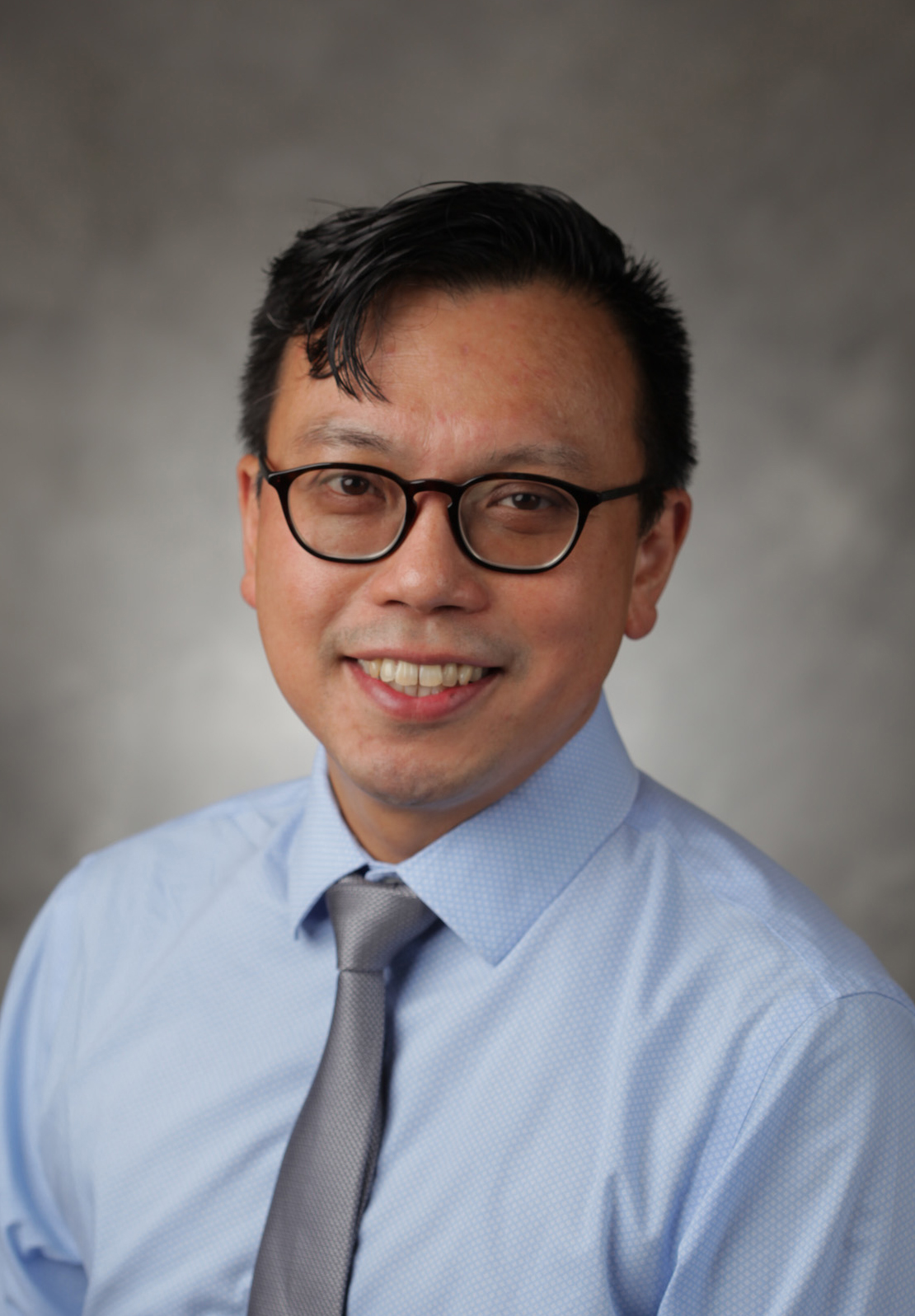
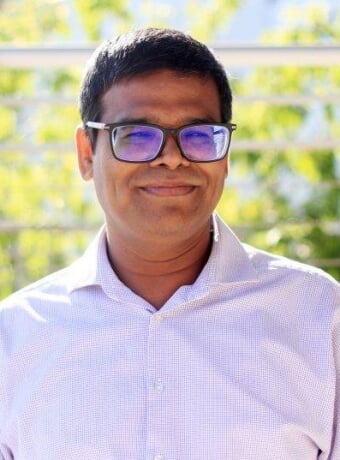
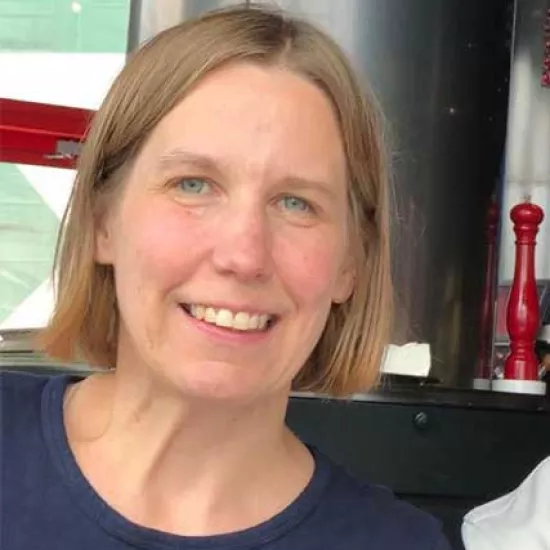
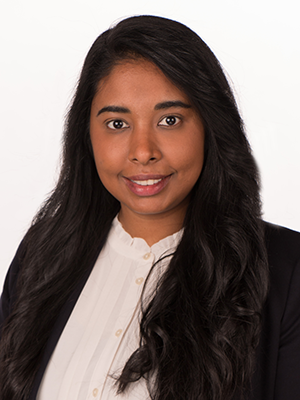
Wilbur Lam is a Professor of Biomedical Engineering at the Georgia Institute of Technology . He leads the Lam Lab , focusing on microfluidics, hematology, and point-of-care diagnostics. His research integrates engineering and clinical medicine to address blood disorders like sickle cell disease and anemia.
Snehamoy Chatterjee serves as Associate Professor and Witte Family Endowed Faculty Fellow in the Department of Geological and Mining Engineering and Sciences at Michigan Technological University. His expertise spans ore reserve estimation, mine planning optimization, and AI-driven safety systems, with significant contributions to remote sensing applications in mining and geological hazard assessment. Chatterjee earned his PhD in Mining Engineering from the Indian Institute of Technology Kharagpur, followed by postdoctoral research at the University of Alaska Fairbanks and the COSMO Stochastic Mine Planning Laboratory at McGill University. His academic journey includes prior faculty positions at India's National Institute of Technology. His research program integrates cutting-edge artificial intelligence with geospatial technologies to solve critical challenges in mining safety and resource management. Key focus areas include: Generative AI frameworks for real-time mining hazard prediction Hyperspectral and InSAR remote sensing for mineral exploration Deep learning applications in geophysical inversion Stochastic optimization of mine planning under uncertainty Machine learning-driven landslide and earthquake hazard mapping Chatterjee's 15 most recent publications (2023-2024) reveal a pronounced shift toward AI-geospatial fusion , with 60% of works applying deep learning to satellite imagery for hazard monitoring. His team's research spans three critical domains: mining safety systems (33%), geological hazard prediction (47%), and resource optimization (20%), demonstrating strong interdisciplinary collaboration across environmental science and engineering disciplines. Professional recognition includes: Editor's Best Reviewer Award 2014 from Mathematical Geosciences Journal APCOM Young Professional Award 2015 at the 37th APCOM conference Chatterjee actively mentors graduate students and leads multiple federally funded research initiatives focused on mine safety innovation and critical mineral exploration. His professional service includes editorial responsibilities for Mining, Metallurgy & Exploration and committee roles in major international conferences through IAMG, SME, and AGU. Current projects emphasize generative AI applications for predictive safety analytics and hyperspectral remote sensing for critical mineral discovery. His research extends through collaborations with the COSMO Laboratory network and industry partners across North America, India, and Australia, with recent fieldwork focusing on Alaskan platinum deposits and Indian coal reserves.
Dr. Linda Duffy is an Associate Professor in Psychology at Middlesex University, where she conducts research at the intersection of sport psychology, cognitive development, and behavioral rehabilitation. Her work spans diverse populations, from elite athletes to youth offenders and individuals with autism spectrum disorder. Research Interests: Her primary fields include sport psychology, expert performance, gender differences in motor skills, and psychological rehabilitation through physical activity. She investigates how mental skills, personality, and social context influence athletic performance and behavioral outcomes. The recent publications reflect a strong focus on darts as a model for studying expert performance, alongside broader inquiries into autism, youth sports dropout, and cross-cultural child development. Her work often employs mixed methods and comparative designs, emphasizing both empirical rigor and practical application. Scientific Engagement: While no formal awards are listed, her extensive publication record in journals such as Frontiers in Psychology and Journal of Exercise Rehabilitation underscores her academic impact. She also contributes to public discourse through blog posts on platforms like Psychreg. Advising and Collaboration: Dr. Duffy frequently collaborates with researchers such as Baluch, Ericsson, and Cohen. Though specific advisees are not named, her role as Associate Professor implies graduate student mentorship. Her research has been downloaded over 1,200 times, indicating strong academic engagement. Laboratories and Teams: While no formal lab name is mentioned, her research group appears to focus on sport and exercise psychology, with ongoing projects involving darts performance, rehabilitation through rugby, and cognitive development in children.
Christian Andres is a Professor at WHU-Otto Beisheim School of Management, specializing in corporate finance, governance, and payout policies. He leads the Finance and Accounting Group, focusing on empirical studies of executive compensation, capital structure, and family-owned enterprises. His work addresses how rumors, tax policies, and ownership dynamics impact corporate behavior and market outcomes. Research Interests : Empirical Corporate Finance Dividend and Repurchase Policies Family Business Governance Credit Risk Analysis Executive Compensation Structures Recent Research Trends : His 2023-2025 publications analyze how takeover rumors depress productivity, the evolving landscape of corporate governance research, and the influence of accounting professionals in financial analysis. Earlier work (2014-2021) explored dividend sustainability, M&A dynamics, and the interplay between tax regimes and ownership structures. Labs/Teams : He collaborates within the Finance and Accounting Group, contributing to interdisciplinary projects on market efficiency and corporate decision-making.
Professor Tenley Conway is a faculty member at the University of Toronto Mississauga within the Department of Geography, Geomatics and Environment. Her research focuses on urban forest governance, human-environment interactions, and geospatial analysis of urban ecosystems, with specific interests in environmental justice, green infrastructure, and socio-ecological systems. PhD in Geography from Rutgers University MSc in Geography from Rutgers University BSc in Natural Resources from Cornell University Conway's work integrates environmental geography, urban ecology, and landscape ecology to examine urban forest governance structures, resident engagement with green infrastructure, and the ecological impacts of policy decisions. She employs diverse methodologies including GIS, remote sensing, statistical analyses, and community surveys to address questions about urban tree distribution equity, invasive species management, and the effects of urban greening initiatives. Recent publications demonstrate her focus on quantifying urban forest diversity using national datasets, developing cost-effective canopy monitoring techniques through Landsat imagery, and analyzing the ethical frameworks of arboricultural practices. She has contributed to understanding how invasive pests reshape distributional justice in urban forests and the relationship between tree proximity and subjective wellbeing across Canadian and Australian cities. As associate editor of Urban Forestry and Urban Greening and board member of LEAF and EcoSpark, she actively participates in urban forestry governance discussions. Her HOUSE Laboratory examines human-environment interactions across urban-suburban-exurban gradients, emphasizing community engagement in sustainable urban forest management.
Robert Czechowski, PhD , is an Assistant Professor at the Faculty of Information and Communication Technology , Wrocław University of Science and Technology , Poland, stationed in the Department of Telecommunications and Teleinformatics . His office is located in building D-20, room 421, and he holds regular consultation hours on Tuesdays 14:00–15:00, Wednesdays 15:00–17:00, and Thursdays 13:00–15:00. His research portfolio is centred on securing the next generation of electrical power systems. Core interests include: Cyber-security architectures for smart grids and micro-grids Artificial-intelligence-driven intrusion detection and prevention systems (IDS/IPS) Network protocols and time-synchronisation security in SCADA environments Simulation of information flow in complex, dynamically reconfigurable networks IPv4/IPv6 network design and security policy enforcement in power-system automation Database and expert-system solutions for real-time energy-management and fraud detection Between 2014 and 2019 he authored or co-authored more than fifteen peer-reviewed works. The publications reveal a clear longitudinal trend: early work established foundational security policies and good-practice guidelines, while later studies pivot toward advanced AI/ML techniques for anomaly detection and risk quantification in smart-metering infrastructures. A recurring theme is the integration of communication-protocol security (IEC 61850, PLC, IPv4/IPv6) with higher-level cyber-physical risk governance. Scientific recognitions: None explicitly mentioned in the supplied text. Advising & Grant activities: The provided material does not list specific doctoral or master’s students, nor does it enumerate funded projects. Laboratories & Teams: He conducts research within the Department of Telecommunications and Teleinformatics, leveraging university laboratories and the wider ICT Faculty infrastructure, although no dedicated lab name is specified.
Jack Clark Francis is a Professor at the Bert W. Wasserman Department of Economics and Finance within the Zicklin School of Business at Baruch College, City University of New York . He holds a PhD in Finance from the University of Washington (1969), an MBA in Finance from Indiana University (1964), and a BS in Marketing from Indiana University (1962). Education: PhD, University of Washington, Finance, 1969 MBA, Indiana University, Finance, 1964 BS, Indiana University, Business Marketing, 1962 Research interests span Investments , Portfolio Management , Derivatives , and Financial Markets . His work includes analyses of cryptocurrencies , timberland investments , utility theories , and market efficiency . He has contributed extensively to asset pricing , tax policy impacts , and executive compensation models . Scientific awards include editorial board memberships for journals like Review of Pacific Basin Financial Markets & Policy (1995–Present) and International Review of Financial Analysis (1992–2025). His advising role involves evaluating finance professors and mentoring interns via reports and committee work. He has participated in grants and research initiatives related to market modeling, real estate, and derivatives. Labs and teams include collaborations with institutions like Rutgers University, Pacific Basin Finance Conference, and Federal Reserve Bank, with presentations at international conferences and editorial contributions to key finance journals.
Professor Helen Woolley is Head of the School of Architecture and Landscape at the University of Sheffield, where she is a leading academic in children's outdoor environments and landscape architecture. Her research spans inclusive play spaces, post-disaster landscapes, urban green space equity, and children's spatial agency. Research Interests: Her work focuses on the relationship between people and green spaces, especially children's access to and use of outdoor environments. She investigates policy, design, and societal influences on play, with a strong emphasis on inclusion, disaster recovery, and urban planning. Her research has been funded by ESRC, AHRC, JRF, JSPS, and the Big Lottery. Recent Publications Trends: Her recent articles (2020–2025) show a global reach, with studies in China, Brazil, and Jordan, using advanced spatial analysis (SOPARC, KDE), co-design methods, and comparative disaster research. Themes include water play, mobility safety, generational change in play, and multifunctional urban green spaces. Scientific Awards: Japanese Society for the Promotion of Science (JSPS) Visiting Fellowship (2014) Invited to Queen’s Garden Party at Buckingham Palace (2003) Landscape Institute Research Award (1997) Winner, Sunday Telegraph Town Garden Design Competition (1982) Advising and Grants: She actively supervises PhD students such as Melih Bozhurt, Junfang Xie, and Maryam Mani. Her grant portfolio includes major projects like Living with Nature (Big Lottery funded), Children’s Lost Landscapes in post-disaster Japan (Daiwa Foundation), and Knowledge Transfer Partnerships with Timberplay and Fairplay. She has led research for CABE Space, Natural England, and the National Audit Office. Labs and Teams: She is a member of the Centre for the Study of Childhood and Youth and the Sheffield Urban Institute. She co-led the Living with Nature partnership with Sheffield City Council and Wildlife Trusts, and contributed to interdisciplinary initiatives like the Green Space Forum and Sheffield Botanical Gardens regeneration.
Ernst Hansen is an Associate Professor at the Department of Mathematical Sciences, University of Copenhagen . He is based at University Park 5, Copenhagen Ø, and his work spans mathematical statistics, probability theory, and applied statistical modeling in public health and finance. Email: erhansen@math.ku.dk Research areas: Public health interventions, Markov chain applications, measure-theoretic probability, and statistical education His publications include textbooks and peer-reviewed articles on topics such as neck/shoulder pain prevention , continuous-time rating transition probabilities , and geometric drift analysis . While his work intersects with causal inference and stochastic processes, no formal awards or student advising records are documented in the provided texts.
Peter Tankov is a Professor of Quantitative Finance at ENSAE (the French national school for statistics and economic administration), part of the Institute Polytechnique de Paris. He is also a researcher at CREST and member of the FIME Laboratory. His academic career includes previous positions at Paris-Cité University and Ecole Polytechnique. Dr. Tankov specializes in applied probability and stochastic processes, with current research interests spanning quantitative finance, energy finance, green finance, sustainable finance, and mean field games applications to economics. His work bridges mathematical rigor with practical financial applications, particularly in the context of climate change and environmental transition. His research output shows a clear trend toward climate-related finance, with recent publications focusing on carbon pricing, transition risk modeling, energy market dynamics, and sustainable investment strategies. The articles demonstrate a strong interdisciplinary approach combining mathematical finance, game theory, and climate science to address pressing environmental finance challenges. 2016 Best Young Researcher in Finance award of the Europlace Institute of Finance 2024 Louis Bachelier award of London Mathematical Society, Natixis Foundation and SMAI Professor Tankov serves as scientific director of the Green and Sustainable Finance program at Louis Bachelier Institute and is a member of editorial boards for top quantitative finance journals including Mathematical Finance and Finance and Stochastics. He is currently guest editing a Special Issue on Climate and Nature Risk in Mathematical Finance. His teaching includes courses on green finance, energy risk management, and financial derivatives.
Sherene Sharath, PhD, MPH is an Assistant Professor of Surgery at SUNY Downstate Health Sciences University. She also holds a secondary appointment as Assistant Professor in the Department of Epidemiology and Biostatistics at the School of Public Health. Dr. Sharath serves as the Director of Clinical and Health Services Research for the Department of Surgery and is actively involved in the Department's iNSPIRe Initiative, which focuses on research education for trainees and development of the department's research program. Dr. Sharath earned her PhD in Epidemiology with a minor in Biostatistics from the University of Texas School of Public Health in Houston, TX. She also completed an MPH in Epidemiology and a BS in Microbiology from Texas A&M University in College Station, TX. Her educational background has prepared her for a career focused on rigorous epidemiological and statistical analysis in surgical contexts. Dr. Sharath's research primarily focuses on adverse event risks after surgical interventions, with particular attention to systemic sources of risks ranging from underlying pathologies and patient behaviors to social risks and healthcare system factors. She employs quantitative methods to study designs in both observational (prospective or retrospective using multicenter administrative and clinical data) and experimental domains. Her specific areas of interest include nonoperative management of intermittent claudication, health care disparities among vulnerable groups, and cohort-specific systematic assessment of postoperative risks. She has extensive expertise in managing and analyzing big datasets, often consisting of millions of observations, using advanced statistical coding techniques. Analysis of Dr. Sharath's publications reveals a consistent focus on vascular surgery outcomes, particularly related to peripheral artery disease, wound infections, and postoperative complications. Her work often examines disparities in care and outcomes, with several studies focusing on geographic and demographic variations in surgical results. She frequently employs large dataset analyses and has contributed to meta-analyses in her field. Her recent work has expanded to include the impact of the COVID-19 pandemic on surgical outcomes, demonstrating her ability to address emerging clinical challenges. Featured on the cover of a major peer-reviewed surgical journal Highlighted in journal editorials for research on patient perspectives in claudication National clinical trial coordinator for the federally-funded Department of Veterans Affairs TOP Trial Dr. Sharath serves as the principal investigator for multiple studies of varying design types and is actively involved in mentoring residents, medical students, and public health students. She has authored and co-authored numerous papers and serves as a peer-reviewer and assistant editor for various journals. As the national clinical trial coordinator for the Department of Veterans Affairs TOP Trial, a multi-center, randomized controlled trial examining the effects of permissive anemia on postoperative adverse events in high cardiac risk patients, she plays a significant role in advancing evidence-based surgical care. Through her leadership as Director of Clinical and Health Services Research for the Department of Surgery and her involvement with the iNSPIRe Initiative, Dr. Sharath has established herself as a key figure in developing and implementing research programs that bridge clinical practice and academic investigation in the surgical field.
Tine Hald is a Professor at the National Food Institute, Technical University of Denmark (DTU), where she leads the Research Group for Risk Benefit. Her work focuses on foodborne disease epidemiology, risk modeling, and the control of zoonotic pathogens (e.g., Salmonella, Campylobacter) with emphasis on antimicrobial resistance. She serves on expert panels for EFSA and WHO, and co-directs the One Health International Summer School. Education: PhD in Veterinary Epidemiology, Royal Veterinary and Agricultural University (2001) DVM, Royal Veterinary and Agricultural University (1994) Business Administration (HD), HHC Business School Centre (1996) Research: Her group develops quantitative risk assessments (QMRA), source attribution models, and surveillance frameworks for foodborne pathogens. Key areas include antimicrobial resistance dynamics, spatial-temporal analysis of outbreaks, and policy advice for global food safety authorities. Publications: Recent work (2025) emphasizes source attribution modeling, multi-country pathogen transmission studies, and systematic reviews of antimicrobial resistance. Research consistently integrates genomics, epidemiology, and One Health approaches. Projects & Supervision: She manages the Danish Salmonella Source Account and the Global Decision Support Initiative (GDSI), and supervises PhD students in projects on foodborne pathogen genomics and antimicrobial resistance mitigation.
Dr. Beata Żukowska serves as a Lecturer at the Department of Banking and Financial Markets within the Institute of Economics and Finance at the Faculty of Economics, Maria Curie-Skłodowska University (UMCS) in Lublin, Poland. Her academic work bridges traditional economic research with modern data analytics approaches, focusing particularly on family businesses and their adaptation to contemporary financial and technological landscapes. Her educational background includes: Doctor of Social Sciences in economics and finance (2020) Master's degree in finance and accounting (2014) Postgraduate studies in "Data science in business applications" (2022) Dr. Żukowska's primary research focuses on family businesses and their unique characteristics, with particular attention to professionalization processes, generational transitions, and strategic decision-making. Her work increasingly examines how family businesses can leverage big data and artificial intelligence technologies to enhance their competitive advantage, reflecting her interdisciplinary approach that combines economic theory with data science applications. Her publication record demonstrates strong expertise in family business dynamics, with emphasis on Polish family enterprises. Her research examines business resilience during crises (including the COVID-19 pandemic), sustainable development practices, gender roles in family businesses, and the impact of social capital on economic performance. She frequently collaborates with researchers from the Institute of Economics and Finance at UMCS, producing interdisciplinary work that connects theoretical frameworks with practical business applications. Her notable scientific achievements include: Individual III degree Rector's Award for doctoral dissertation (2020) Team II degree Rector's Award for outstanding work for the university (2017) "Best paper" award at the Entrepreneurship and Family Enterprise Research International Conference (EFERIC 2017) Dr. Żukowska serves as the tutor for the Business Analytics & Data Science program (first year) and coordinates the organization of student conferences, including four national and one international conference. She has collaborated with various institutions including the Polish Academy of Sciences Foundation, Lublin Consulting Center, and Lublin City Office on significant projects such as the Development Strategy for the Creative Industries Sector in Lublin and the report on "Long-term Financial Savings in Poland." Her teaching portfolio spans data mining, quantitative fundamentals, blockchain and AI technologies in finance, banking and financial services, and introduction to data science.
Brady D. Lund is an active researcher in Library and Information Science with significant contributions to bibliometrics, information behavior, and the ethical implications of artificial intelligence in scholarly communication. His research spans multiple domains including data science ethics, information literacy, and public library services, with particular attention to how digital technologies impact information practices across diverse populations. Lund's research interests focus on the intersection of information science and emerging technologies, particularly examining how AI systems affect scholarly publishing practices, research ethics, and information behavior. His work on ChatGPT's impact on academic writing and AI authorship policies has been particularly influential in library and information science circles. He also investigates information literacy among vulnerable populations, including rural older adults during the pandemic, highlighting the critical role of libraries in community information ecosystems. Analysis of Lund's recent publications reveals a clear trajectory toward examining the ethical dimensions of AI in information contexts, with increasing focus on transparency frameworks, data privacy, and the practical implementation of AI systems in professional settings. His collaborative work spans multiple disciplines, connecting information science with healthcare, cybersecurity, and public policy. Lund demonstrates strong collaborative patterns, frequently working with Ting Wang and Nishith Reddy Mannuru across multiple publications. His research shows methodological diversity, employing both quantitative bibliometric approaches and qualitative investigations of information behavior. While specific grant funding isn't detailed in the publication records, his work addresses significant societal challenges related to information access, digital equity, and ethical technology implementation.
Dr. Michal Heger is a Researcher at Utrecht University's Faculty of Science, specifically within the Membrane Biochemistry & Biophysics department. He also holds the position of Professor of photonanomedicine at Jiaxing University Medical College in China and serves as Editor-in-chief of the Journal of Clinical and Translational Research. Additionally, he is Chief formulation officer at Nurish.Me in San Diego. Dr. Heger's research primarily focuses on the development of minimally invasive diagnostic and therapeutic modalities for treatment-resistant cancers, with special emphasis on bile duct cancer (extrahepatic cholangiocarcinoma, eCCA). His work follows three pillars: minimally invasive approaches, patient-friendly treatments, and affordable solutions. Photodynamic therapy (PDT) forms the core of his research program, where he investigates nanoscale carrier platforms for photosensitizer delivery, cancer cell responses to PDT, PDT-induced immune responses, and representative cell and animal models for cholangiocarcinoma. His publication record shows significant expertise in photodynamic therapy, with numerous articles spanning from 2012 to 2025. The research trends indicate a strong focus on nanotechnology applications in cancer therapy, particularly in developing targeted delivery systems for photosensitizers and combination therapies. His work bridges basic science with clinical applications, especially in difficult-to-treat cancers where conventional approaches have limited success. Dr. Heger collaborates extensively with various research groups, particularly in the areas of liquid biopsies and molecular profiling for cancer diagnostics and therapy monitoring. His work often involves interdisciplinary approaches combining pharmacology, nanotechnology, and molecular biology to address challenging clinical problems in oncology.