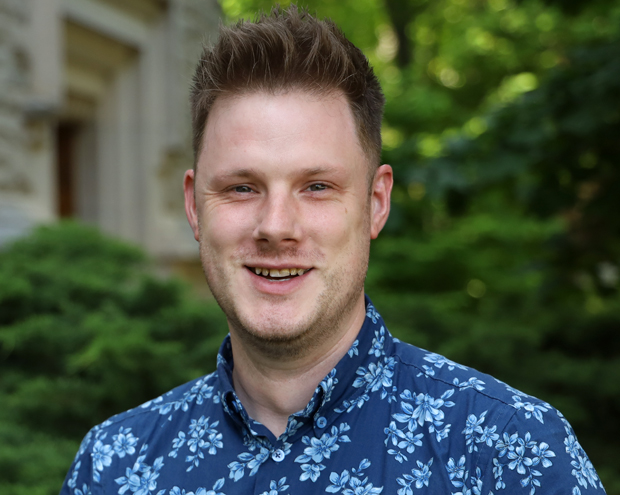
Andrew King is the Allen and Kelli Questrom Professor in Strategy & Innovation at the Questrom School of Business, Boston University, and an affiliated faculty member of the Boston University Institute for Global Sustainability (IGS). His academic career includes a PhD from MIT Sloan School of Management, an MS in Mechanical Engineering from UC Berkeley, and a BA in Mechanical Engineering from Brown University. His research focuses on corporate sustainability, environmental policy, and the credibility of academic research. Key themes include ESG investing flaws, model uncertainty in sustainability frameworks, and the interplay between financial and environmental performance. He critiques conventional strategies like win-win scenarios and emphasizes rigorous empirical methods to address research biases. King’s articles span over two decades, addressing topics like ESG valuation shortcomings, corporate transparency, and the dangers of methodological overconfidence. He has contributed to debates on academic rigor through critiques of statistical practices and calls for improved empirical methodologies. His work bridges strategy, environment, and ethics, influencing both corporate practices and academic discourse. No notable awards are listed, but his extensive publications reflect significant scholarly impact.
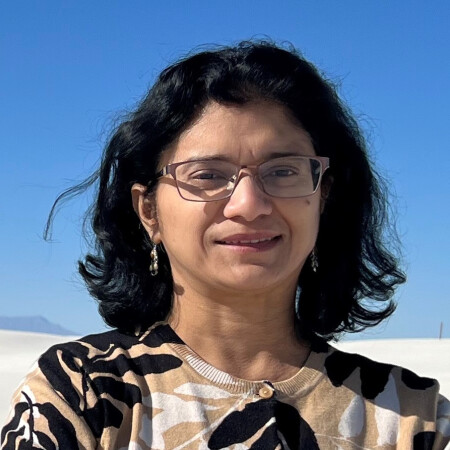
Dr. Swati Biswas is a Professor and Associate Department Head in the Department of Mathematical Sciences at the University of Texas at Dallas (UTD). She holds a Ph.D. in Biostatistics from The Ohio State University (2003) and has held academic positions at UTD since 2012, including roles at the University of North Texas Health Science Center prior to that. Her research focuses on biostatistical methods for genetic epidemiology, cancer genetics, and risk prediction modeling, with a particular emphasis on Bayesian approaches. Education: B.Sc. (1994), M.Sc. (1996) in Statistics from the University of Delhi, followed by a Ph.D. in Biostatistics from The Ohio State University (2003). She completed a postdoctoral fellowship at MD Anderson Cancer Center (2004–2005). Research interests include statistical genetics, rare haplotype analysis, Bayesian clinical trials, and personalized risk prediction models for diseases like breast cancer and substance use disorders. She has developed tools such as CBCRisk for contralateral breast cancer prediction and Bayesian hierarchical models for pathway analysis. Her publications span over 40 peer-reviewed articles, focusing on methodological advancements in genetic association studies and clinical risk modeling. Notable awards include the 2016 Young Researcher Award from the International Indian Statistical Association and the 2011 President’s Award for Educational Excellence from UNT HSC. Dr. Biswas has secured grants totaling over $10M, including NIH funding for projects like multifrequency ultrasound imaging for breast cancer monitoring and Bayesian meta-analysis of cancer risk. She mentors doctoral students and has advised nine completed dissertations, with several current students.
Dr. Sally A Kuykendall is a Professor in the Department of Health Sciences at Saint Joseph’s University, where she has served since 2004 (holding roles including Department Chair from 2011–2015). A former critical care nurse with multidisciplinary academic training (PhD in Health Studies from Temple University, MS in Health Education from Saint Joseph’s University, and BSc in Chemistry/Biology from the University of Plymouth), her work spans bullying prevention, scientific misconduct analysis, and trauma-informed care. She led a nine-year bullying prevention study and authored seminal works like Skewed Studies (2020), exposing flaws in health/psychology research. Her research also examines family violence, adverse childhood experiences, and firearm-related youth behavior. Professional experience includes clinical roles at SmithKline Beecham Pharmaceuticals and Abington Hospital, alongside adjunct/visiting professorships at Temple University and Saint Joseph’s University. She has secured over $3 million in grants for initiatives like the Olweus Bullying Prevention Program implementation and Healthy Lessons for Urban Youth. Awards include the Teaching Excellence Award (2003) and Crystal Community Impact Award (1996). Her recent focus includes creative problem-solving research and book projects addressing institutional responses to whistleblowing. Key contributions include evidence-based bullying prevention frameworks, trauma-informed care protocols, and critiques of unethical research practices across health and psychology disciplines.
Dr. John Sakaluk is an Associate Professor in the Department of Psychology at Western University. He holds affiliations with the Social, Personality, and Developmental Psychology area and the Clinical Science and Psychopathology area. His research focuses on psychometric measurement modeling, particularly in developing analytic tools for measurement techniques, and evaluating psychological intervention literatures for credibility and inclusivity. Sakaluk earned his PhD in Social Psychology (with a Quantitative minor) from the University of Kansas and completed a postdoctoral fellowship with Dr. Emily Impett. Previously, he taught at the University of Victoria, covering human sexuality and research methods. His work emphasizes methodological rigor and the use of secondary data to assess intervention impacts. Education: PhD in Social Psychology, University of Kansas (with minor in Quantitative Psychology) Bachelor’s in Psychology, minor in Family and Child Studies Research Interests: Sakaluk’s work bridges quantitative methodology and applied psychology. He develops psychometric tools for group-based meaning analysis and evaluates intervention efficacy through meta-scientific lenses. His recent focus includes dyadic structural equation modeling and assessing biases in close-relationship research. He advocates for transparent reporting and replicability in clinical and social psychology. Advising & Grants: While no advisees are listed, his teaching and research emphasize statistical methods, suggesting an active role in mentoring graduate students in quantitative techniques. No specific grants are mentioned in the provided text. Labs/Teams: Affiliated with Western’s Department of Psychology research groups, though no specific lab names are provided.
Benjamin Lev is a Professor in the Department of Decision Sciences and Management Information Systems (DS&MIS) at the LeBow College of Business, Drexel University. He previously served as Trustee Professor (2014–2021) and Department Head (2009–2014) at Drexel. His academic leadership extends to prior roles as Professor, Department Head, and Dean at the University of Michigan-Dearborn (1990–2009), Professor and Department Head at Worcester Polytechnic Institute (1987–1990), and Professor and Department Head at Temple University (1970–1987). He has held short appointments at institutions in China and the U.S., including the Wharton School and Tel Aviv University. Lev’s research spans Operations Research, Management Science, and Decision Sciences , with expertise in mathematical programming, operations planning, inventory control, supply chain management, and optimization under uncertainty. His recent work focuses on applications in disaster management, sustainable supply chains, AI in operations, water resource allocation, and emergency logistics. He has published over 150 journal articles and authored or edited 18 books, with a strong emphasis on real-world problem-solving using quantitative methods. The trends in his recent publications (2022–2025) reflect a focus on complex optimization under uncertainty , particularly in humanitarian logistics, environmental sustainability, and digital commerce. His work frequently employs advanced methodologies such as bi-level programming, stochastic optimization, fuzzy logic, and data envelopment analysis (DEA), often applied to critical societal challenges like disaster response, air pollution, and resource scarcity. Lev is an INFORMS Fellow (2003) and has received several honors, including the 2023 Top Cited Article award in Naval Research Logistics and the 2023 First Prize from the Jiangxi Province Social Science Outstanding Achievement Award. His editorial leadership is most notably demonstrated by his 23-year tenure as Editor-in-Chief (2002–2025) of OMEGA – The International Journal of Management Science , one of the premier journals in the field. He has advised numerous scholars and presented his work globally, particularly on his experience as EiC of OMEGA . He has been actively involved in academic collaborations, especially in China, serving on advisory boards and as an external reviewer for institutions like Sichuan University. He has also received significant grant funding from the U.S. National Institutes of Health, U.S. Public Health Service, and U.S. Air Force for research in medical information systems and operations research applications. Lev has been instrumental in organizing major international conferences and has served on the editorial boards of over 20 journals, including Interfaces, IIE Transactions, OR Journal, and Financial Innovation . His role as Vice President of TIMS and INFORMS further underscores his leadership in the global operations research community.
Elif Nuroğlu is a Professor at the Department of Economics, Faculty of Economics and Administrative Sciences at Türk-Alman Üniversitesi. She holds a PhD in Economics from Universität Wien (2010) and multiple master's degrees in Business Administration from Wirtschaftsuniversität Wien. Her academic career includes roles like Dozent (2014) and Assistenzprofessor at Türk-Alman and international universities. Her research focuses on international trade dynamics, digital transformation in industry, EU-Turkey-Germany geopolitical economics, climate change impacts, and econometric modeling. She has authored/co-authored over 30 peer-reviewed articles in journals like Insight Turkey , Empirical Economics , and Zbornik radova Ekonomskog fakulteta u Rijeci . Research Highlights: Analysis of Industry 4.0 implications for Turkish exports Gravity model applications in trade flow estimation Comparative studies on Turkey-Almanya digitalization strategies Post-pandemic capitalism evolution studies Balkans geopolitical economic rivalry analysis Environmental Kuznets curve validations for developing nations Her work intersects economic theory with applied policy analysis, particularly focusing on Turkey's position in global and regional markets. Current research trends emphasize digital transformation's role in trade competitiveness and green economic transitions under EU frameworks.
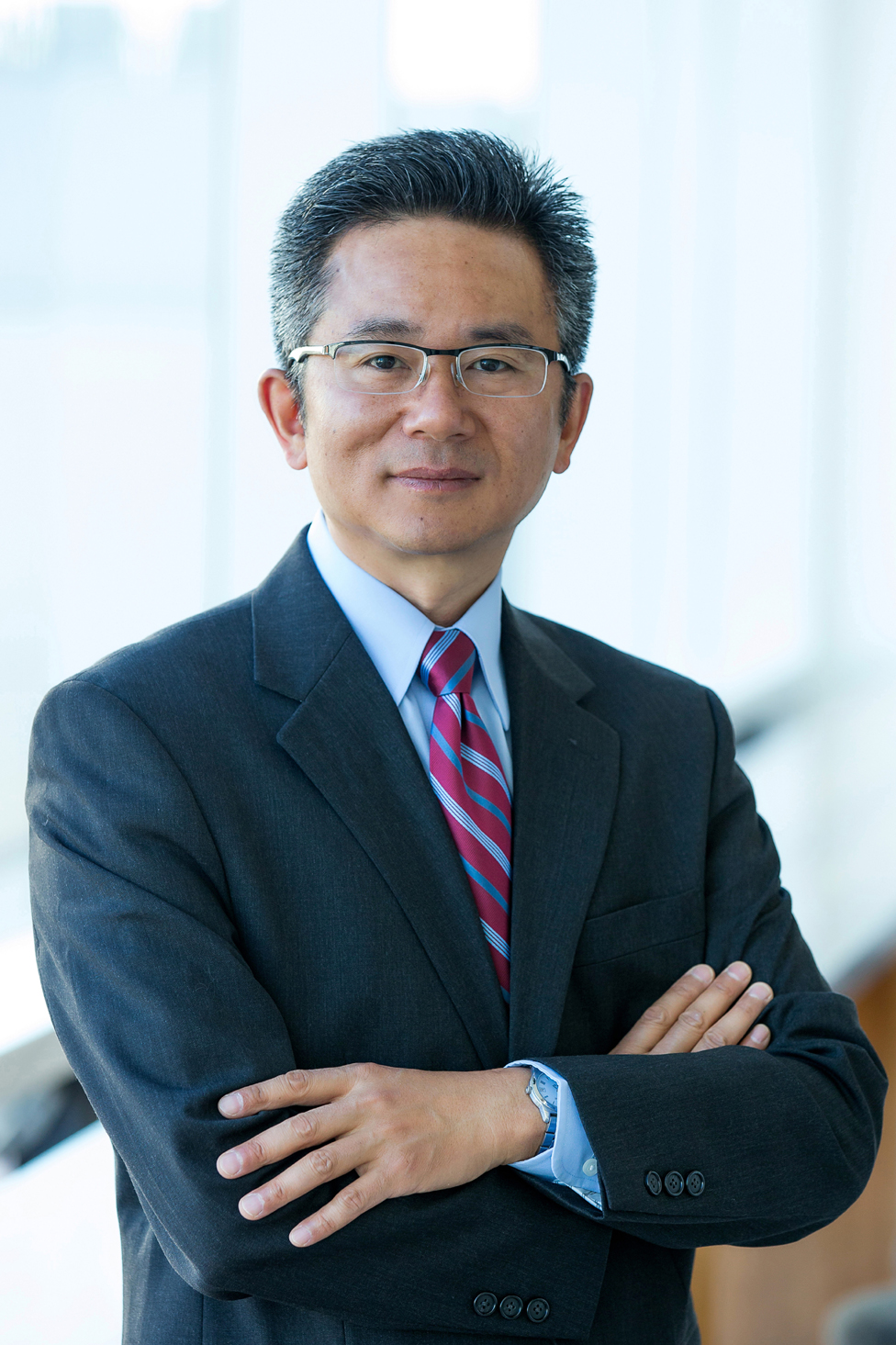
Professor Qihe Tang is a SHARP Professor at UNSW Business School's School of Risk and Actuarial Studies since 2017, where he also serves as Co-Director of the Innovations in Risk, Insurance and Superannuation (IRIS) Knowledge Hub. Previously, he was a Full Professor and held the F. Wendell Miller Endowed Chair at the University of Iowa (2006-2019), following academic appointments at the University of Hong Kong, University of Amsterdam, and Concordia University. Dr. Tang earned his PhD in Statistics from the University of Science and Technology of China in 2001. His research expertise centers on extreme value theory for insurance, finance, and quantitative risk management, with current focus areas including catastrophe risk modeling, systemic risk in financial networks, decision making under uncertainty, pricing in incomplete markets, and climate change impacts on insurance. His recent scholarly output demonstrates significant contributions to tail risk analysis, risk measurement methodologies, and insurance-linked securities pricing. The articles reveal a strong emphasis on extreme events, systemic risk propagation, and innovative approaches to quantifying and managing catastrophic risks in increasingly complex financial and environmental contexts. Elected Member of the International Statistical Institute (ISI) SHARP Professor at UNSW Sydney F. Wendell Miller Endowed Chair at University of Iowa Professor Tang has supervised over a dozen PhD students who now hold positions in academia and industry worldwide. He serves as Editor of Insurance: Mathematics and Economics and has been Principal Investigator for multiple major research grants including three ARC Discovery Projects, NSF funding, and several Society of Actuaries research grants. His research has achieved an H-index of 43 according to Google Scholar.
Prof. Dr. Nedžad Polić is a faculty member at the Faculty of Economics, University of Economics Sarajevo. He holds a Ph.D. in Economic Sciences from the University of Sarajevo's Faculty of Economics. His research focuses on corporate finance, financial systems, banking regulation, data science applications in finance, and privatization models. He teaches courses in Financial Management and actively contributes to academic discourse through numerous peer-reviewed publications. Education: Bachelor's in Economics: Faculty of Economics, University of Banja Luka Master's in Economic Sciences: Faculty of Economics, University of Tuzla Ph.D. in Economic Sciences: Faculty of Economics, University of Sarajevo Research Interests: Prof. Polić explores corporate finance principles, financial leverage impacts, banking regulatory frameworks (e.g., Basel III), and financial market development in emerging economies. He also examines privatization models and their socio-economic implications in transition economies like Bosnia and Herzegovina. His recent work integrates data science methodologies into financial decision-making processes across industries. Article Trends: His publications analyze empirical evidence from Bosnia and Herzegovina and the Western Balkans, focusing on corporate bond markets, banking sector reforms, and corporate restructuring cases. He emphasizes policy-relevant research to address challenges in emerging financial systems. Advising & Grants: No advisees or grants explicitly mentioned in the provided texts. His academic contributions are primarily through teaching and research publications. Labs/Teams: No specific research teams or laboratories associated with his profile in the available information.
Srinivas (Sri) Talluri is the John Hoagland - Richard Metzler Professor in Purchasing and Supply Management at the Department of Supply Chain Management, Michigan State University (Broad College of Business). He holds the title of DSI Fellow and served as the faculty director of the Axia Institute, focusing on advancing supply chain research and education. His work emphasizes supply chain resilience, risk management, and sustainability through innovative applications of blockchain, generative AI, and quantum computing. Dr. Talluri's research spans demand-supply uncertainty modeling, sustainable supply chain design, and strategic sourcing. Notable contributions include frameworks for blockchain integration in logistics, eco-efficient vaccine distribution during pandemics, and data-driven optimization for remanufacturing systems. His work frequently addresses macroeconomic disruptions, geopolitical risks, and environmental compliance under carbon tax schemes. His scholarly recognition includes the Fulbright-Hanken Distinguished Chair (2016-2017) and top 100 Operations Management scholar rankings. His research has been published in leading journals such as International Journal of Production Research and IEEE Transactions on Engineering Management . Key Professional Contributions: Over 140 peer-reviewed articles, leadership in supply chain education, and industry collaborations addressing global supply chain challenges. Labs/Initiatives: Active in the Axia Institute, focusing on supply chain innovation and policy.
Dr. Gulsum Kubra Kaya is a Lecturer in Human Factors at the Centre for Safety & Accident Investigation at Cranfield University. She is a Chartered member of the Chartered Institute of Ergonomics and Human Factors Society (C.Erg.HF) and a Fellow of the Higher Education Academy (FHEA). Dr. Kaya holds a BEng in Industrial Engineering from Sakarya University, an MSc in Systems Engineering Management from University College London, and a PhD in Engineering from the University of Cambridge. Her academic journey includes prior roles as a Lecturer and she earned the title of 'Associate Professor' in Industrial Engineering in 2022. Her research focuses on system safety, human factors, risk assessment, machine learning applications, and decision-making in complex systems. Her work spans various domains including healthcare, transportation, and industrial settings. She is particularly interested in: Air Transport Safety & Investigation Industrial Ergonomics and Human Factors Safety, Resilience, Risk & Reliability Systems Engineering approaches to safety Her recent publications demonstrate a strong focus on applying systems thinking and advanced analytical methods to safety challenges. She has published extensively on topics such as Safety-I and Safety-II approaches, machine learning applications in healthcare safety, risk assessment practices in hospitals, and system-based risk analysis in transportation systems. Dr. Kaya serves on the editorial board of the Ergonomics journal and is an associate editor at the Risk Management and Healthcare Policy Journal. She also serves on the editorial board at the BMJ Health & Care Informatics Journal. She is actively involved in research on safety in liquid-hydrogen-powered aircraft operations and bacteria-type detection. Dr. Kaya is open to supervising PhD students interested in system safety research.
Dr. Lisa Sparks is a Professor at Chapman University with the Foster and Mary McGaw Endowed Chair in Behavioral Sciences. She serves as Founding Dean of the School of Communication and holds joint appointments in the Crean College of Health and Behavioral Sciences and the School of Pharmacy. With over 150 peer-reviewed publications and 13 books, she is a leading scholar in health communication, cancer communication, aging, caregiving, and research methods. Her work bridges academic research with community impact, including documentaries, media appearances, and public policy engagement. Education: Ph.D., M.A., B.A. from the University of Oklahoma Post-graduate Certification: Harvard Institute for Management and Leadership in Education Research Interests: Dr. Sparks’ scholarship focuses on clinician-patient communication, health disparities, cancer care navigation, and intergroup dynamics in healthcare. She has developed frameworks for patient-centered decision-making and designed interventions for vulnerable populations. Scientific Awards: Club for Growth Foundation Fellowship (2020) Recognized among top ten most prolific Health Communication authors Grants & Collaborations: Dr. Sparks has served as Principal Investigator, Co-PI, and Consultant on numerous research grants, collaborating with institutions like the National Cancer Institute, University of California, Irvine, and Vrije Universiteit Amsterdam. She has also contributed to cancer research at the Chao Family Comprehensive Cancer Center.
Karim Ahmed is a Principal Lecturer at the Nottingham Trent University within the Nottingham Business School , affiliated with the Department of Strategy, Analytics and Operations . His expertise includes Project Management , Sustainability , and Supply Chain Management , with a focus on practical applications in VUCA conditions and sustainable operations. Dr. Ahmed is a certified Prince2 and Agile PM Practitioner with over a decade of experience in teaching and industry. He leads the MSc Project Management program, emphasizing stakeholder alignment, efficient execution, and innovation in managing complex projects. His research explores the intersection of sustainability, supply chain resilience, and strategic decision-making, particularly in multinational contexts. Recent publications highlight his work on fuzzy logic in sustainability assessment, gamification in education, and multi-criteria decision models for supply chain optimization. Collaborations span institutions like Loughborough and Sheffield, with fieldwork in Egypt, Iraq, and the UK.
Renato Miguel do Carmo is an Associate Professor in the Department of Sociology at ISCTE - University Institute of Lisbon and an Integrated Researcher at CIES-Iscte - Center for Research and Studies in Sociology. He serves as Coordinator of the research group on Inequalities, Work and Social Welfare and directs the Observatory of Inequalities, contributing significantly to national and international sociological research. He is also involved in the scientific coordination of COLABOR, a collaborative research initiative. PhD in Social Sciences (General Sociology), University of Lisbon Institute of Social Sciences, 2006 Aggregation in Sociology, ISCTE-University Institute of Lisbon, 2023 Master's in In-depth Sociology and Portuguese Reality, Nova University of Lisbon, 1997 Bachelor's in Sociology, Faculty of Social Sciences and Humanities of the New University of Lisbon, 1993 His research focuses on social and territorial inequalities, the welfare state, employment and labor markets, public policies, spatial mobility, and social capital. He has published extensively in journals such as Current Sociology , European Societies , Journal of Civil Society , and Geoforum . His work often employs mixed-methods approaches to analyze the impacts of economic and health crises on labor and social protection, particularly among youth and vulnerable populations. His recent publications center on precarious work, youth labor market integration, social protection erosion, and the socioterritorial dimensions of inequality in Portugal. Themes include the gig economy, pandemic effects on employment, and the persistence of dualistic labor markets. His research combines theoretical depth with empirical rigor, contributing to both academic and policy debates. 2023 João Ferreira de Almeida Award (1st edition) 2022 António Dornelas Award 2022 CIES-Iscte R&D Awards ISCTE-IUL Scientific Awards (2011, 2015, 2016, 2019) Bartolomeu Dias Award (2008) Special Jury Prize 2009 (Análise Social) Renato Miguel do Carmo has authored or edited 37 books and published numerous scientific articles. He has led and participated in multiple research projects, often in collaboration with institutions across Europe. His work has been supported by national research councils and policy bodies, including the Higher Council of Statistics (INE). He advises on public policy through his role in the Observatory of Inequalities and contributes to national debates on labor and social protection reform. He has no listed students in the provided text, but likely supervises graduate research given his senior academic position. He is actively involved in research networks and has contributed to edited volumes such as Faces of Precarity and national policy reports on social inequality indicators. His work bridges academic research and public policy, emphasizing the need for equitable and sustainable labor and welfare systems in contemporary Portugal.
Amy Webb is an Adjunct Professor at New York University’s Leonard N. Stern School of Business, where she teaches strategic foresight at the MBA level. She is also the Founder and CEO of the Future Today Institute, a leading strategic foresight firm. Her expertise lies in artificial intelligence, biotechnology, and long-term forecasting, and she advises global leaders, governments, and institutions including the White House, the World Economic Forum, and the United Nations. Education: Post-Graduate, Nieman Fellowship – Harvard University M.S., Journalism – Columbia University B.A., Political Science and Economics – Indiana University Research Interests: Amy Webb specializes in artificial intelligence, strategic foresight, scenario planning, and quantitative modeling. Her work focuses on identifying early signals of change and developing predictive models to guide organizations through disruptive technological shifts. She is a leading voice on the ethical and societal implications of AI and synthetic biology. Publications Trend: Her recent articles and books reflect a strong emphasis on the future of AI, synthetic biology, and strategic planning. Themes include the risks of concentrated tech power, the emergence of 'living intelligence,' and the need for proactive, data-driven foresight in business and policy. Scientific Awards: #4 Most Influential Management Thinker in the World (Thinkers50, 2023) Thinkers50 Radar Award (2017) Shortlisted for Thinkers50 Digital Thinking Award (2021) BBC’s 100 Women of 2020 Forbes’ Five Women Changing the World Advising and Grants: While specific advisees and grant details are not listed, Amy Webb leads a global consultancy (Future Today Institute) that works with high-level clients on foresight strategy. She has been awarded fellowships from Harvard, Oxford, and the U.S. Government Accountability Office, indicating significant recognition and funding for her research and leadership. Labs and Teams: She leads the Future Today Institute, a research and advisory firm that employs a team of analysts and strategists using a proprietary data-driven foresight methodology. She also collaborates with global institutions such as the World Economic Forum and the Council on Foreign Relations.
Martin Hilbert is a Professor at the University of California, Davis, jointly affiliated with the Department of Communication and Computer Science. He is a leading scholar in digital technology, algorithmic systems, and computational social science, and chairs the campus’s designated emphasis in Computational Social Science. His work bridges theory and practice, integrating information theory with social science to understand the digital age. Education: Ph.D., Communication, Annenberg School of Communication, University of Southern California, 2012 Ph.D., Economics and Social Sciences, Friedrich-Alexander University Erlangen-Nuremberg, Germany, 2006 Dipl.-Kfm. (Master of Business Administration), Friedrich-Alexander University Erlangen-Nuremberg, Germany, 2003 Professor Hilbert's research focuses on the digital transformation of society, using formal tools from information theory to analyze AI and algorithmic systems. His work spans digital ethics, cognitive biases, and the evolution of communication in networked environments. He is particularly known for his pioneering study on global information capacity and early warnings about algorithmic manipulation in politics. His recent publications reveal a consistent trend of applying information-theoretic frameworks to social and digital phenomena, with a strong emphasis on measuring algorithmic impact, digital inequality, and the interplay between human cognition and automated systems. His work frequently appears in high-impact journals across disciplines, reflecting its interdisciplinary nature. Professor Hilbert has made significant contributions to public policy, having designed the first digital action plan for Latin America and the Caribbean at the United Nations and served as an Economic Affairs Officer for 15 years. His technical assistance has reached over 20 countries and major corporations. He is also an innovator in digital education, with online courses taken by over 100,000 students worldwide. Advising and Grants: Chairs the Designated Emphasis in Computational Social Science at UC Davis Teaches graduate and undergraduate courses in information theory, digital technology, and computational social science Has received research support through academic and policy-oriented grants (specifics not listed) Labs and Teams: He is associated with the Center for Computational Science (C2) and the Center for Science and Society (CSS) at UC Davis, which support interdisciplinary research on digital systems and their societal implications. These centers foster collaboration between computer scientists, social scientists, and policymakers.