
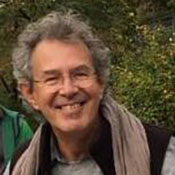
Nicholas Evans is Distinguished Professor of Linguistics and Director of the ARC Centre of Excellence for the Dynamics of Language (CoEDL) at the Australian National University’s School of Culture, History & Language. His work bridges fieldwork-based language documentation with theoretical questions in typology, cultural evolution, and social cognition. Focus on endangered Australian and Papuan languages Director of ARC Laureate Project on 'The Wellsprings of Linguistic Diversity' Co-leader of SCOPIC (Social Cognition Parallax Corpus) study Collaborator in global linguistic diversity initiatives His research explores how micro-level community multilingualism shapes macro-level linguistic diversity, with fieldwork spanning seven years in remote Indigenous communities. Recent projects include PARABANK (paradigm syncretism analysis) and Southern New Guinea language studies, particularly Nen and Yam family languages. Scientific recognition includes the Ken Hale Award (Linguistic Society of America), Anneliese Maier Forschungspreis, and fellowships in the Australian Academy of Humanities, Australian Social Sciences Academy, and the British Academy.
جستجوی استاد راهنمای دانشگاهی
برای مسیر پژوهشیتان، استاد راهنما، استاد دانشگاه و پژوهشگر مناسب را پیدا کنید و با آنها ارتباط بگیرید.
نمایش ۱-۱۵ از ۱٬۴۸۰ استاد راهنما
اطلاعات پروفایلها از صفحات عمومی دانشگاهها گرفته شده و ممکن است بهروز نباشد.
- Internationalisation of Small-Medium Enterprises (SMEs)
- Export Readiness
- Export Commitment
- +۳ مورد دیگر
Dr Alvin Tan is a Lecturer in the School of Advertising, Marketing & PR at Queensland University of Technology (QUT). His research focuses on SME internationalisation, export readiness, and managerial decision-making in cross-border contexts. He holds a PhD in International Business from the University of Queensland (2012) and has over a decade of academic experience, including roles in teaching units like AMB110 Internationalisation. Education: Doctor of Philosophy (International Business), University of Queensland (2012) Bachelor of Business (Honours), Queensland University of Technology Bachelor of Commerce (International Business), University of Tasmania Research Interests: Small-medium enterprise internationalisation drivers, export decision rigidity, managerial commitment in export strategies, and inward internationalisation dynamics. His work emphasizes the pre-internationalisation phase and has contributed to frameworks like the export readiness index. Awards: QUT Vice Chancellor's Performance Award for Teaching Excellence (2008) Accredited Senior Fellow of the Higher Education Academy (SFHEA) Teaching and Supervision: Specializes in global business strategy, international marketing, and supervises postgraduate students on SME internationalisation topics.

Dr. Ly Fie Sugianto is an Associate Professor in the Department of Accounting at Monash Business School, Monash University. Her research focuses on the integration of data analytics, artificial intelligence, and machine learning in accounting and business systems, with applications in the energy sector and organizational behavior. Monash Business School, Monash University Department of Accounting Specialization: Accounting Information Systems, Data Analytics, AI Her research interests span Accounting Information Systems , Agent-Based Simulation , Decision Support Systems , and Technology Adoption . She applies computational methods to study competitive dynamics in deregulated electricity markets and the impact of digital tools on employee well-being and organizational resilience. The recent publications reflect a strong trend in using AI and simulation to analyze complex socio-technical systems, particularly in energy markets and leadership dynamics. Keywords across her work include agent-based modeling , data analytics , servant leadership , and enterprise social media , indicating interdisciplinary research at the intersection of information systems, management, and public policy. Her scientific awards include competitive grants from the ARC (SPIRT/Linkage) , the Australia Indonesia Governance Research Partnership (AIGRP) , and the Sumitomo Foundation . ARC Grant: Dispatch Optimisation in the Australian National Electricity Market Sumitomo Foundation: Technology Use and Employee Well-Being AIGRP: Governance and MSME Resilience during Pandemic Dr. Sugianto has advised research projects and collaborated with industry partners such as Western Power , Ecogen Energy , and AEMO . She is currently accepting PhD students and leads externally funded research initiatives. Her work contributes to UN Sustainable Development Goals related to industry innovation and responsible consumption. She is affiliated with research teams focusing on intelligent decision support systems and digital transformation in business , with active collaborations in Australia and Indonesia.
- Financial Analysis
- Equity Valuation
- Life Insurance
- +۳ مورد دیگر
Demetris Christodoulou is an Associate Professor in Accounting, Governance and Regulation at the University of Sydney. He holds a BEcon from Piraeus University, an MSc(Fin) from the University of York (UK), and a PhD from Athens University of Economics and Business (AUEB). His research focuses on applying data analytics, econometrics, and visualization techniques to financial analysis, equity valuation, life insurance, and financial advice. He co-directs the PEMA research group, specializing in productivity and performance measurement analytics, and previously led the MEAFA research group (2007–2022). He has collaborated extensively with industry partners including Deloitte and Australian insurers, and developed training programs for over 1,000 executives. His work includes open-source contributions to Stata software and the Graph Workflow platform, alongside $662k in workshop-generated funds supporting academic programs. He has advised multiple PhD students and taught at leading universities globally. Education: BEcon in Economics (Econometrics), Piraeus University MSc in Finance, University of York (UK) PhD in Accounting and Financial Analysis, Athens University of Economics and Business His research interests span financial reporting models, life insurance underwriting strategies, and behavioral finance. Recent projects address dishonesty mitigation in insurance disclosures and the adviser effect on customer disclosures. He has published widely in top journals like the Review of Accounting Studies and Stata Journal , and his work was featured in The Australian for insights on insurance fraud reduction. He maintains international collaborations, including visiting roles at Columbia Business School and the University of Cyprus, and serves on advisory boards for organizations like Behaviour.ai. Publications highlight methodological innovations in econometrics and visualization, with 2025's upcoming Stata Journal paper advancing time-series analysis techniques. His grants include partnerships with industry on longitudinal studies of insured lives, aiming to improve risk modeling and public policy insights.
Tom van Laerمشاهده پروفایل
دانشیار
Tom van Laer is an Associate Professor of Marketing and Deputy Head of Discipline, Research at The University of Sydney Business School. He is globally recognized as the leading expert in storytelling and narrative persuasion, currently occupying the top position on Elsevier's SciVal top 100 list for the most-cited researchers in this domain. His academic journey includes a BA and MA from Nijmegen and a PhD from Maastricht University. Dr. van Laer's research explores storytelling, persuasion, and messaging through an interdisciplinary approach that bridges behavioral experiments, quantitative modeling, and interpretive research. His work spans narrative transportation theory, consumer reviews analysis, digital storytelling, and the psychological mechanisms behind how stories influence consumer behavior. He has developed influential frameworks including the Extended Transportation-Imagery Model and narrative agency theory, with particular expertise in analyzing how stories shape responses to climate change communications and social conflict narratives. His publication record features articles in the most prestigious academic journals including the Journal of Consumer Research (where he serves as Area Editor), Journal of the Academy of Marketing Science, Journal of Business Ethics, Journal of Management Information Systems, and International Journal of Research in Marketing. His recent work shows a strong trend toward meta-analyses of narrative effects, climate change communication, and the psychological mechanisms of 'bleed' between fictional experiences and real-world behavior. Dr. van Laer is an active media commentator whose research has garnered extensive global coverage across Australia, France, Germany, the Netherlands, the UK, and the US, including national television and radio interviews. His media engagement focuses on storytelling in political campaigns, social media marketing, and the psychological impact of narratives in consumer contexts. He teaches MKTG3121 Advertising: Persuasive Principles and MKTG6006 Persuasive Advertising: Illuminating Dark Art, and has received recognition for both research and teaching excellence. His professional affiliations include the Association for Consumer Research, Australian Marketing Institute, Australian & New Zealand Marketing Academy, and International Society for the Study of Narrative. Dr. van Laer is a member of several university research centers including the Sydney Centre for Healthy Societies, Sydney Environment Institute, and Charles Perkins Centre, where he contributes his expertise in narrative persuasion to interdisciplinary research on societal challenges.
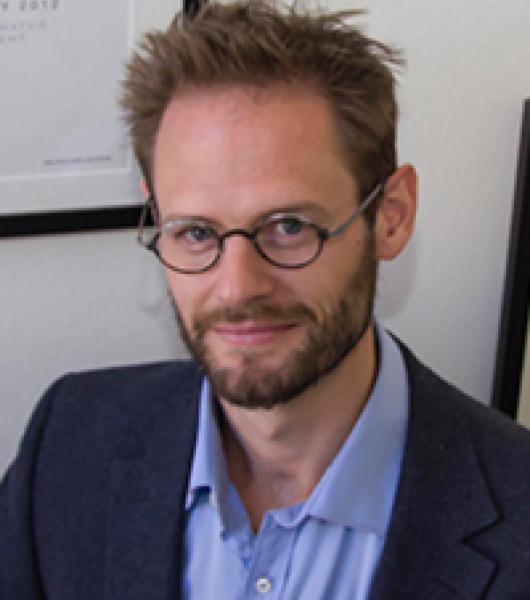
Professor Will Bateman is a distinguished academic at the Australian National University (ANU) College of Law, where he serves as a Professor and recently completed his term as Associate Dean (Research) from 2021 to 2024. He is also a Chief Investigator for the ANU Grand Challenge project "Humanising Machine Intelligence" and a Fellow at the Gradient Institute, a leading ethical AI research organization based in Sydney. Professor Bateman's educational background is impressive, having earned a PhD and LLM (Hons) from the University of Cambridge and a BA/LLB (Hons) from the Australian National University. Prior to his academic career, he worked in appellate litigation, commercial disputes, and banking as a solicitor at Herbert Smith Freehills, and served as an associate to Justice Stephen Gageler AC of the High Court of Australia and Justice Steven Rares of the Federal Court of Australia. Professor Bateman's research spans two major interdisciplinary domains that sit at the intersection of law with finance and technology. His work on financial regulation focuses on the legal aspects of central banking, sovereign debt markets, digital currencies, and sustainable investing. He has provided expert evidence to the UK Parliament's House of Lords Inquiry into Quantitative Easing, and has collaborated with major financial institutions including the Federal Reserve Bank of New York and the Bank of England. His research on artificial intelligence examines regulatory frameworks for AI in the public sector, with collaborations including the Minderoo Foundation and the Gradient Institute. His recent publications demonstrate a remarkable breadth across legal theory, financial regulation, and AI governance. The articles reveal a consistent theme of examining how traditional legal frameworks adapt to new financial technologies and monetary policy challenges. His work bridges theoretical legal scholarship with practical policy implications, as evidenced by his numerous government consultations and collaborations with central banks worldwide. 2020 Yorke Prize by the University of Cambridge for his work on public finance and constitutionalism Top 10 all-time most downloaded SSRN paper on central banking ("Central Bank Money: Liability, Asset, or Equity of the Nation?") Professor Bateman actively supervises research students, currently mentoring Benjamin Ettinger who is pursuing a PhD on "Legal Method, Cartels and Public Monopolies: A View From the High Court 1908 - 1948." He has secured significant research funding, including projects funded by the Economic and Social Research Council (UK), the German Research Foundation (Deutsche Forschungsgemeinschaft), and The Minderoo Foundation. His "Rebuilding Macroeconomics Initiative: Legal and Economic Conceptions of Money" received £245,000, while the "FA Mann" project was funded with €620,000 (approximately A$1,012,500). He leads the "Humanising Machine Intelligence" project, an ambitious interdisciplinary initiative involving computer scientists, mathematicians, philosophers, sociologists, psychologists, and lawyers aimed at developing democratically legitimate machine intelligence. He also co-led a major project with the University of Western Australia to formulate model legal frameworks for AI regulation in the public sector, funded by The Minderoo Foundation.
- Macroeconomics
- Monetary Economics
- Public Finance
- +۳ مورد دیگر
Professor Begona Dominguez is a faculty member in the School of Economics at The University of Queensland (UQ), within the Faculty of Business, Economics and Law. She holds a Doctor of Philosophy in Economics from Universitat Autònoma de Barcelona. Her research focuses on Macroeconomics, Public Finance, and Monetary Economics, with emphasis on fiscal policy design, central bank balance sheets, and optimal taxation frameworks. Her key projects include Supporting Entry and Growth of Australian Businesses via Tax and Transfers (2022–2024) and The role of a central bank's balance sheet in shaping the economy (2021–2024) . She is available for PhD supervision and actively contributes to applied macroeconomic analysis, particularly in urban economic advantages and policy evaluation. Publications span topics like fiscal sustainability, inflation dynamics under central bank policies, and the implications of constitutional constraints on taxation. Her work bridges theoretical models (e.g., Ramsey frameworks) with empirical applications in tax policy and public debt management. Professor Dominguez maintains affiliations with the Centre for Applied Macroeconomic Analysis (ANU) and has reviewed prominent texts such as John Taylor's Reform of the International Monetary System . She is based in Room 507, Colin Clark Building at UQ.

- Asset Pricing
- Portfolio Choice
- Macrofinance
- +۴ مورد دیگر
Francisco Barillas Bedoya is an Associate Professor at the School of Banking and Finance within the UNSW Business School, University of New South Wales. His research focuses on theoretical and empirical asset pricing, particularly portfolio choice, asset pricing tests, macrofinance, and term structure of interest rates. He has published extensively in top-tier journals like the Journal of Finance and Management Science. PhD from New York University MA from University of British Columbia BSc from Trent University His recent publications analyze Sharpe ratios for model comparison, speculative behavior in bond markets, and risk premia in fixed income markets. While no formal awards are listed, his work intersects financial economics, econometrics, and computational methods. Office: Level 3, Room 333C, Ref E12 Email: f.barillas@unsw.edu.au

Zara Ersozluمشاهده پروفایل
مدرس ارشد
Dr. Zara Ersozlu is a Senior Lecturer in Mathematics Education within the School of Education at the University of Newcastle, Australia. With a distinguished international career spanning multiple continents, she has held academic positions at prestigious institutions including North Carolina State University (USA), Gazi and Gaziosmanpasa Universities (Turkey), National Taiwan Normal University (Taiwan), The University of Western Australia, Murdoch University, and Deakin University. Her academic journey includes tenured positions as an Associate Professor and leadership roles as Department Head and Chair in teacher education disciplines. Currently, she teaches undergraduate and postgraduate courses in mathematics education, including Effective Pedagogies in Primary Mathematics, K-6 Mathematics, K-6 Numeracy, and Digitally Supported Learning. Dr. Ersozlu earned her Doctor of Philosophy from Firat University in Turkey and her Master of Art from Sakarya University. Her extensive academic preparation is complemented by five years of practical teaching experience in public schools prior to entering academia. This blend of theoretical knowledge and practical classroom experience informs her approach to teacher education and educational research. At the broadest level, Dr. Ersozlu's research investigates solutions to real-life problems impacting people's well-being, success, and capacity to achieve. Her scholarly work spans primary and secondary mathematics education, the psychology of mathematics (including metacognition, self-regulation, and anxiety), cross-cultural educational studies, teacher education, virtual simulated learning environments, and educational assessment. She has increasingly focused on the transformative potential of AI and machine learning in education, exploring how these technologies alter teaching, learning, and research processes. Her methodological expertise encompasses both quantitative and qualitative approaches, allowing her to effectively analyze both small and large educational datasets. Analysis of Dr. Ersozlu's recent publications reveals a strong emphasis on mathematics anxiety, teacher education, and the integration of technology in learning environments. Her work demonstrates a consistent focus on practical applications of educational research to address real-world challenges in mathematics education. The interdisciplinary nature of her research connects educational psychology, technology integration, and cross-cultural perspectives, with particular attention to how these elements intersect in teacher preparation and student learning outcomes. 2023 ATEA Research Recognition Award from the Australian Teacher Education Association 2021 Fellow of the Higher Education Academy (Advance HE, UK) 2010 Fellowship Program for Postdoctoral Researchers from the Council of Higher Education of Turkey Dr. Ersozlu is deeply committed to mentoring the next generation of scholars, currently supervising four PhD students and having successfully guided ten students to completion. Her grant portfolio includes significant funding for projects such as Best Practice Guidelines for RPL in Initial Teacher Education Programs ($60,000), Exploring the Reciprocal Relationship Between Mathematics Anxiety and Mathematical Resilience ($2,599), and multiple conference travel awards. She serves as an Associate Editor for several prominent journals including the International Electronic Journal of Mathematics Education and as Editor for Interdisciplinary STEM Education. Her editorial work reflects her standing as a respected voice in mathematics education research. Dr. Ersozlu's academic leadership extends to her role in developing innovative teaching approaches that integrate virtual simulation technology and learning analytics. Her work with TeachLivE™, a mixed-reality classroom simulation platform, demonstrates her commitment to creating authentic learning experiences for teacher education students. Through these initiatives, she bridges the gap between educational theory and classroom practice, preparing future educators to effectively implement evidence-based teaching strategies in diverse learning environments.
Professor Hak-Kim Chan of the Sydney Pharmacy School at the University of Sydney is a world-renowned expert in respiratory drug delivery, particularly pulmonary aerosols and inhalation therapies. With over 480 publications and 17,580+ Google Scholar citations, he has pioneered advancements in powder formulation , in silico modeling , and clinical applications of inhalation technologies. His work includes the development of FDA-approved diagnostics like Aridol™ (inhaled mannitol for asthma) and Bronchitol™ (for cystic fibrosis), and groundbreaking research on inhaled bacteriophage therapy to combat antibiotic-resistant respiratory infections. Education: BPharm (University Medal, 1983), PhD (1988), DSc (2009) from University of Sydney Professional Experience: Postdoc at University of Minnesota (1988–89), Scientist at Genentech Inc. (1992–95) Leadership: Executive Editor of Advanced Drug Delivery Reviews , Fellow of AAPS and RACI His research spans in vitro production methods, computational modeling of inhaler design, and in vivo imaging of aerosol deposition. Current projects focus on nanomedicine , phage therapy , and combating superbugs via inhalation routes. He has secured significant recognition for his work, including NHMRC case studies highlighting public health impacts. Professor Chan has supervised numerous researchers, including PhD student Grace YAU studying pulmonary probiotic delivery . His team's 10 patents (7 as first inventor) reflect practical innovations in dry powder inhalers , antimicrobial formulations , and drug stabilization technologies.

Christopher O'Donnell is a Professor of Econometrics at the University of Queensland's School of Economics. He holds a PhD from the University of Sydney and has held academic leadership roles including Director of the Centre for Efficiency and Productivity Analysis. His research focuses on productivity and efficiency analysis, econometric methods, and their applications in agriculture, public policy, and environmental economics. Education: PhD (University of Sydney), MCom (University of New South Wales), BAgEc (Hons) (University of New England). Research interests include economic and statistical methods for measuring productivity changes, stochastic frontier analysis, and metafrontier frameworks. He has authored/co-authored three books and over 80 journal articles, with notable contributions in the American Journal of Agricultural Economics , Journal of Econometrics , and European Journal of Operational Research . Scientific awards include being a Distinguished Fellow of the Australian Agricultural and Resource Economics Society. His work has been applied in sectors like healthcare, fisheries, and public utilities through collaborations with organizations such as the World Bank and Asian Productivity Organization. Key projects include measuring agricultural productivity in China, analyzing hospital efficiency, and evaluating climate impacts on farming. Grants include studies on productivity measurement in Australian universities and Northern Grains Region farms. Labs/Teams: Former Director of the Centre for Efficiency and Productivity Analysis, collaborating with global institutions on productivity benchmarking and policy analysis.
- Machine Learning and Deep Learning
- Big Data and Artificial Intelligence in Accounting
- Accounting Fraud
- +۳ مورد دیگر
Nurul Alam is a Lecturer in Accounting at the University of Sydney Business School. His research focuses on machine learning applications in finance and accounting, corporate distress prediction, and financial reporting. He holds a PhD from the University of Sydney, where he investigated machine learning models for US corporate bankruptcies. His teaching excellence has earned over 15 awards, including multiple Dean’s Citations and nominations for the Wayne Lonergan Award for Teaching Excellence. Education Master of Commerce (Finance & Accounting), University of Sydney Bachelor of Business Administration (Finance & Banking), University of Rajshahi, Bangladesh Research Interests Machine Learning and Deep Learning in accounting and finance Big Data analytics for corporate financial decision-making Accounting fraud detection mechanisms Financial reporting standards and regulations Current Projects Corporate bankruptcy prediction using survival models and AI Deep Learning applications in panel data analysis for firm distress Machine learning variable selection in corporate finance Accounting fraud patterns among lower/mid-level employees Teaching Contributions Financial Accounting B (ACCT3011) Quantitative Methods for Accounting (QBUS5002) Quantitative Business Analysis (BUSS1020)
- Police & Policing
- Community Safety & Crime Prevention
- Prisons, Probation & Parole Policy & Practice
- +۵ مورد دیگر
Professor Philip Birch is a distinguished academic in Criminology at the University of Technology Sydney (UTS), Faculty of Design & Society, School of International Studies & Education. With over 15 years of academic experience across British, American, and Australian university systems, he has established himself as a leading expert in policing, community safety, and criminal justice. His extensive practical background in criminology, including roles as a Specialist Crime Team Manager, Community Safety Research Manager, and Through Care Worker in UK correctional facilities, informs his applied research approach. Professor Birch's educational background includes a BSocSci. (Hons) in Social Policy (Crime & Justice) from the University of Manchester, multiple postgraduate qualifications from the Open University (including an MSc. in Social & Criminological Research Methods), a Post Graduate Certificate in Higher Education Practice from the University of Huddersfield, and a PhD in Criminology from the University of New South Wales. He also holds a Fellowship with the Higher Education Academy. His research centers on six key areas: Police & Policing; Community Safety & Crime Prevention; Prisons, Probation & Parole Policy & Practice; Assessment, Treatment & Management of Offenders; Gender & sexuality inclusive Domestic and Family Violence; and Sex Work, Sex Workers and Procurement. His work emphasizes the practical application of criminological research to real-world justice issues, with strong industry engagement across law enforcement and correctional services. Recent publications reveal a clear trend toward police mental health, aging in policing, hate crime identification, trauma-informed policing approaches, and digital community safety initiatives. His research employs diverse methodologies including qualitative case studies, Delphi methods, rapid evidence assessments, and comparative analyses across multiple jurisdictions. Teaching award (2019) from Australian College of Educators for outstanding contribution to education Literati Award (2019) for published work Fellowship of the Higher Education Academy Professor Birch has supervised numerous Honours, Masters by Coursework, Masters by Research and PhD students in Criminology, Criminal Justice and Policing, with several completions to date. He has secured over $1.3 million in research funding, including an ARC Linkage grant, and has acted as an external assessor for domestic and international funding bodies. His research projects address critical issues in criminology and policing, often with direct policy implications. He established the Crime & Security Science (CaSS) Research Group at UTS in 2022, a cross-faculty initiative connecting academia with industry to advance evidence-based criminology, criminal justice, policing, and community safety research. This group serves as a hub for collaborative projects addressing contemporary security challenges through translational research.
Kingsley Fongمشاهده پروفایل
دانشیار
- Market Microstructure
- Investment
- Household Finance
- +۲ مورد دیگر
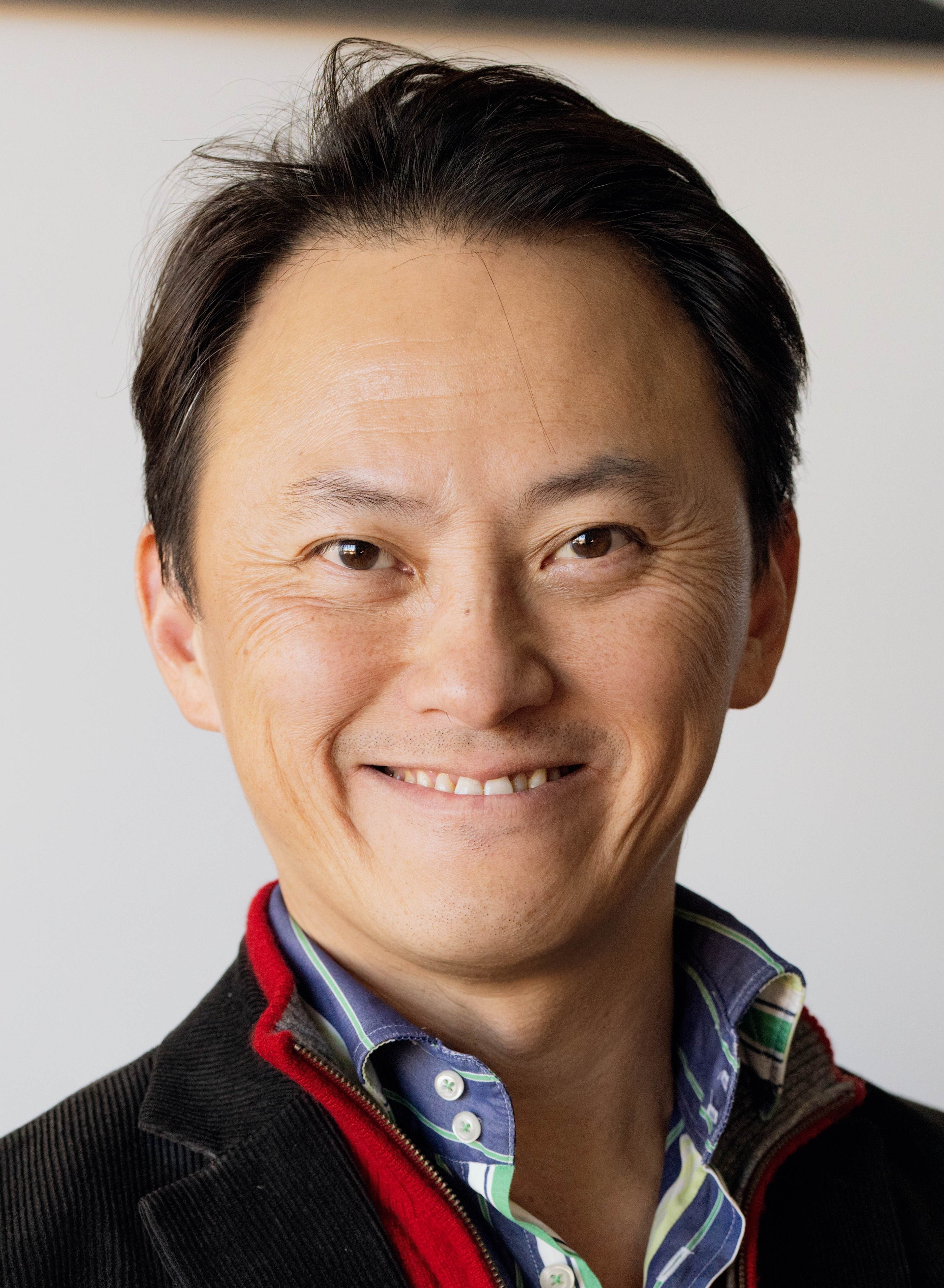
Kingsley Fong is an Associate Professor of Finance at the UNSW Business School , specifically within the School of Banking and Finance . He holds a PhD from the University of Sydney and a BCom (Hons) from UNSW. His research focuses on market microstructure , investment , household finance , and sustainable finance , and he co-founded the RISE Finance Lab to explore finance's role in societal well-being. He also developed the DATKIS framework for systemic coherence in financial practices. Research Interests : Market microstructure, household finance, sustainable finance, and empirical finance. Teaching : Courses such as WEALTH MANAGEMENT AND CLIENT ENGAGEMENT , SUSTAINABLE INVESTING , and SUSTAINABLE FINANCE . Key Trends in Research : His work spans liquidity proxies, algorithmic trading impacts, broker-client dynamics, and sustainable finance innovations. Notable collaborations include studies on market quality, tax-driven trading, and household investment behavior. Scientific Awards : 2017 Review of Finance Spängler IQAM Prize 2021 Aspen Institute Ideas Worth Teaching Award 2022 S&P Global Decarbonisation Hackathon Engagement : Co-Founder of UNSW RISE Finance Lab (2025) Australian Sustainable Finance Institute Reference Group (2024) Deputy Head of School Banking and Finance (2011–2019) Contact : k.fong@unsw.edu.au | Location : UNSW Business School, Ref E12, Level 3, Room 344B.
Steven Luمشاهده پروفایل
دانشیار
Associate Professor Steven Lu is a faculty member at the University of Sydney Business School, serving as Deputy Head of Discipline (Education). He holds a PhD in Marketing from the University of Toronto, an MA in Economics from York University, and a BA from Nankai University. His research focuses on quantitative modeling, machine learning, and big data analytics applied to digital economy challenges such as digital retailing, search advertising, and blockchain. He co-directs the Consumer Insights Research Group and is affiliated with the Sydney Institute of Agriculture. Dr. Lu has published in top journals including Marketing Science , Production and Operations Management , and Journal of Retailing . His awards include the CNS Vithala Rao Award, ANZMAC Best Paper Awards (2022-2024), and the 2021 Vice Chancellor's Teaching Award. He teaches courses on machine learning in marketing, marketing research, and new product development. He leads research grants such as 'The Era of Mobile Payment' (2021) and 'Digital Transformation of Food Sensory Quality' (2017). His advising focuses on topics like neural recommender systems, e-coupon effectiveness, and heterogeneous treatment effects analysis.
نمایش نتایج تا ۷۵۰ مورد اول. برای یافتن نتایج دقیقتر، جستجوی خود را با فیلترها محدود کنید.