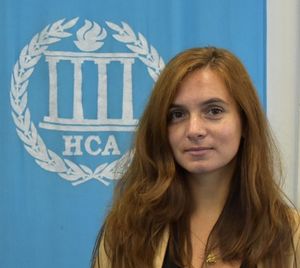
Prof. Ivelin Argirov Ivanov is a full-time Professor at the Department of Old and Medieval History, Faculty of History, University of Veliko Tarnovo. His core research examines medieval military history with emphasis on Crusades, Balkan conflicts, and comparative analyses of warfare in Western Europe, Byzantium, and Livonia. He specializes in interpreting chronicles and apocalyptic manuscripts to reconstruct historical perceptions of war. His scholarly focus spans: Military technology and strategy in High/Late Middle Ages Crusader campaigns in the Balkans and Baltic regions Nomadic-settler interactions in Eastern Europe Bulgarian-Byzantine-Latin geopolitical dynamics Historiographical trends in post-communist academia Analysis of his recent publications (2011-2024) reveals predominant themes: comparative studies of crusading states (Livonia vs. Byzantine Romania), tactical analyses of nomadic warfare, and deconstructions of identity politics in medieval chronicles. His work frequently employs quantitative methods to assess military demographics and battle outcomes. Prof. Ivanov leads/participates in multiple university projects including: Digitization of academic collections (Project Lead) Optimization of university library research capabilities (Team Member) International research integration programs (Project Lead) Development of the VTU Review academic journal (Editorial Leadership)
Minka Miteva Yordanova serves as a Part-time Lecturer in the Department of Mathematics, Computer Science and Natural Sciences at Technical University - Gabrovo, actively contributing to academic and research activities since 2011 through multiple institutional projects. Her research focuses on the intersection of management theory and information technology applications, with primary expertise in: Organizational Management and Business Process Modeling Information Systems Design and Security Computer-Based Educational Methods and Web Accessibility Economic Growth Analysis in National Sectors Analysis of her 15 publications (2011-2016) reveals consistent emphasis on practical implementations of management models in Bulgarian academic and business contexts, particularly in IT project execution, organizational communication, and time management systems. Her work predominantly appears in UNITECH and INFOTEH conference proceedings, demonstrating strong institutional collaboration within Southeast European academic networks. Dr. Yordanova has participated in seven internal research projects at TU Gabrovo (2011-2018) as both researcher and team member, addressing critical areas including modern educational technologies, economic forecasting for EU structural funds, and computer-based research methodologies. These projects involved cross-functional teams of 5-10 specialists focused on translating theoretical models into operational frameworks for national economic development.
Chief Assistant Professor Gloria Hristova, PhD candidate in Data Science, holds a dual academic role at Sofia University's Department of Statistics and Econometrics within the Faculty of Economics and Business Administration. Her research focuses on applying machine learning and NLP techniques to business analytics, digital transformation assessment, and public sentiment analysis. She teaches courses on text analytics, machine learning for finance, and quantitative management methods. Active in open-source contributions, her GitHub repositories showcase projects in data science competitions and Python-based analytical tools development. Education: PhD Studies in Data Science (2019–present), Department of Statistics and Econometrics, Sofia University. Professional memberships include the Data Science Society. Research Interests: Business Applications of Machine Learning Sentiment Analysis in Public Services Automated Analytics Tools Development Text Mining for Customer Insights Published works analyze digital transformation in SMEs, public opinion on e-government services, and banking chat data analytics. Her recent projects employ transformer-based language models and BERTopic for topic modeling in crisis contexts like pandemic education shifts. Professional Affiliations: Representative of FEBA in the Assistant's Club at Sofia University. Collaborates with academic and industry partners on data-driven solutions for enterprise digitalization challenges.
Assoc. Prof. Dr. Angel Dzhambov is an Associate Professor at the Department of Hygiene, Medical University of Plovdiv (since 2022) and National Medical University (since 2024). He holds a Doctor of Hygiene (2017) and Doctor of Science in Psychiatry (2019). His work focuses on environmental health, particularly the impacts of air pollution, noise, and greenspace on mental health and chronic diseases. He leads the research group 'Health and Quality of Life in a Green and Sustainable Environment' and participates in EU Horizon projects like 'RESONATE' and 'Superblock Model.' He has published over 100 peer-reviewed articles, accumulating 4,400 citations, and received awards including the Rebecca James Baker Award (2017) and Pythagoras Grand Prize (2019). Education: Graduated in medicine, specialized in general and communal hygiene, with postgraduate qualifications in mental health. He has held roles at the Technical University of Graz (2020–2024) and serves on editorial boards of journals like Environment International . Research Interests: Urban environments, noise pollution, greenspace exposure, and their effects on mental health, chronic diseases, and pediatric populations. Key areas include environmental justice, health equity, and policy-driven urban planning. Grants/Projects: Leads national and international projects under Horizon, focusing on sustainable urban design and nature-based therapies. Current projects include 'RESONATE' (2023–2027) and studies on greenspace and ADHD in Polish children. Awards: Recognized in global rankings (Top 1% in 2020/21, Top 2% in 2022) and honored with prestigious awards for contributions to environmental epidemiology. Labs/Teams: Heads the research group at the Medical University of Plovdiv's PSNIIR-MUP program and collaborates internationally on environmental health initiatives.
Assoc. Prof. Tsvetelina Valentinova, MD, PhD serves as Associate Professor at Medical University - Pleven within the Faculty of Public Health and Department of General Medicine, Forensic Medicine and Deontology. Her academic career centers on strengthening Bulgaria's primary healthcare infrastructure through research and education, with institutional affiliations spanning all university structural units including the Faculty of Medicine, Faculty of Pharmacy, and Medical College. Her research interests focus on critical gaps in primary care systems, particularly physician job satisfaction, stress management, and patient-centered communication frameworks. She investigates pediatric allergy prevalence in regional populations while examining structural challenges in general practice, including team composition dynamics and integration with social services. Her work consistently addresses Bulgarian healthcare context through evaluations of postgraduate medical training and public health campaign effectiveness. Analysis of her 15 most recent publications (2003-2018) reveals three dominant research trajectories: physician well-being metrics in resource-constrained settings, communication skill pedagogy for medical trainees, and system-level analysis of primary care team functionality. Her methodological approach blends qualitative assessment of practitioner experiences with quantitative epidemiological studies, predominantly focused on Pleven region populations. No scientific awards were documented in available materials. Dr. Valentinova actively shapes medical education through curriculum development for communication skills training and postgraduate general practice programs. Her advising extends to PhD candidate supervision within the university's scientific activity framework, while her research informs national healthcare policy through assessments of primary care team management and public health campaign implementation. She contributes to institutional quality assurance via teaching accreditation activities across medical, pharmacy, and public health specialties.
Lubomir Djalev serves as Assistant Professor in the Department of Cognitive Science and Psychology at New Bulgarian University (NBU), where he teaches Bulgarian studies within the university's undergraduate programs. His academic profile reflects deep integration with Bulgaria's national education infrastructure through prior leadership roles at the National Testing Center and Center for Control and Evaluation of Education Quality. His educational credentials include: PhD in Psychology from New Bulgarian University Master's in Bulgarian Philology from Sofia University "St. Kliment Ohridski" with specializations in History and Theory of Culture, Psycholinguistics, Psychometric Methods, Logic and Applied Statistics, and Sociolinguistics Master's in Quality Control in Education from Anglia Polytechnic University, Essex, UK Dr. Djalev's research centers on psychometric validation and quantitative methodology in social sciences, with particular expertise in cross-cultural adaptation of psychological instruments for Bulgarian populations. His work bridges theoretical test theory with practical applications in educational assessment and mental health diagnostics, emphasizing reliability analysis and factor structure validation across diverse age groups. Analysis of his 2015-2019 publications reveals consistent focus on instrument development for Bulgarian contexts, spanning childhood psychology (parental acceptance questionnaires, autism screening), adolescent mental health (eating disorders, stigma assessment), and educational diagnostics (school readiness tests). Key methodological themes include cross-cultural validation protocols, reliability testing across demographic variables, and adaptation of Western-developed instruments to Bulgarian sociocultural frameworks.
Krasimir Kostenarov serves as an Assistant Professor in the Department of Finance at New Bulgarian University (NBU), holding a PhD in Economics with specialization in Finance, Money Circulation, Credit and Insurance. He teaches core finance courses including Financial Calculations in MS Excel, Risk Analysis, and Financial Modeling with MS Excel. His academic background includes: Higher education in Finance PhD in Economics (professional field) specializing in Finance, Money Circulation, Credit and Insurance Dr. Kostenarov's research focuses on corporate finance, capital markets, and risk management in emerging economies, particularly Bulgaria. He develops computational models for risk assessment using asymmetric deviations and mean absolute deviation in CAPM frameworks, and investigates operational risk in non-financial enterprises through loss allocation methods. His work bridges theoretical finance with practical applications in transitional markets. Publication analysis from 2008-2020 reveals consistent emphasis on Bulgarian capital market dynamics, with specialized contributions to downside risk modeling (D-CAPM), European integration impacts on cost of equity, and enterprise resource planning effectiveness. His research demonstrates methodological innovation in adapting traditional financial models to emerging market conditions. No scientific awards were documented in the source materials. Teaching responsibilities include Financial Calculations in MS Excel (BAFB537), Practice (BAFB563), Seminar: Processing and Visualizing Economic Data (BAFB566), Internship (BAFB769), and Risk Analysis (BAFB801). Office hours are held Thursdays 15:00-17:00 and Fridays 11:00-13:00 in room 708 of Building II.
Assoc. Prof. PhD Toma Ivanov Tonchev is affiliated with the University of Forestry in Sofia, Bulgaria, where he serves in the Faculty of Forestry 's Forest Management and Management department. His work focuses on quantitative forest analysis and sustainable management strategies. Position: Associate Professor Department: Forest Management and Management Email: ttonchev@ltu.bg Research Interests: Tonchev specializes in forest growth modeling , stand dynamics , and ecosystem management . His studies on site index tables , stem form analysis , and multi-function forest balancing contribute to sustainable forestry practices. His research spans diverse forest types including European beech , Macedonian pine , and Turkish pine ecosystems. Key Research Areas: Quantitative forest inventory methods Forest management planning tools Tree growth modeling and biometrics Conversion of coppice forests to high forests Multi-criteria forest function optimization Regional ecological assessments (Balkan Mountains, Eastern Rhodopes)
Assoc. Prof. Svetlozar Vassilev, PhD is an Associate Professor at the Department of Health Protection and Social Work, New Bulgarian University (NBU), where he has held academic positions since 1996. He is also a practicing psychoanalyst and psychiatrist, leading the group practice „Аналитика” since 1998. His professional background includes roles as a coordinator for numerous national and international research projects focused on mental health policy, early psychosis intervention, and childhood trauma effects. Education: MD from Sofia Medical University (1988-1994) Psychiatry specialization from Sofia Medical University (1994-1998) Psychoanalytic diploma from the International Psychoanalytical Association (2002-2008) PhD in Psychology from St. Clement of Ohrid University (2009-2012) Research Interests: Dr. Vassilev’s work bridges psychoanalytic theory with clinical practice, focusing on childhood adversities, mental health policy evaluation, and the intersection of trauma with film and media. His research has explored epidemiological patterns of mental disorders in Bulgaria, suicide risk factors from global surveys, and the application of psychoanalytic methods in diverse settings. Key Projects: Coordinated projects include the EU-funded „Child and Adolescent Mental Health in Expanding Europe” (2007-2010) and the Bulgarian National Mental Health Prevalence Study (2002-2006). He also led initiatives on early psychosis detection and community mental health service management. Awards & Memberships: Active member of the International Psychoanalytical Association (IPA), European Psychoanalytical Federation (EPF), and Bulgarian Psychoanalytic Society. His work emphasizes clinical training standards and ethical practices in mental health systems. Teaching & Advising: Leads courses in psychoanalysis, psychiatric disorders, and social work clinical practices. His teaching integrates theoretical frameworks with practical case coordination methods.
Assoc. Prof. Dimitar Alexandrov Panayotov, PhD is an Associate Professor at the New Bulgarian University since October 12, 1999. He is affiliated with the Department of Administration and Management and has been the head of the "Business Administration" section. From 2000 to 2011, he served as the director of the Master's Program in Business Administration and has been the director of the Doctoral Program in Business Administration since 2012. He is also the Chairman of the "Business Administration" Community, having established, developed, and affirmed the first Master's and Doctoral programs in this specialty in Bulgaria. Dr. Panayotov holds a degree in Pedagogy/Psychology specialization from Sofia University "St. Kliment Ohridski" (1972-1976). He earned his Doctorate from VAK-2337 on October 10, 1988, for applying integrative approaches of psychology and pedagogy in the management sphere. He also possesses a certificate in Positive Psychology for Organizations and Managers from Wiesbaden, Germany (1992). 1972-1976: Pedagogy/Psychology specialization, Sofia University "St. Kliment Ohridski" 1988: Doctorate from VAK-2337 on applying integrative approaches of psychology and pedagogy in management 1992: Certificate in Positive Psychology for Organizations and Managers, Wiesbaden, Germany Dr. Panayotov's research interests are interdisciplinary, primarily focused on interactionist perspectives of human behavior in organizations and management. His work outlines new directions including business psychology (management training), organizational behavior, cross-cultural management, power, leadership, and motivational management. He has introduced numerous new modules and specialized courses for several departments: "Business Administration," Economics, and Cognitive Psychology, leading to methodologies for harmonious and positive development. His publications reveal consistent trends in leadership studies, organizational behavior, and human capital development. Over the years, his research has evolved from foundational work on organizational behavior to more complex analyses of power dynamics, strategic leadership, and interdisciplinary approaches to management. His recent work shows a strong emphasis on positive psychology applications in organizational contexts and the development of unified theories for leadership and management. Editor-in-Chief of the International Publication "Leadership, Society, Strategic Visions (Series)" Author (compiler, scientific editor) of 12 collective volumes from NBU including 3 Annuals, 2 specialized publications, and 7 conference proceedings Principal developer of the first Master's and Doctoral programs in Business Administration in Bulgaria Dr. Panayotov has supervised four doctoral students, with three having completed their studies (Maria Yosifova Tumbeva, Tsanko Borislavov Donkov, and Martin Atanasov Zafirov) and one currently working on digital leadership. He has also led numerous international, national, and educational projects including the Balkan Case Challenge, HR management practical training with the Bulgarian Business Network, and various conference and publication projects. His work has been recognized by prominent figures including the President of Bulgaria, Rumen Radev, who praised the academic debates organized under Dr. Panayotov's leadership. Dr. Panayotov has established and chaired numerous forums, alumni events, and seminars that present diverse current topics and possible solutions with broad public resonance. His initiatives have been described as "a traditional initiative and further evidence that the New Bulgarian University is an institution that finds the right pulse of the times and seeks effective solutions to current problems, drawing global, regional, and national perspectives."
Dr. Reni Pantcheva serves as an Assistant Professor in the Department of Industrial Economics and Management at Sofia University's Faculty of Economics and Business Administration. She specializes in sustainable development, circular economy frameworks, and energy transition strategies. Her research integrates behavioral economics insights to address sustainability challenges. Joined faculty: September 2024 Education: PhD in Economics and Management (Industry) – 2024 (Dissertation: 'Circular Economy Development in the European Union') MSc in Energy Markets and Services – 2021 BSc in Economics – 2017 Research Interests: Focuses on circular economy monitoring frameworks, resource efficiency, and renewable energy adoption drivers. Explores policy impacts through econometric analysis and behavioral studies. Publications: Recent work includes analysis of EU circular economy policies, sustainable finance legal foundations, and youth perceptions of euro adoption. Her studies often combine quantitative methods with policy implications.
Maya Mladenova is an Assistant Professor at New Bulgarian University's Healthcare and Social Work Department, affiliated with the Bulgarian Institute for Human Relations. She has held this position since 1998. Her academic roles include teaching courses like Psychodrama, Clinical Interview, and Social Work with Children/Emigrants. Education: Completed medical studies at Sofia's Higher Medical Institute (1987-1993), specializing in psychiatry at the Medical Academy (1994-1998). Trained in psychodrama therapy under Dr. Bernhard Achterberg (1991-1998) and completed psychoanalytic training in Amsterdam (2001-2005). Research focuses on social psychiatry, community mental health services, psychoanalytic therapy, early psychosis intervention, and minority health. She led projects like Bulgaria's National Epidemiological Survey of Mental Illness and coordinated EU-funded programs targeting mental health system reforms and youth services. Professional activities include over 20 years in clinical supervision, policy advocacy, and cross-cultural healthcare initiatives. She founded the Bulgarian Association of Social Workers (1995) and maintains memberships in the Bulgarian Psychoanalytic Society, European Psychodrama Association, and IPA.
Kalina Dimitrova Hadjinedelcheva is a researcher affiliated with the Faculty of Economics and Business Administration at Sofia University St. Kliment Ohridski , with primary employment at the Financial Supervision Commission of the Government of Bulgaria . Her work focuses on historical economic and financial systems, particularly in Bulgaria and Italy during the interwar period. Key Research Interests: Economic history, monetary policy, exchange rate dynamics, financial stability, EU accession economics, and transition economies. Notable Publications: Co-authored works on interwar exchange rate control, inflation forecasting, and deposit insurance during EU accession. Her research often bridges historical analysis with contemporary policy challenges. Citations: Her work has been cited in studies on capital controls, banking efficiency, and historical economic policy frameworks, indicating influence in financial history and transition economics.
Ralitsa Simeonova-Ganeva is an Associate Professor at the Faculty of Economics and Business Administration , Sofia University 'St. Kliment Ohridski' , affiliated with the Department of Statistics and Econometrics . With over 20 years of experience, she specializes in economic modeling, forecasting, and policy evaluation related to human capital, labor markets, and SMEs. PhD in Statistics/Economics (2007) MBA in Strategic Management (2014) MSc in Statistics and Econometrics (1999) BSc in Economics (1997) Her research spans economic growth , labour economics , health economics , entrepreneurship , and applied econometrics , with a focus on post-communist transitions and EU policy impacts. Recent publications examine neurocomputational forecasting, healthcare workforce shortages, and skill imbalances in Bulgaria. Notable projects include the SIBILA model for EU fund impact assessment and collaborations with institutions like Experian . She teaches courses in Labor Economics , Applied Econometrics , and Skills for Applied Research , while directing the MSc in Applied Econometrics and Economic Modelling program.
Silvia Ilieva-Sinigerova is an Associate Professor at the National Sports Academy “Vassil Levski”, affiliated with the Department of Theory of Sport Training within the Faculty of Sport . Her primary teaching focus is Statistical methods in sports , instructing both bachelor's and master's students. Education: PhD in Theory and methodology of sports training (National Sports Academy, 2016-2020) Master's in Sports management (National Sports Academy, 2009-2010) Bachelor's in Pedagogy of physical education and Taekwon-Do trainer (National Sports Academy, 2005-2009) Bachelor's in International economic relationship (International Business School, 2008-2012) Research Interests: Specializes in applying statistical analysis to optimize sport training methodologies. Her work bridges quantitative research with practical applications in elite athlete performance assessment, sports management strategies, and pedagogical approaches in physical education. She has collaborated with Olympic sports federations through her roles in the Ministry of Youth and Sports. Professional Experience: 2024–present: Associate Professor teaching statistical methods 2021–2024: Chief Assistant Professor 2017–2021: Assistant Professor 2010–2017: Expert/Chief Expert in Ministry's Directorate for Sport Achievements Labs/Teams: Involved in functional and sport research of elite athletes through Ministry collaborations. Active in Olympic preparation commission activities.