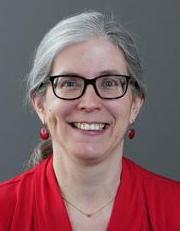
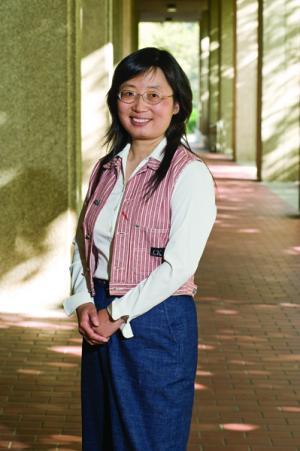
Tijana Gajić is a researcher at Singidunum University in Belgrade, Serbia. She holds a Ph.D. in Philology (2020), an MA in English Language and Literature (2009), and a BA in the same field (2007) from the University of Belgrade. Her work focuses on the intersection of language education, digital tools, and critical pedagogy. Doctoral Studies: Philology , University of Belgrade (2017-2020) Master Studies: English Language and Literature , University of Belgrade (2008-2009) Bachelor Studies: English Language and Literature , University of Belgrade (2003-2007) Dr. Gajić’s research explores the impact of digital technologies on language acquisition, critical thinking development, and the sociopolitical dimensions of English language learning. She has published extensively on mobile applications like Duolingo, HelloTalk, and WordUp, analyzing their efficacy in modern pedagogy. Her recent publications (2024-2025) examine digital tools’ influence on language education, critical pedagogy in Serbian classrooms, and AI-driven language learning innovations. Earlier works (2020-2016) established her expertise in tandem learning, vocabulary enhancement via apps, and affective factors in language acquisition. Notable collaborations include partnerships with researchers like N. Maenza , A. Gagić , and J. Nikolić . While no specific grants or awards are mentioned, her involvement in conferences such as Sinteza and ELTA Serbia underscores her active role in advancing language education. Her 2022 book, Nastava stranih jezika i razvoj kritičkog mišljenja u eri neoliberalizma , synthesizes her critical pedagogy framework. Current projects likely continue her focus on digital transformation in language teaching.
Amy Bruckman is a Regents’ Professor and Senior Associate Chair in the School of Interactive Computing at Georgia Institute of Technology. As a Fellow of The ACM and member of the SIGCHI Academy , she contributes to social computing research focusing on online collaboration, cross-cultural understanding, and content moderation. Her 2022 book "Should You Believe Wikipedia? Online Communities and the Construction of Knowledge" explores digital knowledge creation. Education: Ph.D. from MIT Media Lab (1997), B.A. in Physics from Harvard (1987) Research Affiliations: GVU Center, IRI People and Technology Her work addresses social computing challenges including: AI ethics in human-AI interaction Algorithmic bias in content moderation Epistemic justice in online communities Comparative platform analysis (Reddit, Discord, TikTok) Grassroots technology movements Recent publications examine: AI support tools for online counseling Community-driven research frameworks Racial bias mitigation in toxic language detection Designing teachable social media experiences Human trafficking intervention ethics Scientific recognition includes: ACM Fellowship SIGCHI Academy membership She has contributed to: Georgia Tech's Computing Education initiatives Research ethics frameworks for Human-Computer Interaction
Loreta Vilkienė is a Professor at the Department of Lithuanian Studies, Vilnius University, since October 2020, and served as its Head from 2018–2023. She has been affiliated with Vilnius University since 2007, initially as an Associate Professor, and has lectured since 2001. Her academic background includes a PhD in Humanities (2000) and a qualification as a philologist and teacher of Lithuanian (1986), both from Vilnius University. Education: PhD in Humanities, Vilnius University (2000) Philologist and Teacher of Lithuanian, Vilnius University (1986) Research Interests: Applied linguistics (foreign language teaching/assessment, language attrition, partial acquisition) and sociolinguistics (linguistic attitudes, diaspora language dynamics, language-identity links). Her work focuses on multilingualism, heritage language maintenance, and sociolinguistic transitions in post-Soviet contexts. Article Trends: Recent publications analyze language attitudes in Lithuania, lexical proficiency in native speakers, diaspora language policies in Kazakhstan and Russia, and sociolinguistic impacts on identity. Her studies integrate quantitative methods (e.g., vocabulary size estimation) and qualitative discourse analysis. Scientific Awards: Recipient of the 2006 Lietuvos Science Award (applied sciences) for collaborative work on Lithuanian language pedagogy. Grants & Projects: Managed EU-funded projects like ARQUS (2020) and international diaspora language studies (2020–2022). Active in UNESCO-related language preservation initiatives and digital outreach platforms. Outreach: Delivered public lectures on diaspora identity, contributed to podcasts, and authored 15+ peer-reviewed articles. Co-developed teaching tools like the Po truputį Lithuanian language series.
Sara Stymne is a Senior Lecturer in Computational Linguistics at the Department of Linguistics and Philology, Uppsala University, where she has been working since 2012. She initially joined as a post-doc (2012-2015), then worked as a researcher (2015-2017), and served as an assistant professor (2017-2023) before her current position as Senior Lecturer. Prior to Uppsala, she was a researcher at Linköping University's Department of Computer and Information Science. Dr. Stymne earned her PhD in Computational Linguistics from Linköping University in 2012 with the thesis 'Text Harmonization Strategies for Phrase-Based Statistical Machine Translation,' following a Licentiate degree in Computational Linguistics (2009) and a Master's degree in Cognitive Science (2006), both also from Linköping University. During her doctoral studies, she spent the autumn of 2010 and spring of 2009 at Xerox Research Centre Europe in Grenoble, France. Her primary research interests focus on cross-lingual natural language processing and digital humanities, with particular emphasis on multilingual dependency parsing. Dr. Stymne is passionate about applying computational linguistics to solve research questions in other fields, including language history, literary analysis, and political science. Her earlier work concentrated on machine translation, with specific interests in discourse-aware translation, compound processing, and error analysis. She has made significant contributions to the development of language technology tools for analyzing dialogue, narrative, and stylistic features in literature. Analysis of Dr. Stymne's recent publications reveals a strong focus on cross-lingual and cross-domain natural language processing. Her work spans multiple subfields including dependency parsing across genres and topics, discourse relation analysis in low-resource languages like Egyptian Arabic, direct speech identification in Swedish literature, and causality detection in governmental documents. A notable trend is her application of NLP techniques to digital humanities problems, particularly in analyzing literary texts and historical language change. Her research often involves creating and utilizing specialized datasets for specific linguistic phenomena across multiple languages. Dr. Stymne actively supervises graduate students, having guided numerous master's and bachelor's theses on topics ranging from speech recognition to multilingual parsing and causality detection. She leads or participates in several research projects including 'Fictional prose and language change' (funded by VR, 2021-2023) and 'Enabling climate-resilient development' (funded by Marianne and Marcus Wallenberg Foundation, 2023-2027), demonstrating her commitment to interdisciplinary research with practical applications. Her work has resulted in several notable software resources including uuPronPred for cross-lingual pronoun prediction, uuparser for dependency parsing, and Docent for document-level machine translation. Within the Computational Linguistics and Language Technology group at Uppsala University, Dr. Stymne contributes to multiple research initiatives focused on developing language technology tools for digital humanities applications. Her team works closely with literary scholars and historians to create computational methods for analyzing large corpora of literary texts, particularly focusing on Swedish literature across different historical periods. Her research bridges the gap between theoretical computational linguistics and practical applications in the humanities, creating new methodologies for quantitative analysis of literary and historical texts.
Joep Cornelissen holds a part-time Chair in Strategy and Organization at the University of Liverpool Management School and is a Professor of Corporate Communication and Management at Rotterdam School of Management, Erasmus University. His academic career spans strategic management, organizational theory, and corporate communication. His research interests center on processes of strategizing and organizational change, with a particular focus on innovation, entrepreneurship, and the development of scientific reasoning within management and organization theory. He actively collaborates with entrepreneurs and managers from diverse sectors, including regional development agencies, corporations, NGOs, and startups, to ensure the practical relevance of his work. Currently, he is leading a multi-year project on corporate purpose and sustainability, seeking partnerships in the Liverpool city region and beyond. Professor Cornelissen’s publications reflect a commitment to advancing theoretical and methodological rigor in management studies. Recent work explores the interplay between communication, strategy formulation, and organizational change, while also addressing critical methodological questions such as theoretical triangulation and causal mechanisms. His contributions span both empirical studies and methodological debates, emphasizing the practical implications of organizational research. While specific grants or advising students are not detailed here, Professor Cornelissen collaborates extensively with various organizations to enhance the applied relevance of his research, particularly in the realm of corporate sustainability and strategic change. He is affiliated with the Brett Centre for Entrepreneurship, contributing to research initiatives that bridge academic inquiry and practical business challenges.
Dr. Nienke Smit is an Assistant Professor in the Department of Education at Utrecht University's Faculty of Social and Behavioural Sciences. Her research focuses on scaffolding processes, adaptive teaching, and classroom observational research from a complex dynamic systems perspective. Specializes in teacher-student interaction Expert in adaptive instruction and observational methods Collaborates with Data Science department Develops tools for classroom observation Research interests include language learning and teaching , judgment and decision-making in education , and professional development of teachers . She leads projects like Eye Get It (joint attention in classrooms) and a replication study on adaptive instruction effectiveness. Her work applies dynamic systems theory to second language development and foreign language pedagogy. Recent publications address translanguaging in multilingual classrooms, replication studies , and process-oriented research . She teaches at Utrecht's Graduate School of Teaching and works on initiatives to reduce teacher shortages through improved training programs.
Jakob Merane is a postdoctoral researcher at ETH Zurich's Professorship of Law, Economics and Business, and a visiting researcher at the Max Planck Institute and Harvard Law School. He holds a Ph.D. from ETH Zurich and law degrees from the University of Basel, with additional studies in applied statistics. His research focuses on AI-driven legal enforcement, legal technology, and compliance-by-design approaches, leveraging computational and empirical methods. Merane's work includes developing tools like SwiLTra-Bench for multilingual legal translation and LEXam for benchmarking AI legal reasoning. He has contributed to GDPR compliance studies, automation of legal enforcement processes, and quantitative analyses of Swiss legal datasets. Awards include the 2024 Young Scholar Prize from the German Law and Economics Association. Teaching responsibilities include ETH's Law & Tech course since 2020, emphasizing AI regulation and interdisciplinary collaboration between law and computer science. Merane's research also addresses AI liability in medical contexts, digital advertising regulations, and ethical AI integration in legal systems. His work bridges legal theory with practical applications, aiming to enhance justice accessibility through technology.
Song Kim is an Associate Professor of Political Science at the Massachusetts Institute of Technology (MIT) and a Faculty Affiliate at the Institute for Data, Systems, and Society (IDSS). He holds a Ph.D. in Politics from Princeton University, where he was awarded the Harold W. Dodds Fellowship (2012-2013). His research focuses on International Political Economy, Formal and Quantitative Methodology, and Big Data analysis of international trade. He is particularly known for his work on firm-level political incentives in trade liberalization, which earned him the 2015 Mancur Olson Award and the 2018 Michael Wallerstein Award for best published article in political economy. Kim develops computational methods for analyzing trade data, including dimension reduction and visualization techniques. He maintains two key databases: LobbyView (tracking firm lobbying efforts) and TradeLab (for trade policy analysis). His research has been published in top journals such as the American Political Science Review, American Journal of Political Science, and International Organization. Educations : Ph.D. in Politics (Princeton University), B.A. not explicitly stated. His research interests include the dynamical evolution of lobbying networks, strategic links between political donations and lobbying, and the political origins of trade regulations. He also contributes methodological innovations, such as two-way fixed effects models and matching methods for causal inference with panel data. Awards : Mancur Olson Award (2015) Michael Wallerstein Award (2018) Harold W. Dodds Fellowship (2012-2013) Advising & Grants : No listed advisees. His work is supported by MIT’s IDSS and institutional funding. He collaborates on software tools like the 'wfe' and 'concordance' R packages, advancing computational social science. Labs/Teams : Associated with MIT’s Political Science Department and IDSS, focusing on interdisciplinary projects in trade, lobbying, and quantitative methods.
Prof. Anya Belz is Full Professor of Computer Science at Dublin City University's School of Computing and Science Lead at ADAPT Research Centre. A leading NLP researcher with PhD-level expertise, she specializes in natural language generation, evaluation methodologies, and multimodal systems. Recipient of multiple best paper awards and NAACL Test of Time Award nomination. Research innovations include foundational work on statistical language generation (deployed in weather forecasting systems), comparative evaluation frameworks, vision-language integration, and reproducibility quantification. Current EPSRC-funded ReproHum project coordinates 20 global labs studying evaluation consistency. Achievements : Developed industry-deployed generation systems for accessibility applications Pioneered cross-modal alignment techniques for image description Authored 100+ publications spanning generation, evaluation, and reproducibility
Alison J. Mackey is Professor and Chair of the Department of Linguistics at Georgetown University, College of Arts and Sciences. She is a leading scholar in second language acquisition (SLA), with a focus on interaction, feedback, research methodology, and language learning across the lifespan. Her research interests include second language acquisition , task-based language teaching , research methodology , interaction and corrective feedback , and language learning in children and adults . She has published extensively in top-tier journals and book series, shaping methodological standards in the field. Her recent publications reflect a strong trend in methodological rigor , interactionist approaches , and practical applications of SLA research. Themes include data elicitation , stimulated recall , task design , and pragmatic development , spanning both theoretical and classroom-based inquiry. Mildenberg Prize (2012) for The Handbook of Second Language Acquisition American Association for Applied Linguistics Distinguished Scholarship and Service Award International Association of Task-based Language Learning and Teaching Distinguished Achievement Award CHOICE Outstanding Academic Title (2012) Alison Mackey has advised numerous scholars through co-authorship and editorial leadership. She is Editor-in-Chief of Cambridge University Press Annual Review of Applied Linguistics and Editor of the Routledge Second Language Research series, guiding the publication of cutting-edge research. While specific grants are not listed, her editorial work and high citation count (>35,000) reflect significant research impact and funding support. She leads and contributes to major research initiatives such as the IRIS Repository , promoting open-access research instruments in SLA. Her work fosters collaboration across institutions and supports methodological transparency and replication in the field.
Yuuko Uchikoshi Tonkovich is a Professor at the School of Education, University of California, Davis, where she has served since 2004, advancing from Assistant to Associate and then to full Professor. Her work centers on language and literacy development in young dual language learners, with a focus on bilingualism, early literacy, and the role of family and media in language acquisition. Her research interests include: Early Childhood Development Multilingual Learners and Bilingual Education Language Acquisition and Literacy Parent-Child Interaction and Home Language Environment Quantitative Analysis of Educational Outcomes Educational Television and Multimedia Her recent publications span topics such as cognitive distancing in parent-child reading, morphological awareness in bilingual readers, and the impact of teacher language use in multilingual classrooms. The research consistently emphasizes longitudinal, cross-cultural, and interdisciplinary approaches, particularly focusing on Chinese American and Mexican American immigrant families. Her scientific awards include: AERA Vocabulary SIG Notable Vocabulary Researcher Award (2025) Foundation for Child Development Young Scholars Program Grant International Reading Association Dissertation Fellowship and Finalist Award Harvard Graduate School of Education Fellowships She has advised numerous research projects and secured significant funding from NIH/NICHD, the Foundation for Child Development, and other organizations. She teaches courses such as Language Development, Early Literacy, and Research on Text Comprehension. She is actively involved in national initiatives, serving on the Technical Advisory Group for the First 5 California Dual Language Learner Study and as Associate Editor of Applied Psycholinguistics . She leads the Language & Literacy Development Lab at UC Davis, which investigates the cognitive, linguistic, and socio-emotional development of dual language learners.
Vicki L. Plano Clark is a Professor in the Research Methods area of the School of Education at the University of Cincinnati, where she advises students in the Quantitative and Mixed Methods Research Methodologies (QMRM) concentration of the Educational Studies doctoral program and the Applied Research Methods (ARM) track of the Educational Studies master's program. She joined the University of Cincinnati in 2012 after serving as the director of the Office of Qualitative and Mixed Methods Research at the University of Nebraska-Lincoln. Dr. Plano Clark earned her Ph.D. in Quantitative and Qualitative Methods in Education from the University of Nebraska-Lincoln (2005), M.S. in Physics from Michigan State University (1993), and B.A. in Physics from Kalamazoo College (1990). Her academic journey transitioned from physics education to research methodology, bringing a unique interdisciplinary perspective to her work. As a leading methodologist specializing in mixed methods research, Dr. Plano Clark's scholarship focuses on delineating useful designs for conducting mixed methods research, examining procedural issues associated with these designs, and exploring the contexts for the adoption and use of mixed methods. Her research spans diverse application areas including cancer pain management, STEM graduate student identity development, teacher professional development, and the well-being of rural low-income families. Her work demonstrates how mixed methods approaches can effectively address complex research questions across multiple disciplines. Dr. Plano Clark has made significant contributions to the field through her editorial leadership and publications. She was the founding Managing Editor for the Journal of Mixed Methods Research and currently serves as an Associate Editor. In 2011, she co-led the development of Best Practices for Mixed Methods in the Health Sciences for NIH's Office of Behavioral and Social Sciences Research. In 2012, she became a founding co-editor of the Mixed Methods Research Series with Sage Publications. She has authored numerous influential books including 'Designing and Conducting Mixed Methods Research' (now in its 3rd edition) and 'Mixed Methods Research: A Guide to the Field.' Founding Managing Editor for the Journal of Mixed Methods Research Co-developer of NIH's Best Practices for Mixed Methods in the Health Sciences (2011) Founding co-editor of the Mixed Methods Research Series with Sage Publications (2012) Chair of the Mixed Methods Research Special Interest Group of AERA As an active researcher, Dr. Plano Clark has secured multiple grants including a Department of Education grant evaluating Ohio Network of Education Transformation (ONET) Schools (as Principal Investigator) and a UC University Research Council grant on reducing mass incarceration by improving public defense (as Collaborator). Her recent publications continue to advance methodological understanding in mixed methods research, with a focus on integration techniques, terminology challenges, and applications across health sciences and education. Dr. Plano Clark maintains an active role in the research community through invited presentations and workshops worldwide, helping to train the next generation of researchers in mixed methods approaches and contributing to the ongoing development of methodological standards and practices.
Guanglei Hong is a Professor at the University of Chicago, holding tenure in the Comparative Human Development Department and the Committee on Education. She chairs the University-wide Committee on Quantitative Methods in Social, Behavioral, and Health Sciences and the Committee on Education. Her research focuses on causal inference methodologies for evaluating educational and social policies, particularly mediation and moderation effects in multi-level longitudinal studies. She developed the RMPW and MMWS methods, widely used in causal mediation analysis. Hong holds a Master’s in Applied Statistics and a Ph.D. in Education from the University of Michigan. Education: Ph.D. in Education, University of Michigan, 2004 Master's in Applied Statistics, University of Michigan, 2002 Research Interests: Hong’s work centers on causal moderation and mediation, spillover effects, and sensitivity analysis in policy evaluation. She applies these methods to assess impacts of educational programs, contextual changes, and socioeconomic factors on child/youth development. Her monograph *Causality in a Social World* (2015) is a foundational text in the field. Awards: John Simon Guggenheim Fellowship (2021–2022) William T. Grant Scholar Award (2009–2014) NAE/Spencer Postdoctoral Fellowship (2006–2007) AERA Mary Catherine Ellwein Dissertation Award (2005) Teaching & Training: Hong teaches advanced quantitative methods courses, including causal inference and mediation analysis. She leads the NSF-funded SIARM for STEM institute, training researchers in computational methods for education research. Notable courses include *Advanced Topics in Causal Inference* and *Mediation, Moderation, and Spillover Effects*. Grants & Leadership: Hong leads major grants from NSF, IES, and private foundations. Her current projects include methodological advancements for multisite trials and sensitivity analysis in mediation. She has co-authored over 60 peer-reviewed articles and edited volumes, and serves on editorial boards of leading journals. Labs/Teams: Hong directs the Quantitative Methods Group at the University of Chicago, fostering interdisciplinary collaborations in causal inference and policy evaluation. Her work integrates statistical innovation with real-world applications in education and health sciences.
Dr. Nemanja Stanišić is a Full Professor at Singidunum University's Faculty of Business, with a distinguished academic career spanning over 15 years. He holds a Ph.D. in Corporate Finance from Singidunum University (2010), an MBA in Finance from Lincoln University (2007), and a Bachelor's in Accounting from the University of Belgrade (2005). His expertise focuses on Corporate Finance, Banking, Audit, and Applied Statistical Analysis. His research integrates quantitative methods with economic theory, addressing topics such as audit opinion prediction using AI, tourism destination competitiveness, financial distress dynamics, and air pollution health impacts. He co-authored textbooks including Contemporary Exchange and E-business (2010) and Financial Statement Analysis (2024), and served as Editor-in-Chief of The European Journal of Applied Economics . He teaches courses from Financial Accounting to Advanced Financial Engineering at undergraduate, master's, and Ph.D. levels. The 15 most recent publications highlight his interdisciplinary approach: 7 in Finance/Audit, 5 in Tourism/Hospitality, and 3 in Environmental Health. Key trends include applying machine learning to audit quality (2023), multilevel modeling for hospitality satisfaction (2015-2019), and air pollution mortality analysis (2016). His work appears in high-impact journals like Tourism Management (IF 10.125) and Environmental Health (IF 4.986). He held administrative roles including Rector (2020-2021) and Vice President of Singidunum University. He served as Vice Dean for Student Affairs (2010-2011) and participated in TEMPUS projects for educational reform. He mentors graduate students extensively, advising 100+ bachelor's, 57 master's, and 4 doctoral theses, including international candidates. His visiting professorship at Bangkok's ICO NIDA and teaching in Austria-Singidunum joint programs reflect global engagement. Professional development includes advanced training at Utrecht University (Bayesian Modeling, 2019), Stanford (Mentoring, 2010), and NYU (Valuation, 2012). He reviews for top journals like Annals of Tourism Research and Cornell Hospitality Quarterly , with 1017 Google Scholar citations and 349 Scopus citations. Current research involves the Science Fund of Serbia's TOURCOMSERBIA project evaluating tourism competitiveness models.
Lourdes Ortega is a Professor in the Department of Linguistics at Georgetown University and serves as Faculty Director of Georgetown’s Initiative for Multilingual Studies. Her work focuses on multilingualism beyond childhood, equitable language education, and decolonial epistemologies. She mentors students at undergraduate, master’s, and doctoral levels. Former positions include roles at University of Hawai‘i at Mānoa (2004-2012), Northern Arizona University (2002-2004), and Georgia State University (2000-2002). Education: Ph.D. and M.A. from University of Hawai‘i at Mānoa. Her research investigates how multilingualism develops in non-native contexts, advocating for social justice and equity in language education. Key contributions include her award-winning 2000 meta-analysis in Language Learning , the textbook Understanding Second Language Acquisition (2009), and co-editing The Cambridge Handbook of Bilingualism (2019). Recent work addresses under-studied languages like Arabic and Urdu in U.S. K-12 education, emphasizing decolonial and Indigenous frameworks. She has published extensively in top journals such as Applied Linguistics , Studies in Second Language Acquisition , and World Englishes . Awards: Gerald M. Mara Faculty Mentoring Award (2016, 2020), Pimsleur Award (2001), and 2023 recognition as a top 2% cited researcher. She advises 22 doctoral students and has secured grants supporting multilingual education research. Leads Georgetown’s Initiative for Multilingual Studies, co-chairs the Harmonious Bilingualism Network (HaBilNet), and edits Language Learning . Served as President of the American Association for Applied Linguistics (2023-2024). Her work bridges theory and practice, prioritizing cura personalis (care for the individual) in mentoring and advocating for multilingual well-being.