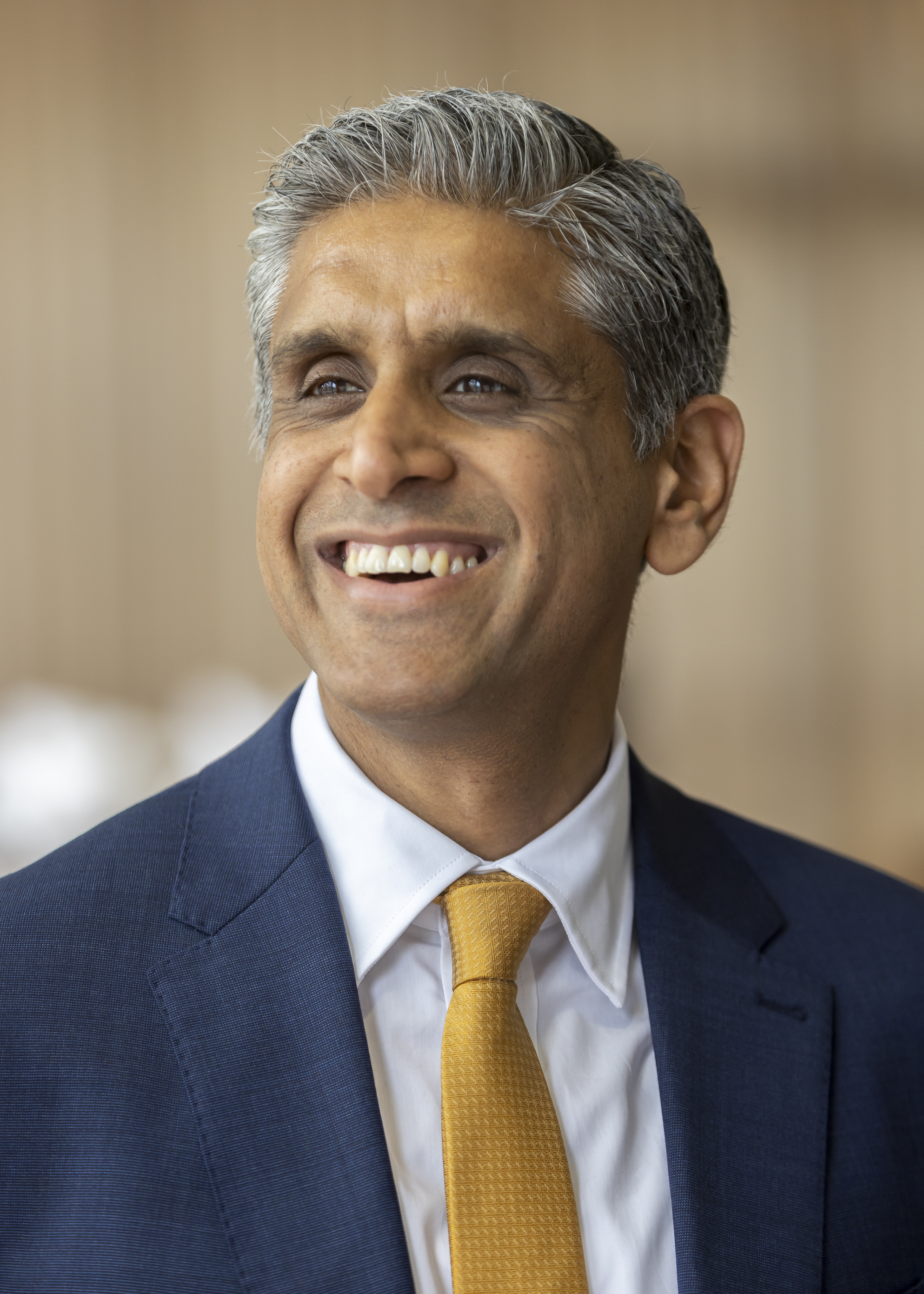
Vishal Ahuja is an Associate Professor and Corrigan Research Professor at Southern Methodist University's Cox School of Business, with adjunct faculty status at University of Texas Southwestern Medical Center. He focuses on decision analytic tools for healthcare improvement through operations management. PhD, University of Chicago Booth School of Business MBA, University of Chicago Booth School of Business His research interests span healthcare operations, service optimization, and AI applications in clinical decision-making. He collaborates with the Department of Veterans Affairs, Parkland Hospital, and pediatric institutions to address care quality and delivery efficiency. Recent publications emphasize predictive modeling for chronic disease management, adaptive clinical trial design, and regulatory healthcare policy. Awards include the Dlin/Fischer Clinical Research Award (2021), INFORMS Pierskalla Award (2012), and 2025 AI75 recognition for Dallas-Fort Worth AI leadership. D CEO Excellence in Healthcare Award - Outstanding Healthcare Innovator (2023) NSF Game Changer Academies for Advancing Research Innovation (2022) C. Jackson Grayson Faculty Innovation Award (2022-23) At SMU, he teaches graduate courses in operations, supply chain, and service management, integrating corporate sector experience from chemical and consumer goods industries. His work has been cited by the FDA in safety labeling changes workshops.
Thomas S. Lontzek is Professor of Economics at RWTH Aachen University, holding the Chair of Computational Economics within the School of Business and Economics since October 2016. His research develops numerical methods for economic decision-making with focus on climate change and environmental risks. His educational background includes economics studies at Maastricht University and UC San Diego (1999-2003), followed by PhD from University of Kiel (2009). Prior positions include Assistant/Senior Assistant at University of Zurich (2010-2016) and visiting scholar at Stanford's Hoover Institution (2012). Lontzek's research spans Economic Growth, Quantitative Macroeconomics, Resource and Energy Economics, Computational Economics, Climate Risk Management, and Decision Making under Uncertainty. His work emphasizes unconventional methods for analyzing economic processes through multidimensional, nonlinear stochastic optimization while incorporating ethical principles into economic analysis for sustainability challenges. His publication record reveals a consistent focus on climate economics, particularly the social cost of carbon, climate tipping points, and integrated assessment modeling. These works demonstrate how accounting for economic and climate risks, especially potential tipping points, necessitates more aggressive climate policies than traditional models suggest, often requiring sophisticated computational techniques to handle high-dimensional uncertainty. 2021 Erik Kempe Award for work on calculating an optimal CO2 tax Lontzek actively mentors students through research seminars and teaching, emphasizing methodological diversity and interdisciplinary approaches. He leads the Global Challenges Research Seminar through the Global Challenges Lab, providing students with opportunities to conduct innovative research using quantitative decision-making techniques for sustainable development challenges. His teaching portfolio for Summer Semester 2025 includes Quantitative Macroeconomics, Sustainable Finance, and specialized research seminars. He heads the Chair of Computational Economics, which includes scientific staff members Dr. Marco Thalhammer, Dr. Yifan Zhao, and Philipp Olivier, M.Sc., working collaboratively on climate economics and computational methods. The chair's research bridges theoretical economic modeling with practical policy applications, developing dynamic stochastic integrated assessment models capable of handling complex climate-economy interactions under uncertainty.
Mahzarin R. Banaji is the Richard Clarke Cabot Professor of Social Ethics at Harvard University and a Harvard College Professor. She is affiliated with the Department of Psychology and is a key figure in the Mind, Brain, and Behavior (MBB) Interfaculty Initiative. Her research is centered at the intersection of social cognition, implicit bias, and ethical behavior. Institution: Harvard University School: Harvard College Department: Psychology Email: banaji@fas.harvard.edu Dr. Banaji earned her Ph.D. from Ohio State University and has been a leading scholar in the study of unconscious bias. Her work explores how implicit attitudes shape perception, judgment, and behavior outside conscious awareness. She co-developed the Implicit Association Test (IAT) , a groundbreaking tool for measuring unconscious biases related to race, gender, age, and other social categories. Her research spans social cognition, prejudice, stereotyping, moral psychology, and the neuroscience of social behavior . More recently, she has extended her work into the domain of artificial intelligence, investigating how human-like biases emerge in large language models. The 15 most recent publications reflect a strong trend toward computational social science , combining psychological theory with natural language processing and AI. Her team analyzes bias in digital corpora, studies the transmission of stereotypes in AI systems, and develops tools to measure intersectional and implicit attitudes at scale. These works bridge psychology, ethics, and technology, highlighting the societal implications of implicit cognition. Among her notable scientific honors are: Fellow of the American Academy of Arts and Sciences William James Fellow Guggenheim Fellowship Kurt Lewin Award (SPSSI) Harvard College Professorship Dr. Banaji has advised numerous graduate students, including Tessa Charlesworth and Kerry Morehouse, many of whom are now active researchers in social and cognitive psychology. She has secured major grants through the Mind, Brain, and Behavior Initiative and has led interdisciplinary teams exploring bias in education, law, and technology. She is also the co-creator of OutsmartingHumanMinds.org , a public education platform on implicit bias. Her lab serves as a hub for collaborative research on implicit social cognition, bringing together psychologists, neuroscientists, and computer scientists to understand and mitigate unconscious bias in human and artificial systems.
Rick Hoyle is a Professor of Psychology and Neuroscience at Duke University, where he serves as Associate Chair of the Department of Psychology and Neuroscience. He is also a Faculty Network Member of the Duke Institute for Brain Sciences. His academic career spans decades, with significant contributions to understanding self-regulation and adolescent development. Dr. Hoyle earned his B.A. from Appalachian State University (1983), followed by an M.A. (1986) and Ph.D. (1988) from the University of North Carolina, Chapel Hill. He progressed from Assistant to Associate to Full Professor at the University of Kentucky from 1989 to 2003 before joining Duke University. His research focuses on how adolescents and emerging adults manage goal pursuit through self-regulation, taking a broad view that accounts for personality, environment, cognition, emotion, and social influences. He employs longitudinal methods with repeated assessments, sometimes spanning years with data collection multiple times per year, or intensive studies with assessments several times daily. His lab develops innovative measurement tools including self-report measures of self-control and grit, as well as unobtrusive approaches using mobile phones and wearable devices to track goal pursuit in natural settings. His recent publications reveal a strong focus on self-regulation in digital contexts, adolescent substance use, socioeconomic influences on development, and innovative measurement approaches. His work increasingly integrates technology (social media analysis, wearable devices) with traditional psychological research methods to understand real-world behavior. Fellow, Association for Psychological Science (2013) Dr. Hoyle has secured numerous research grants totaling millions of dollars, including the current Real-Time and Randomized Tests of Social Media and Mental Health Links in Early Adolescence (2024-2029), NCCU Duke - Substance Use Research & Education (2024-2029), and Mid-Life Health Inequalities in the Rural South: Risk and Resilience (2023-2028). His grant portfolio demonstrates sustained funding for research on adolescent development, substance use, self-regulation, and health disparities. He teaches advanced courses including Applied Structural Equation Modeling and Psychology and Neuroscience Grant Writing, mentoring the next generation of researchers in quantitative methods and research design. His work through the Center for the Study of Adolescent Risk and Resilience (2008-2025) has established a significant research infrastructure for longitudinal studies of adolescent development. Current projects examine social media effects on mental health, substance use patterns, and the impact of environmental factors on adolescent well-being using innovative digital tracking methods.
Aura Istrate is a Lecturer/Assistant Professor in Urban Planning & Sustainable Urbanism at the School of Architecture, Planning and Environmental Policy at University College Dublin (UCD). With an international background spanning multiple continents, she conducts interdisciplinary research on sustainable urban development, focusing on active mobility, nature-based solutions, and climate-neutral cities. She teaches GIS and urban planning modules while coordinating several significant research projects across European and Asian contexts. University College Dublin, School of Architecture, Planning and Environmental Policy Primary Coordinator of C-NEWTRAL (Horizon MSCA-DN 2024-2028) Co-Leader of REALLOCATE (Horizon Europe project 2023-2027) Principal Investigator for BIODIVERSA+ projects (NatureScape and NBS4AQUAMISSION) Educated at the University of Architecture and Urban Planning 'Ion Mincu' in Bucharest (BA and MA) and the University of Liverpool (PhD), Dr. Istrate further enhanced her teaching credentials with a Professional Certificate in University Teaching & Learning from UCD. Her academic journey reflects a strong foundation in architectural and urban planning principles combined with specialized expertise in sustainable urbanism. Dr. Istrate's research focuses on smart and sustainable urbanism, particularly examining active mobility, livable streets, green public spaces, and nature-based solutions in urban planning. Her work employs participatory, geospatial, and mixed methods to inform smart communities and the transition to climate-neutral cities. She has practical international experience in urban design and planning, with ongoing collaborations spanning European and Asian countries, currently teaching and researching across cultures in UCD and UCD's International Colleges (CDIC). Her recent publications reveal a strong focus on street vitality, urban heat adaptation, and nature-based solutions. The research demonstrates methodological diversity combining quantitative spatial analysis with qualitative community engagement approaches. Her work spans multiple geographic contexts, with particular expertise in Chinese urban environments and European cities, showing how urban planning concepts need to be contextualized for different cultural settings. The articles consistently address climate adaptation challenges through innovative approaches like urban nature games and fine-grained street classification systems. Dr. Istrate serves as a PhD thesis supervisor and is actively involved in major research initiatives including C-NEWTRAL (as Primary Coordinator), REALLOCATE (as Co-Leader), and BIODIVERSA+ projects (as PI for NatureScape and NBS4AQUAMISSION). Her grant portfolio includes Horizon Europe projects and other significant funding that supports interdisciplinary research on climate-neutral urban development. She has coordinated multiple teaching modules including Planning Design & Development, GIS & Planning, Intro to Spatial Planning, and Local Planning Studio. She leads international research collaborations and maintains active partnerships across various European and Asian countries. Her work bridges academic research with practical urban planning applications, particularly through her focus on research-by-design approaches and participatory methods that engage communities in the planning process. She has served as a lecturer, tutor, or teaching assistant across departments of Architecture, Planning, Environmental Studies, Global Studies, and Human Geography in Ireland, the UK, Czechia, Sweden, China, and Romania since 2010.
Gregory Paradis is an Assistant Professor in the Department of Forest Resources Management at the University of British Columbia (UBC) Faculty of Forestry. His research focuses on sustainable forest management, integrating operations research, mathematical optimization, and systems modeling to address complex interactions between ecosystems, industries, and society. He works with the FRESH Lab and collaborates with the Integrated Remote Sensing Studio, emphasizing ecological and economic integration in forest planning. Sustainable Forest Management Operations Research Forest Economics Data Science Risk Assessment GIS-based Methods His research spans forest inventory optimization, climate change adaptation strategies, wildfire risk modeling, and decision support systems for invasive species. He develops computational frameworks to enhance wood supply planning, carbon management, and ecological resilience. Recent work includes machine learning applications for fire safety in timber structures and automated road planning tools for wildlife conservation. Paradis’s publications highlight trends in applying optimization methods to sustainable forestry, with a focus on biodiversity, climate adaptation, and value chain innovation. He advocates for interdisciplinary approaches that bridge silviculture, industrial engineering, and data science to tackle emerging challenges in forest ecosystems. As an educator, he seeks motivated students with quantitative and creative problem-solving skills. His lab collaborates on remote sensing integration, risk assessment models, and policy-relevant forest management strategies, ensuring plans account for uncertainties like insect infestations or windthrow events.
Christine Mahoney is a Professor of Public Policy and Politics and Chief Innovation Officer at the Frank Batten School of Leadership and Public Policy at the University of Virginia. She also serves as Director of the Tadler Program in Impact Investing in Appalachia, the UVA Environmental Institute-funded Climate Collaborative on Appalachian Renewable Energy & Resilience, and the EPA-funded Community Change project for economic development in Appalachia. Previously, she was an Assistant Professor at the Maxwell School of Syracuse University and Director of the Center for European Studies and the Maxwell EU Center. Dr. Mahoney earned her Ph.D. in Political Science from Pennsylvania State University in 2006, with fields of study in American politics, Comparative politics, and Research Methods & Statistical Analysis. She also completed her M.A. (2003) and B.A. (2001) in Political Science and International Politics, respectively, at Pennsylvania State University. Professor Mahoney specializes in social justice advocacy, activism, and direct action through social entrepreneurship. Her research focuses on how advocates shape public policy, with particular attention to lobbying strategies in powerful political systems like the United States and the European Union. She has conducted extensive fieldwork in seven conflict zones across Asia, Africa, Eastern Europe, and Latin America, studying the rights of forcibly displaced people and proposing innovative solutions through social entrepreneurship. Her work bridges political science with practical applications in impact investing and refugee integration, creating tangible pathways for social change through entrepreneurial approaches. Professor Mahoney's scholarly output reveals an evolution from comparative studies of advocacy systems to practical applications of social entrepreneurship for forcibly displaced populations. Her early work established foundational knowledge about lobbying in transatlantic political systems, while her more recent research has shifted toward actionable solutions for global displacement crises and sustainable community development. This trajectory demonstrates her commitment to translating academic insights into real-world impact, particularly through the lens of social entrepreneurship and impact investing. Fulbright Fellow Visiting Scholar at Oxford National Science Foundation grant recipient Emerging Scholar award from the American Political Science Association UVA's Public Impact-Focused Research Award Through Social Entrepreneurship at UVA (SE@UVA), which she founded and led for a decade (2011-2021), Professor Mahoney has mentored over 80 student social enterprise teams and supported more than 100 social entrepreneurs with over 38,400 hours of pro-bono consulting. She has secured $37.7 million in funding for programs addressing social and environmental challenges, including the Tadler Program in Appalachia that has made significant strides in advancing rural policy and economic development. Her work demonstrates a consistent commitment to connecting academic research with practical applications that address pressing social problems. Professor Mahoney leads several significant initiatives including the Refugee Investment Network, where she serves as fellow and advisor, and multiple UVA-based programs focused on social entrepreneurship, impact investing, and community development. Her interdisciplinary approach brings together policy experts, social entrepreneurs, impact investors, and community stakeholders to develop innovative solutions to complex social problems, particularly in the areas of refugee integration and rural economic development in Appalachia.
FOONG Pin Sym is a Senior Research Fellow at the Saw Swee Hock School of Public Health, National University of Singapore. She leads the Telehealth Core, a research center focused on developing and studying eHealth projects. Her academic background includes a Master's in Human Computer Interaction Design and a PhD in Interactive Media. Her research emphasizes patient-centered technologies, with a focus on chronic disease prevention, caregiver support, and mobile health applications. Her work addresses challenges in healthcare decision-making, end-of-life care, and lifestyle interventions. Notable projects include developing digital tools for diabetes risk communication, caregiver decision support systems, and studies on telehealth during the pandemic. She teaches courses in Human-Computer Interaction, Mobile Interaction Design, and Technology for Older Adults. Her research spans qualitative and quantitative methodologies, including randomized controlled trials and participatory action research. She actively participates in interdisciplinary collaborations across health, technology, and design sectors to improve patient and caregiver outcomes. Education: PhD in Interactive Media, Master's in Human Computer Interaction Design Labs/Teams: Leads the Telehealth Core research team Grants/Projects: SMART-GDM Study, Vita project for dementia care
Prof. Dr. Johannes Sauer is a Professor at the Technical University of Munich (TUM), holding dual affiliations with the TUM School of Management and the TUM School of Life Sciences . His academic focus is on production and resource economics, with expertise in agricultural sustainability, policy evaluation, and circular economy strategies in Asia-Pacific and Latin America. Education: Bachelor’s/Master’s in Agricultural Economics from Universities of Tübingen, Hamburg, and Imperial College London. Doctorate (summa cum laude) in Agricultural Economics from the University of Bonn (2004). Research Interests: Prof. Sauer’s work spans productivity and resilience in agricultural systems, adoption of sustainable technologies, water resource valuation, and bioeconomic trends. He emphasizes smart technologies and circular economy applications in developing regions. His research employs econometric methods to analyze policy impacts and environmental-economic trade-offs. Key Trends in Publications: Recent articles highlight climate-smart agriculture, ICT adoption in rural China, and agroforestry’s role in reducing ecological-economic trade-offs. He explores behavioral drivers of policy participation and innovative tools like the IoFarm decision support system. Awards: 2021 Honorary Professorship at ANU OECD Fellow Awards (2010, 2016) Best Paper Awards (2008–2015) Consulting & Roles: OECD and Asian Development Bank consultant, ESRC Peer Review College member, and liaison lecturer for the German National Academic Foundation. He advises on agri-environmental policies and international development. Labs/Teams: Active in collaborative projects such as PONDERFUL Framework and IPM Popilia , focusing on nexus research and pest management strategies.
Dr. Daniel J. Bauer is a Professor and Director of the Quantitative Psychology Program and L.L. Thurstone Psychometric Laboratory at the University of North Carolina at Chapel Hill. His research focuses on advancing quantitative modeling techniques for studying negative social behaviors, health outcomes, and psychopathology, with expertise in generalized and nonlinear latent variable models, including multilevel models, structural equation models, and mixture models. His work emphasizes methodological innovations such as Bayesian regularization, measurement invariance evaluation, and the integration of deep learning with psychometrics. Bauer advises doctoral students in quantitative psychology and collaborates with developmental psychology programs. He leads the Thurstone Laboratory, one of the oldest quantitative psychology training programs in the U.S., emphasizing rigorous methodological training and applications in behavioral sciences. Bauer’s research trends span computational advancements in latent variable analysis, regularization for bias detection, and dynamic modeling of developmental processes. His advising includes over a dozen doctoral students now in academia and industry roles. He contributes to labs and initiatives like the Center for Developmental Science, advancing interdisciplinary research in psychological measurement and intervention evaluation.
Christof Bigler is an Adjunct Professor at ETH Zurich's Department of Environmental Systems Science, where he also serves as Deputy Group Head of the Professorship of Forest Ecology and Senior Scientist. He leads the ETH Tree-Ring Laboratory and teaches courses in dendroecology, applied statistics, and forest ecology. His research focuses on tree mortality, climate impacts on forests, disturbance ecology, and phenology, with a strong emphasis on quantitative methods and long-term data analysis. Bigler holds a PhD in Forest Ecology from ETH Zurich (2003), awarded the ETH Medal for his thesis on tree mortality modeling. He has conducted postdoctoral research in Switzerland and the University of Colorado Boulder, exploring disturbance interactions and dendroecology. He has supervised numerous PhD and master's students, contributing to over 150 publications in top journals like Nature Climate Change and Ecology . His work integrates dendrochronological techniques with statistical modeling to understand forest responses to climate change, including drought effects, tree competition, and mortality patterns. He serves on editorial boards for journals like Agricultural and Forest Meteorology and reviews proposals for national and international science foundations. His research also includes managing forest reserves and studying natural forest dynamics in the Alps and beyond. Education: PhD in Forest Ecology, ETH Zurich (2003) Postdoctoral Research: University of Colorado Boulder (2004–2005) Diploma in Biology, ETH Zurich (1998) Key Awards: ETH Medal for PhD thesis (2003) Professional Roles: Member of the Tree-Ring Society, Editor for Frontiers in Forests , and Commission for Phenology and Seasonality (KPS). Bigler's lab and fieldwork emphasize long-term datasets, including analyses of tree-ring records from Swiss National Park and other reserves. His research highlights the critical role of historical climate data in predicting future forest resilience and adaptation strategies.
Claudia Acciai is a Guest Researcher at SODAS (Sociology Department) at the University of Copenhagen, where she works on the research project "Quantifying institutional and country-related Matthew effects in science." She holds a PhD in Political Science and Sociology from the Scuola Normale Superiore, with a dissertation focused on policy design in the Research and Innovation sector. Her academic journey includes research visits at Alliance Manchester Business School, Science Po Paris, and Copenhagen Business School. Her research interests lie at the intersection of comparative public policy, innovation studies, and science of science. She combines computational and experimental methods with qualitative content analysis techniques to examine policy design, institutional effects in science, and research evaluation. Her work frequently addresses how policy instruments function in complex governance environments and investigates gender-related differences in academic publishing. Analyzing her recent publications reveals a strong focus on the science of science, with particular attention to bibliometrics, policy instrument effectiveness, and gender dynamics in academic careers. Her work spans multiple disciplines including political science, sociology of science, and innovation studies, often employing mixed-methods approaches that combine quantitative analysis with qualitative insights. Acciai is an active member of the Knowledge, Organization and Politics research group at the Department of Sociology. Her collaborations span multiple countries and institutions, reflecting the international nature of her research on comparative policy and science studies. She has conducted significant work for research projects funded by the Italian Ministry of Education, including analyses of policy analysis capacity in Italian policymaking and governance changes in higher education systems.
Christopher O'Donnell is a Professor of Econometrics at the University of Queensland's School of Economics. He holds a PhD from the University of Sydney and has held academic leadership roles including Director of the Centre for Efficiency and Productivity Analysis. His research focuses on productivity and efficiency analysis, econometric methods, and their applications in agriculture, public policy, and environmental economics. Education: PhD (University of Sydney), MCom (University of New South Wales), BAgEc (Hons) (University of New England). Research interests include economic and statistical methods for measuring productivity changes, stochastic frontier analysis, and metafrontier frameworks. He has authored/co-authored three books and over 80 journal articles, with notable contributions in the American Journal of Agricultural Economics , Journal of Econometrics , and European Journal of Operational Research . Scientific awards include being a Distinguished Fellow of the Australian Agricultural and Resource Economics Society. His work has been applied in sectors like healthcare, fisheries, and public utilities through collaborations with organizations such as the World Bank and Asian Productivity Organization. Key projects include measuring agricultural productivity in China, analyzing hospital efficiency, and evaluating climate impacts on farming. Grants include studies on productivity measurement in Australian universities and Northern Grains Region farms. Labs/Teams: Former Director of the Centre for Efficiency and Productivity Analysis, collaborating with global institutions on productivity benchmarking and policy analysis.
Elizabeth Bruch is an Associate Professor of Sociology and Complex Systems at the University of Michigan, serving as Associate Director of the Institute for Data and AI in Society. She holds External Faculty status at the Santa Fe Institute and is affiliated with the Center for Population Studies. With a Ph.D. from UCLA and an M.S. in Statistics, her research integrates choice modeling, network science, and agent-based simulations to study individual decisions in social environments. Key areas include residential segregation, dating markets, and higher education. Education: Ph.D. and M.S. in Sociology/Statistics (UCLA), B.A. in Sociology (Reed College) Affiliations: Santa Fe Institute, Institute for Advanced Study Berlin Her work has been published in Science , PNAS , and American Journal of Sociology , earning awards like the ASA Methodology Innovation Prize and the Merton Prize. Her upcoming book Date Like a Local (Princeton, 2026) explores urban influences on romantic behavior. Bruch’s research addresses societal challenges through computational methods, including pandemic modeling during the 2020 crisis and algorithmic analysis of dating markets. She serves on Santa Fe Institute’s Science Steering Committee and collaborates across disciplines to advance complexity science.
Guanglei Hong is a Professor at the University of Chicago, holding tenure in the Comparative Human Development Department and the Committee on Education. She chairs the University-wide Committee on Quantitative Methods in Social, Behavioral, and Health Sciences and the Committee on Education. Her research focuses on causal inference methodologies for evaluating educational and social policies, particularly mediation and moderation effects in multi-level longitudinal studies. She developed the RMPW and MMWS methods, widely used in causal mediation analysis. Hong holds a Master’s in Applied Statistics and a Ph.D. in Education from the University of Michigan. Education: Ph.D. in Education, University of Michigan, 2004 Master's in Applied Statistics, University of Michigan, 2002 Research Interests: Hong’s work centers on causal moderation and mediation, spillover effects, and sensitivity analysis in policy evaluation. She applies these methods to assess impacts of educational programs, contextual changes, and socioeconomic factors on child/youth development. Her monograph *Causality in a Social World* (2015) is a foundational text in the field. Awards: John Simon Guggenheim Fellowship (2021–2022) William T. Grant Scholar Award (2009–2014) NAE/Spencer Postdoctoral Fellowship (2006–2007) AERA Mary Catherine Ellwein Dissertation Award (2005) Teaching & Training: Hong teaches advanced quantitative methods courses, including causal inference and mediation analysis. She leads the NSF-funded SIARM for STEM institute, training researchers in computational methods for education research. Notable courses include *Advanced Topics in Causal Inference* and *Mediation, Moderation, and Spillover Effects*. Grants & Leadership: Hong leads major grants from NSF, IES, and private foundations. Her current projects include methodological advancements for multisite trials and sensitivity analysis in mediation. She has co-authored over 60 peer-reviewed articles and edited volumes, and serves on editorial boards of leading journals. Labs/Teams: Hong directs the Quantitative Methods Group at the University of Chicago, fostering interdisciplinary collaborations in causal inference and policy evaluation. Her work integrates statistical innovation with real-world applications in education and health sciences.