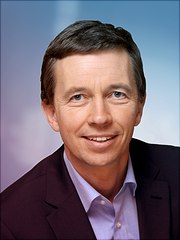
Christian Schlag is a Professor at the Finance Department of Goethe University Frankfurt’s Faculty of Economics and Business , where he also serves as Dean. He leads the Chair of Derivatives and Financial Engineering and coordinates young researchers at the Leibniz Institute for Financial Research SAFE. His research focuses on equilibrium asset pricing, derivative securities, and empirical capital market analysis. Research Trends : Schlag’s recent work explores volatility dynamics, climate risk in asset pricing, return predictability, and investor behavior. His 2023 publications examine time-varying consumption growth risk, equity factors, and individual stock volatility models. Earlier studies (2021–2015) address pricing kernels, welfare costs of temperature volatility, and model mis-specification in hedging. Student Placements : Former advisees hold positions at institutions like the European Central Bank, INSEAD, Australian National University, and Warwick Business School. His Chair of Derivatives and Financial Engineering collaborates with networks across Europe, North America, and Asia.
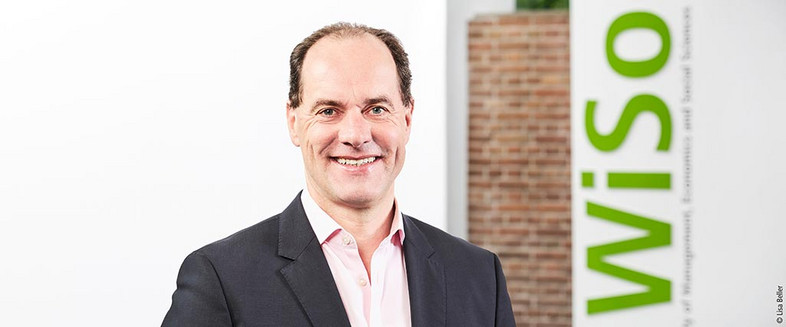
Thomas S. Lontzek is Professor of Economics at RWTH Aachen University, holding the Chair of Computational Economics within the School of Business and Economics since October 2016. His research develops numerical methods for economic decision-making with focus on climate change and environmental risks. His educational background includes economics studies at Maastricht University and UC San Diego (1999-2003), followed by PhD from University of Kiel (2009). Prior positions include Assistant/Senior Assistant at University of Zurich (2010-2016) and visiting scholar at Stanford's Hoover Institution (2012). Lontzek's research spans Economic Growth, Quantitative Macroeconomics, Resource and Energy Economics, Computational Economics, Climate Risk Management, and Decision Making under Uncertainty. His work emphasizes unconventional methods for analyzing economic processes through multidimensional, nonlinear stochastic optimization while incorporating ethical principles into economic analysis for sustainability challenges. His publication record reveals a consistent focus on climate economics, particularly the social cost of carbon, climate tipping points, and integrated assessment modeling. These works demonstrate how accounting for economic and climate risks, especially potential tipping points, necessitates more aggressive climate policies than traditional models suggest, often requiring sophisticated computational techniques to handle high-dimensional uncertainty. 2021 Erik Kempe Award for work on calculating an optimal CO2 tax Lontzek actively mentors students through research seminars and teaching, emphasizing methodological diversity and interdisciplinary approaches. He leads the Global Challenges Research Seminar through the Global Challenges Lab, providing students with opportunities to conduct innovative research using quantitative decision-making techniques for sustainable development challenges. His teaching portfolio for Summer Semester 2025 includes Quantitative Macroeconomics, Sustainable Finance, and specialized research seminars. He heads the Chair of Computational Economics, which includes scientific staff members Dr. Marco Thalhammer, Dr. Yifan Zhao, and Philipp Olivier, M.Sc., working collaboratively on climate economics and computational methods. The chair's research bridges theoretical economic modeling with practical policy applications, developing dynamic stochastic integrated assessment models capable of handling complex climate-economy interactions under uncertainty.
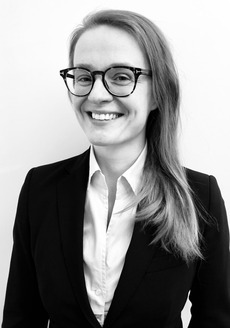
Prof. Dr. Bernd Lucke is a full professor at the University of Hamburg , affiliated with the Faculty of Business, Economics and Social Sciences and Department of Economics . He holds the Chair for Economic Growth and Business Cycles and has been active in research, teaching, and public policy discourse. Research Interests : Macroeconomics, Monetary Policy, European Economic Policy, Business Cycles, Econometrics, Development Policy, and Public Finance. Publications : His recent work (2025–2020) focuses on synthetic control methods for EU monetary analysis, ECB policy critiques, debt sustainability, digital currency legislation, and expropriation impacts on FDI. Earlier works span econometric testing of Ricardian equivalence, productivity shocks, and growth modeling. Media Contributions : Regular political commentary in outlets like Cicero and Frankfurter Allgemeine Zeitung , often critiquing ECB decisions, EU fiscal integration, and inflation dynamics. Contact : bernd.lucke@uni-hamburg.de
Werner Reinartz is a Professor of Marketing at the University of Cologne since 2007, where he holds the Chair for Retailing and Customer Management . He serves as Vice-Rector for Transfer (2023–ongoing) and Director of the Center for Research in Retailing (IFH e.V.) . His career includes a part-time Associate Professor role at INSEAD (2007–2010) and tenured/untenured positions there from 1999–2007. He earned a Ph.D. in Marketing from the University of Houston (1999) and an MBA from Henley Management College (1997). His research focuses on Retailing , Customer Management , Digital Transformation , and Marketing Strategy . He investigates how platformization , geospatial data , and authenticity in TV advertising influence consumer behavior and business outcomes. His work also addresses CRM efficacy , B2B hybrid offerings , and value creation in dynamic markets . Key trends in his recent publications include: Digital transformation in retail and branding Behavioral economics in marketing decisions Quantitative analysis of TV advertising effectiveness Geospatial data applications in international markets Platform business models for enduring customer relationships CRM and customer profitability in noncontractual settings Scientific honors include: Academic Fellow, Marketing Science Institute (MSI) (2023) EMAC Distinguished Marketing Scholar Award (2023) Shelby D. Hunt/Harold H. Maynard Award (2022) Jan Steenkamp Award for Long-Term Impact (2021) Outstanding Area Editor, Journal of Marketing (2016) Donald R. Lehmann Award (2001) and John A. Howard Dissertation Competition Winner (1999) He contributes to editorial boards and collaborative research initiatives like the Research Initiative 'Digital Transformation and Value Creation' and the Cluster of Excellence ECONtribute: Markets & Public Policy , which examines market challenges through interdisciplinary lenses.
Prof. Melanie Schienle is a Professor and Chair of Statistical Methods and Econometrics at the Department of Economics and Management, Karlsruhe Institute of Technology (KIT). She also holds a professorship in the Department of Mathematics at KIT since 2021. Her expertise spans statistical methods, econometrics, financial risk analysis, and forecasting. She leads the HKMetrics Network and the RespiNow Hub for respiratory disease forecasting. She serves as a Senior Fellow at the Rimini Center for Economic Analysis (RCEA), a steering committee member of the German Economic Association, and a member of the University Research Council at KIT. Education: Ph.D. (Dr. rer. pol.) in Economics from Mannheim University (2008), summa cum laude; Diploma in Mathematics (University of Karlsruhe, 2003) with a minor in theoretical physics. She has held academic positions at Leibniz University Hannover (2012–2015) and Humboldt University of Berlin (2008–2012). Research interests focus on financial networks, systemic risk, time series analysis, and machine learning applications in economics. She co-leads projects on nowcasting and forecasting, including collaborative efforts during the pandemic to predict hospitalizations. Her work integrates advanced statistical techniques with real-world policy implications. Prof. Schienle is an Associate Editor for the International Journal of Forecasting and Journal of Time Series Analysis . She has authored over 50 peer-reviewed publications and contributed to high-impact journals like Nature Communications and Journal of Business & Economic Statistics . She leads the Institute of Statistics at KIT and chairs the MathSEE initiative for interdisciplinary mathematical applications.
Rhenish Friedrich Wilhelm University of BonnGermany
Prof. Farzad Saidi is a Professor in the Department of Economics at the University of Bonn. He is affiliated with the Institute for Macroeconomics and Econometrics, ECONtribute, and the CRC TR 224 EPoS research centers. His work focuses on financial intermediation, monetary policy, corporate finance, and labor markets. He has contributed extensively to understanding bank behavior under negative interest rates, the effects of financial regulation, and the interplay between social preferences and economic outcomes during crises. Research highlights include analyzing strategic communication among banks, the impact of regulatory changes on insurance industries, and the role of social preferences in pandemic responses. His awards include the Jensen Prize for outstanding corporate finance research. Current projects explore credit supply dynamics, data-driven business cycles, and the macroeconomic implications of financial sanctions. Prof. Saidi's work spans theoretical and empirical domains, addressing topics such as banking structure, liquidity management, and the transmission of monetary policy. His affiliations with interdisciplinary centers reflect a commitment to collaborative, policy-relevant research.
Prof. Dr. Alexander Meyer-Gohde is a Professor of Financial Markets and Macroeconomics at Goethe University Frankfurt’s Faculty of Economics and Business, and a key figure at the Institute for Monetary and Financial Stability (IMFS). His research spans macroeconomic theory, macro-finance, numerical methods, and econometrics, focusing on DSGE models, nonlinear dynamics, and the impact of risk and uncertainty on monetary policy. Education : PhD in Economics (Technische Universität Berlin), MA in Economics and Management (Humboldt-Universität zu Berlin), BA in Language, Literature & Culture (Colorado State University). Research Interests : Macroeconomics, macro-finance, numerical methods, recursive preferences, stochastic volatility, and model uncertainty. Grants : DFG Individual Research Grant (2021-2024) and MatlabMakro DigiTeLL Grant (2022-2023). Publications : Focus on DSGE model solution methods, numerical stability, term premia, and nonlinear dynamics in macroeconomics. Students : Supervises job market candidates Johanna Saecker and Mary Tzaawa-Krenzler. Leadership : Chair of Financial Markets and Macroeconomics at Goethe University (2018–present) and coimplementation of the IMFS “Project Monetary and Financial Stability”.
Prof. Sven Rady is a leading academic at the Department of Economics at the Hausdorff Center for Mathematics , University of Bonn. He serves as a Hausdorff Chair for Mathematical Economics and Deputy Spokesperson for Collaborative Research Centre TR224. Research Interests include dynamic decision problems, equilibrium models, optimal learning, and strategic experimentation, with significant contributions to information economics and stochastic game theory. His work bridges mathematical modeling with economic theory, focusing on markets, learning dynamics, and policy implications. Scientific Awards include Fellow of the Econometric Society (2023) Teaching Awards at the University of Bonn (2021, 2022) CESifo Outstanding Referee Award (2013) Teaching Award of the State of Bavaria (2005) Key Collaborations involve interdisciplinary research at the intersection of economics and mathematics. He leads projects in the CRC TR224 and contributes to HCM initiatives on probabilistic modeling and information economics.
Prof. Dr. Thomas Heidorn is Professor of Banking Management at the Frankfurt School of Finance & Management, where he has served since the institution's foundation in 1991. He directs the Centre for Practical Quantitative Finance and teaches Financial Mathematics, Risk Management, Derivatives, and Treasury courses across Bachelor's and Master's programs. His academic journey includes: High School Diploma (Bloomfield Hills, Michigan, 1977) Abitur (Hannover, 1979) Pre-degree in Economics (University of Hannover, 1981) MA in Economics (University of Santa Barbara, 1983, Fulbright scholarship) Doctoral degree (Christian-Albrechts-University Kiel, 1986) Professor Heidorn's research centers on practical quantitative finance , with expertise in Investment Banking, Risk Management, Capital Markets, and Derivatives. His work spans Hedge Funds, Commodity Investments, ESG Integration, and Corporate Treasury strategies, emphasizing regulatory impacts like Basel III/IV and LIBOR transition. He bridges academic rigor with industry applications through extensive consulting for corporations and public institutions. His publication trends reveal consistent focus on evolving financial landscapes: recent works analyze post-LIBOR derivatives markets, ESG's impact on volatility, corporate hedging frameworks, and Basel regulation mechanics. This reflects his commitment to solving real-world banking challenges through quantitative methodologies. He actively shapes industry standards as: Board member of Reuters Innovation Award Head of Academic Advisory Board for Portfolio Institutionell Award Editor of Knapps Enzyklopädisches Lexikon Leader of DVFA's Expert Group 3 on Structured Product Ratings Professor Heidorn co-manages professional certification programs including the Certified Corporate Treasurer (with VDT) and HVB/Frankfurt School's Junior Exam Markets training. His office hours are Wednesdays 4-5 PM by appointment (Room 3.08).
Olaf Stotz is a Professor of Asset Management and Pension Economics at the Frankfurt School of Finance & Management since 2008. His research focuses on financial market prices, investor behavior, and empirical finance using large datasets. Education: Industrial Engineering (KIT), Doctorate & Habilitation (RWTH Aachen) Research interests include: Forecasting stock prices and improving investor decision-making ESG exposure and realized returns Trust in pension product recommendations Impact of macroeconomic news on equity markets Low interest rates and pension system challenges Publications span topics like mutual fund performance, hedge portfolios, dividend futures, and behavioral finance. His work appears in journals such as Review of Financial Economics , Journal of Asset Management , and Journal of International Money and Finance . Scientific awards include being ranked among the top 100 most influential economists in the German-speaking world by Frankfurter Allgemeine Zeitung (FAZ) and Neue Zürcher Zeitung (NZZ) .
Professor Andreas Schabert is a W3 Professor of Economics (Macroeconomics) at the Faculty of Management, Economics and Social Sciences, University of Cologne, since 2013. He serves as Academic Director for the MSc Economic Research and PhD Program in Economics, Vice-Dean for International Relations, and former Executive Director of the Center for Macroeconomic Research. He is a Principal Investigator at the Cluster of Excellence ECONtribute: Markets & Public Policy, a joint initiative of the Universities of Bonn and Cologne. Specializes in Monetary Policy, Fiscal Policy, Financial Markets, and International Macroeconomics Key roles: Spokesperson for the Economics Department (2021-2022), Co-Spokesperson for ECONtribute (2020-2021) Education: Habilitation (2004), Doctorate (1999) from University of Cologne; Studies in Chemistry and Economics (1988-1996) Research Focus: His work examines monetary-fiscal policy interactions, liquidity provision, and macroeconomic stability. Current research links macroeconomic modeling to real-world policy challenges like financial crises and inequality through ECONtribute’s interdisciplinary framework. Publications: His recent articles include analyses of fiscal multipliers, central bank balance sheets, and sovereign default theories, reflecting his expertise in macroeconomic policy design. Affiliations: Active in the Reinhard Selten Institute Executive Board, Key Profile Area 'Social and Economic Behavior', and ERSP funding programs at University of Cologne.
Professor Ralf Kellner holds the Chair of Financial Data Analytics at the University of Passau, Faculty of Economics. His work integrates economics, data science, and statistics, focusing on empirical and application-oriented research to explore how statistical learning and AI can uncover insights in data-driven decision-making processes that generate economic value. He also teaches courses such as Deep Learning and Text Analysis in Finance, Financial Data Analytics and Machine Learning, and Scientific Computing with Python. His research examines the intersection of financial markets, statistical learning, and artificial intelligence, with specific interests in modeling adverse financial developments, systemic risks, and analyzing text data via domain-specific language models. Publications highlight collaborations with researchers like D. Rösch and N. Gatzert. Recent publications include work on hybrid service agents, quantile neural networks, default resolution time analysis, Bayesian sovereign bond risk models, and international diversification studies. His methodological approaches span extreme value theory, quantile regression, and multivariate statistical techniques applied to financial and insurance contexts. Contact: ralf.kellner@uni-passau.de
Max Born Institute for Nonlinear Optics and Short Pulse SpectroscopyGermany
Chris Roth is a Professor of Economics and Management at the University of Cologne, where he leads research at the intersection of psychology, economics, and political economy. He serves as Co-Editor of the Journal of the European Economic Association and holds a prestigious ERC Starting Grant for his project 'VIRAL Narratives,' which examines how economic narratives spread and influence beliefs through large-scale experiments combining qualitative and quantitative methods. His research focuses on three primary domains: Psychology and Economics (studying cognitive biases in decision-making), Political Economy (analyzing activism and policy perceptions), and Macro-expectations (investigating how households and firms form economic beliefs). His work employs innovative field experiments and survey methodologies to explore real-world behaviors. Recent publications (2022-2025) demonstrate strong trends in narrative economics, expectation formation, and political behavior research. Key themes include: 1) How stories and statistics shape memory and beliefs, 2) Field experiments in labor/housing markets, 3) Information processing in policy contexts, and 4) Behavioral drivers of political activism. Over 80% of recent articles use experimental methods across 15+ countries. Scientific Awards: ERC Starting Grant: VIRAL (101160770) - European Research Council (2021-present) He leads the ERC-funded 'VIRAL Narratives' project and has developed open resources for researchers including doctoral course materials, experimental design guides, and methodological frameworks. No student advising details or lab information is provided in available texts.
Christian Bittner is an Economist at the Research Centre of the Deutsche Bundesbank since May 2023. His research focuses on Banking, Financial Intermediation, Monetary Policy, and Green Finance. He has contributed to understanding the interplay between unconventional monetary policies like quantitative easing (QE) and interest rate adjustments, particularly at the effective lower bound in the Euro Area. His work also explores information transmission mechanisms in banking and corporate control dynamics, as well as the augmented bank balance-sheet channel of monetary policy. Bittner’s recent publications analyze the implications of negative interest rates and asset-purchase programs on bank lending behavior and financial stability. Key publications include analyses on mixing QE with interest rate policies, information flows between banks and corporate markets, and the contagious effects of 'zombie' firms on financial stability. His research often employs micro-level data to assess policy impacts, contributing to macroeconomic and financial policy design. Bittner holds a strong academic background in economics, though his specific educational details are not elaborated in the provided texts. He is actively involved in the Bundesbank’s Research Centre, collaborating on initiatives like the Panel on Household Finances and Green Finance initiatives. His work bridges theoretical monetary policy frameworks with empirical evidence from banking systems, emphasizing real-world applications for central bank decision-making.
Daniel Gutknecht, Ph.D., is a Professor in the Department of Economic Policy & Quantitative Methods (EQ) at the Faculty of Economics, Goethe University Frankfurt am Main. His academic work spans econometrics, applied microeconomics, and quantitative methods, with a focus on causal inference and time series analysis. Econometrics Methodology Quantile Regression Panel Data Analysis Nonlinear Models Recent research contributions include advanced econometric techniques such as staggered adoption DiD designs, sparsity tests for high-dimensional regressions, and intercept estimation in nonlinear selection models. His publications address critical challenges in quantile forecast optimality, nowcasting monotonicity, and heaped duration data modeling, reflecting interdisciplinary applications in public health and macroeconomic policy. Current teaching includes Advanced Econometrics 1 and Fundamentals of Econometrics for the Winter semester 2025/26. Contact details: Office RuW 3.211, Theodor-W.-Adorno-Platz 4, Frankfurt am Main; email: gutknecht@wiwi.uni-frankfurt.de .