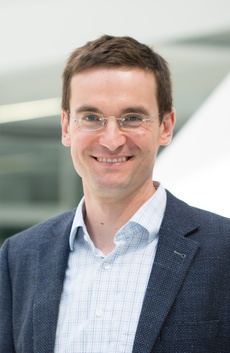
Prof. Dr. Roman Sauer is a Professor of Mathematics at Karlsruhe Institute of Technology (KIT), leading the Topology and Geometric Group Theory Group within the Institute of Algebra and Geometry. His research focuses on geometric topology, geometric group theory, and L²-invariants, with particular emphasis on manifolds, cohomology, and group actions. He has held roles such as Head of the Topology Group and contributed to foundational work on simplicial volume, bounded cohomology, and Kazhdan properties. Key research areas include the interplay between geometry and topology in manifolds, the study of arithmetic groups through profinite invariants, and applications of measure-theoretic methods to group theory. His work often bridges algebraic topology with geometric analysis, addressing questions about rigidity, stability, and quantitative invariants. Publications highlight contributions to L²-Betti numbers, geometric group actions, and the interplay between group properties and topological structures. Notable collaborations involve Uri Bader, Clara Löh, and others in advancing the field of geometric topology and related cohomological theories.
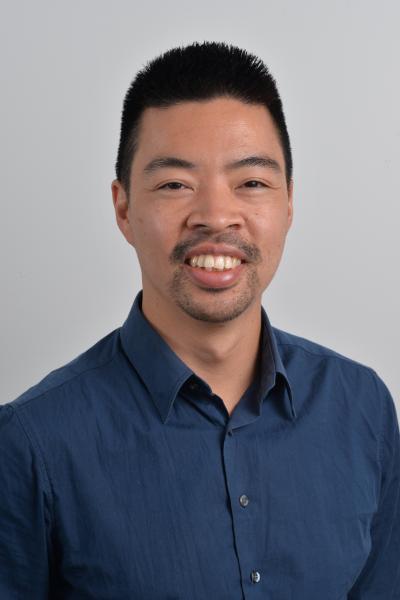
Dr. Huy The Nguyen is a Reader in Mathematics at Queen Mary University of London, specializing in geometric analysis, particularly geometric flows such as Ricci flow, mean curvature flow, and Willmore surfaces, alongside partial differential equations like the Allen-Cahn and Ginzburg-Landau equations. He holds a PhD from the Australian National University (2008) and has held positions at the Max Planck Society, University of Warwick, and University of Queensland before joining Queen Mary in 2017. His research explores geometric flows' dynamics and phase transitions, with notable grants including the EPSRC-funded 'Geometric Flows and the Dynamics of Phase Transitions' (2023–2026) and a prior EPSRC grant on mean curvature flow applications (2019–2022). He organizes the QMUL Geometry and Analysis Seminar and co-leads a geometric analysis seminar for early-stage PhD students. Research interests include conformal immersions, Willmore surfaces, and PDEs' connections to differential geometry. Notable supervision includes Florian Litzinger. No scientific awards are explicitly listed, but his work has been published in top journals like Communications in Analysis and Geometry and Mathematische Annalen .
Dr. Natalia Bulgakova is a Lecturer in Genetics, Genomics and Fundamental Cell Biology at the School of Biological and Behavioural Sciences, Queen Mary University of London. She maintains dual affiliations with the Centre for Molecular Cell Biology and the Centre for Evolutionary and Functional Genomics, where she leads an active research laboratory exploring fundamental mechanisms of cell adhesion and tissue organization. Her research program centers on understanding the roles and regulation of intercellular adhesion during organism development, with particular focus on E-cadherin dynamics. Dr. Bulgakova's laboratory employs a sophisticated multidisciplinary approach combining Drosophila melanogaster genetics with human cell culture systems to investigate how E-cadherin, the major component of intercellular adhesion, is regulated through intracellular trafficking and transcriptional mechanisms. Her work examines how alterations in these processes impact critical cell behaviors including proliferation, survival, and signaling in both normal development and pathological conditions. Methodologically, her research integrates classical genetic approaches with cutting-edge technologies including state-of-the-art microscopy (quantitative confocal imaging, live imaging, Airyscan, STORM) and genomic/epigenomic analyses (RNA-seq, ChIP-seq). Recognizing the complexity of data generated by these techniques, her laboratory develops custom computational pipelines for automated analysis of imaging and sequencing datasets, ensuring reliable and reproducible extraction of biological insights. Analysis of her publication record from 2013-2023 reveals a cohesive research trajectory focused on cell adhesion mechanisms, particularly E-cadherin regulation, and its relationship to cytoskeletal organization, epithelial morphogenesis, and developmental patterning. Her work spans multiple model systems including Drosophila, human cell lines, and Tetrahymena, demonstrating both depth in specific mechanisms and breadth across biological contexts. Cell adhesion mechanisms Cytoskeleton organization and dynamics Intracellular protein trafficking Drosophila developmental genetics Quantitative image analysis Epithelial morphogenesis E-cadherin regulation networks Dr. Bulgakova's laboratory represents a vibrant research environment that bridges molecular, cellular, and tissue-level phenomena to understand fundamental mechanisms of development and tissue organization. Her work has significant implications for understanding not only basic developmental processes but also pathological conditions where cell adhesion is disrupted.
Francisco Criado is a researcher with significant contributions to computational geometry, discrete mathematics, and applied algorithm design. His work spans theoretical and applied domains, including convex optimization, Voronoi diagrams, and geometric modeling in gas dynamics and earthquake decision-making frameworks. Collaborators : Francisco Santos, Sebastian Pokutta, Michael Joswig Key Venues : Discrete & Computational Geometry , Foundations of Computational Mathematics , NeurIPS Research Interests focus on geometric algorithms, polyhedral complexes, and applications of fuzzy logic. His 2025 papers explore convex hulls, zonotopes, and tropical geometry, while earlier works address gas dynamics and decision-making models. Article Trends reveal expertise in high-dimensional geometry, combinatorial optimization, and numerical methods. He frequently employs randomized and linear convergence algorithms in 2022–2025. Advising and Grants : No explicit data provided, but his extensive co-authorship network suggests collaborative research leadership.
Klaus Hinrichs is a Professor at the University of Münster. His work focuses on computer graphics, medical imaging, virtual reality, and scientific visualization. He leads research in interactive visualization techniques, geometric algorithms, and human-computer interaction, with applications in medical diagnostics, astrophysics, and immersive environments. His research interests include 3D reconstruction, volume rendering, gesture-based interfaces, and redirected walking in VR. He has contributed to projects like VIPAR for histopathology analysis and the Voreen framework for interactive volume visualization. Recent work explores touch interaction with stereoscopic objects, haptic feedback systems, and biometric authentication methods for mobile devices. His publications span over 30 years, emphasizing interdisciplinary approaches to visualization and user interface design.
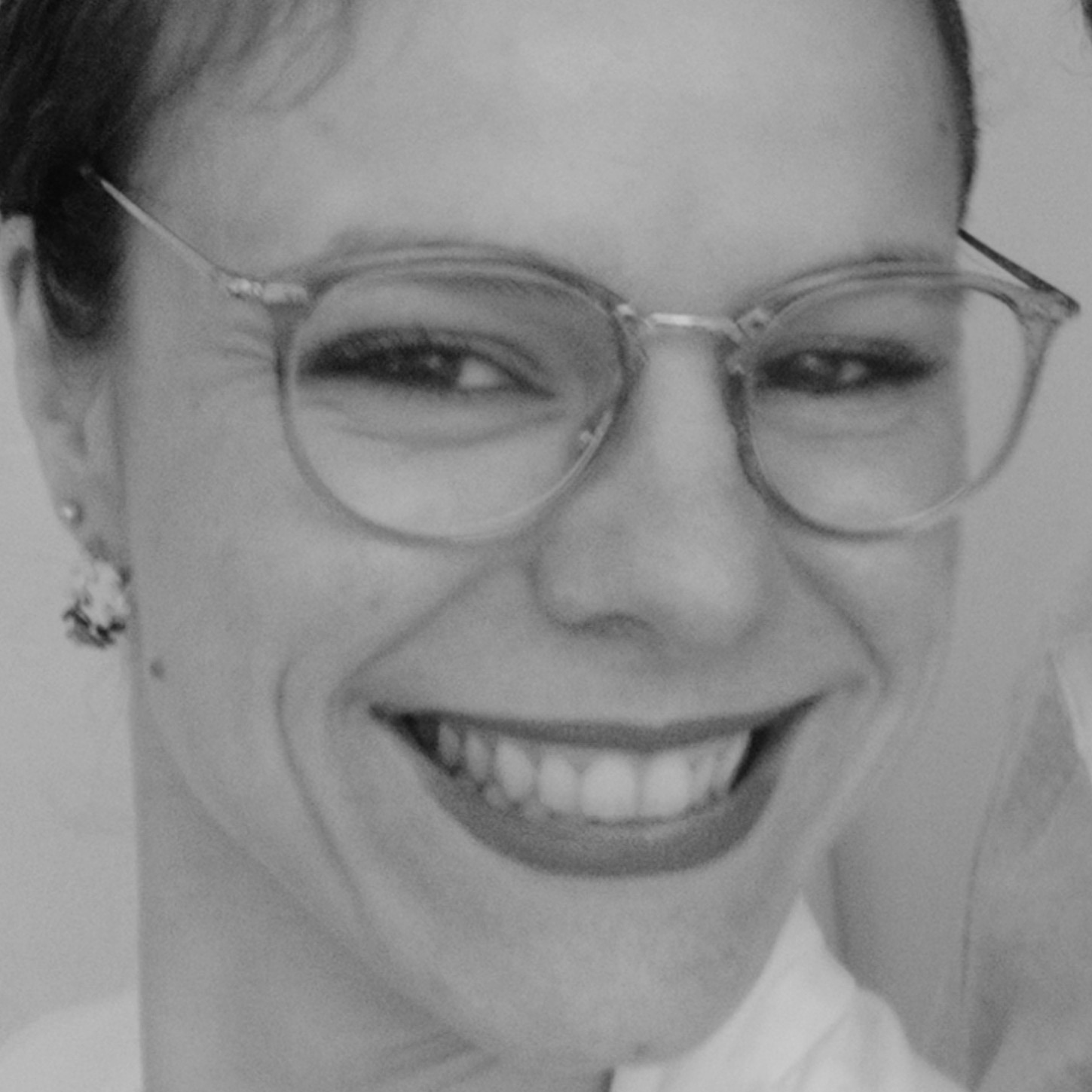
Amandine Staircase is an Associate Professor at the Claude Bernard University, Lyon 1 , affiliated with the Camille Jordan Institute . Her research focuses on Geometric Group Theory and Measured Group Theory , exploring topics such as rigidity, orbit equivalences, and metric structures. She holds a PhD from Paris Cité and Montpellier Universities (2021), supervised by Romain Tessera and Jérémie Brieussel. Her academic journey includes teaching roles at Lyon 1, Paris-Saclay, and Münster, covering linear algebra, group theory, and functional analysis. Recent work includes contributions to Groups, Geometry, and Dynamics and the Annales de l'Institut Fourier . Upcoming presentations include the YGGT XIII conference in Copenhagen (April 2025) and a seminar at ENS Lyon (June 2025). She has developed visualization tools for mathematical structures, including Diestel-Leader graphs, using TikZ. Her research emphasizes quantitative aspects of group actions and geometric constructions, bridging algebraic and topological perspectives.
Marek Jerzy Szopa is a Professor at the University of Silesia in Katowice , affiliated with the Department of Theoretical Physics within the Institute of Physics. With a career spanning over three decades at the university, he focuses on quantum mechanics and its intersections with condensed matter theory, mathematical physics, and quantum information. Education: PhD in physics (Universität Köln, 1992); habilitation (Uniwersytet im. Adama Mickiewicza, 1997); postdoctoral work (Leuven University College, 1998–2007). Research areas: Quantum dynamics, symmetry in nanoscale systems, carbon nanotubes, and game theory applied to decision-making. Publications: 61 total, with highlights in Physical Review B , EPL , and interdisciplinary journals like Studies in Logic, Grammar and Rhetoric . Skills: Expertise in quantum information processing, differential geometry, and mathematical methods for physics. Scientific memberships: Member of the International Quantum Structure Association.
Sean H. Rice is a Professor in the Department of Biological Sciences at Texas Tech University, where he conducts research and teaches in evolutionary theory and mathematical biology. His work spans theoretical and empirical domains, focusing on the conceptual and mathematical foundations of evolution, developmental modeling, and morphological evolution across diverse taxa. University: Texas Tech University School: College of Arts and Sciences Department: Department of Biological Sciences Academic Rank: Professor Email: sean.h.rice@ttu.edu Education: B.A. in Biology, University of California, Santa Cruz (1984) Ph.D. in Ecology & Evolutionary Biology, University of Arizona (1991) Sean H. Rice's research interests lie at the intersection of theoretical biology and empirical evolutionary studies. He investigates the mathematical underpinnings of evolutionary processes, particularly the role of developmental constraints, epistasis, and stochasticity in shaping evolutionary trajectories. His lab explores key conceptual issues through systems such as molluscan shell development, heterochrony in primate brain evolution, and speciation mechanisms in rotifers. He emphasizes analytical models over simulations, arguing that mathematical rigor provides deeper biological insight. The trends in his publications reflect a consistent focus on foundational evolutionary theory. His work integrates population genetics, quantitative genetics, developmental biology, and macroevolution, with recurring themes including the Price equation, G-matrix evolution, canalization, and species selection. He is particularly known for developing axiomatic frameworks that derive evolutionary laws from first principles, bridging philosophy and formal theory. Scientific Awards: No specific awards are mentioned in the provided texts. Advising and Grants: Dr. Rice mentors graduate students who develop independent research projects aligned with broad evolutionary questions. His former and current students include Lisa Suatoni, Heinrich Zu Dohna, David Ralph, Morgan Baker, John Harting, Ben Qin, and Sarah Fumagalli. While specific grant funding is not listed, his sustained research output and lab activity suggest active external support. He values deep conceptual engagement and encourages students to build strong theoretical foundations. Labs and Research Groups: Dr. Rice leads a research group within the Systematics & Evolution research cluster at Texas Tech. His lab combines theoretical modeling with empirical data to address fundamental questions in evolutionary biology. Key projects include an axiomatic theory of evolution, modeling developmental evolution with epistasis, studying heterochrony, and analyzing molluscan shell morphogenesis. The lab fosters independent thinking, with students designing their own dissertation projects under his guidance.
Michael A. King is a Professor in the Department of Radiology at UMass Chan Medical School and holds an appointment in Biochemistry and Molecular Biotechnology at Morningside Graduate School of Biomedical Sciences. His work focuses on nuclear medicine physics and advanced SPECT/CT imaging systems. UMass Chan Medical School, Worcester, MA T.H. Chan School of Medicine Morningside Graduate School of Biomedical Sciences Research Interests: Dr. King specializes in correcting image degradation factors in nuclear medicine, including attenuation, scatter, and motion artifacts . His lab develops deep learning algorithms for cardiac and brain imaging, adaptive collimator designs for SPECT systems, and task-based image quality assessment using human and numerical observers. Recent Research Trends include respiratory motion compensation in cardiac SPECT, multi-pinhole collimator optimization , and AI-driven dose reduction techniques. His team’s work on dynamic SPECT imaging enables non-invasive quantification of physiological functions. Scientific Contributions: Recipient of three NIH R01 grants (R01-EB022092, R01-EB022521, R01-HL154687) Co-investigator on grants exploring wave-radar motion estimation and pediatric SPECT optimization Pioneered motion-corrected reconstruction algorithms integrated into clinical workflows Teaching: Dr. King leads the Physics of Radiology for Residents course and prepares students for the American Board of Radiology physics exam through Physics Review Lectures . He has mentored graduate students like Anne-Dorte Achtert and Daniel deVries, whose work received Best Scientific Paper Awards from the Journal of Nuclear Cardiology and Journal of Nuclear Medicine.
László Gránásy is a Professor at the Department of Experimental Solid State Physics within the Wigner Research Centre for Physics at the Hungarian Academy of Sciences in Budapest, Hungary. His research focuses on computational modeling of microstructure formation in materials, particularly phase-field simulations of polycrystalline solidification processes. Key research areas: phase-field modeling, dendritic growth, spherulitic patterns, growth front nucleation Applications: solidification control in thin films using external fields, confined geometries, and particle additives Methodological emphasis: quantitative phase-field simulations with nucleation mechanisms Contact: granasz [at] wigner [dot] hu
Alexei Kisjukhas is an Associate Professor at the Department of Sociology, Faculty of Philosophy, University of Novi Sad. He graduated and earned his master's degree in sociology from the same faculty in 2007 and 2009, respectively, and completed his doctorate in 2015 with a dissertation on the corporeal, individual, and social dimensions of emotions. His research spans theoretical sociology, sociology of emotions, ideologies, revolutions, and social change. He has contributed to the history of social sciences and sociological metatheory, emphasizing interdisciplinary approaches bridging philosophy, economics, and evolutionary theory. Key Research Areas: Theoretical sociology, emotional rituals, revolutionary theory, affective labor, social geometry, and Simmel's sociology of space. Projects: Participated in Tempus and Horizon 2020 initiatives, focusing on transnational educational and research collaborations. He received the Award for the Best Young Researcher at the Faculty of Philosophy (2015) and the Stanislav Staša Marinković Award for journalistic courage (2016). As a columnist for Danas since 2006, he connects academic rigor with public discourse. Alexei teaches classical and contemporary sociological theories , including specialized courses on emotions and social interaction at all academic levels. His published works include over 40 scientific papers, five monographs, and editorial contributions to thematic proceedings.
Dr. Martin Peeks is a Scientia Senior Lecturer in the School of Chemistry at the University of New South Wales (UNSW). His research focuses on chemical synthesis and advanced analytical techniques to explore fundamental chemistry in sensing and light-harvesting applications, particularly investigating aromaticity, electronic delocalization, and unconventional chromophores. He earned his DPhil from the University of Oxford (2018) and holds an MChem from the University of St Andrews (2013). Peeks leads the Peeks Group (peeksgroup.com) and holds grants including an ARC Discovery Project (2025-2028) and an ARC DECRA Fellowship (2024-2027). He teaches courses like CHEM2031 and co-coordinates the 'Python for Chemists' stream in CHEM4502. Research Interests: Organic and Supramolecular Chemistry Spectroscopic Analysis of Electron Delocalization Design of Functional Materials for Light-Harvesting Anti-Aromatic and Aromatic Molecular Systems Awards: Lindemann Trust Fellowship (2017-2018) Grants: ARC Discovery Project ($679,839) - Electronic delocalization in organometallic molecules ARC DECRA Fellowship ($493,474) - Pushing limits of electronic delocalization in organic molecules Lab/Team: The Peeks Group explores synthetic and physical organic chemistry, with a focus on molecular electronics and photophysical properties of novel materials.
Dr. Paul Bilokon is a Visiting Lecturer in the Department of Mathematics at Imperial College London's Faculty of Natural Sciences. He holds leadership roles as CEO and Founder of Thalesians Ltd, Chief Scientific Advisor to Thalesians Marine Ltd, and Head of Faculty at the Machine Learning Institute (MLI) and Quantitative Developer Certificate (QDC). Previously, he led global credit and core e-trading quant teams at Deutsche Bank and held senior roles at Morgan Stanley, Lehman Brothers, and Citigroup. His research focuses on machine learning in finance, cryptocurrency, high-frequency trading systems, and domain theory. He earned a distinction from the University of Oxford and won the Donald Davis Prize and British Computer Society SET Award for his work on stochastic processes and imaging. His book contributions include 'Machine Learning and Big Data with kdb+/q' and 'Machine Learning in Finance: From Theory to Practice.' He teaches advanced machine learning and C++ programming, emphasizing reinforcement learning and low-latency applications. Education: Christ Church, University of Oxford (MSci with distinction); Imperial College London (Donald Davis Prize-winning MSci thesis). Research interests include algorithmic trading, quantum machine learning, and drug discovery via graph neural networks. Awards: Quant of the Year 2023, multiple industry accolades. Projects span cryptocurrency arbitrage, low-latency systems, and topological approaches to number theory. Advised numerous students on topics like deep reinforcement learning and electronic market making. Labs/Teams: Thalesians Ltd (quantitative research), MLI (machine learning education), QDC (certification programs). Grants and consulting span financial institutions and tech firms. His work bridges academia and industry, driving innovation in finance and computer science.
Laurent Saloff-Coste is the Abram Rogers Bullis Professor of Mathematics at Cornell University , affiliated with the College of Arts and Sciences . His research focuses on analysis , probability theory , stochastic processes , and their interplay with Riemannian geometry and geometric group theory . He explores heat diffusion on manifolds, random walks on groups (both finite and infinite), and quantitative estimates for ergodic Markov chains. Education: Ph.D. in Mathematics (1983), Université Paris VI Doctorat d'État (1989), Université Paris VI Research Interests: His work bridges analysis and probability, studying properties of heat kernels, potential theory, and functional inequalities. He investigates geometric aspects of large-scale structures, such as Cayley graphs, and the relationship between group algebraic properties and random walk behavior. Key areas include: Heat kernel estimates on manifolds and graphs Isoperimetric profiles and their applications Mixing times of Markov chains Sub-elliptic diffusions on Lie groups Recent Trends in Publications (2023–2025): His recent work emphasizes geometric analysis of heat kernels, long-range random walks on nilpotent groups, and functional inequalities. He explores applications to stochastic processes on discrete and continuous spaces, including studies of Lévy processes on nilpotent groups and transient subgraphs. Notable themes include: Estimates for hitting times and Harnack inequalities Perturbation methods for Dirichlet eigenfunctions Uniform doubling properties in Lie group geometries Awards: 2022 Simons Fellow Advising and Grants: No specific advisees or grant details are listed in the provided materials. His research has been supported by collaborations with institutions like the Institute of Mathematics in Wrocław, Poland, and participation in events such as the Midwest Probability Colloquium. Labs/Teams: No dedicated lab or team is explicitly mentioned, though his work involves interdisciplinary collaborations in geometric analysis and probability.
Professor Damiano Brigo holds the Chair in Mathematical Finance at Imperial College London, part of the Faculty of Natural Sciences and the Stochastic Analysis research group. He has held academic roles including co-head of the Mathematical Finance group at Imperial (2012-2019) and previously led the Financial Mathematics group at King's College London. His research spans counterparty credit risk, funding costs, interest rate models, liquidity risk, and algorithmic trading. He has authored over 130 works and four influential books, including Interest Rate Models: Theory and Practice and Counterparty Credit Risk, Collateral and Funding . Education: PhD in Stochastic Filtering (Free University of Amsterdam, 1996) Laurea (BSc/MSc) in Mathematics cum laude (University of Padua) Research Interests: Focuses on valuation and pricing under funding constraints, credit risk, nonlinear valuation via PDEs/FBSDEs, and applications of stochastic processes and information geometry. Current work includes liquidity risk, default modeling, and differential geometric approaches to statistical manifolds. Awards: Most cited author in Risk Magazine (1998-2017) H-index 42 (2023) Key Contributions: Pioneered frameworks for Counterparty Credit Risk (CCR) with funding and collateral considerations. Developed the Counterparty Risk and Funding: A Tale of Two Puzzles model. Editorial roles include International Journal of Theoretical and Applied Finance and Mathematics of Control, Signals, and Systems. Labs/Teams: Co-director of the CFM-Imperial Institute of Quantitative Finance and collaborator with the Centre for Cryptocurrency Research and Engineering.